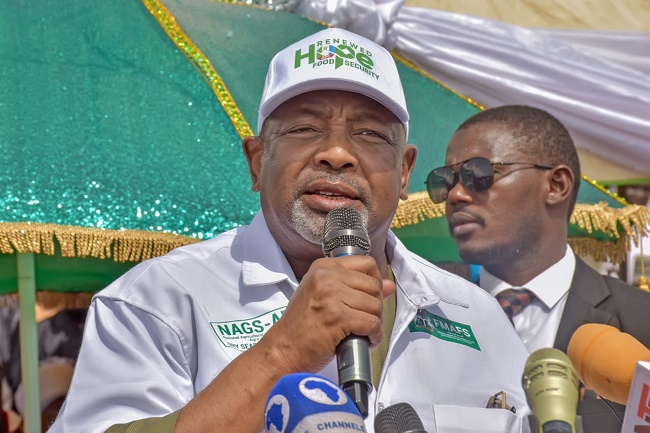
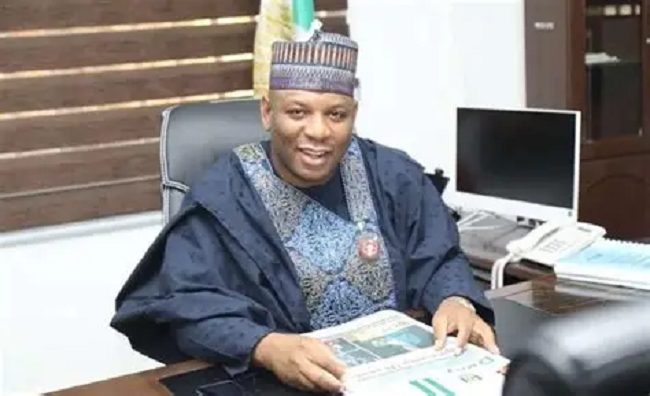
Minister of Agriculture and Food Security, Sen. Abubakar Kyari, says Nigeria loses $10 billion annually to post-harvest losses.
Kyari disclosed this on Monday, September 15, 2025, during the inauguration of the Green Legacy Rural Community Agriculture and Infrastructure Network (G.R.A.I.N) Pulse Centre initiative at Kangire community, Birnin-Kudu LGA, Jigawa State.
Minister of Agriculture and Food Security, Sen. Abubakar Kyari
He said the losses were due to poor storage, weak infrastructure, limited processing, climate change, flooding, soil degradation, and increasingly erratic rainfall across the country.
According to him, agriculture contributes about 24 per cent of Nigeria’s GDP, with smallholder farmers producing around 70 per cent of the nation’s food.
“By empowering smallholder farmers with modern tools, technology, and markets, we can unlock the full wealth of our land and people,” the Minister stated.
Kyari reaffirmed President Bola Tinubu administration’s commitment to prioritising agriculture as the core of the nation’s transformation, stressing that its vision has been translated into practical action.
He described private-sector-driven initiatives as vital in strengthening Nigeria’s food systems and boosting resilience against post-harvest losses.
The Minister said the pulse centre would function as an integrated hub for agriculture, infrastructure, and rural development, covering the entire agricultural value chain.
He added that the hub, equipped with modern facilities, would provide a safe environment for exports and would be replicated across communities nationwide.
Also, Minister of Foreign Affairs, Amb. Yusuf Tuggar, emphasised the strength of public-private partnerships in development, commending the establishment of such hubs in Jigawa’s agrarian communities.
“This microeconomy will benefit Nigeria because of its multiple advantages, particularly the integration of modern facilities and technologies,” Tuggar said.
He praised President Tinubu and Jigawa Governor, Umar Namadi, for prioritising food security within their development agenda.
Governor Namadi expressed delight at Jigawa hosting the country’s first pulse centre, describing it as a brilliant innovation for sustainable rural livelihoods.
He said the project would stimulate Kangire’s economy and highlight the community’s transformation potential through agriculture-led development.
Namadi explained that the facility included a solar-powered integrated system, digitally connected hubs, and services covering the entire agricultural value chain.
He reiterated his administration’s commitment to strengthening agriculture to drive job creation, infrastructure expansion, and improved livelihoods.
Chairman of Birnin-Kudu Local Council, Mr. Muhammad Uba, pledged support for President Tinubu’s Renewed Hope Agenda, highlighting Jigawa’s prioritisation of agriculture and food security.
He added that Governor Namadi had taken significant steps to transform and digitalise agriculture in the state.
Kyari formally inaugurated the G.R.A.I.N Pulse Centre at Kangire, as part of the Renewed Hope agenda.
Delta State Government says it will invest in ranching, renewable energy for agricultural and industrial development in order to create jobs and rejuvenate the state economy.
The State Commissioner for Works (Rural Roads) and Public Information, Mr. Charles Aniagwu, stated this while briefing newsmen on the outcome of the state’s recent investment mission to Brazil.
Gov. Sheriff Oborevwori of Delta State
Aniagwu said that the visit unlocked fresh prospects for industrial expansion in the agricultural sector as the state government explores opportunities in investing in ranching.
He said Gov. Sheriff Oborevwori’s administration has already recorded significant gains by opening up all the 25 local government areas with vital infrastructure, thereby creating access to mineral resources, industrial corridors, and potential free trade zones.
The commissioner explained that the Brazil engagement was aimed at showcasing Delta’s investment opportunities while also drawing lessons from Brazil’s agricultural model, especially in ranching.
He stressed that the establishment of ranches in the state would not only boost food production and jobs but also strengthen security by curbing the use of forests as criminal hideouts.
Aniagwu said, “We are pursuing both security and job creation by targeting ranching and other agro-industrial investments.
“Our discussions in Brazil are progressing very well, and we are optimistic about the outcomes.”
He disclosed that the state also held talks with renewable energy firms and other players in the power sector, building on earlier engagements with the Rural Electrification Agency in Abuja.
According to him, the goal is to light up the state, expand industries, and create employment opportunities that will improve living standards.
He said that government’s focus on agriculture and industry was deliberate, given the rising number of graduates from tertiary institutions across the state.
“Our goal is to create a productive economy where our graduates and young women can secure meaningful jobs beyond the limited space in the civil service,” he added.
“This is how we can guarantee both social and fiscal security for our state while raising living standards,” he said.
He reaffirmed that the Oborevwori administration remains committed to the M.O.R.E Agenda, with particular emphasis on infrastructure expansion, energy generation, agriculture, and industrial growth.
The commissioner also said that the state government was in support of the ongoing screening of civil servants, warning that it would not condone falsification of age, abuse of leave of absence, or indecent dressing in the workforce.
According to Aniagwu many officers have manipulated their official records while some workers have abused their leave of absence.
He added that those who had abused leave of absence by staying abroad for years while still drawing salaries from Delta State’s payroll would be removed, with steps taken to recover funds illegally earned.
Aniagwu also said that the recently re-emphasized dress code for civil servants in the state was not new, adding that government required its workforce to appear decent and corporate.
The Abia State Government says the revived sanitary inspection of compounds is not for taxation or punishment but to ensure residents maintain clean surroundings.
It introduced stipends for sanitary inspectors to encourage diligence and discourage extortion during visits to homes, villages, and communities across the state.
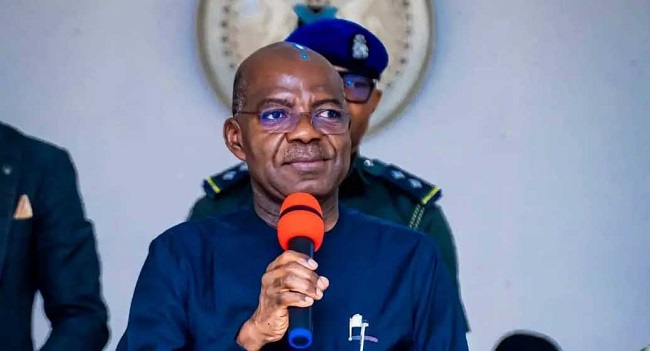
Gov. Alex Otti of Abia State
Commissioner for Information, Okey Kanu, disclosed this at Government House, Umuahia, on Monday, September 15, 2025, while briefing journalists on the outcome of the weekly Executive Council Meeting.
Kanu said communities should be given at least one week’s notice before inspectors’ visits, ensuring fairness and adequate preparation by residents.
He stressed that sanitation efforts target disease reduction from dirty environments, which benefits all residents, and urged the public to comply with health directives.
Kanu added that the Council approved a state-wide tree planting campaign because of its numerous environmental and health benefits.
He said ASEPA was already de-silting drains in Aba and Umuahia following flooding warnings, aimed at preventing disasters in the cities.
The government urged residents not to clog drainage channels, stressing that responsible waste disposal was critical in checking flooding activities.
Officials at the briefing included Philemon Ogbonna, Commissioner for Environment; Dr Eno Jerry-Eze, Chairman Civil Service Commission; and Ferdinand Ekeoma, Special Adviser to the governor on Media.
Governor of Osun State, Senator Ademola Adeleke, has expressed his sympathy with the people of Iwo on the devastating flood that occurred on Friday, September 13, 2025, due to hours of heavy rainfall, assuring the people of ongoing efforts to prevent future occurrence of the natural disaster.
Governor Adeleke rues the huge personal losses suffered by residents as a result of the flooding incident, noting that his administration will be taking nothing to chance to safeguard lives and properties of the people.
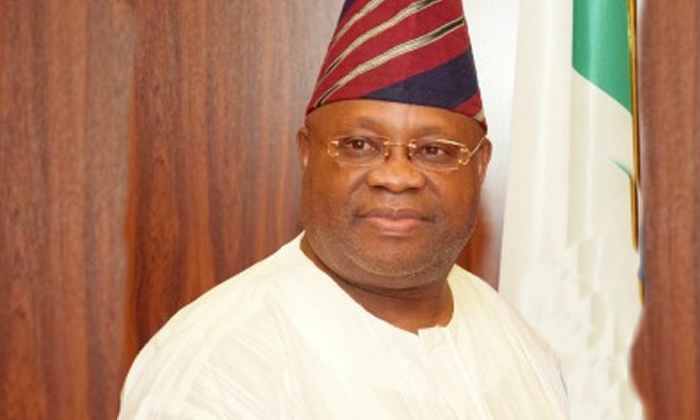
Gov. Ademola Adeleke of Osun State
The Governor said his administration has deployed resources to expand waterways in Iwo and environs in addition to those already done, assuring victims that the government would take stock of losses and provide appropriate support for victims.
“I am devastated to learn about the monumental damage caused by flooding that occurred in Iwo on Friday following hours of heavy downpour. The scale of the losses suffered by our people as a result of the natural disaster is especially heavy and I can only imagine the toll on our people in Iwo,” Governor Adeleke noted in a statement.
“I want to, on behalf of the State Government, convey heartfelt sympathy to everyone affected in one way or the other. As a government, we stand with the people of Iwo in this difficult moment, and assure them of our commitment to support them to overcome the challenges created by the incident.
“Before this incident, our government has taken flood prevention steps, which includes dredging of Aiba waterways among others to open up water channels and ensure the free-flow of water to avert flooding. Following the incident, the government has mobilised resources for the channelisation of more waterways to ensure that this awful incident does not happen again.
“I have also directed the Commissioner of Environment to conduct on-the-spot assessment and come up with a lasting solution to flooding in Iwo and environs. The people of Iwo and indeed Osun State can be rest assured that we are doing everything possible to tackle flooding in the state.”
Governor Adeleke urged the people of Iwo and Osun people to support government efforts to prevent flooding by stopping the indiscriminate dumping of refuse on water channels.
President/Chief Executive, Dangote Petroleum Refinery, Aliko Dangote, has declared that since the refinery began producing petrol a year ago, Nigeria’s five-decade-long struggle with fuel queues has finally come to an end.
Speaking at a conference to mark the first anniversary of the launch of petrol from the 650,000 barrels-per-day refinery, Dangote highlighted that Nigerians have endured persistent fuel queues since 1975. However, this issue has been steadily resolved since the refinery began rolling out petrol on September 15, 2024.
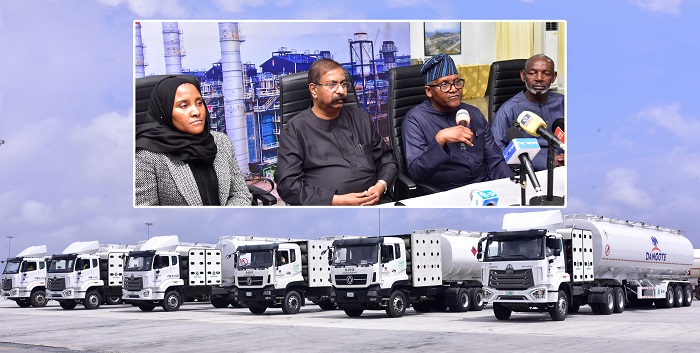
Dangote Compressed Natural Gas (CNG) trucks loading Premium Motor Spirit (PMS) at the Dangote Petroleum Refinery gantry (Inset: L–R: Group Executive Director, Commercial Operations, Dangote Industries Limited, Fatima Aliko Dangote; Vice President, Oil and Gas, DIL, Devakumar Edwin; President/Chief Executive, Dangote Industries Limited, Aliko Dangote; and Chairman, MRS Oil Nigeria Plc, Sayyu Dantata, during a press conference to mark the first anniversary of petrol rollout and the official presentation of CNG-powered trucks for fuel distribution at the Dangote Petroleum Refinery, Lekki, Lagos, on Monday, September 15, 2025)
“We have been battling fuel queues since 1975, but today Nigerians are witnessing a new era,” he said.
Acknowledging the numerous challenges the refinery has faced since its inception, Dangote emphasised the company’s unwavering commitment to Nigeria and Africa.
“The journey has been challenging because we sought to transform the downstream sector in Nigeria. Some believed we were taking food from their tables, which simply isn’t true. What we have done is to make our country and continent proud. Previously, only two African countries were not importing petrol, but regrettably, they have since resumed imports. This is detrimental to Africa,” he added.
Reflecting on the challenges faced during the refinery’s development, Dangote disclosed that the project involved enormous risk. He received repeated warnings from industry experts, investors, local and foreign government officials, who argued that only sovereign nations undertook such large-scale refinery ventures. He admitted that had the project failed, he would have lost all his assets to lenders.
“The decision to build the refinery was not easy. If it had gone wrong, lenders would have taken our assets. But we believed in Nigeria and Africa,” he said.
Despite opposition and economic headwinds, the refinery has successfully reduced the price of petrol from nearly N1,100 before production began to N841 in the South West, Abuja, Delta, Rivers, Edo, and Kwara. With the gradual rollout of CNG-powered trucks, Dangote anticipates this price reduction will soon be felt nationwide.
He noted that the refinery has sufficient capacity to meet Nigeria’s domestic demand while also generating foreign exchange through exports. He revealed that between June and first week of September 2025, the facility had exported over 1.1 billion litres of Premium Motor Spirit (PMS), underscoring its capacity to meet domestic demand and contribute significantly to foreign exchange earnings.
Emphasising job creation, he stated that the refinery has no intention of displacing workers but is instead generating thousands of new employment opportunities. The deployment of 4,000 CNG-powered trucks is expected to create at least 24,000 jobs across Nigeria.
“We have not displaced any jobs; we are creating many more. The CNG trucks will not be operated by robots,” he said. “Our employees earn salaries three times the minimum wage. Our drivers receive a living wage, life insurance, health insurance covering themselves, their spouses, and up to four children, as well as a lifelong pension. We are not only employing drivers but also mechanics, fleet managers, and other professionals to support the CNG fleet.”
Dangote clarified that while the company respects trade unions, membership is a personal choice for each driver.
He reaffirmed his commitment to Nigeria’s industrialisation, describing it as essential for the continent’s development. Dangote emphasised the urgent need for Nigeria to protect its local industries and discourage the dumping of cheap foreign goods, citing the collapse of the once-thriving textile sector as a cautionary example.
He noted that Nigeria’s path to sustainable economic growth lies in industrialisation, which not only boosts local productivity but also supports a circular economy.
“Other nations were not industrialised by outsiders. We must build and industrialise our own economies. Without this, how can others invest? That is why I believe the National Assembly should enact legislation to support the Federal Government’s ‘Nigeria First’ policy. My goal is to see Africa prosper, as we have the fastest-growing population in the world. Relying on imports means exporting jobs and importing poverty. Many individuals with greater financial resources than myself want to invest, but the challenges we face discourage them. Numerous sectors are still in urgent need of industrialisation,” he said.
He reiterated that, with the introduction of CNG trucks, the refinery can deliver products to consumers anywhere in Nigeria, mitigating all associated risks.
Dangote reiterated that the refinery remains open to partnerships and collaborations with other stakeholders in the downstream sector, stressing that the industry stands to gain more through collective effort and cooperation.
He also clarified that the refinery has no plans to enter the retail market, noting that he declined opportunities to acquire filling stations when they were offered for sale.
Looking ahead, Dangote announced that the refinery’s capacity would be expanded to 700,000 barrels per day in its second year of operation, with the aim of further supporting economic growth and job creation.
“Nigeria has now become the refining hub of Africa. We are set to become the largest exporter of polypropylene and are aiming to make Nigeria the world’s leading producer of fertiliser. These initiatives will generate substantial foreign exchange, create employment, and stimulate growth in other sectors,” he said.
“We are fully committed to supporting the government in adding value, creating jobs, and building a stronger economy.”
He also expressed his gratitude to the Federal Government, the refinery’s partners, dedicated workforce, and the Nigerian public for their continued support. In particular, he commended the Independent Petroleum Marketers Association of Nigeria (IPMAN) for encouraging its members to register for the free distribution initiative utilising CNG-powered trucks.
Dangote also used the occasion to showcase some of the CNG-powered trucks currently loading petrol from the refinery, emphasising that the company would successfully deploy all 4,000 trucks across the country soon.
He allayed any fears of potential attacks on the drivers or the trucks, stressing that Nigeria is a country governed by the rule of law and that security agencies are fully empowered to protect its citizens and infrastructure.
At a New York City Climate Week event on September 22, 2025, Ocean Conservancy, the Ocean & Climate Platform and World Resources Institute (WRI) will push for progress on a landmark international initiative to dramatically scale up ocean-focused climate action in countries’ national climate plans.
Launched earlier this year by France and Brazil at the United Nations Ocean Conference in Nice, the Blue NDC Challenge calls on global governments to place the ocean at the heart of their climate plans (Nationally Determined Contributions, or NDCs) ahead of COP30, which Brazil will host from November 10 to 21, 2025.
Dr. Fatima Candace Vahsling, vice president of Ocean Conservancy’s climate programme
In addition to France and Brazil, Australia, Fiji, Kenya, Mexico, Palau and the Republic of Seychelles have committed to including the ocean in their updated climate plans. The event will feature COP30 CEO, Ana Toni, among other high-level speakers, and encourage more countries to take on the challenge, highlighting the specific actions governments can take to ensure the ocean maintains its role in regulating the global climate.
“The ocean is what keeps our climate afloat, and governments around the world need to get on board,” said Dr. Fatima Candace Vahsling, vice president of Ocean Conservancy’s climate programme and a former White House climate official. “The ocean offers real solutions to climate challenges. It’s time to think blue for this blue planet of ours.”
The event will showcase progress on the Blue NDC (Nationally Determined Contributions) Challenge to date and reiterate the need to include climate-based solutions as a critical pathway to achieve the Paris Agreement.
Speakers include Janis Searles Jones, CEO, Ocean Conservancy; Ana Toni, CEO, COP30 Presidency; Antha Williams, Lead of Environment Program, Bloomberg Philanthropies; John Kerry, 68th U.S. Secretary of State and First Presidential Envoy for Climate; Representatives from France and other Blue NDC Challenge countries; and Representative from WRI and the Ocean Climate Platform.
As with all modern industries, the oil and gas sector globally is under pressure to embrace the critical convergence of information technology (IT) and operational technology (OT) systems to maximise efficiencies and productivities. This shift is equally important in Nigeria, where the oil and gas industry plays a pivotal role in the national economy.
Oil production is a major source of income and a substantial contributor to the GDP of many African countries, and Nigeria remains consistently in the top spot as Africa’s largest producer of crude oil. In addition, it possesses significant quantities of natural gas reserves. The country’s oil and gas sector is critical to the economy, contributing over 85% of export earnings and approximately 30% of budget revenue, but it has been performing below its potential in recent years due to a number of challenges.
Gary Chomse
Against this background, the newly operational Dangote Refinery in the Lekki Free Zone outside Lagos, which began production in January 2024, is a positive symbol of the hoped-for revival of the oil and gas arena in Nigeria. This newest addition to Nigeria’s oil and gas industry is Africa’s biggest oil refinery and also the largest single-train facility in the world (meaning a facility where all the major processing units for the crude oil entering the refinery are contained within a single integrated complex).
However, despite the positive symbolism of this beacon within the Nigerian oil and gas realm, the sector is still navigating through the complex regulatory landscape and fiscal reforms introduced by the Petroleum Industry Act of 2021. The Act’s intention is to restructure fiscal terms, institutional frameworks and regulatory policies, and thus attract investment and boost efficiency.
Prior to the implementation of this Act, Nigeria’s oil and gas arena had seen years of under-investment in exploration and production which, together with persistent infrastructure issues and other challenges, had suppressed growth and innovation, as outlined by Nigerian credit rating agency Agusto & Co.
The implementation of effective technology infrastructure in the oil and gas field can help support strategic business and national objectives and assist in overcoming legacy infrastructure challenges.
Supporting key African markets in their digitalisation journeys
Over the past few years, Vertiv has participated in several focused events across Africa to showcase our products and solutions that are suitable for the broader industrial realm. The intention was to create greater awareness around the benefits that Vertiv can bring to these local sectors, following on from our proven success within the oil and gas field in other parts of the globe.
We look forward to similarly engaging with industry representatives within Nigeria also, being Africa’s largest oil producer, as well as possessing substantial natural gas reserves. Nigeria’s natural gas reserves are, in fact, estimated to be one of the largest in Africa, as outlined by global research company, Mordor Intelligence, in its report entitled “Oil and Gas Industry in Nigeria Market Size & Share Analysis – Growth Trends & Forecasts (2025 – 2030)”.
Natural gas is considered a cleaner and more environmentally friendly source of energy compared to other fossil fuels, and investments in natural gas infrastructure would allow Nigeria to diversify its energy mix and meet both domestic and international demand for cleaner energy sources.
According to the Mordor Intelligence report, it appears that, considering the issues holistically and despite certain challenges, there is much to anticipate for the growth of Nigeria’s oil and gas industry over the next few years. One important key is enabling the true convergence of IT and OT systems, to be able to ‘mine’ facts and data as well as oil and gas, and thereby drive informed planning and decision making.
The Importance of Integrating IT and OT Systems
In a challenging global economy, it is critical for oil and gas companies to digitalise their systems and processes, thereby allowing for the harnessing of data volumes from day-to-day operations. As outlined by global IT consulting company BirlaSoft, the IT-OT convergence within the oil and gas sector allows companies to harvest data within the OT layer and then “cross-contextualise it to build valuable insights and automated control and orchestration mechanisms”.
According to BirlaSoft: ‘IO/OT convergence in the oil and gas industry is a key step to harnessing the business benefits of big data. Operational technology generates a vast amount of data when IoT sensors are attached to various parts of critical machinery to record intended parameters. This data is usually in the form of time series. Analysing it with the right artificial intelligence (AI) and machine learning (ML) techniques can help organisations anticipate potential risks or if the operations as a whole are generating a strange footprint. In other words, IT-OT convergence is the bridge to seamless, proactive, and resilient oil and gas operations.’
By maximising a mix of more modern IT systems intertwined with legacy OT systems, and capturing important information, oil and gas companies can derive insight for enhancing operational efficiencies, increasing performance and improving decision-making.
To enable such strategic aims around the necessary digitalisation to link IT and OT systems, Vertiv’s digital infrastructure solutions are designed to assist with power supplies and distribution, as well as thermal management solutions.
There is a well-known saying which notes that “knowledge is power”, and in any industry, information is vital for understanding that sector’s own outlook through the harnessing of facts, statistics and trends. With the oil and gas industry in Nigeria poised for robust growth that will be driven by strategic investments and technological advancements, the importance of being able to access information digitally is critical.
The strategically placed implementation of robust yet high-performance data centres will work to form the backbone for this critical data and support the necessary IT-OT convergence of individual oil and gas companies, while at the same time also supporting the overall aims of the Petroleum Industry Act of 2021 at a national level.
By Gary Chomse, regional director, Central-Southern Africa at Vertiv
As EU ambassadors meet this week to decide their approach ahead of the UN General Assembly, following Macron’s delaying a decision on the group’s 2040 target, concerns have emerged over both weak ambition as well as no decision on the EU NDC ahead of this year’s UN General Assembly and the deadline for countries to submit climate targets.
EU Ambassadors
Andreas Sieber, Associate Director of Policy and Campaigns at 350.org, said: “It’s embarrassing that the EU finds itself in this position. The worst thing would be to rush to a weak 2035 target that locks in low ambition and removes pressure to agree on a strong 2040 goal. The smarter path would be a statement of intent to have something to show at the UN General Assembly, followed by a robust 2040 target in October that can lift up the 2035 milestone. This is not only about Europe’s credibility but in its self-interest to stay competitive. The stakes are high as the world is living through record heat, deadly floods, and devastating wildfires.”
With the world watching ahead of COP30 in Brazil, the group believes that EU’s choices this week will signal whether Europe is prepared to play a leadership role in keeping 1.5°C alive – or whether it risks arriving in Belém with too little, too late.
A delegation of 12 European Union (EU) Ambassadors is set to visit Tanzania’s Kilimanjaro Region from September 17 to 19, 2025, in a mission aimed at deepening cooperation in agriculture and horticulture while marking five decades of EU-Tanzania partnership.
The three-day visit will bring together representatives from the EU and its Member States, Belgium, Denmark, Finland, France, Germany, Ireland, Italy, the Netherlands, Poland, Spain, and Sweden, who will engage with smallholder farmers, agri-business operators, institutions, and local innovators.
According to the EU Delegation to Tanzania, the trip will spotlight the tangible results of Team Europe-funded initiatives across the agricultural value chain, including climate-smart innovations, coffee production, organic pesticide development, post-harvest technologies, and sustainable forestry.
When President Bola Tinubu assumed office on May 29, 2023, he pledged to remodel Nigeria’s economy for growth and development.
He outlined eight priority areas to raise the nation’s Gross Domestic Product (GDP) to one $1 trillion by 2030.
Minister of Steel Development, Shuaibu Abubakar Audu
A common thread runs through these priorities, with each depending on a strong steel industry.
For key sectors such as construction, transport, energy, agriculture, manufacturing, defence, telecommunications and household goods, steel forms the backbone.
It is indispensable to modern life and central to Nigeria’s ambition of building a diversified economy less dependent on oil.
Recent statistics reflect the urgency of this goal.
The National Bureau of Statistics (NBS) revealed that the non-oil sector contributed 96.03 per cent to Nigeria’s GDP in the first quarter of 2025, a 0.05 per cent increase compared to the same period in 2024.
Analysts argue that a reliable local steel industry could provide the foundation for sustaining this growth.
They add that it would also reduce dependence on imported steel products, which drain over four billion dollars from Nigeria’s foreign exchange annually.
Although successive administrations have recognised the crucial role of steel, Nigeria has struggled to translate this recognition into reality.
A major turning point came in 1979, when President Shehu Shagari established the Ajaokuta Steel Company Ltd. (ASCL).
Conceived as an integrated complex of about 43 units, it was envisioned as the engine of Nigeria’s industrialisation.
More than four decades later, however, the project remains largely comatose in spite of huge investments.
Stakeholders say the company faces financial and operational challenges that threaten its survival.
At the first National Steel Summit in August, Prof. Linus Asuquo, Director-General of the National Metallurgical Development Centre (NMDC), listed Ajaokuta’s setbacks as “huge financial burdens, mismanagement, corruption and a disconnected value chain infrastructure”.
According to him, Nigeria has invested over $8 billion in the project, but mismanagement and policy failures have stalled progress.
The supply chain remains weak, with the National Iron Ore Mining Company (NIOMCO) in Itakpe, created to feed Ajaokuta, still non-operational.
In addition, inland rolling mills in Jos, Katsina, Oshogbo and Delta, intended to process billets from ASCL into finished products, have remained underperforming or dormant due to shortages and poor maintenance.
This situation is especially worrisome because, albeit abundant raw materials such as iron ore, limestone and coal, Nigeria imports more than 90 per cent of its steel needs.
The paradox of a resource-rich country still dependent on imports underscores the urgency of reform.
The Ministry of Steel Development, led by Minister Shuaibu Abubakar, explained that the absence of operational integrated steel plants had hampered Nigeria’s industrial development potential.
It was against this backdrop that the ministry convened the National Steel Summit from Aug. 13 to Aug. 14, 2025, to promote partnerships, knowledge exchange and inclusive dialogue for a sustainable roadmap.
The summit, themed “Rebuilding and Consolidating Nigeria’s Steel Industry: Collaborative Action for Sustainable Growth and Global Competitiveness”, drew policymakers, industry operators, financiers, academia and energy experts.
Deliberations, participants noted, were centred on revitalising the sector to drive industrial growth and enhance Nigeria’s global competitiveness.
In his presentation, “Unlocking the Full Potential of Nigeria’s Legacy Steel Assets: Pathways to Sustainable Revitalisation and Industrial Growth”, Asuquo made several recommendations.
He proposed a combination of modern mini-mill technologies, private sector concessions, phased revival, remanufacturing, and Environmental and Social Impact Assessments (ESIA).
He also called for industrial parks, free trade zones, increased funding for NIOMCO, stronger value-chain linkages, investment in human capital and effective policy reforms.
The summit communique outlined short-term steps such as restarting idle units at Ajaokuta using imported billets to stimulate the market, reinstating NIOMCO operations, and intensifying coking coal exploration.
In the medium term, it recommended revitalising Ajaokuta through public-private partnerships or Build–Operate–Transfer (BOT) models, modernising legacy plants with energy-efficient technologies, and strengthening energy and transport infrastructure.
The communique further proposed dedicated industrial corridors with secure rail, port and road access, as well as vocational training in metallurgy, welding and fabrication.
To drive demand, it suggested local content quotas for government infrastructure projects and expansion of industrial clusters across geopolitical zones.
These measures, stakeholders observed, would not only boost production but also encourage job creation and innovation in related industries.
Summit participants agreed that steel must be treated as a strategic national asset if Nigeria is to achieve its trillion-dollar economy target.
Tinubu, represented by Vice President Kashim Shettima, reiterated government’s ambition of producing 10 million tonnes of liquid steel by 2030 and generating over 500,000 jobs in the industry.
“This administration has laid a robust foundation for the revitalisation of Nigeria’s steel industry through strategic policy decisions, substantial investments, international collaborations and intensifies efforts to foster private sector participation in driving economic growth.”
According to him, the plans include a 10-year roadmap for the revival of the steel sector and a three-year plan for operationalising Ajaokuta Steel Plant, covering infrastructure, regulatory reforms and capacity building.
Tinubu outlined the steel agenda as a “national mission” requiring private sector investment, university innovation and the support of workers and the public.
While stakeholders welcomed the political will, they emphasised the need for policy consistency, institutional reforms, stable energy, logistics and sustainable financing to reposition the sector.
They noted that, with disciplined governance, unity of purpose and systematic implementation, Nigeria’s steel industry could finally fulfil its potential as the engine of the nation’s trillion-dollar economy.
Representatives of 196 countries and the European Union will convene in Panama from December 1 to 5, 2025 to review their efforts against desertification, land degradation and drought as Parties to the only legally binding global treaty on the matter – one of the three Rio Conventions, alongside biodiversity and climate.
The 23rd session of the Committee for the Review of the Implementation of the Convention (CRIC 23) to the United Nations Convention to Combat Desertification (UNCCD) will bring together around 500 delegates from governments, civil society, and academia to assess progress in advancing the Convention’s objectives.
UNCCD Executive Secretary, Yasmine Fouad
A signatory to UNCCD since 1996, Panama has committed to achieve Land Degradation Neutrality by 2030, identified 31 critical hotspots, and is advancing reforestation and Dry Corridor adaptation programmes – underlining its role as regional host. In 2023, the country faced its driest year on record, when water shortages disrupted traffic through the Panama Canal and highlighted how local drought can trigger global consequences.
UNCCD Executive Secretary, Yasmine Fouad, said: “Severe droughts and the loss of fertile land are already straining food and energy production, uprooting rural communities, and threatening the livelihoods of millions. Nowhere is this more evident than in Latin America and the Caribbean, a region that is experiencing severe land degradation, affecting at least 20 per cent of its total area. By hosting CRIC23, Panama is placing itself at the center of collective response – from its national Nature Pledge to the regional Dry Corridor Initiative – and helping to build the momentum for the urgent need for drought resilience and land restoration worldwide.”
The CRIC will also place particular emphasis on gender. Women are among the hardest hit by land degradation, facing the daily consequences of degraded soils and drought, while remaining at the forefront of sustaining families and providing food.
Recent UNCCD data show the urgency of taking action: the world is losing nearly 100 million hectares of healthy land annually and over 70 per cent of land area has experienced increased aridity in the past 30 years, undermining the planet’s capacity to sustain a growing population. The world needs $1 billion daily between now and 2030 to meet global land restoration targets and combat desertification and drought -a fraction of what is destined to perverse incentives and investments.
CRIC23 will be held at the Panama Convention Centre, Panama City. Parties will review progress and provide recommendations towards achieving global targets to prevent and reverse land degradation and to build drought resilience by 2030. Additionally, CRIC23 will discuss post-2030 strategic framework and convene key stakeholders, from women and youth to Indigenous Peoples and local communities.
The CRIC23 logo is inspired by the Dove flower (Peristeria elata), Panama’s national flower. At its center, the outline of a white dove in flight emerges-a universal symbol of peace and unity. Today, this delicate flower is increasingly threatened by desertification in its natural habitats, underscoring the urgent need to protect biodiversity and restore our soils.
The CRIC23 emblem further highlights Panama’s Nature Pledge, which unites the country’s commitments on land, climate, and biodiversity in a single vision. The logo also honours Panama’s natural and cultural heritage and reflects the nation’s resolve to build a future that is resilient, sustainable, and in harmony with nature.