Scientists in Manchester in the United Kingdom have developed the world’s first non-antibiotic treatment for tuberculosis.
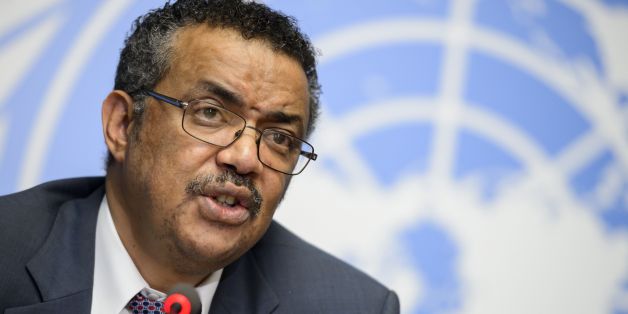
Dr Tedros Adhanom Ghebreyesus, Director-General of the World Health Organisation (WHO). Photo credit: AFP / FABRICE COFFRINI / Getty Images
The team at the University of Manchester hoped the compound, developed after 10 years of painstaking research, will be ready for trials on humans within three to four years.
Project-leader Professor Lydia Tabernero said on Tuesday, September 11, 2018: “For more than 60 years the only weapon doctors have been able to use against TB is antibiotics.
“But resistance is becoming an increasingly worrying problem and the prolonged treatment is difficult and distressing for patients.”
Patients are currently forced to take a cocktail of strong antibiotics over six to eight months, often enduring unpleasant side effects with a 20 per cent risk that the disease will return.
A spokesman at the university said: “Although a vaccine for TB was developed 100 years ago, one in three people across the world are thought to be infected with the infectious disease.
“About 1.7 million die from the bug each year worldwide and 7.3 million people were diagnosed and treated in 2018, up from the 6.3 million in 2016.”
It is most common in Africa and Asia, but on the rise in Britain, with London often described as the TB capital of Europe, added the spokesman.
A drug, developed by the researchers, works by targeting Mycobacterium tuberculosis’ defences rather than the bacteria itself and it can also take out its increasingly commonly antibiotic resistant strains.
The research funded by the Medical Research Council has been published today in the Journal of Medicinal Chemistry, describing the drug as the first non-antibiotic drug to successfully treat tuberculosis in animals.
The Manchester team’s discovery has been proven effective in guinea pigs at Rutgers University in the U. S.
The animals with acute and chronic TB infection were treated with the compound, which was discovered after investigating dozens of other derivatives and compounds thought to have similar properties.
Tabernero added: “The fact that the animal studies showed our compound, which doesn’t kill the bacteria directly, resulted in a significant reduction in the bacterial burden is remarkable.
“By disabling this clandestine bacteria’s defenses, we’re thrilled to find a way that enhances the chances of the body’s immune system to do its job, and thus eliminate the pathogen.”
Mycobacterium Tuberculosis secretes molecules called Virulence Factors, the cell’s secret weapon -which block out the immune response to the infection, making it difficult to treat.
Professor Tabernero added: “The great thing about MptpB is that there’s nothing similar in humans – so our compound which blocks it is not toxic to the human cells. TB is an amazingly difficult disease to treat so we feel this is a significant breakthrough.”
She said the next stage of research is to optimise further the chemical compound, with clinical trials on humans possible within four years.
No fewer than 47,077 children out of 50,268 children under five years had been immunised against polio in Zango Local Government Area of Katsina State in a renewed effort to tackle the virus.
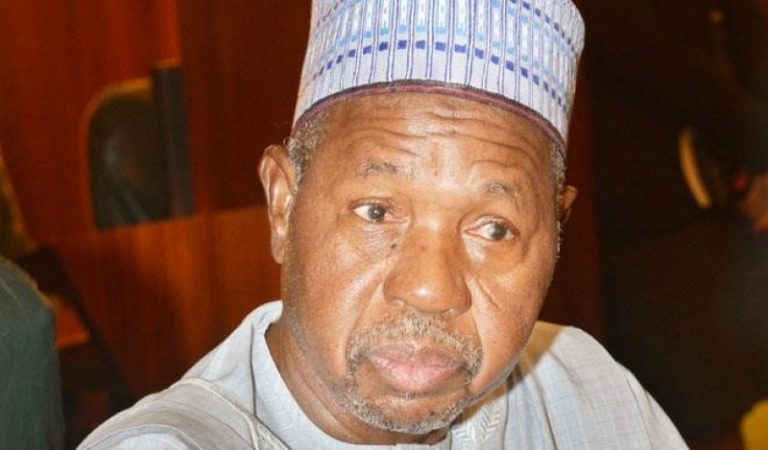
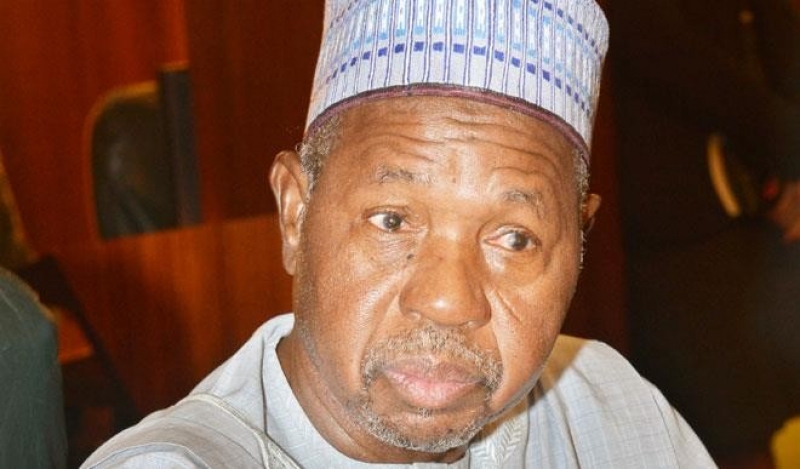
Alhaji Aminu Bello Masari, Governor of Katsina State
The council’s director of primary healthcare, Hajiya Hafsatu Ahmed, disclosed this to the News Agency of Nigeria (NAN) in Zango on Wednesday, September 12, 2018.
Ahmed said that the council had also administered 51,240 out of 52,840 vaccines received.
The director commended the efforts of the state government for providing logistic support for the exercise.
She said that no case of rejection of vaccine against polio was recorded throughout the exercise.
Ahmed said that all stakeholders that included traditional, religious and community leaders were fully involved in the exercise which lasted till Tuesday.
The council’s Roll- Back- Malaria Manager (RBM), Alhaji Tijjani Ahmed, also told NAN that the distribution of free mosquito nets in the LGA would hold between Oct.13 and Oct.17, 2018.
He said that the training of ad-hoc staff that would handle the distribution, monitoring and evaluation of the exercise across the 10 electoral wards had since commenced.
According to him: 20 supervisors, 244 mobilisers, 52 waste managers ,52 health educators and 104 crowd controllers have been engaged for the exercise across 52 distribution points in the area.
He warned the potential beneficiaries against diverting the mosquito nets.
He said that, whoever, was caught either among the beneficiaries or the officials handling the programme would not be spared.
Kenya’s manufacturers’ lobby group on Wednesday, September 12, 2018 signed a Memorandum of Understanding (MOU) with environmental conservation groups to promote the effective management of Polyethylene Terephthalate (PET) containers and bottles.
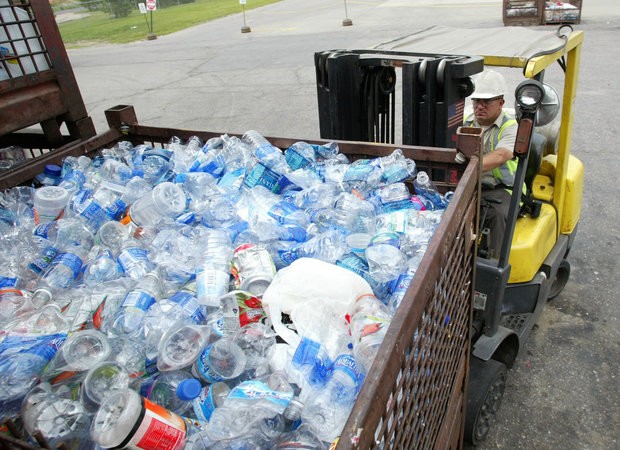
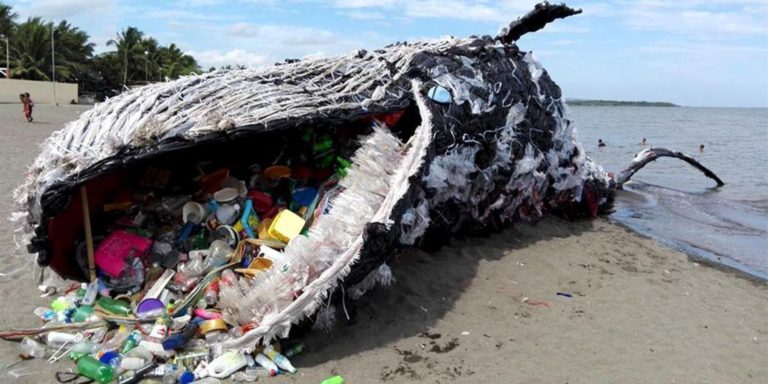
Disposal of waste plastic bottles. Photo credit: Al Goldis / Associated Press
Kenya Association of Manufacturers (KAM) and the groups resolved to take measures to encourage recycling and re-use of plastic bottles across the country.
Mucai Kunyiha, KAM Vice-Chairperson, said that as part of the agreement, the organisation would establish and implement the agreed “take-back” and “extended-producer” responsibility schemes for the plastic bottles.
“We are working with different stakeholders to help achieve policy changes that support a truly circular economy and a more holistic view of material use, collection, and reuse of plastic bottles,” Kunyiha told newsmen in Nairobi.
The industrialists will also undertake clean-up activities and awareness creation in partnership with county governments and other government agencies.
The association, with the support of the National Environmental Management Authority (NEMA), also signed the deal with the Kenya Association of Waste Recyclers and Dandora Hip Hop City for PET plastic waste management.
Ayub Macharia, Chairman of the National PET Management Committee, said recycling represents a systemic shift that builds long-term resilience, generates business and economic opportunities, and provides environmental and societal benefits.
“In other words, plastics aren’t necessarily bad for the environment; it’s the way we dispose of them that’s the problem,” Macharia said.
Tobias Alando, KAM Acting CEO, noted that waste management is a collective role in which the private sector should complement the government’s efforts to ensure a cleaner environment, adding that the partnership is the first and most crucial step in the journey towards effective waste management in Kenya.
KAM targets to recycle up to 20 per cent of PET plastic bottles in 2018 with a target of 70 percent by 2030, based on the circular economy concept that will involve various stakeholders including waste collectors, recyclers, the government.
Richard Kainika, the Secretary General of Kenya Association of Waste Recyclers, which has membership of over 150 registered waste recyclers, emphasised on policy changes to enable effective and sustainable waste recycling.
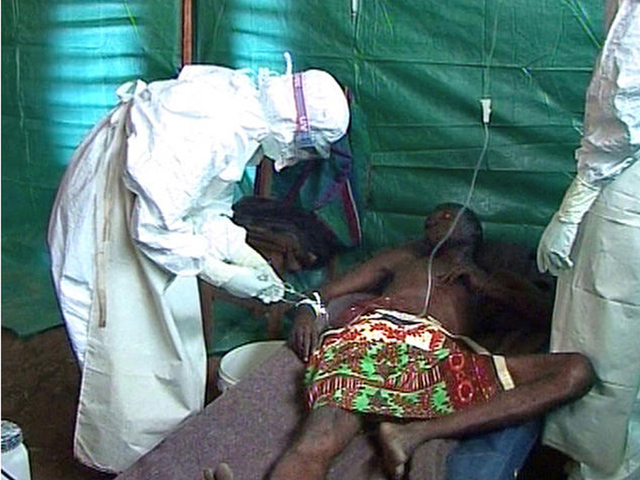
Some Ebola survivors may still experience the virus in the deeper compartments of their bodies where the immune system may not be able to clear.
An Ebola patient receiving treatment
Prof. Jonathan Heeney of Cambridge University, United Kingdom, said this at the 10th Convocation Lecture of the Redeemer’s University in Ede, Osun State, on Wednesday, September 12, 2018.
Heeney, a professor of Veterinary Pathology, spoke on the theme: “Dare to Change: Turning the Tide against Nigeria’s Health Threats.”
Heeney said that the inner compartments of the body where the virus might be noticed include the eyes, the brain, the testes and the joints.
The don said that the virus genomes could be discovered in the semen of 30 per cent of male Ebola survivors six months or longer after they must have recovered from the disease.
He added that it had been documented that suspects could have contracted it from sexual transmission from male survivors or from female to male transmission.
“Breast milk transmission has also been observed, indicating that mother-to-child transmission may also occur from Ebola female survivors.
“Importantly, while an Ebola survivor is healthy, the risk that they may secrete the virus is low and the risk of transmitting the virus casually is negligible, “Heeney said.
The don, however, said that one of the greatest challenges is how to develop a vaccine that would not only protect people against Ebola, but also against its other filovirus family members.
Heeney, however, said that one of the reasons why it was difficult to curb Ebola outbreak in West Africa was because of societal practices.
He said, “Important amongst these factors are tribal cultures, no prior knowledge or experience with Ebola, mistrust of the government, conspiracy theories, among others.’’
According to Heeney, other scientific collaborators and he have started developing a vaccine.
He said that that the vaccine had the potential to protect people from three different kinds of hemorrhagic fever viruses and could be used across Africa.
Heeney said that public health campaigns in the most affected communities should include strategies for keeping rodents out of homes and food supplies and improving personal hygiene.
A UN-backed ocean cleanup vessel aiming at cleaning up 1.8 trillion pieces of plastic debris in the Pacific Ocean has left San Francisco, California on its first voyage.
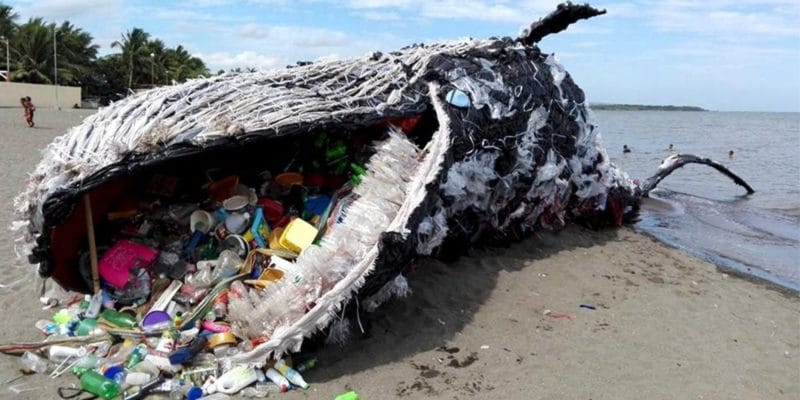
The giant “Dead Whale” is a reminder of the massive plastic pollution problem
The vessel consists of a 600-metre long floater that sits at the surface of the water and a tapered three-metre deep skirt attached below which catches plastic debris.
The cleanup system, designed by a 24-year-old Dutch inventor and “UN Environment Champion of the Earth”, Boyan Slat, would undergo some trials before travelling 1,000 nautical miles to what is known as the Great Pacific Garbage Patch.
The huge mass of marine debris, situated in the North Pacific Ocean halfway between the Californian coast and Hawaii, is estimated by Slat’s Ocean Cleanup organisation to measure 1.6 million square kilometres – three times the size of France – and contains 1.8 trillion pieces of plastic.
That amounts to 250 pieces for every person on the planet, the organisation said.
The long-awaited launch of the first deployable model of the marine litter collection system, named “System 001,” took place on Saturday at the Golden Gate Bridge following four years of research and adjustments.
The system is carried by the ocean’s currents and waves, passively catching plastic debris along the way.
Ocean Cleanup’s research indicated that a scaled-up fleet of 60 such systems could eventually clean up 50 per cent of the patch in the next five years.
The trials are taking place 240 nautical miles into the Pacific Ocean and once they are completed, the devices would be sent the remaining 1,000 nautical miles out to the Great Pacific Garbage Patch.
Slat founded Ocean Cleanup when he was 18-years-old, and he was named a “Champion of the Earth” by UN Environment the following year in recognition of his quest to find a solution to the ever-growing global problem of plastic debris in oceans.
“Champions of the Earth” is the UN’s highest environmental honour, celebrating outstanding figures from the public and private sectors and from civil society organisations whose actions have had a transformative positive impact on the environment.
Every year, at least eight million tonnes of plastic leak into the oceans, and besides washing up on beaches and shorelines, plastic marine debris accumulates in five garbage patches around the world.
Of the five garbage patches, the Great Pacific Garbage Patch is the largest.
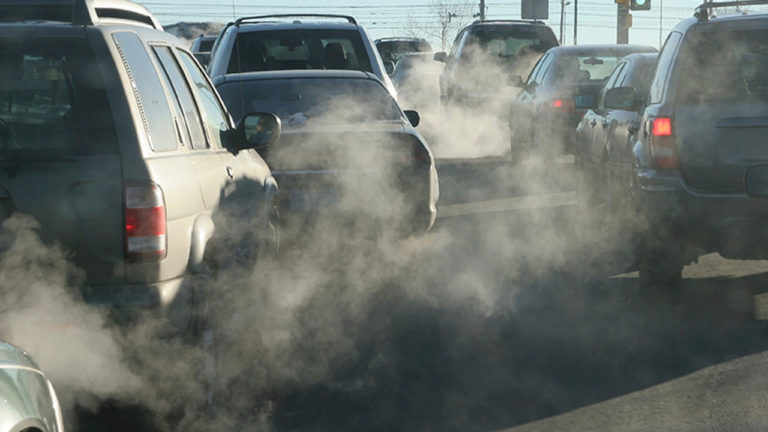
Air pollution causes more than 400,000 premature deaths across Europe annually, the European Court of Auditors (ECA) said on Tuesday, September 11, 2018.
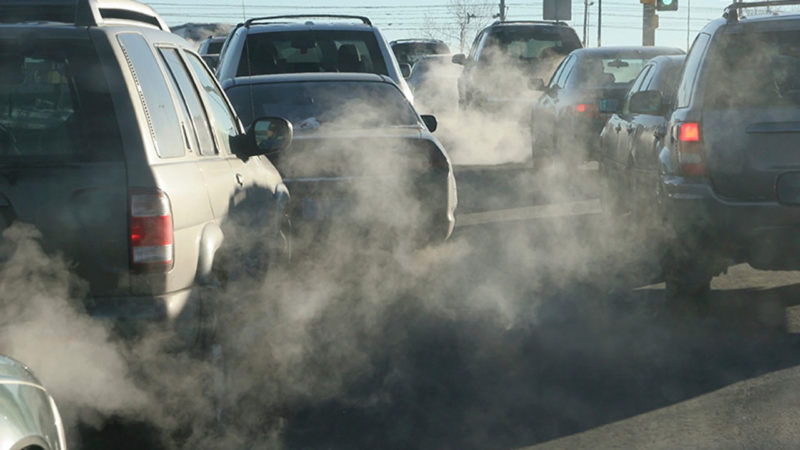
Vehicular pollution
EU action on improving air quality is falling short on implementation, monitoring and enforcement, the report added.
These shortfalls have major human and economic repercussions, including about 400,000 premature deaths a year, according to a new ECA report.
“Air pollution is the biggest environmental risk to health in the EU,” Janusz Wojciechowski, the ECA member, who led the report, said in a statement.
“In recent decades, EU policies have contributed to emission reductions, but air quality has not improved at the same rate and there are still considerable impacts on public health,” he added.
The report comes as EU air-quality rules are getting more scrutiny.
In Germany, some cities have imposed bans on diesel-vehicle use to lower nitrogen oxide levels.
In February 2017, a Constitutional Court decision gave German cities the green light to impose such measures, as more and more have been breaching EU levels.
In this most recent report, auditors studied the EU’s 2008 directive on ambient air quality to see whether and how much member states are complying.
They found that policy compliance and enforcement, as well as national estimates of air quality, are often inconsistent across the EU.
More broadly, air quality standards have not been updated over the course of 20 years.
The report also noted that poor air quality is most severe in eastern EU member states, in cities, and in areas where consumers still use solid fuel for heating and other energy needs.
The UN says Africa is the worst hit region with climate change resulting to the biggest impact on acute food insecurity and women are more vulnerable.
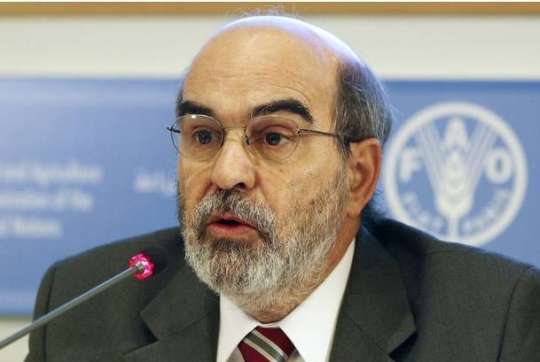
Jose Graziano da Silva, Director General of the FAO
The Food and Agriculture Organisation (FAO) made this known in the 2018 global report on the State of Food Security and Nutrition released on Tuesday, September 11, 2018 in Rome, Italy and made available to the News Agency of Nigeria (NAN) in Abuja.
The report was jointly signed by five head of UN agencies.
They are José da Silva, Director-General, FAO; Gilbert Houngbo, President International Fund for Agricultural Development (IFAD); Tedros Ghebreyesus, Director-General, World Health Organisation (WHO); Henrietta Fore, Executive Director of UNICEF; and David Beasley, Executive Director, World Food Programme (WFP).
The report said that climate change had affected 59 million people in 24 countries and requiring urgent humanitarian action.
It identified the effects of climate variability on rainfall patterns and agricultural seasons, and climate extremes such as droughts and floods, as the key drivers of the rise in hunger, conflict and economic slowdowns.
The UN agencies noted that changes in climate were already undermining production of major crops such as wheat, rice and maize in tropical and temperate regions.
It said that without building climate resilience, the situation was expected to worsen as temperatures increased and became more extreme.
The report showed that the prevalence and number of undernourished people tended to be higher in countries highly exposed to climate extremes.
It said that undernourishment was higher again when exposure to climate extremes was compounded by a high proportion of the population depending on agricultural systems that were highly sensitive to rainfall and temperature variability.
It said that the rising of temperatures, the late or early start of rainy seasons and the unequal distribution of rainfall within a season were affecting food production.
“Other effects include food price hikes and losses in poor farmers’ incomes.
“Temperature anomalies over agricultural cropping areas continued to be higher than the long-term mean throughout 2011 to 2016, leading to more frequent spells of extreme heat in the last five years.
“The nature of rainfall seasons is also changing, such as the late or early start of rainy seasons and the unequal distribution of rainfall within a season,’’ it said.
It indicated that harm to agricultural production contributed to shortfalls in food availability, with knock-on effects causing food price hikes and income losses that reduce people’s access to food.
The UN report noted that women worldwide were especially vulnerable to the impact of climate extremes, particularly in countries where even a semblance of gender parity remained a distance dream.
The report said that the adverse effect of climate change was being felt in many areas that included agriculture, food security, biodiversity and ecosystems, water resources and human health amongst others.
It noted that in many of these contexts, women were more vulnerable to the effects of climate change than men, primarily as they constituted the majority of the world’s poor and were more dependent for their livelihood on natural resources threatened by climate change.
“Women faced social, economic and political barriers that limited their coping capacity.
“Women and men in rural areas in developing countries are especially vulnerable when they are highly dependent on local natural resources for their livelihood,’’ it said.
An environmental group, “Let’s Do It! Nigeria”, says it is set to stage a massive action to commemorate September 15, 2018 World Cleanup Day in 27 locations across the country.
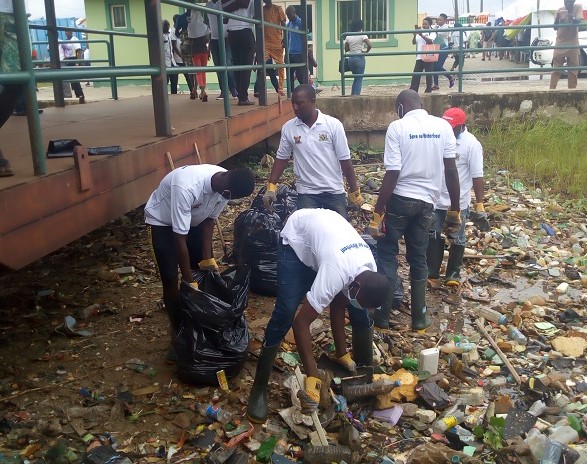
Clean-up of the Ibeshe Waterfront
A Director in Let’s Do it! Nigeria, Mr Gafar Olorunleke, told the News Agency of Nigeria (NAN) on Tuesday, September 11 that the group had the mandate and vision for a waste-free Nigeria.
Olorunleke, an environmentalist, said that it had team leads across Nigeria’s 36 states and the Federal Capital Territory with over 5,000 team members who had connected with over 10,000 volunteers who were ready to execute the biggest cleanup action in the country.
He called on Nigerians to come out in their numbers to commemorate the Sept. 15 World Cleanup Day.
“We urge Nigerians to show support for the environment and come out to clean their communities on that day.
“Trash blindness is the single biggest obstacle to creating cleaner communities which is aided by our attitude toward wastes.
“Nigerians have grown so accustomed to trash that we no longer notice it nor acknowledge that waste is actually a resource and not trash,” the environmentalist said.
According to him, the group is aiming at uniting sectors across the country for a waste-free Nigeria by 2030.
“This year will witness the biggest civic action in history where Let’s Do it! Nigeria and partners will join 150 other countries of the world for World Cleanup Day on Sept. 15, 2018.
“We have a huge network of volunteers who are inspired to have a clean environment and our goal is to unite every sector of the society for a waste-free Nigeria by 2030,” he told NAN.
Olorunleke said that the group’s mandate aimed at fostering proper waste management among Nigerians and the implication of Trash Blindness on the environment.
“Our aim is to inspire Nigerians toward positive mindsets on waste management by engaging key stakeholders on achieving circular economy.
“We will unite five per cent of the country’s population for the biggest civic action in history on World Cleanup Day.”
NAN reports that the ACT Foundation, various states environment ministries and civil society organisations are partnering with Let’s do it! Nigeria to commemorate the World Cleanup Day.
The World Cleanup Day began in Estonia in 2008 when 50,000 people united to clean up the entire country in just five hours.
The World Cleanup Day is currently being celebrated in over 150 countries of the world.
The theme of previous observance of the Ozone Day on every September 16, particularly that of 2017, “Caring for all life under the sun’’, has clearly stated importance of the ozone layer to the life on earth.
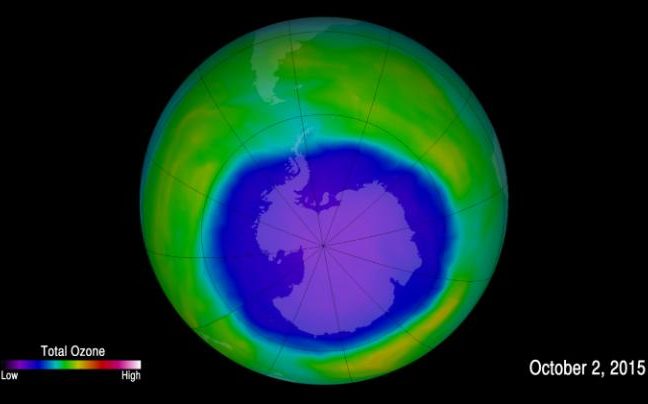
The hole in the ozone layer has shrunk by more than 1.7 million square miles since 2,000, according to scientists. Photo credit: NASA GODDARD
Scientists posit that the layer was formed in the atmosphere around five hundred million years ago when it accumulated enough of the oxygen because of the photosynthesis to protect life under the sun.
Some scientists also observe that the theme of the 2018 Ozone Day – Keep Cool and Carry on: Montreal Protocol – is apt as a follow-up campaign in sensitising the world to the need for moderating human activities to protect the ozone layer.
Observers note that the sensitisation will be useful in that regard since the scientists have proved beyond doubt that ozone layer depletion – the wearing out of the amount of ozone in the stratosphere – is caused by human activity.
Scientists also argued that high above the ground, between 15 kilometres and 30 kilometres, lays a thin layer of ozone that absorbs direct sunlight to protect everything and everyone on the ground from exposure to the harmful direct sun radiation.
According to their findings, industries that manufacture goods such as insulating foams, solvents, soaps, air conditioners, refrigerators and some food containers emit chlorofluorocarbons (CFCs) that later store up in the stratosphere to affect the layer.
They argue further that human-produced chemicals are responsible for the observed depletions of the ozone layer.
In his view, Mr Abayomi Oguntunde, Director of Bio-resource, Federal Ministry of Science and Technology, observes that human activities that involve the emission of fluorine, bromine, chlorine, carbon and hydrogen among others, can deplete the ozone layer.
The director said that knowing how to prevent ozone layer was important to save lives and secure clear atmosphere.
He suggested an energy efficient model when buying a refrigerator, pointing out that less CFCs would be released when fridge wear out.
“Ensure your car’s air conditioner is carefully serviced; go to a service station designed to recycle the refrigerant, otherwise, the CFCs will be vented into the atmosphere.
“Don’t use foam plastic insulation in your home, unless it is made with ozone safe agents; use fiberglass, gypsum, fiberboard, or cellulose insulation instead and don’t buy a halon fire extinguisher for home use.
“Check directions on what to do with aerosol cans; video head cleaners, boat horns, spray confetti, photo negative cleaners and drain plungers,’’ he advises.
Similarly, Prof. Babatunde Rabiu, Director Centre for Atmospheric Research of the National Space Research and Development Agency, pleads with the Federal Government to implement acts that are designed to protect the environment.
He said that diverse anthropogenic activities have contributed to the pollution of the environment, including the depletion of the ozone layer.
He explained further that the ozone layer is a region of the atmosphere that surrounds the earth and contains a particular gas known as ozone.
According to him, fossil fuel vehicles, bush burning, gas emissions especially from heavy industrial areas are all factors that pollute the environment and the loss of the ozone layer.
Rabiu said that the sun continues to emit radiation from time immemorial but human activities and technological advancement have continued to affect the ozone layer.
“Some of the gases that emitted on earth by our anthropogenic activities, human activities and incomplete combustions, affect the ozone layer.
“When these gases get to the top, they react with ozone gases and convert ozone molecules to ordinary oxygen and they are radicalised.
“When this happens, we lose the concentration of ozone in the atmosphere and so the protection that ozone offers the earth will begin to lose its value at that level.
“This is why the region is very important to us; it is a natural region in the atmosphere that protects the earth from receiving direct radiation which comes from the sun.
“We have to start thinking of the eradication of vehicles with incomplete combustion, indiscriminate burning of tyres and bush should also be stopped.
“Gas flaring has to be stopped in the Niger-Delta region, the use of stove for cooking has to reduce, the government needs to come in and see how they can reduce usage of firewood for cooking,’’ he said.
He observes that direct radiation of the sun on the earth could be harmful to humans which could lead to tanning of the skin and aid skin cancer.
Rabiu further insists that the government and stakeholders in the environment sector have the responsibility of sensitising the public to the need to protect the environment.
He says that that there is a need for the country to consider a ban on fossil fuel cars with incomplete combustion as it is being considered in some developed countries.
But Mrs Adenike Aluko, a public health officer in Osun, calls on the Federal Government to invest more on the development of renewable energy technology to further reduce the effect of climate change.
According to her, the use of alternative energy, such as wind, solar and geo-thermal energy is healthier than fossil fuels because of the emission of carbon monoxide to the environment.
“Investing in renewable energy technology would be a right step in achieving Sustainable Development Goals.
“Scientific knowledge allows people to develop new technologies, solve practical problems and make informed decisions.
Aluko further urged well-meaning Nigerians to partner the government in ensuring steady funding of research on new measures to mitigate the impact of climate change.
“Without proper funding, science and technology sector cannot progress and such funding ultimately comes from the society that will reap its benefits,’’ he said.
The world agreed in Montreal in 1987 to do something about the depletion of the ozone layer and in 1994, the UN General Assembly proclaimed September 16 of every year to be the International Day for the Preservation of the Ozone layer.
Scientists have also, recently, announced that the ozone hole, which has been growing since it was discovered in 1985, may have started to shrink.
According to them, if the actions of humans have brought about an ozone layer healing, the international community has proven that it can solve serious environmental problems when everyone works together.
By Gabriel Agbeja and Ijeoma Olorunfemi, News Agency of Nigeria (NAN)
Flood submerged no less than 1,000 residential houses in Etsako Central Local Government Area of Edo following a heavy down pour in the area on Monday, September 11, 2018.
Governor Godwin Obaseki of Edo State
Hectares of farmland with cash crops and property worth millions of naira were also destroyed.
The affected produce included cassava, yam, maize, groundnuts, plantain, among others.
The communities affected are: Anegbette, Udaba, Osomegbe, Ugochi, Ofukpo, Agbaburu and Ifeko.
Some of the victims, who spoke with NAN, blamed the flood on the surge of River Niger.
The Village Head of Udaba, Chief David Inetape, expressed shock over the incident, saying that the entire communities were now flooded.
“With heavy rainfall, the situation is now having negative effects in our communities.
“We are appealing to the Federal and state governments for help,’’ Inetape said.
One of the victims, Mr Benjamin Eyiekioya, told NAN that he lost his entire property to the flood.
“The flood has wreaked havoc on our buildings; as you can see, our houses have been submerged by the flood.
“We are appealing to the relevant authorities to come to our aid,’’ Eyiekioya said.
Another victim, Mrs Rose Akinabor, said that she lost all her farm produce to the flood.
“I invested a lot of my time and finances in cultivating my farm and I am now worried that just at about harvest time, most of my crops have been washed away by the flood,’’ she said.
Mr Aliu Afomede, said he lost millions of naira worth of farm produce to the flood.
“I invested millions of naira on this farm, this year.
“As you can see, this farmland which I rely on for my daily bread is now washed away by the flood,’’ he said.
The Vice Chairman of the Local Government, Mr Ambrose Akhigbe, said the council had commenced the clean-up of the Federal Government’s resettlement camp in Oghomere with the aim of relocating the flood victims to the area.
“The council is doing all it can to relocate the victims after proper cleaning of the buildings and fumigation are completed.
“We are going to the affected communities with speed boats to evacuate them and we have reached out to relevant agencies to provide relief materials to the camp for the affected victims.
“As you can see, the borehole is set and the rooms have been tidied up to ensure that it is conducive.
“We shall also bring a very big generating set to ensure regular power supply in the camp so that the displaced persons can feel at home,’’ he said.