Argentina on Friday, September 21, 2018 launched a new microwave imaging satellite to monitor natural disasters and soil moisture, in a long-term bid to bolster the farm sector.
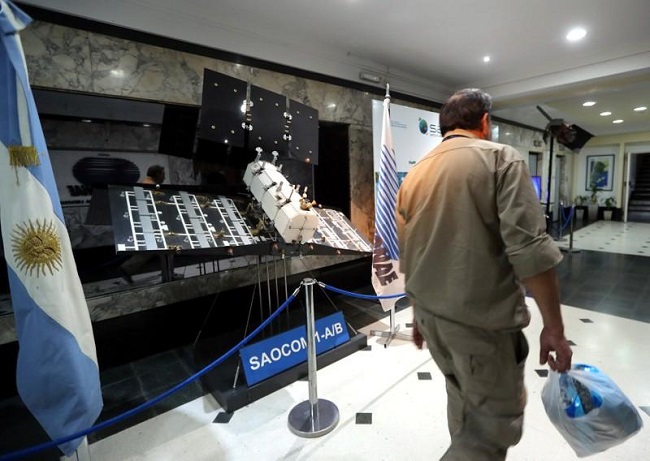
A man walks past a scaled-down replica of the SAOCOM 1-A/B satellite on display at Argentina’s space agency CONAE in Buenos Aires, Argentina September 20, 2018. Photo credit: REUTERS/Marcos Brindicci
Agriculture is an industry that has historically been the backbone of the country’s economy.
Scheduled to launch on a SpaceX Falcon rocket from Vandenberg Air Force Base in California on Oct. 6, Argentina’s SAOCOM 1a satellite “is going to boost the high-quality precision agriculture Argentina relies on,” President Mauricio Macri told farmers and industry representatives last week.
Scientists say the soil and subsurface mapping data provided by the $600 million project would help increase crop yields.
The radar antennae technology will allow Argentina to access a real time “water map”, almost unique in the world, which will allow for prediction of harvest yields, floods, and droughts, the government said.
Argentina’s already-struggling economy has suffered a series of setbacks since Macri took power, led by a drought that sapped grain exports earlier this year.
It was a sharp devaluation of its peso currency that prompted the government to seek a $50 billion standby financing deal with the International Monetary Fund.
The government announced earlier this month it would institute fiscal belt-tightening measures, including a tax on the country’s primary exports like corn, wheat, and soy.
“This mission will be incredibly valuable to the country’s farmers.
“We are hoping that the information will provide a five to seven dollars return on every dollar invested,” said Raul Kulichevsky, Executive and Technical Director for Argentina’s National Space Activities Commission (CONAE).
While Argentina’s previous satellites have relied on optical surveying, scientists say the SAOCOM mission will provide precision X-ray and microwave imaging across Argentina’s grain-producing plains, regardless of weather or time of day.
“This technology is novel and has never before been used in Argentina. It is the product of 10 years of research,” Head Researcher on the SAOCOM mission, Laura Frulla, said in an interview.
But the project will not provide much help to Argentina’s cash-strapped economy in the short-term, according to analysts.
“Farmers depend on these satellites to ensure good crop yields.
However, given that this won’t become operative until June 2019, there is little it can do to help Argentina’s current economic situation,” said German Heinzenknecht, weather specialist at the Applied Climate Consultancy.
The Nigeria Youth SDGs Network will host a roadshow in Abuja on Tuesday, September 25, 2018 to mark the third anniversary of the United Nations’ Sustainable Development Goals (SDGs) as part of the global #Act4SDGs activities.
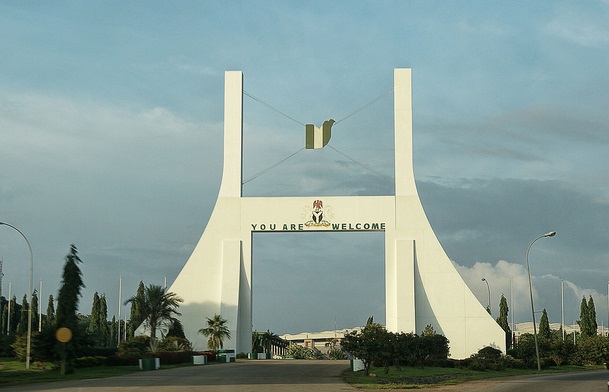
The Abuja city gate: Abuja is hosting a roadshow to celebrate the third anniversary of the SDGs
Believed to be the country’s foremost youth-dominated SDGs coalition, the Nigerian Youth SDGs Network, under the chairmanship of Semiye Michael, will bring individuals representing different organisations together for an Act4SDGs Roadshow to raise awareness on the SDGs and get more young people to understand and be committed to implementing the global goals in Nigeria.
Speaking ahead of the Roadshow, ‘Seyifunmi Adebote, the coalition’s Abuja representative, said: “The 17 goals are very ambitious; too ambitious for the government or international community alone to achieve. Other sectors must be brought into the picture to deliver their best. The legislatures, local governments, civil society organisations, media, businesses and entrepreneurs, scientists and academia and most importantly people themselves. Therefore, we have chosen to host this roadshow to spread the information about the SDGs and ensure no one is left behind.”
Carved from the Millennium Development Goals (MDGs), the SDGs were adopted unanimously by 193 Heads of State and other top leaders at a summit in New York in September 2015 to serve as a framework for the world to achieve 17 Goals and 169 targets by 2030.
“Thanks to the consistent efforts of young people across, Nigeria has improved on the global SDGs index in recent time, this has also truly reflected in some developments witness across the country,” said Adebote.
Global waste could grow by 70 per cent by 2050 as urbanisation and populations rise, said the World Bank.
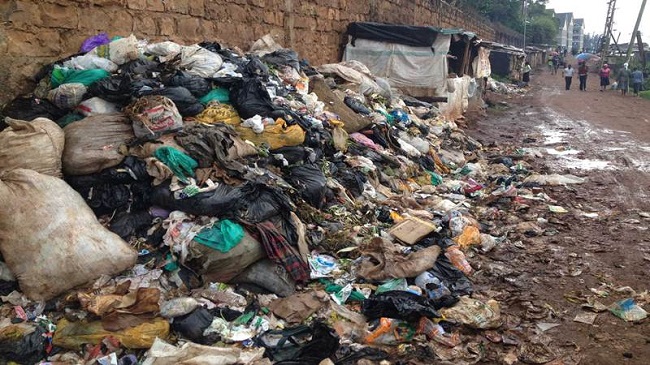
Indiscriminate waste disposal in sub-Saharan Africa
South Asia and sub-Saharan Africa are set to generate the biggest increase in rubbish.
Countries could reap economic and environmental benefits by better collecting, recycling and disposing of trash, according to a report.
The report calculated that a third of the world’s waste is instead dumped openly, with no treatment.
“We really need to pay attention to South Asia and Sub-Saharan Africa, as by 2050, South Asia’s waste will double, sub-Saharan Africa’s waste will triple,” said Silpa Kaza.
Kaza is World Bank urban development specialist and report lead author.
“If we don’t take any action it could have quite significant implications for health, productivity, environment, livelihoods,” she told the media by phone from Belarus.
According to the report, the rise in rubbish will outstrip population growth, reaching 3.4 billion tons by 2050 from around two billion tons in 2016.
High-income countries produce a third of the world’s waste, despite having only 16 per cent of world’s population, while a quarter comes from East Asia and the Pacific regions, it said.
While more than a third of waste globally ends up in landfill, over 90 per cent is dumped openly in lower income countries that often lack adequate disposal and treatment facilities, said the report.
A booming waste burden could also contribute to climate change impact, with the treatment and disposal of current waste levels generating around five per cent of carbon emissions.
Adequate financing for collection and disposal is one of the biggest issues for cities that often struggle to cover the costs of providing waste services, said Kaza.
“If the incentives are aligned and there’s an ability for contracts to be enforced, then the private sector can be a really powerful player,” she said.
Boosting recycling and cutting plastics consumption along with food waste could help reduce rubbish, said the report, which noted a number of low-income countries lack laws to deal with waste.
Plastics, which can contaminate waterways and ecosystems for thousands of years, comprise 12 per cent of all waste, the World Bank said.
“Unfortunately, it is often the poorest in society who are adversely impacted by inadequate waste management,” Laura Tuck, World Bank sustainable development vice president, said in a statement.
“It doesn’t have to be this way. Our resources need to be used and then reused continuously so that they don’t end up in landfills.
The World Rivers Day promotes stewardship, increases awareness and encourages river conservation across the globe, according to its promoters.
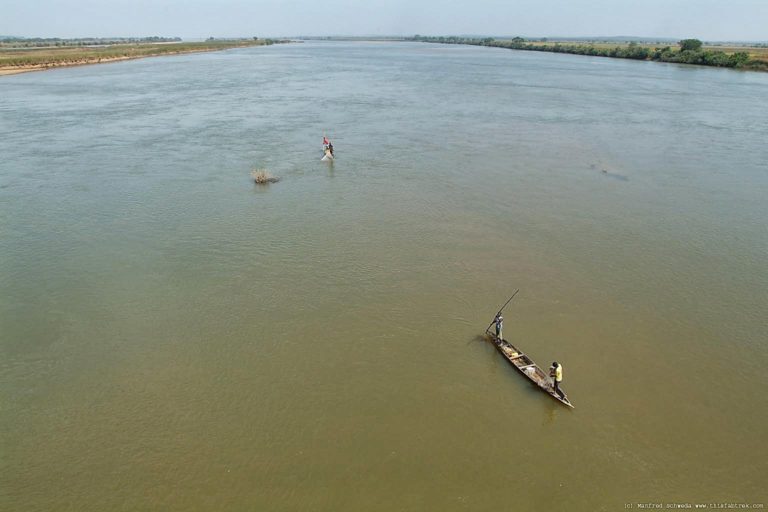
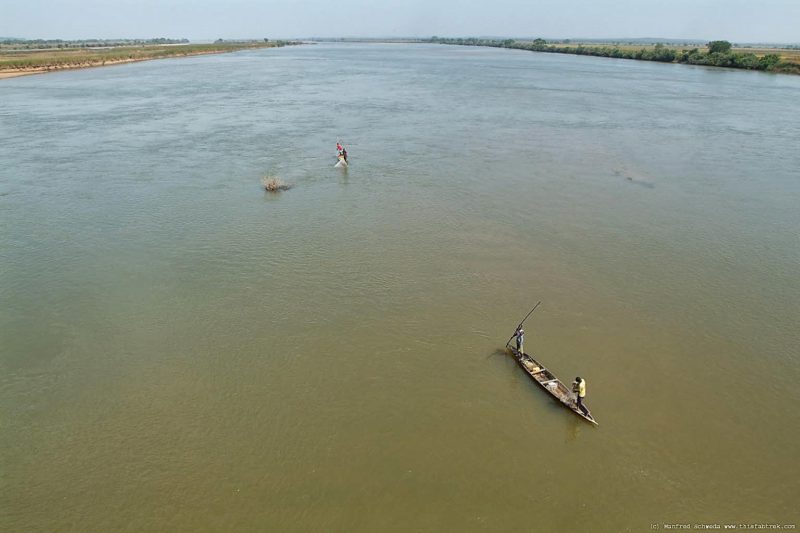
There are fears that the River Niger in West Africa is drying up. There are concerns that many of the world’s rivers face severe and increasing threats associated with climate change, pollution, and industrial development
Millions of people around the world will participate in the 2018 World Rivers Day on Sunday, September 23. With many of the world’s rivers facing increasing pressures associated with climate change, pollution, and industrial development, more than 70 countries are participating in this year’s festivities.
Numerous events around the world will focus on educational and public awareness activities while others will include river cleanups, habitat restoration projects, and community riverside celebrations. World Rivers Day has its roots in the success of BC Rivers Day, which has been celebrated for the past 38 years in Canada’s western-most province.
World Rivers Day strives to increase public awareness of the importance of waterways as well as the many threats confronting them.
“Rivers are integral to all life. Yet, many waterways continue to face an array of threats and are often impacted by inappropriate practices and inadequate protection,” says Mark Angelo, World Rivers Day Chair and Founder and Chair Emeritus of the Rivers Institute at the British Columbia Institute of Technology.
Endorsed in its inaugural year by the United Nations University and the International Network on Water, Environment and Health, and with groups such as the Sitka Foundation as lead sponsor along with the support of others such as the Real Estate Foundation of BC and the Pacific Salmon Foundation, World Rivers Day events will take place in countries ranging from Canada to England, the United States to India, Australia to Bangladesh, Nigeria to Malaysia, and from the Caribbean to the great rivers of Europe.
“Millions of people, dozens of countries, and numerous international organizations will be contributing to World Rivers Day,” says Angelo. “It provides a great opportunity for people to get out and enjoy our waterways. At the same time, the event strives to create a greater awareness of the urgent need to better care for our rivers and streams.”
Robert Sandford, EPCOR Chair of Water Security at United Nations University, and an internationally recognised expert on scarcity and conservation issues, says, “World Rivers Day is rightfully acknowledged and hailed for its global effort to increase awareness of the vital importance of our water resources and the need to properly protect and steward them in the face of mounting pressures.”
Through its first decade, World Rivers Day complimented the UN’s Water for Life Decade and continues to do so as part of the UN’s current Water Action Decade. In addition, groups such as the United Nations University and the International Network on Water, Environment and Health remain valued supporters.
Angelo, a recipient of the Order of Canada, his country’s highest honour, as well as the inaugural recipient of a United Nations Stewardship Award for Science, Education and Conservation, initially founded BC Rivers Day in British Columbia back in 1980 in conjunction with the Outdoor Recreation Council of BC. He then successfully lobbied numerous organisations as well as agencies of the UN to recognise World Rivers Day in 2005.
As the UN-mandated discussions on loss and damage were concluded on Friday, September 21, 2018 in Bonn, experts are weighing in on the outcome and what needs to happen next at the COP24 in Katowice, Poland.
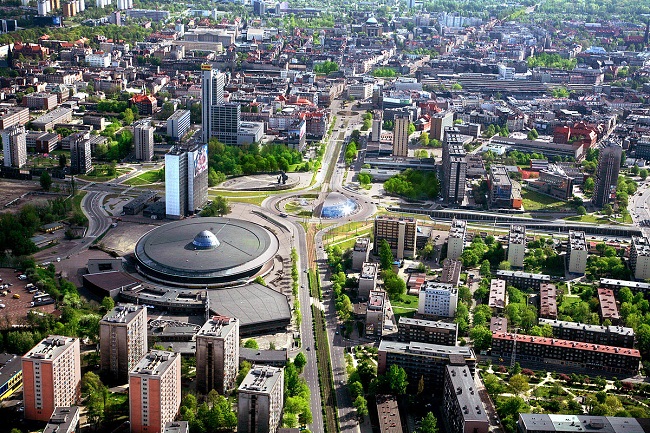
The Polish city of Katowice is hosting the UNFCCC COP24 in December 2018
Amidst the devastating storms in the Philippines, China and the USA, floods in Nigeria, India and record temperatures in many parts of the world, the United Nations body to address climate change impacts met in Bonn. The meeting addressed proposed recommendations for climate change displacement and undertook intense discussions on the scope of an important report on finance for loss and damage, amongst other issues. Civil society representatives present at the meeting were dismayed by a continued lack of progress due to blocking from rich countries on key issues.
The Warsaw International Mechanism for Loss and Damage (WIM) is due to celebrate its fifth anniversary which lends itself to the question “what has the WIM achieved in the last five years?” As the upcoming climate summit (COP24) will again be held in Poland, it is time for the country where the loss and damage mechanism began, to take responsibility for putting it back on track.
Climate change displacement
The meeting dealt with the findings of a year-long process mandated in 2015 at Paris to identify ways to help people displaced by climate change – whether it be people forced to move by increasingly violent storms, as we see in the Philippines, extreme floods like in Nigeria or people forced to move longer term by extreme droughts. The Task Force on Displacement, composed of a number of experts from the field of displacement, compiled a set of recommendations addressing the UN climate process, governments, UN agencies and others.
Sven Harmeling, Global Policy Lead on Climate Change and Resilience, comments: “The work of the Task Force on Displacement is the most comprehensive output on climate-related displacement under the UN climate process so far, and therefore also raises the bar for countries to take this matter seriously. Unfortunately, in three regards it fell far short from what is needed of meeting the needs of displaced people and at-risk communities.
“First, it misses to highlight the need to promote gender equality in actions to address displacement, despite human rights references which CARE welcomes. Second, it fails to highlight clearly the absolute need to get down with carbon emissions to limit global warming as an exacerbating factor. And third, it is almost silent on the matter of financial support to assist poor affected countries in dealing with displacement in a rights-based manner, and how developed countries and other contributors should scale up finance. Some developed countries have further resisted any meaningful discussion on raising support at the ExCom meeting.”
Harjeet Singh, Global Lead on Climate Change for ActionAid, says: “While the UN committee acknowledged the rising challenge of climate induced migration, it failed to commit to concrete actions that will help the affected people. The whole world is facing unprecedented climate impacts and the urgent support is required by poor people in developing nations who are being forced out of their homes.”
Finance for loss and damage
The vulnerable people and countries facing the worst impacts of climate change urgently need more finance to help them to cope. A recent report showed that the majority of costs of loss and damage are paid by poor people and countries, including the example of Hurricane Maria, which decimated Dominica a year ago, and where only 23% of the loss and damage from the storm was provided in various forms of finance.
The loss and damage mechanism has an objective to mobilise finance for loss and damage – and it has been widely criticised for not meeting this objective.
“Even after five years of its existence, the committee has little to show in terms of providing money to the ones displaced by climate disasters. Rich countries continue to delay and obfuscate to stop vulnerable people getting the financial support they need to put their life back together after the disaster,” Singh adds.
At the meeting the Executive Committee was charged with agreeing an outline for a technical paper on finance for loss and damage. The paper was originally commissioned by the climate summit in Marrakesh in 2016 (COP22) to inform the review of the loss and damage mechanism scheduled for the end of 2019. Unfortunately, this initial preparation for the paper followed traditional lines – with rich countries blocking progress on including a genuine attempt to assess what finance is needed, and where such finance might be generated from.
“This technical paper was an opportunity to have an honest assessment of how much finance is needed by vulnerable people on the front line of climate impacts, and constructively consider new ways to generate this finance – like a Climate Damages Tax on the fossil fuel industry that is responsible for the majority of climate change,” notes Julie-Anne Richards, an independent civil society expert present at the meeting.
She adds: “However, rich country delegates pushed through a plan for a smoke and mirrors report to make themselves look good. They are eager to double count all of their existing aid finance as climate adaptation finance and now it seems they want to triple count it as loss and damage finance, without any plan as to how to actually increase finance and help those suffering the worst impacts of climate change.”
Next Steps
Next month the Intergovernmental Panel on Climate Change (IPCC) will report on 1.5oC of warming – the severe impacts of which should provide momentum to the climate summit in Poland in December – offering the impetus to countries to reset the perspective on addressing loss and damage.
At the December Climate Summit, governments will have the opportunity to set the scene for the review of the loss and damage mechanism in 2019 and agree stronger recommendations to address climate displacement and provide finance for vulnerable people who are being increasingly hammered by extreme climate impacts.
Building on the success of previous editions of Barcelona Resilience Week (2015 and 2016) that fostered dialogue between technical and political representatives, the 2018 edition will push forward action to achieve the vision for sustainable and resilient cities set out in the 2030 Agenda.
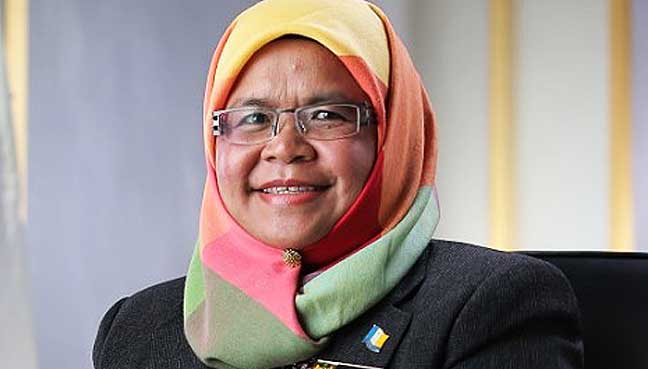
Maimunah Mohd Sharif, Executive Director of the UN-Habitat
Organised by the United Nations Human Settlements Programme (UN-Habitat), the 2018 Barcelona Resilience Week, scheduled to hold from November 11 to 16, 2018 will create a common space to bring together partners and stakeholders from across the globe working on resilience and advance awareness, knowledge and action.
According to the UN-Habitat, a variety of interactive sessions, workshops and dialogues will cover topics such as Climate Action and Resilience; Upgrading Informality Towards Resilience; Governance, Decentralisation and Resilience; Social Resilience; and Humanitarian Urban Crises.
Julia Linares of the UN-Habitat Urban Resilience Programme disclosed in a statement: “Activities and initiatives that are making our cities more resilient and strengthening the development and humanitarian agendas from across the world will be showcased in Barcelona during this week. Key international actors, together with city representatives, governments, NGOs and innovators will discuss how they are addressing urban challenges to implement the Sustainable Development Goals, New Urban Agenda, Sendai Framework for Disaster Risk Reduction and Paris Agreement during the week.
“The cities implementing DRR and resilience tools under the Making Cities Sustainable and Resilient initiative, financed by the European Commission DEVCO, will also be present to share progress on their work.”
She added that the Smart City Expo World Congress and C40 Regional Meeting would be held in Barcelona during the week and “will bring a wide array of profiles to the city and to the Barcelona Resilience Week dialogues”.
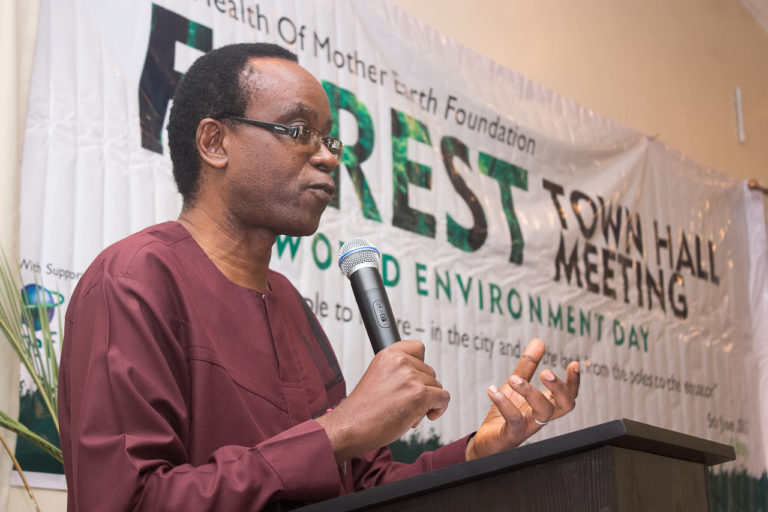
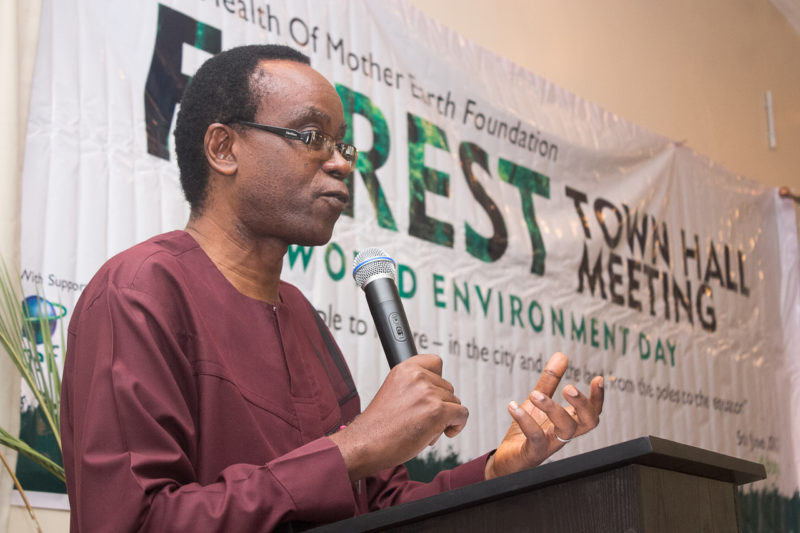
Nnimmo Bassey, director, Health of Mother Earth Foundation (HOMEF), in a presentation at the Farmers’ Dialogue themed: “Promoting Biosafety in Nigeria” held in Benin City, Edo State, on Friday, September 21, 2018, stresses that, because small-scale farmers feed the world, they matter and must be listened to
Nnimmo Bassey
Farmers feed the world. This is an incontrovertible fact. Small scale or family farmers feed the world. This is another incontrovertible fact. This second fact is unfortunately often overlooked. The willful rejection of the truth that small-scale farmers feed the world has persisted because accepting the truth would compel policy makers to refocus attention where it matters rather than pumping resources into industrial farming that create ecological and social economic problems and is vastly inefficient when outputs are compared to inputs. We say this because small scale farmers use 30% of arable land and resources and feed 70% of the population while the exact reverse is the case with industrial farming.
Scare tactics of ever-growing population has been used as an excuse to force the diversion of public funds into private industrial agriculture as well as the introduction of genetically engineered crops into Africa and other parts of the world. Again, the fact that the world currently produces enough food to feed almost double the current population is ignored in the conversations.
For Nigeria, our country, we are told that we will have the third largest population by 2050, surpassing the United States of America (USA) among others. In fact, the United Nations projects that the population growth rate in Africa will “at least double” by 2050. Lineal population growth may be possible if African countries do not improve on social indices and if disease, poverty and illiteracy persist. It is time to re-examine the statistical basis of Nigeria’s population otherwise the shame will be on us when we become the most populous nation on earth and the people cannot be found!
Another fact that begs for acceptance is that people are not hungry because there is no food in the world. About 30 percent of food goes to waste. In addition, industrial farming thrives on monocultures and is the major supplier of feedstock, as expected, for industrial processes. The assertion that people are not hungry due to lack of food in the market is also buttressed that most of the people that go to bed hungry are actually farmers. This happens because farmers have to sell their produce so as to meet family needs – such as housing, medicals, transportation and school needs of their children.
Farmer to farmer exchanges are vital for the sharing of ideas, farming practices and ways for preserving seeds and our overall biodiversity. Meeting to have dialogues between farmers provides a platform to diagnose the challenges facing small holder farmers as they struggle to meet the food requirements of the population.
Dialogue spaces also provide platforms for examining the quality of seeds available to farmers and the special threats posed by opening of the flood gates to genetically engineered crops into Nigeria.
We continue to demand for a radical revision of the National Biosafety Management Agency (NBMA) Act 2015 and the installation of a neutral Biosafety Regulatory Agency that is totally different from the extremely pro-GMO one currently in place. In fact, today it is hard to distinguish NBMA from National Biotechnology Development Agency (NABDA) – an agency expressly set up to promote GMOs even before any biosafety law was in place in the country. We are experts at putting the truck ahead of the truck pusher and once on the wrong path we stubbornly refuse to step back, except in rare cases like that of our Nigeria Air.
Today, respectable research institutions have bought into the GMO train making it difficult for farmers to know when they are being sold genetically modified cassava, beans or maize. Even if farmers were to know that they are being sold suspect seeds, once the seeds get into the food market, consumers have no way of knowing what is being sold to them. There is no way anyone will label akara, moi moi, ogi, eba or similar foods made from genetically modified seeds. In other words, Nigerians are on the wrong bus already.
Concerned medical doctors and religious bodies and consumer groups have expressed reservations over the pollution of our seeds and foods. The agencies responsible continue to push on in utter contempt of these concerns.
We will proceed to dissect, debate and consider the risks to our health and biodiversity, not just for our sake but for the sake of generations yet unborn. We are concerned that unproven assertions are presented as truths by GMO promoting agencies in total disregard of the globally increasing call for ban of cancer-causing herbicides that are already in our markets and will be more extensively used in the cultivation of crops genetically modified to withstand them.
Today we assure our farmers that you have strong allies in the GMO-Free Nigeria Alliance and that the struggle to ensure that technofixes are not presented as cure-all in our agricultural sector. We will stand with you and demand justice for us all. Together we will demand rural infrastructure, storage and processing facilities for farm produce as well as provision of extension officers to share knowledge on agroecological methods of agriculture that is in line with our practices developed over the millennia and is not tied to the apron strings of institutions that are patently neocolonial and unpatriotic.
The Otuoke-Onuebum Road in Ogbia Local Government Area of Bayelsa State has been taken over by flood, as vehicles now pass through Elebele Road, a longer distance, the News Agency of Nigeria (NAN) reports.
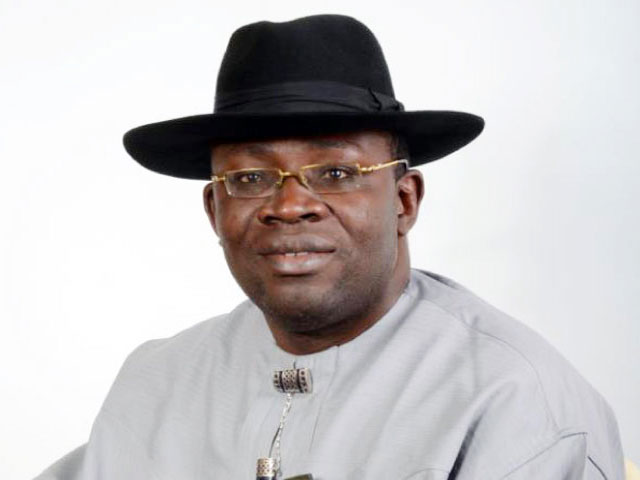
Seriake Henry Dickson, Governor of Bayelsa State
NAN reports that Otuoke is the home town of former president, Dr. Goodluck Jonathan.
A staff of the Federal University Otuoke (FUO), Mr Clever Ogbodi, told NAN in Otuoke on Friday, September 21, 2018 that passengers were paying N400 instead of N250 from Otuoke to Yenagoa, the state capital.
Ogbogi appealed to the Bayelsa government to come to the aid of the community for the sake of FUO students, who are directly affected.
“This was how it happened in October 2012 when flood took over the whole community; Up till now, there is no proper preventive measure put in place by government.
“We are expecting the government to come up with necessary measures to mitigate future occurrence, but it is a matter of regret that such measures are not in place.
“I am calling on all relevant authorities to look into the matter because we cannot be experiencing this terrible situation every year,” he said.
Also commenting, Mr Azibator Omonibo, a passenger, wondered why the situation remained the same even after the intervention fund that was given to the state in 2012 to tackle it.
Omonibo expressed concern over the suffering of the people and urged the government to live up to its responsibility of preventing flooding and rehabilitate the road.
A taxi driver plying the road, Mr Kalawole Adebutu, said that the road was already in a bad shape before the flooding.
He appealed to the Federal Government to assist the people of Bayelsa as the state government was unable to find a lasting solution to the problem.
Adebutu said that the youth in the community were the ones sandfilling the road, adding that commercial drivers were paying them from their little profit.
An agricultural expert, Mr Tunji Owoeye, on Friday, September 21, 2018 urged the government to provide an enabling environment to attract potential investors to invest in agricultural waste-to-wealth projects.
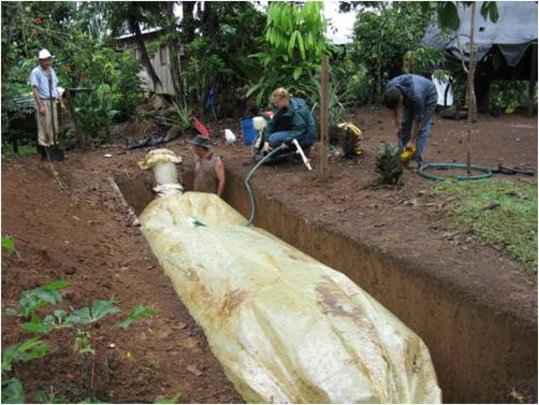
From farm waste to renewable energy
Owoeye, who is the Managing Director, Elephant Group Plc., made this call in an interview with News Agency of Nigeria (NAN) in Lagos.
He noted that a lot of agricultural waste could be converted into useful products via money-spinning ventures if potential investors were sure of getting good returns on their investment.
“Investors are looking for an enabling environment that could safeguard their investments in any sector.
“For investors to be attracted to invest in agricultural waste conversion projects, they want to be assured of the viability of their investment.
“For instance, waste generated from rice production can be used for so many things like generating electricity and producing rice oil, among others.
“Besides, a lot of things could be done with the waste generated from over 100 agricultural produce that we have but there has to be some protection and encouragement for any investment in those areas.
“Investors can come in once they are sure of getting value for their money in such ventures.
“If there are enlightenment activities on the opportunities existing in such ventures and the protectionist policies put in place, it will be easier to get more investors interested in the conversion of agricultural waste into wealth,’’ he said.
Owoeye said that the protectionist policies could be in the form of tax relief for pioneer companies, among others, adding that the policies would go a long way to encourage potential investors to set up agricultural waste conversion projects.
“This is because before taking critical decisions on investing in agricultural waste conversion projects, entrepreneurs would want to look at for the political environment as well as the stability and sustainability of the investment.
“If they harbour some doubts on the sustainability of the investment, it would be difficult for them to go on and invest in such ventures,’’ he said.
Owoeye said that agricultural waste recycling projects were currently undertaken at minor levels, adding, however, that the government should provide an environment that was conducive to the establishment of commercial waste conversion projects.
New diesel and petrol sales need to be stopped by 2030 to ensure that the Paris Agreement targets are met.
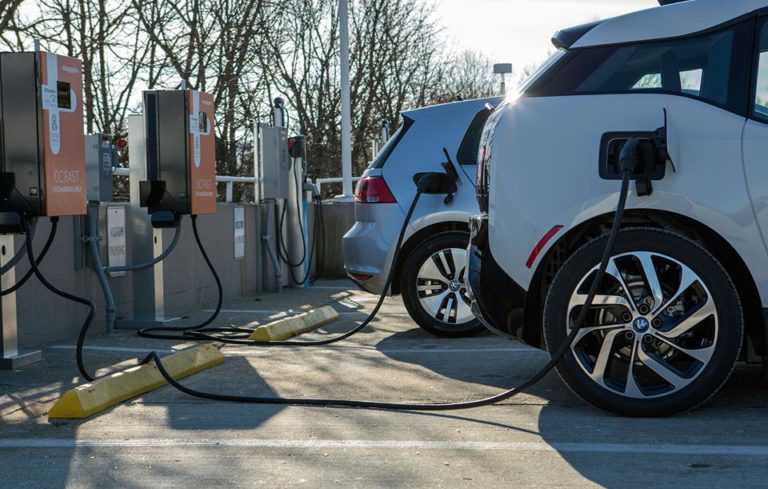
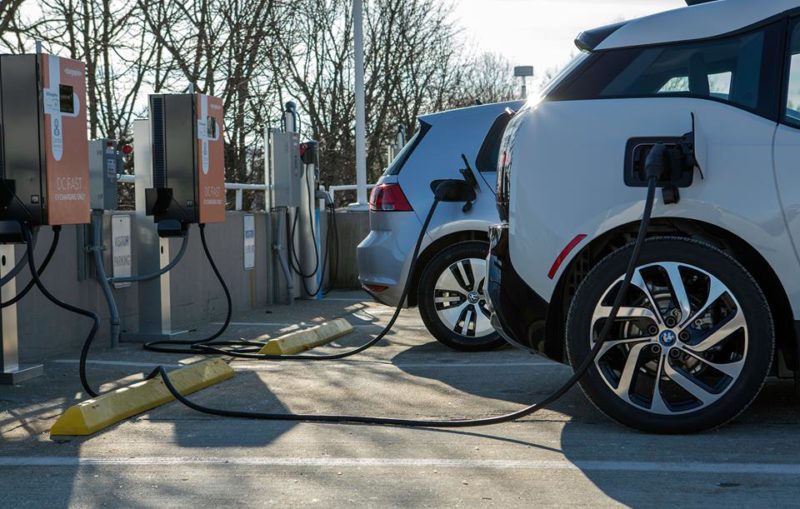
Electric vehicles will replace petrol and diesel cars
The UK announced in 2017 that it aima to ban all sales of new petrol and diesel cars by 2040. But a new report, commissioned by Greenpeace Belgium and conducted by German Aerospace Centre, has shown that this deadline needs to be brought forward if the EU wants to keep its commitment to the Paris Agreement.
Norway has set their target at 2025, and Ireland and the Netherlands have agreed to ban sales by 2030.
The Paris treaty set a carbon budget to limit the increase in mean global temperature to 1.5 degrees Celsius. Several countries have implemented measures to ensure this target is met; however, Australia and the U.S. are failing to implement sufficient climate policy.
Rosie Rogers, clean air campaigner at Greenpeace, said: “Road transport is one of the few EU sectors where CO2 emissions continue to grow. Phasing-out diesel and petrol cars will benefit the climate, help solve the air pollution crisis and improve quality of life for everyone. The speed of the transition is the crucial point. It’s clear most car makers and policy makers are still at least a decade short of meaningful action to clean up our roads.”
The European commission has proposed a 30 per cent cut in vehicle emissions but MEPs want this to increase to 45 per cent.
This news follows Frankfurt’s court-ordered diesel ban aimed at reducing pollution beyond the city limit.