Home Blog Page 18

Environment stakeholders seek sustainable waste management in Lagos

Environment stakeholders have called for stronger collaboration, policy enforcement and public participation to improve waste management in Lagos State.

The call was made at the 2026 Forum of the Property and Environment Writers Association of Nigeria (PEWAN) on Wednesday, March 18, in Lagos.

In her welcome address, PEWAN Chairman, Mrs. Okwy Iroegbu-Chikezie, stressed the need for improved funding, effective monitoring and community participation in waste reduction efforts.
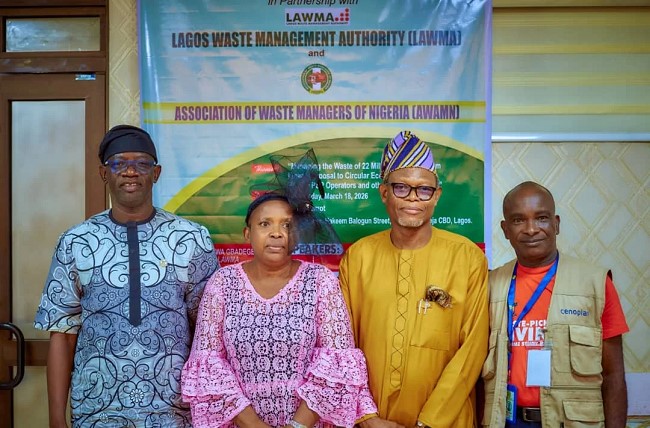
PEWAN
L-R: Executive Director, Finance, LAWMA, Mr. Kunle Adebiyi, PEWAN Chairman, Mrs Okwy Iroegbu-Chikezie; Dr Olugbenga Adebola, President of the Association of Waste Managers of Nigeria (AWAMN); and Comrade Friday Oky, President, Asspciation of Scraps and Waste Pickers of Lagos (ASWOL), at the PEWAN 2026 Forum, in Lagos

Iroegbu-Chikezie emphasised that partnerships with the private sector and local communities were critical to improving waste management outcomes and enhancing quality of life.

The Managing Director of the Lagos Waste Management Authority (LAWMA), Dr Muyiwa Gbadegesin, said managing waste requires shared responsibility among government, operators and residents.

Gbadegesin, represented by the Executive Director, Finance, Mr. Kunle Adebiyi, described waste management as critical to public health, environmental sustainability and flood control.

He said over 450 Private Sector Participant (PSP) operators handle household waste collection across the state under LAWMA’s regulatory framework.

According to him, indiscriminate dumping and patronage of illegal cart pushers undermine waste management efforts and contribute to flooding.

He added that Lagos was promoting waste sorting, recycling and resource recovery to improve efficiency and create economic value.

Also speaking, Dr Olugbenga Adebola, the President of the Association of Waste Managers of Nigeria (AWAMN), stressed the need for sustained collaboration among stakeholders.

Adebola described waste management as a collective responsibility, noting that effective waste handling was directly linked to public health and environmental safety.

He explained that poor waste management contributes to diseases such as malaria, cholera and lassa fever through blocked drainage, pest infestation and environmental pollution.

Adebola warned that open burning of waste releases toxic and carcinogenic substances, posing serious health risks, including respiratory illnesses and cancer.

He also highlighted the dangers of plastic waste, noting that mismanaged plastics break down into microplastics that contaminate water bodies and enter the food chain.

Adebola said Lagos generates over 20,000 metric tonnes of waste daily, driven by rapid urbanisation and population growth.

He identified key challenges as inadequate infrastructure, weak policy implementation, poor waste segregation and limited funding.

According to him, inefficient landfill systems and lack of functional material recovery facilities further limit effective waste processing.

He called for increased investment in waste infrastructure, including modern recycling systems and material recovery facilities.

Adebola also advocated the formalisation of informal waste collectors to improve efficiency and inclusiveness in the waste management value chain.

He urged government to provide enabling policies and long-term financing to attract private sector participation in the industry.

He stressed the need for consistent policy implementation and public education to promote responsible waste disposal practices.

The stakeholders expressed optimism that outcomes from the forum would support efforts to achieve a cleaner and more sustainable Lagos.

They also urged continuous engagement among key actors to address environmental challenges in the state.

By Fabian Ekeruche
Customs officers’ wives induct 250 students to promote environmental responsibility in Ogun

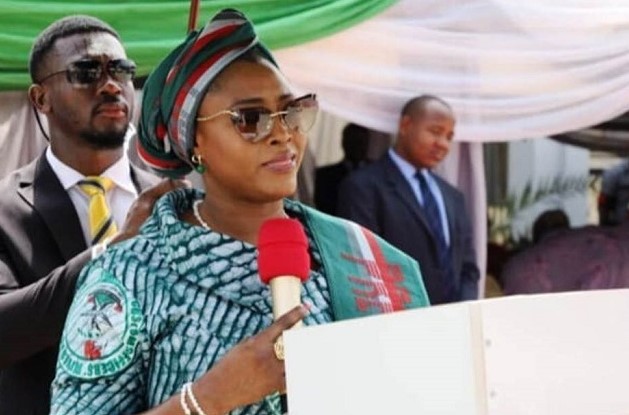
The Customs Officers Wives Association (COWA) on Wednesday, March 18, 2026, inducted 250 students as Green Ambassadors, to promote environmental responsibility at border communities and its environs.

Speaking at the inauguration under the Sustainability and Green Border Initiative in Idiroko, Mrs. Kikelomo Adeniyi, the COWA National President, said the inducted ambassadors were expected to enhance environmental practices within COWA communities.

Adeniyi said that the ambassadors are being encouraged to embark on impactful actions like planting trees, maintaining clean surroundings, and enhancing responsible environmental practices.

Kikelomo Adeniyi
Mrs. Kikelomo Adeniyi, the Customs Officers Wives Association (COWA) National President

She disclosed that the COWA School Idiroko has been honoured to become the first Green Borders Eco-School under the Adopt-a-School Campaign.

According to her, across the world, communities are facing environmental challenges that affects how people live, learn and grow.

Adeniyi decried the situation in which flooding destroys homes, plastic waste pollutes land and water, and rising temperatures affect health and agriculture.

She maintained that the most powerful agents of change are often the young people, noting that when a child learns to plant a tree, that child becomes a protector of nature.

“The future of our environment sits in classrooms and that is why this campaign focuses on schools.

“When a school becomes environmentally responsible, an entire community begins to change.” she said.

Adeniyi urged the ambassadors to pick up waste instead of ignoring it, protect trees instead of damaging them, and keep their environment clean.

In his Welcome address, Mr. Olukayode Afeni, the Area Comptroller, NCS, Ogun 1 Area Command, Idiroko, said that the Green Border Initiative aligned perfectly with global and national efforts for promoting environmental responsibility.

Afeni added that the programme also complements the operational objectives of the command.

By Ige Adekunle

How AI can make Nigeria’s solar mini-grids smarter, by expert

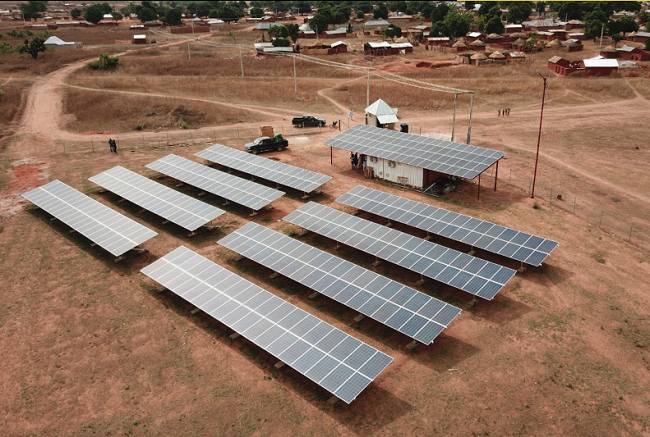
An Artificial Intelligence (AI) research expert, Prof. Charles Adetunji, says AI can make Nigeria’s decentralised solar mini-grids smarter, cheaper, and more reliable, directly improving rural electrification.

Adetunji said this in an interview on Wednesday, March 18, 2026, in Abuja.

“AI can transform Nigeria’s decentralised solar mini-grids by enabling smarter energy distribution, proactive maintenance, and demand forecasting, helping communities achieve reliable, affordable, and sustainable electricity access,’’ he said.

Solar mini-grid
A solar mini-grid system

According to him, AI can also optimise grid performance, reduce costs, and ensure that limited resources were used efficiently, especially in areas where traditional grid expansion is not feasible.

Reacting to key roles AI can play in the solar mini-grids, Adetunji said AI’s procedures or algorithms could predict peak demand and adjust supply accordingly, preventing blackouts.

He explained that AI could introduce flexible tariffs, encouraging efficient energy use in rural communities, and ensuring that batteries are charged and discharged optimally, extending lifespan and reducing replacement costs.

The expert clarified that AI could analyse sensor data to detect early signs of equipment failure, which include solar panels, inverters, and batteries.

“Predictive models allow operators to fix issues before they disrupt power supply, and prevent expensive emergency repairs as well as extend infrastructure lifespan,’’ he said.

According to Adetunji, AI learns from historical consumption data to forecast future demand.

He said AI could predict changes in energy needs during farming seasons, festivals, or school terms.

He further said that AI could help developers design mini-grids that match community growth.

‘The key is pairing AI with strong local capacity building and affordable financing models to ensure communities benefit sustainably,’’ he said.

By Sylvester Thompson

Environmental group empowers 145 Lagos waste recovery officers

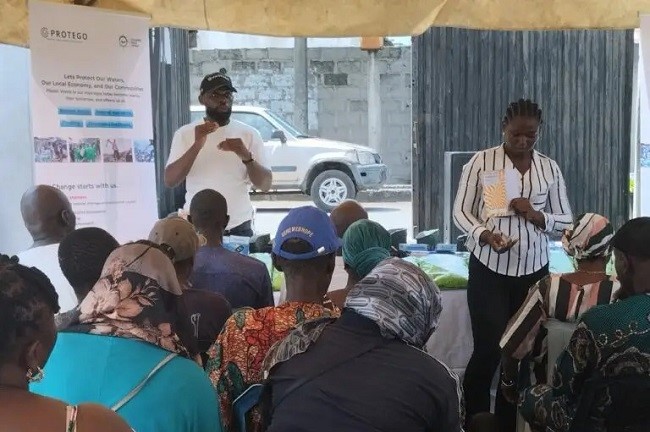
Circularity Africa, a sustainability, climate and environmental organisation, has empowered 145 waste recovery officers in commemoration of the 2026 World Recycling Day.

The founder and Managing Director of the group, Mr. Seunfunmi Ogungbure, said on Wednesday, March 18, 2026, at the handover of the recycling equipment to the officers that the initiative would tackle the plastic population in Lagos State.

Ogungbure said the empowerment of the waste materials recovery officers was aimed at preventing marine litter, plastic pollution and plastics waste from getting into the marine water bodies.

Circularity Africa
Participants at the engagement to commemorate the 2026 World Recycling Day

“So, today we are distributing recycling equipment to 145 material recovery officers who are members of the communities that we are serving.

“As part of efforts to reach the underserved and unreached communities, we are setting up about 54 new community recycling collection clusters in Nigeria within the local government.

“And the idea is to create a system that would help address the critical issues that are confronting the community such as the economy and perception about waste, which is also driven by their economic capacity.

“People have a mentality of why should they pay to clear their waste when they can’t feed themselves? So, it becomes a secondary or a non-consideration at all when it comes to waste management for them.

“Hence, our initiative, recycling, gives them the opportunity to not just address their economic needs, but also address the waste management challenges that they are confronted with. And that is why this initiative is being implemented today,” Ogungbure said.

He said the initiative was in partnership with the German Federal Ministry of Environment and Nuclear Safety.

He said the project would centre on how to prevent marine litter, plastic pollution and plastics waste from getting into the marine water bodies.

“So, we are working in Calabar and Lagos State and in Lagos we are working with Ajeromi-Ifelodun Local Government Area because it is bordering the Atlantic directly.

“If you just look down the Tincan Port and then the Nigerian Ports Authority, and from there, it’s straight up into the Atlantic ocean.

“So, whatever waste gets into the ocean from here goes straight into the Atlantic. So, what we’re doing keys into that project, the goal of the project is to address and arrest the waste before it gets to the canals and then onward into the ocean.

“So, this project is building, it’s providing community recycling clusters, which consists of sizable kiosks which serves as a cluster point, managed by the material recovery officers we are empowering today,” he said.

The Global Recycling Day, celebrated annually on March 18, promotes the importance of recycling to conserve natural resources, reduce waste, and combat climate change.

The day aims to change the global mind-set to view waste as a valuable resource, encouraging the 3Rs (reduce, reuse, recycle) and highlighting the role of recycling in a circular economy.

Circularity Africa provides raw material sourcing for recycling and manufacturing companies. It also manage ESG projects and programmes, sustainability reports for businesses.

The group builds systems in local, underserved and unreached communities and municipal communities to address waste management issues, promoting behavioural culturing, especially when it comes to handling waste post-consumption.

By Mercy Omoike

IWD 2026: EBID, ASKY, Plan International Togo in ‘Girls in Aviation Day’ empowerment initiative

0

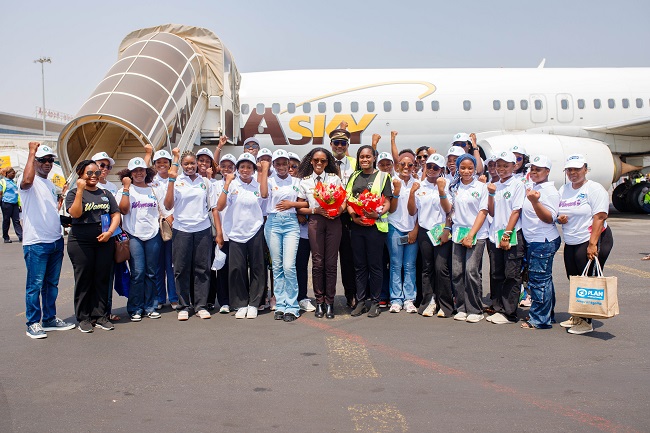
The ECOWAS Bank for Investment and Development (EBID), in partnership with ASKY Airlines and Plan International Togo, hosted the “Girls in Aviation Day” initiative on Saturday, March 7, 2026, at the Gnassingbé Eyadéma International Airport in Lomé, in commemoration of International Women’s Day (IWD) 2026.

The landmark event offered 20 girls a meaningful and immersive learning experience aimed at increasing their exposure to professional opportunities in aviation, aerospace, and other science and technology fields.

IWD 2026
Participants at the ‘Girls in Aviation Day’ empowerment initiative

The joint initiative reaffirmed the partners’ commitment to gender inclusion, youth empowerment, and expanding girls’ access to emerging career paths in underrepresented sectors. Through tours, interactive sessions, and hands‑on activities, the girls gained firsthand insight into airport operations, from terminal and baggage systems to cockpit procedures and air traffic control.

Speaking on behalf of EBID, Mr. Hughes Goa, Director of Private Sector Operations, highlighted the importance of investing in young women to build a more resilient and inclusive workforce in the ECOWAS region. He reaffirmed the Bank’s commitment to empowering girls through education, mentorship, and career exposure as part of its people‑centered development mandate.

The initiative also supports EBID’s upcoming adoption of the “Gender Equality for Public Institutions” Seal in partnership with UNDP and the ECOWAS Commission.

At the ASKY Desk, Commercial Director, Mr. Daté Tévi-Bénissan, stressed the need for a diverse talent pipeline in aviation and underscored the importance of greater female representation in technical and managerial roles. He reaffirmed ASKY Airlines’ commitment to promoting women’s participation across the sector.

Plan International Togo, the initiative’s technical partner, welcomed the programme as a key platform for helping girls to build confidence and leadership skills. The organisation reiterated its dedication to creating safe, inclusive spaces that encourage girls from all backgrounds to broaden their ambitions and explore a wide range of career opportunities.

Through this joint initiative, EBID, ASKY, and Plan International Togo reaffirmed their collective vision: to promote gender equality, foster human capital development, and empower the next generation of women leaders across West Africa.

Group to South Africans on Human Rights Day: You matter, you can make a difference

As South Africa prepares to commemorate Human Rights Day 2026, The Green Connection is reminding citizens – especially those who may feel unheard or powerless – that their voices matter.

The organisation’s 25-year legacy of eco-justice victories demonstrates that when ordinary people unite to defend their rights and their environment, meaningful change is possible.

“Many people feel overwhelmed by decisions made far from their communities, even when those decisions threaten their wellbeing or the environment, they depend on,” says The Green Connection’s Founder and Strategic Lead, Liziwe McDaid.

The Green Connection
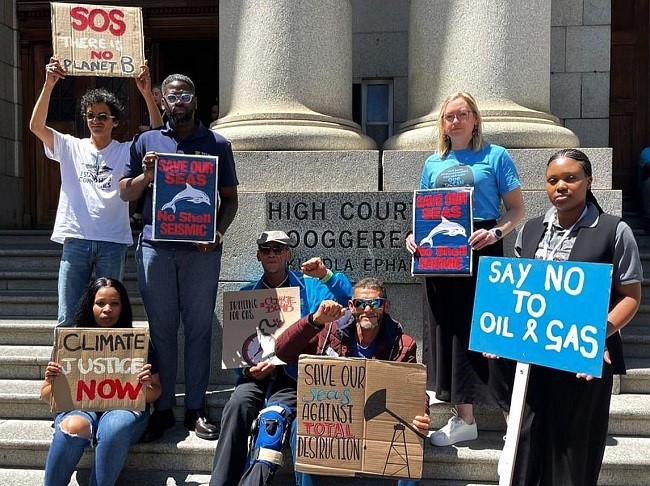
Supported by The Green Connection, small‑scale fishers and coastal communities continue raising their voices to protect their livelihoods and the future of our coastline

“However, our experience shows that when people are properly informed and meaningfully involved, decisions are far more likely to serve the public interest. Human Rights Day reminds us that when people raise their voices collectively, everybody wins. Every person has the power to protect their future,” says McDaid.

The Green Connection recently marked 25 years of community-led activism and environmental governance advocacy. Over this period, the eco-justice organisation has worked alongside coastal communities, small-scale fishers, youth, legal partners and civil society organisations to help reshape national conversations around public participation, fossil fuels and South Africa’s energy future – proving that people-powered action is not only possible, but transformative.

Ordinary People Making Extraordinary Impact

“Over the past five years alone, South Africans from vulnerable and often overlooked communities have helped secure significant environmental and social justice victories. These achievements were not driven by wealth or political influence, but by courage, unity and determination,” says Neville van Rooy, The Green Connection’s Outreach Ambassador.

In the Western and Eastern Cape, communities successfully challenged Karpowerships’ gas-to-power proposal, exposing major flaws in environmental governance and helping to prevent long-term, gas contracts that could have become extremely costly and may have likely placed the greatest burden on low-income households.

Small-scale fishers also successfully challenged Searcher’s proposed seismic blasting, affirming the rights of Indigenous fishing communities to be recognised and respected. In another victory, communities halted TEEPSA’s oil and gas exploration in Block 5/6/7, reinforcing the constitutional right to a healthy environment and meaningful public participation.

“These wins are not just about stopping harmful projects. They are about restoring dignity, defending livelihoods, and ensuring that ways of life passed down through generations are protected. They show that when communities stand together, we can reshape our country for the better.”

Building Confidence, Leadership and Hope

Through initiatives such as its Legacy Programme, Bridges Programme, and the Koeksister Project, The Green Connection continues to strengthen community leadership and deepen collaboration to build resilience and economic independence. These programmes – which prioritise small-scale fishers and women and youth in coastal communities – help ensure that those most affected by environmental decisions are informed, empowered and confident in asserting their rights.

According to The Green Connection’s Advocacy Lead, Lisa Makaula, the organisation has also commissioned three research papers to deepen public understanding of the choices shaping South Africa’s energy transition. These studies explore the potential of offshore renewable energy, the future of the transport sector, and how rising global demand for critical minerals may affect communities on the ground.

Makaula says, “Our aim is simple: to ensure that ordinary people have access to clear, credible information so they can actively participate in decisions that shape their lives, livelihoods and environment. A just transition cannot be built on outdated fuel standards, harmful technologies or governance systems that sideline communities.

“Justice must guide every step of the transition, and no community should be left behind or harmed as we see in Limpopo and KwaZulu-Natal, where unprecedented floods have displaced families, and in the Eastern Cape, where persistent drought has left many without reliable water security.”

As the country marks Human Rights Day, The Green Connection calls on all South Africans to stand firm in defending their rights, their environment and each other. The victories won by communities over the past years show that when ordinary people unite, they can take on powerful interests and win. Their resilience is a clear reminder that collective action has always been one of South Africa’s greatest strengths.

Reactions trail Brazil’s plan to reduce CO2 emissions by up to 67% by 2035

0

The Brazilian government launched the Climate Plan on Monday, March 16, 2026, in Brasília, a document that guides both the country and society in addressing the climate crisis.

It outlines mitigation and adaptation actions for Brazil to transition to a low-carbon economy that is sustainable from a socio-environmental perspective.

The main goal of the plan is to reduce carbon dioxide emissions by 59 percent to 67 percent by 2035, relative to 2005 levels. This reduction will pave the way for Brazil to achieve net-zero greenhouse gas emissions by 2050.

Marina Silva
Brazil’s Environment and Climate Change Minister, Marina Silva. Photo credit: Fabio Rodrigues-Pozzebom/ Agência Brasil

The plan’s development began in 2023, involved 24,000 participants, and produced approximately 5,000 proposals, which were synthesised and selected by the Interministerial Committee on Climate Change (CIM), composed of 25 ministries.

Climate emergency

“We had a process with broad participation from civil society,” noted Environment and Climate Change Minister Marina Silva.

According to her, “the Climate Plan will guide the government’s actions on adaptation and mitigation” and will help reorient actions on development agendas.

“We are living through a very serious climate emergency,” said Minister Marina Silva. “The Climate Plan is the government’s main strategy to address the climate problems that are already affecting us,” she added, referring to events such as extreme droughts and floods in the Amazon, and heavy rains with landslides in Minas Gerais, which caused 70 deaths.

Funding

Funding for the Climate Plan will come from Eco Invest Brasil (private investments), national and international cooperation through the Brazil Platform for Climate Investments and Ecological Transformation (BIP), and the National Climate Change Fund (Climate Fund), operated by the National Bank for Economic and Social Development (BNDES). This year, the Climate Fund will have over BRL 33 billion available.

In response to Brazil unveiling its updated national climate plan, 350.org welcomed progress on tackling deforestation but warned the plan falls short of the urgent action needed to phase out fossil fuels and tackle the growing fuel crisis engulfing Brazil.

The new plan, the first update since 2008, sets out Brazil’s pathway to cut emissions by up to 67% by 2035 and reach net zero by 2050, with a continued focus on ending deforestation, a major driver of emissions in the Amazon. However, campaigners say the plan lacks the ambition needed to rapidly transition away from oil, gas and coal, particularly as Brazil remains one of the world’s top emitters.

João Henrique, Brazil team lead at 350.org, says: “The current hike in diesel prices makes it explicit: fossil fuels are unstable and unreliable. When problems happen – like a war we have no control over – it’s everyday people who pay the price while big corporations cash in at our expense. This shows focusing on land use is not enough. Brazil needs to commit to a full fossil fuels phase out, sooner rather than later.

“Brazil’s renewed focus on ending deforestation is critical and welcome. But transitioning away from fossil fuels and fully embracing Brazil’s vast renewable energy potential is essential to bring down costs, reduce inequality and build a resilient energy system. Governments must move beyond broad commitments and deliver clear, time-bound roadmaps to end fossil fuel production and use.”

Brazil’s plan has been praised for its broader scope and inclusion of adaptation measures, but civil society groups have highlighted the lack of concrete steps to drive the structural economic transformation needed to meet global climate goals.

Henrique adds: “The lack of a clear fossil fuel phaseout roadmap comes at a time when Brazil’s energy system is already under pressure. With electricity prices around R$130/MWh and lower-income households spending up to 18% of their income on energy, the need for a fair and accelerated transition has never been clearer.

“However, when it comes to fossil fuels, Brazil’s Climate Plan does not respond to this challenge – on the contrary, it reinforces existing contradictions. The science is clear, there is no pathway to 1.5°C without a rapid and just phaseout of oil, gas and coal. Countries like Brazil have a crucial role to play, and that means aligning climate plans with a full transition away from fossil fuels.”

The announcement comes ahead of the first global conference on phasing out fossil fuels holding from April 24 to 29, 2026, and hosted by the governments of Colombia and the Netherlands, where pressure is mounting on major economies to commit to clear timelines to end fossil fuel production.

NESREA receives pangolins in Kano, Akwa Ibom

The National Environmental Standards and Regulations Enforcement Agency (NESREA) says pangolins handed over to the agency in Kano and Akwa Ibom states indicate growing public awareness and support for wildlife conservation in Nigeria.

Mrs. Nwamaka Ejiofor, NESREA’s Assistant Director of Press, said this in a statement issued on Monday, March 16, 2026, in Abuja.

Ejiofor said a local hunter, Imo Etim, in Akwa Ibom discovered two pangolins caught in his traps meant for grass-cutters.

pangolins
The Pangolin. Pangolins are believed to be the world’s most trafficked mammals

She said the hunter immediately notified Prof. Olajumoke Morenikeji of the Pangolin Conservation Guild Nigeria (PCGN).

According to her, one of the pangolins later died, while the hunter handed over both animals to NESREA officials led by the State Coordinator, Mr. Mfon Nkanang.

She said the pangolins were subsequently transferred to the National Park Service.

Ejiofor also disclosed that officers of the Kano/Jigawa Area Command of the Nigerian Customs Service handed over two live pangolins and one dead pangolin to NESREA.

She said the animals were suspected to be part of an illegal wildlife trade.

According to her, NESREA officials led by an Assistant Director, Mr. Ismaila Anamoh, received the pangolins.

She said the animals were later taken to the Kano Zoological Garden office.

Ejiofor added that the pangolins were received by Hafsah Adam, a representative of the Kano State Zoological and Wildlife Management Agency (KAZOWMA).

Reacting to the incidents, NESREA Director-General, Prof. Innocent Barikor, commended the actions of the Akwa Ibom hunter and the collaborative efforts of security agencies in Kano.

Barikor said the incidents reflected growing awareness about the protection of endangered wildlife species.

“In Akwa Ibom, when the hunter realised the animals were pangolins, he did not attempt to sell them.

“Instead, he contacted the appropriate authorities and handed them over. This is a major gain for conservation in Nigeria,” he said.

Barikor also attributed the success in Kano to strong inter-agency collaboration in tackling wildlife trafficking.

He warned that wildlife trafficking, whether conducted physically or through social media platforms, remained a criminal offence.

According to him, the crime is prohibited under the Endangered Species Act and the National Environmental (Control of Endangered Species in Domestic and International Trade) Regulations 2025.

Barikor reaffirmed NESREA’s commitment to enforcing environmental laws and protecting endangered species.

He urged members of the public to support conservation efforts by reporting wildlife crimes to the relevant authorities.

By Doris Esa

Minister orders demolition of estate illegally built on green area in Abuja

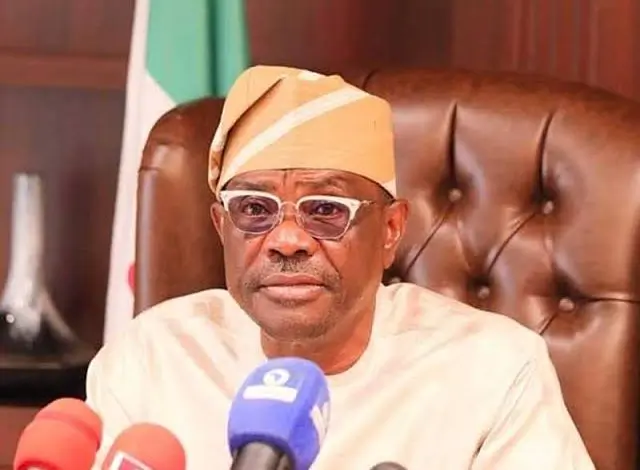
Minister of the Federal Capital Territory (FCT), Nyesom Wike, has ordered the demolition of an estate illegally built on a green area in Guzape, Abuja.

Wike gave the order during routine inspection of ongoing projects in Abuja on Monday, March 16, 2026.

He explained that the plot was initially allocated for Park and Recreation but was converted into residential without approval.

Nyesom Wike
Minister of FCT, Nyesom Wike

He said that beyond demolishing the estate, the allocation would be revoked, adding that the FCT Administration would strictly enforce planning regulations in line with Abuja Master Plan.

The Minister warned that the government would not tolerate deliberate violations of land-use approvals.

He lamented that many developers deliberately flout planning laws because they believe government officials would eventually leave office, allowing them to regularise illegal developments.

“People think that government will come and go and they will continue what they are doing. We will not allow that here. It does not matter who is involved; we will do the right thing.

“This place was given for Park and Recreation not for the development of an estate. But from what you have seen, they are developing it into an estate, which is a clear violation.

“We will not allow that,” he said.

Wike noted that some developers have taken advantage of bureaucratic loopholes and sometimes connive with insiders within government agencies to obtain approvals for illegal projects.

He said that while some civil servants may be involved, “it will not stop us from doing what is right”.

Speaking on inspected projects, the Minister said that the move was to assess the progress of major projects expected to be inaugurated to celebrate President Bola Tinubu third year in office.

On the road network linking the Renewed Hope City in Karsana to Kubwa, Wike said that significant progress has been recorded and expressed optimism that it would be ready for inauguration.

Wike also inspected Arteria Road N16 from Ring Road II to Ring road III, linking Jahi and Gwarimpa.

He described the quality of work as “impressive” and expressed confidence that the project would be completed by the end of May.

The Minister equally inspected the Airport Road to Kuje Highway as well as the Kuje Road to Gwagwalada and expressed satisfaction with the pace and quality of work so far.

According to Wike, road construction remains central to the Administration’s broader transportation strategy for the FCT.

“You cannot have a good transport system without connectivity and a strong road network. When there is good road infrastructure, transport becomes easy and efficient,” he said.

The Minister reiterated the Administration’s commitment to continue to enforce planning regulations while delivering infrastructure that improves mobility and opens up communities across the FCT.

By Philip Yatai

Women solicit investments in gender-responsive water governance

0

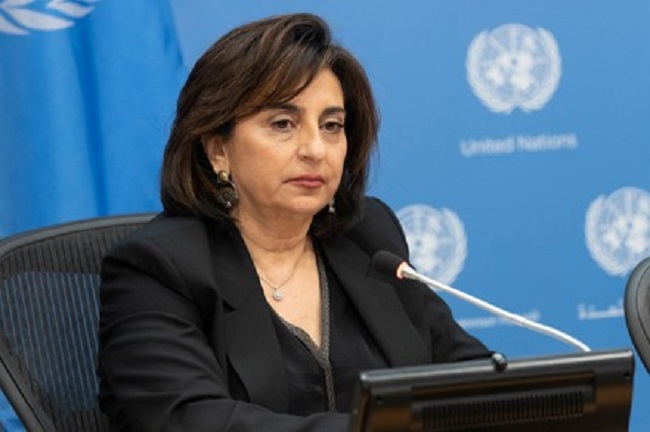
The Executive Director, UN Women, Sima Bahous, has urged governments worldwide to invest in gender-responsive water governance, financing, and services toward ensuring that no woman or girl is left behind.

Bahous stated this in her message for World Water Day released on the sidelines of the ongoing 70th Session of the Commission on the Status of Women (CSW) on Monday, March 16, 2026, in New York.

World Water Day is an annual United Nations observance day held on March 22 that highlights the importance of fresh water. The day is used to advocate for the sustainable management of freshwater resources.

Sima Bahous
UN Women Executive Director, Sima Bahous. Photo credit: Lev Radin/Pacific Press/Shutterstock

“We must invest in gender-responsive water governance, financing, and services; and ensure that no woman or girl is left behind.

“Water can be a force for equality, resilience, and prosperity. Together, let us make it so: for all women and girls, for communities, and for generations to come,’’ she said.

According to her, 2026  World Water Day with the theme: “Water and Gender Equality – Where water flows, equality grows,” is a call for a transformative, rights-based approach that places women’s leadership at the centre of water solutions.

Bahous said in a world shaped by climate change, growing inequalities, and increasing pressure on natural resources, water lies at the heart of our shared future.

“Water is essential for life, health, food, and livelihoods.

“Yet for billions of people, access to safe water and sanitation remains out of reach. And while the global water crisis affects everyone, it does not affect everyone equally,’’ she said.

The UN women chief further said that women and girls bear the greatest impacts of the unequal access to and scarcity of water.

“Every day, they spend millions of hours collecting water, caring for families, and managing scarcity, often at the cost of their education, income, health, and safety. When water is unsafe or unavailable, inequalities deepen and opportunities disappear.

“This reality was already recognised thirty years ago in the Beijing Declaration and Platform for Action, which underscored the central role of women in environmental sustainability and called for their full participation in the management and safeguarding of natural resources, including water.

“Today, those commitments are more urgent than ever,” she said.

The Executive Director added that women are not only the most affected by water crisis but are also powerful agents of change.

By Cecilia Ologunagba