The Akwa Ibom State House of Assembly on Wednesday, January 21, 2026, passed a resolution urging the state government to partner with the private sector to establish waste recycling plants across the state.
The resolution was sequel to a motion by Mr. Ukpong Akpabio, member representing Essien Udim state constituency.
The motion was seconded by Mr. Eric Akpan, member representing Nsit Ibom state constituency, with overwhelming support from lawmakers.
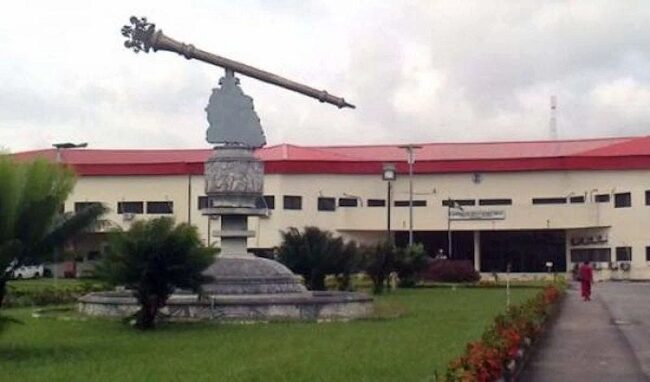
Akwa Ibom State House of Assembly
Akpabio, in the motion titled, “Waste to Wealth: Need to Partner with the Private Sector to Establish a Recycling Plant in the State”, said that there was urgent need to convert the huge waste generated daily in the state to wealth.
The lawmaker added that the resolution when adopted and implemented would create jobs to the teeming youth and save the state of worsening flooding and environmental degradation.
”Proper waste management is critical to public health and environmental sustainability.
”Recycling offers significant advantages over landfills, which pose risks through greenhouse gas emissions, soil and water contamination, and the release of toxic substances to surrounding communities,” Akpabio said.
He added that waste recycling had become a major economic opportunity yet to be tapped.
According to him, the influx of scavengers into the state in search of recyclable materials such as plastic bottles, cartons and scrap metals often transported to other states for processing, underscores the economic potential of establishing recycling plants within Akwa Ibom.
”Having recycling facilities in the state would minimise environmental and health risks associated with landfills, stimulate economic growth, generate revenue and create employment opportunities across the waste management value chain.
”“This will be in line with Gov. Umo Eno’s ‘ARISE Agenda’, particularly the Economic Consolidation and Expansion Blueprint which promotes Public-Private Partnerships in recycling,” he said.
Members who spoke in support of the motion described it as timely and beneficial, stressing that it would help to prevent pollution, conserve natural resources and create jobs.
They also added that the motion focuses on sustainable development and revenue generation in the state.
The Speaker, Mr. Udeme Otong, described the unanimous support of the bill as a people-oriented initiative with far-reaching benefits for the state.
Otong, therefore, directed the Clerk of the House, Mrs. Nsikakabasi Orok, to communicate the resolutions of the House to the governor for necessary action.
The Agreement under the United Nations Convention on the Law of the Sea on the Conservation and Sustainable Use of Marine Biological Diversity of Areas Beyond National Jurisdiction (BBNJ), commonly known as the High Seas Treaty, officially entered into force on Saturday, January 17, 2026.
Despite Africa’s instrumental role in negotiations, as of early 2026, only 18 of 54 African nations have ratified the agreement. Prompt ratification and domestication are now critical for the continent to secure its interests in the “Common Heritage of Humankind” and drive a sustainable Blue Economy.
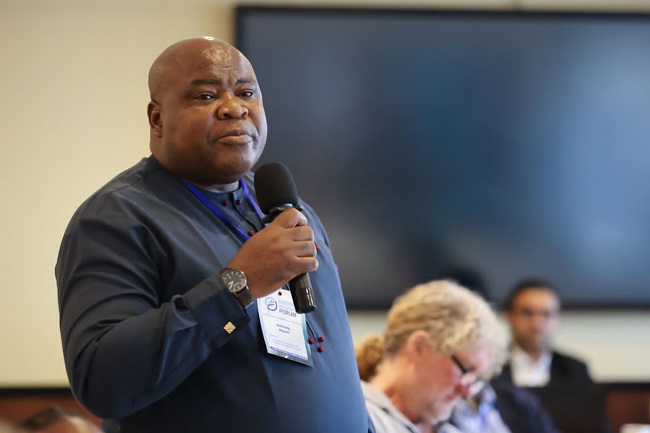
Mr. Anthony Akpan, President of PAVE
Securing Equity in Global Commons
The BBNJ Agreement governs the high seas – two-thirds of the global ocean – which were previously a regulatory vacuum. For Africa, ratification ensures participation in the Conference of the Parties (COP), where rules for the next decade will be established. Without party status, African nations risk being sidelined as wealthier powers define the governance of marine resources. This is particularly vital for landlocked developing countries (LLDCs) in Africa, as the treaty provides them legal standing to access benefits from resources beyond their direct borders.
Equitable Benefit-Sharing and Scientific Advancement
A cornerstone of the BBNJ Agreement is the fair and equitable sharing of benefits from Marine Genetic Resources (MGRs). These resources hold immense potential for pharmaceuticals and biotechnology. By domesticating the treaty, African states can institutionalise mechanisms to access digital sequence information and research data, enabling African scientists to participate in global innovation rather than remaining mere spectators to bioprospecting by developed nations.
Strengthening the Blue Economy and Food Security
Healthy high seas are essential for Africa’s food security, as they serve as vital migration corridors for fish stocks that eventually enter national waters. The treaty provides tools to establish Marine Protected Areas (MPAs) and conduct Environmental Impact Assessments (EIAs), which help curb illegal, unreported, and unregulated (IUU) fishing – a crisis costing Africa over $11 billion annually. Domestication allows states to align national maritime policies with global standards, leveraging uncrewed surveillance technology and regional cooperation to protect their aquatic wealth.
Capacity Building and Technology Transfer
The BBNJ framework mandates Capacity Building and the Transfer of Marine Technology to developing states. For African nations, this offers a pathway to upgrade scientific infrastructure and maritime enforcement capabilities. Ratification is the gateway to dedicated funding mechanisms – including a special fund and the Global Environment Facility (GEF) – designed to support implementation in resource-constrained regions.
Conclusion
As the first BBNJ COP approaches in late 2026, the window for Africa to act is narrowing. Ratification and domestication are not merely environmental obligations; they are strategic necessities to protect sovereignty, foster economic resilience, and ensure that the wealth of the high seas benefits all Africans, coastal and landlocked alike.
Media and civil society advocacy is essential to create the public and political pressure needed to move the instrument from the executive to the National Assembly for final concurrence.
And more importantly, civil society must now transition from advocacy to active implementation in supporting ratification and domestication processes by assisting the remaining African nations in legal and policy adjustments required to formalize the treaty into national law.
By Anthony Akpan, President, Pan African Vision for the Environment
Seplat Energy Plc has reiterated that oil and gas will continue to play a critical role in Nigeria’s energy mix, while stressing the need for operators to conduct their activities responsibly, efficiently, and sustainably.
This position was articulated by Mr. Okechukwu Mba, Director, Gas & New Energy, Seplat Energy Plc, who represented the Company’s Chief Executive Officer, Mr. Roger Brown, at a high-level climate roundtable organised by the Nigerian Exchange Group (NGX Group) in partnership with DEG, Germany’s development finance institution, and Africa Foresight Group (AFG) in Lagos.
Speaking at the event, Mr. Mba noted that the real issue facing Nigeria’s energy sector is not whether oil and gas should exist, but how operators manage their responsibilities to the environment, society, and the economy.
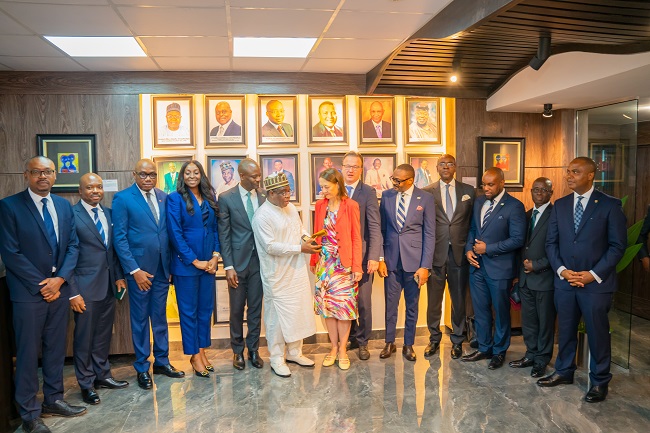
Participants at the high-level climate roundtable organised by the Nigerian Exchange Group (NGX Group)
“Oil and gas will remain an important part of Nigeria’s energy mix for some time to come. The right conversation is not whether oil and gas should exist, but how operators conduct themselves responsibly,” he said.
He emphasised that responsible operations must be driven by concrete actions, including improved efficiency, reduced emissions, and credible offsetting strategies.
At Seplat Energy, Mr. Mba explained, this commitment is already being translated into measurable outcomes. He disclosed that the company had launched a comprehensive programme several years ago to end routine gas flaring across all its onshore operations, adding that by the end of last year, all the projects required to achieve this milestone had been delivered and were currently at the commissioning stage.
“Very soon, we will be able to clearly state that routine flaring has ended in our onshore operations. This is an important milestone that speaks to our stewardship of the environment, while remaining focused on delivering energy to the nation,” he said.
He further highlighted Seplat Energy’s deployment of technology to enhance operational efficiency, including real-time monitoring of emissions across pipelines, valves, plants, and other critical infrastructure, supported by a robust asset integrity programme designed to identify and eliminate emissions.
Beyond operational measures, Mr. Mba said the company is also implementing nature-based solutions to offset emissions. In one of its host communities in Edo State, Seplat Energy has launched an afforestation programme committing to plant millions of trees over a five-year period, with the first phase already completed.
He also pointed to the company’s investments in gas and LPG infrastructure as part of efforts to reduce emissions beyond its direct operations. According to him, expanding access to LPG helps reduce reliance on firewood, charcoal, and other biomass fuels, particularly in communities outside major cities.
Following Seplat Energy’s offshore acquisition, he noted that LPG that was previously exported has now been redirected to the domestic market, significantly improving availability, affordability, and overall market quality.
Mr. Mba also underscored the urgent need for financing to support Nigeria’s energy transition, particularly gas and gas-to-power projects, noting that while only about five gigawatts of electricity currently come from the national grid, a much larger share of power is self-generated through petrol and diesel generators that produce significantly higher emissions.
“If we replace these inefficient power sources with gas-powered energy, we can achieve substantial decarbonisation. But without adequate financing, these projects cannot be implemented, and the benefits will not be realised,” he said.
The event marked the launch of the NGX Net-Zero Programme (N-Zero), an initiative designed to support listed companies in defining net-zero pathways, improving climate-related disclosures, and aligning with global investor expectations. The programme is expected to unlock between $2.5 billion and $3.1 billion in climate-linked capital for Nigerian companies.
Speaking at the launch, Dr. Umaru Kwairanga, Group Chairman of NGX Group, said Africa’s capital markets must take a leading role in driving climate action and sustainable growth, adding that the NGX Net-Zero Programme would help companies move from climate ambition to measurable action.
Also presenting the investment case, Mr. Temi Popoola, Group Managing Director of NGX Group, noted that climate risk has become a critical factor in valuation and capital allocation globally, while Ms. Monika Beck, a member of the Management Board of DEG, said the partnership aligns with DEG’s strategy of mobilising private capital to accelerate climate action while delivering measurable development impact.
IUCN Director General Dr Grethel Aguilar’s reacts as the Agreement on the Conservation and Sustainable Use of Marine Biodiversity Beyond National Jurisdiction (BBNJ Agreement) came into force on Saturday, January 17, 2026, marking a defining moment for global ocean protection and multilateral environmental governance
Saturday, January 17, 2026, marks a historic milestone for the ocean and for multilateral environmental governance. With the entry into force of the Agreement on the Conservation and Sustainable Use of Marine Biodiversity Beyond National Jurisdiction (BBNJ Agreement), the international community has taken a decisive step toward protecting the ocean as a common heritage of humankind.
Dr Grethel Aguilar, IUCN Director General
For the first time, the High Seas – nearly half of our planet – will be governed by a comprehensive, legally binding framework that enables cooperation to conserve and sustainably use marine biodiversity beyond national jurisdiction. This Agreement transforms decades of scientific and traditional knowledge, advocacy, and diplomacy into concrete tools for action.
The BBNJ Agreement opens a new era for ocean protection. It makes possible the establishment of effective marine protected areas on the High Seas, brings modern environmental impact assessment standards to ocean activities, strengthens coherence across existing ocean governance bodies, and ensures the fair and equitable sharing of benefits from marine genetic resources. In doing so, it turns the global ambition to protect at least 30 per cent of the ocean by 2030 into an achievable reality.
IUCN is proud to have contributed to this achievement over more than two decades, working alongside States, scientists, Indigenous Peoples, civil society, and partners across the Union. We wish to recognise the visionary leadership of IUCN High Seas Adviser Kristina Gjerde, whose early and unwavering advocacy for a legally binding agreement to protect biodiversity on the High Seas helped lay the foundations for this Treaty. We now look to the leadership of the BBNJ High Ambition Coalition, to galvanise continued political momentum for a fast, fair and equitable implementation that brings the Agreement to life.
As the BBNJ Agreement enters into force, attention now turns to implementation. The next preparatory commission meeting, ahead of the first Conference of the Parties, will be a definitive moment that is critical to operationalising the Treaty. There, work will focus on establishing its institutions, financial mechanisms, and procedures, ensuring that capacity-building and technology transfer enable all countries to participate fully and effectively.
IUCN stands ready to continue supporting Parties through the Technical Assistance Facility of the EU Global Ocean Programme (Component 1) to translate this landmark Agreement into lasting protection for marine biodiversity, resilient ocean ecosystems, and a healthier planet for present and future generations.
Accelerating progress toward unlocking sustained productivity growth and food security in Africa requires coordinated interventions to strengthen the system-wide application of existing technologies and enable their widespread, efficient use, a new flagship report finds.
The 2025 Annual Trends and Outlook Report (ATOR 2025), titled“Moving the Technology Frontiers in African Agrifood Systems,” identifies hundreds of digital tools with immediate and long-term potential for transforming agrifood systems. Digital farming, precision agriculture, remote sensing, AI, biotechnology, and organisational innovations can not only reduce transaction costs, strengthen efficiency, and support climate-smart productivity gains, but also enable innovative complementary institutions and governmental processes.
Dr. Ousmane Badiane, Executive Chairperson, AKADEMIYA2063
Published by AKADEMIYA2063 through the Regional Strategic Analysis and Knowledge Support System (ReSAKSS), the report concludes that Africa’s agrifood future will be shaped not only by the technologies that exist, but also by how effectively they are governed, financed, adapted, and embedded in inclusive institutions.
With strategic investment in science and digital infrastructure, empowered producer organisations, climate-resilient innovation pathways, and strong accountability systems, Africa can move beyond technology adoption toward technology leadership, helping shape global responses to climate change, food insecurity, and sustainable development.
Successful adoption and scaling depend on supportive institutions, coherent regulatory frameworks, predictable policy environments, and well-organised diffusion pathways.
These efforts, alongside strengthened Comprehensive Africa Agriculture Development Programme (CAADP) monitoring and data systems, will support implementation of the Kampala Declaration, which entered into force on January 1, 2026.
“The Kampala ambitions can be achieved through sustainably raising productivity, cutting costs, and boosting capacity for product and process innovation along agrifood system chains,” said Dr. Ousmane Badiane, Executive Chairperson of AKADEMIYA2063. “The latest Annual Trends and Outlook Report demonstrates that the ‘technology frontier’ is not a single breakthrough, but rather the integration of biological, digital, engineering, ecological, and institutional innovations within a supportive political economy.”
Launched at the three-day ReSAKSS Annual Conference, the report finds that Africa’s agrifood transformation depends on apprehending technology as part of an integrated system, rather than a standalone solution. The analytical framework highlights three complementary pathways – technological progress, improvements in technical efficiency, and reductions in transaction costs – and shows that productivity gains have been constrained less by the absence of innovations than by weak institutions and barriers to widespread adoption.
Reviewing a wide range of underused emerging technologies, including AI and geospatial tools, biotechnology, digital agriculture, mechanisation, value addition, irrigation, livestock, insect-based systems, and aquaponics, and experiences from Europe, China, and Latin America, the report finds that impact depends on governance, financing, and inclusive diffusion, combined with sustained R&D investment, coherent regulatory frameworks, empowered producer organisations, and effective public–private partnerships.
This 17th edition of the ATOR includes two new indices: one measuring the untapped potential of African countries for using AI in agrifood systems, and a second measuring countries’ capacity for agricultural research and development beyond spending alone.
A first-of-its-kind “Untapped Potential Index (UPI)” identifies the African countries with the greatest opportunity to scale AI- and geospatial-enabled transformation in agrifood systems. South Africa and Botswana lead in AI and geospatial technology deployment within the agrifood sector, while Kenya, Egypt, Ghana, and Mali are approaching readiness. South Sudan, Niger, and Zambia have the highest UPI values, reflecting high transformation needs and adequate enabling conditions combined with low current adoption of AI and geospatial tools, significant yield gaps, and high hunger levels; these countries possess decent readiness infrastructure, but low current adoption of AI and geospatial tools.
A new ranking in the report, the Agricultural R&D System Capacity Index (ARDSCI), proposes a novel approach to highlight where investments are translating into real research capabilities and scientific outcomes. An application of the index using data from selected West African countries shows significant strides for Ghana, reflecting a high proportion of PhD-qualified researchers, substantial investment per researcher, and sustained growth in research intensity.
The report also highlights opportunities for broader use of small-scale irrigation, water harvesting, and resource-efficient technologies, with innovations such as insect farming, circular-economy solutions, aquaponics, organic-waste valorisation, and integrated nutrient management reshaping resource-use and production systems, while creating new economic opportunities, especially for youth and small enterprises.
The report concludes by presenting five strategic priorities to guide Africa’s next decade of innovation-driven transformation under the Kampala CAADP Agenda:
Strengthen innovation ecosystems and science institutions. Long-term investments in research, regulatory coherence, and sustainable financing are central to unlocking scientific and technological potential. Increasing and stabilising funding, supporting regional collaboration, investing in next-generation research talent, linking R&D to wider agrifood innovation systems, and improving performance metrics can help reposition agricultural R&D as a driver of Africa’s inclusive and climate-resilient development.
Promote inclusive mechanisms for technology dissemination. Empowering producer organisations, SMEs, digital innovators, and youth-led enterprises will broaden access and deepen the impact of emerging technologies.
Expand digital and climate intelligence infrastructure. Investing in geospatial tools, digital twins, AI-driven analytics, and real-time data systems will be essential for managing climate risks, improving planning, and optimising resource use.
Prioritise climate adaptation and resilience in technological agendas. Climate-smart technologies across crops, livestock, water systems, and circular economy domains will remain essential for safeguarding productivity under changing conditions.
Strengthen governance, coordination, and accountability mechanisms. The CAADP monitoring architecture will continue to anchor the continent’s agricultural transformation and must evolve to reflect broader agrifood system objectives.
The report arrives at a critical policy moment, coinciding with the implementation phase of the Kampala Declaration and the associated CAADP Strategy and Action Plan (2026–2035), which set ambitious targets for agrifood output, value addition, trade, investment, and innovation.
“The Kampala Declaration recognises the role of science and innovation in Africa’s agrifood system transformation,” said Moses Vilakati, Commissioner for Agriculture, Rural Development, Blue Economy, and Sustainable Environment, African Union Commission (AUC-DARBE). “This edition of the Annual Trends and Outlook Report provides timely evidence on how frontier technologies can be governed and scaled to deliver food security, inclusive growth, and climate adaptation across the continent. It is our hope that the report will serve as a strategic reference for policymakers, planners, investors, researchers, and practitioners, and contribute meaningfully to building more productive, resilient, and equitable agrifood systems across Africa.”
TASC, a leading carbon project developer, has achieved a global first with the issuance of certified Climate, Community and Biodiversity carbon credits from its pioneering Grassland Restoration and Stewardship in South Africa (GRASS) project – a landmark initiative restoring the country’s degraded rangelands.
The issuance of 266,255 Verified Carbon Units (VCUs) is the first to carry the Climate, Community & Biodiversity (CCB) label under Verra’s VM0042 methodology, providing independent assurance that climate mitigation is being achieved alongside measurable social and environmental co-benefits. GRASS was the first project registered under VM0042.
Shelley Estcourt, CEO of TASC Africa
The challenge
South Africa’s livestock sector covers 34 million hectares but faces extreme weather, poor productivity and degraded soils. A third of the country’s grasslands are already severely damaged by poor or non-existing management practices. Communal farmers own half the country’s livestock but supply just 9% of the meat market, lacking access to training, markets and income opportunities.
The solution
TASC’s pioneering Grassland Restoration and Stewardship in South Africa (GRASS) project was developed with the goal of supporting the restoration of South Africa’s communal rangelands, some of the most socially and ecologically complex landscapes in the country. The project has since expanded to include commercial farmers alongside communal landholders.
TASC partnered with Meat Naturally Africa, a highly respected South African social enterprise at the forefront of inclusive livestock farmer development, to equip communal farmers with regenerative grazing skills while unlocking real market access through mobile auctions and abattoirs. Ecorangers and farmers are trained in regenerative grazing, fire management, livestock production, business record-keeping, invasive alien plant management, and biodiversity monitoring.
Carbon revenues generated by the project are channelled back through a community trust, directly rewarding participation, strengthening local livelihoods, and creating long-term economic opportunity across rural communities.
The impact
GRASS today represents one of the largest grassland restoration initiatives globally – delivering climate mitigation while restoring ecosystems and supporting rural employment at scale.
The project currently spans over 605,000 hectares in the communal rangelands, engages more than 10,000 farmers and has created 900 jobs, nearly a third of which are held by women. It has also generated approximately ZAR56.4 million (~$3.350 million) in additional revenue for participating farmers through livestock and wool market access.
More recently, TASC has expanded GRASS to include private, commercial sector farmers, with total rangeland under management increasing to 950,000 hectares. TASC plans to scale the project to 2 million hectares under management by 2030, which is forecast to sequester or avoid nearly 2 million tonnes of CO2e annually.
Over its 100-year commitment, GRASS aims to mitigate 14 million tonnes of CO2e in the first 30 years alone.
Reflecting on the milestone, Shelley Estcourt, CEO of TASC Africa, said: “This issuance is a significant milestone that validates a core principle of our pioneering carbon project, that restoring degraded grasslands can simultaneously sequester carbon, strengthen biodiversity, and improve livelihoods in communal areas – not as an add-on, but by design.
“At a time when scrutiny of carbon markets is intensifying, GRASS demonstrates what high-integrity carbon can achieve: real emissions reductions, restored landscapes, and tangible benefits for communities that are often left behind. We’re educating and empowering local farmers to build long-term resilience in their landscapes and businesses, while providing measurable environmental benefits to help businesses across the globe achieve their net zero goals.”
Sarah Frazee, CEO of Meat Naturally, added: “We are proud to have co-developed this pioneering project with TASC and are thrilled to see the traditional grazing and fire management systems in GRASS independently validated – not just for its global contribution to carbon sequestration but for its contribution to biodiversity and livelihood benefits in a changing climate.”
The Federal Government of Nigeria on Tuesday, January 20, 2026, validated an updated National Policy to address the menace of desertification, land degradation, and drought in the country.
Malam Balarabe Lawal, the Minister of Environment said this at the workshop on the “Review of the National Policy on Desertification, Land Degradation, and Drought”.
Lawal, who was represented by Mr. Mahmud Kambari, the Permanent Secretary in the Ministry, said that the validated document would effectively address the menace of desertification, land degradation and drought and enhance environmental sustainability in the country.
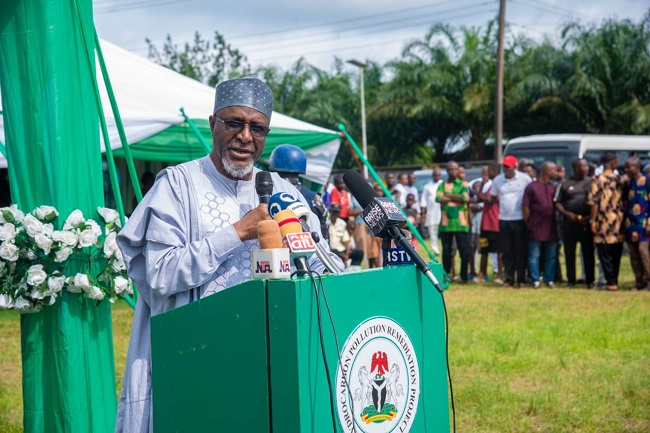
Malam Balarabe Lawal, the Minister of Environment
“This occasion represents a vital milestone in our efforts to address Desertification, Land Degradation, and Drought in Nigeria. As you are aware, Drought and Desertification are not abstract environmental concepts.
“This validation workshop marks a critical stage in the policy review process as it provides a platform for stakeholders to carefully examine the revised policy document, assess its objectives, strategies, and implementation mechanisms, and ensure that it reflects a shared national vision,” Lawal said.
The minister revealed that the objective of the validation is not merely about endorsement; but a collective ownership, asking hard questions, identifying gaps, and refining approaches so that the final document is practical, inclusive, and capable of delivering measurable results.
“It must encapsulate the realities at the national, state, and local levels. It must recognise the different ecological zones of the country and the unique challenges, land degradation is real and pressing challenges that affect millions of Nigerians, particularly in the arid and semi-arid regions of the country.
“These challenges threaten agricultural productivity, water availability, food security, biodiversity, and overall socio-economic stability.
“For farming and pastoral communities, drought means failed harvests, loss of livestock, increased poverty, and in some cases, loss of settlements.
“Desertification on the other hand steadily reduces the productivity of our land, weakens ecosystems, and places additional pressure on already scarce natural resources,” he said.
Lawal expressed optimism that the policy have the potential to serve as a foundation for integrated, long-term solutions that benefit both people and the environment.
“The draft National Drought and Desertification Policy document before us today is the outcome of the review of the existing policy which commenced on July 2, 2025 with the inception workshop which brought stakeholders from the 36 states of the federation including the FCT.
“Government would provide the leadership needed for its full implementation but it must be complemented by strong partnerships with the private sector, civil society, research institutions, and local communities,” he stated.
Kambari, who was represented by Mrs. Regina Nwaneri, the Director of Desertification, Land Degradation and Drought Management in the ministry, said that the existing policy framework, while useful at the time of its development, must respond to new realities, emerging risks, and evolving national and international commitments.
“This necessity informed the decision to undertake a comprehensive review of the National Drought and Desertification Policy, which in all honesty is long overdue.
“The reviewed policy is expected to place stronger emphasis on early warning systems, preparedness, resilience building, and coordinated institutional action,” he said.
Mr. Abdulhameed Umar, the National Project Coordinator for Agro-Climatic Resilience in Semi-Arid Landscapes (ACReSAL), said that land degradation has been an environmental challenge which is being tackled by ACReSAL with the support of World Bank.
Umar, who was represented by Alhaji Musa Shuaibu, Expert Advisor for Landscape Restoration and Wetland Management, ACReSAL, commended the validation of the policy and expressed optimism that land degradation, desertification and drought would be addressed.
Mr. Precious Agbesor, the FAO representative, said that validation of the National Policy, which represents a significant milestone in Nigeria’s efforts to promote sustainable land management, climate resilience, and restored degraded ecosystems, is a welcomed development.
“The policy aligns strongly with Nigeria’s commitments under global and regional frameworks, including the United Nations Convention to Combat Desertification (UNCCD), the Sustainable Development Goals, particularly SDGs one, two, 13 and 15.
“This inclusiveness is critical, as successful implementation will depend on shared ownership and coordinated action across sectors and levels,” Agbesor said.
Nwaneri, in her speech earlier, said that climate challenges have evolved, making it necessary to update the policy to address issues such as desertification, sand and dust storms, and drought.
“The validation workshop supported by ACReSAL and other partners we believe will produce an inclusive, realistic, and effective framework to tackle climate challenges at both local and national levels,” she said.
Mrs. Rose Okonkwo, the Executive Director, Programme Management, Nigeria National Petroleum Corporation (NNPC) Foundation Limited, assured commitment to environmental issues to cushion the effects of climate change.
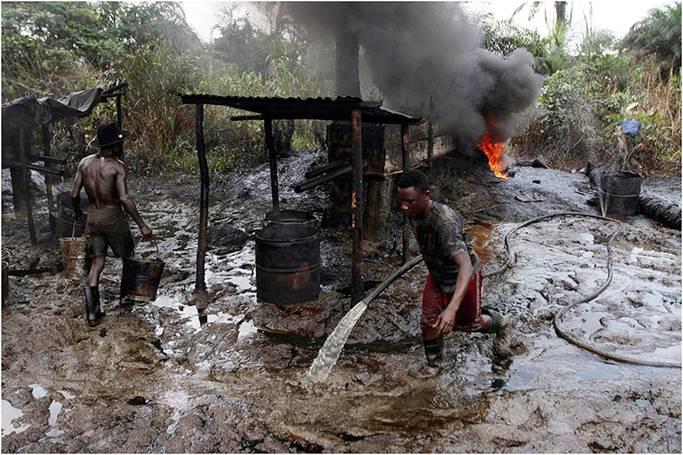
The Air Component of Joint Task Force Operation Delta Safe (OPDS) destroyed no fewer than 131 illegal refining sites and neutralised several crude oil theft facilities across the Niger Delta in 2025.
This had significantly helped in degrading the operations of oil thieves and economic saboteurs.
This was disclosed on Tuesday, January 20, 2026, during a briefing on the activities of the Air Component of OPDS and the Nigerian Air Force (NAF) 115 Special Operations Group, on Thursday in Port Harcourt.
Illegal refining activities in the Niger Delta
The brief was presented by Ft.-Lt. Aro, during the Media Tour of Defence Correspondents led by the Director of Defence Media Operations, Maj.-Gen. Michael Onoja.
It was revealed that the air unit conducted 495 missions in 779 sorties, logging over 784 flight hours in support of joint operations.
The briefing said that sustained air operations had reshaped the theatre of operations, denied criminals freedom of action and enabled ground and maritime forces to exploit operational gains, contributing to improved crude oil production and national revenue.
According to the Air Component, air assets deployed during the period included T-129 ATAK attack helicopters, EC-135 helicopters, Diamond-62 aircraft and Wing Loong II Unmanned Combat Aerial Vehicles (UCAVs), which played critical roles in intelligence gathering, interdiction and combat support.
It was stated that extensive Intelligence, Surveillance and Reconnaissance (ISR) missions led to the detection of illegal refining camps, pipeline vandalism points and storage facilities hidden deep within creeks and communities.
“Footages obtained were analysed and fused with intelligence from other security agencies to generate actionable targets.
“Upon confirmation, the Air Component carried out air interdiction missions that resulted in the destruction of illegal installations, boats, reservoirs and storage tanks containing stolen petroleum products,” the briefing said.
In addition to the 131 illegal refining sites destroyed, the Air Component also neutralised 36 wooden boats, destroyed 23 reservoirs and dugout pits, as well as 125 storage tanks used for storing illegally refined products.
The operations, it added, created significant psychological pressure on criminal networks, forcing many operators to abandon their camps and deterring the re-establishment of destroyed sites.
Speaking during the engagement, the Commander, 115 Special Operations Group, Port Harcourt, Group Capt. Abdulafeez Opaleye, said oil theft in the Niger Delta had become increasingly sophisticated.
Opaleye said that criminals now siphone crude oil through hoses running several kilometres from pipelines to concealed locations.
He stressed that while kinetic operations remained critical, community engagement was key to sustaining gains, urging host communities to see the Armed Forces as partners in progress.
“Our mission is to protect national assets and create conditions for economic growth. When oil production improves, the entire nation benefits,” he said.
Also speaking, the Director, Defence Media Operations, Maj.-Gen. Michael Onoja, commended the Air Component for its operational successes and resilience, describing the media as a critical partner in national security.
Onoja emphasised the need for strong civil-military relations and effective strategic communication, noting that accurate reporting of military operations would enhance public confidence and national cohesion.
He reiterated that security remained a collective responsibility, calling on all Nigerians to support ongoing efforts to secure the Niger Delta and protect critical oil and gas infrastructure.
The Air Component assured that joint air, land and maritime operations under Operation DELTA SAFE would be sustained to further curb militancy, sea robbery, crude oil theft and other criminal activities in the region.
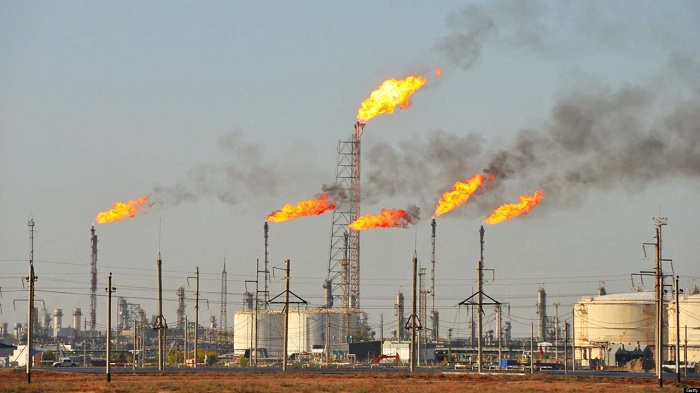
An oil and gas expert, Prof. Wumi Iledare, has urged the Federal Government to tighten regulatory enforcement in accelerating the development of reliable gas infrastructure, critical to ending routine gas flaring in the country.
Iledare said in Lagos on Tuesday, January 20, 2026, that the nation’s persistent gas flaring problem was no longer about the absence of policy frameworks but the weak implementation of existing regulations.
The Professor Emeritus of Petroleum Economics and Policy Research, Louisiana State University Centre for Energy Studies, U.S., said enforcement must begin with flaring penalties that are economically meaningful rather than symbolic.
Gas flaring
“Flaring fees should consistently exceed the cost of gas capture, taking into account inflation and fluctuations in gas prices,” Iledare said.
He added that regulatory exemptions must be clearly defined, strictly time-bound and transparently disclosed to prevent abuse.
Iledare also called for the deployment of real-time monitoring technologies, including metering systems, satellite verification and automated reporting, to close the gap between reported and actual flaring volumes.
“Enforcement must be consistent and impartial. Operators are more likely to comply when consequences are seen as inevitable,” Iledare said.
The expert acknowledged that inadequate infrastructure and limited access to finance remain major barriers to gas capture, noting that routine flaring persists largely due to the absence or high cost of gas evacuation options.
He advocated a blended approach in which government facilitates shared infrastructure such as pipelines and processing hubs, while the private sector drives efficiency and innovation.
“Fiscal incentives must be complemented with access to blended finance, including development, climate and commercial funds, to reduce investment risk,” he said, stressing that policy consistency was essential to attracting long-term investment.
Iledare said Nigeria’s energy transition would only succeed if it aligns with domestic economic priorities, adding that reducing gas flaring should directly support gas-to-power projects, the expansion of CNG and LPG infrastructure and increased industrial gas utilisation.
According to him, the objectives of Nigeria’s “Decade of Gas” initiative and its climate commitments are complementary, with natural gas serving as a credible transition fuel.
“By directing captured gas to power generation, industry and transportation, reductions in flaring can translate into job creation, improved energy access, enhanced social welfare and lower emissions,” he said.
Reacting to the vision of the Nigerian Upstream Petroleum Regulatory Commission (NUPRC) Chairman on production optimisation, revenue expansion and regulatory predictability, Iledare welcomed the aspirations but cautioned against conflating outcomes with regulatory mandates.
“These are desirable outcomes, but they are not the regulator’s primary responsibility.
“Regulators enable value creation; they do not directly deliver barrels or revenues,” he said.
He explained that the Petroleum Industry Act (PIA) envisages sustainable production growth and revenue expansion as outcomes of transparent, predictable and rule-based regulation.
While commending initiatives such as service-level agreements, digital workflows and faster approvals, Iledare said their effectiveness would depend on being firmly anchored in clear regulatory instruments, institutional discipline and PIA-compliant processes.
“Ultimately, durable investor confidence and sector efficiency will be achieved through regulatory specificity, rules over discretion, predictability over speed, and institutions over personalities,” he said.
Stakeholders in the built environment and construction industry have described 2025 as a period of recovery and resilience for the sector, expressing cautious optimism for further growth in 2026.
Industry observers are convinced that the construction sector recorded a remarkable improvement in 2025 compared to the previous year.
They project a slight growth in 2026 to be driven by economic rebound recorded in the last quarter of 2025, rapid infrastructure, high population growth, and significant government investment in infrastructure.
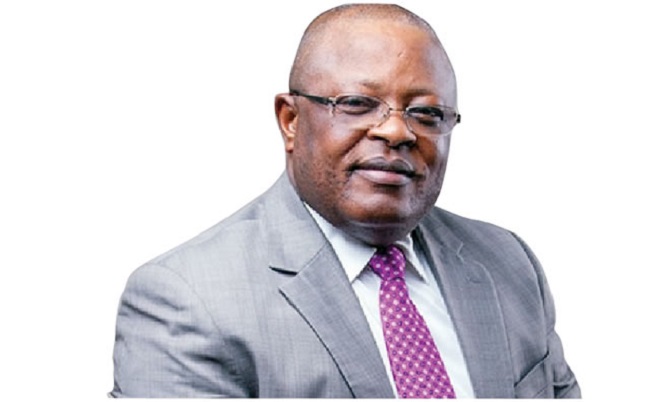
Minister of Works, David Umahi
Analysts believe that stronger investment in housing, infrastructure, oil and gas, and renewable energy would have driven greater growth, arguing that government initiatives, including the approval of major funding packages and reforms in construction-related laws, helped to create a better environment for the industry.
Major players in Nigeria’s construction space in 2025 include Hitech Construction Company Ltd., Julius Berger Nig. Plc, Megastar Technical and Construction Company, Setraco Nig. Ltd., and Dutum Group Construction Company.
In 2026, stakeholders expect improved performance supported by steady contract flow and earnings from projects secured in 2025.
They expect residential building segment to grow slightly, driven by the Federal Government’s pledge to construct about 550,000 new houses annually, projecting infrastructure development to play a major role, with anticipated investments in roads, rail systems, bridges and urban renewal projects.
Experts also foresee increased adoption of modern construction technologies such as Building Information Modelling (BIM) and digital twin technology, which are expected to improve efficiency and project delivery.
The Chairman, Nigerian Society of Engineers (NSE), Apapa Branch, Mr. Emmanuel Okolo, urges that engineers and other professionals should be fully in charge of construction projects in 2026.
He advises governments and other stakeholders to avoid patronising quacks, saying that professionalism is key to safety, quality, and sustainable growth in the sector.
The Chairman of NSE, Ikeja Branch, Mrs. Nimot Muili, notes that the industry faced a number of challenges in 2025, including rising material costs, labour shortages, brain drain and economic uncertainty, which, she argues, affected foreign investment.
She is, however, optimistic the industry will grow more in 2026.
She believes that the growth will be driven by investments in data centres, water infrastructure, transport, renewable energy, and digital transformation.
According to her, expected expansion in the movement of goods and services will further drive infrastructure investments, while increased adoption of Artificial Intelligence, automation, smart buildings, and BIM will enhance productivity and reduce project delivery time.
She, however, expects labour shortages to persist, as the industry is projected to require about 499,000 new workers in 2026, up from 439,000 in 2025.
Mr. Olumide Adewebi, Vice President, West African Region of the Commonwealth Association for Surveying and Land Economy, and Chief Executive Officer of Geosys Nigeria, describes Nigeria’s built environment in 2025 as resilient “but under strain”.
According to Adewebi, the sector showed adaptability in spite of high inflation, exchange rate volatility, rising material costs and limited access to finance.
Adewebi is convinced that these pressures exposed long-standing weaknesses in planning, regulation, professionalism and project execution.
Adewebi argues that while government at both the federal and state levels showed increased awareness of housing delivery and infrastructure renewal, implementation remained inconsistent due to slow and largely manual planning and land administration processes.
He says investments in roads, rail, ports, and energy projects continued in 2025 largely through public/private partnerships and donor funding, but revealed gaps in project management, local content execution, and maintenance culture.
Adewebi expects that 2026 will be a year of measured recovery and consolidation rather than rapid expansion for the industry.
He expects faster regulatory reforms and digitisation, especially in land administration and planning approvals, which may attract more private investment.
Adewebi also predicts stronger professional accountability, deeper technology adoption, and increased focus on affordable housing, modular construction, sustainability, and climate resilience.
According to him, clients and investors will demand greater transparency, speed, and certainty of delivery, rewarding professionals who prioritise competence, ethics and long-term value.
“While challenges will remain, the industry will increasingly favour competence over connections, systems over improvisation, and long-term value over short-term gains,” Adewebi says.