Home Blog Page 1793

UN warns climate change is driving global hunger

0

Climate Change is among the leading causes of rising global hunger according to a new report released by the UN’s Food and Agricultural Organisation (FAO) on Tuesday, September 11, 2018.
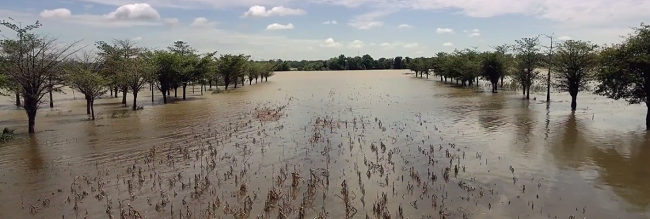
Flooded farmland
A flooded farmland. Photo credit: FAO

Pointing to extreme weather events, land degradation and desertification, water scarcity and rising sea levels, the authors show how climate change already undermines global efforts to eradicate hunger.

Overall, the number of hungry people grew for the third year in row in 2017, reaching a total of 821 million worldwide. The paper warns that this number will continue to rise if countries fail to tackle climate change and to build resilience to its unavoidable impacts.

In a joint foreword to the report, the heads of the UN Food and Agriculture Organisation (FAO), the International Fund for Agricultural Development (IFAD), the UN Children’s Fund (UNICEF), the World Food Programme (WFP) and the World Health Organisation (WHO) call for an integrated approach to counter the adverse effects of climate change on food production systems:

“If we are to achieve a world without hunger and malnutrition in all its forms by 2030, it is imperative that we accelerate and scale up actions to strengthen the resilience and adaptive capacity of food systems and people’s livelihoods in response to climate variability and extremes,” the leaders said.

The number of extreme climate-related disasters, including extreme heat, droughts, floods and storms, has doubled since the early 1990s, with an average of 213 of these events occurring every year during the period of 1990-2016. These disasters harm agricultural productivity of major crops such as wheat, rice and maize causing food price hikes and income losses that reduce people’s access to food.

Data in the FAO study adds further evidence to this trend, showing that prevalence and number of undernourished people tends to be higher in countries highly exposed to climate extremes. Undernourishment is higher again when exposure to climate extremes is compounded by a high proportion of the population depending on agricultural systems that are highly sensitive to rainfall and temperature variability.

To better illustrate the link between climate change and food insecurity the UN’s World Food Programme, in a collaboration with the UK met office, has developed an interactive map that outlines different scenarios for the future. By altering the level of emissions and adaption measures, users can explore how vulnerability to food insecurity could play out in different regions over time.

Landmark agreements such as the Paris Agreement and the 2030 Agenda for Sustainable Development have already acknowledged the link between hunger and climate change as well as the need for urgent action to protect the most vulnerable communities.

In December, the climate change conference COP24 in Poland will see the international community come together to finalise the rulebook of the Paris Agreement and to deliver on its promises.


Pulitzer Centre launches five-Year, $5.5m Rainforest Journalism Fund

0

The Pulitzer Centre on Wednesday, September 12, 2018 announced the launch of the Rainforest Journalism Fund, a five-year, $5.5 million initiative focused on raising public awareness of the pressing environmental issues facing the world’s tropical forests.

amazon_rainforest
The Amazon rainforest

Supported by a grant from the Norwegian Ministry of Climate and Environment through the Norwegian International Climate and Forest Initiative (NICFI), the Rainforest Journalism Fund represents a major investment in international environmental and climate reporting, with plans to support nearly 200 original reporting projects along with annual regional conferences designed to raise the level of reporting on global rainforest issues such as deforestation and climate change. The Fund will also provide hostile-environment and first-aid training to 75 journalists operating in rainforest regions during the course of the grant.

The idea gained momentum when a group of reporters in South America proposed an Amazon Journalism Fund to widen coverage of this important topic. Tropical forests are among the major battlegrounds of climate change – and also one of the most promising ways of mitigating, and reversing, its adverse environmental and public-health consequences. News-media outlets are said to increasingly lack the resources to support the kind of sustained reporting that is required to bring these issues to light; journalists reporting on these issues often face heightened security risks. This kind of reporting is described an essential public good that requires outside support to successfully reach audiences at both local and international levels, support that the Rainforest Journalism Fund will provide.

NICFI, the Pulitzer Centre and the journalists involved are committed to the editorial independence of the Fund’s grantees. One of the Pulitzer Centre’s key roles in administering the Fund is to ensure that the Fund’s grantees are free to conduct their reporting within the highest standards of journalism.

“Forest loss is often driven by hidden, illegal activities and executed with impunity,” said Ola Elvestuen, Norway’s Minister of Climate and Environment. “Global supply chains often provide the cash flows behind these activities. To counter the detrimental ongoing deforestation, we need more transparency and we need quality journalism.

“I am thankful that Pulitzer Centre, a renowned institution with a long track record of supporting state-of-the-art journalism on under-covered issues, will have full editorial control over funds and allocations, supported by advisory committees consisting of distinguished journalists,” Elvestuen said.

“Sunshine is the best disinfectant,” said Per Fredrik Ilsaas Pharo, director of NICFI. “There is no stronger sunshine than professional journalism.”

“No issue is as important to our future as climate change and understanding the role of rainforests is absolutely key to solving the challenges we face,” said Jon Sawyer, executive director of the Pulitzer Centre. “We are grateful for this opportunity to work with some of the world’s leading environmental journalists.”

As part of the Fund’s support for local reporters with regional expertise, the Pulitzer Centre will work with journalism advisory committees and coordinators with expertise on each of the world’s major rainforest regions – in the Amazon, central Africa and southeast Asia.

In reporting from the Amazon region, the Pulitzer Centre will work closely with the Amazon Advisory Committee, which will play a key role in deciding on the allocation of grants. The members are as follows:

  • Jonathan Watts, chair (global environment editor, The Guardian)
  • Eliane Brum (Altamira, Brazil / journalist, filmmaker and El Pais columnist)
  • Daniela Chiaretti, environment correspondent, Valor Economico(São Paulo)
  • Simon Romero (national correspondent, The New York Times)
  • Thomas Fischermann (Die ZEIT, South America)
  • Adriana León (Perú, IPYS and Los Angeles TimesPeru)
  • Fabiano Maisonnave (Amazon correspondent / Folha de São Paulo)

“The Rainforest Journalism Fund is the initiative of reporters in South America who want wider support for local and international media coverage of the Amazon,” Watts said. “We know from experience that reporting in this region is difficult and expensive, but crucially important if humanity is to understand and respond to the existential threats of deforestation, biodiversity loss and climate change.

“Our seven-member advisory committee – which is independent and predominantly comprised of journalists in Amazon nations – is grateful to the Norwegian government for providing substantial financial resources and to the Pulitzer Centre for adding media expertise, education and administration. We hope and expect that more grants and training will mean stronger stories and better governance.”

Over the next few months the Pulitzer Centre will be recruiting similar advisory committees, and regional coordinators, for Africa and Asia. It will also issue a call for proposals on its website, pulitzercenter.org, for rainforest reporting around the globe.

UNIDO, Edo fine-tune policy to combat environmental challenges

0

The United Nations Industrial Development Organisation (UNIDO) says it is collaborating with the Edo State Government to evolve a policy that will address the environmental challenges in the state.

Godwin-Obaseki
Governor Godwin Obaseki of Edo State

The National Programme Officer, UNIDO, Mr Reuben Bamidele, stated this at a one-day validation workshop for “Edo Environment Policy” in Benin City, the state capital, on Wednesday, September 12, 2018.

Bamidele said that the environment policy when developed would curb the activities that caused environmental degradation in the state.

He said human activities had continued to pose threat to the sustainability of environment.

“Edo is currently facing challenges in the areas of water erosion and deforestation, especially with the furniture business in the state; the forest is gradually being eroded.

“In the area of agriculture, the effect of bush burning and use of agrochemicals also pose problems to the environment; these are challenges the state has to tackle.

“The environmental policy is necessary to mitigate these changes,” he said.

The Permanent Secretary, Edo Ministry of Environment and Sustainability, Mr Brai Emoedume, said the essence of the workshop was to validate the input of stakeholders in the policy formulation.

Emoedume said, “Environment is key to human existence hence the need to have a framework to coordinate activities happening within it.

“We should consider the environment as something we are holding in trust for our children and protect it.”

Dr Felix Iyalumhe, the Senior Special Assistant to the Edo Governor on Environment, said the state was working with critical stakeholders on the policy formulation.

Iyalumhe said this was with a view to having a document that would help create a safer and cleaner state.

He added that the residents would benefit from the implementation of the policy as it would help address flooding and other environmental challenges faced in the state.

By Joy Odigie

IPCC considers global warming report for approval

0

The Intergovernmental Panel on Climate Change (IPCC) will consider the Special Report on “Global Warming of 1.5 °C” from October 1 to 5, 2018 at its 48th Session to be held in Incheon, Republic of Korea.

Hoesung Lee
Hoesung Lee, IPCC chair. Photo credit: reneweconomy.com.au

The report, whose full title is “Global Warming of 1.5 °C, an IPCC special report on the impacts of global warming of 1.5 °C above pre-industrial levels and related global greenhouse gas emission pathways, in the context of strengthening the global response to the threat of climate change, sustainable development, and efforts to eradicate poverty (SR15)”, was requested by governments when they adopted the Paris Agreement in December 2015 at the 21st Conference of the Parties (COP21) to the United Nations Framework Convention on Climate Change (UNFCCC).

Formally, the draft Summary for Policymakers will be considered by the First Joint Session of IPCC Working Groups I, II and III. The 48th Session of the IPCC will then accept their work.

A media session to present the Summary for Policymakers of the Special Report on “Global Warming of 1.5 °C” will be held after the meeting, subject to approval of the Summary for Policymakers.

IPCC Chair Hoesung Lee will address the opening session, along with senior officials from the United Nations Environment Programme (UNEP), the World Meteorological Organisations (WMO), and the United Nations Framework Convention on Climate Change (UNFCCC), and senior officials of the Republic of Korea.

Scientists unveil world’s first non-antibiotic treatment for TB in Britain

0

Scientists in Manchester in the United Kingdom have developed the world’s first non-antibiotic treatment for tuberculosis.

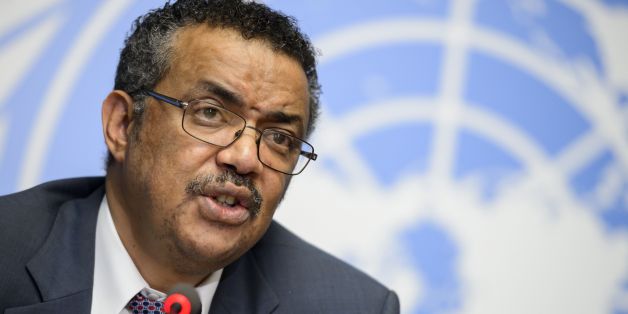
Dr Tedros Adhanom Ghebreyesus
Dr Tedros Adhanom Ghebreyesus, Director-General of the World Health Organisation (WHO). Photo credit: AFP / FABRICE COFFRINI / Getty Images

The team at the University of Manchester hoped the compound, developed after 10 years of painstaking research, will be ready for trials on humans within three to four years.

Project-leader Professor Lydia Tabernero said on Tuesday, September 11, 2018: “For more than 60 years the only weapon doctors have been able to use against TB is antibiotics.

“But resistance is becoming an increasingly worrying problem and the prolonged treatment is difficult and distressing for patients.”

Patients are currently forced to take a cocktail of strong antibiotics over six to eight months, often enduring unpleasant side effects with a 20 per cent risk that the disease will return.

A spokesman at the university said: “Although a vaccine for TB was developed 100 years ago, one in three people across the world are thought to be infected with the infectious disease.

“About 1.7 million die from the bug each year worldwide and 7.3 million people were diagnosed and treated in 2018, up from the 6.3 million in 2016.”

It is most common in Africa and Asia, but on the rise in Britain, with London often described as the TB capital of Europe, added the spokesman.

A drug, developed by the researchers, works by targeting Mycobacterium tuberculosis’ defences rather than the bacteria itself and it can also take out its increasingly commonly antibiotic resistant strains.

The research funded by the Medical Research Council has been published today in the Journal of Medicinal Chemistry, describing the drug as the first non-antibiotic drug to successfully treat tuberculosis in animals.

The Manchester team’s discovery has been proven effective in guinea pigs at Rutgers University in the U. S.

The animals with acute and chronic TB infection were treated with the compound, which was discovered after investigating dozens of other derivatives and compounds thought to have similar properties.

Tabernero added: “The fact that the animal studies showed our compound, which doesn’t kill the bacteria directly, resulted in a significant reduction in the bacterial burden is remarkable.

“By disabling this clandestine bacteria’s defenses, we’re thrilled to find a way that enhances the chances of the body’s immune system to do its job, and thus eliminate the pathogen.”

Mycobacterium Tuberculosis secretes molecules called Virulence Factors, the cell’s secret weapon -which block out the immune response to the infection, making it difficult to treat.

Professor Tabernero added: “The great thing about MptpB is that there’s nothing similar in humans – so our compound which blocks it is not toxic to the human cells. TB is an amazingly difficult disease to treat so we feel this is a significant breakthrough.”

She said the next stage of research is to optimise further the chemical compound, with clinical trials on humans possible within four years.

Katsina council immunises over 47,000 children against polio

0

No fewer than 47,077 children out of 50,268 children under five years had been immunised against polio in Zango Local Government Area of Katsina State in a renewed effort to tackle the virus.

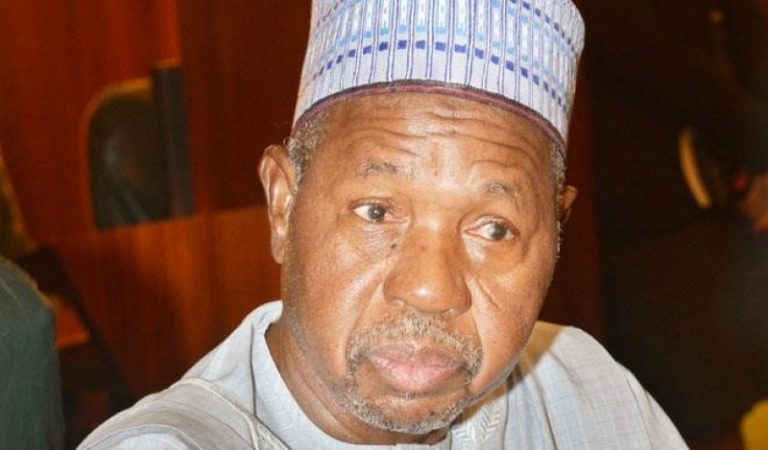
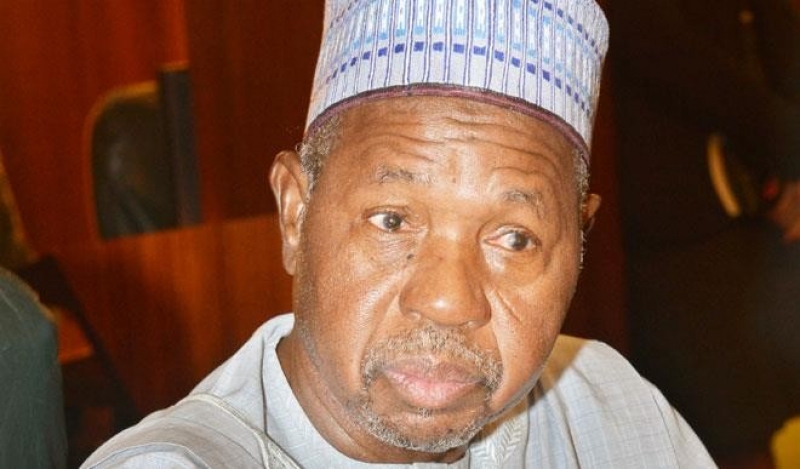
Alhaji Aminu Bello Masari
Alhaji Aminu Bello Masari, Governor of Katsina State

The council’s director of primary healthcare, Hajiya Hafsatu Ahmed, disclosed this to the News Agency of Nigeria (NAN) in Zango on Wednesday, September 12, 2018.

Ahmed said that the council had also administered 51,240 out of 52,840 vaccines received.

The director commended the efforts of the state government for providing logistic support for the exercise.

She said that no case of rejection of vaccine against polio was recorded throughout the exercise.

Ahmed said that all stakeholders that included traditional, religious and community leaders were fully involved in the exercise which lasted till Tuesday.

The council’s Roll- Back- Malaria Manager (RBM), Alhaji Tijjani Ahmed, also told NAN that the distribution of free mosquito nets in the LGA would hold between Oct.13 and Oct.17, 2018.

He said that the training of ad-hoc staff that would handle the distribution, monitoring and evaluation of the exercise across the 10 electoral wards had since commenced.

According to him: 20 supervisors, 244 mobilisers, 52 waste managers ,52 health educators and 104 crowd controllers have been engaged for the exercise across 52 distribution points in the area.

He warned the potential beneficiaries against diverting the mosquito nets.

He said that, whoever, was caught either among the beneficiaries or the officials handling the programme would not be spared.

Kenyan manufacturers sign MOU with environmentalists to manage plastic bottles

0

Kenya’s manufacturers’ lobby group on Wednesday, September 12, 2018 signed a Memorandum of Understanding (MOU) with environmental conservation groups to promote the effective management of Polyethylene Terephthalate (PET) containers and bottles.

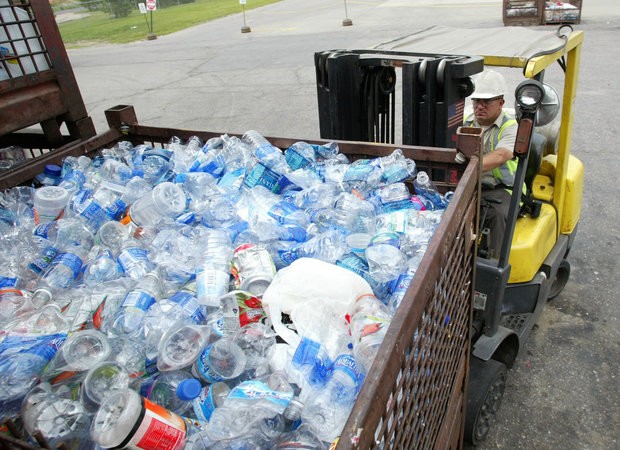
Plastic bottles
Disposal of waste plastic bottles. Photo credit: Al Goldis / Associated Press

Kenya Association of Manufacturers (KAM) and the groups resolved to take measures to encourage recycling and re-use of plastic bottles across the country.

Mucai Kunyiha, KAM Vice-Chairperson, said that as part of the agreement, the organisation would establish and implement the agreed “take-back” and “extended-producer” responsibility schemes for the plastic bottles.

“We are working with different stakeholders to help achieve policy changes that support a truly circular economy and a more holistic view of material use, collection, and reuse of plastic bottles,” Kunyiha told newsmen in Nairobi.

The industrialists will also undertake clean-up activities and awareness creation in partnership with county governments and other government agencies.

The association, with the support of the National Environmental Management Authority (NEMA), also signed the deal with the Kenya Association of Waste Recyclers and Dandora Hip Hop City for PET plastic waste management.

Ayub Macharia, Chairman of the National PET Management Committee, said recycling represents a systemic shift that builds long-term resilience, generates business and economic opportunities, and provides environmental and societal benefits.

“In other words, plastics aren’t necessarily bad for the environment; it’s the way we dispose of them that’s the problem,” Macharia said.

Tobias Alando, KAM Acting CEO, noted that waste management is a collective role in which the private sector should complement the government’s efforts to ensure a cleaner environment, adding that the partnership is the first and most crucial step in the journey towards effective waste management in Kenya.

KAM targets to recycle up to 20 per cent of PET plastic bottles in 2018 with a target of 70 percent by 2030, based on the circular economy concept that will involve various stakeholders including waste collectors, recyclers, the government.

Richard Kainika, the Secretary General of Kenya Association of Waste Recyclers, which has membership of over 150 registered waste recyclers, emphasised on policy changes to enable effective and sustainable waste recycling.

Ebola survivors might still experience virus after, says don

0

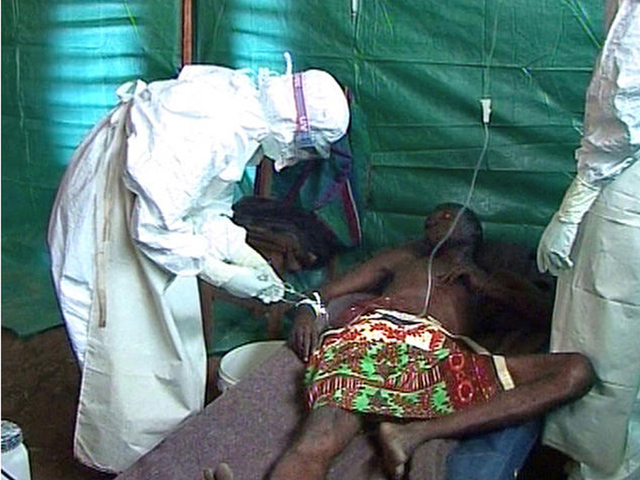
Some Ebola survivors may still experience the virus in the deeper compartments of their bodies where the immune system may not be able to clear.

Ebola
An Ebola patient receiving treatment

Prof. Jonathan Heeney of Cambridge University, United Kingdom, said this at the 10th Convocation Lecture of the Redeemer’s University in Ede, Osun State, on Wednesday, September 12, 2018.

Heeney, a professor of Veterinary Pathology, spoke on the theme: “Dare to Change: Turning the Tide against Nigeria’s Health Threats.”

Heeney said that the inner compartments of the body where the virus might be noticed include the eyes, the brain, the testes and the joints.

The don said that the virus genomes could be discovered in the semen of 30 per cent of male Ebola survivors six months or longer after they must have recovered from the disease.

He added that it had been documented that suspects could have contracted it from sexual transmission from male survivors or from female to male transmission.

“Breast milk transmission has also been observed, indicating that mother-to-child transmission may also occur from Ebola female survivors.

“Importantly, while an Ebola survivor is healthy, the risk that they may secrete the virus is low and the risk of transmitting the virus casually is negligible, “Heeney said.

The don, however, said that one of the greatest challenges is how to develop a vaccine that would not only protect people against Ebola, but also against its other filovirus family members.

Heeney, however, said that one of the reasons why it was difficult to curb Ebola outbreak in West Africa was because of societal practices.

He said, “Important amongst these factors are tribal cultures, no prior knowledge or experience with Ebola, mistrust of the government, conspiracy theories, among others.’’

According to Heeney, other scientific collaborators and he have started developing a vaccine.

He said that that the vaccine had the potential to protect people from three different kinds of hemorrhagic fever viruses and could be used across Africa.

Heeney said that public health campaigns in the most affected communities should include strategies for keeping rodents out of homes and food supplies and improving personal hygiene.

By Victor Adeoti

UN-backed ocean cleanup to remove 1.8tr plastic debris

0

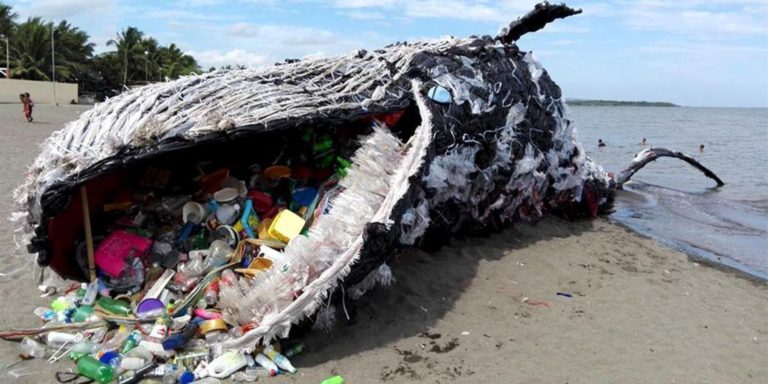
A UN-backed ocean cleanup vessel aiming at cleaning up 1.8 trillion pieces of plastic debris in the Pacific Ocean has left San Francisco, California on its first voyage.

Plastic pollution
The giant “Dead Whale” is a reminder of the massive plastic pollution problem

The vessel consists of a 600-metre long floater that sits at the surface of the water and a tapered three-metre deep skirt attached below which catches plastic debris.

The cleanup system, designed by a 24-year-old Dutch inventor and “UN Environment Champion of the Earth”, Boyan Slat, would undergo some trials before travelling 1,000 nautical miles to what is known as the Great Pacific Garbage Patch.

The huge mass of marine debris, situated in the North Pacific Ocean halfway between the Californian coast and Hawaii, is estimated by Slat’s Ocean Cleanup organisation to measure 1.6 million square kilometres – three times the size of France – and contains 1.8 trillion pieces of plastic.

That amounts to 250 pieces for every person on the planet, the organisation said.

The long-awaited launch of the first deployable model of the marine litter collection system, named “System 001,” took place on Saturday at the Golden Gate Bridge following four years of research and adjustments.

The system is carried by the ocean’s currents and waves, passively catching plastic debris along the way.

Ocean Cleanup’s research indicated that a scaled-up fleet of 60 such systems could eventually clean up 50 per cent of the patch in the next five years.

The trials are taking place 240 nautical miles into the Pacific Ocean and once they are completed, the devices would be sent the remaining 1,000 nautical miles out to the Great Pacific Garbage Patch.

Slat founded Ocean Cleanup when he was 18-years-old, and he was named a “Champion of the Earth” by UN Environment the following year in recognition of his quest to find a solution to the ever-growing global problem of plastic debris in oceans.

“Champions of the Earth” is the UN’s highest environmental honour, celebrating outstanding figures from the public and private sectors and from civil society organisations whose actions have had a transformative positive impact on the environment.

Every year, at least eight million tonnes of plastic leak into the oceans, and besides washing up on beaches and shorelines, plastic marine debris accumulates in five garbage patches around the world.

Of the five garbage patches, the Great Pacific Garbage Patch is the largest.

By Prudence Arobani

EU report blames poor air quality for 400,000 yearly deaths

0

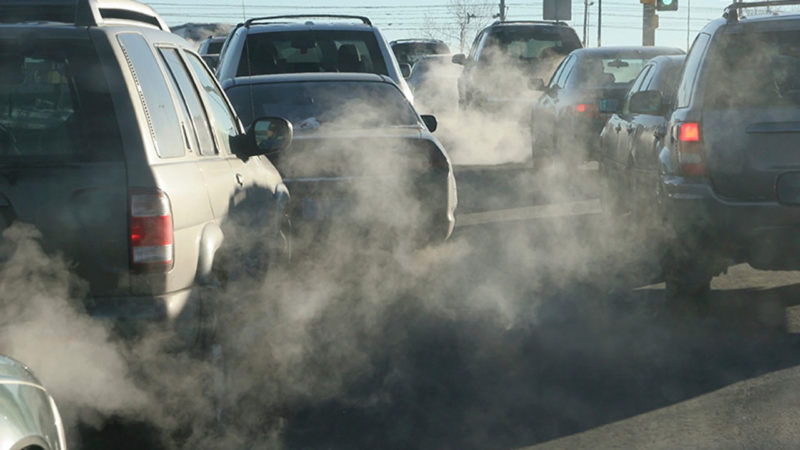
Air pollution causes more than 400,000 premature deaths across Europe annually, the European Court of Auditors (ECA) said on Tuesday, September 11, 2018.

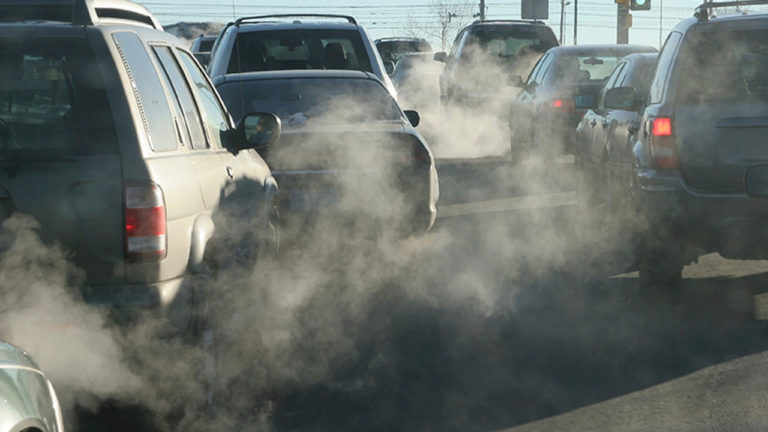
vehicular pollution
Vehicular pollution

EU action on improving air quality is falling short on implementation, monitoring and enforcement, the report added.

These shortfalls have major human and economic repercussions, including about 400,000 premature deaths a year, according to a new ECA report.

“Air pollution is the biggest environmental risk to health in the EU,” Janusz Wojciechowski, the ECA member, who led the report, said in a statement.

“In recent decades, EU policies have contributed to emission reductions, but air quality has not improved at the same rate and there are still considerable impacts on public health,” he added.

The report comes as EU air-quality rules are getting more scrutiny.

In Germany, some cities have imposed bans on diesel-vehicle use to lower nitrogen oxide levels.

In February 2017, a Constitutional Court decision gave German cities the green light to impose such measures, as more and more have been breaching EU levels.

In this most recent report, auditors studied the EU’s 2008 directive on ambient air quality to see whether and how much member states are complying.

They found that policy compliance and enforcement, as well as national estimates of air quality, are often inconsistent across the EU.

More broadly, air quality standards have not been updated over the course of 20 years.

The report also noted that poor air quality is most severe in eastern EU member states, in cities, and in areas where consumers still use solid fuel for heating and other energy needs.