Home Blog Page 179

NUPRC pledges commitment to achieving 2.5m BOPD by 2027, calls for protection of energy infrastructure

0

To achieve the national production target of 2.5 million BOPD by 2027, the Nigerian Upstream Petroleum Regulatory Commission (NUPRC) said it has facilitated renewed activity across mature assets. 

Speaking on Thursday, October 9, 2025, in Lagos at the Annual Conference of the Association of Energy Correspondents of Nigeria (NAEC), the Commission Chief Executive, Gbenga Komolafe, said these interventions are projected to deliver incremental volumes exceeding one million barrels of oil per day, a key milestone toward achieving the national production target of 2.5 million BOPD by 2027.
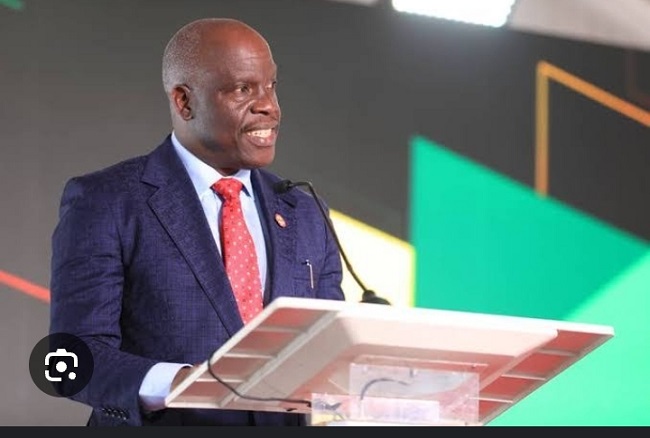
Gbenga Komolafe
Gbenga Komolafe, the Chief Executive of NUPRC

He noted that the NUPRC and other stakeholders are working to address the challenges hindering oil production. 

Speaking on the topic “Nigeria’s Energy Future and the Role of NUPRC in Driving Upstream Oil and Gas Industry’s Rebound”, Komolafe who was represented by a Director at NUPRC, Paul Osu, maintained that there is need to protect the nation’s energy infrastructure and uphold the principles of transparency, accountability and efficiency that define its regulatory mandate.

He said, “As we look to the future, our priorities remain to sustain Nigeria’s upstream rebound, achieve 2.5 million BOPD by 2027, strengthen gas.

“Through these efforts, the commission is not only driving the rebound of the oil and gas industry but also shaping Nigeria’s long term energy future.”

According to him, a sustainable rebound also demands secure infrastructure and credible measurement systems. 

To this end, he said the Commission has collaborated with security agencies, private contractors and community stakeholders in implementing the Upstream Measurement Regulation and the Advance Cargo Declaration Regulation.

He stated that the result is a remarkable 90 per cent reduction in crude oil theft from over 102,000 barrels per day in 2021 to 9,600 barrels per day as of September 2025.

Speaking further Komolafe also said that the Commission through the Host Communities Development Trust (HCDT) has successfully inaugurated over 90 Trusts across the Niger Delta, ensuring that development funds flow directly to communities. 

He said, “This model not only secures local ownership, but also guarantees peace, stability and continuity in production, key pillars for sustained energy security.

According to him, “The rebound we are witnessing in Nigeria’s upstream sector is not by chance.

“It is the outcome of deliberate regulatory design, anchored on transparency, efficiency and inclusiveness. The Commission’s strategic vision aligns with Nigeria’s broader economic goals and global sustainability commitments.

“At the same time, we are advancing Nigeria’s gas agenda as part of the ‘Decade of Gas’ and the nation’s energy transition pathway,” he said. 

Komolafe also noted that Natural gas remains our most reliable transition fuel, a catalyst for industrialisation, power generation and clean energy substitution. 

He maintained that by promoting gas monetisation, flare elimination and gas-based investments, the Commission is reinforcing Nigeria’s commitment to a just and balanced energy transition. 

On the global stage, he said the context reinforces this direction, adding that the IEA projects that upstream investment will surpass $580 billion in 2025, making a steady recovery from pandemic lows. 

He urged NAEC members and the wider press community, to continue ensuring that their reports are factual, verified and development oriented. 

Komolafe noted that responsible reporting strengthens investor confidence and preserves national reputation, adding that misinformation on the other hand, can distort progress and discourage investments.


Abuja to host Africa’s biggest climate forum to drive green transition

0

The Federal Capital Territory (FCT) will host the Africa Climate Forum (ACF) 2025 to bring together stakeholders across the continent to develop practical solutions for Africa’s green transition.

Prof. George Nwangwu, Director-General of the Global Centre for Law, Business and Economy (GCLBE), disclosed this on Friday, October 10, in Abuja.

Prof. George Nwangwu
Prof. George Nwangwu, Director-General of the Global Centre for Law, Business and Economy (GCLBE)

He said the two-day event, scheduled for Oct. 14 to Oct. 15, would bring together governments, investors, innovators, businesses, financial institutions and civil society to discuss how Africa can build a cleaner, fairer and more resilient future.

“Now in its third year, the Forum, organised by GCLBE, has become a key platform for turning climate ideas into action,” Nwangwu said.

He added that this year’s theme, “Bolder, Greener and Better Steps: Closing Transition Gaps in Africa”, focuses on helping African countries move from talk to tangible results.

Nwangwu noted that while progress had been made in renewable energy and climate policy, major gaps remained, especially in funding, technology and capacity.

“ACF 2025 will focus on closing these gaps by linking local priorities with global opportunities for finance, innovation and trade.

“The discussions will also examine how new international rules, including the European Union and United Kingdom Carbon Border Adjustment Mechanisms, could affect African exports, industries and jobs,” he said.

According to Nwangwu, the Forum will feature keynote speeches, policy sessions, side events, networking meetings and a Deal Room to connect project owners with investors and financial partners.

He said the event’s Marketplace would showcase innovative clean technologies from Africa and around the world.

“Together, these activities aim to move conversations from promises to projects; cutting emissions, improving energy access and creating jobs.

“Africa has moved past awareness; the real work now is financing, coordination and execution, and that is what this Forum seeks to drive,” Nwangwu said.

He added that participants are expected from government, finance, academia and the private sector, with the organisers projecting stronger partnerships and more investments in green projects through the ACF Deal Room.

Since its first edition in 2023, Nwangwu said, the ACF had grown into one of the continent’s most respected platforms for climate action.

“With tighter global climate rules and pressure to deliver results, ACF 2025 is expected to demonstrate how Africa can move beyond challenges to real, home-grown solutions for a greener global economy,” he said.

By Abigael Joshua

Global Energy Alliance commends govt over Mission 300 targets, policy reforms, grid expansion

The Global Energy Alliance for People and Planet (GEAPP) has commended the Federal Government’s efforts towards achieving the Mission 300 target. Minister of Power, Chief Adebayo Adelabu, disclosed that Nigeria is making significant progress in implementing the policy, with a focus on deploying solar-powered irrigation systems to farmers across the country.

Speaking during a visit to the Federal Ministry of Power on Monday, October 6, 2025, GEAPP African Director and Leader of Delegation, Labna Bhyani, commended the Minister for what the Nigerian Government has achieved within the time the Minister assumed office, particularly his efforts towards achieving the Mission 300 target.

Global Energy Alliance for People and Planet (GEAPP)
Members of the Global Energy Alliance for People and Planet (GEAPP) during a visit to the . Minister of Power, Chief Adebayo Adelabu

She said the organisation is impressed with Nigeria’s progress in policy reforms, grid, and off-grid programmes. GEAPP has pledged to provide technical assistance to support Nigeria’s Mission 300 initiatives, particularly in monitoring and tracking progress.

“Our mission here is to get a first-hand information on how you are progressing on the programme and even though we do not give loan like the World Bank and the African Development Bank, as we are just philanthropic, we will provide assistance where we feel we need to, to help you provide clean energy to your people. We are really impressed with what we have heard from you.

“You have made a significant progress in your policy reforms such as in your grid and off grid programmes. It is important for us to get involved in the area of technical assistance that you have mentioned, and I think we can provide collaboration and partnership in that area,” Bhayani said.

The Minister had earlier spoken, while receiving the delegation, on the Federal Government’s efforts towards achieving the Mission 300 objectives which aims to provide electricity to 300 million Africans by 2030.

Adelabu said the government is focusing on the transformation of the agricultural sector of the economy, through the deployment of solar powered irrigation system to farmers across Nigeria, adding that this forms part of the strategies towards the implementation of energy access to 300 million Africans by the end of 2030.

He said as a signatory to Mission 300 in Dar es Salaam, Tanzania, in January this year and having presented its National Energy Compact, Nigeria will revolutionise, through the provision of the non-grid solar powered energy, agriculture and other small-scale businesses, at the rural level in achieving energy access to the large population of rural dwellers.

He called on foreign partners to provide technical assistance to Nigeria in the implementation of the Mission 300, saying: “We so much need the technical support for us to be able to monitor and track different parts and locations in the country, so that, at any time, we can measure our achievements for data collection. Even though we have made significant progress in the implementation of this policy, there are lots of gaps to be filled so that it will not just be rhetoric. We must fully implement it.”

Expatiating on how the programme can make effective impact on energy access to the rural areas, Adelabu told the delegation that “in the area of agriculture for instance, we want to focus on irrigation to our rural farmers. In this case, we want to deploy thousands of solar powered pumps to help rural farmers to boost productivity. We will also follow up with the deployment of solar powered storage facilities because, when they produce more than what can be consumed, storage becomes a challenge as the products go bad quickly.

“We want to be able to achieve this for our rural farmers, using the non-grid method to power processors, planters, harvesters and other farm implements. In the same way, we will provide solar powered access to small scale businesses in our rural areas such as patent medicine stores and others that require energy. Through this, we move them to clean energy and enhance their productive capabilities.”

According to the Minister, Nigeria is moving in the right direction in the implementation of the policy “in partnership with the Ministry of Finance but still looking for partnership that can drive the implementation faster.

“We have established key pillars of the compact. About two months ago, we held our first stakeholders meeting. We are taking energy access to a lot of rural communities in their primary health care programmes. We have secured funding from India to achieve these.

“We are enhancing grid extension and expansion through programmes such as the Presidential Power Initiative (PPI), which has generated additional 700 megawatts for us, we are moving to the first phase of the Siemens project, which will also add additional 7000 megawatts to our generation and also stabilise it. We are also moving towards achieving the cost reflective tariff.

“Our metering initiative is going on so that our consumers can get the accurate value of their consumption as the estimated billing is a rip off on them. These and so many other activities have been embarked upon towards achieving mission 300 by 2030. But just as I said, we need your support, your cooperation and partnership for us to move ahead,” Adelabu said.

Migratory bird conservation concern as Slender-billed Curlew officially declared extinct

0

The International Union for Conservation of Nature (IUCN) on Friday, October 10, 2025, officially declared the Slender-billed Curlew (Numenius tenuirostris) extinct, marking the first known global extinction of a formerly widespread migratory bird species whose range included mainland Europe, North Africa, and West Asia.

The last confirmed sighting of the species was at Merja Zerga, Morocco, just over 30 years ago, on February 25, 1995. Friday’s announcement ends hope for the survival of this species, after years of exhaustive searches for any remaining individuals. This devastating loss underlines the urgent and sustained need for stronger, coordinated conservation efforts for migratory birds, and migratory species in general.

Slender-billed Curlew

Reflecting on the broader implications, Amy Fraenkel, Executive Secretary of the Convention on the Conservation of Migratory Species of Wild Animals (CMS), stated: “The extinction of the Slender-billed Curlew is a tragic and sobering moment for migratory bird conservation. It underscores the urgency of implementing effective conservation measures to ensure the survival of migratory species. Hopefully, the loss of this species will help galvanize action to protect other threatened migratory species.”

The Slender-billed Curlew was listed under CMS Appendix I and II at the signature of the Convention in 1979. In September 1994, just five months before what was later confirmed as the bird’s last sighting, a Memorandum of Understanding concerning Conservation Measures for the Slender-billed Curlew was adopted under CMS. The goal was to safeguard the species’ remaining individuals (then estimated at about 50) through international cooperation among 30 Range States, spanning from nesting areas in northwestern Siberia and Kazakhstan to non-breeding sites in southeastern Europe, the Middle East, the Mediterranean, and North Africa.

In June 1995, a new treaty was born out of negotiations under the CMS framework, to prevent the decline of the migratory waterbirds in the African-Eurasian flyway. At the signing of the new Agreement on the Conservation of African-Eurasian Migratory Waterbirds (AEWA), the Slender-billed curlew was also included as a priority species among 255 waterbird species listed for conservation.

“Two-thirds of bird species are in decline and the Slender-billed Curlew’s extinction serves as a poignant reminder that conservation frameworks must be implemented swiftly, backed by adequate science, resources and sustained political will,” said Jacques Trouvilliez, the AEWA Executive Secretary.

Several other waterbird species lister under either CMS or AEWA (or both) have been moved to a higher risk level on the IUCN Red List in recent years, indicating more efforts are needed to reverse their declines. These include waders, such as the Grey Plover (Pluvialis squatarola), Broad-billed Sandpiper (Calidris falcinellus), and Curlew Sandpiper (Calidris ferruginea) which were uplisted to Vulnerable, and the Ruddy Turnstone (Arenaria interpres) and Dunlin (Calidris alpina) which were uplisted to Near Threatened.

“With new technologies and knowledge now available, there is no excuse for allowing such tragedies to repeat. You cannot restore a species once it is gone,” says Nicola Crockford, Chair of the joint CMS/Birdlife Slender-Billed Curlew Working Group and observer for BirdLife International to AEWA and CMS.

Implemented Conservation Measures Have Meaningful Results

Effective conservation is one of the most reliable ways to halt declines and prevent extinctions; when key threats are tackled and habitats are managed well, wildlife populations often rebound. In 2020 the IUCN downlisted the Red Kite from Near Threatened to Least Concern, reflecting gains from targeted action: coordinated efforts across Europe cut poisoning and illegal killing through stronger enforcement, investigation, and awareness; practical site management in key range states improved breeding success and survival; and tighter monitoring with rapid responses to mortality clusters prevented setbacks.

Partnerships among authorities, land managers, and communities turned policy into everyday practice, showing that sustained, threat-focused work can move a species from decline to recovery, while continued vigilance is still needed to hold the gains. Another example is the ban on lead shots on wetlands which was recently adopted by EU members and should prevent one million waterbirds from being poisoned every year.

Need for Multilateral Conservation Action

While the proximate cause of the extinction of the Slender-billed Curlew is not fully known, unsustainable hunting and habitat loss were almost certainly major factors. With many migratory species now under increasing threat, the role of treaties such as CMS and AEWA in bringing together governments and stakeholders has never been more important. They provide the framework, guidance, and tools needed for coordinated action to protect these species, and full implementation of the provisions of these treaties could greatly reduce the risk of further extinctions.

The upcoming Meetings of the 9th Session of the AEWA Meeting of the Parties (MOP9) in November 2025 in Bonn, Germany, and 15th Session of the CMS Conference of the Parties (COP15) in March 2026 in Campo Grande, Brazil will offer a critical opportunity for policymakers and experts to reflect on this loss and strengthen current conservation efforts.

GOCOP 2025: NOA urges journalists to probe manifestos of aspiring political office holders

0

The National Orientation Agency (NOA) has encouraged media practitioners to introduce probing of manifestoes of aspiring political office holders as part of their responsibilities to reshape the country from frivolous and unkept promises.

The Director General of the agency, Lanre Issa-Onilu, gave the task while speaking as a panelist at the 9th annual conference of the Guild of Corporate Online Publishers (GOCOP), with the theme, “Reconciling Campaign Promises with Governance Realities: Challenges and Prospect”, held in Lagos on Thursday, October 9, 2025.

Lanre Issa-Onilu
Director General of the NOA, Lanre Issa-Onilu

He pointed out that some of the so-called manifestos are not originally from those who presented but the party they belong to, and they end up subscribing to such manifestos, stressing that as media practitioners this should be probed.

“Some people proposed manifestos which are not theirs, but party manifestos. They end up subscribing to their party manifestos. As journalists, we do not question manifestos, but populated airtime for other things.”

He equally pointed out that the manifesto of the federal government is the manifesto that governed Lagos state, explaining that the National Orientation Agency (NOA) is to communicate government projects.

The Director General added that government requires value documentation, recalling that before he joined the agency, he was among those who said it should be scrapped, but when he got there, he discovered that the staff there are committed.

“Before I went to NOA. I was among those who said it should be scrapped. It is not the Agency’s problem but a Nigerian problem. When I got there, I discovered that the staff there are committed.

“I am an agency under a Ministry. There is the problem of the need to have them buy into what I want to do. I am lucky to get the support of the president who is interested in the unity of the country,” he stated.

GOCOP 2025: Bode George urges online publishers to tackle fake news, uphold journalism ethics

0

A chieftain of the Peoples Democratic Party (PDP), Chief Bode George, has charged members of the Guild of Corporate Online Publishers (GOCOP) to take the lead in clearing the obstacles facing journalism, particularly the menace of fake news and unprofessional conduct among impostors in the industry.

Chief George gave this charge on Thursday, October 9, 2025, during the 9th Annual Conference of GOCOP, held at the Radisson Blu Hotel, Ikeja, Lagos, with the theme: “Reconciling Campaign Promises with Governance Realities: Challenges and Prospects.”

Chief Bode George
Chief Bode George at GOCOP 2025 Conference

Expressing displeasure over the growing number of untrained individuals masquerading as journalists, George commended GOCOP for its consistent efforts in promoting professionalism and integrity in digital journalism.

“I am extremely happy that GOCOP continues to grow stronger despite the odds. I have followed your activities since inception, and I am proud to be associated with a body of credible professionals,” he stated.

The elder statesman urged the Nigerian government to improve the lives of young citizens who, he lamented, have become victims of poor governance.

He emphasised that Nigeria’s diverse resources and human potential should be harnessed responsibly for national progress.

According to him, “There is no part of Nigeria that is not endowed. True democracy means utilising resources for the benefit of the people. Leaders must remember that power is transient and that posterity will judge their actions.”

Chief George further warned against any calls for military intervention, insisting that such moves would derail the nation’s democratic progress.

He stressed that the civilian system, despite its imperfections, provides checks and balances through its three arms of government, unlike the military, which centralises authority.

He also called for a comprehensive review of the Independent National Electoral Commission (INEC) to strengthen Nigeria’s democratic institutions and restore public confidence in the electoral process.

Chief George concluded by urging journalists to continue upholding truth, ethics, and patriotism, reminding them that credible journalism remains a pillar of democracy and national development.

Proud moment for Lekoil as Tinubu commissions Otakikpo Onshore Export Terminal

0

Lekoil Nigeria Limited is marking a defining chapter in her journey as a leading independent oil and gas company in Nigeria, as President Bola Ahmed Tinubu, represented by the Minister of State for Petroleum Resources (Oil), Heineken Lokpobiri, commissions the Otakikpo Onshore Crude Oil Export Terminal.

The commissioning of the strategic export channel, through which Lekoil evacuates crude oil from the Otakikpo field, is in line with ongoing reforms to expand Nigeria’s production capacity towards Nigeria’s economic development. According to the company, “the Otakikpo Onshore Crude Oil Export Terminal is not just infrastructure; it is a symbol of progress, credibility, and the determination of indigenous producers to deliver value on a global stage.”

Lekan Akinyanmi
Chief Executive Officer of Lekoil, Lekan Akinyanmi

In a statement, Lekan Akinyanmi, CEO of Lekoil, praised President Tinubu and the leadership of the Nigerian Upstream Petroleum Regulatory Commission (NUPRC) for creating an enabling environment. He said the commissioning of the terminal represents a validation of the company’s commitment to consistency and building lasting value.

“The commissioning of the Otakikpo Onshore Crude Oil Export Terminal is a proud moment for Lekoil. It validates our commitment to building lasting value as an indigenous producer, delivering our crude to the market reliably while supporting our host communities and Nigeria’s broader energy ambitions. This milestone is a clear indication that Lekoil represents resilience, responsibility, and results,” Akinyanmi stated.

Lekoil, along with Green Energy International Limited, her joint venture partner on the Otakikpo field (PML 11), has consistently demonstrated that indigenous oil and gas companies can operate at world-class standards, unlock resources, advance community development, and contribute to national production growth.

With the commissioning of the terminal, Lekoil can now maximise the potential of Otakikpo, widely regarded as a prolific area for oil and gas nestled in the southeastern part of the Niger Delta basin, and ensure secure, efficient evacuation and reinforce its reputation as a reliable supplier of Nigerian crude.

“This achievement underscores Lekoil’s place as a trusted, responsible operator with a long-term commitment to Nigeria’s energy security and economic growth and its vision: to be the world’s leading exploration and production company focused on Africa. We celebrate this historic commissioning as a major step in Lekoil’s growth story, one that confirms our standing as a bonafide independent producer with the capacity, the partnerships, and the will to deliver,” Akinyanmi added.

Dangote Refinery clarifies feedstock imports, reaffirms high-quality petrol production

0

Dangote Petroleum Refinery has dismissed recent media reports alleging that it is importing finished petrol with high sulphur content into Nigeria, describing the claims as false and misleading.

In a statement issued on Friday, October 10, 2025, the company explained that, as a world-scale complex refinery, it processes a wide range of crude oils and intermediate feedstocks, which is a standard global practice aimed at optimising production and product quality.

“The cargo in question is an intermediate feedstock, not finished petrol,” the company said. “It will be fully refined in our processing units to meet both Nigerian and international quality standards.”

Dangote Refinery
Dangote Refinery

Operating within a Free Trade Zone, Dangote Petroleum Refinery said it refines and sells only high-quality fuels that comply with all regulatory specifications. The company added that its exports of petroleum products to the United States and Europe, among the world’s most regulated markets, underscore its adherence to international benchmarks for quality and safety.

Dangote Refinery further noted that all imported feedstocks are accompanied by quality certificates, which are transparently shared with regulators.

“We are also willing to make these documents available to the public in the interest of full transparency and accountability,” the statement added.

The company reaffirmed its commitment to advancing Nigeria’s energy independence, maintaining global best practices, and delivering cleaner, high-quality fuels for both domestic and international markets.

Read full statement below:

Clarification on Importation of Intermediate Feedstocks

Dangote Petroleum Refinery has noted reports claiming it is importing finished petrol (PMS) with high sulphur content into Nigeria. These reports are false, malicious, and misleading.

As a world-scale complex refinery, Dangote processes a range of crude oils and intermediate feedstocks, a standard global practice aimed at optimising production and quality. The cargo in question is an intermediate feedstock, not finished petrol, and will be fully refined in our units to meet Nigerian and international quality standards.

Operating within a Free Trade Zone, Dangote Petroleum Refinery refines and sells only high-quality fuels, compliant with all regulatory specifications. Our exports of petroleum products to the United States and Europe, among the world’s most regulated markets, underscore our adherence to global benchmarks.

All imports are accompanied by quality certificates and shared transparently with regulators. Dangote Petroleum Refinery is also willing to make these documents available to the public in the interest of full transparency and accountability.

Dangote Refinery remains fully committed to advancing Nigeria’s energy independence, upholding the highest standards of quality and transparency, and delivering cleaner fuels for Nigeria and beyond.

Management

Danlami Nmodu emerges GOCOP president, takes over from Chigbo

0

The Guild of Corporate Online Publishers (GOCOP) has inaugurated a new executive council after a keenly contested election in Lagos.

The new EXCO is headed by Danlami Nmodu, as President. Other officers include Mr. Olumide Iyanda, Deputy President; Mr. Sufuyan Ojeifo, General Secretary; Mr. Akeem Oyetunji, Deputy General Secretary; Ms. Ngozi Onyeakusi, Treasurer; Mr. Moses Ebosele, Financial Secretary; and Ms. Kemi Yesufu as Publicity Secretary, 

GOCOP
Members of the Danlami Nmodu led GOCOP Exco

With the inauguration, Nmodu took over from immediate past president of GOCOP and publisher of RealNews, Dr Maureen Chigbo.

In his acceptance speech after inauguration, Nmodu expressed gratitude to members of GOCOP for finding him worthy of the office of President.

He promised to abide by the ideals, rules and regulations of the guild in order to take the body to a higher level of growth within the online publishing community in Nigeria.

“I take the responsibility of the office seriously. Our members shall come first. I promise to work harmoniously with other exco officers and members to take GOCOP to a higher level of growth,” he declared.

Nmodu also promised to create more human capital and business opportunities for all members of GOCOP.

The presidency was the only contested position during the election between Mr. Danlami Nmodu and Mr. Segun Adeleye. The other officers were returned unopposed.

Declaring the result of the election, Mr. Yusuf Ozi-Usman, Chairman, Electoral Committee, GOCOP 2025, stated that out of a total of 120 registered members as of October 8, 114 were qualified, by the provision of GOCOP constitution to vote and be voted for.

He also disclosed that, out of the 114, 80 members attended the Annual General Congress in person, while 71 voted physically, some nine members did e-voting.

Nmodu scored a total of 56 votes to emerge.

Lagos-Calabar Coastal Highway: An appeal to protect Nigeria’s coastline amid development

Dear President Bola Ahmed Tinubu, Minister of Works, David Umahi, and Minister of Environment, Balarabe Abbas Lawal,

As Nigeria charts a new trajectory toward becoming an economic powerhouse in Africa, critical infrastructure projects like the Lagos-Calabar Coastal Highway represent a beacon of hope and progress. This 700-kilometre standard highway, now advancing simultaneously across several states of the federation, including Lagos, Ogun, Ondo, Edo, Akwa Ibom, and Cross River, embodies the vision of a connected and unified nation. This lofty and ambitious project has the potential to transform our coastal regions into hubs of commerce, tourism, and innovation, much like major infrastructural developments seen in nations such as Indonesia and the United Arab Emirates.

Surajdeen Alabede
Surajdeen Alabede

The true beauty of this project lies in its vast potential to boost economic growth by facilitating faster trade, reducing transportation costs, and creating thousands of jobs both during construction and long after completion. Imagine seamless travel along our stunning Atlantic coastline, unlocking opportunities for ecotourism, aquaculture, and blue economy initiatives capable of generating billions in revenue while showcasing Nigeria’s natural splendour to the world.

Beyond the economic benefits, enhanced connectivity will not only bridge urban centers but also empower rural communities, fostering inclusive development and attracting diaspora investments that strengthen our global ties. Indeed, this highway is far more than asphalt and concrete; it is a symbol of national unity, visionary leadership, and Nigeria’s unstoppable march toward progress under the present administration.

However, as stewards of our nation’s resources, we must confront the sobering realities that come with such grand endeavours. The highway’s proposed route through ecologically sensitive coastal ecosystems, including mangroves, wetlands, barrier islands, and biodiversity hotspots in the Niger Delta, raises significant environmental concerns that could undermine the very progress we seek to achieve.

Ongoing construction activities such as dredging, land reclamation, and earthworks are already contributing to the degradation of natural habitats, resulting in loss of species, the spread of invasive species, and a troubling increase in roadkill involving fish, birds, reptiles, and mammals.

Research shows that coastal erosion is already prevalent at rates up to 8 meters per year in states like Lagos and may speed up due to altered sediment dynamics and vulnerability to sea-level rise, leading to saltwater intrusion, subsidence, and heightened flooding risks. Runoff, sediments, heavy metals, and hydrocarbons pollute coastal water, thereby threatening aquatic life, fisheries, and community water sources, with potential for eutrophication and toxicity in lagoons and estuaries.

Also, air and noise pollution during construction exceed standards, impacting human and animal health, while long-term traffic could worsen greenhouse gas emissions and urban heat islands without proper offsets. These impacts not only jeopardise our rich biodiversity but also affect vulnerable communities, potentially displacing livelihoods and deepening social tensions amid ongoing land disputes.

This project can still be a model of sustainable development if we prioritise mitigation strategies grounded in global best practices and supported by rigorous environmental oversight. Foremost, it is essential to enforce comprehensive Environmental and Social Impact Assessments (ESIAs) across all project sections, ensuring full compliance before further advancement, in line with Lagos State regulations and federal environmental guidelines.

Additionally, the creation of wildlife corridors, mangrove restoration programmes, and artificial reefs will help restore habitats and preserve ecological connectivity. To protect the coastline, authorities should implement soil-stabilisation measures, such as ocean-wave barriers, improved drainage systems, and bioengineering techniques, to stabilise shorelines and mitigate the effects of sea-level rise.

The contractors handling the project should be encouraged to use low-emission machinery, dust-suppression measures, and noise barriers to significantly reduce environmental pollution. Regular monitoring of air, water, and soil quality should also be mandated to ensure adherence to environmental standards. Furthermore, transparent stakeholder engagement involving local communities, environmental NGOs, and diaspora groups is vital for building trust, addressing genuine concerns, and fostering a shared sense of ownership of this project.

In conclusion, the federal government must integrate sustainable funding and long-term maintenance plans that prioritise green infrastructure, such as cool pavements and the integration of renewable energy along the route.

Your Excellencies, let me remind you that Nigeria’s legacy depends on balancing ambition with responsibility. By heeding this call to duty, you can ensure the Lagos-Calabar Coastal Highway becomes a triumph of progress that preserves our environment for future generations to come. Let us build not just a road, but a sustainable future.

By Surajdeen Alabede, a Nigerian Canadian environmental professional, environmental protection and sustainability advocate and Co-Founder of Environmental and Green Initiative for Sustainability (EGIS)