Home Blog Page 178

Concern as Sterling Oil pipeline runs through homes, schools in Delta communities

0

The indigenous communities of Afor Clan in Ndokwa East Local Government Area of Delta State are facing an urgent environmental and constitutional crisis due to Sterling Oil Exploration & Energy Production Co. Ltd.’s controversial pipeline project.

Despite strong community opposition and ongoing legal proceedings, the company is said to have proceeded with construction through residential areas, raising concerns about environmental safety, proper consultation, and constitutional violations.
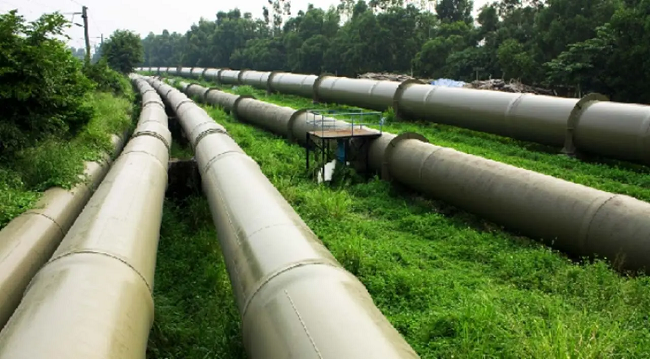
Oil pipeline vandalism
Oil pipeline

Sterling Oil began exploration activities in the Afor Clan communities five years ago. In April 2025, the company returned to secure permissions for a pipeline running in these locations to its Flow Station in Beneku, which would affect five communities: Okolori-Afor, Ogbetitit-Afor, Umuachi-Afor, Ogbedigbo-Afor, and Obetim-Uno.

The pipeline is located near the Health Centre, as well as homes, schools, and it passes through farms. The route through which the pipeline would follow had initially been laid out by the community through a map it designed to accommodate the company showing the safer options.

The pipeline runs less than 100 metres from the only health centre serving the entire Afor region, thereby depriving communities of their only healthcare access. This poses environmental risks, threatening water sources, biodiversity, and agricultural lands, as well as significant safety concerns due to the potential for explosions, leaks, and contamination.

During a community visit, it was discovered that the community has a history of legal disputes with the company. Multiple protest letters have been submitted to Sterling Oil by the communities, although no response has been received. The communities, however, have secured legal representation through qualified law firms, and a petition to the National Assembly has been submitted through Nnamdi Eziechi (Ndokwa/Ukwuani Constituency).

However, the petition is still pending a final hearing at the National Assembly, and Sterling Oil has reportedly proceeded with excavation despite ongoing legal proceedings, without addressing the concerns of the communities or responding to legal communications.

The company’s actions appear to violate human rights, with the initial plan being to route the pipeline behind Owoi Creek, an undeveloped and safer area. The company has allegedly failed to present a mandatory Environmental Impact Assessment (EIA) to the affected communities, nor has it engaged in meaningful dialogue with legitimate community representatives. The project reportedly violates Sections 43 and 44 of Nigeria’s 1999 Constitution, which guarantee citizens’ rights to own property and protect against forceful takeover of landed properties.

Mr. Cletus Ifeadime, President of Afor United, the umbrella organisation representing the affected communities, noted: “We are not against oil and gas development, but we cannot accept a pipeline running through our homes, schools, and health facilities, Sterling Oil promised to route the pipeline behind Owoi Creek, away from residential areas, but instead they are bulldozing through our towns.”

Also, Amb. Chukwuyenum Kind Uzor, Secretary of Afor United, who joined in protesting the location of the pipeline, mentioned: “When we protested the route change in April, they brought soldiers to chase us away and continued with their plans. This is not how responsible companies should engage with host communities. The pipeline will traverse our developing residential areas, which will result in irreparable environmental damage and harm to local biodiversity, the legal petition states.

“We demand strict adherence to our position on this matter, including adequate compensation and community development projects as stipulated in the Petroleum Industry Act 2021.”

Dr Otive Igbuzor, a human rights advocate, further calls for the review and audit of Sterling Oil’s environmental compliance, verification of proper consultation procedures, and Assessment of alternative route feasibility.

“This situation represents a critical test of Nigeria’s commitment to environmental protection, constitutional rights, and corporate accountability. Immediate intervention is required to prevent a potential environmental disaster and protect the constitutional rights of Nigerian citizens in Delta State. The convergence of environmental risks, constitutional violations, and corporate overreach demands urgent attention from government authorities, regulatory bodies, and civil society organisations.”

The executive director of HOMEF, Dr Nnimmo Bassey, noted: “We keep seeing this utter disregard of the welfare of our communities and any regard to their environment. Sterling Oil Exploration & Energy Production Co. Ltd has no right whatsoever to place its pipeline close to the community when the community has offered them a safer, better route that doesn’t endanger them. What does Sterling Oil Exploration & Energy Production Co. Ltd want? To bomb the peaceful community? They should stop work immediately and reroute the pipeline.”

The communities require immediate action to be taken, which includes the following:

  1. The cessation of all construction activities by Sterling Oil, pending proper consultation and agreements. The re-routing of the pipeline behind Owoi Creek is as initially planned.
  2. Comprehensive Environmental Impact Assessment conducted by accredited agencies.
  3. Meaningful community consultation with legitimate stakeholders, and adequate compensation and community development projects as stipulated in the Petroleum Industry Act 2021.
  4. The communities further demand that the company stick to the community-proposed route behind Owoi Creek, as this will ensure minimal impact on residential areas, water sources, and livelihoods. They demand inclusive dialogue with all affected communities, and
  5. Regular updates and community involvement in decision-making.

Civil society groups recommend that the following recommendations be made to all concerned parties: for government authorities to immediately intervene and halt construction pending a proper environmental assessment, begin an investigation into Sterling Oil’s compliance with Nigerian environmental laws, and enforce the constitutional rights and property protections of the Afor communities.
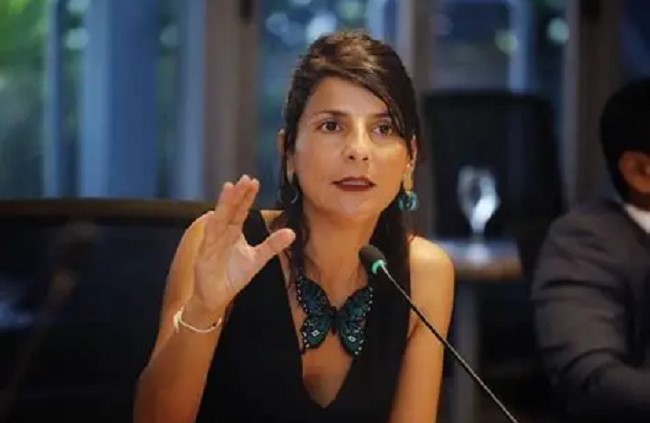
UNGA: Colombia offers to host first International Conference for the Phase-Out of Fossil Fuels

0

During the United Nations General Assembly (UNGA) in New York City, Colombia has announced its plan to host the First International Conference for the Phase-Out of Fossil Fuels in April 2026. The landmark conference will provide a global platform for countries to cooperate on strategies to phase out oil, gas and coal extraction, complementing and reinforcing the Paris Agreement.

It also aligns with the historic International Court of Justice Advisory Opinion (ICJAO), which recognises States’ legal obligation to protect the climate, including by addressing fossil fuel production.

Irene Vélez Torres
Irene Vélez Torres, Minister in Charge of Environment and Sustainable Development of Colombia

The decision to convene the conference was reached by the 17 countries participating in discussions to develop a Fossil Fuel Non-Proliferation Treaty. Participating nations agreed to advance a series of diplomatic conferences starting in 2026, with the goal of fostering international cooperation for a just transition away from fossil fuels.

Irene Vélez Torres, Minister in Charge of Environment and Sustainable Development of Colombia, said: “Colombia is proud to host the First International Conference for the Phase-out of Fossil Fuels in 2026. This historic gathering will be a pivotal moment for the Global South to lead the charge in transforming our energy systems and addressing the intertwined crises of climate and justice. Together, we will chart a path that prioritises life, equity, and sustainability over destruction and inequality. This is our moment, our mandate – to build a future beyond fossil fuels and ensure reparative justice for everyone.”

Ralph Regenvanu, Minister for Climate Change, Energy, Environment and Disaster Management of Vanuatu, said: “For vulnerable nations like Vanuatu and our other Small Island States, the phase-out of fossil fuels is not merely an environmental imperative, it is an existential one. This conference represents a pivotal step towards forging a common roadmap, ensuring that no community or nation is left behind as we build a resilient, sustainable future that protects our people, our economies, and our planet.”

Tzeporah Berman, Founder and Co-Chair of the Fossil Fuel Non-Proliferation Treaty Initiative, said: “This announcement from Colombia signals a bold and necessary step towards climate leadership. The proposed Fossil Fuel Treaty is gaining momentum, and this conference offers a vital opportunity to translate growing support into concrete action, accelerating our shift towards a more sustainable and just energy future for all.”

The conference will serve as a strategic space for dialogue among diverse stakeholders across all sectors – including government representatives, experts, rural and Indigenous Peoples, Afro-descendant communities, civil society, climate advocates, industry leaders, and academia – to explore viable, fair, and equitable pathways for transitioning to sustainable, diversified and accessible energy. Focused on fostering robust and structural transformations, the summit aims to facilitate a planned, just, and sustainable phase-out of fossil fuels.

This announcement marks the first political step towards the formal launch of the conference, with further details to be unveiled at COP30 in Belém. During a High-Level Ministerial Meeting, participating nations will outline the contours of the 2026 conference, and issue a joint political declaration, solidifying their commitment to decisive action in confronting the climate crisis: through a just and equitable transition away from fossil fuels, one that recognises the need for a structural shift in our socioeconomic model.

The idea of a global conference builds upon successful examples of previous diplomatic summits that have led to increased international cooperation and treaty negotiations to address major global threats including the Mine Ban Treaty (Ottawa Process); the Convention on Cluster Munitions (Oslo Process); and the Treaty on the Prohibition of Nuclear Weapons, for which a series of three conferences, known as the Humanitarian Initiative, shifted the framing of nuclear weapons from one of security to a humanitarian discourse, leading to successful treaty negotiations within the UN General Assembly.

This announcement comes at a critical moment, amplified by the release of the 2025 Production Gap Report today. The findings reveal a stark misalignment between global fossil fuel production plans and the levels essential to limiting global warming to 1.5°C. According to the report, government projections for 2030 indicate fossil fuel production will surpass Paris Agreement-compliant levels by more than 120%, and by 2050, production is expected to exceed necessary levels by 4.5 times for a 1.5°C pathway.

This systemic failure to reduce fossil fuel production demands even more drastic future cuts to meet Paris targets, underscoring the urgent need for a swift and decisive global transition away from fossil fuels.

By Adaobi Ogbuani

World Cleanup Day: YASIF, others want reorientation to strengthen Nigeria’s waste sector

0

The Young Advocates for a Sustainable and Inclusive Future (YASIF), the Federal Ministry of Environment, and civil society groups have called for a wide range of public awareness campaigns to help address the challenges of poor waste disposal and its impact on Nigeria’s economy.

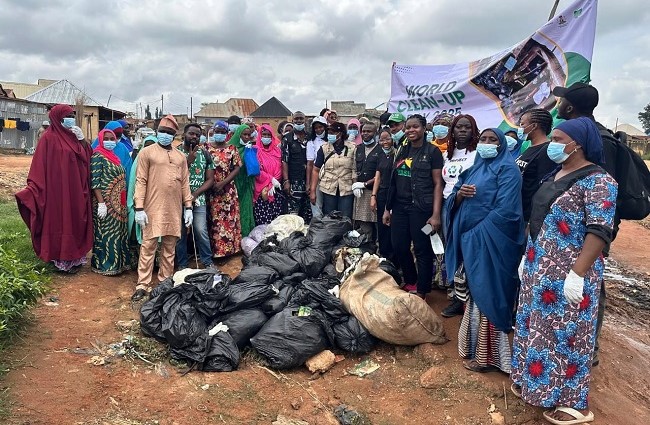
The group, which referred to waste as wealth, made the call on Friday, September 20, 2025, just after a cleanup exercise in Karonmajiji, a small community on the outskirts of Abuja, the capital of Nigeria, as part of its activities to celebrate this year’s World Cleanup Day.

World Cleanup Day
Participants at a cleanup event in Karomonjiji, Abuja, gathered to commemorate the 2025 World Cleanup Day. This event was organised by the Young Advocates for a Sustainable and Inclusive Future (YASIF) in collaboration with the Federal Ministry of Environment

It continued by saying that Nigeria will be more than halfway to tackling the problem and accomplishing its sustainability objective if it can persuade its citizens to realise this hidden truth.

Blessing Ewa, the founder of YASIF, told EnviroNews in an interview that the desire to confront the aforementioned problem actually motivated her organisation to earlier sensitise some selected women in the community on waste upcycling and recycling, and most of them reported that they were already earning income from the skills they had acquired.

According to her, the women leader informed her in a conversation that many of their members have generated over N150,000 each from selling some of their products which they made from pure water sachets.

Ewa said this is “what they previously considered as waste.” This gesture reveals how pleased the women are with the training, which has not only provided them with knowledge about environmental sustainability but has also enriched their pockets by allowing them to earn money from recycling agencies that buy their products.

She expressed her happiness at the development, which she says her establishment anticipates because of its impact in positioning the beneficiaries as pacesetters of ecological conservation.

In a similar vein, Lawrence Okechukwu, an assistant chief chemical engineer with Solid Waste Management and Technology in the Federal Ministry of Environment’s Department of Pollution Control, underscored the pressing need to change the stereotype that waste is typically associated with into its true value as an economic asset.

When asked about his thoughts on using the law to solve the issue, he strongly expressed his belief that people will be more reluctant to commit crimes if there is a shift in public perception ofwaste. So, for him, there is no need to go to such lengths because the majority of the people being referred to are already poor and require the environment for empowerment.

“The primary concern is reorientation; with effective reorientation, this issue can be addressed at its roots – that is my honest opinion,” he stated, commending YASIF for its efforts in working with women and young people to help them recognise that they can profit from the items they no longer need.”

On her part, Mrs. Rita Nnaji, assistant director of the Environmental Education and Awareness division with the National Environmental Standards and Regulations Environmental Enforcement Agency (NESREA), acknowledged that her institution has regulations that deal with waste control, which spell out penalties that can be used to punish offenders.

This can be done by requiring the person or group to clean up the mess, taking them to court, or even providing them with an abatement notice, she continued. If the problem is not resolve, the offenders can be arrested. 

Like Ewa and Okechukwu, she supported the idea that public education should be the first step in resolving the crisis and urged the people of Karomonjiji to form a task force unit that would not only enforce good waste management principles but also ensure coordinated monitoring to protect the environment.

“All the communities have to set a day aside, which is compulsory, so that everybody will be mandated to clean up the environment,” she noted in her response to what she would do differently if in the position to put things into the right perspective.

Zainab Musa, the women’s leader of Karomonjiji, who spoke on their behalf, expressed gratitude for identifying the community for the cleanup exercise, especially given how filthy the neighbourhood is.

She reported that more than 50 women participated in the cleanup initiative, which impressed the Hakimi, the community’s traditional leader, after he watched the women’s efforts.

Musa bestowed blessings on YASIF for training women in the locality, specifically for empowering them to own a small shop where they produce and sell items created from waste products.

“People may look at what they have given to us as small, but we do really appreciate it, and thank God,” the women leader said, urging the government and stakeholders to support YASIF’s efforts by providing additional resources to expand their work.

To summarise, promoting sustainability through a waste management culture requires grassroots communities to consider themselves as environmental advocates rather than vulnerable groups or victims of environmental degradation.They must realise that everyone has a responsibility to play in trash management because a mountain of waste requires everyone to dump waste together, and a clean community requires everyone to practise waste management.

By Etta Michael Bisong, Abuja

Chile, UK, Madagascar join global effort to put ocean at centre of national climate plans

0

Governments at New York Climate Week commit to a tidal wave of climate action as ocean continues to absorb 90% of the excess heat from global warming

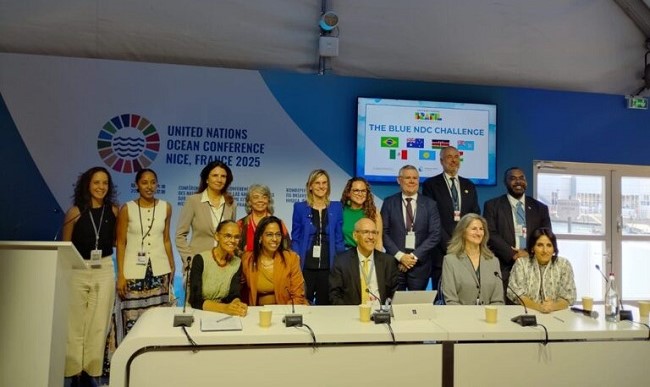
At a ministerial-level New York City Climate Week event on Monday, September 22, 2025, Chile, the UK and Madagascar committed to the Blue NDC Challenge, underscoring both the economic and environmental value of protecting the ocean. The initiative urges coastal nations to integrate ocean-focused actions into their climate plans – nationally determined contributions (NDCs) – ahead of COP30.

Blue NDC Challenge
The was inaugurated at the United Nations Ocean Conference in Nice, France, in June 2025

The NDCs are the cornerstone of global climate action under the UN Framework Convention on Climate Change (UNFCCC), serving as investment plans and the primary tool for limiting global warming. With these new members, the Blue NDC Challenge now counts 10 countries, joining leaders including Brazil, France, Australia, Fiji, Kenya, Mexico, Palau, and the Republic of Seychelles.

Brazil and France launched the initiative alongside these inaugural members at the United Nations Ocean Conference in Nice, France this past June; Brazil will be hosting COP30 in November. The initiative is supported by Ocean Conservancy, the Ocean & Climate Platform, and the World Resources Institute.

Studies have shown that ocean-based climate solutions can deliver up to 35% of the emissions reductions needed to keep global temperatures from spiking. By signing on to the Blue NDC Challenge, countries commit to integrating the ocean into their national climate strategies or implementation plans, examples of which may include: 

  • Sustainably managing, conserving, and restoring coastal and marine ecosystems; 
  • Phasing out offshore oil and gas production;
  • Expanding clean ocean energy such as offshore wind, wave, and tidal power; 
  • Cutting emissions and strengthening resilience in maritime sectors, including the shipping and seafood industries; and
  • Supporting sustainable, climate-resilient fisheries and aquaculture. 

The Blue NDC Challenge is part of an overall effort spearheaded by Brazil to ensure the ocean plays a central role in the upcoming climate talks in Belem, Brazil. In addition to absorbing excess heat, the ocean has absorbed close to 30% of the annual CO2 emissions from human activities since the beginning of the Industrial Revolution.

Governments that join the Challenge will receive support from a wide range of partners and initiatives, including the NDC Partnership hosted by World Resources Institute as well as the Ocean Breakthroughs, which is co-led by the Marrakech Partnership for Global Climate Action and the UN High-Level Climate Champions.

Together, they aim to boost investment and action in ocean-based solutions to help achieve a net-zero, resilient, and nature-positive future by 2050. The Blue NDC Challenge effort is funded through the Ocean Resilience and Climate Alliance (ORCA) and has been endorsed by WWF-Brazil.

“The ocean is our unsung resource hero, and it’s encouraging to see so many countries recognise its vast, untapped potential to help stabilise our climate. The ocean offers a trove of solutions – from offshore wind to green shipping to restoring ecosystems – that countries can implement today to reach their national climate targets,” said Janis Searles Jones, CEO of Ocean Conservancy. “Now is the time for more countries to join this historic initiative and recognise that the ocean is a powerful and essential ally in our efforts to tackle the climate crisis.”

“On the road to Belém, the Blue NDC Challenge ensures the ocean is more than a backdrop – it is a driver of climate action. This is how we move from ambition to implementation and make COP30 the turning point the Planet truly needs,” said Loreley Picourt, Executive Director of the Ocean & Climate Platform.

“The ocean is the world’s greatest ally in the fight against climate change, but only if we put it at the heart of climate action. The Blue NDC Challenge is gathering momentum because countries see that the ocean is not a side issue, but central to meeting climate goals and delivering benefits for people and nature,” said Tom Pickerell, Global Director of the Ocean Programme at the World Resources Institute and Head of the Secretariat for the High Level Panel for a Sustainable Ocean Economy. “At New York City Climate Week, we want to see more nations to step forward and commit to ocean-based action, turning the ambition, we saw at UNOC into implementation ahead of COP30.”

Lagos ready for partnerships in waste conversion to wealth, energy 

0

The Lagos State Government has expressed readiness to partner with investors in converting municipal solid waste to energy, wealth and liquid waste.

Commissioner for Environment, Mr. Tokunbo Wahab, made this known in a statement signed by the Director of Public Affairs in the ministry, Mr. Kunle Adeshina.

Tokunbo Wahab
Commissioner for Environment and Water Resources, Mr. Tokunbo Wahab

Wahab said that the present administration in Lagos State had set up a climate adaptation and climate resilience plan encapsulating its vision and policies.

He added that the state had carried out two pre-feasibility studies on waste-to-energy and waste water projects to demonstrate its commitment.

He said that, with a population of over 20 million generating 13,000 metric tonnes of waste daily, the state was adopting a sustainable climate-friendly approach.

“We now see waste as a resource for wealth and a resource for energy because the quantum of waste that ends in our landfill sites will become very minimal.

“As a state, we have set up policies and laws that enable us as a sub-national to reach out to neighbouring countries where they have expertise,” Wahab said.

He noted that the state government signed a contractual agreement 18 months ago with a Ghana-based company.

According to him, the agreement will take 4,000 metric tonnes of municipal waste out of the 13,000 generated daily.

He said that the agreement would lead to conversion of waste to wealth, composite fertilisers and recyclable plastics, as well as  setting up  of a transfer station for the most challenging parts.

“If that contractual obligation is successfully carried out, we seek to also decommission one of our biggest landfills at Olusosun and Solous.

“All these are symbols of  progress of collaboration,” he said.

The commissioner said that Lagos, as a coastal city, was exposed to the effect of climate change, sea level rise, heavy rainfall and excessive heat.

“All these bring about flash flooding when there is tidal lock due to the inability of water to discharge into its sources,” he said.

He said that aerial geographic information showed that the original landmass of Lagos, which was 3,577 square metres. had increased to 4,050 square metres.

Wahab attributed this to massive reclamation of wetlands and lagoon water bodies for real estate construction.

He said that Lagos State had been exercising its legal powers to check excesses coming with the human activities.

The commissioner, at the weekend, featured as a panelist at the Harvard University Climate Action Week.

The event had “Rising Seas, Resilient Communities, Climate Adaptation Strategies in West Africa” as its theme.

By Olaitan Idris

COP30: Group calls on govts to protect climate, save Amazon forest

0

The 30th session of the Conference of the Parties (COP30) to the United Nations Framework Convention on Climate Change (UNFCCC) will take place in mid-November 2025 in Brazil’s Amazon region. Heads of state, government delegations, business leaders, and scientists will gather in the city of Belém to negotiate climate action.

Indigenous associations, environmental and human rights organisations have reportedly united for the People’s Summit for Climate Justice to make their voices heard. The highlight will be a day of protest on November 15 in Belém, where several organisations, including the Rainforest Rescue, will be present on the ground.

Amazon rainforest
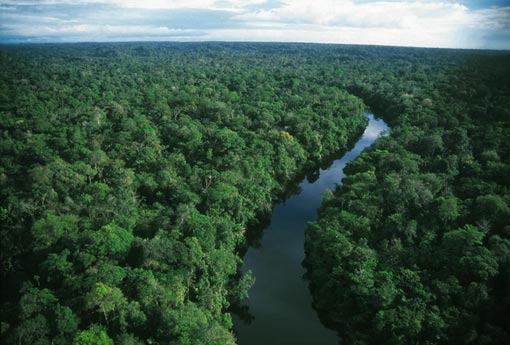
The Amazon rainforest

According to Rainforest Rescue, the tropical rainforests are essential for humanity, biodiversity, and the global climate. Covering 6 million km2, Amazonia is said to be the world’s largest rainforest – more than the area of all EU countries combined.

“From the vast canopy, enormous amounts of water constantly evaporate to form rain clouds. In this way, Amazonia helps stabilise the global water cycle and the climate.

“At the same time, it stands at the heart of global forest destruction, biodiversity collapse, and escalating threats to both nature and human rights,” said John Hayduska of Rainforest Rescue.

According to the group, the homeland of hundreds of Indigenous peoples is under threat. It adds that agribusiness, logging, and mining are destroying ecosystems and the foundations of life for local communities, even as deep social inequality, violence, and abuse of power are widespread.

“The Amazon rainforest is approaching a tipping point beyond which there can be no recovery. South America’s great ‘rain machine’ could collapse – with global consequences for us all. We cannot let this happen,” stated Hayduska.

At COP30 in Brazil, he wants governments to commit to decisive measures to confront the global climate crisis and protect rainforests.

“We are calling for real and just solutions,” Hayduska said, seeking support for the demands of the People’s Summit, and an endorsement of a petition.

The petition

To: governments, heads of state and government, and delegations to the UN climate summit COP30 in Brazil

Ladies and Gentlemen,

With people from every corner of the globe, I urge you to make binding decisions at the United Nations Climate Change Conference in Brazil in November 2025 that truly confront the climate crisis. Seize this moment – take meaningful action to curb global warming and protect the world’s forests for generations to come.

Together with the participants of the People’s Summit, I call for:

  • Ending the production and burning of fossil fuels – responsible for more than two-thirds of the emissions fueling global warming.
  • Consistent and uncompromising protection of forests from deforestation.
  • Swiftly reaching international agreements for a just energy transition, led by the wealthiest nations.
  • Establishing true environmental and climate justice; false solutions often most severely affect those who have contributed least to global warming.
  • Full respect for human rights – including the rights of Indigenous and traditional communities to ancestral land and the sovereignty to shape their own food systems.
  • Recognising nature as a subject of rights and safeguarding biodiversity for the future.

We stand at a turning point. Not tomorrow, not someday. Now is the time for concrete decisions – and your leadership is essential.

Yours faithfully,

By Idowu Ojuade

African nations must collaborate to develop oil industry – NCDMB

0

Close partnership and collaboration among African oil and gas producing countries are some of the strategies that would enable sustainable development of Africa’s oil industry, according to discussants at the Africa Content Forum, a segment at the 2025 Africa Oil Week holding in Accra, Ghana.

The Executive Secretary, Nigerian Content Development and Monitoring Board (NCDMB), Felix Omatsola Ogbe, delivered the keynote address at the forum. Represented by the Director, Corporate Services, Dr. Abdulmalik Halilu, the Executive Secretary pointed out that no single African country can fully develop its local content potentials and support her the oil and gas industry without the collaboration of other nations, hence the need for close partnership with other nations.

Africa Oil Week
Some participants at the 2025 Africa Oil Week in Accra, Ghana

He pointed out that the Africa continent holds more than 10 percent of global crude oil reserves and eight percent of proven natural gas resources, and is also host to critical resources for renewable energy. He argued that the continent’s oil and gas wealth must fuel intra-country trade, industrialisation, value retention and prosperity, rueing the current situation where many African countries export raw materials to more developed countries across the globe, whereas there is minimal inter-country trade within the continent.

Speaking on the need for consolidation and scaling of local content programmes beyond borders, Halilu canvassed for an enduring policy framework with full complements of governance and enforcement oversight as well as Human Capital Development and cross border deployment as critical pillars. He noted that the continent must continue to reward efforts focused at technology development as local content policy without research and development will remain static.

On cross border partnerships and collaboration, the Director posited that “Africa’s diverse capabilities are its greatest strength with strong collaboration. Just as a Boeing or Airbus is built with components from different countries, we can build a thriving African energy sector by specialising and trading with one another, where each country specializes in areas where it has a comparative advantage”.

Halilu reiterated the need for mindset change of seeing local content as social responsibility initiative but about ensuring that capital stays within our borders, and our nations build the technological and industrial capacity to compete on a global scale.

“Let us build an African energy sector that is owned, operated, and sustained by Africans. A sector that provides jobs for our youth, creates wealth for our nations, and brings true prosperity to our continent,” he said.

The forum featured four panel sessions and was attended by policymakers, oil and gas operating and service companies, original equipment manufacturers (OEMs) and other stakeholders from various Africa countries and other continents.

The first session focused on strategies for African content growth, and the panelists recommended that the future of the continent lies in deliberate planning, strong policies, and the courage to take bold steps that position African solutions at the center of Africa’s development.

The second session examined African capacity and expertise, while the third session discussed cross-border projects and knowledge exchange. Panelists underscored the power of partnership, the necessity of breaking silos, and the immense potential of sharing best practices to accelerate progress across our markets.

The fourth session focused on funding African content and was moderated by the General Manager, Corporate Communications, NCDMB, Dr. Obinna Ezeobi.

Discussions on the panel highlighted strategies for attracting sustainable funding for oil and gas projects, and the need for African oil and gas companies to decarbonize their operations and comply with environmental, social and governance (ESG) regulations.

Other themes included innovative funding options that are available in the continent and how companies can position themselves appropriately to access them.

The NCDF model was also showcased, highlighting how it has been applied successfully to grow capacities and capabilities in the Nigerian oil and gas industry.

Africans rise to ‘Draw the Line’ for climate justice, just energy future

0

From the Niger Delta to Lamu, from Johannesburg to Dakar, communities across Africa joined the global “Draw the Line” mobilisations, sending a powerful message: Africa will not be a sacrifice zone for fossil fuels.

As part of over 600+ actions in more than 85 countries worldwide, including more than 100 across Africa – thousands on the continent rejected fossil fuel expansion, elite corruption, and corporate capture, while uplifting the solutions Africa needs: community-led renewable energy, food sovereignty, democracy, and dignity.

Draw The Line
Draw The Line campaign in Kenya

From Nairobi, where a carnival filled the streets with music, costumes, and banners calling for an end to fossil fuel colonialism, to Johannesburg, where workers, youth and faith leaders marched together linking the rising cost of living to energy injustice, to Cotonou, where artivists transformed public spaces into powerful murals and performances against oil and gas expansion, Africans showcased both resistance and creativity. These mobilisations highlighted that the fight for climate justice is not only about survival, but also about reclaiming culture, community, and hope.

The mobilisations come at a crucial moment. World leaders will meet at the UN General Assembly in September, just six weeks before COP30 in Belém, Brazil – a summit that will define whether the world keeps the promise of 1.5°C alive.

Across Africa, communities made it clear that fossil fuel colonialism must end, that polluters must pay their climate debt, and that the future lies in decentralised, locally owned renewable energy systems.

The actions linked the climate crisis to everyday struggles with food insecurity, energy poverty, unemployment, and shrinking civic space, showing that climate justice is inseparable from democracy, human rights, and peace.

Regina Baiden, Africa Regional Director of 350.org, said: “Africa is on the frontlines of a crisis we did not create, yet we are paying the highest price through floods, droughts, cyclones, and heatwaves. This week, our communities have drawn the line and said: no more fossil fuel colonialism, no more debt traps, no more false solutions. We are demanding a just transition that puts people before polluters, prioritises renewable energy that is community centered, and guarantees our right to live in dignity.”

Christian Hounkannou, Africa Francophone Organiser at 350.org, said: “Fossil fuels are destroying our lands, poisoning our waters, and threatening our food systems, while ordinary people are left in poverty. What we are building instead are African solutions like solar projects that power schools and hospitals, agroecology that sustains our farmers, and people-led movements that defend our democracy. This mobilisation is just the beginning. As we head into COP30, our demand is simple but urgent: cancel illegitimate debt, make polluters pay their climate debt, and fund the transition our people deserve.”

As the world turns to COP30, Africa’s message is clear: “The time for empty promises is over. Leaders must end fossil fuels, unlock real climate finance, and put communities at the heart of the transition.”

Hundreds join Abuja Climate March to ‘Draw The Line’ against injustice

0

Hundreds of climate advocates on Saturday, September 20, thronged the streets of Abuja for the Abuja Climate March 2025, joining a global call to #DrawTheLine against climate injustice, inequality, environmental destruction, and poverty.

The march, convened by the Global Initiative for Food Security and Ecosystem Preservation (GIFSEP) alongside other civil society organisations (CSOs) with support from Oxfam in Nigeria, brought together citizens demanding urgent action on climate justice.

Draw The Line
Draw The Line campaign in Abuja

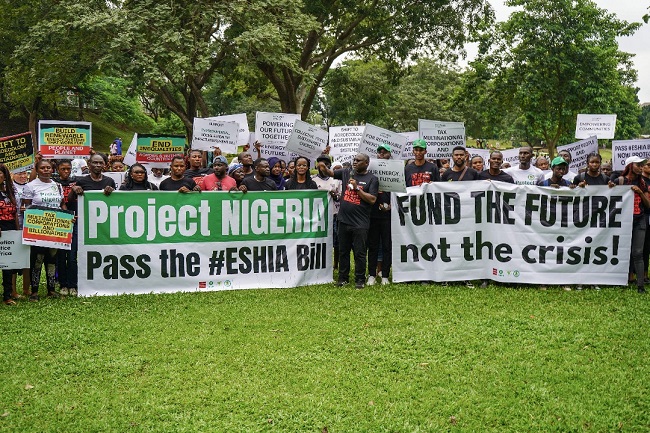
Starting from Millennium Park, participants marched through major roads in Abuja, raising placards with bold messages such as “Fund Our Future, Not the Crisis,” “Cancel the Debt,” and “Deliver on Climate Finance.” Their voices echoed a clear demand: stop using public funds to support destructive industries that fuel floods, heatwaves, hunger, and poverty and, instead, invest in building a safer, fairer, and more sustainable future for all Nigerians.

The marchers also called on the National Assembly to expedite passage of the Environmental, Social and Health Impact Assessment (ESHIA) Bill, which is considered critical to safeguarding communities and ecosystems.

In his remarks, Dr. Michael Terungwa David, Executive Director of GIFSEP, emphasised that Nigerians must rise as active citizens.

“Our future cannot be mortgaged to the profits of industries that destroy lives and livelihoods. Only active citizens can reclaim our future and ensure justice for generations yet unborn,” he said.

By Adaobi Ogbuani

UNGA 2025: Nigeria activates empowerment of 10m women

0

The Federal Government of Nigeria says it has activated the economic empowerment of no fewer than 10 million women to achieve its one trillion-dollar economy ambition.

Minister of Women Affairs and Social Development, Imaan Sulaiman-Ibrahim, disclosed this at a high-level sideline event of the 2025 United Nations General Assembly (UNGA) in New York, U.S.A.

UNGA 2025
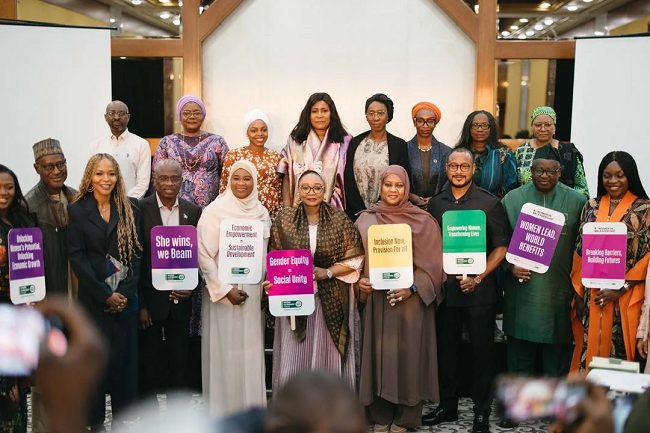
Participants at the high-level sideline event of the 2025 United Nations General Assembly (UNGA) in New York

The event is themed: “Scaling Women’s Economic Empowerment: Financing Inclusive Growth for Peace, Development, and Human Rights – Lessons from Nigeria for Women Project.”

Vice-President Kashim Shettima departed Abuja on Sunday, September 21, 2025, for New York to represent President Bola Tinubu at the 80th session of the UNGA.

Speaking at the event, the minister said the economic empowerment is being achieved through targeted projects, initiatives, programmes, and interventions focused on women.

She said that one of the key vehicles being utilised for the empowerment is the Nigeria for Women Project ((NFWP).

According to her, NFWP, under the leadership of President Tinubu, is currently the nation’s most significant women’s economic empowerment platform.

“In phase one, we mobilised over 460,000 women into Women Affinity Groups (WAGs) across multiple states.

“These groups have collectively saved over an average of N4.9 billion of their own money and have inter-loaned significantly to expand businesses, cover health costs, and pay school fees.

“In addition, over 330,000 women have accessed livelihood grants, while thousands have been linked to formal financial institutions, national ID, and health insurance schemes,” she said.

The minister said after the successful pilot launch in six states, the ministry had scaled up and opened up to all states.

“It is critical to highlight, that while this model borrows from the most successful global experiences, we have wholly adapted it to Nigerian realities.

“The Women Affinity Groups that are created under the programme have become platforms of voice, social capital, and economic agency.

“They are changing the texture of communities, lowering household vulnerability, and strengthening our democracy from below, ” she said.

The minister told delegates and partners at the event that the ministry realised that “investing in women’s entrepreneurship will transform not just incomes but also nutrition, education, and community stability”.

She said that, based on that understanding, the government consolidated its empowerment approach into a single delivery architecture that integrated agriculture, clean energy, logistics, digital access, mobile services, amongst others.

“We call this the Renewed Hope Social Impact Interventions – 774 (RH-SII774).

“This programme is envisioned as a transformative, gender-responsive initiative that will directly impact over 50 million women, children, families, and vulnerable persons across all 774 Local Government Areas of the Federation.

“It provides a unified national platform to tackle systemic issues such as gender inequality, family instability, digital exclusion, child vulnerability, and economic disempowerment.

“It is a full-scale transformation of how social protection and women’s economic empowerment are delivered in Nigeria,” she said.

Earlier, the Chairman, Nigeria Governor’s Forum, Gov. Abdulrahman Abdulrazak of Kwara State, said investments in women empowerment are not only a moral imperative, but an economic necessity for peace, prosperity and shared growth.

Abdulrazak, represented by Gov. Hyacinth Alia of Benue State, said in Nigeria and around the world, when a woman thrives, family, communities and entire communities thrive.

The governor noted that the Nigeria for Women Programme (NFWP) is a powerful demonstration of what sustained target financing could achieve.

“The programme is a collaboration among the Federal Government, State Ministries, the World Bank and other partners.

“It began in six states and it is now active in 15 states with commitments from 32 states in overall

“To date, more than 46,000 women have organised into 22,000 Women Affinity Groups, saving over N4.4 billion and channelling these resources into small businesses that are transforming families and community alike,” he said

The Minister of State for Federal Capital Territory, Dr Mariya Mahmoud, commended President Tinubu for his support and unwavering commitment to women Inclusivity and youth development in Nigeria.

“So many policies and initiatives have been put in place to empower women at the national and sub-national levels on women empowerment,” she said.

For his part, Gov. Dauda Lawal of Zamfara State said his administration gave special attention to women empowerment.

He added that women were the major beneficiaries of almost all the empowerment programmes in the state.

Other dignitaries at the event included Plateau Governor Gov. Caleb Mutfwang, Minister of Housing and Urban Development, Ahmed Dangiwa and the First Lady of Zamfara State, Hajiya Huriyya Lawal,

The Charge d’Affaires at the Permanent Mission of Nigeria to the United Nations, Samson Itegboje, and Prof. Kabir Mato were also at the event.

President Tinubu’s administration has set a target for Nigeria to become a $1‑trillion economy by 2030.

This goal is part of his administration’s broader “Renewed Hope Agenda’ economic plan under a policy called “Nigeria First”.

The Vice President, in April, inaugurated the Interministerial Committee to drive the process of achieving the goal.

By Salisu Sani-Idris