Home Blog Page 1761

Court grants SERAP leave to compel Fashola to account for power expenditure

0

There is prospect Nigerians keen on knowing why the power sector reforms in the country have not yielded any tangible result and why the citizens continue to stay in darkness but still made to pay crazy electricity bills, despite the huge spending on the sector, may soon have some answers, as the Federal High Court in Ikoyi, Lagos on Tuesay, October 23, 2018 granted leave to the Socio-Economic Rights and Accountability Project (SERAP) to seek its reliefs to compel the Minister of Power, Works and Housing, Mr Babatunde Fashola, to account for the spending.
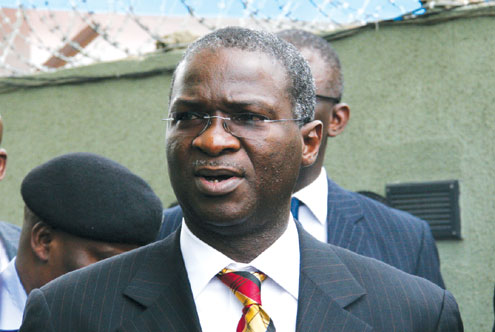
Babatunde-Fashola
Minister of Power, Works and Housing, Babatunde Raji Fashola (SAN)

Hon. Justice C.J. Aneke granted leavr to SERAP, which is praying to seek judicial review and order of mandamus to compel Mr Fashola over the “failure to account for the spending on the privatisation of the electricity sector and the exact amount of post-privatisation spending on generation companies (GENCOS), distribution companies (DISCOS) and Transmission Company of Nigeria to date, and to explain if such spending came from budgetary allocations or other sources.”

Justice Aneke granted the order for leave following the hearing of an argument in court on exparte motion by SERAP counsel Ms Bamisope Adeyanju. The Court also ruled that Mr Fashola be put on notice and adjourned the matter to Tuesday, November 20, 2018 for mention.

SERAP had in June sued Mr Fashola in suit number FHC/L/CS/972/18 at the Federal High Court seeking “an order for leave to apply for judicial review and an order of mandamus directing and/or compelling Mr Fashola to provide specific details on the privatisation of the electricity sector, the names of all the companies and individuals involved; and to publish widely including on a dedicated website any such information.”

The suit followed SERAP’s Freedom of Information request dated May 7, 2018 to Mr Fashola giving him 14 days to provide “information on the status of implementation of the 25-year national energy development plan, and whether the Code of Ethics of the privatization process which bars staff of the Bureau of Public Enterprises (BPE) and members of the National Council on Privatisation (NCP) from buying shares in companies being privatized were deliberately flouted.”

The suit reads in part: “Most of the companies that won the bids had no prior experience in the power sector and little or no capacity at all to manage the sector. The privatization of the Power Holding Company of Nigeria (PHCN) have yielded the country total darkness. The gains of privatization have been lost through alleged corruption, manipulation of rules and disregard to extant laws and lack of transparency in the exercise.

“The Goodluck Jonathan government reportedly spent over N400 billion on the power sector while the present government spent over N500 billion on the sector despite privatisation. It is unclear if this spending is drawn from budgetary allocations and if these are loans to generation companies (GENCOS), Distribution companies (DISCOS) and Transmission Company of Nigeria.

“Publishing the information requested and making it widely available to the public would serve the public interest and provide insights relevant to the public debate on the ongoing efforts to prevent and combat a culture of mismanagement of public funds, corruption and impunity of perpetrators.

“To further highlight the seriousness of the situation, several years after the country’s power sector was privatized, millions of Nigerian households particularly the socially and economically vulnerable sectors of the population continue to complain about outrageous bills for electricity not consumed, and poor power supply from distribution firms. Millions of Nigerians continue to be exploited using patently illegal estimated billing by DISCOs. One wonders the essence of the privatisation if there has been no corresponding improvement in power for Nigerians.

“Enforcing the right to truth would allow Nigerians to gain access to information essential to the fight against corruption and provide a form of reparation to victims of grand corruption in the power sector. The UN Committee on Economic, Social and Cultural Rights in its General Comment 3 has implied that privatization process should not be detrimental to the effective realization of all human rights, including access to regular electricity supply.

“SERAP has the right to request the information under contention on the basis of several provisions of the Freedom of Information (FOI) Act, 2011. By Section (1) of the FoI Act, SERAP is entitled as of right to request for or gain access to information, including information on post-privatization spending by the Federal Government and accounts of spending on the private entities such as GENCOS and DISCOS.”


The suit is seeking the following reliefs:

  1. A DECLARATION that the failure of the Respondent to furnish the Applicant with information on specific details on the spending on the privatisation of the electricity sector, the exact amount of post-privatisation spending to date and the names of all the companies and individuals involved; as well as explain if such spending came from budgetary allocations or other sources is unlawful as it contradicts and in conflict with the obligations of the Respondent under the Freedom of Information Act 2011.
  2. A DECLARATION that the failure of the Respondent to furnish the Applicant with information on the details of spending on and status of implementation of the twenty-five (25) year national energy development plan is unlawful as it contradicts and in conflict with the obligations of the Respondent under the Freedom of Information Act 2011.
  3. A DECLARATION that the failure of the Respondent to clarify to the Applicant the degree of compliance with the Code of Ethics of the privatization process which bars staff of the Bureau of Public Enterprises (BPE) and members of the National Council on Privatization (NCP) from buying shares in companies being privatised is unlawful as it contradicts and in conflict with the obligations of the Respondent under the Freedom of Information Act 2011.
  4. AN ORDER OF MANDAMUS directing and/or compelling the Respondent to furnish the Applicant with information on specific details of spending on the privatization of the electricity sector, the exact amount of post-privatisation spending to date and the names of all the companies and individuals involved; as well as to explain if such spending came from budgetary allocations or other sources, and to publish widely including on a dedicated website any such information.
  5. AN ORDER OF MANDAMUS directing and/or compelling the Respondent to furnish the Applicant with information on the details of spending and status of implementation of the twenty-five (25) year national energy development plan, and to publish widely including on a dedicated website any such information.
  6. AN ORDER OF MANDAMUS directing and/or compelling the Respondent to clarify the degree of compliance with the Code of Ethics of the privatisation process which bars staff of the Bureau of Public Enterprises (BPE) and members of the National Council on Privatisation (NCP) from buying shares in companies being privatised.

“The privatisation of power assets has already caused major crises, ranging from illiquidity, load rejection, metering problems, corrupt practices, lack of gas to power the stations, disinterestedness of investors, lack of injection of fresh capital after acquisition of financing, tariff interest, consumer apathy, foreign exchange hostilities, and a host of other sundry issues associated with it.”
Government charges stakeholders on environmental degradation

0

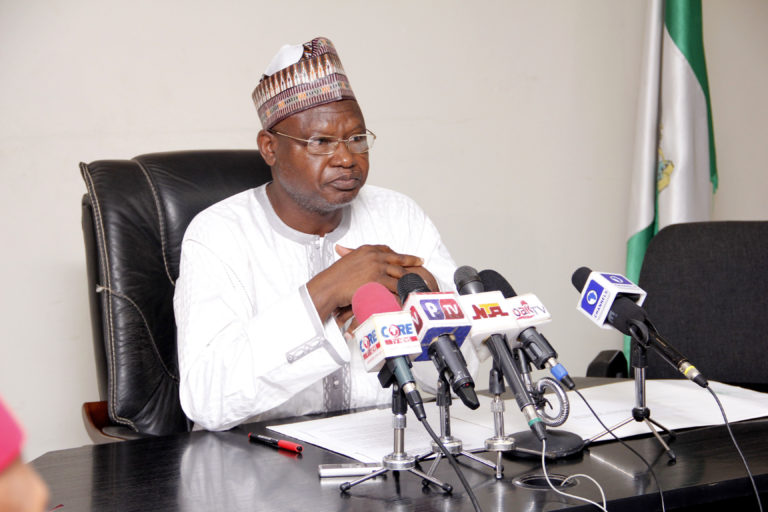
The Minister of State for Environment, Alhaji Ibrahim Jibril, has called on relevant stakeholders to intensify efforts to address environmental degradation in the country.

Ibrahim Usman Jibril
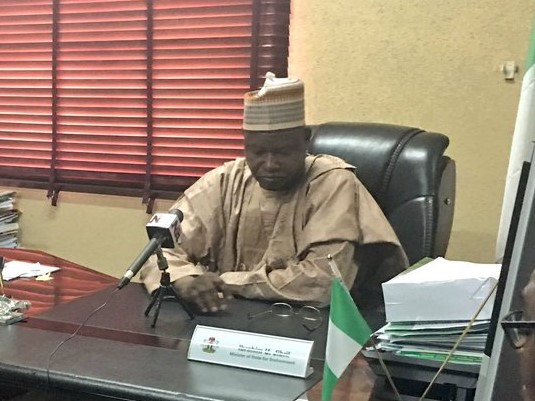
Environment Minister of State, Ibrahim Usman Jibril

Jibril made the call in Abuja on Tuesday, October 23, 2018 at a news conference on the 12th National Council on Environment (NCE) scheduled to hold between Oct. 29 and Oct. 31 in Akure, Ondo State.

The theme of the conference is entitled “Environment and Security in Nigeria: Consolidating Nigeria’s Environment Sector Reforms towards Sustainable Development.”

The minister underscored the need for relevant stakeholders in the environment sector to double efforts towards arresting the rapidly growing environmental degradation.

“World over, the major headlines on news and discussions of major fora especially the global bodies like United Nations, regional and sub-regional international bodies have been dominated by issues relating to environmental challenges and its sustainability.

“This is due mainly to extreme danger posed by the rapidly growing environmental degradation whose threat has assumed a global catastrophic dimension.

“The environmental adversities in Nigeria and the effects on the economy and security can no longer be kept in silence,” Jibril said.

According to him, more needed to be done in order to address the growing concerns.

The minister said that the theme of the upcoming NCE was carefully chosen to reflect the resolve of the Federal Government to implement fully the Economic Recovery Growth Plan.

According to him, the effort is aimed at guaranteeing the sustainability of the nation’s environment.

Also, the Commissioner for Environment, Ondo State, Mr Funso Esan, said that, that government was ready to host NCE event.

He assured that the organising committee was working assiduously to achieve a successful conference.

By Deji Abdulwahab

Judge upholds Monsanto verdict, slashes damages

0

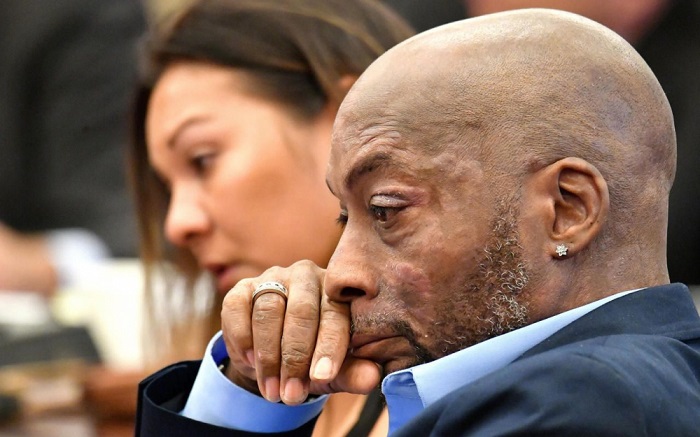
A San Francisco judge made a surprise ruling on Monday, October 23, 2018 and upheld a jury’s verdict that Monsanto‘s Roundup weedkiller gave a California groundskeeper cancer, and that the company failed to warn him of the danger, CNN reported.

Dewayne Johnson
Plaintiff Dewayne Lee Johnson during the Monsanto trial in San Francisco

Superior Court Judge Suzanne Bolanos had issued a tentative ruling on Oct. 10 ordering a new trial over the punitive damages awarded to plaintiff Dewayne “Lee” Johnson, saying he had failed to prove that Monsanto acted with “malice or oppression.” After reviewing arguments from both sides, however, Bolanos instead upheld the verdict, but lowered the punitive damages from $250 million to $39 million. A new trial will only take place if Johnson’s lawyers don’t accept the reduced award.

“The evidence presented to this jury was, quite frankly, overwhelming … Today is a triumph for our legal system. We care deeply for Lee and his family, and we are excited to share this important win with them and all those who supported this case,” Johnson’s lawyers said in a statement reported by The Guardian.

His legal team added also said the reduction in damages was “unwarranted” and that they were “weighing the options.”

Bayer, the German company that bought Monsanto this year, saw its shares fall eight percent because of Bolans’ decision, Reuters reported.

“The court’s decision to reduce the punitive damage award by more than $200 million is a step in the right direction, but we continue to believe that the liability verdict and damage awards are not supported by the evidence at trial or the law and plan to file an appeal with the California Court of Appeal,” Bayer said, as CNN reported.

Johnson was originally awarded a total of $289 million in August – $39 million in compensatory damages and $250 million in punitive damages. The verdict was historic because it was the first of more than 8,000 similar pending lawsuits against Monsanto claiming that glyphosate, the active ingredient in its Roundup product, caused cancer in plaintiffs or their loved ones.

The International Agency for Research on Cancer listed glyphosate as a probable human carcinogen in 2015, though the U.S. Environmental Protection Agency ruled it was “not likely” to cause cancer in humans in a draft risk assessment published in December 2017.

Johnson was awarded an early trial because he is not expected to live past two years, and California grants early trials to dying plaintiffs.

Before Bolanos issued her final ruling Monday, five of the jurors who had decided in Johnson’s favor wrote letters to her asking her not to overturn their decision, Reuters reported.

“You may not have been convinced by the evidence but we were,” juror Gary Kitahata wrote in a letter to Bolanos reported in The San Francisco Chronicle. “I urge you to respect and honor our verdict and the six weeks of our lives that we dedicated to this trial.”

Bolanos did not address those letters in her ruling, but said the jury was entitled to its feelings, Reuters said. In the end, her decision to reduce damages was not based on lack of evidence, but California due process law.

“In enforcing due process limits, the court does not sit as a replacement for the jury but only as a check on arbitrary awards,” Bolanos wrote in her ruling Monday, according to CNN. “The punitive damages award must be constitutionally reduced to the maximum allowed by due process in this case – $39,253,209.35 – equal to the amount of compensatory damages awarded by the jury based on its findings of harm to the plaintiff.”

Togo, Eranove sign concession agreement for 65MW power plant

0

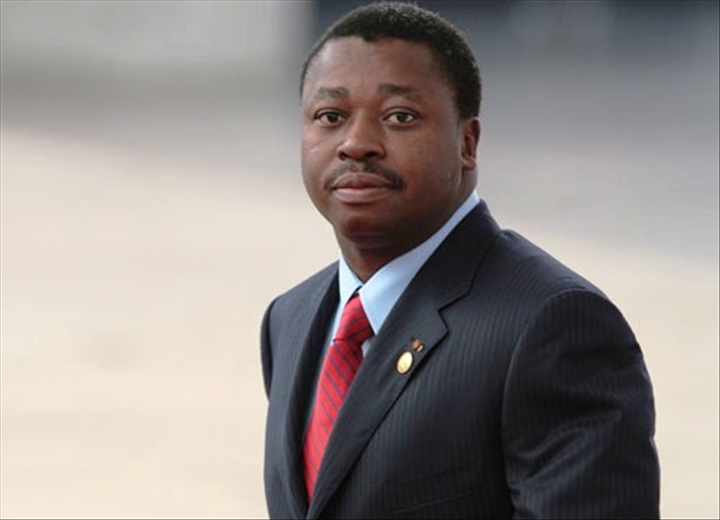
Under the high patronage of Faure Essozimna Gnassingbé, President of Togo, the Minister of Mines and Energy, Marc Dèdèriwè Ably-Bidamon, and the Director General of the pan-African industrial group Eranove, Marc Albérola, signed on Tuesday, October 23, 2018 a power generation concession agreement for the design, financing, construction, commissioning, operation and maintenance of the Kékéli Efficient Power plant, which will be located in the Lomé port area.

Faure-Essozimna-Gnassingbé
Faure Essozimna Gnassingbé, president of Togo

The project follows a competitive dialogue launched in January 2018. It includes the participation of Siemens, which wishes to be actively involved in the electrification efforts of the Togolese Republic, and will provide the turbines, technology and maintenance services for the power plant. The construction will be carried out by the Spanish group Grupo TSK (EPC).

As for the financing to be mobilised in CFA francs, the West African Development Bank (BOAD) and the pan-African banking group Oragroup will be the lead partners. The Eranove group will develop, operate and maintain this plant, which will eventually be operated and managed by Togolese people.

With an installed capacity of 65 MW, the Kékéli Efficient Power gas plant will use combined cycle technology. The technology makes it possible to produce more electricity without extra gas consumption while limiting CO2 emissions into the atmosphere, thereby contributing to electricity production that respects the sector’s economic and financial balance and the environment.

According to Mr. Marc Dèdèriwè Ably-Bidamon, Togo’s Minister of Mines and Power, the structuring and strategic project is in line with the dual will of President Gnassingbé and the Government to promote the national economy and cope with the ever-increasing demand for electrical power. The Minister also says that the plant will be at the service of the development of the entire Togo development and provide extra electrical power for some 263,000 Togolese households.

Developing the Kékéli Efficient Power plant in Togo is also an important step in the growth of the pan-African industrial group Eranove, which already operates 1,247 MW of generating capacity and is currently developing projects aiming to bring 1,000 MW to the continent’s service.

“We are very happy and extremely proud to contribute in designing the national strategy and implementing the National Development Plan by developing the new electricity production unit alongside the Togolese Republic, and we thank the country’s authorities for their trust. Thanks to its recognized expertise and African roots, Eranove Group constantly strives to develop structuring, efficient and adapted projects for the continent. To ensure a successful quality public/private partnership, we have assembled an innovative pan-African financing mechanism denominated exclusively in CFA francs (a first for an Independent Electricity Producer in Africa) mobilized by regional institutions, as well as by renowned pan-European technical partners with Eranove, Siemens and TSK. The project is a perfect illustration of the model we want to promote in order to meet the challenge of access to electricity and water in Africa,” says Marc Albérola, CEO of Eranove Group.

Backed by its leading shareholder Emerging Capital Partners (ECP), a pan-African leader in private equity raising $3 billion of assets dedicated to the African continent, Eranove Group is developing numerous projects in Côte d’Ivoire, Gabon, Madagascar and Mali.

GCF approves three AfDB projects worth over $110m

0

The Board of the Green Climate Fund (GCF) has approved funding for three proposals from the African Development Bank (AfDB) totaling over $110 million.

Anthony Nyong
Dr. Anthony Nyong, Director, Climate Change and Green Growth, African Development Bank (AfDB)

The approvals were granted at the GCF’s 21st Board Meeting held from October 17 to 20, 2018 in Manama, Bahrain. Overall, the GCF Board, which was co-chaired by Paul Oquist from Nicaragua, and Ambassador Lennart Båge from Sweden, considered 20 funding proposals requesting approximately $1.2 billion.

The Board approved $67.8 million for the “Programme for Integrated Development and Adaptation to Climate Change in the Niger Basin (PIDACC/NB)”, which will benefit from GCF funds comprising $57.8 million grant, and a $10 million concessional loan. The programme is further resourced by co-financing from the bank, the European Union, the Global Environmental Facility, the Forestry Investment Programme of the Climate Investment Funds, and the beneficiary countries, for an estimated $147 million. This brings the total programme resources to $214.8 million.

PIDACC will help preserve basin ecosystems and biodiversity, particularly by reducing the Niger River silting process; improving the adaptability of populations to climate change; and strengthening the resilience of production systems for four million direct beneficiaries, and 10 million indirect beneficiaries in the nine Niger Basin countries. It will also contribute to reducing about seven million tCO2eq emissions over the project lifespan.

The “multi-national approach to climate change adaptation by PIDACC offers an opportunity for the African Development Bank-GCF partnership to promote low-emission, climate-resilient agriculture in the nine Niger basin countries” said Martin Fregene, Director, Department of Agriculture and Agro-Industry at the AfDB.

The “Democratic Republic of Congo (DRC) Green Mini-Grid” also received approval for a $20 million senior loan, and $1 million grant. The bank will match the approved amounts and instruments, resulting in a total of $40 million senior loan, and $2 million grant. The loan will finance three pilot solar PV plants and battery storage – with the shortfall financed by project sponsors’ equity and quasi-equity- and the grant will finance complementary technical assistance to ensure that green mini-grids are scaled-up across the country beyond the pilot phase.

The mini-grids will provide access to clean, reliable and more affordable energy to approximately 150,000 people who live off-grid. This will contribute to reducing emissions of 560,000 tCO2eq over the 20-year lifespan of the project.

The third project, the “Yeleen Rural Electrification Project in Burkina Faso” valued at about $62 million, received approval for $28.3 million, with co-financing from the bank, EU and private sector sponsors to cover the rest of the project costs.

The project will provide electricity access to 335,000 people with an estimated annual consumption of 15 GWh and create between 200 and 700 permanent jobs in the mini-grid market. It will also contribute to an estimated reduction in GHG emissions of about 390,000 tCO2eq over the 25-year lifespan of the project.

Ousseynou Nakoulima, Director of the Renewable Energy Department at the AfDB, said, “We are pleased to partner with the GCF to unlock the first wave of green mini-grid deployment in the DRC and Burkina Faso and to accelerate access to a clean energy system. With innovative business models, these projects will set the stage for scaling up and replication throughout Africa.”

At the 19th Board session held in February 2018, the GCF Board approved the bank’s first funding request of $50 million senior debt and $2.5 million grant for the Zambia Renewable Energy Financing Framework (ZREFF).

As the financing mechanism of the United Nations Framework Convention on Climate Change (UNFCCC), the GCF is intended to, among other goals, primarily channel concessional financing for climate actions that contribute to meeting NDC targets aligned with the Paris Agreement.

Anthony Nyong, Director of Climate Change and Green Growth Department responsible for managing AfDB’s engagement with the GCF, thanked the bank and the GCF teams who worked hard to deliver these projects. He welcomed the strong partnership between both institutions, stating, “The approval of these projects is a demonstration of GCF’s commitment to providing the financial support that is critically needed to meet the targets set out in the Nationally Determined Contributions of African countries. In view of the recent IPCC report and the urgency it brings to climate action, we support a strong GCF replenishment to enable the GCF to do more and on time.”

Protecting the climate whilst protecting jobs

0

Participants of a key meeting in Poland to prepare the UN Climate Change Conference in Katowice in December 2018 (COP24) highlighted the wealth of economic opportunities when acting on climate change, and the urgent need for a just transition towards a low carbon society that both protects the climate and jobs.

Poland
Participants at the “Pre-COP” meeting in Krakow, Poland

Speaking at the business day of the so-called “Pre-COP” in Krakow, Poland, attended by Ministers from 35 countries, government delegations and private sector representatives, the Deputy Executive Secretary of UN Climate Change, Ovais Sarmad, said: “You have all highlighted that economic growth and tackling climate change are compatible. In fact, one leads to the other. Therefore, it is a very encouraging moment. We need to have a just transition to low-carbon. But the time for that is getting shorter and shorter.”

At the Pre-COP, the International Energy Agency presented latest data showing that global greenhouse gas emissions from the energy sector are set to grow in 2018, continuing the upwards trend observed since 2017.

With current commitments, the global community is not on track to achieve the Paris Agreement’s central goal, which is to hold the global average temperatures to as close as possible to 1.5 degrees Celsius and well under 2 degrees Celsius.

To achieve this goal, emissions would need to peak as soon as possible, and the world would need to be climate neutral by 2050.

The focus of the pre-COP24 business day was achieving climate neutrality notably through accelerated in action in the areas of energy, electromobility and urbanisation – all highly interlinked or overlapping topics.

Michal Kurtyka, Polish Secretary of State and incoming COP24 President, said a revolution of clean transport with the help of electro-mobility could bring a new quality of life not only to the richer societies, but also to those in poorer countries with large urban societies.

One example of leapfrogging polluting technologies in developing countries is intelligently combining new battery technology with electro mobility. Another example is making use of car sharing schemes, also for electric vehicles.

“It will change the energy sector by making energy storage more affordable than any time before. Introducing the sharing economy to the mobility sector will redefine our concept of using cars and car itself, specially combined with advanced digital technologies of the autonomous vehicles,” he said.

He pointed to Poland as an example of a country that had successfully deployed innovation in many areas and was now looking to innovate in the fields of mobility, energy and urbanization.

In terms of urbanisation, participants highlighted the need for a green shift in the tax system, cities setting environmental standards and different incentives for producers and consumers. In the field of energy, the central focus was on the importance of renewable energy and energy efficiency.

Sarmad noted that at the recent World Bank/IMF annual ministerial meeting in Indonesia, Finance Ministers recognised the $26 trillion worth of economic opportunities for the business community.

These opportunities could best be seized by fully implementing the Paris Climate Change Agreement.

One of the key outcomes of COP24 would be to finalise and adopt the guidelines that will tell the world how to implement the Paris Agreement fairly and transparently.

“As of last week, 181 countries have ratified the Paris Agreement. No other multilateral, global agreement enjoys that kind of political commitment. We now need to unleash the Agreement’s full potential by finalising its implementation guidelines,” he said.

Following the Pre-COP’s successful business day, discussions among Ministers at the Pre-COP over the next two days will focus on issues relating to the implementation guidelines.

UN-Habitat urges adoption of 3Rs method for effective waste management

0

The United Nations Human Settlements Programme (UN-Habitat) has called for the adoption of 3Rs, Reduce, Recycling and Re-use of wastes for proper management and healthy society.

Maimunah Mohd Sharif
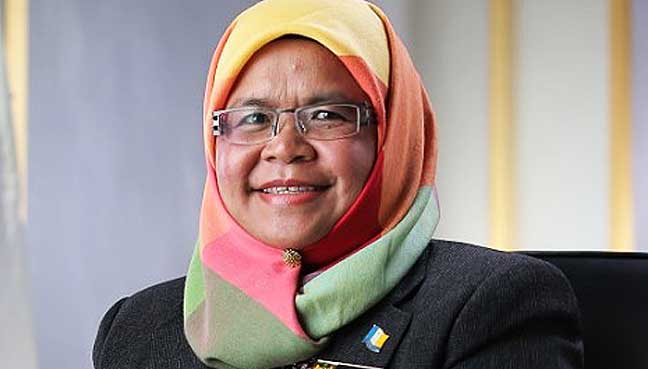
Maimunah Mohd Sharif, Executive Director of the UN-Habitat

Dr Odunbaku Omoh, Human Settlements Officer and Programme Manager, African Urban Agenda made the call on Monday, October 22 in Abuja at the event to commemorate 2018 Urban October organised in conjunction with the Ministry of Power, Works and Housing.

Urban October, celebrated every first Monday of October, comprises of World Habitat Day and World Cities Day with the theme: “Municipal Solid Waste Management” and “Building Sustainable and Resilient Cities” respectively.

It is a platform set up by the United Nations under the umbrella of UN-Habitat to reflect upon and set new directions on issues concerning human settlements and environment.

According to Omoh, through the 3Rs method wastes could be tuned into fashion, accessories, and manure among others.

She said that the organisation was committed to partnering with the Federal Government to ensure proper wastes management in the country for a sustainable city.

Ms Maimunah Sharif, UN Under Secretary and Executive Director of UN-Habitat, in an address said instead of allowing waste to be simply waste, a different approach to the concept of waste being the 3Rs was introduced.

In her 2018 World Habitat Day statement presented by Mr Jean Bankole, UN Resident Coordinator, she said that we could not continue to consume and dispose waste the way we have been doing.

“We can all make small adjustments to our consumption styles by using alternatives to disposable plastic items such as bottles, cups, plates and cutleries

“Making a conscious effort to recycle correctly and fixing broken items instead of simply throwing them away.

“The total waste in the world is enormous, some are recycled but a lot is simply discarded causing health problems for people and their animals and polluting our environment.

“Tackling our waste management challenges requires imagination and innovation, ‘’ she said.

According to her, to accommodate the world’s population of approximately 7.6 billion people, we will need 1.7 planet earths to sustain our resource consumption and absorb our wastes.

Sharif noted that UN-Habitat was scaling up its role in supporting cities to improve their waste management practices to lead in designing cost effective systems to ensure proper waste disposal.

By Emmanuella Anokam

Urban October: Government clamours new attitude on waste management

0

The Federal Government has called for new attitude among Nigerians toward waste management to develop sustainable and resilient cities.

Urban October
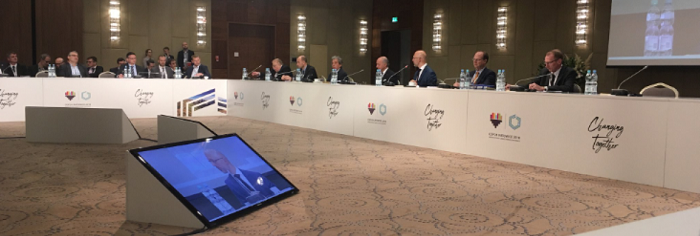
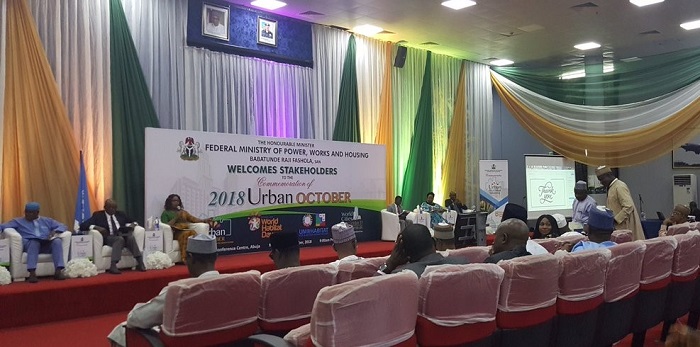
Guests and panellists at the Urban October event in Abuja

Minister of Power Works and Housing I, Mustapha Shehuri, made the call at an event to commemorate 2018 Urban October, organised by the ministry on Monday, October 22, 2018 in Abuja.

Urban October, celebrated every first Monday of October, comprises of World Habitat Day and World Cities Day with the theme “Municipal Solid Waste Management” and “Building Sustainable and Resilient Cities” respectively.

It is a platform set up by the United Nations under the umbrella of United Nations Human Settlements Programme (UN-Habitat) to reflect upon and set new directions on issues concerning human settlements and environment.

Shehuri, however, said that solid waste management in urban areas has become a potent subject which featured across the globe while there were massive complexities surrounding its processes of generation, collection and disposal.

According to him, it is indeed time to re-invent our attitude in favour of minimisation of wastes, re-use or recycle of wastes and increased level of regularisation of informal waste collectors.

“Proper application of wisdom in the management of wastes must necessarily lead to efficiency in collection and disposal of wastes as well as better use of public expenditure towards waste management.

“It could be necessary for city that is Waste-Wise to regroup informal and isolated waste collectors to enjoy economies of scale.

“Such city will ensure that waste is collected and disposed without polluting atmospheric air or underground water.”

He said the focus of the World Cities Day celebration on “Building Sustainable and Resilient Cities” evoked equally challenging interest as that of World Habitat Day.

According to him, if Nigerians must collectively achieve better living, the cities must become more sustainable and resilient.

“Many shocking statistics have emerged to establish the worrisome effects of natural disasters across nearly every region on the globe.

“Within the past ten years, it has been estimated that the economic damage arising from effects of natural disasters across the globe is about $100 billion annually,” the minister said.

Shehuri said that the figures would keep growing if conscious efforts are not made to make cities more sustainable and resilient.

Apart from the measurable impacts on the economy, he said that there were many subterranean effects of socio-cultural and community levels on which re-adjustments could continue for many years.

“It is unfortunate reality that a considerable proportion of disasters are not caused solely by nature but also by economic stress, religious intolerance and other avoidable acts of man’s inhumanity to fellow man.

“Also, the resultant damage of disasters is usually not selective, but it often cuts across public and private assets.

“If cities remain less resilient and natural disasters continue to occur, hordes of urban residents will ultimately be pushed to poverty. This is a scenario we must contend with in Nigeria,’’ he said.

Shehuri said in 2017 and 2018 budget years, the ministry adopted the approach of enriching available data store on resilience and sustainability of Nigerian cities.

He mentioned the parts of the steps taken as finalisation of plans for preparation of resilience and sustainability plans for Ibadan, Oyo state, Lokoja, Kogi state and Yola, Adamawa State.

In addition, he said plans were made to prepare technical reports on Inner City Regeneration Plans for Kano and Enugu states.

He said over the years the ministry had equally funded Model Urban Renewal and Slum Upgrading Schemes, including roads and drains work in selected communities across geo-political zones.

He, however, called for tangible suggestions to set up vibrant municipal structures and cities in Nigeria.

In his presentation, Minister of State II in the ministry, Suleiman Hassan, Zarma, urged the citizenry to reflect on their consumption pattern/lifestyle and determine to reduce wastes and adopt better environmental habits.

His words: “We can assume active roles in environmental education for all. We can reverse the threat of polythene and plastics to terrestrial and acquatic life. We can become more sensitive to the fact that our environment is fragile and susceptible to disasters that are often times avoidable.”

In an address, Senator Barnabas Gemade, Chairman Senate Committee on Housing and Urban Development, decried the fact that in Nigeria people dumped waste anywhere they found space.

Gemade said that the parliament would ensure adequate legislature to facilitate all policies adopted for effective management of municipal wastes.

The presentations were followed by the Urban October Dialogue Session that had “Improving Municipal Solid Waste Management for Sustainable Development in Nigerian Cities” as its theme.

Moderated by former High Commissioner of Nigeria to Kenya and Permanent Representative of Nigeria to UN-Habitat and UNEP, Ambassador Akin Oyateru, the Dialogue Session had Mr Ola Oresanya of the Lagos State Waste Management Agency (LAWMA) as guest speaker and Dr Lawrence Anukam (Director General, National Environmental Standards and regulation Enforcement Agency), Mr Amos Odunfa (Deputy Director, Abuja Environmental Protection Agency), Mariam Lady Yunusa (former Director, UN-Habitat), and Mr. Michael Simire (Principal Consultant, MS & Associates Limited) as panellists.

Wales pledges to keep oil in the soil

0

The Welsh government has announced that it will end the use of coal, a development observers describe as an historic moment for a country that was once at the forefront of the global coal mining industry.

Payal Parekh
Payal Parekh, Programme Director, 350.org

scientific report released on October 8, 2018 by the Intergovernmental Panel on Climate Change (IPCC) confirmed that the world needs to take urgent action to limit climate change catastrophe to prevent temperature rises of more than 1.5℃. Greenhouse gas emissions need to drop to half their current level by 2030 and reach net zero by 2050, the report said, even as it demonstrates that it is feasible if fossil fuels are kept in the ground.

The announcement follows on from news that Wales has reconfirmed its commitment to ban fracking and has revealed a new energy strategy which details how the country will generate 70% of its energy from renewable sources by 2030.

Anna Vickerstaff, spokesperson for 350.org, said: “We applaud the Welsh government in taking these vital steps for a climate safe future. Their actions are in direct contrast to its English neighbour who this week has given the green light to start fracking and created an unfavourable environment for renewable energy.”

Last week, The High Court overturned a legal injunction brought by local campaigners to stop fracking at a site run by Cuadrilla in Lancashire. The decision has been met by rolling protests and emonstrations throughout the week, with an emergency demonstration being held on Saturday, October 20.

Payal Parekh, Programme Director of 350.org, said: “The IPCC report released last week should act as a wake up call for leaders worldwide, more countries must rapidly follow the path of Wales in leaving fossil fuels in the ground and transitioning to renewables.”

Wales joins a growing number of countries that are turning their backs on the fossil fuel industry including Costa Rica, who this year became the first country to commit to become 100% fossil free.

‘Nigeria will continue to be from ozone-depleting substances’

0

The Minister of State for Environment, Alhaji Ibrahim Jibril, said on Monday, October 22, 2018 that the Federal Government would continue to free the country from ozone-depleting substances.

Ibrahim Usman Jibril
Ibrahim Usman Jibril, Minister of State for Environment

Jibril told the News Agency of Nigeria (NAN) on the sideline of the commemoration of the 2018 International Day for the Preservation of the Ozone Layer in Abuja.

He said that the Federal Ministry of Environment, in collaboration with the Nigeria Customs Service, was checkmating the imported ozone-depleting substances.

“We have tightened up our operations at the ports with active collaboration of the Nigeria Customs Service.

“The Customs is helping us a lot; and we are checkmating those people who are bringing these ozone-depleting substances into the country.

“What we normally do is that, if you import illegally and you are caught, your goods will be sent back to the country of origin,’’ the minister said.

According to him, this will tend to continue, to ensure that Nigeria is free of such substances.

Jibril said that his ministry was educating Nigerians on the recycling of raw materials they got from condemned electronic waste (e-waste) to sustain their livelihood.

“We are looking at the possibility of recycle economy. What most people don’t understand is that this e-waste contains a lot of metal that are valuable.

“It contains gold, copper, aluminium and other metal materials that are used in the production of e-material.

“So, when their life cycle are done and condemned as waste, they tend to move around.

“What we are doing now in Nigeria is to sensitise people and show them that they can actually get more gold and other valuable, if they go into the field.’’

According to him, people can get a lot of copper, silver and other raw materials from e-waste.

By Deji Abdulwahab