Home Blog Page 1760

How climate action can close emissions gap – Studies

0

Two key milestone publications by the United Nations Framework Convention of Climate Change (UNFCCC) released on Tuesday, November 20, 2018 highlight that success in tackling the global climate crisis can be achieved, but only if public and private sector actions are urgently stepped up.
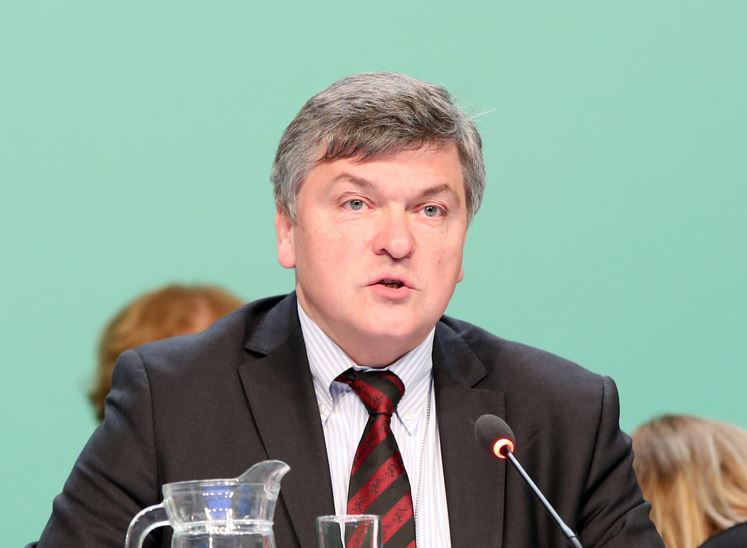
Tomasz Chruszczow
Tomasz Chruszczow, Special Envoy for Climate Change from Poland

The reports – “Talanoa Dialogue Synthesis Report” and “Yearbook for Global Climate Action 2018” – take the pulse of where the world stands on its journey towards full carbon neutrality by mid-century, says the UNFCCC.

The Synthesis Report, it was gathered, was prepared using submissions to the Talanoa Portal (launched on January 10, 2018) which received a total of 471 inputs throughout the year, including notably the IPCC’s special report on the impacts of global warming of 1.5 degrees Celsius. It also drew from stories that were presented by government and non-government representatives during the intersessional climate change session held in May 2018.

The Yearbook for Global Climate Action takes account of some 9,000 commitments – spanning cities, regions, businesses, investors and civil society – incorporating 128 countries (16 per cent of the global population), around 240 states and regions and more than 6,000 businesses in 120 countries representing $36 trillion in economic activity.

Special Envoy for Climate Change and Poland’s High-Level Climate Champion, Tomasz Chruszczow, said: “Global Climate Action remains the best response to the challenges of changing climate. 2018’s Yearbook documents how the action can deliver on existing NDCs, on adaptation, mitigation, capacity building, etc. Every climate related initiative, programme or action contributes to laying a solid foundation for the climate neutral, peaceful, climate resilient and sustainable future for all. Parties and non-Party stakeholders act together and prove that cooperation may lead to more emission reductions, faster delivering on existing NDCs and strengthening of biosystems’ capacity to store atmospheric carbon, while life standards get improved, economies grow, and the nations approach all the goals of the Paris Agreement in an accelerated manner. The examples from this year’s Yearbook will surely inspire more ambitious action by the governments and the stakeholders. Responding to climate change related threats is an opportunity that no one can afford missing.”

Together the publications illustrate that global climate action can close the gap to meeting the goals of the Paris Agreement: to limit average global warming to 2 degrees Celsius and to strive for the safer 1.5-degree limit.

However, what the reports also make clear is that all actors – government and non-governmental, public and private – need to urgently step up the pace of action if the world is to achieve the Paris targets and to avoid the worst effects of climate change.

According to key findings in the Synthesis Report, the reality is that, despite current efforts, greenhouse gas emissions and global warming are still on the rise.

The Report also describes how these atmospheric changes are already having devastating impacts, citing a total of 11,000 extreme weather events between 1997 and 2016, which have resulted in approximately 524,000 deaths and trillions of dollars of opportunity lost in economic development

“The publications are sober reading, but they do signpost the solutions that can exponentially drive the transition towards a low carbon economy. That is, if global actors adhere strictly to the Paris Agreement process and its principles.

“This theme of exponentiality is a major focus of the Yearbook for Global Climate Action, which states that if countries were to fully implement their nationally determined contributions (NDCs) under the Paris Agreement, and if cooperative initiatives were to meet their commitments, global emissions in 2030 would be in a range consistent with the long-term trajectory to meet the Paris Agreement goal of well below 2°C.

Similarly, the Synthesis Report, which emphasises ways of increasing ambition, points to ‘untapped potential’ that, if properly fulfilled, could yield economic gains of $26 trillion and 65 million jobs in clean energy,” submits the UNFCCC.

Inia Seruiratu, Minister for Agriculture, Rural & Maritime Development, National Disaster Management and Meteorological Services, and Fiji High-Level Climate Champion, said: “This year, the entire Talanoa process – as reflected in the Synthesis Report – shows how we can put in place holistic approaches and policy frameworks across all sectors of the economy and the natural environment. With the right policy frameworks, NDCs could address not only mitigation but also adaptation, disaster resilience and efficient use of resources. Crucially, non-Party engagement will be essential in delivering on all these objectives.”

Significantly, these reports are published just two weeks before governments gather for the global climate summit in Poland (COP 24), where they are set to complete the implementation guidelines for the Paris Agreement, known as its Work Programme. A finalised Paris Agreement Work Programme, observes the UNFCCC, has the potential to unleash practical actions from the whole global climate action community commensurate with a 1.5 pathway.
Fight against malaria off target, says WHO

0

Malaria infections rose for the second year in a row in 2017, following half a decade of decreases, the World Health Organisation (WHO) reported on Monday, November 19, 2018.

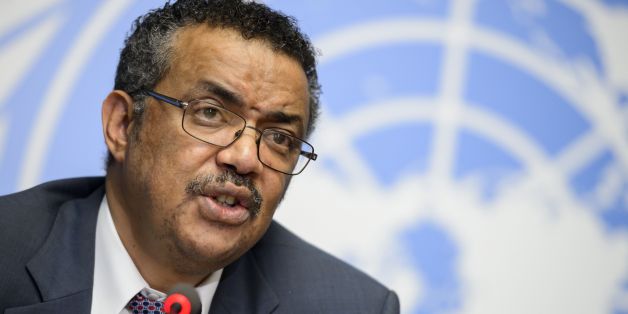
Dr Tedros Adhanom Ghebreyesus
Dr Tedros Adhanom Ghebreyesus, Director-General of the World Health Organisation (WHO). Photo credit: AFP / FABRICE COFFRINI / Getty Images

In its annual malaria report, the UN health agency estimated 219 million cases in 2017, 2 million more than in 2016.

“As progress stagnates, we are at risk of squandering years of toil, investment and success in reducing the number of people suffering from the disease,” WHO Director-General, Tedros Ghebreyesus, warned.

“The fact that every two minutes a child dies from this preventable and curable disease is unacceptable,” he wrote in the report.

African countries account for 92 per cent of all infections from the mosquito-borne parasite which causes the potentially lethal fever disease.

Infections increased in the hardest-hit countries of Burkina Faso, Cameroon, Congo, Ghana, Mali, Mozambique, Niger, Nigeria, Tanzania and Uganda in 2017.

Low use of bed nets treated with insecticide; a falling rate of indoor spraying; and a lack of preventive therapies for pregnant women and children have contributed to this rise.

In addition, international donations to fight the disease have levelled off, amid decreasing infections and deaths in the past years.

The WHO not only urged wealthy donor countries to increase spending, but also asked the hardest-hit countries to secure domestic funding.

The money should be spent more efficiently in a targeted manner, the UN agency added.

As a positive exception to the negative trend, the WHO highlighted India, where case numbers dropped by nearly a quarter in 2017.

Sperm whale washed up in Indonesia had plastic bottles, bags in stomach

0

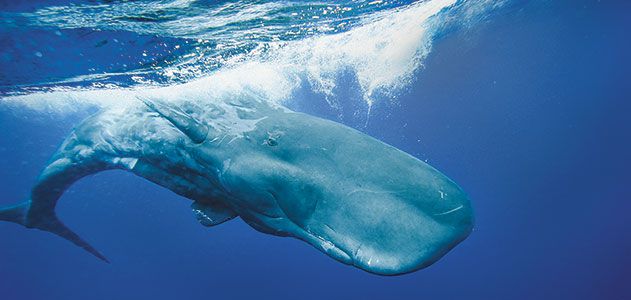
A sperm whale found dead in a national park in Indonesia had nearly six kilogrammes (13.2 lbs) of plastic waste, including 115 cups, in its stomach, park officials said on Tuesday, November 20, 2018.

Sperm Whale
The Sperm whale

The 9.5-metre (31.17 ft) whale was found in waters near Kapota Island, part of the Wakatobi National Park, south east of Sulawesi, the park said in a statement.

The park is famous among divers for its large area of reefs and diverse marine life including rays and whales.

The cause of death was not known, but park officials found plastic bottles, bags, sandals, and a sack with more than 1,000 pieces of string in the whale’s stomach.

In June, the death of a pilot whale in Thailand with 80 pieces of plastic rubbish in its stomach garnered headlines locally but drew more attention outside the country.

Five Asian nations – China, Indonesia, the Philippines, Vietnam and Thailand – account for up to 60 per cent of plastic waste leaking into oceans, said a 2015 report.

This report was put together by the environmental campaigner Ocean Conservancy and the McKinsey Centre for Business and Environment.

Indonesia is ranked second behind China in the 2015 study of mismanaged plastic waste from populations living near coastal areas in 192 countries.

It has pledged $1 billion a year to reduce marine plastic debris by 70 per cent by 2025.

Wakatobi Park planned to bury the whale carcass at high tide on Tuesday, and the remains would be used for study purposes by the local marine academy.

China glacier melt speeds up in ‘wake-up call’ for world – Greenpeace

0

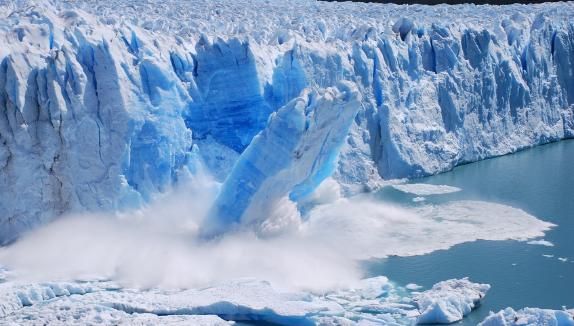
Glacier melt at major sites in western China is accelerating fast, Greenpeace said on Tuesday, November 20, 2018.

melting glaciers
The disappearance of glaciers is considered by scientists as one of the clearest signs of climate change. Photo credit: beforeitsnews.com

The melt is prompting thousands to evacuate in recent months and underscoring the vulnerability to climate change in a “wake-up call” for the world.

Satellite analysis showed that the rate of retreat at glaciers in China’s remote western regions had more than doubled, Greenpeace said.

The annual rate at the Tianshan Glacier No. 1 in Xinjiang is rising from an average of 5,000 square metres between 1962 and 1986 to 10,600 square metres between 1986 and this year.

“This is a wake-up call for China and the world,’’ said Greenpeace’s climate and energy campaigner, Liu Junyan.

“Glaciers in China supply water to 1.8 billion people, and they’re melting, fast.

“In just the last few months, thousands of people have been evacuated from their homes due to threats of flooding.’’

Greenpeace has identified two major disasters caused by glacier melt this year.

The disaster included the release of 25 million cubic metres of floodwater into the Yarkant river basin that forced the evacuation of residents in August.

Researchers with the China Academy of Sciences said in September that glaciers in the Qinghai-Tibet plateau had shrunk 15 per cent as a result of rising temperatures over the last 50 years.

Temperatures in the region are rising faster than the global average, they said.

China has pledged to bring carbon emissions to a peak by “around 2030” as part of its commitment to the 2015 Paris agreement.

The agreement aims to keep the average global temperature increase to “well below” two degrees Celsius above the historical norm.

The Inter-governmental Panel on Climate Change (IPCC) warned in a report in October.

It warned that high-altitude zones like the Tibetan plateau would be especially vulnerable if global temperature rises were not restricted to 1.5 degrees Celsius.

Another CAS study published in October said China was at risk of longer and more intense drought as well as more destructive flooding if global temperature rises were not limited to 1.5 degrees.

China sends five satellites into orbit via single rocket

0

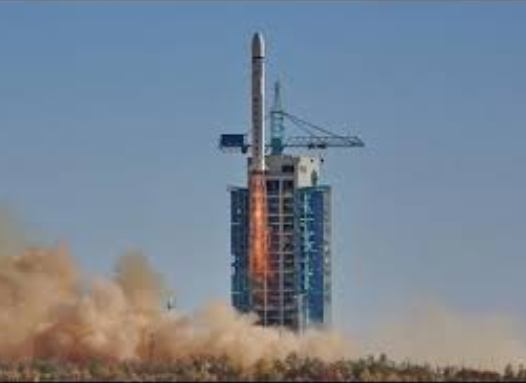
China on Tuesday, November 20, 2018 launched a new space environment research satellite and four nanosatellites on a Long March-2D carrier rocket from the Jiuquan Satellite Launch Centre in northwest China.

The Long March 2D carrier rocket

According to the centre, the satellites have successfully entered their pre-set orbit.

Shiyan-6 will be used for conducting space environment exploration experiments.

The term nanosatellite refers to a small artificial satellite, weighing between one kg and 10 kg.

Among the four nanosatellites, Tianping-1A and Tianping-1B will be used for equipment calibration on ground control stations, while Jiading-1 is the first satellite of the Xiangyun satellite constellation in low earth orbit.

A software-defined satellite, developed by the Innovation Academy for Microsatellites, the Chinese Academy of Sciences, will be used for conducting experiments on open-source satellite software research and development on Android platforms.

Compared to traditional satellites, a software-defined satellite is more flexible and reconfigurable.

A report says it enables its operator to capture diverse markets with its ability to change things like frequency band and coverage areas on demand.

It is the 292th mission of the Long March carrier rocket series.

World Toilet Day: Lagos to effect policy on open defecation, urination

0

As part of its World Toilet Day declaration, the Lagos State Government is finalising implementation plans concerning its Water Sanitation and Hygiene (WASH) policy.

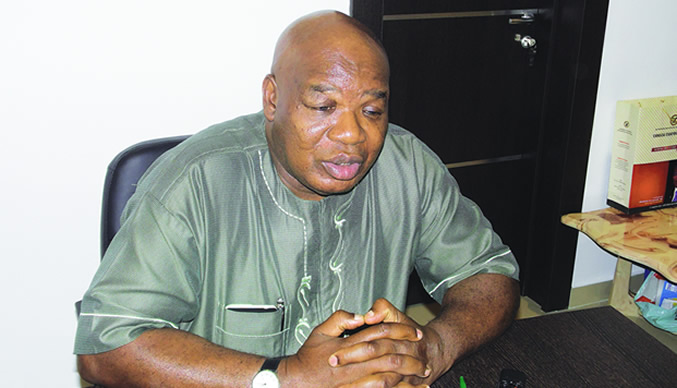
Babatunde Durosimi-Etti
The Lagos State Commissioner for Environment, Mr Babatunde Durosimi-Etti

Commissioner for Environment, Mr Babatunde Durosinmi-Etti, made this known during the celebration of the 2018 World Toilet Day in Lagos on Monday, November 19, 2018.

The commissioner said that the policy (WASH) was envisaged to complement extant laws and curb the menace of open defecation and urination in the state.

Durosinmi-Etti decried the practices of open defecation and urination as unwholesome, with a lot of negative impact on the environment, public health, human dignity and personal safety especially for women, children and those in vulnerable situations.

He said that the 2018 World Toilet Day celebration, themed: ‘’When Nature Calls’’, promoted the campaign against open defecation.

According to him, open defecation is a practice that is not only unhealthy but also anathema to the Lagos Megacity dream.

The commissioner said that not less than 892 million people around the world practiced open defecation, as they were unable to access basic sanitation facilities, particularly toilets and water.

“These staggering statistics, no doubt, calls for urgent action among all stakeholders to prioritise toilet and sanitation issues.

“The statistics calls on stakeholders to enhance access to water and sanitation facilities and spread awareness of the ills of undesirable sanitation practices,’’ he said.

Durosinmi-Etti said that the World Toilet Day celebration brought to the front burner issues such as water, sanitation and hygiene, which required urgent actions to stem the tide of diseases and bring about healthy citizenry.

According to him, the world is changing faster than one can imagine, with human population increasing at an exponential rate.

“Therefore, there is an urgent need to provide access to safe and sustainable sanitation systems that will effectively address the menace of open urination, open defecation and other sanitation infractions to prevent the spread of diseases,’’ he said.

The commissioner said that proper handling of these critical issues would help reduce government expenditure on treatment of diseases and make more money available for other important public uses.

Durosinmi-Etti said that the government was making efforts to eradicate the menace of open defecation and urination through the provision of public toilets and upgrading of already-existing facilities across the state.

The commissioner called on Lagosians to join the global crusade, spread the awareness and inspire environmentally-friendly actions.

He said that Lagosians should support in facilitating the provision of sustainable sanitation systems capable of promoting economic growth and well-being of the entire citizenry.

The World Toilet Day, regarded as an important international observance day, is dedicated to creating awareness and inspiring actions to combat the global sanitation challenges facing humanity.

The 2018 edition of the World Toilet Day was celebrated by Lagos State Government in conjunction with Reckitt Benckiser.

By Florence Onuegbu

Radio Report: Borehole and emerging threat of earth tremors

0

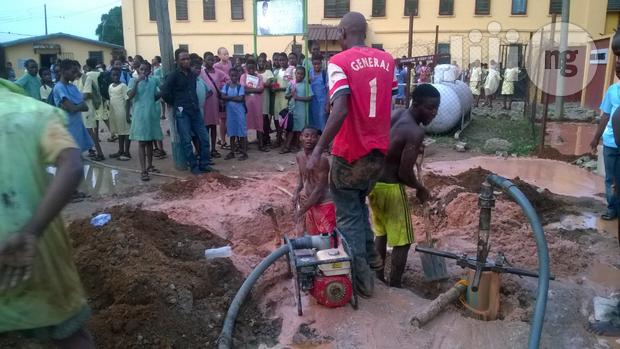
It is common knowledge that the inability of governments to maintain as well as expand water infrastructures built around independence some 58 years ago a contributory factor to the proliferation of boreholes across the country, as people make desperate efforts to provide water for themselves.

But, with recent cases of earth tremor in Abuja, which experts say could be the result of haphazard extraction of underground resources, it is becoming obvious to Nigerians that drilling of boreholes is another time bomb that they should avoid.

How then will Nigerians survive in the absence of the borehole, which is a major source of portable water to city dwellers in particular?

Correspondent Innocent Onoh in this report that explores boreholes as a major source of water in Lagos attempts to find an answer to this poser.

Government to deploy solar energy systems to 37 universities

0

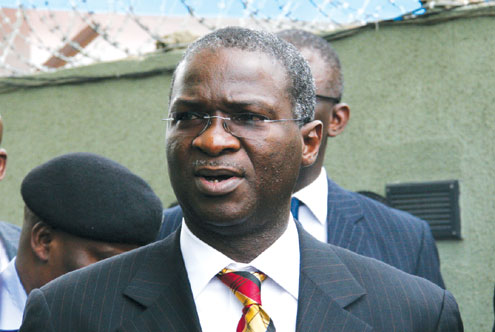
The Minister of Works, Power and Housing, Mr Babatunde Fashola, on Monday, November 19, 2018 said the Federal Government would deploy solar energy systems to 37 universities in the country.

Babatunde-Fashola
Minister of Power, Works and Housing, Babatunde Raji Fashola (SAN)

Fashola made this known while delivering the 32nd Convocation Lecture of the Yaba College of Technology (YABATECH), titled: “Sustainability of Technological Advancement-A Key to Industrial Growth’’.

He said the solar energy project was ongoing, saying that government would soon deliver 12 Mega Watts of electricity in nine institutions.

“We are embracing technology and we are embracing solar energy. We will go phase by phase until we complete the 37 federal institutions.

“We have started construction of roads in 14 tertiary institutions for internal road rehabilitation.

“I don’t know the last time the Federal Government went back to rehabilitating internal roads or build independent power plants for its own universities in this country.

“That is what President Buhari’s government is doing now,” he said.

Fashola said that the country must develop a technology to store electricity, pointing that, today, it is still difficult to store electricity.

The minister said the Federal Government had invested in Automated Meter Reading Machines.

“Everybody, from providers of power to consumers of power can see the value chain from a remote location.

“Once this can happen, it will mean that investment in power will grow. The investment in transmission will grow and investment in distribution will grow.

“Everybody is getting his money and reinvesting appropriately,’’ he said.

The minister said technology had advanced growth in every sector of the economy, from Banking to ICT.

He noted that technology was sustainable because it was evolving without disrupting lives in a bad way.

“Our world is changing so very quickly; our world will change so much I suspect in the next 10 to 20 years.

“We can leap-frog with technology; we can deploy them and we can add value to it. The world is changing, add your own,” he said.

Earlier, Mr Obafemi Omokungbe, Rector of the college, said the Convocation lecture was a very important component of the graduation ceremony.

Omokungbe said the lecture was an avenue to examine issues of national and global interests with a view to proffering solutions to identified challenges.

He said the recommendations would assist the relevant organs of government in formulation and implementation of policies that might be beneficial to the nation at large.

“Your presence here is not an accident and we do not want the opportunity to be lost by us.

“There is, therefore, a huge burden on the college for replacement of these facilities that have become dilapidated and decayed due to age, particularly at a time when fund is a serious and harrowing issue.

“First, we seek your assistance to facilitate the completion of the reconstruction of the college road network and request for the construction of an electricity substation for the college.

“The issue of electricity supply to the college has been a daunting task to be accomplished by the college management alone.

“As an institution of higher learning, the poor power supply or lack of it, has been a constant factor for disharmony between students and the management,” the rector said.

Guterres charges delegates at maiden geospatial information summit

0

The inaugural United Nations World Geospatial Information Congress (UNWGIC) is being held in Deqing, East China’s Zhejiang Province. The event started on Monday Nov. 19, 2018 and will end on Nov. 21.

António Guterres
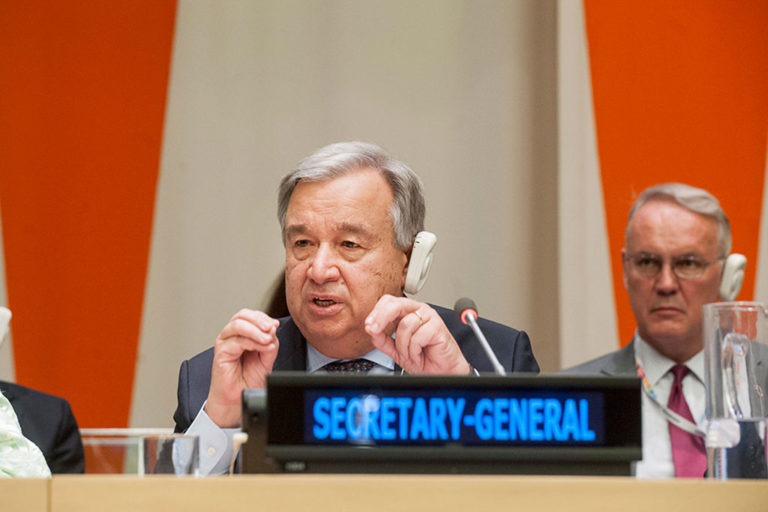
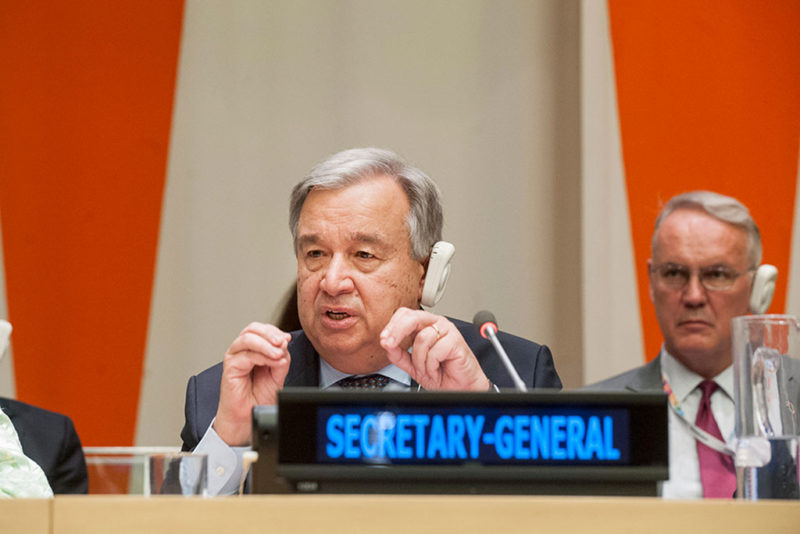
UN Secretary-General António Guterres. Photo credit: UN Photo/ Kim Haughton

UN Secretary-General Antonio Guterres sent a video message to the congress, expecting the UNWGIC to “use geospatial information to build a safer, better world where no one is left behind.”

Themed “The Geospatial Way to a Better World,” the UNWGIC aimed to advance the potential and usefulness of geospatial information for sustainable development and to tackle global challenges.

Guterres noted that to achieve the Sustainable Development Goals, reliable, timely and accessible geospatial information is in need for decision-making, ensuring effective and inclusive development initiatives and measuring progress.

He also encouraged participants to provide suggestions on developing new and emerging technologies, sharing the digital economy, and building smart societies.

The event includes exhibitions, meetings, workshops and learning events.

Delegates from over 100 countries and regions, geospatial information organisations, and academic and research institutions are attending the conference.

Don’t betray Africa on synbio, gene drives, campaigners urge governments

0

Civil Society on Monday, November 19, 2018 at the ongoing United Nations Convention on Biodiversity Conference of Parties (COP 24) in Egypt, called on African and all other delegates to apply caution on the issue of synthetic biology (synbio) and gene drive organisms (GDOs), saying that delegates from the continent are not adequately representing the continent’s interest at the summit.

GM mosquitoes
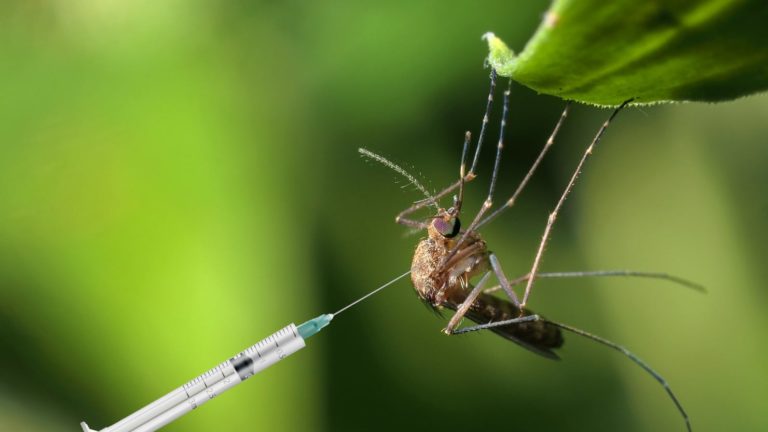
Gene drives, such as those being promoted by Target Malaria, aimes at releasing gene drive mosquitoes in Burkina Faso

As representatives of a broad range of African civil society organisations, we do not feel represented by the delegations of Nigeria and South Africa, in their attempt to speak on behalf of the people of Africa on the issue of synthetic biology (synbio) and gene drive organisms (GDOs).

Throughout the history of the United Nations (UN) Convention on Biological Diversity (CBD) and the UN Cartagena Protocol on Biosafety, African delegates have championed the defence of our biodiversity, protection of our seeds, indigenous agroecological practices and culture. They have always advocated the need for a precautionary approach.

In the past, African delegates have strongly defended our ecological life-support systems from threats, such as Terminator technologies (seeds designed to be sterile).

We are now alarmed at what is going on at COP14 and how our concerns for our environment, biodiversity and communities are being betrayed and threatened by delegates from some African nations. In particular, they are not representing our concerns about gene drives and synbio.

Most countries in Africa are still grappling with the threats from basic genetic engineering and associated agro-toxics and do not even have experience or capacity for basic regulation of the risks for those first-generation genetic technologies, let alone synbio and GDOs.

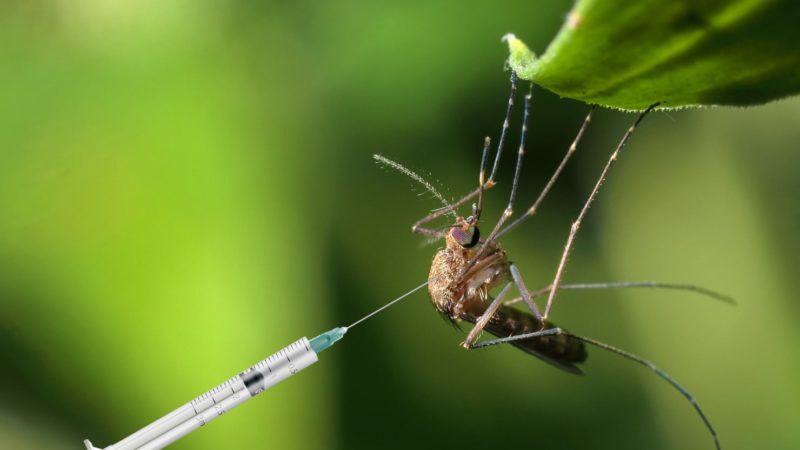
Gene drives, such as those being promoted by Target Malaria, aimed at releasing gene drive mosquitoes in Burkina Faso, are a deliberately invasive technology designed to propagate genetic material across an entire population – potentially wiping out entire species. As Africans, we are forced to confront this new and serious threat to our health, land, biodiversity, rights, and food supply.

African government delegations appear to have been neutralised. They have fallen from grace on the altar of the multi-national corporations, gene giants and private foundations. The African group’s position at the CBD slavishly replicates the position of these interest groups.

As Africans, we do not wish to be lab-rats for Target Malaria’s experiments. We refuse to be guinea pigs for their misguided disruption of our food systems and ecology.

We call on the African and all other delegates to put the brakes on this exterminating technology. We reject any form of representation that is against the interest of our peoples and biodiversity. We call on the governments of Africa to call their delegates to order and avoid acquiescence to unfolding intergenerational crimes.