The International Labour Organisation (ILO) has commended the Federal Government for ensuring that workers’ voices are reflected in Nigeria’s updated Nationally Determined Contributions (NDC) 3.0 on climate action.
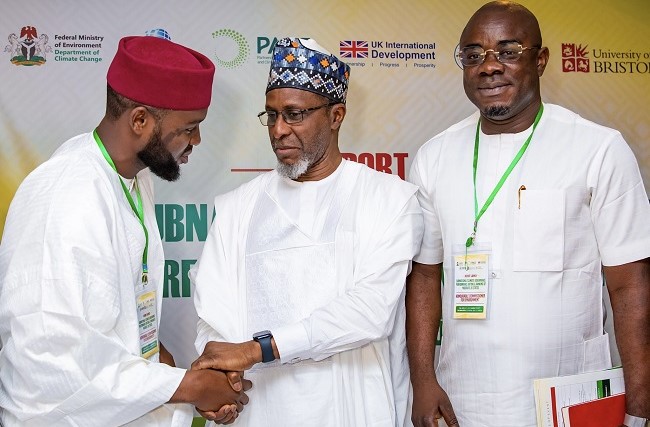
Ms. Inviolata Chinyangarara, ILO Senior Specialist, on Friday, October 17, 2025, in Abuja said the inclusion of workers’ concerns in the NDCs 3.0 demonstrated the success of social dialogue and inclusiveness led by the National Council on Climate Change (NCCC).
“The fact that workers’ issues are now at the centre of Nigeria’s NDC 3.0 shows that social dialogue still works,” she said.
Inviolata Chinyangarara, ILO Senior Specialist
According to her, the Nigeria Labour Congress (NLC) played a vital role in shaping the document by contributing ideas on how a just transition should guide Nigeria’s climate policy.
“The NLC brought their membership, their structures across the 36 states and their views on how just transition should inform the NDC reviews,” she added.
Chinyangarara said that the ILO provided technical and capacity-building support to the NLC to strengthen its participation in the NDC process and promote evidence-based advocacy.
“We empowered the trade unions to come to the discussion table with evidence on why workers’ issues should be integrated into national climate plans,” she said.
She noted that the collaboration among government, ILO and trade unions ensured a balanced and inclusive process where “no one is left behind” in the transition to a green economy.
Chinyangarara, however, cautioned that while Nigeria had developed strong and inclusive policies, implementation remained the greatest challenge.
“We are optimistic, but with a big caution. Nigeria, like many countries in Africa, has good policies, but the issue of implementation is the real challenge,” she said.
She said that there was need for sustained collaboration among labour, government and development partners to ensure that climate commitments translate into real results for workers.
According to her, the NLC’s charter of demands highlights key areas such as occupational safety, gender equality, youth re-skilling and social protection for workers affected by the energy transition.
Chinyangarara further urged Nigeria to mobilise domestic resources to finance its climate goals, adding that, with local resources, you can plan, you can own and you can commit to the work areas.
She assured that the ILO will continue to support Nigeria through training, technical assistance and partnerships to ensure workers’ welfare remain central to climate action.
The story of food waste doesn’t end in the trash can – it’s a starting point for climate change, economic challenges and the empty plates of hundreds of millions. According to the Food Waste Index Report 2024, recent years have seen 19 per cent of food available to consumers wasted, which in turn is responsible for five times the total emissions from the aviation sector – and this comes while a third of humanity faces food insecurity.
However, as much as food loss and waste is a systemic issue of global scale, it’s also an area where individuals, families and communities can readily take action – and in creative ways that celebrate culture and tradition.
One foremost fighter of food loss and waste is United Nations Environment Programme (UNEP) Goodwill Ambassador and globally renowned chef Massmio Bottura, whose Food for Soul initiative runs community kitchens – “Refettorios,” now in nine countries – that rely on surplus food for ingredients. Here, Bottura shares how turning attention to food waste is not only an environmentally responsible thing to do, but also an act of memory and beauty.
Massimo Bottura
Why should we worry about food waste?
The greatest amount of food waste happens quite innocently in home kitchens around the world. When we throw away food, we are collectively wasting resources, wasting opportunity and wasting dignity. Reducing food waste is a win for the planet – it can cut up to 10 per cent of global emissions. It is also a win for people, turning surplus into billions of meals a day to fight hunger, and a win for the economy, saving nearly US$1 trillion a year. Fighting food waste is one of the simplest, most powerful actions people can take to create a better future for everyone.
Memory shapes taste. How can family traditions and childhood flavors help fight food waste? Memory is the foundation of taste, and taste is a foundation of culture. I often say that my mother was my first teacher in the kitchen. She respected every crumb. Leftover bread became passatelli in broth, vegetable scraps became minestrone and nothing ended up in the bin. These traditions are not nostalgia; they are lessons in sustainability. When we cook with memory, we are reminded that every ingredient carries history, labor, and love. Reviving those flavors teaches us to honor food not as a disposable commodity, but as a story to be carried forward.
This is the spirit behind my work with Food for Soul, where we transform surplus food into meals that restore dignity and nourish the community. And it is the same spirit behind the UNEP Food Waste Breakthrough, which I support as a UNEP Goodwill Ambassador and UN SDG Advocate – reminding the world that reducing food waste is not a side issue. It is central to fighting climate change, hunger and inequality.
How can chefs turn overlooked foods into something extraordinary?
Chefs have the privilege to transform what is overlooked into something extraordinary, and in doing so, they change perceptions. What was once seen as waste becomes culture on a plate. Some of the most renowned recipes all over the world came from the kitchens where people had to make do with what was in the pantry – humble, seasonal, local ingredients. Ribollita, paella, feijoada – these dishes are monuments to resourcefulness. A bruised peach becomes a granita. Carrot tops become pesto. Stale bread becomes cake.
This is what we practice every day in the Refettorios: we take surplus food destined for landfill and turn it into delicious meals full of dignity and beauty. As a UNEP Goodwill Ambassador, I see it as my duty to inspire others to recognize that the future of gastronomy is not about excess, but about creating beauty through respect.
You’ve worked on projects from Modena to Rio. In places like Brazil, resourceful cooking is cultural. What lessons can the world learn from that approach?
Brazil taught me resilience in the kitchen. In the favelas of Rio, I saw families doing with little what many of us fail to do with abundance. Cassava peels are dried and fried, fish bones flavor broths, banana skins become sweets. This is not “poor cuisine” – it is an ingenious cuisine.
Waste is not inevitable – it is the result of privilege and disconnection from nature. Communities with fewer resources remind us that true abundance is not endless supply; it is creativity, solidarity, and the transformation of every ingredient into a communal meal.
In their role as influencers, how can chefs spark a movement to bring back zero-waste traditions?
Chefs today hold enormous cultural influence. If we use it only to create luxury, we are missing the point. Zero-waste traditions like fermenting, pickling and curing are not just techniques but are also acts of preservation and wisdom passed from generation to generation. By putting them back on the table, we remind people that they are not old-fashioned; they are the future. At Osteria Francescana, if I celebrate potato skins or bread crusts on a Michelin-starred plate, I give dignity back to what many saw as disposable. At the Refettorios, we do the same for communities in need, proving that scraps can nourish both body and soul. This visibility sparks curiosity, then imitation, then systemic change.
Why did you become a UNEP Goodwill Ambassador?
I carry this role because chefs have a responsibility beyond cooking. Food is culture, memory and care. Through Food for Soul, I’ve seen how surplus can restore dignity. Becoming a UNEP Goodwill Ambassador, and later an SDG Advocate, allows me to bring this message to the world: Food is never just food, it is our common future.
The World Bank says AgriConnect, its flagship initiative to boost agriculture, will assist smallholder farmers move from subsistence to surplus.
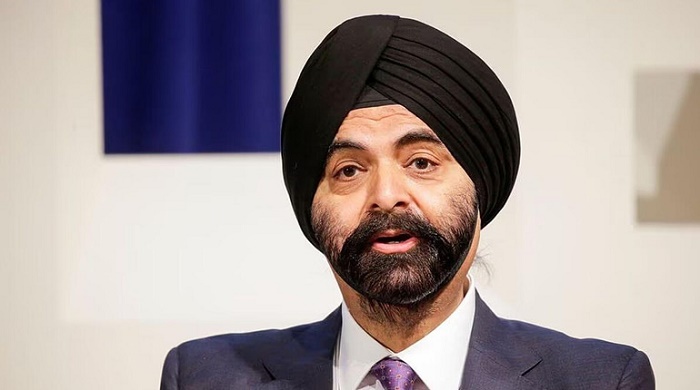
President of the World Bank Group, Ajay Banga, said this on Friday, October 17, 2025, in Washington, during the plenary of the annual meetings of the group.
Banga noted that the initiative was building an ecosystem around cooperatives that would integrate financing for farmers and SMEs, link producers to markets and harnesses digital tools, like small AI.
Ajay Banga, World Bank President
According to him, this is underpinned by a pledge to double financing to $9 billion a year and mobilise an additional $5 billion.
He said that the group was also finalising a minerals and mining strategy to help countries move beyond raw extraction into processing and regional manufacturing.
The president further stated that this would enable more value and more jobs to “stay local”.
“We expect to share this strategy in the coming months.
“So, how do we make this real?
“We begin with a single Country Partnership Framework across the World Bank Group, that is developed with the country’s leadership and our subject matter experts,” he said.
He noted that each framework was a long-term strategic plan that united the full capacity of relevant institutions within the World Bank Group around a focused set of priorities.
Banga added that the priorities would be tailored to a country’s unique needs and ambitions.
“In one country, that might mean end-to-end mineral value chains.
“In another, tourism rooted in nature and culture, perhaps stronger health systems that heal and employ or agribusiness ecosystems that lift smallholder farmers.
“The path is tailored, but the fundamentals are shared,” Banga said.
He listed the fundamentals to include building infrastructure, setting clear, predictable rules and supporting private investment.
According to him, to reach scale and free up the balance sheet for the toughest challenges, the group must unlock the full power of the private sector.
“That is why we are breaking down barriers to investment and creating conditions where private capital can deliver development impact.
“We are advancing the roadmap the Private Sector Investment Lab provided, deploying tools and practical solutions across the institution,” he said.
France’s Minister for Europe and Foreign Affairs, Mr. Jean-Noël Barrot, says his country is deepening collaboration with Nigeria in technology, innovation, and the creative industries.
Barrot said the partnership aims to drive sustainable development and cultural exchange across Africa.
He disclosed this on Friday, October 17, 2025, in Lagos during the second edition of the Forum Création Africa, which promotes creative and cultural industries across the continent.
Jean-Noël Barrot, France’s Minister for Europe and Foreign Affairs
The minister said the forum showcased exceptional talents from 42 African countries in video games, extended reality, webtoons, and digital design.
He said: “We are seeing strong participation of creative talent across Africa.
“I am happy that France contributes to this success. France leads in creative industries in Europe, while Nigeria leads in Africa.”
Barrot said both countries could achieve more by connecting creative talents and entrepreneurs to co-develop industries that strengthen their economies.
He stressed that technology remains a key area of partnership, underscoring shared commitment to innovation and multilateralism.
Barrot said both nations aim to create regulatory frameworks that promote creativity while preventing misuse of technology.
“Technology is one field where France and Nigeria have much to achieve together.
“We share a common vision of development, multilateralism, international law, and technology. We want to build strategic digital economies,” he said.
He explained that effective regulation should encourage creativity while preventing misuse that threatens collective interests.
Barrot reaffirmed France’s commitment to supporting Africa’s creative and technological ecosystems.
On bilateral ties, he described France–Nigeria relations as long-standing and mutually beneficial, citing increased visits, partnerships, and collaborations.
He recalled that President Emmanuel Macron visited Nigeria in 2018, while President Bola Tinubu visited France last year, deepening ties further.
“There has been strong interaction between administrations, companies, and civil societies from both countries,” he said.
Highlighting a key outcome, Barrot recalled the recent inauguration of the ‘Omi Eko’ Project, promoting sustainable water transport in Lagos.
“We have inaugurated the ‘Omi Eko’ Project to deliver decarbonised water transportation in Lagos,” he said.
The project, he noted, would deploy 78 electric boats and open 15 new waterways spanning 140 kilometres.
He said it would help Lagos cut carbon emissions and adapt to rising sea levels.
Barrot said the initiative, supported by the European Union, involves a total investment of 410 million euros.
Residents and shop owners at the Oja Retail Market, Oke-Afa, Jakande Estate, Isolo, Lagos, have kicked against the planned demolition of the market by the Chairman of Ejigbo Local Council Development Area (LCDA), Mr. Taoreed Taiwo.
The protesters appealed to the council chairman, councilors, council manager, and other officials to stop the planned demolition.
They lamented that their shops were their only source of livelihood.
The protesting residents
One of the traders, Mrs. Temitope Olufowokan, urged the LCDA chairman to suspend the planned demolition, especially with the festive period around the corner.
Olufowokan said the traders had hoped to enjoy the benefits of democracy, not the pains of losing their shops.
She also called for transparency and accountability in any redevelopment plans for the market.
Also speaking, the Chairman of the Estate Youth Parliament, Mr. Adeyemi Yusuf, advised the council chairman to focus on developmental projects that would not bring hardship to the residents.
Yusuf said selling rebuilt shops at N5 million would make them unaffordable for most traders, defeating the purpose of its redevelopment.
He said: “We have told him what the community needs. If he doesn’t want to attend to those issues, he should not force what we didn’t ask for.”
Responding, the chairman said the plan to rebuild the market was part of his administration’s campaign promises and in line with the Renewed Hope Agenda.
Taiwo said the market leaders had earlier requested for improvements, including solar lights, a new fence, gate, and concrete floors.
He noted that the existing structures were over 40 years old and dilapidated.
“The market was built during the administration of the late Gov. Lateef Jakande, and the structures are too weak to be renovated,” he said.
Taiwo said several meetings had been held with market executives, shop owners, and other stakeholders to discuss the project before plans were made public.
He added that the redevelopment was part of broader infrastructure renewal efforts across Ejigbo LCDA, including roads, schools, and health centres.
The chairman appealed to the traders to cooperate with the council, assuring them that the original shop owners would be given priority when the new modern market is completed.
The International Maritime Organisation (IMO) failed to adopt the world’s first-ever global, legally binding carbon price – postponing for a year a vote on the measure at a meeting on Friday, October 17, 2025, in London.
The agreement would have dictated that all large ships operating globally, including cruise ships, are required to slash emissions 17% by 2028 – with increasing emission reduction targets thereafter – or pay a fee.
Currently, the global shipping sector runs on some of the dirtiest fossil fuels and accounts for 3% of global carbon emissions – polluting the ocean and imperling the health of people in coastal areas.
Maritime shipping is a major consumer of energy and polluter
In a reaction to the development, Delaine McCullough, Ocean Conservancy’s shipping programme director, stated: “The failure of IMO member states to clinch this agreement is a major setback for people and the planet. It’s disgraceful that climate action has been delayed when we see the devastating impacts every day, and when shipping fuels have been tied to 250,000 premature deaths and 6 million cases of childhood asthma every year.
“The agreement would have required ships across the globe to slash their greenhouse gas emissions, driving a sector-wide switch from dirty fossil fuels to zero-emission options, including harnessing the power of wind to traverse the ocean and running on new fuels produced from 100% renewable energy. The agreement would have slashed carbon emissions and saved lives. A world without this agreement is dirtier and more dangerous for people, wildlife and the ocean.
“While the agreement was not perfect, it was an important step to deliver on the IMO’s commitment and send clear signals to an industry that was not only asking for a global framework but actively supported this deal. While this delay is a serious setback, there is still a major opportunity to put the sector on a zero-emission pathway.
“In April 2026, the IMO will continue the revision of its main energy efficiency measure, the Carbon Intensity Indicator (CII), which would reduce fuel burn through technical and operational measures like simply slowing ships down. Strengthening the CII is absolutely critical to immediate emission reductions, necessary to meet the IMO’s 2030 goals.”
In the 2018 Greenhouse Gas Strategy, the IMO’s goal was to halve emissions by 2050; thanks in part to Ocean Conservancy’s advocacy, their aim is now to reach net-zero at the same time.
The Bauchi State-based Yisin Consulting Services (YCS) has congratulated the governments and people of Osun and Kano states on their remarkable performance in the 2nd Edition of the Subnational Climate Governance Performance Ranking Report, an initiative of the Federal Government of Nigeria in collaboration with the Society for Planet and Prosperity (SPP) and the National Council on Climate Change (NCCC).
In a statement made available to EnviroNews on Friday, October 17, 2025, YCS commended Governor Ademola Adeleke of Osun State and Governor Abba Kabir Yusuf of Kano State for “their visionary leadership in championing climate action, environmental governance, and sustainable development at the subnational level”.
Minister of Environment, Balarabe Abbas Lawal (middle), congratulates Dr. Dahir M. Hashim, the Kano State Commissioner of Environment and Climate Change (left)
“In the 2025 ranking, Osun State made an extraordinary leap from 30th position in 2024 to 6th position, while Kano State achieved an unprecedented rise from 35th to 4th position, demonstrating what strategic governance, institutional reforms, and evidence -based policies can achieve in driving resilience and sustainability across Nigeria’s states,” noted the organisatin.
Mannir Musa, Lead Consultant and Principal Partner of Yisin Consulting Services, submitted: “The achievements of Osun and Kano states reflect a new wave of climate leadership emerging at the subnational level in Nigeria. These states have shown that, with political will, strong institutions, and community -driven innovation, resilience can be built from the ground up. YCS celebrates this milestone as a sign of Nigeria’s growing commitment to measurable and inclusive climate governance.”
Yisin Consulting Services, a private sustainability and adaptation consultancy, has developed the Sustainable Adaptation Audit Protocol (SAAP) and the Sustainable Climate Adaptation System (SCAS) – proprietary frameworks that help governments, organisations, and institutions assess, plan, and improve their climate adaptation performance.
In recognition of these recent milestones, YCS expresses its readiness to collaborate with subnational governments, including Osun and Kano, to deepen institutional adaptation systems and build a verifiable Climate Adaptation Index (CAI) for Nigeria’s states – in alignment with the country’s National Adaptation Plan (NAP) and the newly launched Nigerian Climate Investment Platform (NCIP).
YCS reaffirms its commitment to supporting Nigeria’s transition toward a climate -smart and resilient economy through innovation, capacity building, and professionalization of adaptation management systems under its flagship Integrated Climate Services and Adaptation Management Programme (ICSAMP).
The Federal Government of Nigeria has reaffirmed its commitment to the implementation of the National Clean Cooking Policy, which will contribute to meeting Nigeria’s sustainable energy and emissions reduction targets.
Speaking at the 2025 Nigeria Clean Cooking Forum, Minister for Environment, Mallam Balarabe Lawal, represented by the Permanent Secretary in the ministry, Mallam Mahmud Adam Kambari, underscored the government’s resolve to ensure clean cooking energy for all Nigerian.
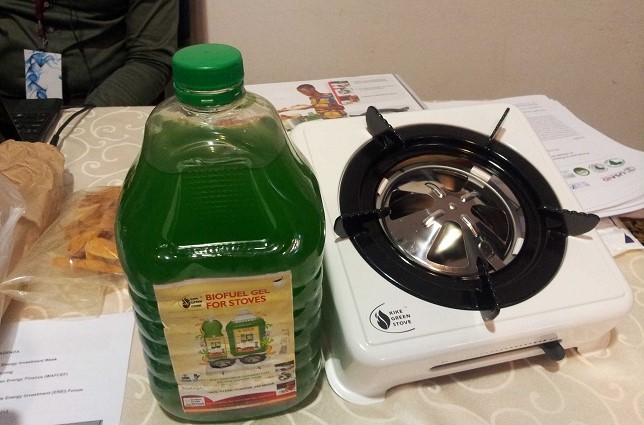
Biofuel clean cooking stove
In his address, he stated that “our Ministry recognises that clean cooking initiatives are crucial pathways to reducing emissions, bolster climate policies that foster entrepreneurship and achieving Nigeria’s target of net-zero emissions by 2060, as a result we are taking concrete steps toward the implementation of the National Clean Cooking Policy”. He emphasised the necessity of strong leadership in promoting clean cooking initiatives.
This year’s theme, ‘Clean Cooking Energy for All in Nigeria: Scaling-Up Sustainable Access and Adoption”, highlights the urgent need to address the pressing challenges of clean cooking access and adoption in Nigeria especially the need for innovative financing mechanisms to make clean fuels and technologies more affordable.
Despite advancements in promoting cleaner cooking technologies, recent trends indicate a concerning regression, with many households reverting to traditional polluting fuels. This reversal is largely driven by the rising costs of cleaner alternatives, such as liquefied petroleum gas (LPG), which has become increasingly unaffordable for a significant segment of the population.
In his welcome address, Ewah Otu Eleri, Executive Director, International Centre for Energy, Environment and Development (ICEED, and Chairman, Board of Trustee, Nigerian Alliance for Clean Cooking, noted that access to clean cooking should be seen as a human right, not a luxury.
“Just as governments around the world subsidise vaccines to save lives, we must do the same for clean cooking energy. Every woman and child has the right to breathe clean air and live free from the deadly smoke of traditional stoves. Investing in clean cooking is not just about technology – it’s about health, dignity, and justice for millions of Nigerian families”, he lamented.
Annett Gunther, Germany’s Ambassador to Nigeria, in her goodwill message, praised Nigeria’s ambitious goal of achieving 25 per cent annual progress towards clean cooking. She reaffirmed Germany’s commitment to supporting Nigeria in enhancing access, fostering innovations, and strengthening institutions for clean cooking expansion.
The Team Lead for Green and Digital Economy in Nigeria at the European Union (EU), Ms. Inga Stefanowicz, reiterated the EU’s commitment to improving access to clean cooking through financing, policy development, and partnerships, highlighting the intersection of clean cooking with gender equality, social equity, and environmental impact.
Addressing the forum, Duke Benjamin, representing Dr Markus Wagner, Country Director for GIZ Nigeria and ECOWAS, said: “Strong collaboration among government, private sector, civil society, and development partners is needed to achieve universal access by 2030. This collaboration will make carbon finance accessible to community-based clean cooking projects. This would enhance the financial sustainability of the clean cooking sector while supporting Nigeria’s commitments under the Paris Agreement.”
Mr. Ben Nkechika, representing Bello Lawal, National President, ALGON, also called for stronger collaboration among all levels of government, even as he expressed the willingness of the 774 local government chairmen across the nation to support the clean cooking initiative and foster dialogue at local levels.
Olamide Fabuji, Senior Special Assistant to the President on Climate Technology and Operations, in his goodwill message, detailed the government’s initiative to develop an integrated framework alongside the National Council on Climate Change (NCCC) and the Clean Cooking Alliance, stating, “The path ahead requires courage, collaboration, and capital. We must leverage technological innovation and mobilise financial resources to ensure no household is left behind.”
Dr. Abdullahi Mustapha, Director-General of the Energy Commission of Nigeria, represented by Dr. Izuchukwu Okafor, announced the Commission’s partnership with the University of Nigeria, Nsukka, to develop innovative clean cooking stoves aimed at enhancing fuel efficiency and reducing health hazards.
The forum called for public-private partnerships, greater investment in domestic LPG production and distribution infrastructure, and support for alternative fuels such as bioethanol and compressed biomass briquettes, capacity-building programmes for clean cooking entrepreneurs, the establishment of a national framework to streamline carbon credit certification, the need for smart and well-targeted subsidy mechanisms that prioritize vulnerable populations while preserving market sustainability, transparency, and accountability.
The 2025 Nigeria Clean Cooking Forum, held at the Transcorp Hilton Hotel, Abuja, from October 9-10, 2025, convened over 200 key stakeholders, including representatives from federal ministries and agencies, state governments, international development partners, stove and fuel producers, marketers, academia, and the media.
A coalition of stakeholders in Nigeria’s food sector has called for urgent measures to curb food waste and promote sustainable consumption, as part of efforts to reduce hunger and improve food security in the country.
They made the call at the “Table for All” event held in Abuja on Thursday, October 15, to commemorate the 2025 World Food Day.
It was themed “Hand in Hand for Better Foods and a Better Future”.
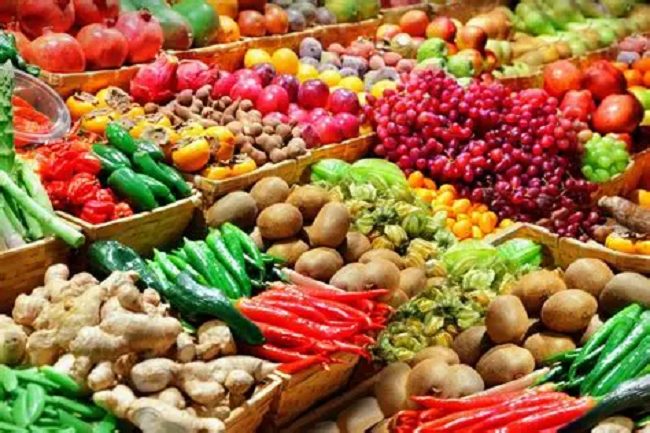
Food
Ms. Jennifer Dinchi-Zando, Founder and Chief Executive Officer of Platters and Co Restaurant, said over 33 million Nigerians face persistent food insecurity, stressing the need for collective efforts to end hunger and food waste.
According to her, “This reminds us that food is not a privilege, it is a right, and it challenges us to work together in building systems that are fair, sustainable, and inclusive.
“We call on the government to do the needful; create better agricultural systems and a more conducive environment for all Nigerians to live a better life”.
Dinchi-Zando appreciated the contributions of local businesses and stakeholders for their commitment to ensuring that no one eats alone.
She also urged young people to participate actively in building Nigeria’s food system.
“Let us ensure that good food never goes to waste while others go hungry.
“Together, let’s share ideas on how leftovers from our businesses and our homes can be safely shared with people in our communities,” she said.
Mr. Roland Chidozie-Osondu, Centre Manager, Novare Central Mall, emphasised the need for food security and proper nutrition for every Nigerian.
“Hunger remains one of the gravest challenges facing humanity, and it is incumbent upon us to take concerted action to eradicate it,” he said.
A pharmacist with Medplus Pharmaceutical Company, Mr. Abubakar Abdulhamid, noted the role of nutrition in maintaining good health.
He called for greater access to nutrient-rich foods.
“Your food should be your medicine. So, the better you eat, the healthier you are,” he said.
A participant, Ms. Serah Emmanuel, said the event served as a reminder of the importance of unity and collective action in addressing food insecurity and improving nutrition nationwide.
“This event has shown that we all have a role to play in ensuring everyone has access to nutritious food,” she said.
Among the notable attendees were representatives of major companies, including Guinness Nigeria, Flour Mills Nigeria, and several local food producers.
They all pledged to support responsible consumption and production in line with Sustainable Development Goal 12.
The event also featured a farmers’ market where attendees purchased fresh fruits and vegetables, while 150 meals were distributed to members of the surrounding community.
Other activities included free health checks, counselling sessions, and the distribution of food items.
The Federal Government has intensified investment in agriculture through the Renewed Hope Agricultural Mechanisation to empower smallholder farmers and boost food and nutrition security in the country.
The Renewed Hope Agricultural Mechanisation initiative aimed to empower smallholder farmers with modern equipment, reduce manual labor, and increase yields.
Sen. Aliyu Abdullahi, the Minister of State for Agriculture and Food Security, stated this at the Ministerial news conference on Thursday, October 15, in Abuja to mark the 2025 World Food Day with the theme: “Hand in Hand for Better Foods and a Better Future.”
Sen. Aliyu Abdullahi, Minister of State for Agriculture and Food Security
He said the theme emphasised the importance of global collaboration across governments, organisations, private sector, and communities to build a peaceful, sustainable, prosperous, and a food-secure future.
Abdullahi said that through supportive policies, rising investments and strategic partnerships taken by government, Nigeria’s agriculture is now poised for a stronger performance.
“The present administration has demonstrated a steadfast commitment to tackling the complex issues of food insecurity, economic instability, and agricultural development.
According to him, the government Tinubu recognises the critical role that agriculture plays in driving economic development and feeding the nation.
“The government has intensified investment in agriculture through various initiatives such as the Renewed Hope Agricultural Mechanisation Programme.
“Recently, 2,000 tractors and over 9,000 specialised farming implements were inaugurated by President Bola Tinubu, for the cultivation of over 550,000 hectares of farmland.
” The expected outcome is to produce more than two million metric tonnes of staple foods and create jobs for Nigerian youths and women.
“This initiative aimed to empower smallholder farmers with modern equipment, reduce manual labor, and increase yields.
“The programme seeks to transform Nigeria’s agriculture sector and make it a global powerhouse.
“It was a momentous occasion that marked a significant milestone in our nation’s quest to enhance agricultural productivity and food security under the Renewed Hope Agenda of the present administration.
” It was also a major step forward in the nation’s agricultural mechanisation process that promises to enhance efficiency of our agricultural practices,” he said.
He said that President Tinubu also approved the recapitalisation of the Bank of Agriculture (BOA) with a massive N1.5 trillion, marking a monumental milestone in Nigeria’s agricultural financing landscape.
“Accordingly, the President has approved the sum of N250 billion credit facility through the Bank for disbursement to smallholder farmers at a single-digit interest rate.
“This unprecedented boost is targeted at promoting the agricultural sector and unlocking new opportunities for growth, development, and food security,” he said.
Abdullahi said in response to the numerous challenges faced by smallholder farmers, the Ministry of Agriculture and Food Security had developed short-term plans to make farm inputs more accessible and affordable.
“In line with President Bola Tinubu’s promise to ease economic hardship, we are supporting smallholder farmers in all the states of the federation and FCT with vital farm implements and inputs.
“I urge you all to get involved by educating ourselves about global food challenges and food insecurity.
“Let us advocate for policies and initiatives that will provide short, medium and long-term solutions to address hunger, food waste, and sustainable farming practices at the local, national, and international levels,” he said.
In a related development, local government leaders in Lagos State have reaffirmed their commitment to tackling hunger, promoting food sufficiency, empowering farmers and vulnerable households across their communities.
They made this known in separate messages on Thursday to mark the 2025 World Food Day, with the theme: “Hand in Hand for Better Foods and a Better Future”.
The Chairman of Ikosi Isheri Local Council Development Area (LCDA), Mrs. Samiat Bada, said her administration remained steadfast in promoting access to nutritious food and supporting local farmers who play critical roles in strengthening food systems.
“At Ikosi Isheri LCDA, our administration is deeply committed to promoting access to nutritious food, empowering local farmers, and supporting small-scale producers,” Bada said.
She noted that since assuming office, her administration had implemented several empowerment and welfare programmes targeted at improving food sufficiency and reducing the impact of economic challenges on vulnerable households.
Bada explained that her council’s agricultural support initiatives were designed to enhance local production capacity and encourage residents especially young people to see agriculture and agribusiness as viable pathways to prosperity.
“This year’s theme emphasises teamwork and innovation. It reminds us of our shared responsibility to ensure that everyone has access to safe, affordable, and healthy food,” she added.
She urged residents, particularly the youth, to take advantage of agricultural opportunities in the area, while pledging continuous investment in initiatives that promote food security and sustainable livelihoods.
In a similar message, the Chairman of Kosofe Local Government Area, Mr. Moyosore Ogunlewe, said food security transcends individual effort and requires genuine partnership as well as shared responsibility among stakeholders.
“As we commemorate World Food Day, we recognise that food security demands collective responsibility and partnership,” Ogunlewe said.
He noted that the Kosofe Food Bank initiative exemplifies this spirit by ensuring that nutritious meals reach 5,000 households monthly, particularly those most affected by rising food costs and economic pressure.
“To our farmers, traders, and community members, your dedication strengthens our collective food sovereignty.
“Together, we shall build a future where no resident goes hungry, where sustainable agriculture flourishes, and where prosperity flows through our communities,” he said.
Ogunlewe reaffirmed his administration’s resolve to deepen agricultural development, empower traders, farmers, and cooperative groups within Kosofe to boost local production and reduce dependency on imported foods.
Also, Sanni Okanlawon, who represents Kosofe Constituency I in the Lagos State House of Assembly, said this year’s theme aligns with Nigeria’s drive toward inclusive agricultural reform and economic diversification.
Okanlawon, who also chairs the House Committee on Local Government, Chieftaincy Affairs and Rural Development, underscored the importance of unity, innovation, and inclusivity in building resilient food systems that guarantee access to safe, nutritious, and affordable food for all Nigerians.
He said sustainable agriculture, rural development, and environmental stewardship remain central to achieving lasting food security and economic growth.
“As the world reflects on this year’s theme, I urge every stakeholder from policymakers to farmers, from communities to consumers to work hand in hand toward a future where hunger is eradicated and prosperity is shared,” he said.
The lawmaker further noted that Lagos, being a densely populated and commercially active state, must lead by example through investment in urban farming, waste-to-feed initiatives, and innovative food distribution systems that strengthen resilience against global shocks.
He added that the synergy between government agencies, local councils, and private stakeholders would play a vital role in ensuring equitable access to nutritious food for residents.
The World Food Day is celebrated annually on Oct. 16.
The day was established by the United Nations Food and Agriculture Organisation (FAO) in 1979 to raise global awareness about hunger, food insecurity, and sustainable agricultural practices.
Meanwhile, The Lagos State Government has restated its commitment to ensuring food security in spite of its geographical limitations.
The state made this known at the grand finale of the Ministry of Agriculture and Food Systems event in commemoration of the 2025 World Food Day at the Police College Parade Ground on Thursday, in Ikeja.
In his keynote address, the Lagos State Governor, Mr. Babajide Sanwo-Olu, represented by Mrs. Abimbola Salu-Hundeyin, the Secretary to the State Government, vowed the continued commitment of the government to ensure food security.
“I am delighted to join you today on the occasion commemorating the Y2025 World Food Day.
“This significant day underscores the importance of our shared responsibility to strengthen the state’s food system and serves as a collective call to action against hunger and malnutrition.
“This year’s theme: ‘Hand in Hand for Better Foods and a Better Future’, highlights the urgent need for collaboration among governments, the private sector, development organisations, and communities to transform agri-food systems, promote healthy diets, and safeguard our environment.
“For Lagos State, the challenge is unique. Despite being the smallest in landmass, Lagos is home to over 22 million people, making it the most densely populated state in Nigeria.
“Feeding such a vast population requires innovation, bold investments, and robust partnerships.
“Having recognised the importance of food security, this administration remains deeply committed to ensuring Lagos remains food secure despite its geographical limitations,” Sanwo-Olu said.
He also highlighted achievements in the government’s roadmap towards achieving a food secure Lagos, while collaborating with all relevant stakeholders in the sector.
“Our dedication is evident in the continuous provision of support for food production, infrastructure, and market systems designed to reduce high food prices and build a sustainable food reserve management structure.
“Agriculture remains the bedrock of Nigeria’s economic resilience—a sector that nurtures livelihoods, drives innovation, and sustains prosperity.
“In Lagos, we are redefining agriculture as a dynamic engine for growth, inclusion, and sustainability.
“As we commemorate World Food Day 2025, let us reaffirm our collective resolve to work hand in hand for better food systems and a better future for all,” Sanwo-Olu said.
In his goodwill message, an Executive Director at the British America Tobacco Nigeria Foundation (BATNF), Mr. Yarub Al-Bahrani, restated the foundation’s commitment in advancing agriculture and food security in the country.
“This year’s theme for the 2025 World Food Day: “Hand in Hand for Better Foods and a Better Future,” echoes the mission of BATNF which, over the last two decades, has remained committed to empowering rural Nigeria and advocating the rights of smallholder farmers, laying the groundwork for a truly sustainable future.
“I am proud to reassure our unwavering commitment to this cause and our continued efforts to uplift rural communities across Nigeria.
“We firmly believe that the key to sustainable development lies in uplifting small holder farmers, the backbone of our food systems.
“Through targeted initiatives that deliver training, capacity building and financial support, we have profitably impacted over 300,000 farmers and reached more than 1.7 million beneficiaries, including women and youth all over the 36 states of the federation.
“Food security is not something we can do alone, but it’s a collaborative effort,” Al-Bahrani said.
Also, as part of the 2025 World Food Day celebration, the Lagos State Government celebrated farmers.
Best Agro-processor of the year was awarded to Farm Junction, while Erikorodo Poultry Association was awarded the Best Farm Estate, Ajara Farm Settlement bagged the Best Farm Settlement in the state.
Also, the Lagos Island Local Government Area bagged the Best Livestock Champion and Apapa Local Government Area was awarded the Best Agriculture champion.
Yaba Local Community Development Area won the best local government in agriculture practice.
The Best Artisanal Champion went to the Ejalonibu Fishermen Cooperative, while the Best Crop champion was won by the Daddy Louis Tomatoes Growers Association Badagry.