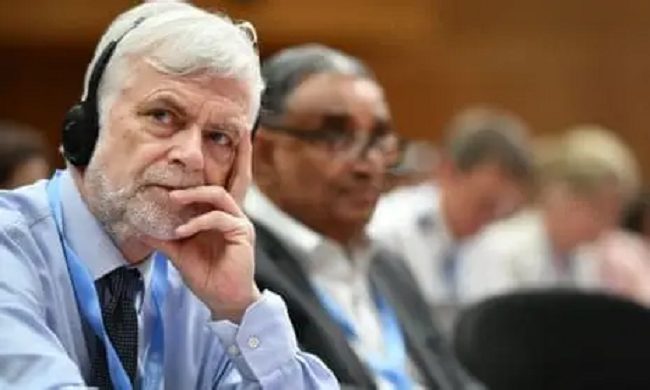
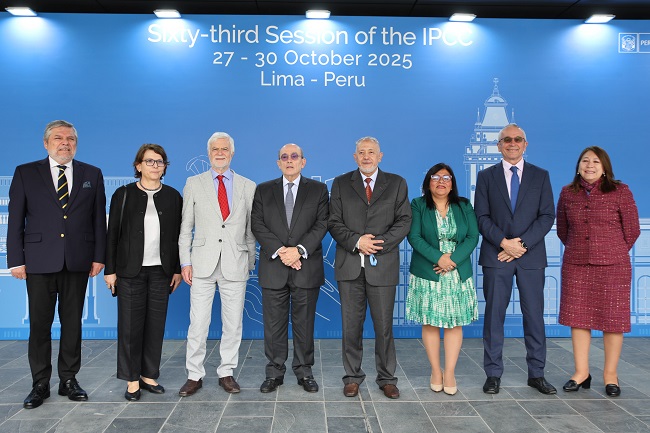
The Intergovernmental Panel on Climate Change (IPCC) on Monday, October 27, 2025, opened its 63rd Plenary Session in Lima, Peru, bringing together some 300 delegates from IPCC member governments and observer organizations to advance its work in the seventh assessment cycle.
Over the four-day session, the Panel will continue discussions on the timelines for the three Working Group contributions to the Seventh Assessment Report (AR7), as well as on the draft outline and timeline of the Methodology Report on Carbon Dioxide Removal Technologies, Carbon Capture Utilisation and Storage.
In addition, the Panel will discuss the IPCC’s Trust Fund programme and budget for 2026, the indicative budget for 2027 and 2028, a proposal for an expert meeting, and other agenda items.
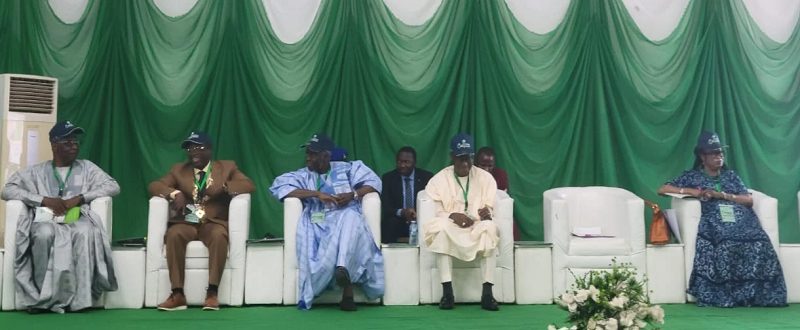
Dignitaries at the IPCC 63rd Plenary Session in Lima. Photo credit: IISD / Anastasia Rodopoulou
“By now, we know the scope of the Seventh Assessment Report, and we have selected the scientists who will be delivering the work,” said IPCC Chair, Jim Skea. “Building on the progress made so far, the Panel now needs to settle the important matter of the timelines for producing the reports, taking into account inclusive assessment practices and policy relevance. I trust that Panel members will seek consensus on the timelines in line with the IPCC’s established procedures.”
The Peruvian Minister of Foreign Affairs, Hugo de Zela, addressed the opening of the IPCC’s 63rd Plenary Session, reaffirming the country’s commitment to the global fight against climate change. In his remarks, Minister De Zela urged member states to act with a sense of urgency and responsibility to finalize the reports and methodologies necessary to accelerate climate action.
“Information produced by the IPCC remains essential to guiding the policy decisions of States seeking to reduce global warming,” said Minister De Zela.
The IPCC’s seventh assessment cycle formally began in July 2023 and will culminate in the release of the AR7 Synthesis Report in 2029. In this cycle, the IPCC will prepare the AR7, which comprises three Working Group contributions and a Synthesis Report, as well as update the 1994 Technical Guidelines for Assessing Climate Change Impact and Adaptation. The Panel will also produce a Special Report on Climate Change and Cities, and two Methodology Reports.
Delegates were welcomed at an opening ceremony in Lima, which included remarks from Peru’s Minister of Foreign Affairs, Ambassador Hugo de Zela; Deputy Minister of Strategic Development of Natural Resources for Peru’s Ministry of Environment, Raquel Hilianova Soto Torres; the IPCC Chair, Jim Skea; and Director of Climate Change Division of the UN Environment Programme (UNEP). Martin Krause.
The opening also included projections of video messages from Celeste Saulo, the Secretary-General of the World Meteorological Organisation and Simon Stiell, the Executive Director of the United Nations Framework Convention on Climate Change.
The Biotechnology Society of Nigeria (BSN) says it aligns with the safe application of biotechnology because it promotes enhanced health care delivery and engenders a sustainable food security and environment.
Prof. Sylvia Uzochukwu, President of BSN, said this during an interview on Monday, October 27, 2025, in Abuja.
The society’s position comes at a period when there is controversy over the safety of Genetically Modified Organisms (GMO) and food security.
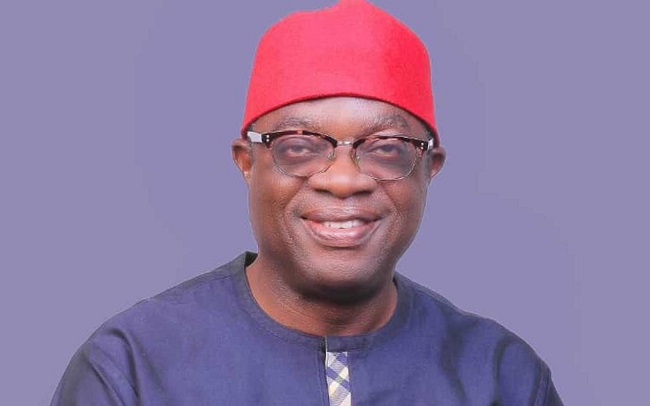
Prof. Sylvia Uzochukwu, President of BSN
Uzochukwu explained that biotechnology is a form of technology that uses biological systems, living organisms or their parts to develop or create different products.
She said that in healthcare, for instance, the world benefitted from the messenger ribonucleic acid (mRNA) vaccines that contributed in bringing COVID-19 to an end.
NAN reports that an mRNA vaccine is a type of vaccine that uses mRNA to produce an immune response.
According to her, similar great strides are being recorded in sickle cell research using biotech.
She further told NAN that there was a possibility of having an affordable cure for it and other diseases lodged in the DNA such as hepatitis B and HIV AIDS.
“Modern biotechnology has revolutionalised health care, with procedures such as gene therapy, becoming more and more routine in healthcare, for the cure of genetic diseases.
“In agriculture, Nigerian beans will soon no longer be rejected in international trade because of high pesticide residues and high levels of cancer-causing fungal toxins.
“This is because Nigerian scientists have developed the insect resistant beans called Bt cowpea which requires little or no insecticide sprays to do well,’’ she said.
Uzochukwu said that the environment was also becoming safer due to biotechnology.
She said the development of pest-resistant crops using biotechnology tools had taken tonnes of toxic chemicals off the farms across the world.
Accordingly, this makes the air, as well as surface and ground waters safer for humans and aquatic lives.
“Modern techniques in biotechnology are here to stay and will only get better as they have enormous potentials for improving the life of man,’’ Uzochukwu said.
The professor of Food Science and Biotechnology assured that Nigerian scientists would not harm their compatriots because they have the mandate to promote and regulate biotechnology.
Executive Vice President (EVP) of Downstream, NNPC Ltd., Dr Mumuni Dagazau, says the nation’s downstream oil and gas sector is undergoing a transformation driven by deregulation, foreign exchange reforms, and strategic collaborations.
Dagazau made this known on Monday, October 27, 2025, in Lagos at the 19th Africa Downstream Energy Week, with the theme “Energy Sustainability: Growth Beyond Boundaries and Competition”.
He said recent policy reforms had unlocked new growth opportunities, encouraging integration, innovation, and stronger partnerships across the energy value chain.
xecutive Vice President (EVP) of Downstream, NNPC Ltd., Dr Mumuni Dagazau
“We are witnessing strategic measures, supply partnerships, and joint investments that signal a shift from siloed operations to integrated ecosystems.
“These developments are not merely transactional. They are structural, redefining how we produce, distribute, and consume energy,” Dagazau said.
The NNPC executive noted that sustaining the current momentum required prioritising key enablers such as security, infrastructure, innovation, and transparency.
He said, “The safety of our people and assets is foundational.
“Investment in robust infrastructure is essential to meet demand and unlock new opportunities.”
Dagazau said frameworks like the Petroleum Industry Act (PIA) and fiscal incentives for renewable and gas projects were creating a stable environment for long-term investment.
He emphasised the growing role of digitisation, automation, and low-carbon technologies, saying they were key to achieving operational excellence and reducing environmental impacts.
Dagazau also noted that government reforms had catalysed growth in the Liquefied Petroleum Gas (LPG) and Compressed Natural Gas (CNG) markets, opening new business frontiers and empowering indigenous small and medium enterprises.
“Despite local and global headwinds, Nigeria’s downstream sector enjoys strategic advantages.
“Abundant reserves and expanding infrastructure position the country as a regional energy hub,” Gagazau noted.
He added that the transition to cleaner fuels presented niche export opportunities, while access to international financing platforms was enhancing competitiveness.
Dagazau commended the increasing collaboration among African downstream players through public listings, mergers, and cross-border partnerships, saying such efforts were positioning Africa as a global energy player.
He explained, “Collaboration is Africa’s new competitive edge. To consolidate our gains and unlock new frontiers, cooperation must become our default mode.”
He noted that platforms such as OTL Africa Downstream Week remained vital in aligning stakeholders and advancing shared industry goals.
“At NNPC Limited, we are deploying new infrastructure and revamping existing assets to support strategic alliances.
“Our co-investments across upstream, midstream, and downstream operations reflect our belief that shared growth is sustainable growth,” Dagazau maintained.
He urged industry leaders to view sustainability as a catalyst, not a constraint, saying it should drive profitability, innovation, and long-term value.
“The leaders who will thrive are those who deliver not just energy, but trust, transparency, and sustainability,” he further said.
Dagazau reaffirmedthe commitment of NNPC Ltd. to building an inclusive, secure, and sustainable energy future, calling for purpose-driven innovation and collaboration.
“Together, we can grow beyond boundaries and competition, building an energy future for ourselves and for generations to come,” he said.
Also speaking, Gov. Babajide Sanwo-Olu of Lagos State described the OTL Africa Downstream Energy Week as the continent’s foremost platform for driving energy dialogue, policy reform, and investment.
Represented by Mr. Abiodun Ogunleye, Commissioner for Energy Resources, Sanwo-Olu said Lagos had hosted nearly every edition of the event over the years, reinforcing the city’s status as the energy and logistics capital of sub-Saharan Africa.
“We in Lagos take pride in hosting this global event, which has found a home in our city for nearly every edition since it began.
“This enduring relationship reinforces Lagos’s position as a true hub of innovation, enterprise, and strategic investment,” the governor said
Sanwo-Olu commended the OTL Africa platform for its impact, noting that it had influenced major policy shifts and encouraged private-sector participation across the continent.
“Over the years, OTL Africa has played a pivotal role in shaping the agenda for downstream development across Africa, sparking reforms, attracting investments, and driving meaningful change,” he said.
The governor cited recent multi-billion-naira investments by Mainland Oil and Gas and long-term partnerships with Rainoil Ltd. as examples of how engagement through the forum continued to stimulate growth.
He added that global technology firms such as Dover Fueling Solutions had leveraged the platform to introduce automation and digital tools, transforming Africa’s fuel retailing sector.
“These examples underscore the strength of collaboration, the very essence of this year’s theme, Growth Beyond Boundaries and Competition.
“It challenges us to envision a future where sustainability, innovation, and inclusivity shape the African energy landscape.”
The governor reiterated tje commitment of Lagos State to clean energy and inclusive growth through initiatives like the Lagos Electricity Policy and Energy Transition Plan, which promote private participation and sustainable development.
“As Chief Host, I reaffirm Lagos State’s commitment to collaborating with platforms like OTL Africa that bring together policymakers, regulators, investors, and innovators to build a sustainable energy future,” he said.
Sanwo-Olu welcomed delegates and investors, expressing optimism that the forum would unlock new opportunities for Nigeria and the continent.
“I am confident that the discussions and partnerships formed here will open new doors, not just for Lagos, but for Nigeria and Africa as a whole,” he said.
The Federal Ministry of Housing and Urban Development and the Nigerian Institute of Town Planners (NITP) have raised concerns over the lack of full implementation and domestication of the 1992 Urban and Regional Planning (URP) Law.
They said this at the National Colloquium on the Implementation of the Urban and Regional Planning (URP) Law, organised by the Nigerian Institute of Town Planners (NITP) in Abuja on Monday, October 27, 2025.
They said that the URP law, officially codified as CAP 138 of the Laws of the Federation of Nigeria, 2004, had suffered setback due to non domestication by states.
A panel discussion session during the National Colloquium on the Implementation of the Urban and Regional Planning (URP) Law
The Minister of Housing and Urban Development, Ahmed Dangiwa, recalled that the law was a bold reform designed to replace the outdated 1946 Town and Country Planning Law, a colonial relic that had become inadequate for a rapidly urbanising nation.
“The 1992 Law was conceived to provide a comprehensive framework for the orderly use and development of land across all tiers of government.
“It sought to ensure coordination in physical planning and promote the creation of functional, efficient, and livable human settlements across Nigeria.”
The minister said in spite of its ambitious objectives, the full potential of the landmark legislation has yet to be realised for over three decades.
“Many states and local governments have not domesticated or operationalised the law’s provisions, resulting in uncoordinated urban growth, proliferation of informal settlements, and inadequate infrastructure.
“Some states have not even enacted the enabling laws necessary to activate the institutional framework envisaged by the URP Law,” he noted.
“Others grapple with weak institutional capacity, inadequate technical manpower, and poor coordination among government agencies.”
Dangiwa said that limited public awareness, weak development control mechanisms, and the evolving realities of urbanisation, climate change, and technology have further underscored the urgent need to update and adapt the 1992 legislation to contemporary challenges.
He said that under the Renewed Hope Agenda of President Bola Tinubu, the Ministry is working to reinvigorate urban and regional planning as an integral component of national development.
He called on all stakeholders, policymakers, professionals, and citizens to renew their commitment to structured urban growth and the enforcement of planning regulations as tools for order, productivity, and resilience.
Also Speaking, Gov. Dikko Radda of Katsina State revealed that Katsina was among the few states that have fully implemented the provisions of the Law, adding that it helped to establish a transparent, structured, and accountable planning system in the state.
Radda represented by his Deputy, Malam Faruk Jobe, disclosed that in the administration’s first year, about N1 billion was invested in re-equipping the state’s Urban and Regional Planning Board with modern tools to ensure effective development control and enforcement.
He announced that revised master plans for Katsina, Funtua, and Daura which had remained unchanged for over two decades were recently completed and four additional cities were expected to receive new master plans by 2026.
According to him, the state government is investing over N72 billion in comprehensive urban renewal projects aimed at upgrading road infrastructure, revitalising aging neighborhoods, and stimulating balanced economic growth in the state capital.
The governor urged states to domesticate the law emphasising to the need for stronger institutions, sustained professionalism, and practical outcomes from the colloquium.
“The framework already exists. What we need now is unwavering consistency in implementation and stronger institutional backing,” he said.
The President of NITP, Dr Ogbonna Chime, called on all tiers of government to fully implement the provisions of the 1992 URP Law (CAP 138, Laws of the Federation of Nigeria, 2004) to ensure sustainable national development, efficient resource management, and orderly growth of Nigerian settlements.
“The Institute is concerned about the implementation of the Law because of the far-reaching implications of non-adherence to its provisions on national development planning and efficient resource management,”he said
He explained that many levels of government were yet to domesticate or operationalise its key provisions thereby contributing to persistent challenges such as unregulated urban expansion, inadequate infrastructure, poor land-use planning, and environmental degradation.
“All levels of government should play their constitutional roles effectively through mutual cooperation.
“Development experts now recognise that the daunting challenges of delivering the dividends of democracy can only be overcome through partnership and stakeholder collaboration.”
Chime lauded state governments that have begun reviewing their urban and regional planning laws in line with federal expectations, urging others to follow suit.
He, therefore, expressed optimism that the deliberations would “usher in a new dawn in national development planning,” reinforcing the importance of effective urban governance as a catalyst for Nigeria’s economic transformation.
The Nigerian Institute of Town Planners (NITP) has expressed commitment to repositioning Nigeria’s towns and cities for national development through the effective implementation of the Urban and Regional Planning (URP) Law.
President of the NITP, Dr Chime Ogbonna, said this on Monday, October 27, 2025, in Abuja at a National Colloquium on the implementation of the 1992 URP Law (CAP N138, Laws of the Federation of Nigeria, 2004).
He said the institute, in collaboration with relevant stakeholders, would develop a national plan of action to reposition Nigerian urban areas through coordinated and sustainable land use planning.
President of the NITP, Dr Chime Ogbonna,
“The preparation of appropriate land use plans at each level of governance will help integrate economic and environmental interests while mobilising resources and technical skills for infrastructure and service provision,” Ogbonna said.
He noted that some states had begun reviewing their urban and regional planning laws in line with Federal Government expectations to enhance spatial development and resource management.
Ogbonna expressed concern over the slow adoption of the URP Law, warning that poor implementation had far-reaching implications for national development and efficient land use in Nigeria.
“The Federal Government enacted the URP Law to address challenges arising from rapid population growth, uncontrolled urban expansion, inadequate infrastructure, and unregulated settlement patterns,” he said.
He added that the failure to fully implement the law across all levels of government had continued to hinder Nigeria’s economic growth and urban sustainability.
According to him, the URP Law emphasises that urban and regional planning is a residual matter under the Constitution, requiring coordinated action and integration among the federal, state, and local governments.
“It has been observed that, since the enactment of the URP Law, all levels of government are yet to adopt its major provisions to achieve the desired objectives,” Ogbonna said.
He stressed that governments at all levels must play their constitutional roles effectively and foster mutual cooperation to make Nigerian cities responsive, competitive, and efficient in the face of globalisation.
“Development experts increasingly recognise that the daunting challenges of delivering the dividends of democracy are best addressed through partnership and stakeholder collaboration,” he added.
He noted that experiences from other countries had shown that effective collaboration in urban management was key to reducing poverty and attracting foreign investment.
Ogbonna explained that the colloquium was timely, given that land was limited, fixed, and subject to competing uses, which made rational and sustainable management essential for national development.
“These unique attributes of land call for its prudent use to achieve sustainable development, economic growth, and efficient land consumption in Nigeria,” he said.
He added that the colloquium preceded the Institute’s International Annual Conference, aimed at engaging professionals in the built environment and representatives of all levels of government who were direct end users of the URP Law.
Minister of State for Petroleum Resources (Oil), Heineken Lokpobiri, says the Federal Government will fully support Dangote Refinery in achieving its 1.4 million barrels-per-day refined products target.
Lokpobiri said this on Monday, October 27, 2025, in Lagos during his welcome address at the 19th Africa Downstream Energy Week.
The theme of the event is “Energy Sustainability: Growth Beyond Boundaries and Competition”.
“I received the good news that the Dangote Refinery is expanding its capacity to 1.4 million barrels per day.
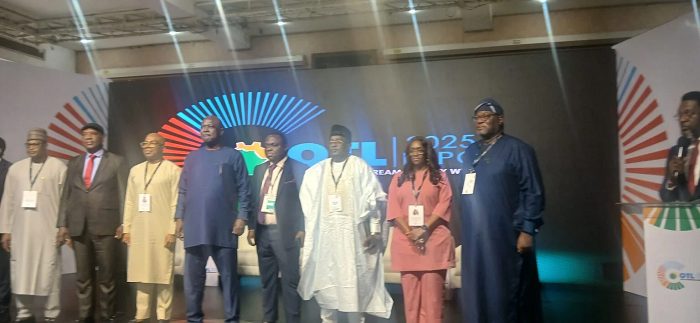
Dignitaries at the 19th Africa Downstream Energy Week in Lagos
“That will not just save Nigeria or West Africa, it will save Africa and, indeed, make an impact globally.
“The Federal Government will support him all the way to accomplishing that goal,” he said.
The minister described the refinery’s expansion plan as a major milestone for Africa’s energy independence and a validation of the government’s policy direction under President Bola Ahmed Tinubu.
Lokpobiri explained that the removal of fuel subsidy and the liberalisation of the downstream petroleum sector were key policy decisions aimed at creating a viable environment for private sector investment.
“The main reason President Tinubu announced the removal of fuel subsidy on his first day in office was because, with subsidies, the private sector could not grow.
“The downstream can only thrive when the right business environment allows private capital to flow in, invest, and maximise opportunities.
He noted that while some Nigerians initially misunderstood the policy, it has now led to a more stable and competitive petroleum products market.
“With deregulation and liberalisation, there is now healthy competition. Prices are stable, availability has improved, and products are more accessible and affordable despite challenges,” he said.
Lokpobiri stressed that if the government had not removed subsidies, Nigeria’s energy sector would be facing severe difficulties today.
The minister reaffirmed the Federal Government’s commitment to deepening investment in the oil and gas sector, saying the global conversation on energy transition is gradually shifting to a more balanced perspective that recognises the continued importance of hydrocarbons.
“The world has realised that energy transition cannot happen in a vacuum.
“Even as we pursue cleaner sources, the global economy still depends on oil and gas.
“Without substantial investment in these resources, there will be no financial capacity to fund the energy mix we all desire,” Lokpobiri noted.
Citing recent United Nations reports, Lokpobiri said the world needs to invest about $540 billion annually in oil and gas recovery and related infrastructure to meet growing energy demand and ensure global energy security.
He added that discussions on climate change and net-zero emissions remain relevant, but the realities of global population growth and consumption patterns make it clear that hydrocarbons would continue to play a central role for decades to come.
“Africa, with a population exceeding 1.4 billion people, cannot afford to ignore investment in oil and gas.
“Expanding exploration, production, and refining capacity is crucial not only for self-sufficiency but also for the continent’s economic stability,” he said.
Lokpobiri noted that Nigeria’s downstream sector is gradually stabilising following the removal of subsidies, with improved product availability and increased investor confidence.
The minister said, “Subsidy was not sustainable; it discouraged private investment and placed a heavy burden on government finances.
“What we are seeing today is a more competitive environment that promotes efficiency and private participation.”
He commended President Tinubu for taking decisive policy actions that have repositioned the downstream sector for long-term growth and sustainability.
“It takes a courageous leader to make decisions that may be unpopular today but are necessary for the country’s future,” he added.
The minister also reaffirmed that ongoing reforms in the oil and gas industry aim to ensure energy security, encourage domestic refining, and foster private sector participation across the value chain.
“We are no longer just talking about transition; we are building an energy mix that guarantees security for Africa,” Lokpobiri said.
“Every stakeholder must align with this vision to create the Africa we want.”
Also speaking, the Chairman of the Advisory Board of OTL Africa Downstream Energy Week, Mr. Adetunji Oyebanji, called for renewed collaboration, policy consistency, and innovation to drive Africa’s energy sustainability and competitiveness in a rapidly changing global landscape.
Oyebanji said that the conference underscored the need for Africa and Nigeria to look beyond conventional limits and create an energy future anchored on integration, inclusiveness, and responsible growth.
He described the OTL Africa Downstream Energy Week as a bridge between policy and practice, bringing together regulators, operators, investors, and innovators to shape the future of Africa’s downstream energy industry.
“Energy sustainability is not merely about preserving resources; it is about ensuring that our growth today does not compromise the prosperity of tomorrow.
“We must build an industry that is competitive, responsible, and adaptable to a rapidly changing global environment,” he explained.
Oyebanji, the former Chairman of the Major Energy Marketers Association of Nigeria (MEMAN), observed that the global energy sector had been undergoing major shifts, driven by geopolitical tensions, supply uncertainties, and the accelerating march toward energy transition.
He said that the conflicts in Eastern Europe and the Middle East, had kept oil markets tight, while the global push toward cleaner fuels and renewables is reshaping investment priorities.
He stressed that the continent, richly endowed with natural resources and human capital, must move beyond being just a supplier of raw hydrocarbons to becoming a hub for innovation, efficiency, and value addition.
“Africa must position itself not just as a source of energy, but as a source of innovation.
“Our growth must be sustainable, inclusive, and borderless,” he added.
The OTL Advisory Board Chairman emphasised that Nigeria remains central to Africa’s energy transformation.
The deregulation of the downstream petroleum sector, renewed focus on gas commercialisation, and expanding infrastructure, he said, have laid a foundation for long-term growth.
He, however, cautioned that sustained progress depends on policy stability, regulatory transparency, and institutional consistency.
He noted, thrive on predictability, and long-term capital inflows will only come with confidence in the regulatory environment.
Reflecting on recent developments in Nigeria’s downstream market, Oyebanji said that while the removal of fuel subsidies and market liberalisation have presented short-term difficulties, they also mark necessary steps toward building a competitive, efficient, and innovation-driven sector.
He highlighted ongoing progress in logistics optimisation, storage efficiency, and digital trading platforms as signs of renewal within the industry.
He noted, “The downstream market is evolving amid both turbulence and transformation.
“Success will depend on our ability to combine innovation with policy stability and operational efficiency.”
Oyebanji called for a new mindset where collaboration becomes the new competition, urging industry players to balance innovation with inclusiveness and competition with cooperation.
“Our capacity to grow beyond boundaries depends not only on how hard we compete but on how well we cooperate,” he said.
He added that the future of energy lies in integration, bridging hydrocarbons, renewables, and alternative energy sources, to create a system that promotes both growth and environmental responsibility.
The Delta State Ministry of Environment has re-echoed the importance of stakeholders working together to minimise greenhouse gas emissions, transition to renewable energy sources, and promote sustainable land use practices throughout the state and beyond.
Ejiro Jamani, the state Commissioner for the Environment, said that belief inspired some of the green initiatives, like tree planting, waste-to-wealth, and climate literacy, as well as environmental sanitation currently ongoing in the state.
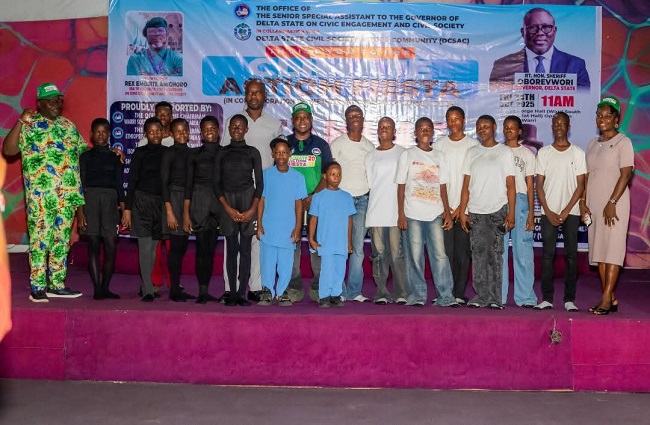
Attendees at the Climate Change Fiesta hosted by the Delta State Government’s Office of Civic Engagement and Civil Society in Warri, Delta State
Speaking on Friday, October 24, 2025, at an event organised by the Delta State Government’s Office of Civic Engagement and Civil Society in Warri as part of celebrations for this year’s International Day of Climate Action, he commended the organisers for their unwavering efforts and outstanding contributions to raising awareness of climate action, especially among young students in schools across the state.
The commissioner, represented by Mrs. Vivian Douye Briggs, told the students who came from different schools to participate in the Climate Action Fiesta that their voice, creativity, and action matter to conquer this monster because young people’s role in the fight against climate change continues to dominate the global climate dialogue.
He referred to them as the “green generation,” which will create eco-friendly communities, develop beyond fossil fuels, and hold leaders responsible for sustainability.
“Every small action adds up,” the state environment boss insists, citing the numerical strength of young people, which he described as power that, when wisely used, will make change inevitable.
In a similar spirit, Matthew Opuoru, the Delta State Governor’s special adviser on the environment, praised the various eco-initiatives being carried out by the administration of Governor Sheriff Oborevwori and urged everyone to support these efforts in order to jointly combat climate change.
He claims that the governor’s vision shows his unwavering dedication to environmental sustainability, climate action, and general growth, making the state a model of environmental stewardship and climate resilience that will encourage others to do the same.
According to Opuoru, the event emphasises the value of teamwork in advancing climate action because research unequivocally demonstrates that human activity, especially the use of fossil fuels and deforestation, releases enormous volumes of greenhouse gases into the atmosphere.
“These actions lead to rising temperatures, more extreme weather events, and devastating impacts on ecosystems and human societies,” he hinted.
Civicist Rex Anighoro, the programme’s coordinator and senior special assistant to the Delta State governor on civic engagement and civil society, praised Governor Sheriff Oborevwori as a climate champion whose leadership has resulted in substantial development across the state.
Like the previous speakers, he highlighted the need for individual and collective action in addressing the climate crisis, urging students and residents to take ownership of climate issues rather than waiting for the next man to do it.
“We must be the change we seek to see; make the difference, show a more excellent way, and raise the standards, because no one else will do it if it is not you. There is no room for waiting for the next man, if ever you are the next man. Take ownership and make our world a better place,” he advocated.
He expressed gratitude to the state’s governor for giving him the chance to work in his administration and revealed that it has tremendously empowered him, particularly with regard to global climate change issues.
Civicist Anighoro continued by explaining that the exposure has made him famous throughout the world because he will soon be recording a song with the renowned Orits Wiliki and the gifted children whose dance and music skills were all exceptional.
The climate change fiesta was designed to utilise entertainment and art in a unique way to enhance climate change education among Delta State kids. The event, themed “Taking Climate Action Now: It Begins with You”, brought together students from several schools who gave stunning presentations and participated in quizzes, dances, spoken word poetry, and musical competitions, all focused on climate change awareness.
It concluded with a call to action, encouraging the students and residents to act right away to lessen the effects of climate change and inspire further action on the issue in Delta State and elsewhere.
Nigerian civil society group, the Society for Planet and Prosperity (SPP), is convening a key engagement among African climate change stakeholders as the continent prepares for COP30 in Belém, Brazil.
Despite only 13 out of 54 African countries having submitted their NDCs 3.0, the main hindrances can be attributed to limited time, technical capacity gaps, and inadequate financing.
As countries work to close these gaps before submission, it is important to reflect on the development process, and most importantly, implementation needs. These would help shape Africa’s stance and messaging at COP30.
The city of Belém in Brazil is hosting COP30
SPP is therefore convening a multi-country stakeholders’ webinar to discuss the NDCs situation in Africa, with the view of interrogating how COP30 can be leveraged to advance practical efforts that will support implementation.
The event, scheduled for 11a.m West African Time on Friday, October 31, 2025, seeks to bring African stakeholders together to discuss the current landscape of national climate commitments (NDCs) in Africa, hindrances to effective implementation, the intersection between NDCs implementation and sustainable development, key messaging for COP30, etc.
Entitled “COP30: Coordinating Ambitious NDCs Development and Implementation in Africa”, the virtual webinar will feature a presentation on Africa’s current NDCs landscape, interrogate the governance framework that should guide NDCs development and implementation in the continent, highlight country, gender, and youth experiences and solutions, and recommend what should be the focus of African countries during negotiations and bilateral at COP30.
While this year has been mostly dominated by conversations on NDCS 3.0, submissions as at October 1, 2025, still leaves a gap of over 30GtCO2e. What that means is that either the remaining countries overstretch their ambitions or the 61 that already submitted retrieve theirs and increase ambition, the path to reaching expected goals will include ensuring that implementation goes beyond commitments.
Several experts have identified that exploring other options for emissions reduction can help enhance the final reduction output by 2035. Yet little has been said about supporting the conditional targets of developing countries, which can help expand targets.
This webinar seeks to discuss all of these issues while framing a message that can help guide Africa’s multilateral and bilateral engagements at COP30, recognising the key intersection between climate action and Africa’s sustainable development.
Speakers include: Prof. Chukwumerije Okereke, President, SPP (Host); Iskander Erzini Vernoit, Executive Director, IMAL Initiative for Climate and Development; Gbemisola Titilope Akosa, Executive Director, Centre For 21st Century Issues (C21st); Samuel C. Okorie, UNFCCC Santiago Network Advisory Board Member, Youth Rep; Peter Odhengo, Head of Climate Finance and Green Economy Unit, Financing Locally-Led Climate Action (FLLoCA) Programme, Kenya; Tirivanhu Muhwati, Climate Scientist in the Ministry of Environment, Climate and Wildlife, Zimbabwe; Gboyega Olorunfemi, Project Lead, SPP; and Nnaemeka Oruh, Senior Policy Analyst (Climate Change), SPP.
Aspiring participants can register to join the event here: https://shorturl.at/uLZ17
The Nigerian Meteorological Agency (NiMet) has predicted varying weather conditions, including dust haze and rainfall, across different parts of the country between Monday, October 27 and Wednesday, October 29, 2025, urging residents to stay alert.
In its weather outlook released on Sunday in Abuja, NiMet projected slight dust haze with good visibility over Borno, Zamfara, northern Kaduna, Yobe, Jigawa, Kano, and Katsina states on Monday.
The agency added that isolated thunderstorms with light rain were likely in parts of Taraba and Adamawa States during the afternoon or evening hours on Monday.
Rainfall
NiMet forecast sunny skies with patches of clouds over the central region, with prospects of isolated thunderstorms and light rain in the FCT, Nasarawa, and Kogi states later in the day.
“Cloudy conditions are expected in the southern region on Monday morning, with isolated thunderstorms and light rains over parts of Cross River, Rivers, and Akwa Ibom states.
“Later in the afternoon and evening, thunderstorms with moderate rainfall are anticipated in Imo, Abia, Ebonyi, Ondo, Osun, Lagos, Ekiti, Ogun, Edo, Bayelsa, Delta, Rivers, and Akwa Ibom states.
“On Tuesday, NiMet forecast continued slight dust haze in good visibility over northern states, while Taraba and Adamawa may experience isolated thunderstorms and light rain throughout the day.
“Sunny skies with intermittent clouds are predicted in the central region, alongside chances of early morning thunderstorms in Benue and later moderate rain across FCT, Nasarawa, and Kogi states.”
NiMet also projected cloudy skies across the southern states, with moderate rainfall over Rivers, Cross River, Ebonyi, and Akwa Ibom in the morning, intensifying later in the day.
The agency warned of possible flooding in parts of Akwa Ibom, Rivers, and Cross River states, urging local authorities to activate emergency response measures where necessary.
For Wednesday, NiMet anticipated sunny skies across the northern region, with isolated thunderstorms and light rain expected later in the day, particularly over parts of Taraba State.
“The central region will experience sunny skies with patches of clouds, while isolated thunderstorms with light rain are likely over Kogi and the Federal Capital Territory.
“In the south, cloudy conditions are expected in the morning, followed by thunderstorms with moderate rains later in the afternoon and evening across Lagos, Ogun, Rivers, Delta, and Akwa Ibom.”
NiMet reiterated a high risk of flash floods, urging motorists to exercise caution when driving in rain and for authorities in vulnerable areas to implement flood response measures immediately.
The agency also advised individuals with asthma and respiratory conditions to limit outdoor exposure due to dust particles suspended in the atmosphere over the northern parts of the country.
Airline operators were urged to obtain airport-specific weather reports from NiMet for flight planning, while the public was encouraged to follow updates via the agency’s website and communication channels.
At the European Council summit on Thursday, October 23, 2025, EU Heads of State reached a long-awaited decision on “competitiveness and the twin transition”, taking a decisive hurdle on the bloc’s 2040 climate target ahead of COP30 in Belém.
Following the EU Commission’s proposal for a 90% reduction target, European Heads of State tasked the EU Commission to “develop the necessary enabling conditions to support European industry and citizens in achieving the 2040 intermediate target”.
While Heads of State provided some additional guidance and included a revision clause, the decision marked a de facto green lighting for ministers to agree on the proposed 2040 target.
European Council summit
However, the European Union has yet to agree it’s crucial climate target.
Summit discussions centred on outlining how Europe intends to strengthen its global market position while advancing its decarbonisation agenda. Leaders debated how to reconcile industrial competitiveness, energy security, and the green transition.
This decision will shape not only the EU’s internal climate architecture but also paves the way to recover its credibility as a global climate leader, as the EU has already missed two UN deadlines to submit its enhanced Nationally Determined Contribution (NDC) under the Paris Agreement before COP30.
In a reaction to the development, Fanny Petitbon, France Team Lead, 350.org, said: “Today the EU took a major hurdle for Europe’s energy independence, green competitiveness, and climate leadership. However, the EU still has to actually agree on its new climate target and must do so urgently.
“While leaders included the option for a review later on, de facto aligning with the EU Commission proposal for a 2040 climate target sends a long-awaited signal to citizens and businesses alike that Europe is serious about scaling renewables, boosting jobs, and securing prosperity in a decarbonised future.
“The next step is for EU ministers to translate this commitment into action by submitting an updated 2035 EU climate target ahead of COP30 in Belém in line with a 72% emissions-reduction goal. The clock is ticking. Europe has shown ambition today; now it must deliver.”