The Nigerian Navy has deactivated an illegal refining in Bonny Local Government Area of Rivers State and recovered more than 20,000 litres of suspected stolen crude oil.
This is contained in a statement by the Acting Director of Naval Information, Navy Capt. Abiodun Folorunsho, on Friday, March 27, 2026, in Abuja.
Folorunsho said the operation was carried out under Operation Delta Sentinel by personnel of the Forward Operating Base (FOB) Bonny, Eastern Naval Command.
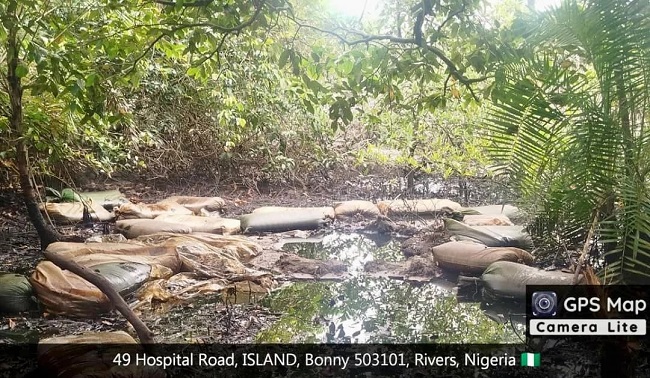
Site of the deactivated illegal refining in Bonny Local Government Area of Rivers State
He said the operation followed credible intelligence on illegal refining activities in Allison Community, Bonny.
Folorunsho said an anti-crude oil theft patrol team was deployed to the area, leading to the discovery of an active illegal refining site.
He said the site contained dugout pits, locally fabricated cooking and cooling systems, as well as sacks filled with substances suspected to be stolen crude oil.
“Further assessment revealed over 20,000 litres of suspected stolen crude oil stored at the facility.
“The illegal refining infrastructure was dismantled in line with established operational procedures, while the perpetrators fled on sighting the naval team,” he said.
Folorunsho said the success underscored the Nigerian Navy’s sustained efforts to curb crude oil theft and economic sabotage in the Niger Delta.
He added that the operation aligned with the directive of the Chief of the Naval Staff (CNS), Vice Adm. Idi Abbas, to intensify intelligence-driven operations to safeguard critical oil infrastructure.
He noted that such efforts were also geared towards supporting the Federal Government’s target of achieving 2.5 million barrels per day oil production.
The Director-General of the Nigerian Conservation Foundation (NCF), Dr Joseph Onoja, has called on Nigerian students to partner with the organisation in advancing environmental conservation across the country.
Onoja made the call during a courtesy visit to him by the National Association of Nigerian Students (NANS), in Lagos on Friday, March 27, 2026.
Onoja emphasised the critical role of the youth in driving environmental sustainability.
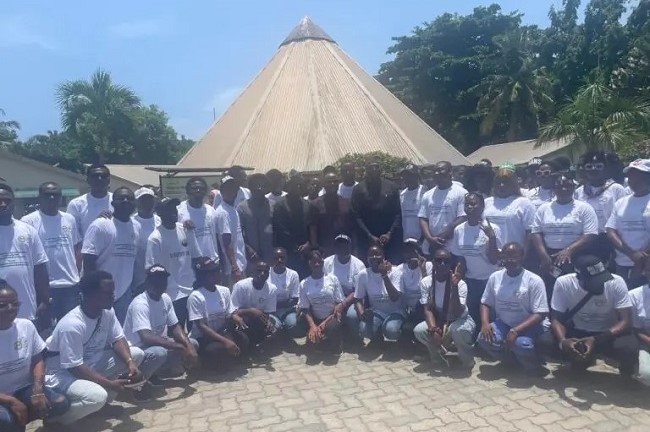
Dr Joseph Onoja, Directir-General, Nigerian Conservation Foundation, and some members of National Association of Nigerian Students at the Lekki Conservation Center, Lagos, on Friday
He said that young people possessed the energy, innovation and enthusiasm to drive environmental conservation.
“Young people have the capacity to push whatever agenda forward either positively or negatively.
“NANS partnering with the Nigerian Conservation Foundation will have a positive effect on our environment,” he said.
Onoja urged students to channel their strength to conserving nature, saying that collective action would yield significant results.
“We need to conserve mother nature so that mother nature can conserve us.
“Imagine about 70 million students in Nigeria contributing even one naira each; thatwill have a huge impact,” he said.
Onoja described deforestation as a major environmental challenge in Nigeria, adding that the country had less than 10 per cent of its forest cover remaining.
He disclosed that the foundation had launched an initiative known as Green Recovery Nigeria aimed at restoring degraded forest ecosystems.
According to him, the programme focused not only on tree planting but also on nurturing trees to ensure their survival.
“At NCF, we don’t just say plant, we say nurture. Nurturing ensures that the trees survive, which is the only way to effectively combat deforestation,” he said.
Onoja added that the organisation was collaborating with stakeholders at national, sub-national and community levels, including students, to restore degraded landscapes.
He said that NCF partnership with state governments was crucial since land administration was under their jurisdiction.
The NANS Presidential Spokesperson, Comrade Alao John, said that the students paid the visit to gain practical knowledge.
“We are here to learn beyond the conventional classroom. We are here to learn new things,” he said.
He commended the NCF for efforts in environmental conservation, hoping that the visit would help to bridge the gap between theory and practice in environmental protection.
He urged active participation of the youth in safeguarding the environment.
“Our immediate environment tells a lot about us. We should not be strangers in our environment.
“A way to learn is by exploring and visiting natural habitats,” he said.
John said that about 100 students from various tertiary institutions in Nigeria participated in the visit.
He urged Nigerian students to take responsibility for the environment and contribute to its conservation.
The 64th Plenary Session of the Intergovernmental Panel on Climate Change (IPCC) closed in Bangkok on Friday, March 27, 2026. The session discussed the review of the Principles and Procedures that govern IPCC’s work.
These should be reviewed every five years and are critical to ensuring the IPCC’s capacity to produce comprehensive, neutral, objective, transparent, inclusive, and robust assessments of climate-related science.
The Panel decided to consider the review of the IPCC Principles and Procedures at future sessions.
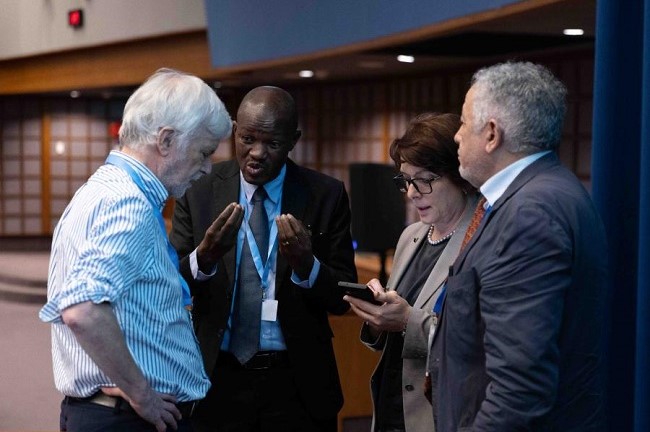
IPCC Chair Jim Skea (left), consults with IPCC Vice-Chair Ladislaus Chang’a, IPCC Deputy Secretary Ermira Fida and IPCC Secretary Abdalah Mokssit
During the Plenary, the member governments also decided to consider the timeline of the Seventh Assessment Report (AR7).
While the Panel made no formal decision, the member governments clearly indicated that they want the timeline agreed at its next session.
“In IPCC, we use our best endeavours to achieve consensus. Sometimes, as we pursue our best endeavours, we strive in slightly different directions. But I think the spirit of compromise and flexibility in IPCC was shown in the end,” said IPCC Chair Jim Skea, addressing the delegates in closing the session.
During the four-day session, the Panel also considered the financial situation and fundraising for the IPCC Trust Fund for this cycle and beyond to ensure its long-term sustainability. Supported entirely by voluntary contributions from member governments, the IPCC Trust Fund is the key mechanism enabling participation by developing-country governments and scientists in the IPCC’s work.
The Panel also agreed on the work programme of the Task Group for Data Support for Climate Change Assessments.
The 64th Plenary Session of the IPCC was also the last one for the IPCC Secretary, Abdalah Mokssit, who led the IPCC Secretariat for the past decade, and will retire in the next few months. On this occasion, the delegates, Bureau Members, observer organisations, and staff expressed appreciation for the outgoing Secretary’s strong commitment and rich contributions.
The Federal Government of Nigeria is taking proactive measures to tackle climate-induced hazards in the country.
Mr. Saleh Abubakar, the Director-General of the National Agency for the Great Green Wall (NAGGW), made this known in an interview on Thursday, March 26, 2026, in Abuja.
He said the Federal Government has launched the Anticipatory Action Framework on Floods, in line with the to mitigate disasters impacting over five million people.
Director-General of the National Agency for the Great Green Wall (NAGGW), Alhaji Saleh Abubakar
This is in view of the technical consultation meeting on the New African Union Great Green Wall Strategy and Its 10-year Implementation Framework 2024-2034 in Dakar, Senegal.
Saleh stated that, with significant efforts, the agency is making to combat climate-induced hazards and ecosystems, are resistant to climate change, other countries would soon begin to look up to Nigeria as a global model.
The three-day event, which started on March 24, was convened under the leadership of the African Union and the United Nations Convention to Combat Desertification (UNCCD), and supported by the Pan-African Agency of the Great Green Wall (PAGGW), focused on strengthening both the institutional arrangements and strategic direction of the Great Green Wall (GGW) Initiative.
The DG stated that the ongoing efforts by the agency to combat land degradation in affected communities and enhance food security in line with the Renewed Hope Agenda of President Bola Tinubu was already paying off.
He said NAGGW was gradually reducing climate-induced hazards through extensive afforestation, solar-powered boreholes, and sustainable land management in the 11 frontline Northern Nigerian states of Borno, Yobe, Jigawa, Kano, Katsina, Zamfara, Sokoto, Kebbi, Bauchi, Gombe, and Adamawa.
He said that while the Federal Government is making “significant progress under the GGW initiative in restoring degraded lands, reforestation, and empowering communities, other countries would soon begin to tap from the nation’s model for international cooperation.”
“On the significance of the technical consultation meeting on the New African Union Great Green Wall Strategy, Saleh expressed optimism that with its 10-year implementation framework, the consultation would ginger commitments and reasonable action against desertification and climate change across the African continent.
He said, “The meeting focused on strengthening both the institutional arrangements and strategic direction of GGW Initiative.”
Saleh commended the speakers at the meeting for highlighting the urgency to scale up efforts to combat desertification, restore degraded land, and build resilience across Africa’s dryland regions.
“We had detailed discussions on the African Union’s updated strategy for GGW, with a focus on strengthening coordination and driving collective action across member states.
“There were clarifications on the roles and responsibilities of various institutions, helping to ensure a shared understanding of how stakeholders can effectively contribute to the implementation.
“The meeting laid a solid foundation for improved coordination, stronger strategic alignment, and renewed commitment to achieving the goals of the GGW Initiative,” The DG said.
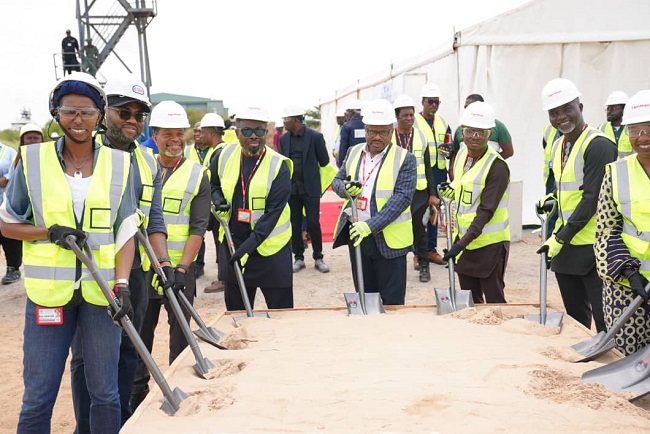
The Nigerian Content Development and Monitoring Board (NCDMB) has applauded ESSO Nigeria on the groundbreaking of its permanent shorebase facility at the LADOL Deep Offshore Logistics Base, describing the project as a major demonstration that Nigeria has become a prime hub for global oil and gas logistics.
ESSO Nigeria is an affiliate ExxonMobil, an international operating company and the shorebase facility is valued at $23m and will include an administrative building, warehouses, and other storage areas.
Speaking at the event held on Thursday, March 26, 2026, at LADOL base, Lagos, the Executive Secretary of NCDMB, Felix Omashola Ogbe, congratulated ESSO and LADOL on the project, and reaffirmed the Board’s commitment to working with industry players to deepen capacity development in the country’s upstream supply chain.
Officials at the groundbreaking of ESSO permanent shorebase facility at the LADOL Deep Offshore Logistics Base
He praised LADOL’s track record of consistency, tenacity and forward-looking momentum, and noted that the qualities had been evident over many years of close engagement with the facility.
He situated the groundbreaking within the broader context of the ongoing global logistics crisis triggered by instability in the Middle East, noting that supply chain disruptions had driven up costs from Singapore to Eko Hotel and across markets in the United States, sparing no economy.
The Executive Secretary who was represented by his Senior Technical Adviser, Austin Uzoka, noted that LADOL’s emergence as a credible deep offshore base represented a direct and tangible response to vulnerability in the logistics sphere of the Nigerian oil and gas industry.
“Today, we’re pleased that Nigeria has an alternative” he stated, drawing a parallel between the completion of the Dangote Refinery and the expansion of LADOL, and harping that Nigeria’s supply chain was measurably stronger than it was 10 years ago.”
The NCDMB chief urged ESSO’s leadership to adopt a front-end-loaded payment structure in its contractual arrangements with LADOL, arguing that timely and adequate funding from the client side would enable the facility to complete the project without recourse to bank loans at cut-throat interest rates.
He noted that cash flow constraints had become a recurring challenge for Nigerian suppliers across the industry, with many approaching the Board for funding support precisely because payment timelines from operators were not aligned with project delivery demands.
“I would like to encourage you to pay LADOL more. Make sure that it is front-end-loaded, so they can have money to finish this on time without having to go to the banks and pay high interest rates to get the job done.”
He emphasised that supply chains are at the bedrock of national development and that the NCDMB, as the agency mandated to grow capacity in Nigeria’s oil and gas industry, would continue to deepen its partnership with both the LADOL and ESSO to build more capacity within the country.
He described ESSO as a measured and deliberate operator that moved decisively once committed, expressing confidence that the groundbreaking signalled the commencement of a project that will be delivered on schedule.
He further charged that ESSO Nigeria to remain committed to the utilising the Nigerian capacities and capabilities on delivering the project.
The Chairman and Managing Director ExxonMobil affiliates in Nigeria, Mr. Jagir Baxi, had earlier indicated that the project reflects an important milestone investment by ESSO Nigeria in its 70-year long partnership with the country. The project also underscores the company’s steadfast commitment to enhance Nigeria’s deepwater offshore operational capabilities.
The structures will be constructed predominantly by Nigerian companies, thereby supporting local job and development of expertise in engineering, construction and commissioning, the company’s chief executive added. The ceremony was attended by representatives of the Bank of Industry, leadership of ESSO Nigeria, the LADOL management led by Dr. Amy Jadesimi, as well as officials from the Nigeria Customs Service, the Nigeria Immigration Service, and other relevant government agencies.
Some of the longest, most important migrations of species on Earth are happening beneath the surface of the world’s rivers and many are rapidly collapsing, according to a major new assessment by the Convention on the Conservation of Migratory Species of Wild Animals (CMS), an environmental treaty of the United Nations.
The Global Assessment of Migratory Freshwater Fishes, launched at the CMS 15th Meeting of the Conference of the Parties (COP15) in Brazil, finds that migratory freshwater fish – a group of species that maintain river health, underpin some of the world’s largest inland fisheries, and sustain hundreds of millions of people – are among the most imperiled wildlife on the planet.
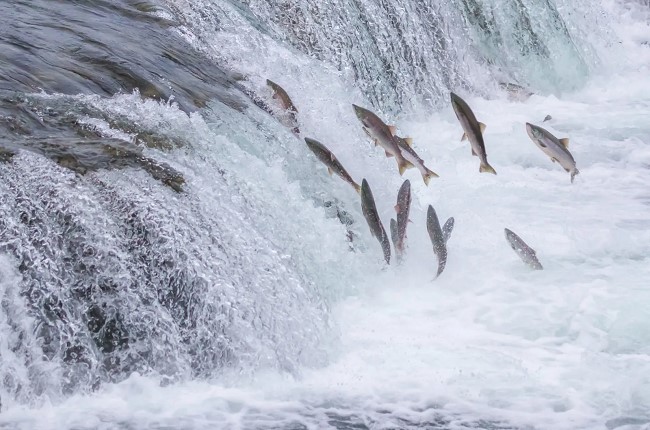
Fish migration: Sockeye salmon (Oncorhynchus nerka) leaping the waterfalls of the Brooks River in order to spawn
TheAssessment identifies hundreds of migratory fish needing cross-border action, presenting authoritative evidence that species whose life cycles depend on connected rivers across national borders face accelerating declines driven by dam construction, habitat fragmentation, pollution, overfishing and climate-driven ecosystem changes.
The analysis identifies 325 migratory freshwater fish species as candidates for coordinated international conservation efforts, highlighting a largely overlooked biodiversity crisis unfolding across the world’s shared river basins.
A regional breakdown of the 325 migratory freshwater fish species deemed candidates for international protection under the Convention’s Appendices I – listing species requiring strict protection – and II – listing species needing international cooperation – (beyond the 24 already listed) is as follows:
Asia: 205
South America: 55
Africa: 42
Europe: 50
North America: 32
The total adds to more than 325 because some species occur on multiple continents.
Priority river basins include South America’s Amazon and La Plata–Paraná, Europe’s Danube, Asia’s Mekong, Africa’s Nile, and the Indian sub-continent’s Ganges–Brahmaputra.
Prepared by CMS scientific experts using extensive global datasets and IUCN assessments of nearly 15,000 freshwater fish species, the report provides the most comprehensive overview yet of migratory freshwater fish conservation needs.
It also outlines practical tools governments can deploy immediately, including:
protection of migration corridors and environmental flows,
basin-scale action plans and transboundary monitoring, and
coordinated seasonal fisheries.
A global crisis largely hidden beneath the waterline
Populations of animals inhabiting freshwater ecosystems are declining faster than populations of terrestrial and marine animals, yet the collapse of migratory freshwater fish populations has received little international attention.
Many migratory fish rely on long, uninterrupted river corridors connecting spawning grounds, feeding areas and floodplain nurseries, often across multiple countries. When dams, altered flows or habitat degradation interrupt those pathways, populations can decline rapidly.
According to the report, migratory freshwater fish populations worldwide have declined by roughly 81% since 1970 and nearly all (97%) of the 58 CMS-listed migratory fish species (including fresh and salt-water species) are threatened with extinction.
The new assessment deepens that picture, identifying hundreds of migratory freshwater fish with an unfavourable conservation status and underlines that protecting migratory fish requires managing rivers as connected systems rather than isolated national waterways.
Spotlight on South America’s great rivers
Host of COP15, Brazil is proposing several conservation measures related to South America’s two largest river systems, the Amazon and La Plata–Paraná.
The Amazon Basin remains one of the last great strongholds for migratory freshwater fish, but intensifying development pressures threaten that status.
A case study released along with the new global assessment identifies 20 migratory fish species in the Amazon meeting criteria for potential CMS Appendix II listing. These large long-distance migrants are flagships for the river’s migratory fish, which account for roughly 93% of fisheries landings, underpinning regional fisheries valued at an estimated US$436 million annually.
They are also famed for undertaking some of the longest freshwater migrations ever recorded. Among them is the dorado (gilded) catfish (Brachyplatystoma rousseauxii), a bottom-dweller known for its metallic gold/silver skin and impressive size (up to 2 meters / 6.5 ft), highly prized in commercial fisheries. Renowned for the longest life cycle freshwater migration of any fish, its journey spans 11,000 kilometers, from Andean headwaters to coastal nurseries.
To strengthen conservation, Brazil and other governments are proposing a Multi-species Action Plan for Amazonian Migratory Catfish (2026–2036), developed through regional cooperation involving multiple countries.
Brazil has also proposed adding the spotted sorubim catfish (Pseudoplatystoma corruscans) to CMS Appendix II, highlighting the need for coordinated action in the La Plata Basin, where they are threatened by dams, altered flows and fishing pressures.
Together, the initiatives rank among the most ambitious international efforts yet to safeguard migratory freshwater fish species and reinforce the central purpose of CMS: conservation solutions for migratory species must operate across the full range of the species, and require international cooperation to succeed.
Dangote Petroleum Refinery and Petrochemicals (DPRP) says it notes with concern the recent circulation of unauthorised information across various media and social platforms regarding a potential Initial Public Offering (IPO).
DPRP further notes that several online platforms and unofficial sources have published unverified, and in some instances inaccurate, information relating to a potential offering. Such reports do not originate from DPRP and should be treated with caution, disclosed the organisation.
“All official updates regarding any potential transaction will be communicated strictly through DPRP’s formal public disclosures and announcements issued by its appointed advisers, in line with applicable laws and regulatory requirements,” submitted the DPRP..
Dangote Petroleum trucks
The firm advised the public, investors, and market participants to disregard speculative commentary and rely solely on verified information formally issued by DPRP or its authorised representatives.
DPRP says it remains committed to the highest standards of transparency, corporate governance and market integrity, adding that it underscores the importance of responsible public communication and urges commentators, analysts and social media influencers to rely only on authenticated information.
DPRP assured stakeholders that, when appropriate, comprehensive, and accurate details regarding any proposed transaction would be made available through official channels, including regulatory filings, authorised press releases, and coordinated communications by the Enterprise and its appointed advisers.
“This communication is for information purposes only and does not constitute, or form part of, an offer to sell or a solicitation of an offer to buy any securities. Any such offer, if made, will be undertaken solely on the basis of duly authorised offer documentation and in compliance with all applicable laws and regulatory requirements,” added the DPRP.
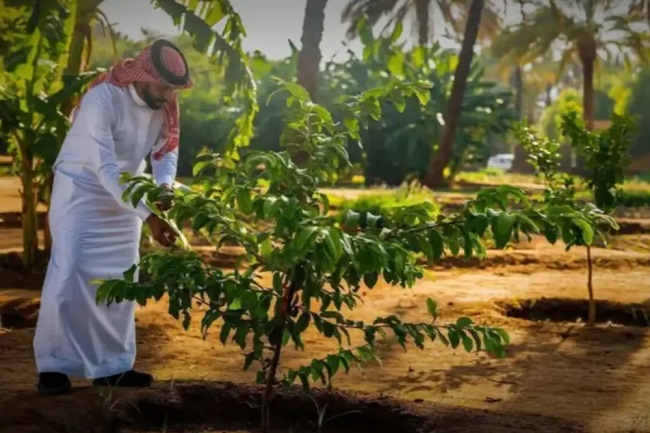
The Kingdom of Saudi Arabia (KSA) has reached a major milestone in restoring degraded land, announcing the rehabilitation of one million hectares under the Saudi Green Initiative, demonstrating that large-scale land restoration is achievable even in some of the world’s most water-scarce environments.
The achievement comes at a time of growing global pressure on land and water systems, as droughts intensify, food systems face increasing strain, and land degradation continues to affect nearly half of the global population.
“This milestone shows that restoring land at scale is not only possible but also it is already happening,” said UNCCD Executive Secretary, Dr. Yasmine Fouad, in a recorded message marking the occasion.
Saudi Green Initiative
“In a world facing rising drought and increasing water stress, this achievement sends a clear signal: with the right policies, science, and commitment, countries can turn environmental challenges into opportunities for resilience and growth,” Fouad added.
“Reaching one million hectares of restored land marks a pivotal milestone in Saudi Arabia’s environmental journey. It reflects our leadership’s commitment to sustainability and demonstrates how coordinated action across government, private sector and communities can deliver lasting impact, strengthening ecosystems, supporting biodiversity, and advancing our Vision 2030 goals,” stated Abdulrahman bin Abdulmohsen Al-Fadley, Minister of Environment, Water and Agriculture, KSA.
Implemented under challenging climatic conditions and limited water availability, the restoration effort reflects a comprehensive approach combining innovation, science-based solutions and long-term planning. Measures such as cloud seeding programmes, early warning systems for sand and dust storms, and the expansion of protected areas have contributed to strengthening ecosystem resilience and improving land productivity.
Land restoration is increasingly recognised as a critical investment in sustainable development. Healthy land systems underpin food security, water availability, economic resilience and stability, making restoration not only an environmental priority, but a strategic economic and social imperative.
“Land is our most vital infrastructure,” added Dr. Fouad. “When land degrades, water systems weaken, food production declines, and communities become more vulnerable. Investing in healthy land is investing in people, stability and long-term prosperity.”
Saudi Arabia’s efforts also contribute to strengthening international cooperation on land, including through initiatives such as the Middle East Green Initiative and the G20 Global Land Initiative, hosted by the United Nations Convention to Combat Desertification (UNCCD). The Kingdom’s leadership during its presidency of the UNCCD Conference of the Parties has further reinforced global ambition to address land degradation and drought.
The milestone illustrates the importance of aligning national action with global frameworks, demonstrating how countries can translate commitments into measurable progress on the ground.
As the international community prepares for the seventeenth session of the Conference of the Parties (COP17) to the UNCCD, to be held in Mongolia in August 2026, this achievement provides a timely example of the scale and pace of action required to restore land, strengthen drought resilience and support sustainable livelihoods worldwide.
“Restoring land is not only an environmental necessity, but also a pathway to resilience, stability and prosperity,” Dr. Fouad said. “The progress we are seeing today shows what is possible when ambition is matched with action.”
The Saudi Green Initiative (SGI) Day, observed annually on March 27 following a Cabinet decision, reflects the Kingdom’s commitment to establishing a culture of sustainability, enhancing national environmental efforts, and encouraging all sectors to achieve sustainable development goals in line with Vision 2030.
The initiative recently achieved a significant national milestone by rehabilitating one million hectares of degraded land through the National Greening Programme, overseen by the National Centre for Vegetation Cover Development and Combating Desertification. This objective aims to expand vegetation cover, reduce desertification, improve quality of life, and enhance the natural capacity of local environments to adapt to climate change.
The achievement is an extension of the Kingdom’s broader efforts to protect natural resources, reduce emissions, promote reliance on clean energy, and preserve biodiversity, thereby strengthening Saudi Arabia’s regional and international standing in environmental action.
Over the past year, the initiative has continued to make tangible progress. More than 159 million trees were planted across the Kingdom, and environmental reserves saw the birth of Arabian oryx calves for the third consecutive year. Furthermore, the National Water Efficiency and Conservation Center currently saves 120,000 cubic meters of water daily, with plans to increase this capacity to 300,000 cubic meters.
These combined efforts align with the objectives of Vision 2030 and contribute to strengthening the Kingdom’s regional and international standing in environmental sustainability.
SGI Day is observed annually to highlight the initiative’s achievements, review its future goals, and encourage broad sector participation in environmental efforts and sustainable development.
These efforts reflect the Kingdom’s approach to environmental and climate action, driven by the Saudi Green Initiative and the Middle East Green Initiative, both launched by His Royal Highness Prince Mohammed bin Salman bin Abdulaziz Al Saud, Crown Prince and Prime Minister, underscoring its ongoing commitment to supporting the transition toward a more sustainable development model.
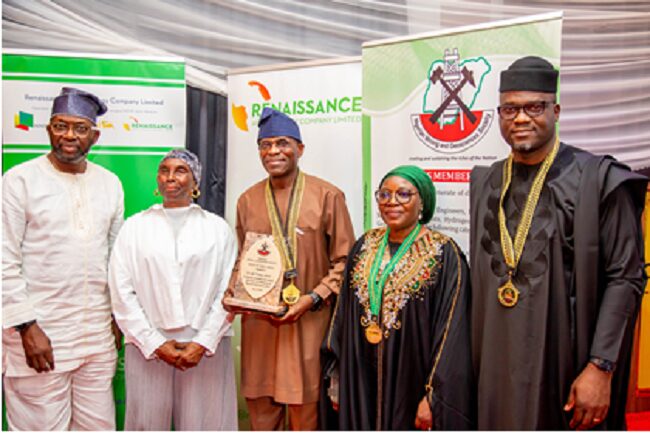
Chairman of Renaissance Africa Energy Company Limited, Dr. Layi Fatona, has been awarded the 2026 Nigerian Mining and Geosciences Society (NMGS) highest honour, the NMGS/Shell Award, at the Society’s just concluded 61st Annual International Conference in Uyo, Akwa Ibom State.
Also honoured at the event is Renaissance’s Vice President for Exploration, Johnbosco Uche, who received the 2026 NMGS/Durotoye/COMEG Award.
Speaking on the deserving attributes of the Fatona and Johnbosco, NMGS President, Ms. Rose Ndong, said their contributions to the growth of mining and geosciences had been consistent over the years and had brought about economic development to the Nigerian nation.
L-R: Managing Director and Chief Executive Officer of Renaissance Africa Energy Company Limited, Mr. Tony Attah; Mrs. Toyin Fatona; the recipient of he 2026 Nigerian Mining and Geosciences Society (NMGS) highest award, the NMGS/Shell Award, and Chairman, Renaissance Africa Energy Company Limited, Dr. Layi Fatona; President, NMGS, Ms. Rose Ndong; and the recipient of the 2026 NMGS/Durotoye/COMEG Award and Renaissance’s Vice President for Exploration, Mr. Johnbosco Uche, at the NMGS Awards Ceremony that rounded off the 61st NMGS Annual International Conference and Exhibition… in Uyo, Akwa Ibom State… on Wednesday
“Your economic contributions to the profession also singled out for the awards,” she said.
In his acceptance speech, Fatona called for tighter regulation of Nigeria’s mining and energy sectors, warning against the proliferation of unqualified practitioners and the risks of weak enforcement, environmental neglect, and short-term opportunism.
“We are living in extraordinary times with the global energy transition accelerating and critical minerals becoming strategic assets,” Fatona said. “Nigeria must not be a spectator. We must be a strategic player, and that requires competence, discipline and professional integrity.”
He urged the industry to restore what he termed “professional sovereignty,” where trained experts lead practice and institutions enforce standards. “Capital must partner with competence – not replace it,” he added.
Fatona drew parallels between Nigeria’s oil and gas sector and its mining industry, noting that while the oil industry has matured faster, it has also faced challenges including environmental damage, governance issues and dilution of professional authority. He cautioned that the mining sector must avoid repeating those mistakes.
Reacting to the honour done two leaders of Renaissance, the Managing Director and Chief Executive Officer, Tony Attah, said the two recipients reflect the commitment of Renaissance to redefining Nigeria’s energy future with ambition, belief, and courage.
He said, “Every day, we benefit from the foresight, wisdom and experience of Dr. Fatona, including his vision and thoughts on how to better manage Nigeria’s abundant natural resources for the nation’s industrialisation.”
The Elephant Protection Initiative (EPI) Foundation and The Central Africa Markets Venture Capital & Private Equity Association (CAMPEA) on Friday, March 27, 2026, announced a strategic partnership designed to strengthen collaboration between conservation and private capital markets across Africa.
The alliance brings together EPI Foundation’s pan-African conservation mandate with CAMPEA’s regional investment network to accelerate sustainable financing solutions that support both biodiversity protection and economic development.
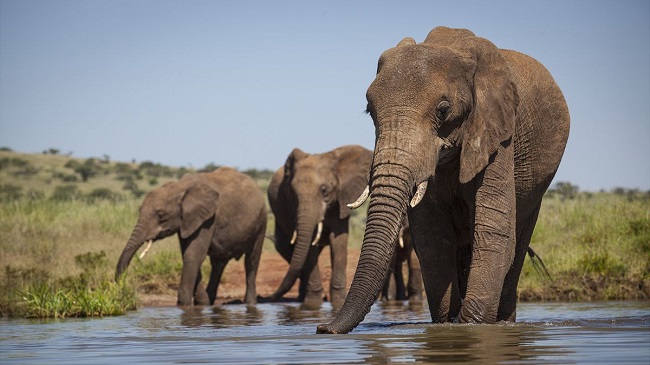
EPI Foundation and CAMPEA plan to mobilise private capital to strengthen elephant protection, empower local communities, and develop investment models
Through this partnership, the organisations will explore innovative financing mechanisms that align long-term elephant conservation goals with responsible investment frameworks. The collaboration aims to foster dialogue with African governments, corporate and institutional investors, and private sector stakeholders to promote sustainable land use, climate resilience, and nature-friendly development initiatives in African elephant-range states.
Under the agreement, the EPI Foundation and CAMPEA will jointly convene industry roundtables, develop knowledge-sharing platforms, and support capacity-building programmes that bridge conservation priorities with private capital deployment. The partnership will also seek to mobilise new funding pathways that integrate environmental stewardship into regional investment strategies.
“This partnership reflects a shared vision that conservation and economic prosperity are not competing ambitions,” said John Scanlon, Chief Executive Officer at the EPI Foundation. “By working alongside CAMPEA, we can mobilise private capital to strengthen elephant protection, empower local communities, and develop investment models that recognise natural capital as a cornerstone of Africa’s long-term resilience and growth.”
Tania Eyanga, MBA. CEO at CAMPEA, added: “The future of responsible investment in Africa depends on partnerships that connect capital with long-term environmental and social impact. Collaborating with the EPI Foundation enables us to engage investors who recognise the value of preserving natural capital while supporting resilient economies.”
The Elephant Protection Initiative Foundation is a UK-registered charity that serves as the secretariat supporting the Elephant Protection Initiative, a coalition of African governments committed to conserving their elephants. The EPI Foundation’s board is led by Hon Sharon Ikeazor CON, a former Nigerian minister of the environment.
Central Africa Markets Venture Capital & Private Equity Association (CAMPEA) is the regional industry body dedicated to strengthening private capital markets in Central Africa by connecting institutional investors, policy makers, commercial and philanthropic enterprises and corporate entities alongside fund managers and development partners to work symbiotically to foster a capital-expansive, sustainable investment ecosystem that drives tangible economic growth.