27.5 C
Lagos
Saturday, January 17, 2026
Home Blog Page 17

Nigeria’s health sector gains amid strikes

0

Nigeria’s health sector in 2025 recorded notable progress in infrastructure, emergency care, insurance expansion, and service utilisation, yet persistent strikes by doctors, nurses, and allied health workers exposed unresolved labour tensions threatening reforms.

Under the Health Sector Renewal Investment Initiative, the Federal Government commissioned oncology centres, expanded emergency services, improved immunisation coverage, and cleared several legacy arrears owed to health workers, signaling significant investment in healthcare reform.

In spite of these gains, waves of strikes disrupted federal hospital services, left patients stranded, and highlighted deep-rooted tensions between authorities and health sector unions, exposing the fragile nature of reforms even with investment and policy advances.
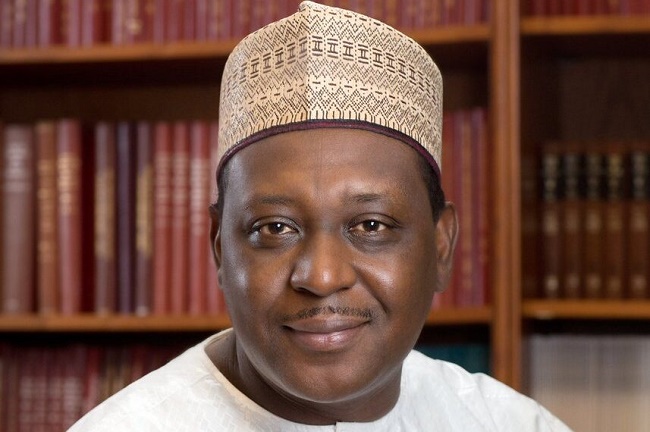
Mohammed Ali Pate
Prof. Mohammed Ali Pate, Coordinating Minister of Health and Social Welfare

In practice, 2025 was marked by repeated industrial actions, with several unions halting hospital operations, making labour disputes the defining feature of the year, even as reforms and infrastructure improvements continued across the country.

One of the most consequential disruptions came from the Nigerian Association of Resident Doctors (NARD), which launched an indefinite nationwide strike on Nov. 1 over unresolved welfare and structural issues affecting federal health institutions.

After 29 days of paralysis in tertiary hospitals, NARD suspended the strike following a series of conciliatory meetings with the Federal Government, signaling temporary resolution but leaving critical issues still unaddressed in hospitals.

NARD National President, Dr Mohammad Suleiman, announced the suspension on Nov. 29 after an extraordinary National Executive Council meeting, citing a Memorandum of Understanding that outlined the status of the association’s 19-point demands.

Suleiman explained the suspension was conditional: “The NEC resolved to suspend the strike for four weeks to allow room for dialogue, while ensuring follow-up on implementation of pending welfare and structural demands,” he said.

Promotion arrears remained unpaid because Chief Medical Directors and Managing Directors had not completed compilations, though a four-week deadline was agreed between Nov. 30 and Dec. 31 for clearing outstanding salary obligations.

On specialist allowances, directives from the Office of the Head of the Civil Service and the National Salaries, Incomes and Wages Commission were expected to initiate implementation, signaling partial progress while systemic delays persisted across federal institutions.

The MoU also covered failed or omitted payments for the 25/35 per cent review and accoutrement allowances, while upgrading eligible residents continued following the release of the Post-Assessment Tool, addressing long-standing financial grievances.

Interim directives were issued to curb excessive call duties and limit “obnoxious clauses” in locum engagements, with committees reviewing policies expected to submit comprehensive recommendations within two months to improve doctors’ work conditions.

“The countdown for the four weeks shall start on Monday and serve as a daily reminder to Nigerians and the Federal Government to use this window fully and justly,” Suleiman warned.

On Sept. 15, resident doctors in the Federal Capital Territory embarked on an indefinite strike following a seven-day warning strike beginning Sept. 8, citing unpaid salaries, delayed promotions, poor infrastructure, and severe manpower shortages.

ARD President, Dr George Ebong, noted hospitals were overstretched and under-equipped, with some doctors handling up to 60 patients overnight, highlighting operational pressures that exacerbated strikes and strained patient care throughout the year.

Members of the National Association of Nigerian Nurses and Midwives (NANNM) staged a seven-day warning strike on July 30 over decades-old welfare, allowances, and career progression demands, signaling broad dissatisfaction across health sector cadres.

Allied health workers followed, with the Joint Health Sector Unions declaring an indefinite nationwide strike on Nov. 14 over a 12-year delay in implementing the adjusted Consolidated Health Salary Structure (CONHESS), intensifying sector-wide unrest.

The Nigeria Labour Congress backed the industrial action on Dec. 2, warning of escalation if demands were ignored, showing coordinated pressure from organised labour on the government to address systemic failures in healthcare.

Beyond unions, faith-based and professional groups expressed concerns over the ethical and human cost of strikes, with the Islamic Medical Association of Nigeria warning that patients often bear the heaviest burden.

Health analyst, Dr Francis Ayomo, noted strikes had “very bad and very negative” impacts on health outcomes, leaving patients to either seek private care, resort to informal providers, or self-medicate with potential life-threatening consequences.

Ayomo said recurring strikes reflected failure to address human resource issues sustainably, criticising authorities for implementing temporary fixes without post-mortem reviews, perpetuating cycles of unrest and undermining healthcare progress across Nigeria.

Government officials acknowledged the scale of the problem.

Minister of State for Health, Dr Iziaq Salako, warned that recurring strikes threatened Universal Health Coverage goals, stressing dialogue as the preferred path while addressing root causes.

Coordinating Minister of Health, Prof. Muhammad Pate, noted ongoing reforms were restoring confidence and addressing longstanding grievances, citing measures under President Tinubu’s administration to improve working conditions and clear arrears owed to healthcare workers.

Pate highlighted progress including raising retirement age for skilled workers, clearing 2023 arrears, processing new hazard allowances, and settling more than N10 billion owed under the 2025 Medical Residency Training Fund, demonstrating tangible government commitment.

He added that CONHESS and CONMESS salary relativity adjustments were being institutionalised, while Collective Bargaining Agreement negotiations with NMA, JOHESU, and NANNM continued, reflecting a multi-pronged approach to resolving labour tensions in the sector.

For patients like Blessing Yakubu, referred to federal hospitals during strikes, reforms remained fragile.

“We had to borrow money for private clinics because we had no choice,” she said, illustrating persistent gaps in service delivery.

As Nigeria closes 2025, progress in healthcare is evident, yet unresolved labour disputes remain.

Citizens warn that until agreements move from paper to practice, each strike suspension risks being a temporary “quick fix” rather than lasting solution.

By Folasade Akpan, News Agency of Nigeria (NAN)

Anambra community urges govt to tackle erosion displacing residents

0

Residents of Enugwu-Nanka Village in Orumba North Local Government Area (LGA) of Anambra State have sought government’s intervention to address the worsening gully erosion threatening the community.

The residents also seek reprieve from the World Bank and relevant environmental stakeholders, in a bid to prevent continuous destruction of lives and properties in the area.

Chairman of the Enugwu-Nanka Erosion and Flood Control Committee, Chief Emmanuel Osele, told newsmen that the erosion had displaced over 200 families, while houses worth billions of naira had collapsed into the gullies.

Gully erosion
Gully erosion at Enugwu-Nanka Village in Orumba North Local Government Area (LGA) of Anambra State

“Several buildings, farmlands, access roads linking the village with neighbouring Amakor and Ubahu communities, as well as critical infrastructure, are at risk, if urgent action was not taken.

“The community and individuals have embarked on various self-help measures, including tree planting, construction of drainages and catchment pits, to mitigate the damage.

“We also warned residents against cutting down trees in erosion-prone areas, but to no avail.

“We are therefore calling on the Federal and Anambra State Governments, to urgently intervene in the worsening gully erosion threatening our community,” he said

Reacting, a resident of the community, Nze Joshua Obinwa, whose house is threatened by the erosion, said that the problem had lingered for decades.

Obinwa, an octogenarian, said that the menace had also displaced many old people from their ancestral homes; he consequently, joined in the call for governments intervention.

Another member of the community, Mr. Alexander Nwafete, also lamented that over 1,000 plots of land had been lost to the erosion, with severe effects on socio-economic activities.

He also begged government to save residents from dangers posed by the erosion.

Meanwhile, the Vice Chairman of Ubahu Village, Nze James Ezeilo, raised concerns over emerging erosion sites around the Uhuabor axis near the boundary between Enugwu-Nanka and Ubahu villages.

He attributed the development to a runoff from neighbouring communities and urged government to take decisive steps aimed at addressing the problem.

By Lucy Osuizigbo-Okechukwu

A breakthrough on plastic pollution remains within reach – Andersen

0

At the resumed fifth session of the United Nations Environment Assembly (UNEA), in February 2022, the world came together and made a commitment: to end plastic pollution, including in the marine environment.

Since then, six meetings have been convened and, throughout this process, global momentum has surged. This is no small achievement. We have made progress. But further dialogue, diplomacy and time are needed to complete negotiations and deliver on the promise of resolution 5/14. 

Yes, there was real hope that the process could be concluded at the second part of the fifth session of the Intergovernmental Negotiating Committee (INC-5.2). But agreement proved elusive after 10 intense days. Given the high stakes and high hopes, there was an understandable sense of unmet expectations and disappointment.

Plastic waste pollution

Now, as we collectively assess what has been achieved since the initial resolution, allow me to highlight three important factors that we would be well advised not to lose sight of: 

First, these negotiations unfolded amid geopolitical complexities, economic challenges and multilateral strains. These external factors created and continue to create real difficulties. 

Second, ending plastic pollution is a complex and far-reaching task that affects many countries in many diverse ways. 

Third, all comparable negotiations for other agreements took much longer than the three and a half years we have been at it.

At the same time, I believe that there were real advances at INC-5.2. Delegations went deeper than ever into all areas of the draft text. We saw constructive proposals, increased clarity on positions and growing convergence on several key elements of a possible treaty.

Yes, divisions remain regarding scope, production, plastic products, finance and decision making. And more work is needed on the balance between globally binding rules and national measures. But we have seen all countries reaffirm their commitment to stay at the table and build on the progress made. Ultimately, no country wants the environmental, economic and health impacts of plastic pollution. 

UNEP’s commitment to supporting Member States deliver on UNEA resolution 5/14 remains unwavering. And let me emphasize that we will do this by continually raising the standards of how we serve Member States in this process.

Now, as we look ahead, a path needs to be found to enable Member States to recalibrate the process. 

First, the INC will convene for a one-day resumed session (INC-5.3) on February 7, 2026, in Geneva. This meeting will be administrative in nature and focus on the election of officers, including a new Chair. Let me take this opportunity to acknowledge former INC Chair, Ambassador Luis Vayas Valdivieso, whose leadership brought us to this important point. And of course, the leadership of Ambassador Meza Cuadra until INC-3.

Naturally, a one-day meeting has heavy financial implications. We provided the Bureau with other feasible options and are now organising the meeting, taking all cost-saving measures possible.

Under a new Chair, the Committee will chart a path to the subsequent session. My plea to Member States is to use the intersessional period to make meaningful substantive progress. This will require carefully designing this period to help narrow remaining gaps.

Building consensus will take time, persistence and, crucially, ongoing dialogue – not only with those who share similar positions but with those who do not, so viable landing zones can emerge. I strongly encourage Member States to continue this informal engagement. As a Member-State driven process, continued transparency will be key to ensure trust, legitimacy and collective ownership of the path forward. 

I am mindful that all of this will need time, but science tells us that time is not unlimited. So, let us try to move briskly, but carefully. I firmly believe that countries can still come together and deliver a treaty for the ages that sends a clear and impactful global signal. And with it, move the world closer to an end to plastic pollution.

By Inger Andersen, Under-Secretary-General of the United Nations and head of the United Nations Environment Programme (UNEP)

Sanwo-Olu unveils towering 32-foot Eyo monument in Lagos

0

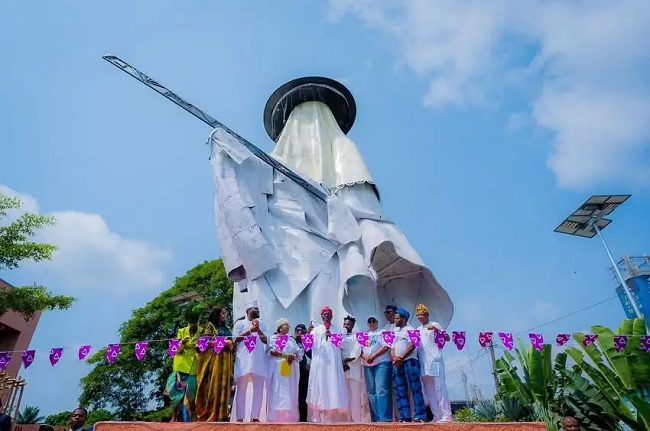
Gov. Babajide Sanwo-Olu of Lagos State has unveiled the 32-foot Eyo Monument at John Randle Centre for Yoruba Culture and History, in Lagos, describing it as a symbol of culture and identity.

Sanwo-Olu said that the unveiling, though simple, represents a significant and wholesome cultural experience in celebration of the Eyo Adimu Orisa Festival.

He said that the monument reflects the depth of Lagos’ cultural heritage, and reaffirmed the state’s position as a cradle of culture and tradition.

Eyo Monument
Gov. Babajide Sanwo-Olu unveils the 32-foot Eyo Monument

“This unveiling is simple, yet very significant; It is a wholesome experience that celebrates the Eyo Adimu Orisa Festival and what it represents to Lagos and our people,” he said

Sanwo-Olu commended the creator of the monument, Mr. Dotun Popoola, for using his artistic skills to project Lagos as a symbol of culture, creativity and history

He said that the state government would continue to support initiatives that preserve, promote and showcase Lagos’ rich cultural heritage to residents and visitors alike.

In his welcome address, the Chief Executive Officer of the Centre, Mr. Qudus Onikeku, said that the 32-foot monument mounted on a six-foot base, was designed to tell the story and history of Eyo in Lagos State.

Onikeku said that the centre also planned to produce a documentary film on the Eyo festival to further document and preserve its cultural significance.

According to him, the documentary will feature a respected custodian of Yoruba culture in the state, Erelu Abiola Dosumu.

He said that the monument and the planned documentary aligned with the centre’s mandate to serve as a hub for cultural education, preservation and creative expression

Reacting, the Erelu Kuti IV of Lagos, Erelu Abiola Dosumu, commended Sanwo-Olu for his contributions to the preservation and celebration of Lagos’ cultural heritage and traditions.

Dosumu also praised the governor, for his proactive approach to infrastructural development across the state, adding that cultural development thrived best in an environment supported by strong infrastructure.

Earlier, the creator of the Eyo Monument, Mr. Dotun Popoola, said that the almost 40-foot statue was conceived as a commitment to the promotion of culture and tradition.

Popoola thanked the Lagos State Government for the opportunity and support to execute the project, describing the monument as a tribute to the enduring legacy of the Eyo tradition.

According to him, the artwork is intended to inspire pride, cultural consciousness and continuity among present and future generations.

By Aderonke Ojediran

Tinubu hails $1.1bn financing for Lagos-Calabar coastal highway

0

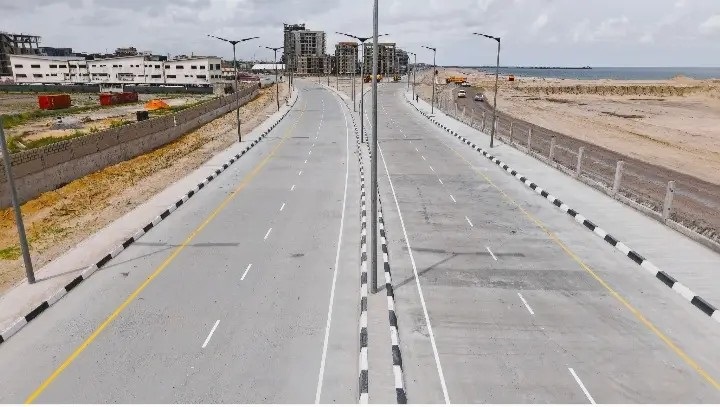
President Bola Tinubu has praised the Federal Ministry of Finance for successfully closing a $1.126 billion financing package for Phase 1, Section 2 of the Lagos-Calabar Coastal Highway.

This is contained in a statement issued by Presidential spokesperson, Mr. Bayo Onanuga, on Friday, December 26, 2025, in Lagos.

Tinubu also commended the Ministries of Finance and Works, alongside the Debt Management Office, for their collaboration in concluding the landmark transaction.

Lagos-Calabar Coastal Highway

“This is a major achievement, and closing this transaction means the Lagos–Calabar Coastal Highway will continue unimpeded.

“Our administration will continue to explore available funding opportunities to execute critical economic and priority infrastructural projects across the country,” the President said.

Phase 1, Section 2 of the highway covers about 55.7 kilometres, linking Eleko in Lekki to Ode-Omi, key economic corridors expected to enhance national trade efficiency and logistics connectivity.

The successful close follows the earlier $747 million financing secured for Phase 1, Section 1, underscoring the scalability and bankability of the Lagos–Calabar Coastal Highway project.

The financing was fully underwritten by First Abu Dhabi Bank and Afreximbank, with partial risk mitigation support from the Islamic Corporation for the Insurance of Investment and Export Credit (ICIEC).

It marks ICIEC’s largest transaction since Nigeria’s institutional and regulatory reforms, reflecting growing investor confidence in the country’s reformed investment climate.

SkyKapital served as Lead Financial Adviser, coordinating transaction structuring, lender engagement and execution, while Earth Active (UK) provided Environmental and Social advisory services.

The advisory ensured compliance with the IFC Performance Standards, the Equator Principles and international Environmental, Social and Governance best practices.

Hogan Lovells acted as International Legal Counsel, with Templars serving as Nigerian Legal Counsel on the transaction.

Describing the development as a defining moment, Minister of Finance and Coordinating Minister of the Economy, Mr. Wale Edun, said the funds would be deployed responsibly and within agreed timelines.

“The signing on Dec. 19, 2025, of the $1.126 billion financing for Phase 1, Section 2 of the Lagos–Calabar Coastal Road marks a defining moment in Nigeria’s infrastructure journey.

“Collectively, these transactions firmly establish the Lagos–Calabar Coastal Highway as one of the flagship projects of President Bola Ahmed Tinubu’s Renewed Hope agenda,” Edun said.

He stated that the facility represents the first fully underwritten transaction of such magnitude for a Nigerian road infrastructure project.

Construction of the highway is being executed by Hitech Construction Company Limited, whose early delivery of key road sections has attracted commendation from lenders.

In line with the Federal Government’s commitment to transparency, a comprehensive Value-for-Money assessment was conducted by the Ministry of Works and independently reviewed by GIBB.

The successful close of Phase 1, Section 2 signals increased market confidence and Nigeria’s capacity to translate reform-driven infrastructure vision into delivery.

By Muhyideen Jimoh

Natural Gas and Liquefied Natural Gas: Building a bridge to African energy security, prosperity

0

Africa is awakening to the power of its natural gas reserves, recognising that among its many resources, natural gas offers a reliable and expedient track to economic growth and energy independence.

In our “State of African Energy: 2026 Outlook Report,” the African Energy Chamber (AEC) details how the energy matrices of several gas-producing nations are pivoting from holding gas back as mainly an export product to building gas-centric domestic markets.

We regard this crossover not as some hopeful economic gamble, but as an essential step that all gas-producing nations on the continent must take if Africa is to benefit fully from its fossil fuel reserves and build up true self-reliance – without apology – just as the developed nations of the world did when it was their time.

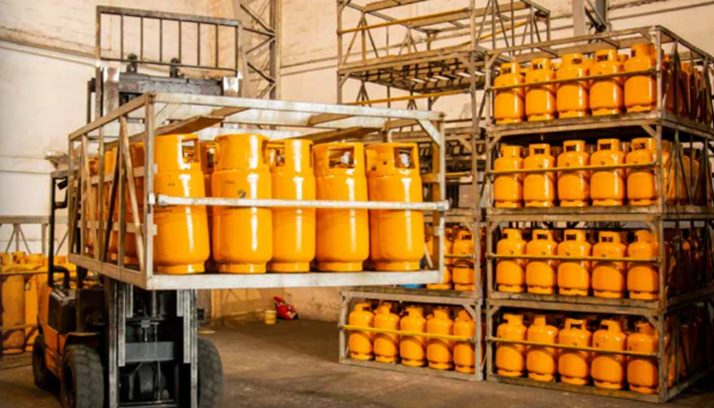
LPG
Liquefied petroleum gas (LPG)

As our report makes clear, domestic gas demand in Africa is ready to surge in the coming years, driven primarily by rising power needs. At this pivotal juncture, several African nations serve as prime case studies on how forward-looking investments in gas production can power whole industries, create new jobs, and stabilise grids in places where such improvements are desperately needed. Additionally, their stories exemplify how, amid a global energy transition, natural gas will serve as a bridge fuel that will power Africa into its own sustainable future.

Angola’s Gas Renaissance: From Exports to Domestic Growth

In Angola, the oil and gas sector has seen its economic footprint shrink over the last decade amid declining output. Regardless, Angolan policymakers are well aware of the vast untapped value in the country’s gas reserves, and recent industry moves reflect a commitment to realizing their potential.

Angola’s journey into the global gas arena began with the construction of the Angola LNG liquefied natural gas (LNG) facility in 2008. This transformed associated gas (gas found in wells alongside crude oil), which was previously flared or reinjected, into exportable LNG – slashing upstream emissions in the process.

The raw natural gas (or feedstock) that is processed and liquefied to produce LNG initially came from key offshore blocks operated by ExxonMobil, Total, and Eni/BP, and was augmented later with gas from other blocks operated by Eni/BP and Chevron. Though half of the associated gas produced in Angola today is still reinjected into wells to maintain pressure and enhance oil recovery, recent progress – like the December 2024 achievement of first gas from the Sanha Lean Gas project – aims to boost supply volumes to the Angola LNG plant.

Angola has also begun to pivot toward non-associated gas fields in areas like the Lower Congo basin. The New Gas Consortium, a joint venture headed up by Azule Energy, is targeting numerous developments on multiple blocks that are expected to ramp up LNG capacity by 2026.

Post 2010 exploration in the southern Kwanza Basin offshore led to giant non-associated gas discoveries. While exciting, we at AEC are frustrated that those finds remain stranded due to a lack of gas export infrastructure in the area and the high cost and difficulty of deepwater drilling where they’re located.

The Kaminho project, which targets condensate-rich pre-salt discoveries in the Cameia and Golfinho fields, is the first operation under development in block 20 of the Kwanza basin. Condensate/light oil recovery is the current priority at the site, and the extent of development will depend on the completion of the Kaminho floating production, storage, and offloading (FPSO) unit expected in 2028.

As our report speculates, the possibility of a network between Kaminho and the appraisal programs at the Lontra, Zalophus, and Bicuar fields in the same region could encourage development of gas transport infrastructure leading to Angola LNG at Soyo or central Angola.

The Angolan government seeks to expand its pipeline network, which may involve gas evacuation from Cameia-Golfinho to the coastal point of Caboledo and an onshore pipeline to Luanda and Soyo to satisfy local demand, but project costs and the necessary transportation tariffs are holding up investment. Funding for such developments could potentially come from upstream firms or international banks with added tax breaks to make them viable.

In the long term, gas blowdown operations at maturing oil fields in the Congo Fan could also supply Angola LNG, leveraging existing midstream infrastructure for extended production into the 2030s.

Domestically, Angola is allocating more gas to power generation, with supplies feeding the 750-megawatt (MW) Soyo combined-cycle gas turbine (CCGT) plant that has been balancing hydropower fluctuations since its start in 2018. But ambitions extend further: the Angola Gas Master Plan calls for fertilizer (ammonia) and methanol facilities by 2030, which would spur a massive increase in gas demand.

The proposed ammonia plant, set for construction in 2025 and operations by 2027, could demand up to 80 million cubic feet per day (MMcf/d) by 2035. Power expansions and conversions from oil will also drive demand, while opportunities in petrochemicals, direct gas exports, or mining electrification could diversify use.

By integrating LNG exports with local needs, Angola exemplifies how Africa can benefit from its resources while encouraging economic diversification and reducing dependence on imports.

Emerging LNG Exporters: Mauritania and Senegal’s Shared Success

Shifting north, Mauritania and Senegal have stepped into the LNG scene. They became exporters in 2025 with the Greater Tortue Ahmeyim (GTA) project, a shared deepwater startup. This cross-border venture, featuring subsea infrastructure, an FPSO, and a floating LNG (FLNG) unit, has already generated approximately 3,000 local jobs and engaged roughly 300 domestic companies.

In 2015, developers overcame unitization hurdles through discussion, arriving at equitable terms, including domestic gas obligations. The project reached a final investment decision (FID) and agreed to a FLNG model, inspired by proven tanker conversions that have kept costs competitive on previous projects despite deepwater challenges.

Future expansions could double output through low-cost vessel upgrades; however, our report cautions that market oversupply risks and pledges from Senegal’s new nationalist government to audit contracts may introduce additional risks.

Domestically, each country claims about 35 million standard cubic feet per day (MMscf/d) from the project – with delivery of Senegal’s portion going to the Saint-Louis CCGT for power generation expected in 2026. Infrastructure initiatives, like gas networks and a proposed 366 MW power plant in Cap de Biches, aim to electrify close to 500,000 homes. Beyond power, other uses in petrochemicals and fertilizers could broaden the economic impacts, demonstrating how LNG can facilitate other industries.

Country-level initiatives like these align with the broader continental trends also outlined in our 2026 Outlook report.

Harnessing Regional Power Pools for Continental Integration

As of 2025, Africa’s gross natural gas production is set to hit 331 billion cubic meters (bcm), led by the major producers: Algeria, Nigeria, and Egypt. Natural gas already powers 40% of the continent’s electricity, with North Africa’s 32% share doing most of the heavy lifting.

By 2050, gas-fired capacity could swell by more than 77 GW, yet its share of the total energy mix should stay around 40%. This demonstrates how gas can fill in as a transitional fuel during the expected growth in renewables, as well as its flexibility in supporting solar and wind during downtime.

Numerous nations are phasing out coal and oil – implementing gas-to-power in their national strategies while looking toward LNG imports or domestic sources. For instance, Nigeria has made gas-to-power a centerpiece of its master plan. South Africa’s plans emphasise converting gas to electricity during its coal retirement. Senegal aims to have 3 GW of gas-to-power in place by 2050, and Ghana and Tanzania have similar gas-powered ambitions.

Though challenges like infrastructure gaps, import vulnerabilities, and environmental concerns will surely arise, we at the AEC are confident that targeted investments can overcome them.

These efforts are amplified by regional power pools – collaborations that allow neighboring countries to connect to each other’s power grids. Five pools cover the continent:

  1. Southern African Power Pool (SAPP) leads as the most mature and serves as a model for strong interconnections and competitive trading.
  2. West African Power Pool (WAPP) has advanced cross-border links but grapples with regulatory and financial issues.
  3. Eastern Africa Power Pool (EAPP) is also making progress on interconnections despite political hurdles.
  4. Central African Power Pool (CAPP) is the furthest behind due to instability, limited infrastructure, and a lack of investment.
  5. North African Power Pool (NAPP) has arguably the most advanced infrastructure but limited trade as it has more of a focus on integration with European markets.

The African Single Electricity Market, an effort to combine these five pools into a single continental power market, has sights on full integration by 2040. Although barriers like physical distances and technological and political compatibility issues are expected, finding ways around these barriers could further unlock the potential of gas by linking exporters to importers and boosting access and cooperation.

“The State of African Energy” spells it out: Natural gas is a catalyst for African prosperity, not merely a commodity on the market. By expanding LNG and domestic uses, nations can drive growth, cut emissions, and assert their energy independence. As a transitional fuel, it offers a comfortable route to an eventual conversion to renewables and can ensure that no African is left in the dark during the process.

Africa deserves to thrive on the wealth of its own resources, and the developments outlined in our latest report prove that outcome is possible.

By NJ Ayuk, Executive Chairman, African Energy Chamber

Preserving Earth’s last sanctuaries: A call for urgent action on primary forests

0

From boreal forests near the Arctic Circle to dense tropical jungles south of the Equator, Earth’s last primary forests – ancient ecosystems that remain undisturbed by industrial activity – are vanishing. These forests, rich in biodiversity and unmatched in their carbon storage capacity, have a high degree of ecological integrity and are nature’s defence in the fight against climate change and species extinction. Yet they continue to fall, often quietly, cleared for short-term economic gain or degraded due to weak policy protections and underfunded conservation efforts

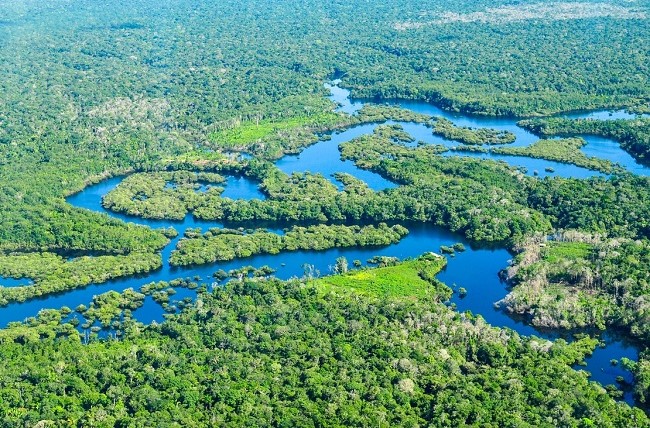
Amazon Rainforest
Amazon Rainforest. Photo credit: Neil Palmer / CIAT

Primary forests are the heart of the global climate and biodiversity agenda, underpinning key international agreements such as the Paris Agreement and the Kunming-Montreal Global Biodiversity Framework. These forests store dense carbon stocks while continuing to act as powerful carbon sinks. They also regulate water systems, reduce the risk of zoonotic disease, support livelihoods with essential resources, and provide irreplaceable habitat for countless species – many of them critically endangered and found nowhere else.

Over 80 percent of terrestrial biodiversity lives in forests, and primary forests host the highest concentrations of species: especially those that are endemic, endangered or both. Primary forests fulfil a host of ecological functions, and the loss of these ecosystems is permanent – no restoration plan can replicate the complexity and resilience of intact forest landscapes within a reasonable timeframe, if ever.

Since 2001, the world has lost at least 83 million hectares of tropical primary forest and 50 million hectares of intact boreal forest. In 2024 alone, tropical primary forest loss exceeded 6.7 million hectares, releasing more than 3.1 gigatonnes of CO into the atmosphere – slightly more than India’s fossil fuel emissions that year. This marks a doubling of loss from 2023 and the highest annual rate in two decades – an alarming reversal of hard-won progress.

Despite rising awareness, much of the global response remains misaligned and siloed. Although restoration efforts are extremely important to repairing functionality and restoring habitat in degraded areas and ought to be continually funded, these efforts should not be at the expense of preventing further deforestation and degradation of the primary forests that remain.

We cannot plant our way out of deforestation: prevention is more effective, more cost-efficient and ecologically far superior

A fundamental shift is needed in both policy and finance frameworks concerned with forest ecosystem integrity which sustains primary forests. The Convention on Biological Diversity (CBD), through the Kunming-Montreal Global Biodiversity Framework (GBF), aims to protect 30% of the planet by 2030, and countries are striving to make progress towards this target. Fortunately, the CBD took critical steps both in Montreal and in Cali to integrate a clear and strong ecosystem integrity mandate into the GBF in Goal A, and Targets 1, 2, 8 and 12. Of course, the comprehensive focus on ecosystem integrity in the GBF by definition includes primary forests, but it is important to recognise this explicitly in the CBD at COP17.

The financial commitments made through CBD by countries earlier this year represent a critical milestone, but unless primary forests are explicitly prioritised in national strategies, we are sadly liable to continue seeing significant deforestation and degradation, as was the case in 2024. Similarly, the financial commitments made at UNFCCC COP29 represent an important step towards accelerating action to combat climate change – but primary forest conservation remains an overlooked solution within climate dialogues.

Where primary forests remain, governments must integrate primary forest protection into their international commitments and back those promises with legally binding safeguards, robust monitoring, enforceable protections, policy coherence and elimination of harmful incentives. In parallel, global finance must evolve. Current funding models fall short in prioritising conservation efforts with the highest ecological returns – leaving primary forests underfunded and exposing biodiversity, climate and communities to avoidable harm.

Beyond just a new policy, safeguarding primary forests demands an evolution of mindset: environmental protection isn’t a barrier to economic growth – it’s a value-add, a long-term investment in resilience, stability and prosperity of the planet.

These ecosystems are not liabilities to be cleared or degraded for development – they are assets, already delivering high-value ecological services that underpin healthy societies and healthy economies.

Innovative financial mechanisms can help close this gap. Redirecting climate finance toward avoided deforestation strategies, including payments to communities for ecosystem services and sovereign debt swaps for countries which steadfastly protect their primary forests, can unlock substantial resources to maintain and restore the ecosystem integrity of forests. Nations and communities demonstrating effective forest stewardship should be directly rewarded.

Moreover, Indigenous Peoples and local communities who have stewarded these landscapes for generations offer robust networks and approaches for maintaining these landscapes, a fact which has been reinforced by decisions made at CBD COP16 last year. Their governance systems have proven effective at protecting primary forests for millennia, and they are to this day both dependents and stewards of these ecosystems. Securing Indigenous land rights and channelling direct financial support to Indigenous forest stewards is not only equitable – it is a proven conservation strategy.

Some global conservation initiatives are already pushing for these changes and are backed by funding from multilateral organisations. For example, the Global Environment Facility (GEF), which provides the largest funding for forest protection globally, supports the conservation of tropical primary forests as a priority globally – notably through the Amazon, Congo and Other Critical Forest Biomes Integrated Programme, endowed with $306 million grants leveraging in addition around $1.5 billion, as well as through other global projects executed by IUCN, Wild Heritage, Griffith University and other pioneering partners. These initiatives demonstrate that investing in primary forest integrity can simultaneously advance benefits for climate, biodiversity, people and economies, creating a win-win situation for everyone.

Protecting primary forests is not just an environmental imperative – it is a strategic policy decision with climate, economic and social benefits. Yet without immediate intervention, these ecosystems will continue to disappear, weakening global efforts to combat climate change and stem accelerating biodiversity loss. Policymakers must act to close policy gaps, realign and unlock financial flows, and position primary forests as foundational to global sustainability

The time for action is now. The destruction of these ecosystems is irreversible

We are already off-track to meet the goal of halting global deforestation and forest degradation by 2030, a commitment made by several global platforms over the last decade, including the UNʼs Strategic Plan for Forests 2017–2030. As critical global policy forums like COP30 bring decision-makers together, world leaders have a timely opportunity to act.

These forums must move beyond broad commitments and blanket statements and instead position primary forest conservation at the heart of climate and biodiversity agendas. We urge donors, financial institutions and policymakers to prioritise long-term solutions. The time for incremental action has passed. Preserving the world’s last great forests is not only possible – it is non-negotiable.

By Dr. Chetan Kumar (Global Head of the IUCN Forest and Grasslands Team), Cyril Kormos (Founder and Executive Director of Wild Heritage), Pascal Martinez (Senior Climate Change Specialist at the Global Environment Facility – GEF)

A non-exhaustive look back at 2025 – CBD

0

At the Convention on Biological Diversity (CBD) Secretariat, 2025 has been an eventful, busy and rewarding year. It started with the preparations for the resumed session of COP 16/NP-MOP-5/CP-MOP-11 in Rome, where Parties to the Convention completed what they had started at the COP de la gente in Cali.

With 10 months away from COP17 and as the new year approaches, the CBD hopes that 2026 will be a year of “Taking Action for Nature” as called for by Armenia with its slogan for the 2026 UN Biodiversity Conference.

As the Convention bids farewell to 2025, it looks back at a year that saw important moments and collective achievements for nature and for people.

Astrid Schomaker
Astrid Schomaker, Executive Secretary of the Convention on Biological Diversity

Off to a good start in Rome

In Rome, Parties adopted a roadmap for resource mobilisation and reached agreement on the Planning, Monitoring, Reporting and Review mechanism, thus paving the way for the first global review of collective progress in the implementation of the Kunming-Montreal Global Biodiversity Framework (KMGBF), at COP17 in Yerevan in 2026.

Rome also saw the launch of the Cali Fund, a mere three months after it was operationalised, making 2025 truly a defining year for the collective quest to ensure the fair and equitable sharing of benefits from the use of Digital Sequence Information on Genetic Resources. The Guide to the Cali Fund, issued in June, provides essential information that can help boost the Fund’s capitalisation in 2026, building on the first contribution to the Fund in October.

Biodiversity meetings in Panama City

Eight months and several bureau meetings after the Rome meetings, Parties reconvened in Panama for the twenty-seventh meeting of the Subsidiary Body on Scientific, Technical and Technological Advice (SBSTTA-27). They adopted recommendations on 10 key topics, including on the scientific and technical elements of the global report that will be the basis of the review of the implementation of the KMGBF next year in Yerevan.

 In addition, SBSTTA-27 adopted important recommendations on aligning the programmes of work of the Convention with the KMGBF, on potential new areas of work, and on strengthening the response to the threat of invasive alien species. The critical contribution of soil biodiversity to agriculture was also in focus as was progress in the implementation of the Convention’s new Biodiversity and Health Action Plan and expanded voluntary guidelines on design and implementation of approaches on the use of biodiversity and ecosystem services for climate change adaptation and disaster risk reduction.

SBSTTA also discussed ways of encouraging synergies between the implementation of biodiversity, climate change and desertification policies at national level (more on such synergistic approaches below), deliberated on the risk assessment and risk management of living modified organisms, and  successfully piloted some key approaches for improving the effectiveness of processes under the Convention, some of which have been adopted for the upcoming SBI-6.

In the margins of SBSTTA-27, we were happy to benefit from the strong engagement of our IPBES colleagues and lead authors of their seminal nexus and transformative change assessments. A two-day seminar provided the opportunity to Parties to discuss their findings and what they may mean for national policy making. And there was a moment of buzzy celebration as we marked the International Pollinators Initiative’s 25th anniversary.

Immediately after SBSTTA-27, also in Panama, was the inaugural meeting of the Convention’s new Subsidiary Body on Article 8(j) and Other Provisions of the Convention Related to Indigenous Peoples and Local Communities (SB8j-1), marking a new chapter in the Convention’s history. This first meeting of SB8(j) was a truly special moment. In the words of Irene Vélez Torres (Colombia), COP President and Co-Chair of the inaugural meeting of SB8(j), this was “an unprecedented step toward greater environmental democracy within the United Nations”.

Adopting six recommendations and holding an in-depth dialogue on resource mobilisation and access to finance for indigenous peoples and local communities, the meeting took the CBD closer to giving SB8(j) everything it needs to adequately elevate and protect the role and contributions of the custodians of a sizeable portion of the planet’s biodiversity in the work of the Convention.

Striking the right balance between maintaining the principle of a Party-led process and the full and effective participation of indigenous peoples and local communities proved challenging, meaning that, in the run-up to and at COP17, more discussions will be needed so that the Subsidiary Body’s Modus Operandi can be adopted.

More discussions will also be needed on the proposed guidelines in relation to protecting the rights of indigenous peoples and local communities in the implementation of the KMGBF’s restoration and conservation targets (Targets 2 and 3) and on how to recognise traditional lands and resource use in spatial planning processes and environmental impact assessments.

Increased momentum for crucial synergies

Throughout the year, culminating at UNEA-7, there were lively discussions on synergies. Symbiosis among MEAs was seen as a must for increased policy impact. The launch of the Rio Conventions website, the joint contribution to the GEF-9 replenishment by the Liaison Group of Biodiversity-related Conventions, and the CBD SBSTTA-27 discussions in Panama City, followed by the UNFCCC COP30 in Belém, contributed to building that momentum.

At SBSTTA, Parties recommended strengthening cooperation with the other two Rio Conventions, UNFCCC and UNCCD, including by strengthening the Joint Liaison Group and working together with the Secretariats and the current and incoming COP Presidencies of all three Rio Conventions towards the development of a multilevel roadmap with short-, medium-, and long-term actions, for discussion at COP17.

On the sidelines of COP30, the current and incoming Presidencies of the Rio Conventions issued a joint statement recognising the interconnected nature of biodiversity loss, climate change, and land degradation and drought, and affirming the imperative of complementary approaches towards implementing the goals and targets of the three Conventions.

The upcoming entry into force of the BBNJ Agreement, which reached enough ratifications earlier this year in September, provided an opportunity to reflect on synergy and areas of confluence between the CBD and this landmark treaty.

Business and finance: Stepping up action for nature

Cognisant of the importance of their role in bringing about the transformative change the world needs, CBD sought new ways of engaging with businesses and financial institutions around the world in 2025, including at the 4th International Conference on Financing for Development, meetings of the Coalition of Finance Ministers for Climate ActionCity Week 2025Climate Week NYC 2025, and at the Finance for Biodiversity Summit 2025. In a major collective step forward, ISO launched the new Biodiversity Standard (ISO 17298:2025) – a significant milestone for business engagement in biodiversity action.

Given the size of the finance gap, innovative approaches are needed. A very encouraging development – which was welcomed as a trailblazing financial innovation showing how finance can thrive in harmony with nature – came from the heart of the Brazilian Amazon with the launch of the Tropical Forests Forever Facility in the margins of UNFCCC COP30.

All hands on deck for biodiversity

Listing every important happening would be a challenge, but the Secretariat would like to express its heartfelt gratitude for the extraordinary engagement from Parties and members of the public in the context of the celebration of the International Day for Biological Diversity 2025, which examined how action on biodiversity underpins the SDGs.

Beating the drum for the KMGBF implementation beyond “Biodiversity Day,” the Secretariat engaged in many of the year’s defining meetings, from the United Nations General Assembly and the IUCN World Conservation Congress to Conferences of the Parties to the Ramsar, BRS, Minamata, CITES and Climate Conventions, and regional ministerial forums as well as high-level environmental gatherings in Africa, Europe and Latin America and the Caribbean. We conveyed a message of urgency to act for biodiversity to the first Africa Biodiversity Summit and to Summits of the G7 in Canada and the G20 in South Africa.

Around the world, it has been heartening to see the strong commitment from youth, women, cities, and other stakeholder groups to accelerating the tempo of implementation of the KMGBF, demonstrating the whole-of-society approach that the world needs for its full implementation. Actions showcasing the importance of biodiversity and what can be done to halt and reverse its loss were plentiful, with Cali Biodiversity Week, happening one year after COP 16, serving as an outstanding example.

Commitments from actors other than national governments will be a crucial contribution to strengthening the implementation of the KMGBF. In October, the CBD issued this notification enabling them to submit such commitments through the CBD Online Reporting Tool.

Biosafety in focus

This year, biosafety was an area where important progress was made, despite difficult discussions at SBSTTA-27. Strengthening collective commitment to the detection and identification of living modified organisms and highlighting the role of customs officials in implementing the Cartagena Protocol were among the areas the Secretariat focused on. The publication of the COP-MOP 11 Booklet and of the Technical series issue 7 took the CBD all a little closer to fulfilling the vision of a biosafe world.

From global commitment to regional action

The Convention’s Technical and Scientific Cooperation Mechanism is crucial for facilitating and increasing Parties’ access to relevant information, tools, advice, technical support and additional resources. Since COP16 welcomed the selection of 18 organisations around the globe to serve as the Convention’s subregional technical and scientific cooperation support centres (TSCCs) and mandated the Secretariat to host and operationalise the Global Coordination Entity, we have worked hard to bring this novel and promising mechanism to life.

Bolstered by the strong response, commitment and enthusiasm of the designated centres, the CBD concluded eight host agreements and are looking forward to the first biennial workplans of the TSCCs. It is also looking forward to the workshop of all the TSCCs to be held in Montreal in mid-January 2026 (as well as to building some snow(wo)men).

CBD also organised nine regional and sub-regional dialogues on NBSAPs and national reporting throughout 2025 to support Parties in accelerating the implementation of the 23 action targets and accounting for their work.

NiMet forecasts three-day sunshine, cloudiness from Friday

0

The Nigerian Meteorological Agency (NiMet) has predicted sunshine and cloudiness from Friday, December 26 until Sunday, December 28, 2025, across the country.

NiMet’s weather outlook released on Thursday, December 25 in Abuja, predicted sunny skies on Friday over the northern region throughout the forecast period.

According to the agency, sunny skies with patches of clouds are anticipated over the central  region throughout the forecast period.

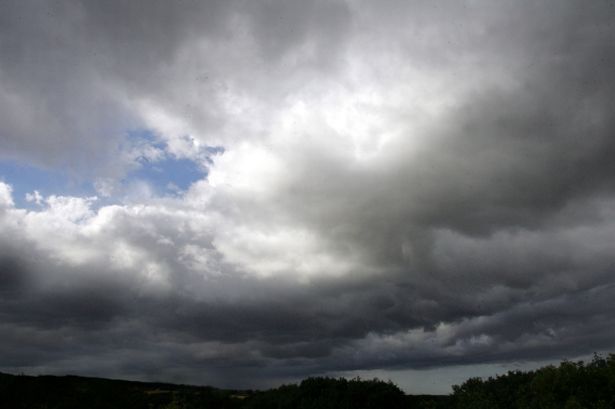
cloudy weather
Cloudy weather

The agency predicted sunny skies with patches of clouds over the southern region during the morning hours.

It anticipated isolated thunderstorms with light rains over parts of Ondo, Ogun, Lagos, Rivers, Delta, Cross River, Akwa Ibom, Edo and Bayelsa states later in the day.

“For Saturday, sunny skies are anticipated over the northern region throughout the forecast period while sunny skies with patches of clouds are anticipated over the central region during the forecast period.

“Sunny skies with patches of clouds are anticipated over the southern region during the morning hours.

“The isolated thunderstorms with light rains are anticipated over parts of Edo, Ogun, Ondo, Delta, Lagos, Rivers, Akwa Ibom, Cross River and Bayelsa states later in the day,” it said.

NiMet envisaged sunny skies over the northern region throughout the forecast period on Sunday, while anticipating sunny skies over the north central region throughout the forecast period.

According to NiMet, sunny skies with patches of clouds are anticipated over the southern region during the morning hours.

NiMet urged motorists driving under rain to drive with caution while airline operators should get airport-specific weather reports (flight documentation) from NiMet for effective operations.

“Residents are advised to stay informed through weather updates from NiMet. Visit our website (www.nimet.gov.ng),” it said.

By Gabriel Agbeja

Strengthening Nigeria’s disaster response amid epidemics

On a rainy evening on a Nigerian highway, a tanker overturned, blocking the road.

As a result, some victims died immediately, while others later died in crowded hospitals, leaving families in grief and confusion.

Such incidents therefore reveal why Nigeria is reassessing its disaster and epidemic preparedness.

Zubaida Umar
Director-General of NEMA, Zubaida Umar

Moreover, recurring emergencies continue to expose gaps in coordination, response capacity, and the humane management of mass fatalities.

Across the country, floods, explosions, road crashes, and disease outbreaks have repeatedly tested emergency systems.

Consequently, families are often left struggling with loss and unanswered questions.

Questions such as who identifies the dead, ensures bodies are handled with dignity, and supports survivors have long exposed weaknesses in Nigeria’s response framework.

Data further highlight the scale of these challenges.

Between 2020 and 2024, Nigeria recorded over 150 infectious disease outbreaks, including cholera, Lassa fever, and measles, revealing gaps in rapid response, according to the Nigeria Centre for Disease Control (NCDC).

In addition, the Federal Road Safety Corps (FRSC) reports that Lagos, Kano, and Rivers states account for nearly 35 per cent of road fatalities, with unsafe practices such as fuel scooping and overloading contributing heavily.

Similarly, surveys by the West African Society of Parenteral and Enteral Nutrition (WASPEN) indicate that malnutrition affects up to 45 per cent of patients in surgical and paediatric wards in northern tertiary hospitals, increasing recovery times, infections, and readmissions.

Albeit these challenges, authorities say the gaps are now being addressed.

In Abuja, the National Emergency Management Agency (NEMA) inaugurated Nigeria’s first National Mass Fatality Response Plan.

The framework is designed to improve coordination, clarify responsibilities, and ensure dignified handling of victims during large-scale disasters.

According to NEMA’s Director-General, Mrs. Zubaida Umar, the plan was developed in response to lessons drawn from previous emergencies.

“This document is a response to what we saw in past disasters.

“We now have clear procedures, defined responsibilities, and the right tools to manage mass fatalities with compassion and professionalism,” Umar said.

She noted that mass fatality incidents, ranging from explosions and floods to building collapses and epidemics, have become increasingly common across the country.

Umar attributed the trend to climate change-induced flooding, rapid urbanisation, strained infrastructure, and rising insecurity.

She added that each incident leaves behind not only casualties, but families searching for answers and closure.

Moreover, she explained that the new response plan prioritises coordinated action across federal, state, and local governments to address past challenges of fragmented responses and overlapping mandates.

“In the past, overlapping mandates and unclear chains of command often resulted in confusion, duplication of efforts or neglect,” Umar said.

Unlike previous emergency responses, where bodies were sometimes mishandled, poorly documented, or left unaccounted for, she said NEMA now has standard operating procedures, trained personnel, and essential resources, including body bags.

According to her, the plan establishes clear protocols for identification, documentation, storage, and burial or release of remains, while taking cultural and religious sensitivities into account.

“The goal is dignity for the dead and hope for survivors,” Umar said, saying the initiative was a shift from reactive to proactive disaster management.

Developed through stakeholder consultations and evidence-based processes, the framework assigns responsibilities across all tiers of government and relevant agencies.

Running from 2025 to 2029, Umar said the plan is designed as a living document that will be periodically reviewed and adapted as new risks and lessons emerge.

Beyond policy formulation, she stressed that the document must guide training, simulations, and real-time operations to restore public confidence and improve outcomes during emergencies.

While natural disasters and epidemics often dominate public attention, officials say road traffic crashes remain Nigeria’s most persistent source of mass fatalities.

Mr. Hyginus Omeje, Assistant Corps Marshal of the Federal Road Safety Corps (FRSC), said Nigerian roads have effectively become the country’s most consistent disaster zone.

“In 2024 alone, more than 5,400 people were killed on Nigerian roads, a seven per cent increase from the previous year.

“This is in spite of a reduction in the total number of crashes and injuries,” Omeje said.

He added that tanker explosions, highway collisions, and urban road accidents occur daily, overwhelming emergency responders and devastating families.

Omeje also identified fuel scooping from fallen tankers as one of the most dangerous practices, noting that poverty and desperation continue to drive the activity.

According to him, more than 400 people died in 2024 alone while attempting to scoop fuel from overturned tankers.

Human factors, he said, remain central to the crisis.

“Reckless driving, speeding, overloading, fatigue and poor road discipline continue to fuel Nigeria’s high fatality rates,” Omeje said.

In spite of the progress in reducing crash numbers, he noted that Nigeria remains among countries with the highest road accident rates globally, contributing nearly 10 per cent of road fatalities worldwide.

Omeje called for the declaration of a state of emergency on Nigerian roads, warning that without sustained intervention, road traffic deaths would continue to overshadow other disasters.

“Daily on Nigerian roads, lives are lost. We don’t need to wait for another tragedy before identifying that there are gaps,” he said.

He added that road crashes are one of the most frequent sources of mass fatalities, reinforcing the need for a comprehensive national response framework.

Nigeria’s renewed commitment to humane disaster response has drawn support from international partners.

Dr Latifa Arfaoui, Field Coordinator for Health Emergencies at the World Health Organisation (WHO), noted that the National Mass Fatality Response Plan was a “critical milestone” in strengthening Nigeria’s emergency preparedness.

She emphasised that managing the dead with dignity is not merely a technical issue, but a deeply human one.

According to her, respectful handling of remains supports family grieving, community healing, and reduces the long-term psychological toll of disasters.

Furthermore, Arfaoui added that the plan adequately addresses cultural and religious considerations, ensuring that emergency responses do not deepen trauma.

She reaffirmed WHO’s commitment to providing continued technical support to strengthen readiness at national and subnational levels.

Similarly, Ms. Nourane Houas, Protection Coordinator at the International Committee of the Red Cross (ICRC), stressed that implementation would determine the success of the plan.

“The impact of this document lies specifically in execution.

“We stand ready to play our part to ensure it achieves the purpose for which it was created,” Houas said.

She emphasised the importance of wide dissemination to ensure that all agencies and stakeholders understand and apply the framework consistently.

According to her, the ICRC will support training, systems, and tools that improve coordination and uphold the dignity of human remains during mass casualty incidents.

Emergency response, experts say, extends beyond disaster sites to hospitals and military medical facilities.

In Kaduna, the Chief of Air Staff, Air Marshal Hasan Abubakar, underscored the role of healthcare professionals while addressing Nigerian Air Force nurses during a Mandatory Continuing Professional Development Programme.

“In an era marked by epidemics, disasters and tumultuous conflicts, the role of healthcare professionals, especially nurses, has never been more critical.

“Your expertise forms the backbone of our medical response capabilities,” Abubakar said.

He added that nurses play a vital role in caring for the injured, maintaining operational continuity, and supporting humanitarian and disaster relief operations.

The training, organised in collaboration with the Nursing and Midwifery Council of Nigeria, focused on emergency preparedness and disaster response within the Nigerian Air Force.

According to Abubakar, such programmes help build resilience, encourage innovation, and strengthen collaboration among healthcare workers.

Even when disaster victims survive and reach health facilities, another challenge often threatens recovery.

Dr Teresa Pounds, President of WASPEN, described hospital malnutrition as a “silent epidemic”.

Speaking during the 2025 Malnutrition Awareness Week, Pounds said that globally, between 20 and 50 per cent of hospitalised patients suffer from malnutrition.

She added that emerging studies from tertiary hospitals in Nigeria suggest inpatient malnutrition rates of 30 to 45 per cent, especially among surgical, paediatric, oncology, and elderly patients.

Pounds cited findings from Nasarawa, Borno, and Enugu states, noting high levels of malnutrition among hospitalised children and elderly patients.

“Malnutrition in the community and in hospitals are two sides of the same coin,” she said.

She called for the integration of clinical nutrition into national health strategies, stressing that addressing malnutrition is essential for improving patient outcomes, reducing healthcare costs, and strengthening resilience during emergencies.

Stakeholders say initiatives such as the National Mass Fatality Response Plan, road safety advocacy, military healthcare training, and increased attention to hospital nutrition reflect a growing recognition that preparedness saves lives and preserves dignity.

For NEMA, the focus is ensuring the new plan does not remain a document on the shelf; it must become “a living tool,” guiding daily operations, inter-agency collaboration, and training.

By Abiemwense Moru, News Agency of Nigeria (NAN)

×