Home Blog Page 169

Nigeria finally validates its National Adaptation Plan to fight climate change

0

After painstaking consultations with several stakeholders and field assessments, Nigeria has eventually validated its National Adaptation Plan (NAP), signaling the nation’s readiness for its submission to the United Nations Framework Convention on Climate Change (UNFCCC) ahead of the Conference of Parties (COP30), which is scheduled to take place from November 10 to 21, 2025, in Belem, Brazil.

The high-level event, which was organised by the Department of Climate Change (DCC) under the Federal Ministry of Environment in Abuja, Nigeria’s capital, on Wednesday, October 22, 2025, brought together non-state actors and representatives from various Ministries, Departments and Agencies (MDAs) across the 36 states of the federation, including the federal capital territory, who all lauded the process, describing it as being inclusive and encompassing in nature.
National Adaptation Plan (NAP)
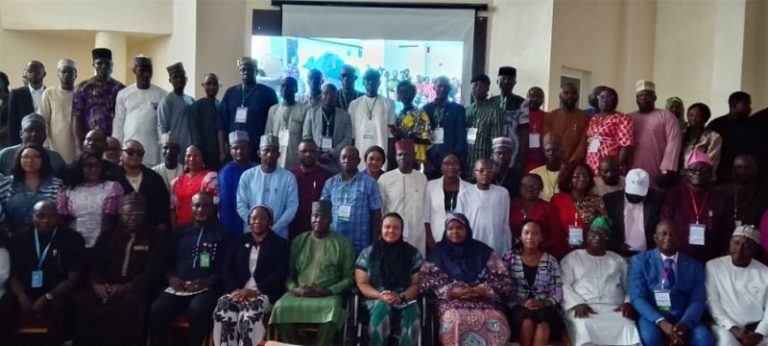
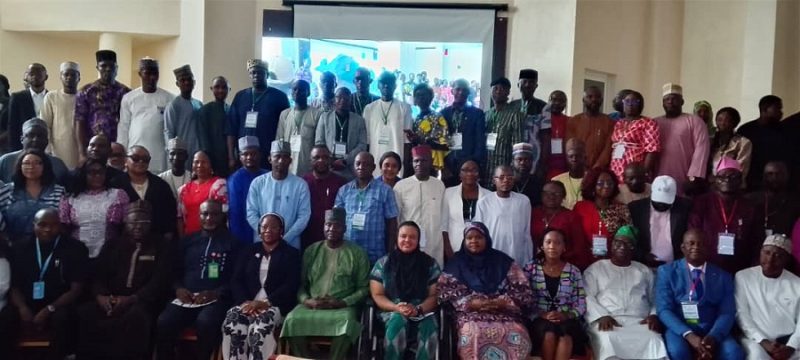
Stakeholders at the National Adaptation Plan (NAP) validation meeting in Abuja

Minister of Environment, Balarabe Abbas Lawal, drew attention to Nigeria’s climate vulnerability, such as drought and desertification, rising seas, and flooding, which he said if drastic and decisive actions are not taken now to address them, coping with these impacts in the future will be more difficult and costly.

“Adapting to climate change means taking action to prepare for and adjust to both the current effects of climate change and the predicted impacts in the future,” Lawal, who was represented by the Permanent Secretary (PS) of the Ministry, Mahmud Kambari, said.

Nigeria’s National Adaptation Plan (NAP), conducted with the support of the Green Climate Fund (GCF), focuses on the 13 thematic areas outlined in the National Adaptation Strategy and Plan of Action (NASPA). A key component of the process, the nation’s environment chieftain highlighted, is the Climate Risk and Vulnerability Assessment (CRVA), which identifies community vulnerabilities and suggests adaptation options to address challenges.

Other gaps that would further enrich and make the document more robust were also identified during this process, particularly gender considerations and conflict sensitivity & peacebuilding, which have all been integrated into the document.

“I especially appreciate the NAP Global Network, who supported the country in addressing these gaps,” he stated.

He informed the participants that presently, talks are on with the NAP Global Network and other delivery partners to address other identified gaps such as issues on loss & damage and human mobility, as well as education, to further enhance the document.

Now that the nation has created its NAP, he said, the next stage would be implementation, which calls for everyone to work together to make sure Nigeria can secure the funding it needs, both local and international, to address the effects of climate change, particularly in the area of adaptation.

Mr. Gift Gewona, Task Manager for the United Nations Environment Programme (UNEP) Nigeria, referred to the NAP as a living document that allows Nigeria to plan for its short-term, medium-term and long-term activities to ensure that the resilience of communities is gained.

According to him, the process arose due to Nigeria’s pressing climate challenges, which he assured that he was going to be working with his team members to address.

“I would like to thank the whole team that has been involved in this process. We are going to ensure we implement the plan to finance the global climate fund,” he guaranteed.

The validation of the NAP document, according to Dr. Angelina Ugben, President of Global Disabilities Green Initiative (GDGI), represents more than a policy milestone; it is a crucial opportunity to ensure that no Nigerian is left behind in the collective response to climate change.

She hinted that her organisation strongly advocates for a climate adaptation framework that is inclusive, accessible, and disability-responsive, stressing that persons with disabilities – who are often among the most vulnerable in times of environmental crisis – must be recognised not just as beneficiaries, but as active participants and contributors to national climate planning.

“Inclusion must go beyond consultation – it must be reflected in implementation, with clear strategies for accessibility, representation, and data-driven monitoring to track the impact of climate actions on persons with disabilities,” Dr Ugben stated.

Consequently, the GDGI boss urged that the NAP document should be a bold blueprint for resilience, justice, and equity – one that reflects Nigeria’s diversity and upholds the rights of every citizen, regardless of ability.

In conclusion, this document arrives at a crucial moment as Nigeria aligns itself with global efforts to green its economy. It is anticipated that the insights contained within will significantly contribute to shaping, enriching, and assisting the country in achieving its global climate targets.

By Etta Michael Bisong, Abuja
NiMet forecasts three-day sunshine, thunderstorms

0

The Nigerian Meteorological Agency (NiMet) has predicted sunny and thundery weather conditions from Wednesday, October 22 to Friday, October 24, 2025, across the country.

NiMet’s weather outlook, released on Tuesday, October 21, in Abuja envisaged sunny skies over the northern region during the morning hours on Wednesday.

NiMet anticipated slim chances of isolated thunderstorms over South of Taraba State later in the day.

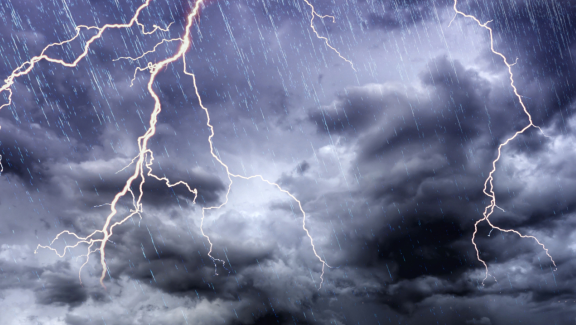
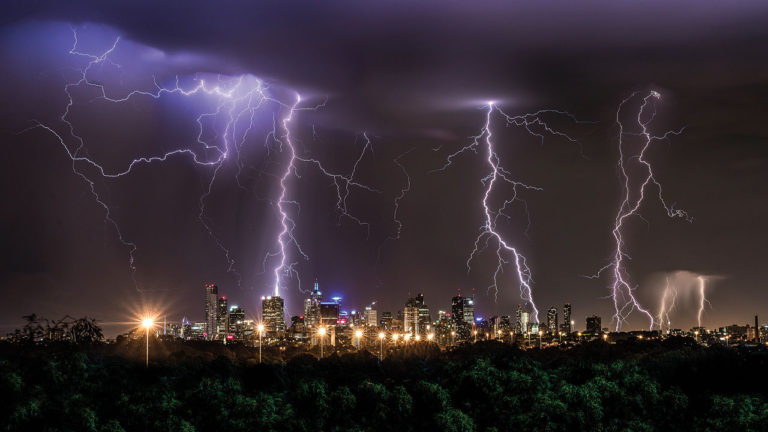
Thunderstorm
Thundery weather

“For central region, sunny skies with patches of clouds are expected over the region during the morning hours.

“In the afternoon/evening hours, isolated thunderstorms with moderate rains are expected over parts of Kogi, Kwara, Benue, the Federal Capital Territory and Nasarawa states,” it said.

The agency predicted a cloudy atmosphere over the southern region with prospects of morning thunderstorms with light rains over parts of Edo, Ogun, Ondo, Ebonyi, Cross River, Rivers, Lagos and Akwa Ibom states.

‎NiMet envisaged thunderstorms with moderate rains over the entire region later in the day.

It projected that sunny skies would be expected over the northern region during the morning hours on Thursday.

‎According to NiMet, later in the afternoon/evening hours, there are chances of isolated thunderstorms over South of Taraba State.

“For central region, sunny skies with patches of clouds are expected over the region during the morning hours.

“In the afternoon/evening hours, isolated thunderstorms with moderate rains are expected over parts of Kwara, Kogi, Benue, the Federal Capital Territory and Nasarawa states,’’ it said.

It anticipated cloudy atmosphere over the southern region with prospects of morning thunderstorms and light rains over parts of Ondo, Imo, Edo, Ebonyi, Bayelsa, Rivers, Cross River and Akwa Ibom states.

NiMet forecast thunderstorms with moderate rains over most parts of the region later in the day.

According to NiMet, sunny skies are expected over the northern region during the morning hours on Friday.

‎It predicted isolated thunderstorms over the southern part of Taraba State later in the day.

‎”Sunny skies with patches of clouds are expected over the central region during the morning hours.

’In the afternoon/evening hours, isolated thunderstorms with moderate rains are expected over parts of Benue, the Federal Capital Territory, Kwara, Kogi and Nasarawa states,” it said.

The agency envisaged the cloudy atmosphere over the southern region with prospects of morning thunderstorms with light rains over parts of Osun, Ogun, Ondo, Ebonyi, Lagos, Rivers, Bayelsa, Cross River and Akwa Ibom states.

‎NiMet forecast thunderstorms with moderate rains over most parts of the region later in the day.

”Airline operators are advised to get airport-specific weather reports (flight documentation) from NiMet for effective planning in their operations.

“Residents are advised to stay informed through weather updates from NiMet. Visit our website www.nimet.gov.ng,’’ it said.

By Gabriel Agbeja

COP30: UN climate chief urges countries to deliver on climate finance

0

UN Climate Change chief Simon Stiell has urged countries to deliver a rapid surge in climate finance ahead of COP30 to address the impact of climate change.

Stiell, the head of United Nations Framework Convention on Climate Change (UNFCCC), however, warned that developing nations remained dangerously short of the resources needed to withstand worsening storms, floods and droughts.

UN climate chief, in a statement on Tuesday, October 21, 2025, called for finance to “flow right now”, as delegates prepare to head for the Brazilian city of Belém in November for what is being seen as a crunch summit for turning promises into action.

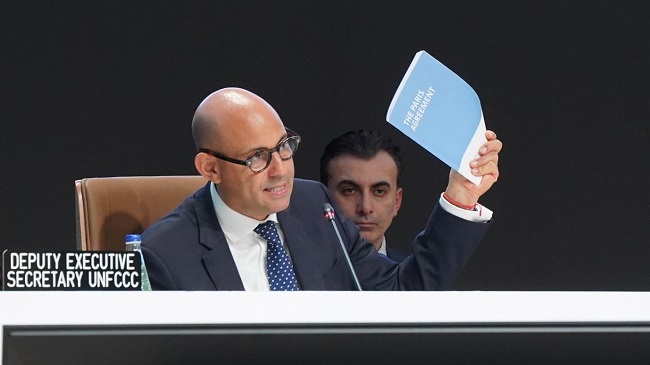
Simon Stiell
Simon Stiell, UN Climate Change Executive Secretary. Phoro credit UN Climate Change / Lucia Vasquez Tumi

“Whether or not countries need to be prepared to cope with a changing, more unpredictable climate is hardly in question:

“Extreme weather events such as devastating wildfires, catastrophic droughts, and apocalyptic floods are making life increasingly difficult in all parts of the world.

“There are plenty of examples of effective measures that countries can take to adapt to this new normal, ranging from high sea walls to cyclone warning systems, floating homes and planting drought-tolerant crops,’’ he said.

UN Climate Change agency released a new report detailing the progress countries are making on their national climate adaptation plans (NAPs). It confirms that the persistent funding gap risks scuppering plans that many are attempting to implement.

Speaking  at the launch in the Brazilian capital, Brasilia, Stiell reminded that the climate crisis is destroying lives and livelihoods in every region of the world, especially in the most vulnerable countries, and that “adaptation is not optional; it is absolutely essential.”

The UN climate chief said adaptation would not only protect lives but also help empower communities and countries to thrive.

National Adaptation Plans, he declared, are “key to unleashing the epic transformative power of investing in climate resilience.”

Aside from the funding challenge, progress is being made as 67 developing countries have submitted plans.

These, he said, include 23 from least developed countries and 14 small island developing States – with an approach aimed at engaging more women, young people, Indigenous Peoples, local communities and the private sector.

These efforts explain in detail what the priorities and needs are – and should, Stiell suggested, make it more straightforward for investors and financial institutions to fund climate adaptation.

The report comes 19 days before the opening of the COP30 UN climate conference in the Amazonian city of Belém, where adaptation and the funding gap will be a central issue for negotiators, with the aim of mobilising 1.3 trillion dollars in climate finance.

Looking ahead to the UN summit, Stiell said it was a “key test of global solidarity,” that must “connect climate action to real lives everywhere to spread the vast benefits.”

By Cecilia Ologunagba

National Adaptation Plans Progress Report: We’ve a serious need for speed – Stiell

0

Remarks delivered by UN Climate Change Executive Secretary, Simon Stiell, on the launch of the National Adaptation Plans Progress Report, released on Tuesday, October 21, 2025

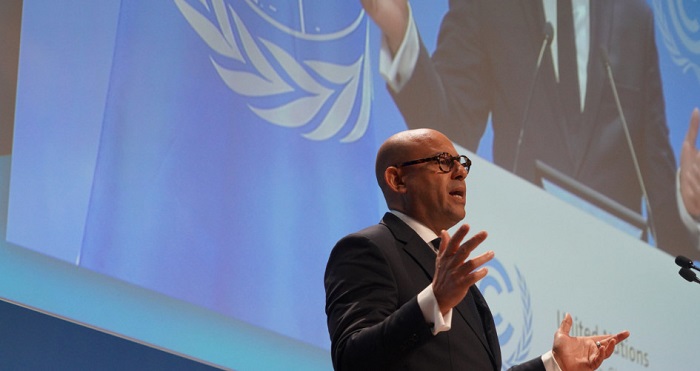
Simon Stiell
Simon Stiell

Every year, the impacts of climate change grow more intense, and more uneven. In August I went back to Carriacou, my home island which was brutalised by Hurricane Beryl last year.  It was sobering.

Although the spirit of the people is incredibly strong, many continue to struggle to rebuild their lives.

Lives and livelihoods are being destroyed in every region of the world, and especially in the most vulnerable countries. Adaptation is not optional; it is absolutely essential.

It means protecting communities from worsening floods, droughts, wildfires and storms. It also means protecting economies.

Global supply chains, food systems, vital health care facilities and energy security all depend on climate resilience.

But adaptation is about far more than protecting human lives and economies.

It’s about empowerment: enabling communities and countries to thrive despite a changing climate.

National Adaptation Plans are key to unleashing the epic transformative power of investing in climate resilience.

They are the blueprints for stronger economies, more resilient societies, and faster progress right across the SDGs.

So, what are the key takeouts from this report? I’m an optimist so I’ll start with the good news. This new NAP (progress) report shows that real progress is being made.

It shows the direction of travel is clear. The analytical frameworks are increasingly in place. In many respects, this is the hardest part.

Around the world, governments are building the foundations for more climate-resilient economies and societies.

Almost all developing countries are working on their adaptation plans. Sixty-seven have submitted plans to the UNFCCC – including 23 from the Least Developed Countries and 14 Small Island Developing States. That adds up to a big collective commitment, despite very limited capacity and resources.

Adaptation is increasingly being integrated into national development plans.

Countries are putting in place coordination mechanisms, financing strategies, and monitoring systems.

They are deepening their efforts in every key sector – for example in agriculture and health – with specialized plans.

And crucially, adaptation plans are showing a whole-of-society approach – engaging more women, young people, Indigenous Peoples, local communities and the private sector in planning and implementation.

But there are also several worrying aspects of this report. It points to some persistent barriers that are holding back progress at the speed and scale that we need.

No prizes for guessing the number one constraint. Many countries still lack access to the funding that’s needed. Too often, they face complex approval processes, fragmented support, and overdependence on external expertise.

It’s clear from this report that the systems are increasingly ready, but the finance must flow right now.

So, this report could easily be sub-titled: “No more excuses, investors!”.

Because investors and financial institutions can no longer say they don’t know where or how to invest in adaptation. These plans clarify – country by country, sector by sector – what the priorities are, what the needs are, and what opportunities exist.

The task is to match those priorities, needs and opportunities with more quantity, but also better-quality finance. That means long-term, predictable, and equitable support that empowers countries to take the lead.

More broadly, where does this report leave us?  What’s the bottom line?

So let me boil it right down. Before this report, we faced two climate adaptation challenges – direction and speed. Now it’s largely just one: the direction is right – but we have a serious need for speed.

So, we must pick up the pace. Which brings us to COP30, where nations must respond.

Adaptation will be a central issue. Parties are expected to agree on adaptation indicators, and work to close the adaptation finance gap.

The roadmap to mobilise $1.3 trillion in climate finance will clearly be key at COP30.

Let’s be very clear: climate finance is not charity. It is vital for protecting every population and economy, and the global supply chains that every nation depends on for low-inflationary growth, and food and energy security.

On adaptation issues, but also more broadly, COP30 will be a key test of global solidarity. So, it must do three things:

It must show nations are fully on board for climate cooperation because it works, with stronger outcomes in all key issues.

It must spur faster and wider implementation, leaving no one behind.

And it must connect climate action to real lives everywhere, to spread the vast benefits.

Meeting that test is how we turn plans into protection, prosperity and progress.

Toxic haze chokes Indian capital

0

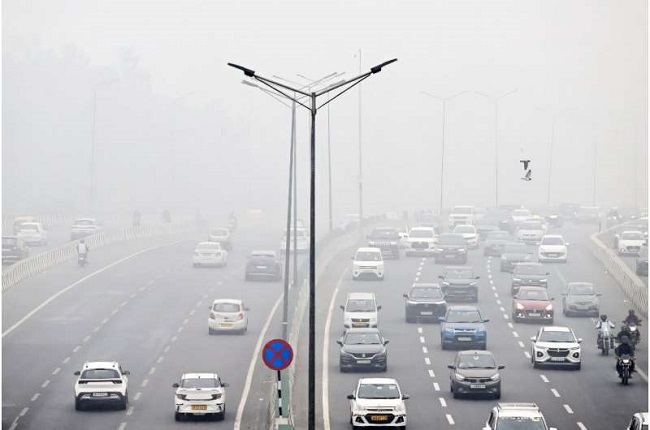
India’s capital New Delhi was shrouded in a thick, toxic haze on Monday, October 20, 2025, as air pollution levels soared to more than 16 times the World Health Organization’s recommended daily maximum.

New Delhi and its sprawling metropolitan region – home to more than 30 million people – are regularly ranked among the world’s most polluted capitals, with acrid smog blanketing the skyline each winter.

New Delhi
New Delhi, India

Cooler air traps pollutants close to the ground, creating a deadly mix of emissions from crop burning, factories and heavy traffic.

But pollution has also spiked due to days of fireworks set off to mark Diwali, the major Hindu festival of lights, which culminates on Monday night.

The Supreme Court relaxed this month a blanket ban on fireworks over Diwali to allow the use of the less-polluting “green firecrackers” – designed to emit fewer particulates.

The ban was widely ignored in past years.

On Monday, levels of PM2.5 – cancer-causing microparticles small enough to enter the bloodstream – hit 248 micrograms per cubic meter in parts of the city, according to monitoring organisation IQAir.

The government’s Commission of Air Quality Management said air quality is expected to further deteriorate in the coming days.

It also implemented a set of measures to curb pollution levels, including asking authorities to ensure uninterrupted power supply to reduce the use of diesel generators.

City authorities have also said they will trial cloud seeding by airplanes for the first time over Delhi this month, the practice of firing salt or other chemicals into clouds to induce rain to clear the air.

“We’ve already got everything we need to do the cloud seeding,” Delhi Environment Minister Manjinder, Singh Sirsa, told reporters this month, saying flight trials and pilot training had been completed.

A study in The Lancet Planetary Health last year estimated 3.8 million deaths in India between 2009 and 2019 were linked to air pollution.

The UN children’s agency warns that polluted air puts children at heightened risk of acute respiratory infections.

EU weighs ethanol ban in hand sanitisers over cancer fears

0

The European Union is considering banning ethanol as an active ingredient in biocidal products, including hand sanitisers, amid growing concerns over its potential cancer risk, the Financial Times reported Tuesday, October 21, 2025.

The European Chemicals Agency (ECHA) flagged ethanol as a toxic substance, citing increased cancer risks and potential reproductive harm, following an internal recommendation made by one of its working groups on Oct. 10.

Ethanol
Ethanol

ECHA said the substance might contribute to pregnancy complications and should be replaced in disinfectants and other cleaning products used across the bloc.

The agency’s Biocidal Products Committee is scheduled to meet from Nov. 25 to 28, where the matter is expected to be discussed further.

In an emailed statement to Reuters, ECHA confirmed it was currently assessing ethanol for its use in biocidal applications.

It added that if the expert panel concluded ethanol posed risks of cancer or reproductive harm, a recommendation for substitution would follow.

ECHA emphasised that evaluations were still ongoing and no final conclusion had been reached. The European Commission would make the final decision based on the scientific opinion of the agency’s expert committee.

In spite of the review, the World Health Organisation continues to classify ethanol and isopropanol as safe for hand hygiene. 

Crude oil, condensate output drops in September, experts give reasons

0

The Nigerian National Petroleum Company Limited (NNPC Ltd.) has recorded 1.61 million barrels per day (mbopd) of Crude and condensate production in September, slightly down from 1.65 mbpd recorded in August.

This was disclosed in the NNPC’s Monthly Financial and Operations Report for September 2025, released on Tuesday, October 21, and made available in Abuja.

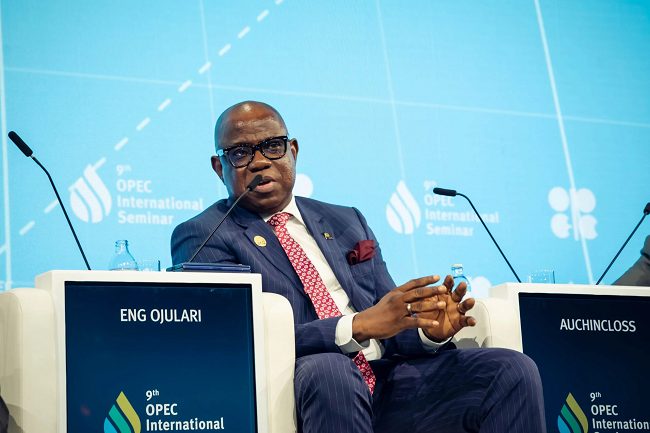
Bayo Ojulari
Bayo Ojulari, GCEO, National Petroleum Company (NNPC) Limited

Output had fluctuated between 1.57 mbpd and 1.70 mbpd from January to September, reflecting the lingering impact of pipeline disruptions, crude theft, and deferred production linked to scheduled and unscheduled maintenance.

The case was not different for Natural Gas Production which recorded 6,284million standard cubic feet per day (mmscf/d) in September, against robust 6,949 mmscf/d recorded in August.

The report also revealed that the national oil company recorded N4.3 trillion revenue, declared N216 billion Profit After Tax and remitted N10.073 trillion from January to August to the federation account.

On strategic efforts, the company said it had sustained industry wide collaboration and driven production recovery initiatives.

It said production levels during the period were temporarily moderated due to planned maintenance activities including those at the Nigeria Liquefied Natural Gas (NLNG).

This, it said, was alongside the phased recovery of previously shut-in assets and delays in the commencement of operations at OMLs 71 and 72.

Meanwhile, credible industry sources said that NNPC Limited had embarked on a series of scheduled maintenance activities across key upstream assets, including facilities linked to the NLNG network.

These planned interventions, which also coincided with the phased recovery of previously shut-in fields and the onboarding of new assets, were part of a broader strategy to optimise output and enhance infrastructure reliability.

An upstream expert, Dr Cletus Zanders, had in the meantime linked the shortfall in crude oil and condensate production to the upstream assets’ maintenance.

Zanders said recent production levels reflected a temporary moderation, adding that the development was a necessary recalibration to ensure stronger performance in the fourth quarter (Q4) and beyond.

“You don’t build resilience by pushing volume only, you build it by maintaining integrity of your assets,” he said.

An industry official who pledged anonymity, said stakeholders expect a rebound in crude and gas volumes as systems gradually come back online with most of the maintenance nearing completion.

“The move also underscores NNPC Limited’s proactive approach to asset stewardship and its role in sustaining industry-wide collaboration for production recovery.

“Rather than a setback, this phase marks a strategic reset that positions Nigeria’s energy sector for more consistent and secure output in the months ahead,” he said.

By Emmanuella Anokam

CSOs fault factory farming, seek agroecology-based food system

0

Civil society organisations have raised concerns over the proposed entry of multinational meat company, JBS S.A., into Nigeria’s agricultural sector.

They warned that factory farming poses serious risks to public health, the environment, and livelihoods.

Industrial animal farming, also known as factory farming, is an intensive system of animal agriculture that maximises output while minimising costs.

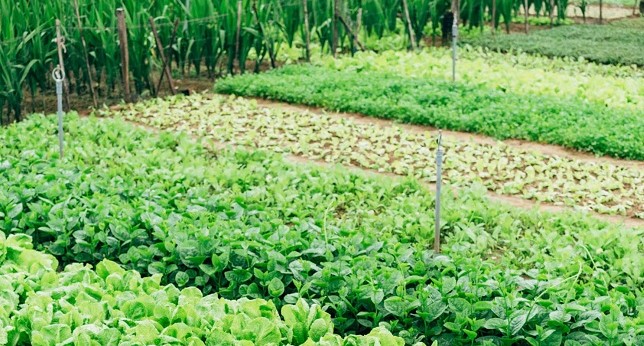
Farming
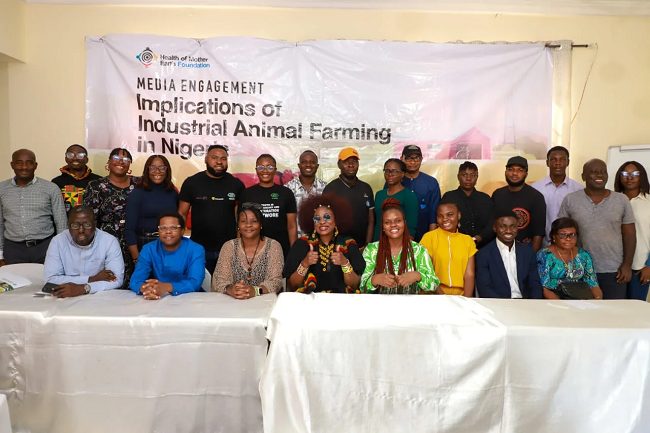
Participants at the media training on industrial animal farming and its implications for Nigeria

It involves housing large numbers of animals in confined spaces to produce meat, eggs, and milk efficiently, but it has significant animal welfare, environmental, and public health concerns.

The CSOs made the appeal during a media training on industrial animal farming and its implications for Nigeria on Tuesday, October 21, 2025, in Lagos.

The Ogun State Government, in February, secured a $2.5 billion investment from JBS to boost livestock development.

Speaking to journalists on Nigeria’s future food systems, Mrs. Mariann Bassey-Olsson, the Deputy Executive Director of the Environmental Rights Action/Friends of the Earth Nigeria (ERA/FoEN), described factory farming as “a profit-driven model”.

Bassey-Olsson described it as an initiative that prioritises corporate gains over people’s welfare, animal welfare, and environmental safety.

According to her, industrial livestock systems such as those proposed by JBS are characterised by animal confinement, overuse of antibiotics, land grabbing, and heavy water consumption with grave implications for climate, biodiversity, and food sovereignty.

“Factory farming is intensive, large-scale and purely profit-oriented. Animals are caged, injected with antibiotics, and raised in unnatural conditions.

“The result is food that endangers our health and degrades our environment,” she said.

Bassey-Olsson warned that JBS’s proposed $2.5 billion investment in six large-scale meat processing plants across Lagos, Ogun, Oyo, Kano, Cross River and the Federal Capital Territory should not proceed without full public disclosure and environmental scrutiny.

She recalled that JBS had been linked to environmental destruction, illegal deforestation, and human rights abuses in Brazil and other countries.

“If a company can cause so much damage in its own country, what should we expect in Nigeria, where regulation is weaker?

“We must apply the precautionary principle – where there is doubt, pause,” she said.

She urged the Nigerian government to place citizens and smallholder farmers at the centre of agricultural planning rather than foreign corporations.

Bassey-Olsson advocated agroecology – an environmentally friendly and people-centered farming approach – as the true path to sustainable food security.

“Agroecology is agriculture in harmony with nature. It respects the people who grow the food and those who eat it.

“It cools the earth and restores balance to our ecosystems. Nigeria can feed itself without poisoning its environment,” she added.

Also, Mr Mayowa Shobo, Programmes Officer at the Human and Environmental Development Agenda (HEDA Resource Centre), said the organisation’s research on industrial farming revealed widespread cases of land grabbing, pollution, and human rights violations in host communities.

Shobo emphasised the need for stronger government oversight and corporate accountability in Nigeria’s agricultural investments.

“We are not anti-investment. But while we modernise livestock production, companies must comply with environmental and social standards,” Shobo said.

“Too often, these multinationals engage in brainwashing – promising jobs and development, but leaving behind pollution, loss of land, and public health crises,” he added.

He called on relevant regulatory agencies to ensure consistent monitoring of large agribusiness operations and to involve host communities in decision-making processes.

Both ERA/FoEN and HEDA urged the Federal Government to strengthen agroecology policies, support smallholder farmers, and reject exploitative industrial models that threaten Nigeria’s food sovereignty and environmental future.

By Fabian Ekeruche

Osinbajo, Nasreddin, George-Ikoli, others to receive Gavel International Lifetime Awards

0

Former Vice President, Prof Yemi Osinbajo SAN; Chairman of Nasco Group, Dr Attia Nasreddin; former Attorney General of Bayelsa State, Chief Anthony George-Ikoli SAN; and foremost corporate lawyer, Mr. Gbenga Oyebode, are amongst the seven distinguished Nigerians to receive Lifetime Awards at the upcoming Gavel International Annual Lecture and Awards on November 11, 2025.

Others include the Chairman of CITEC Group, Dr Oludare Bello, and foremost journalist and human rights activist, Mr. Richard Akinnola.

Gavel International Lifetime Awards
Osinbajo, Nasreddin, George-Ikoli, others to receive Gavel International Lifetime Awards

Osinbajo is being recognised for the role he played in the Administration of Justice System while he was the Attorney General of Lagos State 1999-2007. Under him, new innovations in the Justice system such as the Office of the Public Defender (OPD), Citizens Mediation Centre (CMC), were established. Today, it has become a Directorate in Lagos State while all states in the Federation and even the Federal government have bought into the innovation by establishing similar directorates.

Dr Nasreddin is being recognised for his resilience and business development. The Nasco group continues to thrive under his leadership despite the security challenge in Northern and Central Nigeria. Jos, the capital city of Plateau State, is otherwise known as the “Nasco City” in recognition of the roles the group continues to play in the lives of the people.

Chief George-Ikoli, the grandson of the fiery journalist and nationalist, is the first Senior Advocate from Bayelsa State. As the Attorney-General of the State between 2007 and 2011, Ikoli was responsible for moving the Ministry of Justice from portakabins to the secretariat where he built the modern Justice Ministry in the country. Additionally, he moved the government of Bayelsa State to support the establishment of the Nigerian Law School Campus at Yenagoa, the first in South-South Nigeria.

Oyebode, Nigeria’s foremost and very successful corporate lawyer is moving beyond the borders by building a network of law firms across Africa, seeking to find solutions to corporate legal challenges that will spearhead the development of the continent, rather than reliance on western law firms that have limited knowledge of Africa. His ALN network is now in more than 10 African countries.

Akinnola, a foremost legal journalist, is always seeking answers to the human rights challenge in Nigeria. He is one of the trio that founded the first human rights organisation in Nigeria, the Civil Liberties Organisation (CLO) alongside Dr. Olisa Agbakoba, former President of the Nigerian Bar Association (NBA). Akinnola has written many books on contemporary Nigerian and African issues.

Dr Oludare Bello is the Chief Executive Officer of CITEC International Estates leading with passion to solve the housing challenge in Nigeria. CITEC, under his leadership, has built affordable housing estates in Plateau State, Abuja, and is currently building massive housing estates in Ekiti State.

All the recipients have confirmed their acceptance of the prestigious awards which will be conferred on them on Tuesday, November 11, 2025, at the Lagos Chamber of Commerce (LCCI), Alausa, Ikeja Lagos.

Survivor Nyasulu: Amplifying African voices in conservation

0

The Elephant Protection Initiative (EPI) friend of the month is Survivor Nyasulu, a conservation storyteller, filmmaker, photojournalist, and culture photographer from Dete, Hwange in Zimbabwe. He currently serves as the marketing and communications assistant at Painted Dog Conservation. He has written conservation articles for Community Podium News, a non-profit participatory media organisation, with some of his stories reaching global audiences

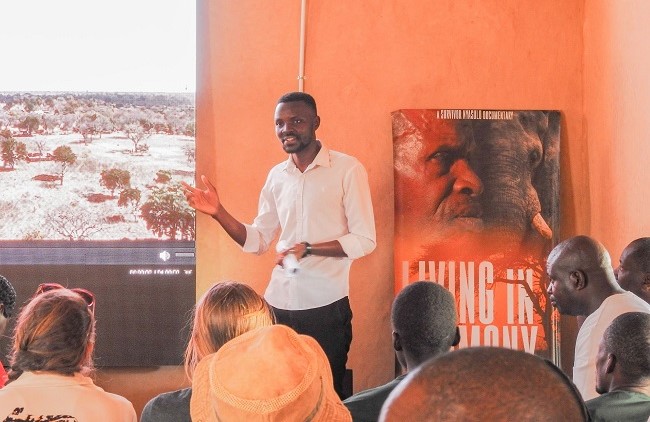
Survivor Nyasulu
Survivor Nyasulu presenting at the film screening of his documentary, ‘Living in Harmony’, at Soft Foot Alliance in Mabale, Zimbabwe

Please share a brief introduction.

I’m a qualified safari guide and a former ranger and dog-handler assistant, having served eight years on anti-poaching patrols. I host the weekly Nature Is Life radio talk show on SkyzMetro FM, a commercial station in Bulawayo, where listener tips have even helped recover two pangolins. I also teach camera basics at the Wilton Nsimango Children’s Bush Camp. My work has been featured by Wildlife Conservation Network and Space for Giants, and my painted-dog photo essay was published on LinkedIn by Conserve Zim. I hold a first-class BA in Film, Television, and Media Studies, with a final project that was itself a photo essay on painted dogs. 

Tell us a bit about your upbringing and where your love for conservation began.

My love for conservation began at the Wilton Nsimango Children’s Bush Camp, where I first fell in love with wildlife and the natural world. Spending time there ignited my curiosity and passion for protecting animals. Influences like wildlife photographer Nicholas Dyer also inspired me to pick up the camera and see storytelling as a powerful tool for conservation.

How have your years as a ranger, patrolling Hwange National Park, removing snares and confronting poaching firsthand, shaped the themes you choose to capture in your filmmaking?

Having served as a ranger for eight years, I witnessed firsthand how rangers and local communities are often overlooked despite their critical role. Those experiences guide my filmmaking: I focus on amplifying ranger voices and the stories of people living alongside wildlife, ensuring their struggles and dedication are seen and heard.

Could you share with us the experiences that prompted you to pursue wildlife storytelling?

Pursuing storytelling was about owning our stories and telling them from an African perspective. We live with these animals every day; it’s our duty to share those narratives. When locals tell the story, the community connects more deeply because it comes from someone they know and trust.

Tell us more about your film, Living in Harmony.

Living in Harmony, sponsored by the European Union Zimbabwe and screened at Soft Foot Alliance in Mabale, amplifies local voices, highlighting people who share borders with wildlife and often bear the brunt of conflict. The film shows how, when communities are empowered and heard, they become the strongest protectors of wildlife.

As a local storyteller, you offer a perspective deeply rooted in cultural identity and lived truth. How do you believe telling these stories from an African lens changes the conservation narrative?

An African lens brings authenticity. It shifts conservation from a distant concept to a lived experience, ensuring the narrative reflects cultural realities and gives agency to the people who coexist with wildlife.

In the documentary process, you encountered compelling human–wildlife stories, conflicts, losses, and hope. Which of these stories best illustrates the possibility of coexistence?

One story that stands out is of a woman who lost a goat to a lion yet remains a committed conservation volunteer with Painted Dog Conservation. Traditional leaders also preach coexistence despite losses, showing resilience and a belief that humans and wildlife can thrive together.

To emerging Zimbabwean filmmakers and conservationists, your path from bush camp to filmmaking is a powerful example. What advice would you give them to lift African voices in wildlife conservation?

Never give up. I waited seven years after high school before attending university. I learnt while working as a ranger, often under harsh conditions, and eventually transitioned to marketing and communications. Through perseverance, I graduated with a first-class degree. Where there is a will, there truly is a way. Believe in yourself and keep going.

Looking ahead, what are your hopes for elephant conservation in Zimbabwe, and how do you plan to continue using your storytelling to help realise those hopes?

My next project is a photo essay on elephants, their lives, their contribution to the ecosystem, and the threats they face. I plan to exhibit this work to raise awareness and inspire collective action for their protection, while continuing to use storytelling to highlight their importance and the people safeguarding them.