Home Blog Page 167

Lagos climate summit to unlock funding for Africa’s ocean sustainability – Commissioner

0

The Lagos State Government says its 2025 International Climate Change Summit (LICCS) will focus on unlocking sustainable financing and innovation to strengthen Africa’s coastal resilience and blue economy.

The Commissioner for the Environment and Water Resources, Mr. Tokunbo Wahab, said this on Thursday, October 23, at a news conference held in Lagos, ahead of the summit scheduled for Nov. 6 to Nov. 7.

Wahab said the summit, with the theme: “Blue Economy, Green Money: Financing Africa’s Coastal Resilience and Ocean Innovation,” would provide a strategic platform for governments, investors and global development partners to develop actionable solutions to climate-related challenges.

Lagos
Dignitaries during a media briefing on Lagos International Climate Change Summit on Thursday, in Lagos

“Lagos, as a coastal megacity, faces increasing threats from flooding, coastal erosion, and rising sea levels, but we are determined to turn those challenges into opportunities for economic growth and environmental sustainability.

“The summit embodies our belief that vulnerability can be transformed into vision, and that Lagos’ coastal challenges can become a source of economic and ecological strength,” he said.

Wahab said the 2025 edition would attract over 1,200 delegates from across Africa and beyond, including global chief executive officers, financiers, researchers, and young innovators, all focused on mobilising resources for Africa’s climate resilience.

According to him, the summit will highlight four key areas: the blue economy, green finance, innovation and youth empowerment, and partnerships.

He said that these are aimed at creating long-term transformation for Lagos and other African coastal cities.

Wahab described the event as an avenue to position Lagos as Africa’s climate leadership hub, ahead of the COP30 global climate conference.

“Our goal is to make Lagos the climate capital of Africa, a city that not only adapts to change but leads it,” he said.

He appreciated the support of partners such as Eko Atlantic, NIMASA, the International Finance Corporation (IFC), the African Development Bank (AfDB), and the United Nations Development Programme (UNDP), among others.

The commissioner noted the roles of its partners in advancing sustainable development in Lagos.

Wahab called on the media, private sector, and the global community to actively engage in the summit, which, he said, would serve as a launchpad for innovative financing models for Africa’s climate resilience.

“Through this summit, Lagos is sending a clear message: Africa is not waiting to be rescued; we are ready to lead,” he said.

Earlier, the Head of Corporate Communications, Eko Atlantic City, Ms. Joanna Fabikun, outlined the city’s contributions to coastal protection and environmental sustainability.

She described the city as a model for resilience against climate-induced erosion in Lagos.

Fabikun, who narrated how the city was reclaimed, said the Eko project was born out of the need to tackle the severe coastal erosion that had threatened Victoria Island and parts of Lagos for decades.

Speaking on the structure of the summit, Mr. Michael Bankole, Technical Lead for the summit, noted that the first day would feature different technical sessions and high-level panel discussions with international participation.

Bankole said this was aimed at addressing the economic, environmental, and policy implications of climate change.

“The two-day programme will have stakeholders share insights on climate financing, economic resilience, and sustainable development.

“The discussions will also focus on how to catalyse market-driven climate solutions, strengthen economic systems, and influence policy direction in line with the Federal Government’s climate adaptation agenda,” he said.

Bankole noted that President Bola Tinubu’s administration had shown commitment to addressing climate-related economic issues.

He said that the summit would complement such efforts by generating actionable strategies for implementation at the subnational level.

Also, the Director-General of the Nigerian Maritime Administration and Safety Agency (NIMASA), Dr Dayo Mobereola, assured the Ministry of the agency’s readiness to partner with it in hosting the event.

Mobereola, who was represented by the Deputy Director of the Deep Blue Project at NIMASA, Mr. Tuti Hebron, said the summit would provide opportunities for entrepreneurs to harness the vast potential of the blue economy.

He said that the platform would serve as an eye-opener to the world on what Lagos had to offer in areas such as coastal tourism, fishing, and marine resource development, as well as its potential for wealth creation and job opportunities.

By Taiye Olayemi
Paris Accord at 10: COP30 should move from commitment to action

0

Ahead of the 2025 UN Climate Change Conference, or Conference of the Parties (COP30), the Executive Secretary of the UN Framework Convention on Climate Change, Simon Stiell, is rallying stakeholders for action.

Stiell has urged countries to deliver a rapid surge in climate finance to address the impact of climate change.

COP30 will be held in Belém, Brazil, between Nov. 10 and Nov. 21.

Paris Agreement
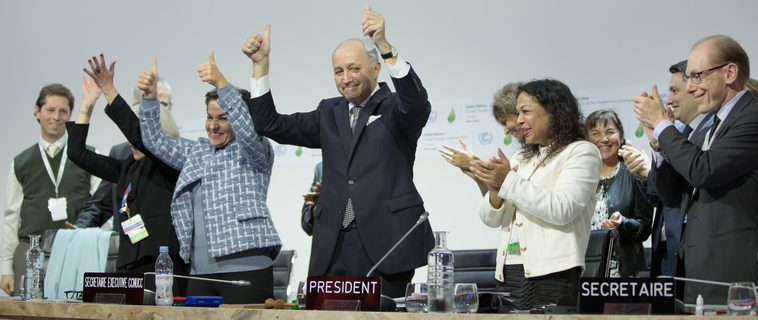
Jubilation greeted the adoption of the Paris Agreement in December 2015 in Paris, France. Photo credit: unfccc.int

Stiell warned that developing nations remained dangerously short of the resources needed to withstand worsening storms, floods, and droughts.

The UN climate chief, therefore, called for finance to “flow right now”, as delegates prepare for what is being referred to as a crunch summit for turning promises into action.

“Whether or not countries need to be prepared to cope with a changing, more unpredictable climate is hardly in question…

“Extreme weather events such as devastating wildfires, catastrophic droughts, and apocalyptic floods are making life increasingly difficult in all parts of the world.

“There are plenty of examples of effective measures that countries can take to adapt to this new normal, ranging from high sea walls to cyclone warning systems, floating homes and planting drought-tolerant crops,” he said.

In a new report detailing the progress countries are making on their national climate adoption plans (NAPs), the UN said persistent funding gaps risk derailing plans that many are attempting to implement.

Stiell said at the launch of the report in Brazil that the climate crisis is destroying lives and livelihoods in every region of the world, especially in the most vulnerable countries.

According to him, adaptation is not optional; it is essential, as it will not only protect lives but also help empower communities and countries to thrive.

The question on the lips of some climate activists is: How do vulnerable countries and regions that are the least polluters adapt when rich polluting countries have refused to fund climate action?

The Paris Agreement (also known as the Paris Accord), a legally binding international treaty on climate change adopted in 2015, was signed by 195 countries to address climate change mitigation, adaptation, and finance.

Its core goal is to hold the increase in the global average temperature to well below 2°C above pre-industrial levels and make efforts to limit the temperature increase to 1.5°C above pre-industrial levels.

However, to achieve this, it was agreed that greenhouse gas emissions must peak before 2025 at the latest and decline by 43 per cent by 2030.

Unfortunately, experts and activists warn that through a combination of poor commitment, a lack of collaboration, and inequality in terms of resources, the world is at risk of missing that crucial target.

They say the impact of climate change on developing countries, especially in Africa, is an indication that the support, funding, and awareness required for adaptation needs have been inadequate.

Yet, those three components – mitigation, adaptation and finance – seem to be exclusively within the reach of wealthy nations who, ironically, are the biggest polluters.

In 2023, Kenya hosted the first Africa Climate Summit (ACS), where President William Ruto appealed for a change in strategy in the continent’s pursuit of a sustainable solution to its climate crisis.

“For a very long time, we have looked at this as a problem. It is time we flipped it and looked at it from the other side…

“Climate action is not a Global North issue or a Global South issue. It is our collective challenge, and it affects all of us.

“We need to come together to find common, global solutions,” he said.

The summit culminated in an eleven-point call to action, now known as the Nairobi Declaration, including the operationalisation of the Loss and Damage fund as agreed at COP27.

It also called for the resolution of a measurable Global Goal on Adaptation (GGA) with indicators and targets to enable the assessment of progress against the negative impacts of climate change.

However, critics said the summit overly focused on market-driven financing mechanisms such as carbon credits, compensations, and debt forgiveness.

They said some of the points raised in the Nairobi Declaration were mere echoes of demands that developed countries have either turned a blind eye to or refused to fulfill previous commitments on.

They cited the demand for the operationalisation of the Loss and Damage fund as agreed at COP27 and the resolution of a measurable Global Goal on Adaptation (GGA).

The GGA was established at COP26 in Glasgow to enhance resilience and assist the most vulnerable communities.

However, developed countries have failed woefully to fulfill their financial commitments to vulnerable and worst-hit regions, either through the GGA or the Loss and Damage fund, or any such climate financing instrument.

In response to some of the challenges, French President Emmanuel Macron convened a Summit for a New Global Financing Pact in 2023.

The summit was aimed at finding a roadmap for easing the debt burdens of low-income countries while freeing up more funds for climate financing.

Macron presented four pillars that should underpin the new global financial pact: “First, no country should have to choose between fighting poverty and protecting the planet.

“Second, each country must follow its own path because there is no single model; third, we need to take on a public funding shock.

“And fourth, we need more from the private sector to mobilise a lot of money.”

Climate experts are worried that things have changed since Macron and other stakeholders made that commitment, as the world now faces tense geopolitical confrontations.

Copernicus Climate Change Service (C3S) confirmed 2024 to be the warmest year on record globally, and the first calendar year that the average global temperature exceeded 1.5°C above its pre-industrial level.

Some experts are already painting a pessimistic picture of COP30; saying optimism has been dampened by the rhetoric of some world leaders, especially U.S. President Donald Trump.

Jennifer Bansard of the International Institute for Sustainable Development (IISD) raised concerns.

“The multilateral diplomatic scene has been more difficult than ever in recent years.

“We also have a lot of logistical constraints for COP 30, with some delegations not sending anyone to Belém and others knowing they’re going to have reduced delegation sizes,’’ she said.

At COP29 in Baku, Azerbaijan, parties agreed to a new collective quantified goal (NCQG) on climate finance of 300 billion dollars annually to support climate action in developing countries.

Commended as a step forward compared to the previous goal of 100 billion dollars, climate activists say the NCQG still falls short of what is required to tackle climate change.

They say climate justice recognises that climate change disproportionately affects marginalised communities, who are the least responsible for causing it.

They call for solutions that address these inequities by focusing on a fair and just distribution of climate action’s burdens and benefits, with vulnerable populations at the center of decision-making.

According to the UN, fossil fuels (coal, oil, and gas) are responsible for nearly 90 per cent of global carbon dioxide emissions.

Unfortunately, they still dominate global energy production.

Yet, a recent report by IRENA, in collaboration with the African Development Bank (AfDB), indicted rich nations when it comes to just and inclusive transition to clean energy.

The report showed that Africa has been significantly left out of the energy transition, as only two per cent of global investments in renewable energy in the last two decades were made in Africa.

Some climate activists, therefore, stress that, if COP30 does not move from commitment to action 10 years after the Paris Accord, then vulnerable countries should reconsider their participation in the annual conference.

By Kayode Adebiyi, News Agency of Nigeria (NAN)

Zenith Bank reaffirms support for Africa climate change summit

0

Zenith Bank Plc has reaffirmed its commitment to supporting the Africa Business Ventures and Investment Group (ABVIG) to ensure the success of the Africa Climate Change and Green Investment Summit (AICIS-2026).

Dame Adaora Umeoji, Group Managing Director/CEO of Zenith Bank, made this known in a statement following a courtesy visit by Moses Owharo, Chairman of the AICIS-2026 Planning and Organising Committee, in Lagos on Thursday, October 23, 2025.

She said the bank would support the global summit scheduled for Nov. 25 to 28, 2026, aiming to promote sustainable infrastructure, climate resilience, and inclusive economic growth across Africa.

Zenith Bank
L-R: Dame Adaora Umeoji, GMD/CEO of Zenith Bank hqtrs., Lagos and Mr. Moses Owharo, Chairman Planning and Organising Committee, AICIS-2026

Umeoji highlighted Zenith Bank’s dedication to fostering partnerships that converted visionary ideas into measurable impact for communities and economies across the continent.

She stressed the critical role of women’s participation in sustainability and climate action, emphasising their contribution to building a resilient and equitable future for Africa.

“This renewed partnership signifies our commitment to advancing progress and sustainability together as we prepare for AICIS-2026,” Umeoji added, reflecting on the collaboration between Zenith Bank and ABVIG.

Owharo explained the visit sought to deepen the partnership, especially regarding climate change initiatives, noting Zenith Bank’s extensive branch network across Africa.

He hailed Zenith Bank’s invaluable support during the AICIS-2025 summit in Abuja and expressed optimism about continued collaboration to achieve shared climate goals.

By Fortune Abang

Tinubu hails Ekpo, Mshelbila on GECF positions

0

President Bola Tinubu has congratulated Dr Philip Mshelbila, Managing Director of Nigeria LNG Limited (NLNG), on his election as Secretary-General of the Gas Exporting Countries Forum (GECF).

Mshelbila was elected at the 27th Ministerial Meeting of the Forum held in Doha, Qatar.

The President also congratulated the Minister of State for Petroleum Resources (Gas), Ekperikpe Ekpo, on his emergence as President of the 2026 GECF Ministerial Meeting.

Ekperikpe Ekpo
Minister of State Petroleum Resources (Gas), Mr Ekperikpe Ekpo

‎According to a statement by Presidential Spokesperson Mr. Bayo Onanuga, Tinubu said the development reaffirms Nigeria’s leadership in global gas diplomacy.

The President expressed confidence that both Mshelbila and Ekpo would represent Nigeria with distinction and foster stronger cooperation, stability, and inclusivity in the global gas market.

“The Nigerian government is proud of Mshelbila’s election as Secretary-General and Ekpo’s emergence as President of the GECF Ministerial Meeting, as the two positions reflect the international community’s confidence in Nigeria’s leadership and technical expertise in the global gas sector.

“Natural gas remains the cornerstone of Nigeria’s industrial growth, energy security, and economic transformation under our administration’s Renewed Hope Agenda.

“Our country shall remain a dependable voice in advancing equitable energy access and a cleaner energy future,” Tinubu is quoted as saying.

By Muhyideen Jimoh

Group says GMOs will not solve Nigeria’s food insecurity

A non-governmental organisation (NGO), Health of Mother Earth Foundation (HOMEF), has stated that introducing Genetically Modified Organisms (GMOs) in Nigeria farming culture is not the solution to the nation’s food insecurity.

Ms. Joyce Brown, HOMEF’s Director of Programmes, stated this in Bakassi on Thursday, October 23, 2025, during a one-day practical agro-ecology training, themed, ‘’Solving the Food and Climate Crisis’’ for farmers in Bakassi.

The training exposed the farmers to the implications of GMOs and inorganic pesticides, while teaching them how to produce effective and environmentally friendly organic fertiliser and herbicides.

GMOs
GMOs

According to Brown, the introduction of GMOs in the nation means a loss to Nigeria’s food sovereignty especially as farmers cannot replant GMO seeds and would have to depend on corporations and governments.

“This goes against the culture of farming in Nigeria where farmers are able to save, reuse and exchange seeds in a sustainable way to produce food.

“With GMOs, we also risk destruction of our soils; in 2024, the Association of Cotton Farmers reported that after three years of planting the GMO cotton, their soils have become unproductive to the local varieties.

“They also added that there is no substantial difference  in the yield performance of the GMO crop over the local varieties,” she said.

She added that the challenge of food insecurity in Nigeria can only be resolved by providing extension services, solving the farmer herder clashes, proper storage facilities, among others.

On his part, Umo Isua-Ikoh, Coordinator, Peace Point Development Foundation (PPDF) partnering with HOMEF, noted that the training was necessary because there was a lot of ignorance on the issue of GMOs among Nigerians.

Isua-Ikoh said few years ago, the National Agency for Food and Drug Administration and Control (NAFDAC) declared that GMOs were not safe but in 2025, they returned to tell Nigerians that they were safe for consumption.

“We have done a lot of researches and tests and come to the conclusion that GMOs were not safe for human consumption

“My direct message to NAFDAC is to join the campaign to ban GMO products all over the nook and crannies of Nigeria, they do not benefit the nation, economically, culturally or health-wise,” he said.

Similarly, Ms Grace Bassey, leader of the Bakassi Legislative Council who commended HOMEF  for coming to Bakassi, said she would follow-up on the petition against GMOs to ensure that Bakassi was free of them.

Mr. Asuquo Okon, on his part, appealed to the Federal Government to ban GMOs as it was altering their farming system, making them over reliant on corporations for seeds.

He said the excessive use of chemicals like inorganic fertiliser, herbicides, pesticides and the introduction of GMOs might be some of the things increasing the prevalence of some unexplainable illnesses in the nation.

By Christian Njoku

40th Anniversary: NES demands stricter laws to tackle Nigeria’s waste crisis

The Nigerian Environmental Society (NES) has advocated for the enactment of stringent legislation to help address the worsening problem of poor waste management in Nigeria.

According to the group, Nigeria’s waste management challenges constitute a national disaster that necessitates the enactment of laws to enforce waste segregation from its source. Additionally, it is essential to integrate public awareness campaigns and robust institutional frameworks as fundamental components in reversing this troubling trend.

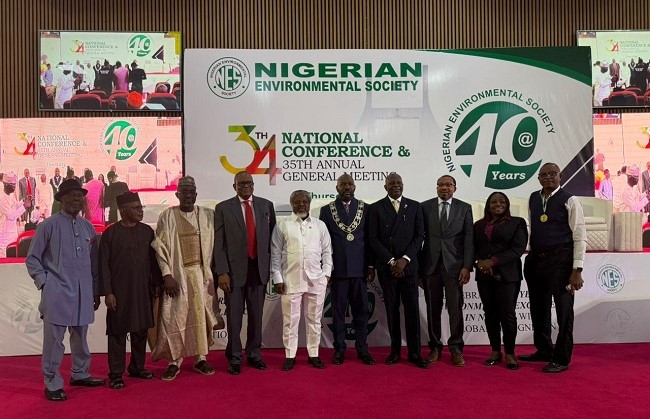
 Speaking at a meeting it hosted in Abuja on Thursday, October 23, 2025, to celebrate its 40 years of existence and achievements, the president of the association, Dr Efegbidiki Okobia, told the participants that the NES would soon launch the Nigerian Environmental Outlook, a new tool that will track national environmental indicators and guide evidence-based policymaking.

Nigerian Environmental Society (NES)
Participants at the Nigerian Environmental Society (NES) 40-year celebration held in Abuja

“This is the beginning of another 40 years,” he said, because the roadmap will focus on practical implementation of the Nationally Determined Contributions (NDCs) and ensure that climate commitments get to the grassroots.

Dr Okobia, who expressed extreme delight over the milestone achievements of the NES since the last four decades, hinted that it has made giant strides with different partners across government and the private sector.

Reflecting on the historical record of his organisation, he reminisced about its inception with just ten professionals, primarily from the oil and gas sector. Since then, the society has expanded significantly, now comprising 35 chapters across Nigeria, in addition to one located in the United Kingdom.

The body also championed the passage of the Institute of Environmental Practitioners (IEP) of Nigeria Act in May 2023, a noteworthy accomplishment, which the NES boss described as a major breakthrough.

“That act has given a voice to environmental practice as a foundation in Nigeria,” he said.

Sarah Mukherjee, President and CEO of the Institute of Sustainability and Environmental Professionals (ISED), United Kingdom, who delivered her message virtually, referred to the NES as “a beacon of what can be achieved when a group of people come together with a vision and complete the hard work.”

Sarah, who spoke on the theme of Nigeria’s Contribution to Global Climate Action, congratulated the society for its 40 years of commitment to environmental advocacy, policy development, and capacity building.

“You should be rightly proud to celebrate 40 years of the society’s dedication to shaping national policies, from the National Policy on the Environment to the Environmental Impact Assessment Act,” she said. “It is a landmark achievement.”

She noted that many NES members have served on inter-ministerial committees, offered technical advice, and represented Nigeria at international environmental negotiations.

“The capacity of the Institute for Technology and professional collaboration has contributed significantly to the country’s environmental governance,” she added.

Sarah also drew parallels between Nigeria’s environmental challenges and those faced globally, citing issues such as waste management, pollution control, and energy efficiency as “shared struggles that demand shared learning and solutions.”

“There is so much that we can learn from each other,” she said, citing examples of flood adaptation work in Copenhagen where overflow areas were transformed into flood-proof cycling lanes.  “These are the kinds of innovations that reflect what sustainable urban living can look like.”

In his goodwill message, Mr Hamid Adekunle, one of the society’s founding members, reflected on its humble beginnings and expressed gratitude for its growth.

“There were ten of us who started the Nigerian Environmental Society. I thank Almighty God that I am alive to see 40 years of the seed we planted,” he asserts.

He praised the current leadership for achieving the long-sought professionalisation of environmental practice, and he urged the next generation to prioritise research and innovation that address Nigeria’s unique environmental realities.

“I would like to see the society focusing on research and technology that reflect who we are as a country,” he said. “Let us look at the challenges of our regions and craft local solutions, not imported prescriptions.”

By Etta Michael Bisong, Abuja

IPCC’s 63rd Plenary in Peru explores contributions to Seventh Assessment Report

0

The representatives of member governments and observer organisations of the Intergovernmental Panel on Climate Change (IPCC) will be meeting in Lima, Peru, from October 27 to 30, 2025.

The Panel, comprising 195 member governments, is expected to continue discussions on the workplan of the Working Group contributions to the Seventh Assessment Report, as well as on the draft outline and workplan of the Methodology Report on Carbon Dioxide Removal Technologies, Carbon Capture Utilisation and Storage. 

Jim Skea
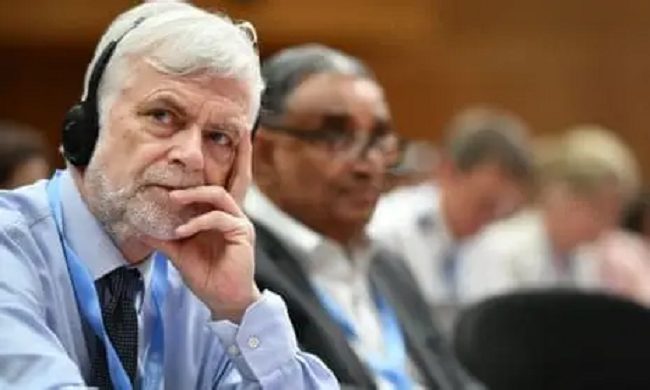
Jim Skea, IPCC Chair

The 63rd Session of the Panel, hosted by the Peruvian government, will also consider proposals for Expert Meetings and Workshops to be held in its current cycle as well as the IPCC’s programme and budget, among other business.

The opening session of the meeting will take place on Monday, October 27, 2025, at ESAN Convention Centre in Lima. During the opening, the Plenary will be addressed by IPCC Chair Jim Skea, Peru’s Minister of Foreign Affairs Ambassador Hugo de Zela, Deputy Minister of Strategic Development of Natural Resources for Peru’s Ministry of Environment, Raquel Hilianova Soto Torres, and Director of Climate Change Division of the UN Environment Programme (UNEP) Martin Krause.

The delegates will also see the video messages from Celeste Saulo, the Secretary-General of the World Meteorological Organisation and Simon Stiell, the Executive Director of the United Nations Framework Convention on Climate Change.

IPCC assessments provide governments, at all levels, with scientific information that they can use to develop climate policies. IPCC assessments are a key input into the international negotiations to tackle climate change. IPCC reports are drafted and reviewed in several stages, thus guaranteeing objectivity and transparency.

Comprehensive scientific assessment reports are published every five to seven years. The IPCC is currently in its seventh assessment cycle, which formally began in July 2023.

South Africa: Firms appeal offshore oil exploration court ruling

0

In a pivotal development in the fight for environmental justice, Shell and the South African Minister of Mineral and Petroleum Resources have applied for leave to appeal the recent judgment of Judge Mangcu-Lockwood of the Western Cape High Court, which found the environmental authorisation for offshore oil and gas exploration in Block 5/6/7, to be unlawful.

The case was initially filed by The Green Connection and Natural Justice, in a bid to defend the rights of coastal communities to sustain their ocean-dependent livelihoods, protect their food security and shield them from the deepening impacts of climate change.

Western Cape High Court
Western Cape High Court, Cape Town, South Africa

Following an online hearing on October 16, 2025, Strategic Lead at The Green Connection, Liz McDaid, says: “This appeal attempt is disappointing but not surprising. It is clear that the oil and gas giants, together with government, are determined to push ahead despite the court’s recognition of serious environmental and procedural shortcomings. We will continue to stand firm for the rights of coastal communities and the protection of our oceans because the High Court’s ruling correctly highlighted serious procedural and environmental flaws in the approval process for Block 5/6/7.”

The Green Connection’s Community Outreach Coordinator, Neville van Rooy, adds: “For the people living along our coasts, this could be a serious development because thousands of coastal families who depend on small-scale fishing for their livelihoods may face immediate and long-term harm if the project proceeds. Any offshore drilling accident, including a “well blowout”, could devastate marine life and fisheries along South Africa’s west coast, with oil potentially drifting into Namibian waters via the Benguela Current. These are just some of the reasons why we keep raising our voices – loudly and clearly – to ensure that these risks are not brushed aside.”

The Green Connection says that this case may be part of a broader pattern in which fossil fuel companies and government authorities appear to repeatedly sidestep environmental safeguards, making court rulings, such as this one, a crucial defence for both people and the planet.

“Beyond the potential local impacts, we cannot ignore that production from this block could directly increase greenhouse gas emissions, possibly accelerating climate change. Climate change impacts could have a ripple effect on small-scale fisheries and the overall wellbeing of coastal communities,” adds van Rooy.

The Green Connection and Natural Justice now await judgment on whether the appeal can proceed and, if so, whether it will be heard by a Full Bench of the Western Cape High Court or the Supreme Court of Appeal.

Katsina ranks second in Nigeria’s 2025 Climate Governance Performance Ranking

0

Katsina State has been ranked second in the 2025 Subnational Climate Governance Performance Rating and Ranking – an independent, research-based assessment developed by Professor Chukwumerije Okereke and the Society for Planet and Prosperity (SPP).

This, according to the promoters, marks one of the most significant recognitions of subnational climate leadership in Nigeria. Katsina’s leap of 23 places from the previous year is said to demonstrate tangible improvements in governance capacity and policy innovation directly informed by this evidence-based evaluation framework.

Katsina
Katsina State official being awarded following its second placement in the 2025 Subnational Climate Governance Performance Rating and Ranking

The rating, launched in Abuja on October 14, 2025, by the Federal Ministry of Environment in partnership with SPP, the UK FCDO’s Partnership for Agile Governance and Climate Engagement (PACE), the African Climate Foundation, and others, assesses all 36 states across five governance pillars: institutional structures, policy frameworks, budgeting, implementation and monitoring, and public engagement.

Professor Mohammed Al-Amin, Special Adviser to the Governor on Climate Change, noted: ““This recognition heartens us. Coming in second among all Nigerian states is a clear signal that Katsina’s Green Growth Agenda is yielding results. Our administration is deeply committed to climate governance, not only in policy formulation, but also in practical implementation and transparency. We want climate action to translate into real, visible improvements in the lives of our people.

“The recognition validates our reforms and the technical guidance we’ve drawn from the Climate Governance Performance framework. It shows that evidence-based research can translate directly into institutional and policy change at state level.”

Professor Al-Amin highlighted the key areas of progress that contributed to the state’s strong performance and how these actions were premised on the rating and ranking methodology published by SPP in collaboration with the Federal government earlier in 2024.

Key Research-Informed Impacts

  • Institutional Strengthening: Guided by the performance indicators developed through the national Climate Governance Ranking research, Katsina established climate governance desks across ministries and created formal coordination mechanisms with local governments.
  • Policy Uptake: The 2024 Katsina State Climate Resilience and Green Economy Policy was designed to align with performance benchmarks highlighted in the Rating methodology, showing direct research-to-policy translation. One of the landmark policy innovations inspired by the ranking was the passage and implementation of the Katsina State Climate Resilience and Green Economy Policy (2024).
  • Budgetary Reform: Noting the high marks allocated to climate finance, we pushed very hard to drive climate-related funding which subsequently rose by 30% in 2025 – a measurable outcome linked to the project’s budgeting criteria and follow-up capacity-building workshops led by the research team.
  • Implementation and Public Accountability: The launch of Katsina Climate Watch, a digital transparency platform, mirrors the project’s call for improved visibility and citizen engagement in climate projects.

Governor Dikko Umaru Radda praised the result describing it as: “A testament to our administration’s proactive approach to governance, innovation, and environmental responsibility.”

He said this was a perfect example of “how collaborative research and data-driven policy can drive real transformation in governance and public service delivery.”

Minister of Environment, Balarabe Abbas, commended the top-performing states, urging others to adopt the Ranking framework as a “map for reform and learning.”

SPP submitted: “Katsina’s achievement demonstrates how rigorous academic research can have direct and verifiable impacts on public policy, institutional design, and environmental outcomes. The state’s adoption of evidence-based recommendations from the Subnational Climate Governance Performance Ranking illustrates a model of research-informed decision-making now influencing both federal-state collaboration and peer learning among subnational governments.”

Over 3,000 climate litigation cases reshaping global climate policy – Report

0

Climate litigation is now being pursued across more countries than ever before, according to a report published by the UN Environment Programme (UNEP) and the Sabin Centre for Climate Change Law at Columbia University. 

The report reveals how legal action is addressing issues such as greenwashing, carbon offsets, and energy-intensive data centres.

Climate Change in the courtroom: Trends, impacts, and emerging lessons is the fourth edition of a series first launched in 2017. Drawing on data from the Sabin Centre’s Climate Change Litigation Databases, the report examines key trends, pending cases, and court decisions.

Climate litigation
Climate litigation

“Climate litigation has evolved into a powerful global tool for advancing climate action, and accountability,” said Inger Andersen, Executive Director of UNEP. “Transforming our energy, mobility, housing, and food systems must be a collective effort, through ambitious and science-based policymaking. Independent judicial systems are essential to ensuring this transformation is both just and effective.” 

As of June 30, 2025, a cumulative 3,099 climate-related cases have been filed in 55 national jurisdictions and 24 international or regional courts, tribunals, or quasi-judicial bodies. This continues a trend in climate-related cases filed by 2022 (2,180 cases), 2020 (1,550 cases) and 2017 (884 cases). While cases from the Global South still represent less than 10 per cent in 2025, their share is steadily growing. 

Since the first recorded climate litigation case nearly four decades ago, the field has expanded and matured. Litigation now covers virtually all aspects of climate governance, and similar patterns are appearing in litigation on related crises such as biodiversity and pollution. 

The report highlights significant decisions from around the world including the landmark and recent Advisory Opinion of the International Court of Justice, which clarifies States’ obligations in addressing climate change. Courts are increasingly recognising the scientific basis for climate-related claims, including through attribution science that links specific extreme weather events to greenhouse gas emissions. These rulings help define global norms and obligations.

At the same time, the report also identifies anti-climate litigation is on the rise, with lawsuits aimed at deregulating environmental protections or deprioritising environmental, social, and corporate governance issues in investments. Particularly concerning is the increase in lawsuits against public opposition to high-emitting projects, which target climate advocates, journalists, and civil society organisations.