The Minister of Environment, Malam Balarabe Lawal, on Tuesday, September 16, 2025, in Abuja reaffirmed the Federal Government’s commitment to addressing environmental degradation in Ogoniland.
Lawal, who also chairs the Governing Council of the Hydrocarbon Pollution Remediation Project (HYPREP), gave the assurance at the joint meeting of the HYPREP Governing Council and the Board of Trustees (BOT) of the Ogoni Trust Fund (OTF).
Joint meeting of the HYPREP Governing Council and the Board of Trustees (BOT) of the Ogoni Trust Fund (OTF) in Abuja
He said both bodies were vital instruments of accountability and hope, charged with transforming years of neglect into renewed health, prosperity and environmental sustainability.
“The world is watching. We must rise to the occasion and deliver on the mandate with transparency, accountability and urgency.
“The Ogoni clean-up is not only a national duty but also an international model for environmental justice. Its success will demonstrate Nigeria’s integrity, capacity and commitment to sustainable development.
“I therefore call for synergy between the Governing Council and the BOT for harmonised strategies and alignment of priorities towards the timely and effective implementation of the Ogoni clean-up,” Lawal said.
The minister urged all stakeholders to work collaboratively to accelerate the pace of the project, strengthen institutions and consolidate the trust and confidence of the Ogoni people.
“HYPREP was established under the Federal Ministry of Environment by a 2016 notice, with the mandate to remediate hydrocarbon-impacted sites in Ogoniland and restore livelihoods.
“Since its inception, and particularly since 2023, HYPREP has made notable progress in addressing the legacy of degradation, supporting community development initiatives, and laying the foundation for sustainable livelihoods in Ogoni,” he added.
On his part, Mr. Emmanuel Deeyah, BOT Chairman of the OTF, assured that the board would deliver on its functions judiciously and not fail the Ogoni people.
He also pledged the timely payment of contractors working in Ogoniland to enable them to discharge their duties effectively.
A new report released on Tuesday, September 16, 2025, has revealed the devastating impacts of fossil fuel extraction and use on human health.
Titled “Cradle to Grave: The Health Toll of Fossil Fuels and the Imperative for a Just Transition”, the reportprovides what is believed to be the first comprehensive global overview of the health consequences associated with fossil fuel use at every stage of their lifecycle – from extraction to waste, and across the human lifespan, from pregnancy and pre-birth to old age.
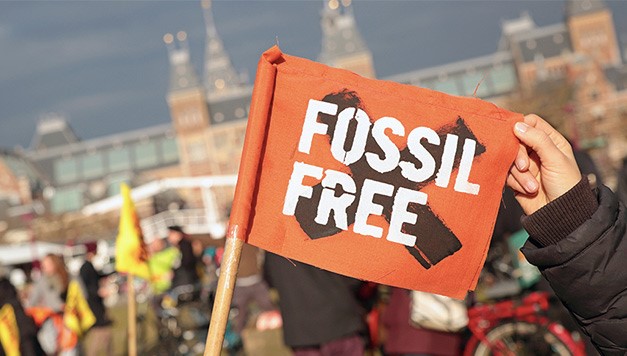
Fossil fuel divestment campaign
Key Findings from the report include:
Fossil fuel-related pollution affects every stage of life, from fetal development to old age.
Fossil fuels cause severe health harms at every stage of their lifecycle – extraction, refining, transport, storage, combustion, and disposal.
Harm doesn’t end with initial exposure: the health impacts of fossil fuels are persistent and systemic.
Fossil fuel health harms are unevenly and unjustly distributed in communities and across nations.
Fossil fuels drive wider societal health impacts and exacerbate other pre-existing health disparities in communities and between nations.
Climate policy and health policies have largely ignored these multidimensional health harms of fossil fuels.
The cost of inaction is rising by the day, with global fossil fuel subsidies reaching an estimated $7 trillion, including explicit subsidies such as tax breaks and price caps, and implicit subsidies, due to the unpriced health, environmental, and societal damages caused by fossil fuel production and use.
A rapid and just transition away from fossil fuels – and to clean, affordable, renewable energy for all – is imperative for the health of everyone on earth.
“Fossil fuels are a direct assault on health, harming us at every stage of their lifecycle and every stage of our lives, from the womb to old age, driving miscarriages, childhood leukemia, asthma, cancer, strokes, and mental health crises,” said report author, Shweta Narayan, Campaign Lead at the Global Climate and Health Alliance, a consortium of over 200 health professional and health civil society organisations and networks from around the world addressing climate change.
“Fossil fuels’ toxic legacy persists for decades in our air, water, and bodies, exposing communities throughout the world, and imposing an especially heavy burden on marginalized communities,” Narayan continued. “Even if carbon emissions were captured tomorrow, fossil fuels would still poison, displace, and destabilise. Not only are they a climate problem, but fossil fuels are also driving a global public health emergency.”
In compiling the report, the Global Climate and Health Alliance (GCHA) collated existing scientific evidence, and gathered personal testimonials and case studies, to explore the multidimensional interactions between fossil fuels and human health and social wellbeing.
The report calls for “bold leadership from governments, civil society, businesses, and the global health community to swiftly transition away from fossil fuels… (and) by prioritising public health, safety, health system stability, social justice, and environmental sustainability, this transition can not only mitigate harm but also create transformative change – protecting the most vulnerable and building a healthier, more equitable future (for all), for generations to come.”
“The age of fossil fuels has poisoned our air, broken health, and fractured dignity. We must choose a just transition without delay in order to safeguard life, restore justice, and secure a healthier future for all,” said Chrisitana Figueres, global climate leader, architect of the Paris Agreement and former UN climate chief.
“Fossil fuels are not just an environmental crisis – they are a public health emergency,” saidDr Jemilah Mahmood, Executive Director of Sunway Centre for Planetary Health, Malaysia. “As health professionals, we know the cost of inaction is measured in lives. A just transition is both imperative and possible: a prescription for cleaner air, healthier communities, and intergenerational justice. The time for bold action is now.”
“Enough is enough – around the world, policymakers must put an end to the damage the outrageous and irresponsible ongoing pursuit of fossil fuel production is inflicting upon our health,” said Dr Jeni Miller, Executive Directorof theGlobal Climate and Health Alliance.
“Cradle to Grave delivers a staggering overview of the sheer scale and range of health issues and impacts, including how our bodily functions are being impaired by the extraction and use of fossil fuels, and the global scale of the problem. No one is exempt from the toxic exposures caused by our addiction to fossil fuels. Political leaders already know the solutions for ending fossil fuel dependence and know that further delay is indefensible – all that is required is political courage,” added Dr Miller.
Miller went further: “At COP30, political leaders must respond with urgency by recognizing fossil fuel dependence as a widespread driver of disease and inequality, along with driving global warming emission. An appropriate response would see governments halting new oil, gas, and coal projects, setting clear timelines to phase out existing projects, and ending the shocking $1.3 trillion in direct subsidies that keep this industry afloat.
“Those resources should instead be invested in public health, clean energy, and protecting communities already living with the heaviest burdens of pollution and climate harm. Just as governments once curbed tobacco industry influence, they must now ban fossil fuel lobbying and disinformation. COP30 is the moment to act – not only for the climate, but for people’s health and futures.”
Tzeporah Berman, Chair and Founder, Fossil Fuel Non-Proliferation Treaty Initiative,said: “Our world is burning, drowning, flooding, and gasping for air – crushed by the weight of the climate crisis. The ‘Cradle to Grave’ report lays the hard truth: fossil fuels are not only fueling the climate emergency but are poisoning our health and the planet at every stage. This research is a wake-up call. We must urgently phase out fossil fuels and build a Fossil Fuel Treaty to ensure a just transition for workers and communities, safeguard our health and secure a world worth living in.”
Anabela Lemos, Director of Justiça Ambiental, Mozambique, said: “In Mozambique, gas has meant the loss of our land, our sea, and our safety. Farmers are displaced, fisherfolk cut off from the ocean, and communities torn apart by violence that has killed thousands and forced nearly a million from their homes. Children go hungry, families are traumatised, and our future health is being stolen.”
Sharon Mbonani, Mbalenhle Secunda Mpumalanga South Africa, said: “We face oppression from the coal-fired power stations in our backyards that are meant to bring about development for our communities, but unfortunately, our lives have become a living sacrifice for so-called economic growth. We are struggling with contaminated water, and air pollution is hurting our health. We need action to address these issues through a Just Transition away from dirty fuel.”
Neha Mahant, health worker, Korba, India, said: “In Korba, living near coal mines means living with disease. Children and elders struggle with asthma, bronchitis, and TB; families face birth defects, skin infections, and stomach illnesses from contaminated water. Asthma in children is alarmingly high. Coal doesn’t just generate electricity – it generates suffering.”
The Wildlife Justice Commission (WJC) and Nigeria’s National Environmental Standards and Regulations Enforcement Agency (NESREA) on Tuesday, September 16, 2025, signed a Memorandum of Understanding (MoU) to strengthen Nigeria’s response to organised wildlife crime.
The MoU, signed at NESREA’s headquarters in Abuja by Prof. Innocent Barikor, Director General/CEO of NESREA, and Stephen Carmody, Chief of Investigations at the WJC, establishes a framework for cooperation to combat transnational organised criminal networks trafficking in wildlife, fish, and timber.
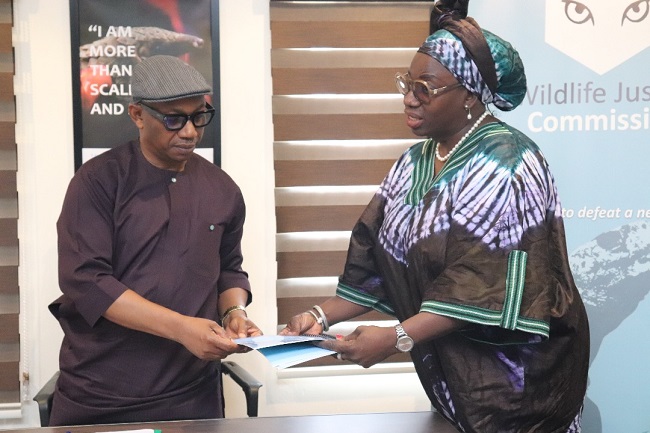
Director General of NESREA, Prof Innocent Barikor (left), and the Wildlife Justice Commission (WJC) Regional Manager for West and Central Africa, Abim Isafiade, at the signing of MoU between NESREA and WJC in Abuja on Tuesday
The agreement also aims to support the implementation of future programmes that the WJC may provide to NESREA and its partners in the Nigerian Wildlife Law Enforcement Task Force (WLETF), depending on funding and mutual agreement.
This milestone builds on the WJC’s successful partnership with the Nigeria Customs Service (NCS), which has already resulted in the seizure of more than 25 tonnes of pangolin scales and multiple tonnes of ivory, the arrest of 42 suspects, and 12 convictions – including the first convictions of Vietnamese nationals in Nigeria on wildlife crime charges.
In 2025, the partnership also led to the arrest of the first Chinese kingpin in Nigeria for wildlife trafficking. This MoU, it was gathered, will enable the WJC to further support Nigeria and will complement its existing partnership with NCS.
“Among all of the WJC’s successes, nowhere has our mission come to life more powerfully than in Nigeria. Working in partnership with the NCS, we helped transform the country from the world’s largest hub for pangolin trafficking into a global enforcement success story. This new MoU with NESREA builds on that legacy. By expanding our partnerships to include NESREA and the Nigerian Wildlife Law Enforcement Task Force, we can sustain and deepen this transformation — ensuring that Nigeria continues to set the benchmark for intelligence-led enforcement,” said Olivia Swaak-Goldman, Executive Director of the Wildlife Justice Commission.
“This MoU aligns perfectly with Nigeria’s obligations under the Convention on International Trade in Endangered Species of Wild Fauna and Flora (CITES) and demonstrates our government’s determination to protect biodiversity, conserve threatened species, and ensure sustainable managed wildlife resources for future generations,” stated Prof. Innocent Barikor, Director General of NESREA.
“The results in Nigeria prove what is possible when enforcement is strategic, intelligence-led, and focused on the right targets. Between 2021 and 2024, 93% of pangolin seizures involved WJC support – collapsing trafficking routes, fracturing syndicates, and halting major shipments for over three years. This MoU with NESREA builds on that momentum to further disrupt the organised criminal networks driving the illegal trade in wildlife, fish, and timber. Our objective is to dismantle the criminal infrastructure itself and hold traffickers to account,” added Swaak-Goldman.”
“NESREA is committed to working hand-in-hand with the WJC to ensure that Nigeria does not serve as a safe haven or transit hub for wildlife traffickers. Together, we will make it increasingly difficult for those who profit from the destruction of our natural heritage,” added Barikor.
The MoU will strengthen intelligence-sharing, enhance forensic and legal collaboration, and support future programmes under the Nigerian Wildlife Law Enforcement Task Force.
It reflects a shared commitment by NESREA and the WJC to disrupt wildlife crime, dismantle transnational criminal networks, and ensure that organised crime is no longer driving species to extinction.
Minister of Agriculture and Food Security, Sen. Abubakar Kyari, says Nigeria loses $10 billion annually to post-harvest losses.
Kyari disclosed this on Monday, September 15, 2025, during the inauguration of the Green Legacy Rural Community Agriculture and Infrastructure Network (G.R.A.I.N) Pulse Centre initiative at Kangire community, Birnin-Kudu LGA, Jigawa State.
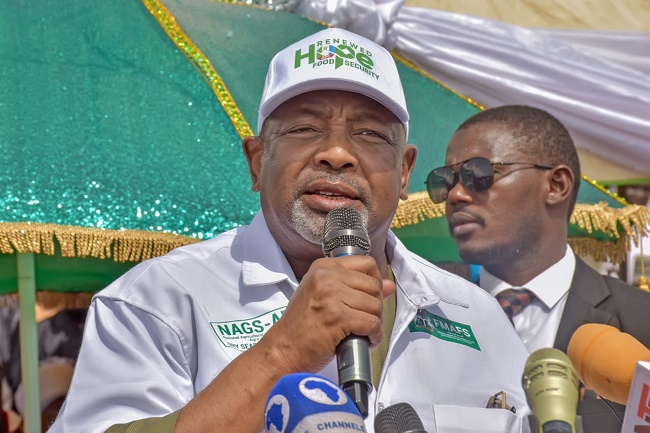
Minister of Agriculture and Food Security, Sen. Abubakar Kyari
He said the losses were due to poor storage, weak infrastructure, limited processing, climate change, flooding, soil degradation, and increasingly erratic rainfall across the country.
According to him, agriculture contributes about 24 per cent of Nigeria’s GDP, with smallholder farmers producing around 70 per cent of the nation’s food.
“By empowering smallholder farmers with modern tools, technology, and markets, we can unlock the full wealth of our land and people,” the Minister stated.
Kyari reaffirmed President Bola Tinubu administration’s commitment to prioritising agriculture as the core of the nation’s transformation, stressing that its vision has been translated into practical action.
He described private-sector-driven initiatives as vital in strengthening Nigeria’s food systems and boosting resilience against post-harvest losses.
The Minister said the pulse centre would function as an integrated hub for agriculture, infrastructure, and rural development, covering the entire agricultural value chain.
He added that the hub, equipped with modern facilities, would provide a safe environment for exports and would be replicated across communities nationwide.
Also, Minister of Foreign Affairs, Amb. Yusuf Tuggar, emphasised the strength of public-private partnerships in development, commending the establishment of such hubs in Jigawa’s agrarian communities.
“This microeconomy will benefit Nigeria because of its multiple advantages, particularly the integration of modern facilities and technologies,” Tuggar said.
He praised President Tinubu and Jigawa Governor, Umar Namadi, for prioritising food security within their development agenda.
Governor Namadi expressed delight at Jigawa hosting the country’s first pulse centre, describing it as a brilliant innovation for sustainable rural livelihoods.
He said the project would stimulate Kangire’s economy and highlight the community’s transformation potential through agriculture-led development.
Namadi explained that the facility included a solar-powered integrated system, digitally connected hubs, and services covering the entire agricultural value chain.
He reiterated his administration’s commitment to strengthening agriculture to drive job creation, infrastructure expansion, and improved livelihoods.
Chairman of Birnin-Kudu Local Council, Mr. Muhammad Uba, pledged support for President Tinubu’s Renewed Hope Agenda, highlighting Jigawa’s prioritisation of agriculture and food security.
He added that Governor Namadi had taken significant steps to transform and digitalise agriculture in the state.
Kyari formally inaugurated the G.R.A.I.N Pulse Centre at Kangire, as part of the Renewed Hope agenda.
Delta State Government says it will invest in ranching, renewable energy for agricultural and industrial development in order to create jobs and rejuvenate the state economy.
The State Commissioner for Works (Rural Roads) and Public Information, Mr. Charles Aniagwu, stated this while briefing newsmen on the outcome of the state’s recent investment mission to Brazil.
Gov. Sheriff Oborevwori of Delta State
Aniagwu said that the visit unlocked fresh prospects for industrial expansion in the agricultural sector as the state government explores opportunities in investing in ranching.
He said Gov. Sheriff Oborevwori’s administration has already recorded significant gains by opening up all the 25 local government areas with vital infrastructure, thereby creating access to mineral resources, industrial corridors, and potential free trade zones.
The commissioner explained that the Brazil engagement was aimed at showcasing Delta’s investment opportunities while also drawing lessons from Brazil’s agricultural model, especially in ranching.
He stressed that the establishment of ranches in the state would not only boost food production and jobs but also strengthen security by curbing the use of forests as criminal hideouts.
Aniagwu said, “We are pursuing both security and job creation by targeting ranching and other agro-industrial investments.
“Our discussions in Brazil are progressing very well, and we are optimistic about the outcomes.”
He disclosed that the state also held talks with renewable energy firms and other players in the power sector, building on earlier engagements with the Rural Electrification Agency in Abuja.
According to him, the goal is to light up the state, expand industries, and create employment opportunities that will improve living standards.
He said that government’s focus on agriculture and industry was deliberate, given the rising number of graduates from tertiary institutions across the state.
“Our goal is to create a productive economy where our graduates and young women can secure meaningful jobs beyond the limited space in the civil service,” he added.
“This is how we can guarantee both social and fiscal security for our state while raising living standards,” he said.
He reaffirmed that the Oborevwori administration remains committed to the M.O.R.E Agenda, with particular emphasis on infrastructure expansion, energy generation, agriculture, and industrial growth.
The commissioner also said that the state government was in support of the ongoing screening of civil servants, warning that it would not condone falsification of age, abuse of leave of absence, or indecent dressing in the workforce.
According to Aniagwu many officers have manipulated their official records while some workers have abused their leave of absence.
He added that those who had abused leave of absence by staying abroad for years while still drawing salaries from Delta State’s payroll would be removed, with steps taken to recover funds illegally earned.
Aniagwu also said that the recently re-emphasized dress code for civil servants in the state was not new, adding that government required its workforce to appear decent and corporate.
The Abia State Government says the revived sanitary inspection of compounds is not for taxation or punishment but to ensure residents maintain clean surroundings.
It introduced stipends for sanitary inspectors to encourage diligence and discourage extortion during visits to homes, villages, and communities across the state.
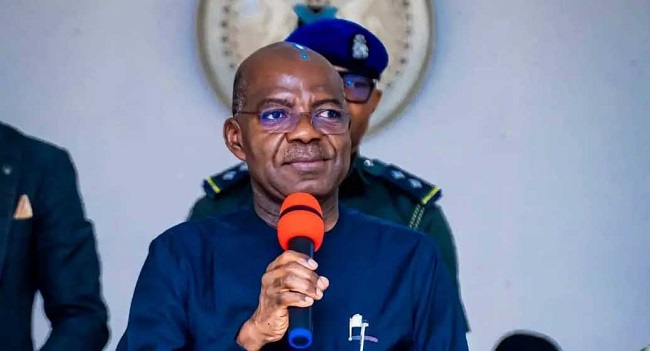
Gov. Alex Otti of Abia State
Commissioner for Information, Okey Kanu, disclosed this at Government House, Umuahia, on Monday, September 15, 2025, while briefing journalists on the outcome of the weekly Executive Council Meeting.
Kanu said communities should be given at least one week’s notice before inspectors’ visits, ensuring fairness and adequate preparation by residents.
He stressed that sanitation efforts target disease reduction from dirty environments, which benefits all residents, and urged the public to comply with health directives.
Kanu added that the Council approved a state-wide tree planting campaign because of its numerous environmental and health benefits.
He said ASEPA was already de-silting drains in Aba and Umuahia following flooding warnings, aimed at preventing disasters in the cities.
The government urged residents not to clog drainage channels, stressing that responsible waste disposal was critical in checking flooding activities.
Officials at the briefing included Philemon Ogbonna, Commissioner for Environment; Dr Eno Jerry-Eze, Chairman Civil Service Commission; and Ferdinand Ekeoma, Special Adviser to the governor on Media.
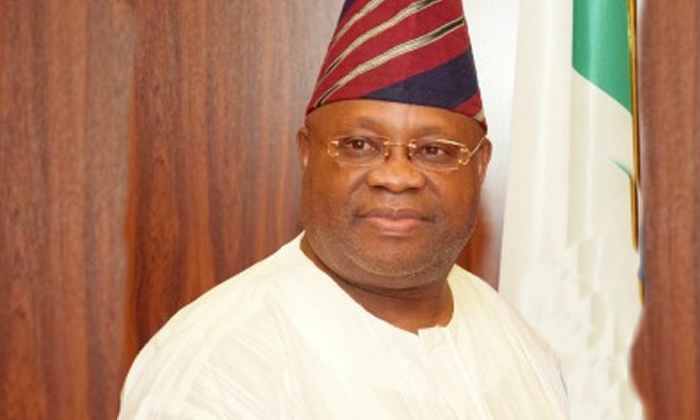
Governor of Osun State, Senator Ademola Adeleke, has expressed his sympathy with the people of Iwo on the devastating flood that occurred on Friday, September 13, 2025, due to hours of heavy rainfall, assuring the people of ongoing efforts to prevent future occurrence of the natural disaster.
Governor Adeleke rues the huge personal losses suffered by residents as a result of the flooding incident, noting that his administration will be taking nothing to chance to safeguard lives and properties of the people.
Gov. Ademola Adeleke of Osun State
The Governor said his administration has deployed resources to expand waterways in Iwo and environs in addition to those already done, assuring victims that the government would take stock of losses and provide appropriate support for victims.
“I am devastated to learn about the monumental damage caused by flooding that occurred in Iwo on Friday following hours of heavy downpour. The scale of the losses suffered by our people as a result of the natural disaster is especially heavy and I can only imagine the toll on our people in Iwo,” Governor Adeleke noted in a statement.
“I want to, on behalf of the State Government, convey heartfelt sympathy to everyone affected in one way or the other. As a government, we stand with the people of Iwo in this difficult moment, and assure them of our commitment to support them to overcome the challenges created by the incident.
“Before this incident, our government has taken flood prevention steps, which includes dredging of Aiba waterways among others to open up water channels and ensure the free-flow of water to avert flooding. Following the incident, the government has mobilised resources for the channelisation of more waterways to ensure that this awful incident does not happen again.
“I have also directed the Commissioner of Environment to conduct on-the-spot assessment and come up with a lasting solution to flooding in Iwo and environs. The people of Iwo and indeed Osun State can be rest assured that we are doing everything possible to tackle flooding in the state.”
Governor Adeleke urged the people of Iwo and Osun people to support government efforts to prevent flooding by stopping the indiscriminate dumping of refuse on water channels.
President/Chief Executive, Dangote Petroleum Refinery, Aliko Dangote, has declared that since the refinery began producing petrol a year ago, Nigeria’s five-decade-long struggle with fuel queues has finally come to an end.
Speaking at a conference to mark the first anniversary of the launch of petrol from the 650,000 barrels-per-day refinery, Dangote highlighted that Nigerians have endured persistent fuel queues since 1975. However, this issue has been steadily resolved since the refinery began rolling out petrol on September 15, 2024.
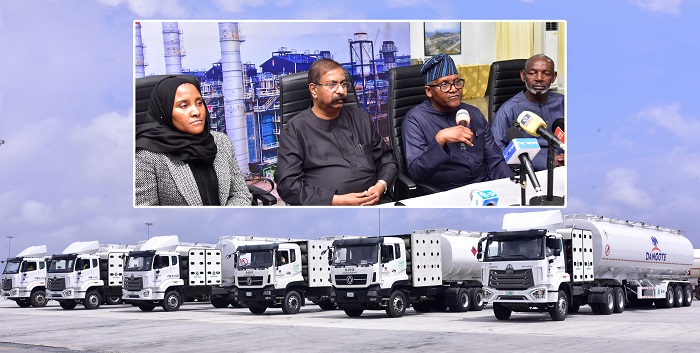
Dangote Compressed Natural Gas (CNG) trucks loading Premium Motor Spirit (PMS) at the Dangote Petroleum Refinery gantry (Inset: L–R: Group Executive Director, Commercial Operations, Dangote Industries Limited, Fatima Aliko Dangote; Vice President, Oil and Gas, DIL, Devakumar Edwin; President/Chief Executive, Dangote Industries Limited, Aliko Dangote; and Chairman, MRS Oil Nigeria Plc, Sayyu Dantata, during a press conference to mark the first anniversary of petrol rollout and the official presentation of CNG-powered trucks for fuel distribution at the Dangote Petroleum Refinery, Lekki, Lagos, on Monday, September 15, 2025)
“We have been battling fuel queues since 1975, but today Nigerians are witnessing a new era,” he said.
Acknowledging the numerous challenges the refinery has faced since its inception, Dangote emphasised the company’s unwavering commitment to Nigeria and Africa.
“The journey has been challenging because we sought to transform the downstream sector in Nigeria. Some believed we were taking food from their tables, which simply isn’t true. What we have done is to make our country and continent proud. Previously, only two African countries were not importing petrol, but regrettably, they have since resumed imports. This is detrimental to Africa,” he added.
Reflecting on the challenges faced during the refinery’s development, Dangote disclosed that the project involved enormous risk. He received repeated warnings from industry experts, investors, local and foreign government officials, who argued that only sovereign nations undertook such large-scale refinery ventures. He admitted that had the project failed, he would have lost all his assets to lenders.
“The decision to build the refinery was not easy. If it had gone wrong, lenders would have taken our assets. But we believed in Nigeria and Africa,” he said.
Despite opposition and economic headwinds, the refinery has successfully reduced the price of petrol from nearly N1,100 before production began to N841 in the South West, Abuja, Delta, Rivers, Edo, and Kwara. With the gradual rollout of CNG-powered trucks, Dangote anticipates this price reduction will soon be felt nationwide.
He noted that the refinery has sufficient capacity to meet Nigeria’s domestic demand while also generating foreign exchange through exports. He revealed that between June and first week of September 2025, the facility had exported over 1.1 billion litres of Premium Motor Spirit (PMS), underscoring its capacity to meet domestic demand and contribute significantly to foreign exchange earnings.
Emphasising job creation, he stated that the refinery has no intention of displacing workers but is instead generating thousands of new employment opportunities. The deployment of 4,000 CNG-powered trucks is expected to create at least 24,000 jobs across Nigeria.
“We have not displaced any jobs; we are creating many more. The CNG trucks will not be operated by robots,” he said. “Our employees earn salaries three times the minimum wage. Our drivers receive a living wage, life insurance, health insurance covering themselves, their spouses, and up to four children, as well as a lifelong pension. We are not only employing drivers but also mechanics, fleet managers, and other professionals to support the CNG fleet.”
Dangote clarified that while the company respects trade unions, membership is a personal choice for each driver.
He reaffirmed his commitment to Nigeria’s industrialisation, describing it as essential for the continent’s development. Dangote emphasised the urgent need for Nigeria to protect its local industries and discourage the dumping of cheap foreign goods, citing the collapse of the once-thriving textile sector as a cautionary example.
He noted that Nigeria’s path to sustainable economic growth lies in industrialisation, which not only boosts local productivity but also supports a circular economy.
“Other nations were not industrialised by outsiders. We must build and industrialise our own economies. Without this, how can others invest? That is why I believe the National Assembly should enact legislation to support the Federal Government’s ‘Nigeria First’ policy. My goal is to see Africa prosper, as we have the fastest-growing population in the world. Relying on imports means exporting jobs and importing poverty. Many individuals with greater financial resources than myself want to invest, but the challenges we face discourage them. Numerous sectors are still in urgent need of industrialisation,” he said.
He reiterated that, with the introduction of CNG trucks, the refinery can deliver products to consumers anywhere in Nigeria, mitigating all associated risks.
Dangote reiterated that the refinery remains open to partnerships and collaborations with other stakeholders in the downstream sector, stressing that the industry stands to gain more through collective effort and cooperation.
He also clarified that the refinery has no plans to enter the retail market, noting that he declined opportunities to acquire filling stations when they were offered for sale.
Looking ahead, Dangote announced that the refinery’s capacity would be expanded to 700,000 barrels per day in its second year of operation, with the aim of further supporting economic growth and job creation.
“Nigeria has now become the refining hub of Africa. We are set to become the largest exporter of polypropylene and are aiming to make Nigeria the world’s leading producer of fertiliser. These initiatives will generate substantial foreign exchange, create employment, and stimulate growth in other sectors,” he said.
“We are fully committed to supporting the government in adding value, creating jobs, and building a stronger economy.”
He also expressed his gratitude to the Federal Government, the refinery’s partners, dedicated workforce, and the Nigerian public for their continued support. In particular, he commended the Independent Petroleum Marketers Association of Nigeria (IPMAN) for encouraging its members to register for the free distribution initiative utilising CNG-powered trucks.
Dangote also used the occasion to showcase some of the CNG-powered trucks currently loading petrol from the refinery, emphasising that the company would successfully deploy all 4,000 trucks across the country soon.
He allayed any fears of potential attacks on the drivers or the trucks, stressing that Nigeria is a country governed by the rule of law and that security agencies are fully empowered to protect its citizens and infrastructure.
At a New York City Climate Week event on September 22, 2025, Ocean Conservancy, the Ocean & Climate Platform and World Resources Institute (WRI) will push for progress on a landmark international initiative to dramatically scale up ocean-focused climate action in countries’ national climate plans.
Launched earlier this year by France and Brazil at the United Nations Ocean Conference in Nice, the Blue NDC Challenge calls on global governments to place the ocean at the heart of their climate plans (Nationally Determined Contributions, or NDCs) ahead of COP30, which Brazil will host from November 10 to 21, 2025.
Dr. Fatima Candace Vahsling, vice president of Ocean Conservancy’s climate programme
In addition to France and Brazil, Australia, Fiji, Kenya, Mexico, Palau and the Republic of Seychelles have committed to including the ocean in their updated climate plans. The event will feature COP30 CEO, Ana Toni, among other high-level speakers, and encourage more countries to take on the challenge, highlighting the specific actions governments can take to ensure the ocean maintains its role in regulating the global climate.
“The ocean is what keeps our climate afloat, and governments around the world need to get on board,” said Dr. Fatima Candace Vahsling, vice president of Ocean Conservancy’s climate programme and a former White House climate official. “The ocean offers real solutions to climate challenges. It’s time to think blue for this blue planet of ours.”
The event will showcase progress on the Blue NDC (Nationally Determined Contributions) Challenge to date and reiterate the need to include climate-based solutions as a critical pathway to achieve the Paris Agreement.
Speakers include Janis Searles Jones, CEO, Ocean Conservancy; Ana Toni, CEO, COP30 Presidency; Antha Williams, Lead of Environment Program, Bloomberg Philanthropies; John Kerry, 68th U.S. Secretary of State and First Presidential Envoy for Climate; Representatives from France and other Blue NDC Challenge countries; and Representative from WRI and the Ocean Climate Platform.
As with all modern industries, the oil and gas sector globally is under pressure to embrace the critical convergence of information technology (IT) and operational technology (OT) systems to maximise efficiencies and productivities. This shift is equally important in Nigeria, where the oil and gas industry plays a pivotal role in the national economy.
Oil production is a major source of income and a substantial contributor to the GDP of many African countries, and Nigeria remains consistently in the top spot as Africa’s largest producer of crude oil. In addition, it possesses significant quantities of natural gas reserves. The country’s oil and gas sector is critical to the economy, contributing over 85% of export earnings and approximately 30% of budget revenue, but it has been performing below its potential in recent years due to a number of challenges.
Gary Chomse
Against this background, the newly operational Dangote Refinery in the Lekki Free Zone outside Lagos, which began production in January 2024, is a positive symbol of the hoped-for revival of the oil and gas arena in Nigeria. This newest addition to Nigeria’s oil and gas industry is Africa’s biggest oil refinery and also the largest single-train facility in the world (meaning a facility where all the major processing units for the crude oil entering the refinery are contained within a single integrated complex).
However, despite the positive symbolism of this beacon within the Nigerian oil and gas realm, the sector is still navigating through the complex regulatory landscape and fiscal reforms introduced by the Petroleum Industry Act of 2021. The Act’s intention is to restructure fiscal terms, institutional frameworks and regulatory policies, and thus attract investment and boost efficiency.
Prior to the implementation of this Act, Nigeria’s oil and gas arena had seen years of under-investment in exploration and production which, together with persistent infrastructure issues and other challenges, had suppressed growth and innovation, as outlined by Nigerian credit rating agency Agusto & Co.
The implementation of effective technology infrastructure in the oil and gas field can help support strategic business and national objectives and assist in overcoming legacy infrastructure challenges.
Supporting key African markets in their digitalisation journeys
Over the past few years, Vertiv has participated in several focused events across Africa to showcase our products and solutions that are suitable for the broader industrial realm. The intention was to create greater awareness around the benefits that Vertiv can bring to these local sectors, following on from our proven success within the oil and gas field in other parts of the globe.
We look forward to similarly engaging with industry representatives within Nigeria also, being Africa’s largest oil producer, as well as possessing substantial natural gas reserves. Nigeria’s natural gas reserves are, in fact, estimated to be one of the largest in Africa, as outlined by global research company, Mordor Intelligence, in its report entitled “Oil and Gas Industry in Nigeria Market Size & Share Analysis – Growth Trends & Forecasts (2025 – 2030)”.
Natural gas is considered a cleaner and more environmentally friendly source of energy compared to other fossil fuels, and investments in natural gas infrastructure would allow Nigeria to diversify its energy mix and meet both domestic and international demand for cleaner energy sources.
According to the Mordor Intelligence report, it appears that, considering the issues holistically and despite certain challenges, there is much to anticipate for the growth of Nigeria’s oil and gas industry over the next few years. One important key is enabling the true convergence of IT and OT systems, to be able to ‘mine’ facts and data as well as oil and gas, and thereby drive informed planning and decision making.
The Importance of Integrating IT and OT Systems
In a challenging global economy, it is critical for oil and gas companies to digitalise their systems and processes, thereby allowing for the harnessing of data volumes from day-to-day operations. As outlined by global IT consulting company BirlaSoft, the IT-OT convergence within the oil and gas sector allows companies to harvest data within the OT layer and then “cross-contextualise it to build valuable insights and automated control and orchestration mechanisms”.
According to BirlaSoft: ‘IO/OT convergence in the oil and gas industry is a key step to harnessing the business benefits of big data. Operational technology generates a vast amount of data when IoT sensors are attached to various parts of critical machinery to record intended parameters. This data is usually in the form of time series. Analysing it with the right artificial intelligence (AI) and machine learning (ML) techniques can help organisations anticipate potential risks or if the operations as a whole are generating a strange footprint. In other words, IT-OT convergence is the bridge to seamless, proactive, and resilient oil and gas operations.’
By maximising a mix of more modern IT systems intertwined with legacy OT systems, and capturing important information, oil and gas companies can derive insight for enhancing operational efficiencies, increasing performance and improving decision-making.
To enable such strategic aims around the necessary digitalisation to link IT and OT systems, Vertiv’s digital infrastructure solutions are designed to assist with power supplies and distribution, as well as thermal management solutions.
There is a well-known saying which notes that “knowledge is power”, and in any industry, information is vital for understanding that sector’s own outlook through the harnessing of facts, statistics and trends. With the oil and gas industry in Nigeria poised for robust growth that will be driven by strategic investments and technological advancements, the importance of being able to access information digitally is critical.
The strategically placed implementation of robust yet high-performance data centres will work to form the backbone for this critical data and support the necessary IT-OT convergence of individual oil and gas companies, while at the same time also supporting the overall aims of the Petroleum Industry Act of 2021 at a national level.
By Gary Chomse, regional director, Central-Southern Africa at Vertiv