Home Blog Page 160

Stakeholders laud launch of West Africa’s first sustainability institute

Stakeholders have lauded the official launch of the FABE Institute of Sustainability (FIS) aimed at promoting environmental awareness and sustainability in Africa.

The launch of the institute was promoted by the Foundation for a Better Environment (FABE International) in partnership with Deloitte on Thursday, October 30, 2025, in Lagos.

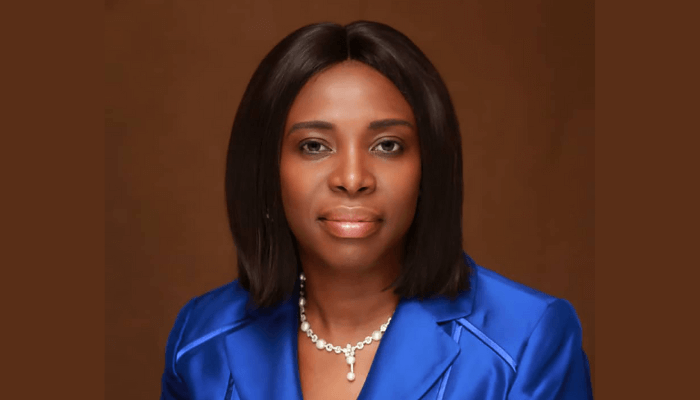
The Chief Executive Officer and founder of FABE Foundation International, Mrs. Temitope Okunnu, described the launch of the institute as a dream come true to promote environmental sustainability culture and lifestyle among Nigerians.

Temitope Okunnu
Chief Executive Officer and founder of FABE Foundation International, Mrs Temitope Okunnu

“Today, we are celebrating more than just the launch of the Institute of Sustainability, but the realisation of a vision that began almost 10 years ago.

“This began in classrooms, school upcycled ecogardens, and communities where we taught children that upcycling, recycling, and that sustainability is not concepts, but a lifestyle.

“When we started teaching climate action in schools through EcoSchoolsNG, we dreamed of raising a generation that understands and acts for the planet.

“The FABE Institute of Sustainability is that dream come alive — an e-learning platform built to make climate literacy, circular economy, and sustainability education accessible to everyone.

“It is built for Nigerians, by Nigerians, to help us solve global problems locally – because when people understand the why and how of sustainable living, real change begins.

“Powered by Deloitte Africa, FIS stands as Nigeria’s first sustainability-focused e-learning institute – a bridge between knowledge and action,” she said.

Okunnu noted that learners could explore courses designed by African experts already creating solutions in waste management, renewable energy, sustainable finance, biodiversity, and green enterprise.

“To Deloitte Africa, thank you for believing in this dream and investing in the power of education to build a sustainable future,” Okunnu said.

In her keynote address, the Deloitte West Africa Chief Sustainability officer, Mrs. Abena Biney, noted that the partnership was part its Corporate Social Responsibility (CSR) to promote sustainability in Africa.

“It is my utmost pleasure as we celebrate the lunch of the FABE Institute of Sustainability (FIS). This is a milestone in advancing sustainable climate change education and advancing awareness across our region.

“On behalf of Deloitte, I want to express how proud we are to be part of this journey. Sustainability is something we owe very close and dear to our heart we believe in sustainability and that will be gains with informed people.

“When individuals understand the why behind sustainability, they begin to see how their actions in actions daily decisions in innovation and other activities can make a difference,” Biney said.

According to her, there is a green skills gap in Africa, which the institute is set to bridge, hence the strategic partnership.

“We have a green skills gap in Africa, across Africa there’s a growing recognition of the needs to transition towards cleaner and more sustainable systems in energy agriculture and finance.

“One of our biggest barriers is that we do not have enough people with the skills required to make that transition or at a greater scale.

“We have enough in enthusiasm, we have boundless passion and great ideas but we need more people with technical practical and managerial expertise to change these ideas into lasting solutions.

“As a result in partnership with the FABE Foundation, we see sustainability not just as a corporate social responsibility but as a capability imperative,” she said.

On her part, the Special Adviser to the Lagos State Governor on Climate change and Circular Economy, Mrs. Titilayo Oshodi, lauded FABE Foundation on the great feat of setting up a sustainability institute.

“I congratulate the FABE Foundation on the launch of its FIS, it is such a great feat.

“Today is not just a launching of an institute but it is about an idea whose time as fully come. The FIS  is more than a building or virtual platform.

“It is showing us how learning can lead us to the future where progress and the planet are not in competition but in collaboration.

“We are moving out of outdated models to teach sustainability, through innovation and hands one experience, where waste becomes wealth and where learners do not just memorise climates solutions.

“In Lagos, this is the spirit that drives our secular economy agenda we are building a city that does not just see change but adapts to change,” she said.

She said that sustainable development was not a luxury but necessity and pathway to shared prosperity.

“FABE institute and its partners stands as representative that bridge the gap between knowledge and impact where younger Africans, innovators and policy makers can meet at the intersection of ideas and relationship.

“We will learn not only worst sustainability is but how to make it working our homes city and industries sustainability is not just a cause, it is a culture,” she said.

Lauding FABE Foundation’s exploits, Dr Desmond Majekodunmi, the Executive Director of Lekki Urban Forest and Animal Sanctuary Initiative, described it as the right step in the right direction.

“The importance of leading a sustainability revolution is what we call this launch. With what FABE is doing in partnership with the launch we say a big well done.

“This launch is not just the beginning, we are now on the springboard of environmental awareness education that will penetrate deep into the conscience of those who we come in contact with.

“As we start opening the awareness to schools and the education sector, this consciousness will spread exponentially and prick the conscience of all who are trying to understand what we are trying to do with the sustainability revolution FABE has started in Africa,” Majekodunmi said.

By Mercy Omoike
Nigerian Breweries reaffirms drive for net-zero emission by 2030

0

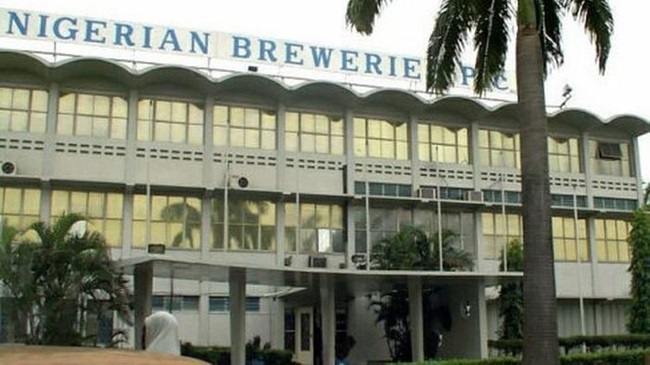
Nigerian Breweries Plc, Nigeria’s foremost brewing company, has reaffirmed its ambition to achieve net-zero carbon emissions in production across its operations nationwide by 2030.

The Corporate Affairs Director, Nigerian Breweries Plc, Mr. Uzodinma Odenigbo, made this known on Thursday, October 30, 2025, in Lagos, in a communique from a media parley/engagement session.

Odenigbo stated that the company’s ambition was aimed at promoting environmental sustainability and responsible production across its value chain.

Nigerian Breweries Plc

He noted that the company had made significant investments in renewable energy solutions such as biomass, solar and energy-efficiency projects across its breweries.

He said to reduce carbon emissions across its breweries, the company had signed power purchase agreements to this effect.

Odenigbo explained that, over the last few years, the company had signed many power purchase agreements with different renewable energy firms to reduce its dependence on non-renewable energy sources.

He disclosed that the company had spent over N2.5 billion supporting its carbon reduction ambition across its operations as part of the Brew a Better World sustainability strategy.

Odenigbo added that the company had committed considerable resources by contributing to water-replenishment projects in water-stressed areas.

Some of which include support for the Olokomeji reforestation initiative, where over 300,000 trees have been planted in Ogun state, Nigeria, through external partnerships to support local watershed restoration.

“As a company, we are advancing sustainability outcomes through our Brew a Better World initiatives.

“Over the past few years, we have made notable investments in renewable energy as part of our transition toward net-zero operations that many people are unaware of.

“We are also signing power purchase agreements to further reduce our national carbon footprint and progress toward our long-term net-zero ambition,” he said.

Odenigbo affirmed that the company would continue to empower its host communities by investing in capacity building for its people and expanding its operations to create employment opportunities.

He disclosed that the company recently invested over N200 million in skill acquisition and constructed a cassava milling plant in Kaduna and Awo-Omamma (Imo State), respectively.

By Rukayat Moisemhe

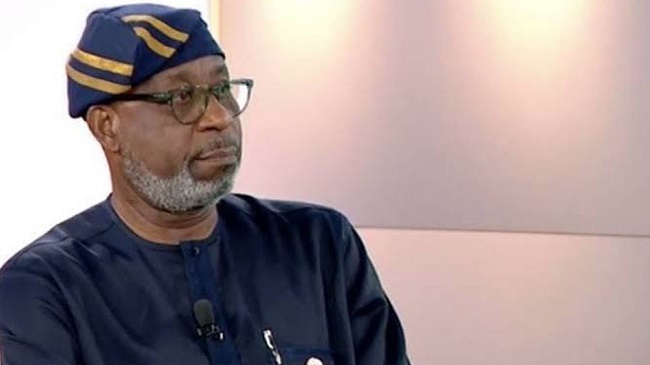
We’ve recovered over 90 mining sites from illegal miners – Alake

0

The Minister of Solid Minerals, Mr Dele Alake, says no fewer than 90 mining sites have been recovered from illegal miners across the country.

Alake made the disclosure in Akure on Thursday, October 30, 2025, at the ongoing South-West stakeholders’ dialogue organised by Afenifere, the Pan-Yoruba social-cultural group; DAWN Commission; and South-West governors.

The theme of the two-day summit is: “Strengthening Democracy Through Dialogue: Assessing Progress. Charting the Future.”

Dele Alake
Dr Dele Alake, Minister of Solid Minerals Development

Alake added that over 300 illegal miners had been arrested with 50 of them being prosecuted, stating that over 20 illegal miners had been convicted since the inception of the present administration.

According to him, the ministry in collaboration with the Nigeria Security and Civil Defence Corps (NSCDC) has established mining marshals with a purpose to secure mining sites.

The minister noted that the Federal Government raked in N28 billion as revenue in 2024 from the ministry, adding that the ministry over-performed on its budgetary target in 2024.

Alake said that the current administration’s policy on mining was that the mined minerals should not be exported raw except undergone local process in giving it value chain.

He cautioned traditional rulers not to connive with illegal miners irrespective of financial inducements, saying the future of the country must not be traded.

Also speaking, Gov. Ademola Adeleke of Osun State, asked the stakeholders in the South-West not to allow party politics to divide them in achieving oneness and togetherness that would bring desired development.

Adeleke, who was represented by his deputy, Mr. Kola Adewusi, said that the summit would amount to waste of time and a mere repetition if resolutions are not put into actions.

He said that as the descendants of Odua, people of the South-West must forgive one another and allow peace, mutual understanding to achieve the desired unity.

The governor said that the state government’s plans to enhance collaboration with the federal structure was clouded by political partnership actively promoted by operatives of the ruling political party at the centre.

“We discovered over time that partisan consideration has become the yardstick for federal interactions with Osun State.

“A development that threatens to fracture inter-governmental relations.

“Even with the pace of positive reach-out, it is sad to note that some operatives of the ruling federal party have adopted an adversarial approach to Osun State.

“Federal projects and initiatives are now being routed to party structures instead of Osun State government machinery.

“Nominations and access to federal opportunities are channelled to party organisations with official state structures deliberately excluded,” Adeleke said.

In his remarks, the Director-General of the Development Agenda of Western Nigeria (DAWN), Dr Seye Oyeleye, said the summit was an opportunity to build institutions capable of bridging inter-regional divides.

“We seek platforms that create pathways to collaboration around our shared values, shared heritage, and shared destiny.

“History teaches us that progress is built on partnerships, not isolation.

“We must ensure that this becomes an enduring institutional platform through which South-West engages with the Federal Government, starting from today and into the foreseeable future,” he stated.

By Alaba Olusola Oke

Stakeholders seek reversal of privatisation in electricity sector

Stakeholders comprising trade unions and civil society organisations (CSOs) have called for the urgent reversal of privatisation in the electricity sector and all existing privatisations in the water and waste sectors.

The stakeholders also called for the suspension of ongoing or planned discussions with the World Bank and other International Financial Institutions (IFIs) on the privatisation of public assets.

Their call is contained in a communiqué issued at the end of the National Public Utilities Summit and made available to newsmen on Wednesday, October 29, 2025.

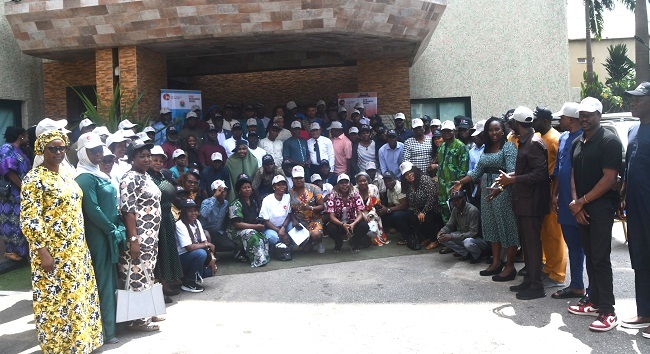
National Public Utilities Summit
Participants at the National Public Utilities Summit

The summit, themed “Promoting Transparency and Decent Work in Supply Chains in Electricity, Water, and Waste Services in Sub-Saharan Africa”, was organised by Public Services International (PSI) in collaboration with DGB Bildungswerk Bund (DGB BW).

The event reviewed the impact of the PSI-DGB project on promoting decent work and addressing privatisation in the water, electricity and waste sectors.

The communiqué was endorsed by the Amalgamated Union of Public Corporations, Civil Service Technical and Recreational Services Employees (AUPCTRE), the National Union of Electricity Employees (NUEE) and their CSO partners under the PSI-DGB project.

The CSO partners include the Renevlyn Development Initiative (RDI), Citizens Free Services Forum (CFSF), Child Health Organisation, and the Union of Kenya Civil Servants (UKCS).

The stakeholders urged the government to adopt Public-Public Partnerships (PUPs) as a sustainable, democratic and just alternative to privatisation which have shown proven success in delivering quality public services without profit motives.

They called on the government to reinvest in human capital within the public sector by allocating sufficient resources for the training, motivation, and retention of workers to promote efficiency, innovation, and transparency.

They also called for stronger social dialogue and collaboration among civil society, trade unions, and other key sectors to hold the government accountable.

They further urged the PSI-DGB to support education projects for workers on the PUP model, which was still at its early stage in Nigeria.

The stakeholders noted that privatisation had failed to serve the public interest, arguing that Nigeria’s electricity sector had neither increased power generation nor improved distribution.

They added that, instead, it had led to escalating tariffs and categorised consumers according to economic status. In the water sector, it had shut off consumers, and in the waste sector, discouraged unionism.

According to the communiqué, public revenues have been plundered and funds that could have been invested in improving public services have been channelled into privatised entities that claimed they would invest in public utilities.

“For instance, the Nigerian government and international funders have ploughed over N2 trillion in bail out funds for the 11 Power distributing companies without any single megawatt added to the 12,500 megawatts obtained in 2013,” they noted.

They linked increased corruption and conflicts of interest to privatisation, noting that opaque contracts that did not pass through due process had created room for private individuals and companies to fleece Nigeria while holding onto public utilities.

They noted that workers in the water, electricity and waste services sectors face precarious work conditions marked by low wages, wage arrears, job insecurity, casualisation, and lack of social protection such as pensions and unemployment insurance.

“These deliberate policies continue to undermine workers’ morale, workers’ dignity, service quality and community well-being.

“Advocates of public sector solutions are largely ignorant on the workings of the Public-Public Partnership Model of managing public utilities and there are few discussions going on about the model,” they said.

By Martha Agas

UNESCO, LVMH sign new five-year partnership, expand joint actions for biodiversity conservation

0

UNESCO and LVMH Group on Thursday, October 30, 2025, announced the renewal of their partnership dedicated to biodiversity conservation and sustainable development.

This new agreement, entitled “For the Beauty of the Living”, strengthens and expands the cooperation first initiated in 2019 around UNESCO’s Man and the Biosphere Programme.

Now extending beyond the scope of this programme, the partnership aims to intensify joint actions by mobilising all of UNESCO’s education, science and cultural programmes, with the active support of LVMH. It also includes a new project conducted with the Tiffany & Co. Foundation, focused on the sustainable management of marine areas.

Audrey Azoulay
Audrey Azoulay, UNESCO Director-General

“Preserving together the beauty of the living is the objective of this strengthened partnership. Within UNESCO-designated sites, we are developing with LVMH nature- and culture-based solutions, such as agroforestry or craftsmanship, for the benefit of local communities around the world,” said Audrey Azoulay, Director-General of UNESCO.

“Proud of the actions carried out locally under the first partnership with UNESCO, LVMH is pleased to formalise this new chapter. In connection with local stakeholders, such as breeders and farmers, the Group intends to continue its role as an integrator and facilitator in shaping this renewed relationship with living systems,” added Antoine Arnault, Image and Environment of LVMH.

Three priorities for 2025–2029

The “For the Beauty of the Living” partnership is structured around three major priorities:

  • Supporting sustainable economic models: supporting local initiatives designed according to community needs and territorial specificities, notably within the framework of actions already undertaken in the Amazon or in Africa.
  • Measuring environmental and social impacts: promoting sustainable and nature-positive practices by assessing their combined benefits (carbon, biodiversity, water, soil, know-how) and contributing to international work on the development of Nature Certificates, aiming in particular at providing additional income for local communities.
  • Strengthening skills and knowledge: promoting sustainable practices through agroforestry or regenerative agriculture, especially in professions connected to living systems, through education, research, and skills-based sponsorship, while valuing local know-how. The partnership will notably rely on UNESCO University Chairs and cooperation with the Learning Planet Institute.

A first illustration with the Tiffany & Co. Foundation

The renewal takes concrete form as of today with a symbolic commitment: the Tiffany & Co. Foundation joins UNESCO to support ocean sciences. Through the “Delivering a Healthy Ocean” initiative, the Foundation will support the development of sustainable management plans for marine areas in several regions of the world, mobilizing scientific and local knowledge, and strengthening international cooperation.

This project will help establish a network of decision-makers and experts in at least 10 countries and will promote the emergence of concrete solutions to protect marine ecosystems. It also aligns with the objectives of the Decade of Ocean Science for Sustainable Development (2021–2030), led by UNESCO’s Intergovernmental Oceanographic Commission.

A new collaboration built on tangible results since 2019

This new chapter extends a first phase of cooperation between LVMH and UNESCO’s Man and the Biosphere Programme, conducted over the past five years. It focused on eight biosphere reserves in the Amazon region – in Bolivia, Brazil, Ecuador and Peru covering nearly 30 million hectares and home to 1.3 million people, including many Indigenous communities.

In close collaboration with these communities, more than 80 initiatives directly benefiting over 1,000 families and young people have helped restore ecosystems and create sustainable sources of income. Among the main achievements:

  • Establishment of participatory governance in the eight biosphere reserves located in Bolivia (Pilón-Lajas, Beni), Ecuador (Yasuní, Sumaco, Podocarpus-El Condor), Brazil (Central Amazon) and Peru (Manu, Oxapampa-Ashaninka-Yanesha), including the involvement of local communities and youth networks in management committees.
  • Training and equipment for forest fire prevention: more than 200 people have been trained and equipped in Peru, Brazil, Ecuador and Bolivia.
  • Development of income-generating activities unrelated to deforestation, such as meliponiculture in Peru, with the support of 26 producers; creative mentoring, with the participation of Central Saint Martins, for the Tsimane women’s community in Bolivia producing jewelry from local and renewable resources; and cacao production through agroforestry practices in Ecuador and Peru.

The direct and indirect support of local communities lies at the heart of the initiative. Thus, in Peru, nearly 28,000 people have indirectly benefited from the training of fire prevention and management brigades, the provision of equipment, and the construction of 100 km of firebreaks.

In addition, almost 18,000 people have indirectly benefited from support for ecotourism and agroforestry, as well as for the production of cocoa, coffee, crafts and honey, particularly in the central area of the Bioay (Oxapampa–Ashaninka–Yanesha) Reserve and the Manu Reserve.

Several LVMH Maisons have made concrete contributions to this first phase: Guerlain launched, in collaboration with UNESCO, the Women for Bees initiative to train and support more than 120 women beekeepers in eight countries while helping to preserve these territories. Christian Dior Couture partnered with UNESCO to strengthen community initiatives for biodiversity conservation and restoration in Mexico’s Monarch Butterfly Biosphere Reserve.

The new global partnership “For the Beauty of the Living” is part of LVMH’s LIFE 360 environmental strategy and extends a collaboration already embodied by concrete, on-the-ground actions.

Three supermarkets sealed for violating Lagos single-use plastics ban

0

The  Lagos State Government has sealed three supermarkets in the Kosofe area for violating the ban on single-use plastics, as part of its ongoing enforcement against plastic pollution.

Commissioner for the Environment and Water Resources, Tokunbo Wahab, disclosed this in a post on X on Wednesday, October 29, 2025, stating that the exercise aimed to ensure full compliance with the state’s environmental regulations.

According to him, enforcement teams of the ministry carried out operations across multiple locations in the Kosofe Local Government Area, where several businesses were found to be non-compliant.

Tokunbo Wahab
Lagos State Commissioner for the Environment and Water Resources, Tokunbo Wahab

“Winny Supermarket has been sealed, with all single-use plastic materials confiscated for non-compliance,” Wahab wrote.

He added that Afia Supermarket at Tipper Garage, Ketu, and Beyond Tastee2Go Restaurant on Ogudu Road, Ojota, were also sealed on Tuesday, October 29, 2025, after repeated warnings were ignored.

“Similarly, Afia Supermarket at Tipper Garage, Ketu, and Beyond Tastee2Go Restaurant on Ogudu Road, Ojota were sealed on Tuesday, October 29, 2025, after repeated warnings were ignored.

“This ongoing exercise is part of our broader effort to curb plastic pollution, protect the environment, and promote a sustainable waste management culture in Lagos,” the commissioner stated.

Wahab urged businesses to transition to eco-friendly alternatives, noting that the government would continue to intensify enforcement.

“Our goal remains clear: to safeguard public health and protect our environment for a #CleanerLagos and a #GreaterLagos,” he added.

The Lagos State Government began full-scale enforcement of its ban on single-use plastics below 40 microns with effect from Tuesday, July 1, 2025.

The move, aimed at tackling environmental degradation and promoting sustainable living, targets Styrofoam food packs, plastic straws, lightweight nylon bags, disposable cups, and plastic cutlery.

The state government also warned that any business found storing, selling, or distributing such items would be sealed, while offenders would face penalties in line with Lagos’ environmental regulations.

WaterAid, PepsiCo inaugurate new WASH facilities in Ikorodu North, over 54,000 residents to benefit

In a major stride toward improving access to clean water and sanitation in Lagos State, WaterAid Nigeria, in partnership with the PepsiCo Foundation, on Wednesday, October 29, 2025, commissioned and handed over newly constructed water and sanitation facilities at Agodo Alara Primary School and Ebuwawa Community, Agbede, both in Ikorodu North Local Council Development Area (LCDA).

The ceremony, held at Agodo Alara Primary School and later at Ebuwawa Market Square, attracted key dignitaries including representatives of the Lagos State Ministry of Environment and Water Resources, the Office of Drainage Services, the Office of Environmental Services, the Ikorodu North LCDA Chairman (represented by the Vice Chairman, Aliyu Matthew Adesanya), education stakeholders, civil society partners, community leaders, and members of the press.

Ikorodu North LCDA
Commissioning of newly constructed water and sanitation facilities in Ikorodu North LCDA, Lagos

Delivering the opening remarks on behalf of the Country Director, WaterAid Nigeria, Dr. Adebayo Alao, Lagos State Lead for WaterAid, expressed joy at the successful completion and handover of the facilities, describing the moment as “a major step in advancing sustainable and inclusive access to clean water, sanitation, and hygiene in Lagos State.”

The intervention, part of the PepsiCo Foundation-funded Water, Sanitation and Hygiene Improvement Project (WASHIP), is a three-year initiative launched in September 2022. It aims to provide sustainable, reliable, and affordable WASH services to over 43,000 people while promoting improved hygiene practices among 100,000 individuals across six schools and one primary health centre in Ikorodu North, Ojodu, and Igando-Ikotun LCDAs.

Dr. Alao highlighted the impressive progress of the project: “During the first two years, we constructed six solar-powered, inclusive WASH facilities across six sites. In the third year, two more water facilities – one in Ebuwawa Community and another at Agodo Alara Primary School – were completed, alongside the rehabilitation of a six-compartment sanitation block.”

With these additions, the project has now provided direct WASH access to 54,489 people, surpassing its initial targets.

WaterAid also revealed the success of its Hygiene Behaviour Change (HBC) Campaign, which reached over 952,000 people through radio and mass media campaigns. The initiative has significantly improved awareness and adoption of key hygiene practices, including regular handwashing with soap, safe water handling, and proper sanitation behaviors.

To ensure sustainability, WaterAid established seven WASH Committees (WASHCOMs), formed Environmental Health Clubs (EHCs) in schools, and trained 35 young women as Female Local Area Mechanics (FLAMs) for routine maintenance and repair of facilities.

“These community structures ensure that ownership and management of the facilities remain in local hands,” Dr. Alao emphasised.

“We deeply appreciate the PepsiCo Foundation for their unwavering partnership and the Lagos State Government for their leadership in the WASH sector.”

He further urged the LCDA and the Lagos State Universal Basic Education Board (SUBEB) to prioritise sustainability, allocate resources for maintenance, and replicate this model across the state.

Speaking on behalf of the Ikorodu North LCDA Chairman, Aliyu Matthew Adesanya commended WaterAid and PepsiCo Foundation for their commitment to community development.

“This project represents a sustainable solution that promotes cleanliness, reduces water-borne diseases, and supports productivity in our markets and schools,” he said.

“We call on traders, residents, and youths to take ownership of these facilities and ensure they remain functional for generations to come.”

Similarly, Prince Adeniran Ogunbanwo, Chairman of the Ikorodu North Community Development Committee (CDC), highlighted the collaborative effort that led to Agodo Alara’s inclusion in the project. He acknowledged the role of proactive teachers who continuously drew attention to the school’s dire sanitation conditions.

“It was community persistence and effective communication that brought this intervention here,” Ogunbanwo noted, while urging parents, teachers, and local authorities to prioritize facility maintenance and security.

Also speaking, Chief Lateef Adelowo, Baale of Agbede Ebuwawa Community, expressed gratitude for what he described as “a historic day” for his people.

“This is the first time Agbede is experiencing a water and solar-powered project of this magnitude. We will ensure proper maintenance so that, by next year, you will find it in excellent condition,” he assured. 

The highlight of the event was the signing of a Memorandum of Understanding (MoU) to cement the partnership and clarify sustainability roles, coordinated by Mr. Rotimi Adenigba, Executive Director of the Humanity Family Foundation for Peace and Development (HUFFPED).

Dignitaries at the event included James Oyedele, Director, Lagos State Ministry of Environment and Water Resources; Mrs. Juliet Omoneh of SUBEB; Mrs. Juliet Olaide Oni, Head Teacher of Agodo Alara Primary School; Niyi Alabi, Chairman of Ebuwawa CDA; and several community representatives.

The commissioning marked not only the completion of vital infrastructure but also a deepened collaboration between government, corporate partners, civil society, and communities in ensuring that clean water and sanitation are not privileges but basic rights.

As the event concluded, Dr. Alao reaffirmed WaterAid’s vision: “We remain committed to working with all stakeholders to achieve universal access to sustainable, inclusive, and resilient WASH services in Nigeria’s schools and communities.”

By Ajibola Adedoye

WIEN congratulates Mshelbila, Ekpo on GECF elections

0

Africa’s leading advocate for gender inclusion and capacity development in the energy sector, Women in Energy Network (WIEN), congratulates the Managing Director of Nigeria LNG Limited (NLNG), Dr. Philip Mshelbila, on his election as Secretary-General of the Gas Exporting Countries Forum (GECF) at the 27th Ministerial Meeting of the Forum held in Doha, Qatar.

WIEN also congratulates the Minister of State for Petroleum Resources (Gas), Ekperikpe Ekpo, on his emergence as President of the 2026 GECF Ministerial Meeting, describing both appointments as a resounding affirmation of Nigeria’s leadership and credibility in the global gas community.

Eyono Fatai-Williams
Mrs. Eyono Fatai-Williams, President, Women in Energy Network (WIEN)

President of WIEN, Mrs. Eyono Fatai-Williams, hailed the dual achievements as a strong vote of confidence in Nigeria’s technical competence, vision, and growing influence within the international gas industry.

“The emergence of Minister Ekpo as President of the 2026 GECF Ministerial Meeting and the election of Dr. Mshelbila as Secretary-General represent a major vote of confidence in Nigeria’s strategic role in shaping the global gas agenda,” Mrs. Fatai-Williams stated, adding that “these achievements call attention to our nation’s technical depth, visionary leadership, and commitment to promoting cooperation, inclusivity, and stability across the gas value chain.”

WIEN emphasized that the twin appointments validate Nigeria’s continued efforts to strengthen investment, infrastructure, and innovation across its gas sector.

Mrs. Fatai-Williams noted that Nigeria continues to demonstrate strong resolve in positioning natural gas as a catalyst for economic growth, industrialization, and sustainable development.

“Dr. Mshelbila’s election as GECF Secretary-General is a proud moment for Nigeria and Africa. His wealth of experience and steady leadership at NLNG will bring value-driven collaboration and renewed purpose to the GECF,” she said. “His appointment is a testament to excellence, consistency, and technical brilliance.”

Mrs Fatai-Williams highlighted that Nigeria LNG Limited (NLNG) is a proud corporate member of WIEN, upholding the values and aspirations of the Network through its commitment to diversity, inclusion, and the advancement of women in the energy industry.

She declared that Dr Mshelbila’s outstanding professional and leadership pedigree reinforces WIEN’s connection to NLNG and emphasizes the organization’s role in building on shared vision of fueling home cooking with LPG and creating an industry that harnesses full human capacity irrespective of gender in delivering energy to homes and businesses.

“NLNG’s consistent support for professional growth and gender balance reflects the spirit of WIEN’s mission to build a more inclusive and innovative energy sector,” she added.

Reiterating WIEN’s mission to promote inclusivity and sustainability across the energy industry, Mrs. Fatai-Williams stressed that natural gas remains central to Nigeria’s industrial transformation and energy security.

“As a nation and as a continent, we remain committed to advancing gas as the bridge fuel for industrialization, job creation, and climate balance,” she said. “These new global roles for Minister Ekpo and Dr. Mshelbila reaffirm Nigeria’s standing as a trusted and forward-looking partner in the global energy dialogue.”

WIEN expressed confidence that both leaders will represent Nigeria with distinction, working with other member nations to strengthen cooperation, stability, and inclusivity within the global gas market.

“Their elections reflect the international community’s confidence in Nigeria’s leadership and technical expertise in the global gas sector,” Mrs. Fatai-Williams concluded. “Natural gas remains the cornerstone of Nigeria’s industrial growth, energy security, and economic transformation under the Renewed Hope Agenda. Nigeria will continue to be a dependable voice in advancing equitable energy access and a cleaner energy future.”

Eugene Itua honoured for panel contribution at AADFI-ADFIAP Joint CEO Forum

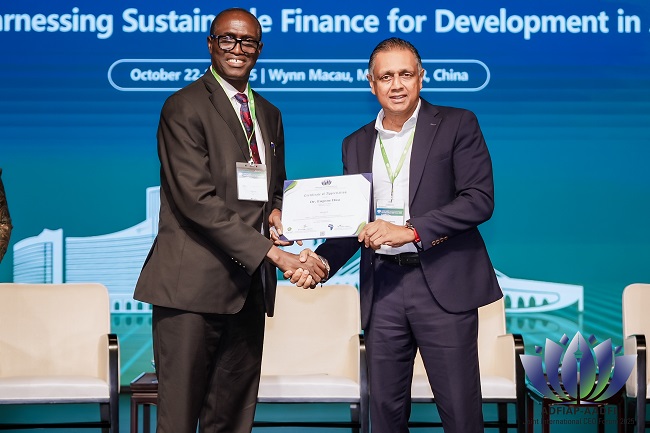
At the AADFI-ADFIAP Joint International CEO Forum 2025, held from October 22 to 24, 2025, in Macau SAR, China, Dr. Eugene Itua, CEO of Natural Eco Capital and Executive Director of the Africa Green Economy and Sustainability Institute (AGESI), was honoured with a Certificate of Appreciation by Mr. Thimal Perera, CEO of DFCC Bank PLC, Sri Lanka, for his outstanding contribution as a panelist in Session 1: “Harnessing Sustainable Finance for Development – Exploring Innovative Financing Models to Accelerate Sustainable Development in Asia-Pacific and Africa”.

Dr. Itua’s intervention delivered a compelling thesis: Sustainable finance must evolve from niche innovation to mainstream risk management”, anchored in three foundational pillars:

Eugene  Itua
At the AADFIAP-AADFI Joint International CEO Forum 2025, held October 22–24 at the Wynn Macau Hotel, Macau SAR, China, Mr. Thimal Perera, CEO of DFCC Bank, proudly presented Dr. Eugene Itua, CEO of Natural Eco Capital and Executive Director of AGESI, with a Certificate of Appreciation for his outstanding contribution as a panelist in Session 1: Harnessing Sustainable Finance for Development
  • Legal and policy certainty
  • Natural capital valuation
  • Auditable governance standards

A standout moment was his introduction of the Africa Green Opportunity Index™ (AGOI) – a first-of-its-kind strategic dashboard designed to transform Africa’s ecological wealth and governance capacity into investable, measurable, and resilient financial opportunities. The AGOI maps over $1.4 trillion in annual natural capital value and benchmarks governance readiness across African nations.

Dr. Itua proposed using the AGOI as a shared platform for opportunity mapping and strategic risk benchmarking between Africa and Asia-Pacific. He emphasized that Africa’s natural capital must be perceived not as a vulnerability, but as an opportunity: “The GOI is Africa’s answer to the global capital gap. It shows where nature is bankable, where governance is investable, and where capital can flow with confidence.”

The Africa Green Opportunity Index™ (AGOI) shifts the narrative from “Africa as vulnerable” to “Africa as investable.” It meets Development Finance Institutions (DFIs) where they operate – at the intersection of governance, risk, and capital deployment—positioning them as co-architects of global resilience. But its impact goes further.

AGOI also engages governments by providing a strategic lens to assess policy reform, signal investment readiness, and align national development plans with global sustainability standards. It empowers private investors and corporates with market intelligence to identify bankable natural assets and sustainability-aligned opportunities. For civil society and academia, AGOI offers a transparent platform for advocacy, research, and capacity building – ensuring that sustainability is not just a financial imperative, but a shared societal mission.

Together, these stakeholders form a collaborative ecosystem where AGOI serves as the common dashboard – translating ecological wealth and governance capacity into measurable, investable, and resilient development pathways across Africa.

Dr. Itua’s panel remarks also included:

  • Case studies on climate legislation and sovereign investment strategies
  • Tools for monetizing nature as infrastructure, including Natural Capital Accounting and forest carbon offset systems
  • Governance safeguards such as UNDP SDG Impact Standards and ESIA/RAP compliance frameworks

He concluded with a call for auditable resilience, urging DFIs and investors to embed law, nature, and governance into every deal. His closing message: “Let’s move sustainable finance from niche to norm. Let’s build a future that is resilient, inclusive, and bankable.”

Faith meets health: Fighting breast cancer through awareness of risks including environmental factors

0

Every October, the world goes pink – a symbolic reminder of the ongoing fight against breast cancer. Across countries and communities, survivors, advocates, and health institutions amplify a message of hope: “early detection saves lives.” In Ghana, where breast cancer remains the most commonly diagnosed cancer among women and the leading cause of female cancer deaths, this message is both urgent and deeply personal.

The urgency of this call, is underscored by the fact that, while the exact cause of this devastating disease remains unknown, scientists also point to hazardous chemicals in our everyday environment as important and often overlooked contributing factors

Breast Cancer
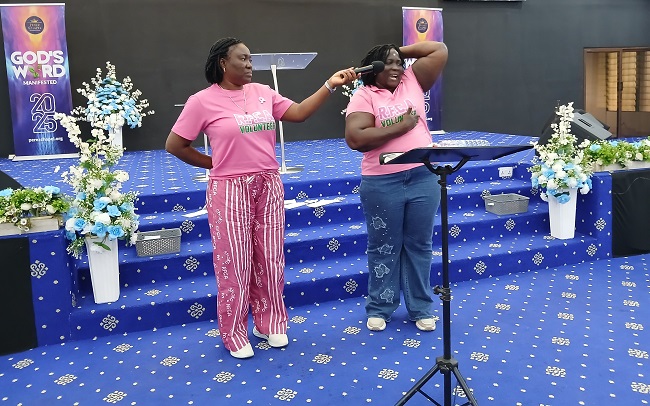
Assisted by another member of the Run for a Cure, Ghana Team, Madam Odonkor demonstrates the process of self-examination of the breast

This year, that call resonated powerfully at the Resurrection Temple, Adenta Branch of Perez Chapel International. Run for a Cure, Ghana, an NGO committed to the eradication of breast cancer in Africa, collaborated with the leadership of the Church and its Women of Faith Ministry (WOF), and organised a comprehensive sensitisation and free screening exercise to mark Breast Cancer Awareness Month.

The event, held on Sunday, October 26, 2025, combined education, screening, and spiritual reflection, inspiring women to take charge of their health as part of their faith journey.

A Call from the Pulpit: Health as a Ministry Priority

Before the main presentation, Associate Pastor Sammy Appiah delivered an exhortation which, among other things, reminded the congregation that caring for one’s body is a divine duty. He underscored that health is central to Christian living, explaining that “our ability to serve God effectively and live purposeful lives depends, in many ways, on the state of our health.”

Pastor Appiah’s message emphasised that Christian service thrives on wellness: physical, mental, and spiritual. He urged believers to make their health one of the priorities in their daily lives. His words set the tone for a morning that intertwined faith, science, and wellness.

Demystifying Breast Cancer: Understanding the Risks

The main presentation was delivered by Madam Rita Narkie Odonkor, a member of Run for a Cure, Ghana and Head of the Nursing Department of the West End University Collage, at Ngleshie-Amanfro. Speaking on the global theme, “Catch it Early, Treat it Right, Survive it,” she simplified medical facts and made them relatable to everyday life.

Madam Odonkor explained that breast cancer develops when cells in the breast grow uncontrollably, forming lumps or masses that may invade surrounding tissues.

She admitted that while the exact cause is not known, risk factors include modifiable ones that can be controlled and managed such as stress, cosmetic implants, diet, excessive alcohol intake, smoking and exposure to radiation. The non-modifiable risks are those that are beyond human control like being a woman, history of breast cancer in one’s family and oestrogen exposure through early onset of the menstrual cycle and late menopause.

However, Madam Odonkor, emphasised that “men, too, can develop breast cancer, although at lower rates,” and advised “everyone to be alert to unusual changes in the breast area and report them early.”

The concern of her Team is that breast cancer cases are on the rise in Ghana. Last year, 4,400 new cases were diagnosed and approximately 2,000 deaths occurred. Statistics from the Ministry of Health indicate that breast cancer accounts for about 18% of all cancer related deaths among Ghanaian women.

Recognising the Signs, Acting Early and Treatment

Using vivid pictorial slides, Madam Odonkor demonstrated how benign or harmless and malignant or dangerous lumps differ, stressing that early detection is critical to survival. Warning signs include: painless swellings in the breast, armpit or collarbone; changes in breast shape or size; thickening of the breast skin or when it becomes like an orange peel; a retracted nipple and a nipple discharge unlike that of a nursing mother.

“Pain is not the first sign,” she cautioned. “Don’t wait until it hurts before you act,” and urged women to perform monthly breast self-examinations and to have clinical screenings at least once a year.

Madam Odonkor explained that once it is established that one has breast cancer, three methods of treatment are available: Surgery to remove the lump or affected breast, radiotherapy process involving the use intense energy to kill the cancer cells, and chemotherapy, which uses powerful drugs to kill the fast-growing cells.

Following her presentation and general discussions, the other members of the group, who are also nursing professionals conducted free screenings and provided counseling to the women. The atmosphere was one of both seriousness and relief:  seriousness at the realization of risk, and relief at knowing how much could be done to stay healthy.

A Reflection on the Event

Reflecting on the significance of the day’s activities later in an interview, the President of the Church’sWomen of Faith Ministry, Ms. Louisa Nelson shared her joy over the engagement. “Sunday’s breast cancer sensitization and screening was a vital step towards promoting our health and wellbeing,” she stated,” noting that “it raised our awareness on the importance of early detection and empowered our members, especially we women, to take charge of their health.”

Ms. Nelson encouraged all other branches of Perez Chapel nationwide as well as women in other congregations and religious bodies to take advantage of this month, and beyond “to engage in similar initiatives for continuous awareness on healthy lifestyles and choices.

The Environment-Health-Cancer Nexus

Madam Odonkor’s presentation gave a hint on the relationship between environmental exposures and breast cancer risk. Research findings have established that long-term contact with certain chemicals and pollutants can disrupt hormonal balance and possibly influence cancer development.

“These are chemicals we are exposed to through the air we breathe, the food we eat, the water we drink, and the products we use. Many of them have been linked with breast cancer,” according to a publication on Breast Cancer and the Environment on the website of the USA based Silent Spring Institute, which researches into environment and women’s health.

The publication said over the years, studies have shown that chemicals can trigger breast cancer in many different ways. “They can damage DNA, causing a cancerous tumor to form; they can make breast cells grow uncontrollably; and they can change the way the breast develops, leaving it more vulnerable to carcinogens.”

It therefore called for the integration of the contribution of environmental chemicals in cancer prevention strategies, in order to reduce the burden of breast cancer. It is also recommendable that national cancer awareness raising efforts be complemented by environmental protection officers and activists advocating stricter regulation of hazardous chemicals, cleaner industrial practices and public education on safer product use.

The environment-health-cancer nexus makes it imperative for everyone, especially women to be conscious of their environmental health choices. Every small effort to reduce pollution or toxic exposure contributes to a healthier life.

Catching It Early, Treating It Right, and Surviving It

As Breast Cancer Awareness Month draws to a close, the message from the Adenta Perez Chapel and Run for a Cure, Ghana, event remains clear and hopeful: early detection saves lives. While,screening, self-examination, balanced living, and environmental mindfulness can drastically reduce risk.

With continued education and collaboration among civil society, health professionals, and faith-based organizations, Ghana can make meaningful progress in reducing breast cancer incidence and mortality.

The 2025 theme, “Catch it Early, Treat it Right, Survive it,” is far more than a slogan: it is a declaration of faith, resilience, and shared responsibility. It reminds every woman, every family, and every community that vigilance and care can turn fear into survival, and survival into testimony.

By Ama Kudom-Agyemang