A 55-year-old farmer, Sunday Olowosoga, on Friday, October 31, 2025, appeared before an Okitipupa Chief Magistrates’ Court in Ondo State, over alleged malicious damage of some crops and palm trees worth N3 million.
The defendant, whose address was not given, was facing a two-count charge bordering on misdemeanor and malicious damage.
The Police prosecutor, ASP Zedekiah Orogbemi, told the court that the defendant and one other at large, on Sept. 11 at about 10.00 a.m at Lurere village in Ode-Irele, Ode-Irele magisterial district, conspired to commit misdemeanor.
The farmer appeared in court over alleged malicious damage of some crops and palm trees worth N3 million
Orogbemi said the defendant, and one other at large, took a bulldozer to Lurere Village and destroyed some crops and young palm trees valued at N3 million.
According to the prosecutor, the destruction is over an undisclosed arguement with one Samuel Oyedele, the owner of the farmland.
He also said the defendant committed offences contrary to and punishable under Sections 517 and 457, Criminal Code, Cap.37, Vol. 1, Laws of Ondo State, 2006.
The defendant, however, pleaded not guilty to the charges preferred against him.
The Chief Magistrate, Mr. Olarenwaju Adelegan, granted the defendant bail in the sum of N1.2 million and one surety in like sum.
Adelegan added that the surety must be resident within the court’s jurisdiction and also present evidence of two years tax payment to the state government.
He adjourned the case until Nov.10 for further hearing.
An environmentalist with the Lower Niger River Basin Authority (LNRBA), Dr Olabisi Awoniyi, has warned that Nigerian rivers continue to face serious pollution challenges.
In an interview on Friday, October 31, 2025, in Ilorin, Kwara State, Awoniyi described rivers as synonymous with life, noting that they remained vital sources of sustenance for humans, animals, and plants.
He observed that Nigerian rivers suffered from significant pollution, mainly caused by industrial waste, poor sewage management, and agricultural runoff, among other factors.
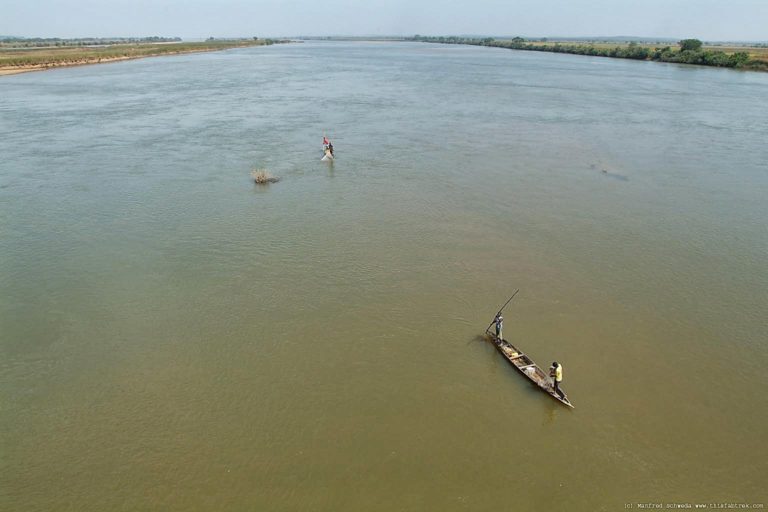
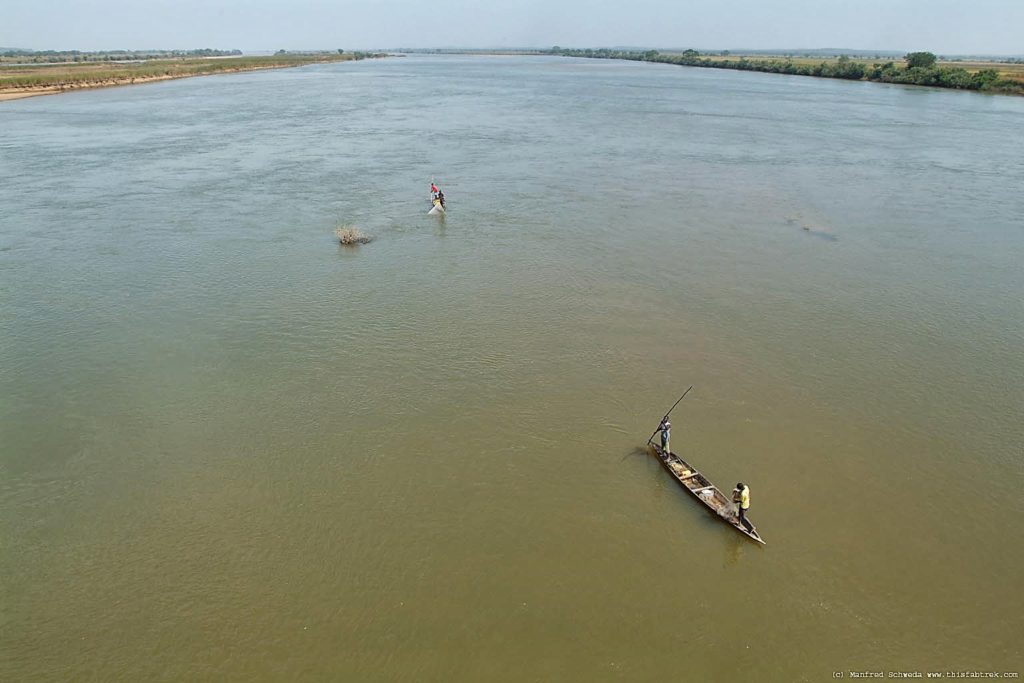
The River Niger
Awoniyi, who is an instructor and environmental scientist at the LNRBA, said rivers provide water, food, transportation, and energy, and in some areas have become cultural symbols – such as in the Argungu Fishing Festival.
“Through the rivers, we have our drinking water, it supports agriculture through irrigation, and fisheries,” he said.
According to him, rivers provide transport, generate energy through hydropower and support biodiversity; aquatic plants and animals.
He, however, lamented that there were many challenges facing our rivers and that all livelihoods that rally round them were under serious threats, saying this was detrimental to the existence of man.
He described pollution as the introduction of harmful or contaminating substances, or even excess natural materials into the environment at a rate faster than it could disperse, dilute, or decompose.
According to Awoniyi, the result is a negative effects on ecosystems and human health.
“So when harmful substances such as industrial waste, human waste in form of sewage, chemicals and plastics are introduced into our rivers, they become polluted and the effects are better imagined,” he said.
The environmental scientist explained that the Asa River in Ilorin serves as a confluence where other rivers and streams emptied their waters, adding that Asa is a tributary of the River Niger.
“Research findings have shown bacteriological contamination, high faecal coliform counts, and elevated physicochemical parameters downstream of urban and industrial discharges recorded in the river,” he said.
He noted that a healthy community thrived when its rivers were protected and appealed to residents to stop dumping refuse in gutters and channeling sewage into rivers.
“Whatever you do to the rivers have a way of coming back to you. Let us organise community clean-ups to remove plastics and waste from the rivers.
“Plant trees along riverbanks to reduce erosion and organise community education and advocacy programmes to raise awareness in rural and urban areas on the need to protect our rivers,” he advised.
President Bola Tinubu has approved the adoption of National Carbon Market Framework, the operationalisation of the Climate Change Fund and the restoration of the National Council on Climate Change (NCCC) to the budget line.
The approvals followed a presentation by the Director-General of NCCC, Mrs. Omotenioye Majekodunmi, at the second meeting of the council held at the Presidential Villa, Abuja.
Tinubu, represented by Vice-President Kashim Shettima, said the approvals were part of measures by his administration to position Nigeria to leverage opportunities in the global carbon market.
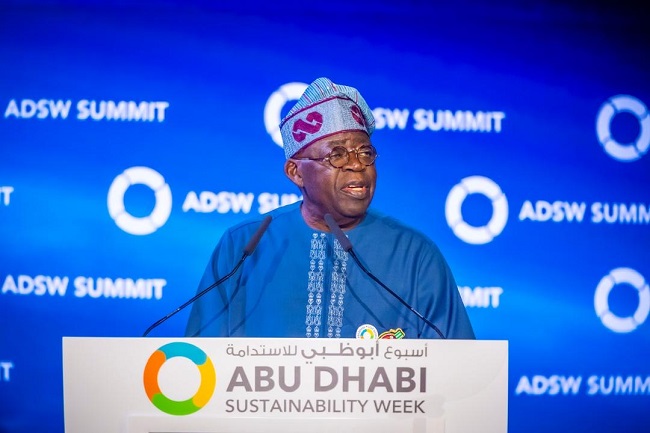
President Bola Tinubu
The Nigerian leader also said that the measure would enable the country to be more active in climate change ecosystem.
He explained that the goal was to establish and manage Nigeria’s participation in carbon markets, enabling the nation to unlock between $2.5 billion and $3 billion annually in carbon finance over the next decade to help meet climate goals.
Tinubu also set the agenda for Nigeria ahead of the forthcoming 30th United Nations Climate Change Conference (COP30) scheduled for Belem, Brazil.
He said that the focus was to harness all of the opportunities for financing climate resilient projects and related interventions, particularly from the global carbon market.
Tinubu said his administration recognises the fact that addressing climate change is not just an environment imperative but an opportunity to unlock new investments, jobs and innovations across the nation’s energy, agriculture and industrial sectors.
He said, “Nigeria stands ready to take its rightful place as a global leader in climate action, ensuring that our voice and our reality are heard and respected in international negotiations.
“We have demonstrated this commitment through our active participation in the UNFCCC process.
“Our progress towards implementing our nationally determined contributions and our efforts to mobilise climate finance for adaption and mitigation across all levels of government.”
The president assured that as the Chairman of the council, Climate action would continue to be prioritized in his administration’s development agenda.
“We will continue to champion policies that protect our people, strengthen our economy and position Nigeria as a destination for green investment and innovation.’
Earlier, Majekodunmi informed the council chaired by vice-president that the meeting was timely ahead of the 2025 United Nations Climate Change Conference (COP30) scheduled to hold in Brazil.
She said the deliberations and decisions of the council would shape how Nigeria is perceived globally and determine how effectively the country can mobilise support to achieve its climate goals.
The director-general expressed its commitment to providing the technical leadership and coordination needed to translate Nigeria’s climate goals into measurable results.
Presenting the council’s progress report, Majekodunmi disclosed that Nigeria is now eligible to access new rounds of climate finance from multilateral funds.
Highlighting the Secretariat’s key requests, she said the council sought the adoption of the National Carbon Market Framework to enable Nigeria unlock between $2.5 billion and $3 billion annually in carbon finance over the next decade.
The council also requested the operationalisation of the Climate Change Fund to ensure immediate readiness for fund mobilisation and utilisation.
The final request was for the council to restore the NCCC budget line within the annual FAAC allocation to guarantee the financial stability of the Climate Change Fund.
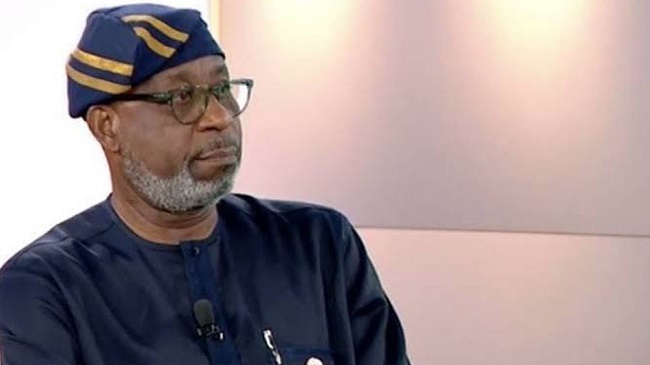
The Minister of Finance and Coordinating Minister of the Economy, Wale Edun, backed the couuncil Secretariat’s recommendations, noting that Nigeria must secure a strong position within the carbon framework.
He assured the council of his ministry’s support, including coordination with the ministry’s economic department to host a quarterly Climate Finance Tracking Dashboard.
The Kunming Biodiversity Fund (KBF) has announced the endorsement of 22 projects as the Fund’s first full-size projects. These projects will support 34 countries across all the regions and diverse ecosystems to achieve the global biodiversity commitments.
Since its launch in May 2024, the Kunming Biodiversity Fund has been rapidly developing as a full-fledged fund. The Fund aims to support countries to accelerate implementation of the Kunming-Montreal Global Biodiversity Framework (the KMGBF). The Fund prioritises implementing a whole-of-society approach to address nature and biodiversity loss, improving polices for biodiversity across all national and subnational levels, strengthening capacities and cooperation, and mobilizing additional resources.
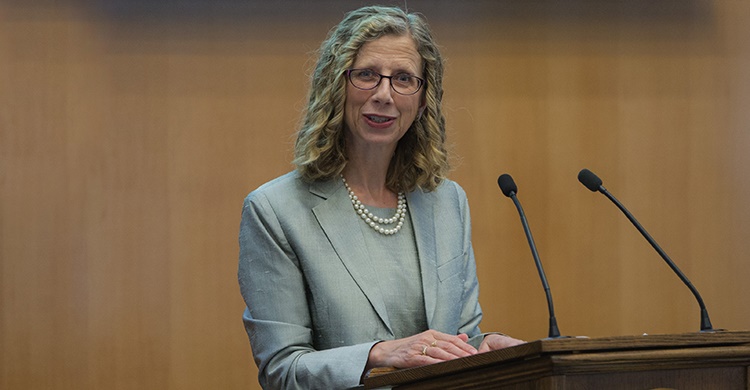
United Nations Environment Programme (UNEP) Executive Director, Inger Andersen. Photo credit: Eric Bridiers
“China has consistently advanced the global biodiversity conservation agenda with the strongest determination and most proactive approach. The Kunming Biodiversity Fund should adhere to the principles of international operation and multilateralism, uphold fairness, openness and transparency, strengthen the supervision and management of project implementation, and continuously monitor progress and evaluate the effectiveness of approved projects.” said Hiang Runqiu, Minister of the Ministry of Ecology and Environment of the People’s Republic of China.
According to the Intergovernmental Science-Policy Platform on Biodiversity and Ecosystem Services (IPBES), one million species are at risk of extinction largely due to human activities. Ecosystems on land and in the ocean have declined dramatically with three-quarters of the land-based environment and two-thirds of the marine environment significantly altered. This accelerating loss of biodiversity threatens the foundation of economies, livelihoods, food security, and health. The KMGBF provides the roadmap to halt and reverse this decline.
“Globally, biodiversity is vanishing at an alarming pace. For this reason, the Kunming Biodiversity Fund is moving quickly – approving projects and channelling finance to developing countries that need it most. The 22 newly approved projects, that will benefit at least 34 countries, will fast-track efforts to halt and reverse nature loss in line with global goals. It is a strong start, but with much more to do, we invite other partners to join us and help mobilize additional funding,” said Inger Andersen, Executive Director of UNEP.
“The endorsement of these first full-size projects represents a significant step in implementation of the Kunming-Montreal Global Biodiversity Framework. Through the Kunming Biodiversity Fund, countries will be better equipped to align their national strategies and strengthen implementation to turn commitments into action. Continued investment and support will be vital to sustain momentum and tackle biodiversity loss,” said Astrid Schomaker, Executive Secretary of the Convention on Biological Diversity.
Stakeholders have lauded the official launch of the FABE Institute of Sustainability (FIS) aimed at promoting environmental awareness and sustainability in Africa.
The launch of the institute was promoted by the Foundation for a Better Environment (FABE International) in partnership with Deloitte on Thursday, October 30, 2025, in Lagos.
The Chief Executive Officer and founder of FABE Foundation International, Mrs. Temitope Okunnu, described the launch of the institute as a dream come true to promote environmental sustainability culture and lifestyle among Nigerians.
Chief Executive Officer and founder of FABE Foundation International, Mrs Temitope Okunnu
“Today, we are celebrating more than just the launch of the Institute of Sustainability, but the realisation of a vision that began almost 10 years ago.
“This began in classrooms, school upcycled ecogardens, and communities where we taught children that upcycling, recycling, and that sustainability is not concepts, but a lifestyle.
“When we started teaching climate action in schools through EcoSchoolsNG, we dreamed of raising a generation that understands and acts for the planet.
“The FABE Institute of Sustainability is that dream come alive — an e-learning platform built to make climate literacy, circular economy, and sustainability education accessible to everyone.
“It is built for Nigerians, by Nigerians, to help us solve global problems locally – because when people understand the why and how of sustainable living, real change begins.
“Powered by Deloitte Africa, FIS stands as Nigeria’s first sustainability-focused e-learning institute – a bridge between knowledge and action,” she said.
Okunnu noted that learners could explore courses designed by African experts already creating solutions in waste management, renewable energy, sustainable finance, biodiversity, and green enterprise.
“To Deloitte Africa, thank you for believing in this dream and investing in the power of education to build a sustainable future,” Okunnu said.
In her keynote address, the Deloitte West Africa Chief Sustainability officer, Mrs. Abena Biney, noted that the partnership was part its Corporate Social Responsibility (CSR) to promote sustainability in Africa.
“It is my utmost pleasure as we celebrate the lunch of the FABE Institute of Sustainability (FIS). This is a milestone in advancing sustainable climate change education and advancing awareness across our region.
“On behalf of Deloitte, I want to express how proud we are to be part of this journey. Sustainability is something we owe very close and dear to our heart we believe in sustainability and that will be gains with informed people.
“When individuals understand the why behind sustainability, they begin to see how their actions in actions daily decisions in innovation and other activities can make a difference,” Biney said.
According to her, there is a green skills gap in Africa, which the institute is set to bridge, hence the strategic partnership.
“We have a green skills gap in Africa, across Africa there’s a growing recognition of the needs to transition towards cleaner and more sustainable systems in energy agriculture and finance.
“One of our biggest barriers is that we do not have enough people with the skills required to make that transition or at a greater scale.
“We have enough in enthusiasm, we have boundless passion and great ideas but we need more people with technical practical and managerial expertise to change these ideas into lasting solutions.
“As a result in partnership with the FABE Foundation, we see sustainability not just as a corporate social responsibility but as a capability imperative,” she said.
On her part, the Special Adviser to the Lagos State Governor on Climate change and Circular Economy, Mrs. Titilayo Oshodi, lauded FABE Foundation on the great feat of setting up a sustainability institute.
“I congratulate the FABE Foundation on the launch of its FIS, it is such a great feat.
“Today is not just a launching of an institute but it is about an idea whose time as fully come. The FIS is more than a building or virtual platform.
“It is showing us how learning can lead us to the future where progress and the planet are not in competition but in collaboration.
“We are moving out of outdated models to teach sustainability, through innovation and hands one experience, where waste becomes wealth and where learners do not just memorise climates solutions.
“In Lagos, this is the spirit that drives our secular economy agenda we are building a city that does not just see change but adapts to change,” she said.
She said that sustainable development was not a luxury but necessity and pathway to shared prosperity.
“FABE institute and its partners stands as representative that bridge the gap between knowledge and impact where younger Africans, innovators and policy makers can meet at the intersection of ideas and relationship.
“We will learn not only worst sustainability is but how to make it working our homes city and industries sustainability is not just a cause, it is a culture,” she said.
Lauding FABE Foundation’s exploits, Dr Desmond Majekodunmi, the Executive Director of Lekki Urban Forest and Animal Sanctuary Initiative, described it as the right step in the right direction.
“The importance of leading a sustainability revolution is what we call this launch. With what FABE is doing in partnership with the launch we say a big well done.
“This launch is not just the beginning, we are now on the springboard of environmental awareness education that will penetrate deep into the conscience of those who we come in contact with.
“As we start opening the awareness to schools and the education sector, this consciousness will spread exponentially and prick the conscience of all who are trying to understand what we are trying to do with the sustainability revolution FABE has started in Africa,” Majekodunmi said.
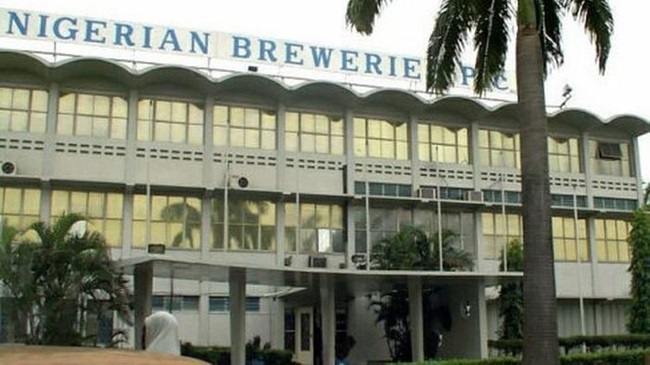
Nigerian Breweries Plc, Nigeria’s foremost brewing company, has reaffirmed its ambition to achieve net-zero carbon emissions in production across its operations nationwide by 2030.
The Corporate Affairs Director, Nigerian Breweries Plc, Mr. Uzodinma Odenigbo, made this known on Thursday, October 30, 2025, in Lagos, in a communique from a media parley/engagement session.
Odenigbo stated that the company’s ambition was aimed at promoting environmental sustainability and responsible production across its value chain.
Nigerian Breweries Plc
He noted that the company had made significant investments in renewable energy solutions such as biomass, solar and energy-efficiency projects across its breweries.
He said to reduce carbon emissions across its breweries, the company had signed power purchase agreements to this effect.
Odenigbo explained that, over the last few years, the company had signed many power purchase agreements with different renewable energy firms to reduce its dependence on non-renewable energy sources.
He disclosed that the company had spent over N2.5 billion supporting its carbon reduction ambition across its operations as part of the Brew a Better World sustainability strategy.
Odenigbo added that the company had committed considerable resources by contributing to water-replenishment projects in water-stressed areas.
Some of which include support for the Olokomeji reforestation initiative, where over 300,000 trees have been planted in Ogun state, Nigeria, through external partnerships to support local watershed restoration.
“As a company, we are advancing sustainability outcomes through our Brew a Better World initiatives.
“Over the past few years, we have made notable investments in renewable energy as part of our transition toward net-zero operations that many people are unaware of.
“We are also signing power purchase agreements to further reduce our national carbon footprint and progress toward our long-term net-zero ambition,” he said.
Odenigbo affirmed that the company would continue to empower its host communities by investing in capacity building for its people and expanding its operations to create employment opportunities.
He disclosed that the company recently invested over N200 million in skill acquisition and constructed a cassava milling plant in Kaduna and Awo-Omamma (Imo State), respectively.
The Minister of Solid Minerals, Mr Dele Alake, says no fewer than 90 mining sites have been recovered from illegal miners across the country.
Alake made the disclosure in Akure on Thursday, October 30, 2025, at the ongoing South-West stakeholders’ dialogue organised by Afenifere, the Pan-Yoruba social-cultural group; DAWN Commission; and South-West governors.
The theme of the two-day summit is: “Strengthening Democracy Through Dialogue: Assessing Progress. Charting the Future.”
Dr Dele Alake, Minister of Solid Minerals Development
Alake added that over 300 illegal miners had been arrested with 50 of them being prosecuted, stating that over 20 illegal miners had been convicted since the inception of the present administration.
According to him, the ministry in collaboration with the Nigeria Security and Civil Defence Corps (NSCDC) has established mining marshals with a purpose to secure mining sites.
The minister noted that the Federal Government raked in N28 billion as revenue in 2024 from the ministry, adding that the ministry over-performed on its budgetary target in 2024.
Alake said that the current administration’s policy on mining was that the mined minerals should not be exported raw except undergone local process in giving it value chain.
He cautioned traditional rulers not to connive with illegal miners irrespective of financial inducements, saying the future of the country must not be traded.
Also speaking, Gov. Ademola Adeleke of Osun State, asked the stakeholders in the South-West not to allow party politics to divide them in achieving oneness and togetherness that would bring desired development.
Adeleke, who was represented by his deputy, Mr. Kola Adewusi, said that the summit would amount to waste of time and a mere repetition if resolutions are not put into actions.
He said that as the descendants of Odua, people of the South-West must forgive one another and allow peace, mutual understanding to achieve the desired unity.
The governor said that the state government’s plans to enhance collaboration with the federal structure was clouded by political partnership actively promoted by operatives of the ruling political party at the centre.
“We discovered over time that partisan consideration has become the yardstick for federal interactions with Osun State.
“A development that threatens to fracture inter-governmental relations.
“Even with the pace of positive reach-out, it is sad to note that some operatives of the ruling federal party have adopted an adversarial approach to Osun State.
“Federal projects and initiatives are now being routed to party structures instead of Osun State government machinery.
“Nominations and access to federal opportunities are channelled to party organisations with official state structures deliberately excluded,” Adeleke said.
In his remarks, the Director-General of the Development Agenda of Western Nigeria (DAWN), Dr Seye Oyeleye, said the summit was an opportunity to build institutions capable of bridging inter-regional divides.
“We seek platforms that create pathways to collaboration around our shared values, shared heritage, and shared destiny.
“History teaches us that progress is built on partnerships, not isolation.
“We must ensure that this becomes an enduring institutional platform through which South-West engages with the Federal Government, starting from today and into the foreseeable future,” he stated.
Stakeholders comprising trade unions and civil society organisations (CSOs) have called for the urgent reversal of privatisation in the electricity sector and all existing privatisations in the water and waste sectors.
The stakeholders also called for the suspension of ongoing or planned discussions with the World Bank and other International Financial Institutions (IFIs) on the privatisation of public assets.
Their call is contained in a communiqué issued at the end of the National Public Utilities Summit and made available to newsmen on Wednesday, October 29, 2025.
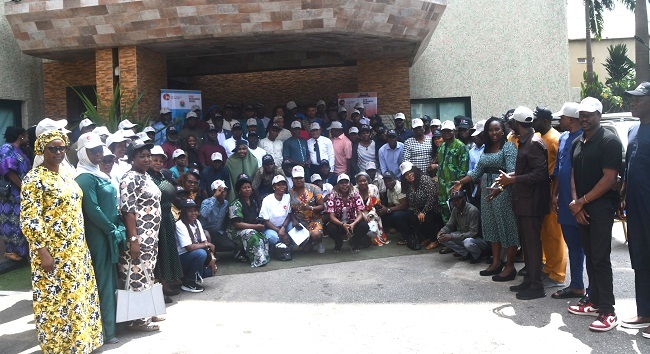
Participants at the National Public Utilities Summit
The summit, themed “Promoting Transparency and Decent Work in Supply Chains in Electricity, Water, and Waste Services in Sub-Saharan Africa”, was organised by Public Services International (PSI) in collaboration with DGB Bildungswerk Bund (DGB BW).
The event reviewed the impact of the PSI-DGB project on promoting decent work and addressing privatisation in the water, electricity and waste sectors.
The communiqué was endorsed by the Amalgamated Union of Public Corporations, Civil Service Technical and Recreational Services Employees (AUPCTRE), the National Union of Electricity Employees (NUEE) and their CSO partners under the PSI-DGB project.
The CSO partners include the Renevlyn Development Initiative (RDI), Citizens Free Services Forum (CFSF), Child Health Organisation, and the Union of Kenya Civil Servants (UKCS).
The stakeholders urged the government to adopt Public-Public Partnerships (PUPs) as a sustainable, democratic and just alternative to privatisation which have shown proven success in delivering quality public services without profit motives.
They called on the government to reinvest in human capital within the public sector by allocating sufficient resources for the training, motivation, and retention of workers to promote efficiency, innovation, and transparency.
They also called for stronger social dialogue and collaboration among civil society, trade unions, and other key sectors to hold the government accountable.
They further urged the PSI-DGB to support education projects for workers on the PUP model, which was still at its early stage in Nigeria.
The stakeholders noted that privatisation had failed to serve the public interest, arguing that Nigeria’s electricity sector had neither increased power generation nor improved distribution.
They added that, instead, it had led to escalating tariffs and categorised consumers according to economic status. In the water sector, it had shut off consumers, and in the waste sector, discouraged unionism.
According to the communiqué, public revenues have been plundered and funds that could have been invested in improving public services have been channelled into privatised entities that claimed they would invest in public utilities.
“For instance, the Nigerian government and international funders have ploughed over N2 trillion in bail out funds for the 11 Power distributing companies without any single megawatt added to the 12,500 megawatts obtained in 2013,” they noted.
They linked increased corruption and conflicts of interest to privatisation, noting that opaque contracts that did not pass through due process had created room for private individuals and companies to fleece Nigeria while holding onto public utilities.
They noted that workers in the water, electricity and waste services sectors face precarious work conditions marked by low wages, wage arrears, job insecurity, casualisation, and lack of social protection such as pensions and unemployment insurance.
“These deliberate policies continue to undermine workers’ morale, workers’ dignity, service quality and community well-being.
“Advocates of public sector solutions are largely ignorant on the workings of the Public-Public Partnership Model of managing public utilities and there are few discussions going on about the model,” they said.
UNESCO and LVMH Group on Thursday, October 30, 2025, announced the renewal of their partnership dedicated to biodiversity conservation and sustainable development.
This new agreement, entitled “For the Beauty of the Living”, strengthens and expands the cooperation first initiated in 2019 around UNESCO’s Man and the Biosphere Programme.
Now extending beyond the scope of this programme, the partnership aims to intensify joint actions by mobilising all of UNESCO’s education, science and cultural programmes, with the active support of LVMH. It also includes a new project conducted with the Tiffany & Co. Foundation, focused on the sustainable management of marine areas.
Audrey Azoulay, UNESCO Director-General
“Preserving together the beauty of the living is the objective of this strengthened partnership. Within UNESCO-designated sites, we are developing with LVMH nature- and culture-based solutions, such as agroforestry or craftsmanship, for the benefit of local communities around the world,” said Audrey Azoulay, Director-General of UNESCO.
“Proud of the actions carried out locally under the first partnership with UNESCO, LVMH is pleased to formalise this new chapter. In connection with local stakeholders, such as breeders and farmers, the Group intends to continue its role as an integrator and facilitator in shaping this renewed relationship with living systems,” added Antoine Arnault, Image and Environment of LVMH.
Three priorities for 2025–2029
The “For the Beauty of the Living” partnership is structured around three major priorities:
Supporting sustainable economic models: supporting local initiatives designed according to community needs and territorial specificities, notably within the framework of actions already undertaken in the Amazon or in Africa.
Measuring environmental and social impacts: promoting sustainable and nature-positive practices by assessing their combined benefits (carbon, biodiversity, water, soil, know-how) and contributing to international work on the development of Nature Certificates, aiming in particular at providing additional income for local communities.
Strengthening skills and knowledge: promoting sustainable practices through agroforestry or regenerative agriculture, especially in professions connected to living systems, through education, research, and skills-based sponsorship, while valuing local know-how. The partnership will notably rely on UNESCO University Chairs and cooperation with the Learning Planet Institute.
A first illustration with the Tiffany & Co. Foundation
The renewal takes concrete form as of today with a symbolic commitment: the Tiffany & Co. Foundation joins UNESCO to support ocean sciences. Through the “Delivering a Healthy Ocean” initiative, the Foundation will support the development of sustainable management plans for marine areas in several regions of the world, mobilizing scientific and local knowledge, and strengthening international cooperation.
This project will help establish a network of decision-makers and experts in at least 10 countries and will promote the emergence of concrete solutions to protect marine ecosystems. It also aligns with the objectives of the Decade of Ocean Science for Sustainable Development (2021–2030), led by UNESCO’s Intergovernmental Oceanographic Commission.
A new collaboration built on tangible results since 2019
This new chapter extends a first phase of cooperation between LVMH and UNESCO’s Man and the Biosphere Programme, conducted over the past five years. It focused on eight biosphere reserves in the Amazon region – in Bolivia, Brazil, Ecuador and Peru covering nearly 30 million hectares and home to 1.3 million people, including many Indigenous communities.
In close collaboration with these communities, more than 80 initiatives directly benefiting over 1,000 families and young people have helped restore ecosystems and create sustainable sources of income. Among the main achievements:
Establishment of participatory governance in the eight biosphere reserves located in Bolivia (Pilón-Lajas, Beni), Ecuador (Yasuní, Sumaco, Podocarpus-El Condor), Brazil (Central Amazon) and Peru (Manu, Oxapampa-Ashaninka-Yanesha), including the involvement of local communities and youth networks in management committees.
Training and equipment for forest fire prevention: more than 200 people have been trained and equipped in Peru, Brazil, Ecuador and Bolivia.
Development of income-generating activities unrelated to deforestation, such as meliponiculture in Peru, with the support of 26 producers; creative mentoring, with the participation of Central Saint Martins, for the Tsimane women’s community in Bolivia producing jewelry from local and renewable resources; and cacao production through agroforestry practices in Ecuador and Peru.
The direct and indirect support of local communities lies at the heart of the initiative. Thus, in Peru, nearly 28,000 people have indirectly benefited from the training of fire prevention and management brigades, the provision of equipment, and the construction of 100 km of firebreaks.
In addition, almost 18,000 people have indirectly benefited from support for ecotourism and agroforestry, as well as for the production of cocoa, coffee, crafts and honey, particularly in the central area of the Bioay (Oxapampa–Ashaninka–Yanesha) Reserve and the Manu Reserve.
Several LVMH Maisons have made concrete contributions to this first phase: Guerlain launched, in collaboration with UNESCO, the Women for Bees initiative to train and support more than 120 women beekeepers in eight countries while helping to preserve these territories. Christian Dior Couture partnered with UNESCO to strengthen community initiatives for biodiversity conservation and restoration in Mexico’s Monarch Butterfly Biosphere Reserve.
The new global partnership “For the Beauty of the Living” is part of LVMH’s LIFE 360 environmental strategy and extends a collaboration already embodied by concrete, on-the-ground actions.
The Lagos State Government has sealed three supermarkets in the Kosofe area for violating the ban on single-use plastics, as part of its ongoing enforcement against plastic pollution.
Commissioner for the Environment and Water Resources, Tokunbo Wahab, disclosed this in a post on X on Wednesday, October 29, 2025, stating that the exercise aimed to ensure full compliance with the state’s environmental regulations.
According to him, enforcement teams of the ministry carried out operations across multiple locations in the Kosofe Local Government Area, where several businesses were found to be non-compliant.
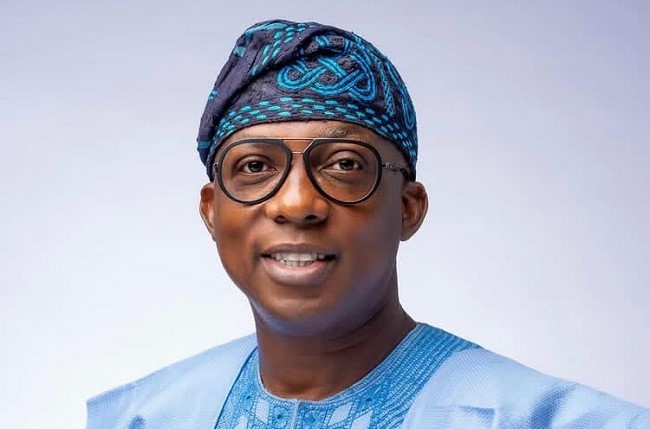
Lagos State Commissioner for the Environment and Water Resources, Tokunbo Wahab
“Winny Supermarket has been sealed, with all single-use plastic materials confiscated for non-compliance,” Wahab wrote.
He added that Afia Supermarket at Tipper Garage, Ketu, and Beyond Tastee2Go Restaurant on Ogudu Road, Ojota, were also sealed on Tuesday, October 29, 2025, after repeated warnings were ignored.
“Similarly, Afia Supermarket at Tipper Garage, Ketu, and Beyond Tastee2Go Restaurant on Ogudu Road, Ojota were sealed on Tuesday, October 29, 2025, after repeated warnings were ignored.
“This ongoing exercise is part of our broader effort to curb plastic pollution, protect the environment, and promote a sustainable waste management culture in Lagos,” the commissioner stated.
Wahab urged businesses to transition to eco-friendly alternatives, noting that the government would continue to intensify enforcement.
“Our goal remains clear: to safeguard public health and protect our environment for a #CleanerLagos and a #GreaterLagos,” he added.
The Lagos State Government began full-scale enforcement of its ban on single-use plastics below 40 microns with effect from Tuesday, July 1, 2025.
The move, aimed at tackling environmental degradation and promoting sustainable living, targets Styrofoam food packs, plastic straws, lightweight nylon bags, disposable cups, and plastic cutlery.
The state government also warned that any business found storing, selling, or distributing such items would be sealed, while offenders would face penalties in line with Lagos’ environmental regulations.