26.1 C
Lagos
Sunday, March 1, 2026
Home Blog Page 16

Dangote Refinery’s crude distillation unit, motor spirit block hit 650,000 bpd capacity

0

The Dangote Petroleum Refinery says it has achieved a major operational milestone with the full restoration and optimisation of its Crude Distillation Unit (CDU) and Motor Spirit (MS) production block. Both units are now running at optimal performance, further strengthening the steady state operations of Africa’s largest oil refining facility.

Following a scheduled maintenance exercise on the CDU and MS Block, the refinery has commenced an intensive 72-hour series of performance test runs in collaboration with licensor UOP. These tests are designed to validate operational efficiency and confirm that all critical parameters meet global standards.
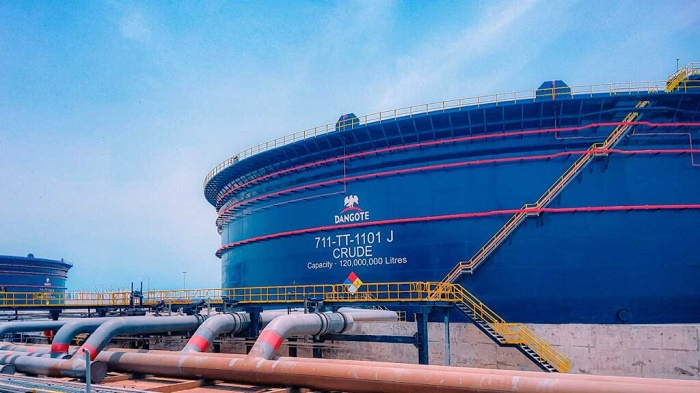
Dangote Refinery
Dangote Refinery

Chief Executive Officer, David Bird, noted that the seamless integration and strong performance of the units demonstrate the refinery’s advanced engineering and robust operational capabilities.

“Our teams have demonstrated exceptional precision and expertise in stabilising both the CDU and MS Block, and we are pleased to see them functioning at optimal efficiency. This performance testing phase enables us to validate the entire plant under real operating conditions. We are confident that the refinery remains firmly on track to deliver consistent, world class output.

“This milestone underscores the strength, reliability, and engineering quality that define our operations. We remain committed to producing high quality refined products that will transform Nigeria’s energy landscape, eliminate import dependence, and position the nation as a net exporter of petroleum products.”

Bird added that the CDU and MS Block, which comprise the naphtha hydrotreater, isomerisation unit, and reformer unit, are now operating steadily at the full nameplate capacity of 650,000 barrels per day. He further confirmed that all remaining processing units will begin their respective performance test runs in Phase 2, scheduled to commence next week.

During the recent festive period, the refinery supplied between 45–50 million litres of Premium Motor Spirit (PMS) daily. With the CDU and MS Block now fully restored, the refinery is positioned to comfortably deliver up to 75 million litres of PMS to the domestic market as required.

Expressing appreciation to customers and Nigerians across the country, Bird reaffirmed the refinery’s unwavering commitment to enhancing Nigeria’s energy security while supporting industrial development, job creation, and economic diversification.

Falcon Corporation secures ‘A’ Long-Term and ‘A1’ Short-Term Credit Ratings from Agusto & Co.

0

Falcon Corporation Limited, one of Nigeria’s leading indigenous gas companies, has received an “A” long-term and “A1” short-term corporate credit rating with a stable outlook from Agusto & Co., Pan-African’s foremost credit rating agency.

According to Agusto & Co., the assigned ratings reflect Falcon’s strong financial position, underpinned by sustained gas demand driven by industrialisation, growing domestic power generation needs, and energy transition pressures, within the company’s exclusive distribution rights in designated franchise areas.

The ratings also recognise the company’s strong, sustainable operating cash flow, supported by favourable terms of trade and long-term gas supply contracts with industrial and commercial customers.

Audrey Joe-Ezigbo
Audrey Joe-Ezigbo, Chief Executive Officer of Falcon Corporation Limited

Commenting on the rating, Audrey Joe-Ezigbo, Chief Executive Officer of Falcon Corporation Limited, said, “This rating affirms the resilience of our business model, the strength of our operations, and the clarity of our long-term strategy. For over three decades, Falcon has remained committed to developing gas infrastructure that supports Nigeria’s industrial growth, energy security, and environmental stewardship. We are pleased that Agusto & Co.’s assessment reflects the discipline, expertise, consistency, strategic foresight, and strong governance frameworks that define our approach to delivering value.”

Also speaking on the rating, Nelson Walter, Chief Financial Officer of Falcon Corporation Limited, added, “We continue to uphold a disciplined financial strategy, prioritising the development of a robust balance sheet that supports our sustainable growth ambitions. Our investments are strategically targeted to optimise asset utilisation, broaden revenue streams, and strengthen long-term financial stability. This rating underscores the confidence in our financial leadership and growth outlook.”

Chibueze Ekeocha, Chief Technical Officer of Falcon Corporation Limited, emphasised that the rating highlights the company’s technical leadership and operational excellence.

“This recognition validates Falcon’s outstanding technical capabilities, uncompromising commitment to excellence, and the deep expertise within our management and engineering teams. Our operations are shaped by internationally recognised best practices and are further strengthened by our ISO 9001:2015 Quality Management System, ISO 14001:2015 Environmental Management System, and ISO 45001:2018 Occupational Health and Safety Management System certifications.”

The Company operates a 25 million standard cubic feet per day (MMSCF/D) gas distribution network within the Ikorodu Natural Gas Distribution Zone, supplying over 21 industrial and commercial customers, and has expanded its footprint into the Liquefied Petroleum Gas (LPG) subsector through trading, distribution, and storage infrastructure investments.

UNEP Annual Report: Global cooperation delivered environmental gains in 2025

The UN Environment Programme (UNEP) released its 2025 Annual Report on Wednesday, February 11, 2026, highlighting progress made last year on key environmental challenges through international cooperation despite ongoing global geopolitical tensions.

The report shows how environmental action can deliver major economic and public health benefits. Highlights include:

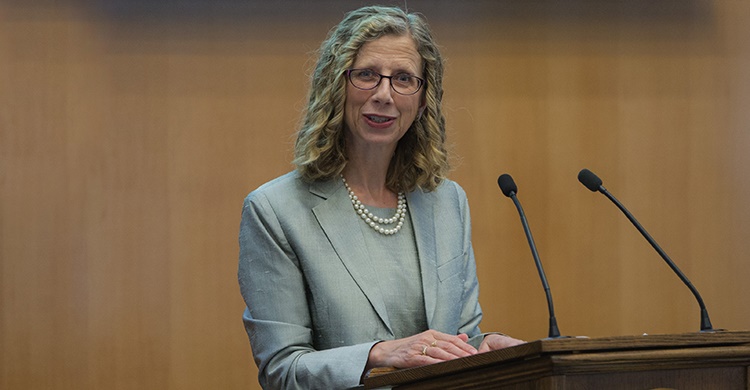
Inger Andersen
United Nations Environment Programme (UNEP) Executive Director, Inger Andersen. Photo credit: Eric Bridiers
  • UNEP’s seventh Global Environment Outlook found that stronger environmental policies could add trillions to global GDP, prevent millions of deaths, and help lift hundreds of millions of people out of poverty and hunger.
  • The Intergovernmental Science-Policy Panel on Chemicals, Waste and Pollution was established after three years of negotiations under UNEP’s leadership. The panel will provide policymakers with independent science to tackle the growing threat of pollution and waste, complementing panels on climate and biodiversity.
  • At the seventh session of the UN Environment Assembly (UNEA-7), countries adopted 11 resolutions and three decisions, including on critical minerals for the energy transition, glacier melt, wildfires, antimicrobial resistance, coral reefs, the sustainable use of AI and more.
  • The landmark agreement to protect biodiversity in the high seas (BBNJ Agreement) entered into force as international law in January 2026, after UNEP supported dozens of countries to ratify the agreement.
  • With UNEP support, more than 170,000 square kilometres of natural spaces – an area larger than New York state – have come under protection or more sustainable management, expected to benefit 2.3 million people.
  • UNEP’s International Methane Emissions Observatory detected methane leaks from oil and gas installations in 36 countries. Alerts to governments led to the repair of at least 19 leaks, which combined had been pumping out 1,200 tonnes of methane every 24 hours. Through the Oil and Gas Methane Partnership 2.0 (OGMP 2.0), 150 oil and gas companies – with assets in over 90 countries, representing 42 per cent of global production – now transparently report methane emissions data.
  • World Environment Day 2025, hosted by the Republic of Korea, was marked by more than 3,000 events across 155 countries, uplifting solutions to plastic pollution.

Despite progress, UNEP’s scientific assessments show the scale of the challenge ahead: 

  • The Emissions Gap Report 2025 revealed that even with existing climate pledges, the world will warm by 2.3 to 2.5°C, with a likely overshoot of the 1.5°C threshold.
  • The Adaptation Gap Report 2025 found that nations will need up to US$365 billion a year by 2035 to adapt to climate change – around 12 times what they have access to now.

As conflicts continue across the world, UNEP continued to inform recovery efforts and provide recommendations for reversing environmental damage in the Gaza Strip,  Ukraine and Sudan.

Reflecting on the past year and looking ahead at 2026, UNEP’s Executive Director, Inger Andersen, said: “Even amid global tensions, 2025 was a year in which nations showed that environmental multilateralism is the beacon that rises high above the fog of geopolitical differences to rally the world in united action.”

“UNEP remains at the centre of these global efforts to tackle climate change, nature and biodiversity loss, land degradation and desertification, and pollution and waste – and create a better and more resilient future for people and planet,” she added.

UNEP’s Annual Report also emphasizes the critical need for a steady source of predictable and flexible financing for UNEP to carry out its mandate, particularly through Member State support to its core fund, the Environment Fund. In 2025, 106 Member States contributed to the fund, with a record number contributing their full financial share. This helped enable UNEP’s global work in 151 countries.

Nigeria to strengthen meteorology for sustainable national development

0

The Federal Government of Nigeria says it will advance meteorology to enhance sustainable development across the country.

Meteorology is the scientific study of the Earth’s atmosphere, focusing on short-term weather phenomena, processes, and forecasting.

Mr. Festus Keyamo, Minister of Aviation and Aerospace Development, said this at the public presentation of the 2026 Seasonal Climate Prediction (SCP) on Tuesday, February 10, 2026, in Abuja.

Festus Keyamo
Festus Keyamo, Minister of Aviation and Aerospace Development

Keyamo said the level of government representation showed readiness to deploy early warning tools and climate science for sustainable development.

“Permit me to state that the Seasonal Climate Prediction directly aligned with the priorities of the present administration. It is an example of science for action.

”This is to translate complex climate signals into clear and actionable guidance for decision‑makers across all sectors of the Nigerian economy.

“As the Minister of Aviation and Aerospace Development, and the Minister in charge of meteorology, I recognise that safe, efficient, and sustainable aviation cannot exist without reliable meteorological input,’’ he said.

He added that beyond daily air safety, government aimed to build an aviation industry capable of supporting the nation’s growing population and economic development.

Keyamo said climate data remained critical to achieving the ministry’s goals and strengthening national resilience.

“The Ministry has been very supportive to the Nigerian Meteorological Agency (NiMet) and will continue to do so to ensure that the Nigerian people have access to the best weather and climate information and services.

“The credibility of any climate forecast lies in its scientific foundation. This foundation was laid 140 years ago in 1886 when the first weather observing station was established.

“Through these years, the science of meteorology in Nigeria has grown in leaps and bounds, transitioning into efficient service delivery in the weather and climate services value chain embodied by the NiMet,’’ he said.

Keyamo said NiMet remained central to aviation safety, resilience and development of architecture by safeguarding aviation operations and supporting agriculture.

He added that it had also promoted water resources management, disaster risk reduction, health services, energy planning, and transportation for over a century.

He commended the agency for consistently fulfilling its mandate across critical sectors of national development.

He listed major drivers used for the forecast to include the El Niño–Southern Oscillation and the Indian Ocean Dipole.

Keyamo said 2026 indicators suggested a predominantly neutral ENSO phase, with implications for rainfall distribution, temperature patterns and sectoral risks nationwide.

The minister said the 2026 SCP was based on global best practices, combining meteorological science with long-term climatological data and climate drivers.

He added that the scientific robustness of the SCP made it a trusted reference for policy formulation, investment planning and risk management in public and private sectors.

By Gabriel Agbeja

Climate change could halve areas suitable for cattle, sheep, goat farming by 2100 – Study

0

A new study conducted at the Potsdam Institute for Climate Impact Research (PIK) shows that grassland-based grazing systems – currently covering a third of the Earth’s surface and representing the world’s largest production system – will see a severe contraction as global temperatures rise.

Depending on the scenario analysed, 36-50 percent of the land with suitable climatic conditions for grazing today will experience a loss of viability by 2100, affecting more than 100 million pastoralists and up to 1.6 billion grazing animals.

Maximilian Kotz
Maximilian Kotz, study’s coauthors and researcher at the Barcelona Supercomputing Centre and PIK

The study, published in the scientific journal PNAS on Tuesday, February 10, 2026, identifies a “safe climatic space” for cattle, sheep and goat grazing. To date, these agricultural systems have thrived within certain ranges of temperature (from −3 to 29°C), rainfall (between 50 and 2627 millimetres per year), humidity (from 39 to 67 percent) and wind speeds (between 1 and 6 metres per second). 

“Climate change will shift and significantly contract these spaces globally, leaving fewer spaces for animals to graze. Importantly much of these changes will be felt in countries that already experience hunger, economic and political instability, and higher levels of gender inequity,” commented lead author Chaohui Li, PIK researcher at the time the study was conducted and now with the Barcelona Supercomputing Centre.

“Grassland-based grazing is highly dependent on the environment, including things like temperature, humidity, and water availability. What we see is that climate change is going to reduce the spaces in which grazing can thrive, fundamentally challenging farming practices that have existed for centuries,” commented Maximilian Kotz, another of the study’s coauthors and researcher at the Barcelona Supercomputing Centre and PIK.

Africa a hotspot for impacts on grazing

The authors highlight that Africa will be particularly vulnerable. Grasslands in Africa could reduce by 16 percent in a low emissions scenario, or up to 65 percent in a future in which fossil fuels continue to expand, as temperatures on the continent already sit at the upper end of the safe climatic space identified as suitable for grazing. 

As temperatures rise, the climate niches currently supporting critical grazing regions in the Ethiopian highlands, the East African Rift Valley, the Kalahari Basin, and the Congo Basin will shift southward. Because the African landmass terminates at the Southern Ocean, these suitable temperature belts would eventually extend beyond the continent’s edge, resulting in a loss of viable grazing land. 

“This shift away from what we’re identifying as the safe climatic space really challenges the efficacy of adaptation strategies that have been used in places such as Africa in times of hardship, such as switching species or migrating herds. The changes are just too big for that,” said Prajal Pradhan, assistant professor of the University of Groningen, PIK researcher and a coauthor of the study. 

“Reducing emissions by rapidly moving away from fossil fuels is the best strategy we have to minimise these potentially existential damages for livestock farming,” Li concluded.

Sierra Leone launches landmark soil health, digital mapping initiative

0

The Government of Sierra Leone has launched a new technical assistance programme to support digital soil mapping and site-specific fertiliser recommendations, marking a shift toward precision soil management in the country’s agricultural sector.

Formally launched during a three-day inception workshop held in Freetown, the initiative is funded through the World Bank-supported Food Systems Resilience Programme (FSRP) and will be implemented by the Regional Hub for Fertiliser and Soil Health for West Africa and the Sahel.

The programme supports the transition from generalised fertiliser application to data-driven, site-specific nutrient management through a national Digital Soil Information System. The work aligns with the government’s “Feed Salone” agenda, which prioritises increased domestic food production and reduced reliance on imports.

Sierra Leone
Delegates at the launch

Government Focus on Precision Agriculture

Opening the workshop, Dr. Henry Musa Kpaka, Minister of Agriculture and Food Security, said the programme addresses long-standing soil productivity challenges.

“Sierra Leone depends heavily on agriculture for food security and economic growth, but our soils have not delivered the results we need,” Kpaka said. “Strengthening the Soil Information System will provide the data required to make better fertiliser and soil management decisions.”

He added that the tools developed under the project will support farmers, researchers, and investors with accurate soil profiles and site-specific fertiliser recommendations, saying:

“When completed, this work will provide modern digital tools that support smarter, more sustainable farming and help increase productivity.”

Building National Technical Capacity

In addition to field activities, the programme includes a strong focus on national capacity building. Dr. Kepifri Lakoh, Programme Manager for the FSRP in Sierra Leone said the project prioritises long-term technical sustainability.

“We are building national capacity, not just installing equipment,” Lakoh said. “Training for PhD students, support for adaptive research, and certification of laboratory technicians are designed to ensure these systems are managed locally over the long term.”

From Planning to Implementation

The project is being implemented by a consortium that includes International Institute of Tropical Agriculture (IITA), International Fertiliser Development Center (IFDC), African Plant Nutrition Institute, University Mohammed VI Polytechnic (UM6P), OCP Africa, and International Soil Reference and Information Centre (ISRIC), working with national institutions Sierra Leone Agricultural Research Institute (SLARI) and Njala University.

Lionel Axel Kadja, Director of the Regional Hub for Fertiliser and Soil Health for West Africa and the Sahel, said the workshop validated the technical roadmap for implementation:

“The roadmap provides a clear path for digital soil mapping and site-specific recommendations for rice, maize, and cassava.”

Field teams will collect and analyse soil samples from farms across Sierra Leone to update national soil maps and generate farm-level data for rice, maize, and cassava. The new information will feed into the national Soil Information System, enabling more precise fertiliser recommendations, improving fertiliser efficiency, and supporting the government’s “Feed Salone” drive to boost domestic food production, while strengthening long-term technical capacity at SLARI and Njala University.

“Updating national soil maps and conducting nutrient omission trials will provide the data needed to support extension services and improve fertiliser recommendations,” said Dr. Abdul R. Conteh, Acting Director-General of SLARI.

SAIPEC 2026: Renaissance reinforces commitment to energy security, industrialisation

0

Renaissance Africa Energy has reaffirmed its strategic commitment to delivering energy security, driving industrialisation, and strengthening African capability across the oil and gas value chain.

Speaking at a Energy CEOs Live session of the ongoing Sub‑Saharan Africa International Petroleum Exhibition and Conference (SAIPEC) in Lagos, Managing Director and Chief Executive Officer of Renaissance, Tony Attah, noted that Renaissance was founded on a clear conviction that Africa must define and deliver its own energy narrative, leveraging local expertise, local capability, and Africa focused operational excellence.

Renaissance
L-R: Chief Executive Officer, Global Process and Pipelines Limited, Obi Uzu; Chief Operating Officer, Energia Limited, Oladimeji Bashorun; Vice President for Development, Wells and Technology, Renaissance Africa Energy Company Limited, Abdulrahman Mijinyawa; and Chairman, Petroleum Technology Association of Nigeria, Wole Ogunsanya at the Energy CEOs Session of the 2026 Sub-Saharan Africa International Petroleum Exhibition and Conference in Lagos… on Tuesday

“We have a very audacious vision, to be Africa’s leading energy company, enabling energy security and industrialisation in a sustainable manner,” Attah said, adding that the company was “actively working on the path of growth which is fully aligned with Nigeria’s ambition to produce two million barrels of oil per day by 2027 and three million barrels by 2030.

Attah, who was represented by the company’s Vice President, Development, Wells and Technology, Abdulrahman Mijinyawa, highlighted that the acquisition of  all of Shell’s share in the Shell Petroleum Development Company (SPDC), now Renaissance, provided a unique platform to activate the company’s long-term ambition. “Renaissance was born out of a strong conviction that the time is ripe for Africa to define its own energy story,” he said.

On the assumption of the operatorship of the joint venture comprising Nigeria National Petroleum Company Limited (NNPC), Renaissance Africa Energy, TotalEnergies Limited; and Agip Energy and Natural Resources, the Renaissance CEO said the company’s cultural foundation anchored in its core values of collaboration, respect, integrity, safety, and performance has guided the organisation internally and shaped its engagement with stakeholders, communities, regulators, and partners.

Attah described the transition of operatorship to Renaissance as a multidimensional effort centred on a three‑phase philosophy of safely receiving the assets, stabilising them, and then growing them. The company grew the joint ventures oil and gas output by over 40 % in the first 100 days of operatorship of the assets. “The workforce continuity was a major competitive advantage that preserved institutional memory and enabled immediate operational stability from day one,” he said.

He also noted that Renaissance has elevated safety to a core value, embedding IOC‑grade discipline across processes and field execution to protect people, assets, and the environment.

NiMet forecast: Experts urge farmers to adopt irrigated farming

0

Some agriculture experts have urged local farmers to adopt irrigation farming due to the inconsistent rainfall patterns.

The experts made the recommendation in separate interviews on Wednesday, February 11, 2026, in Lagos.

The recommendation was made in line with the recent Nigerian Meteorological Agency’s (NiMet) forecast on the expected rains in some states and the need for farmers to delay the planting season.

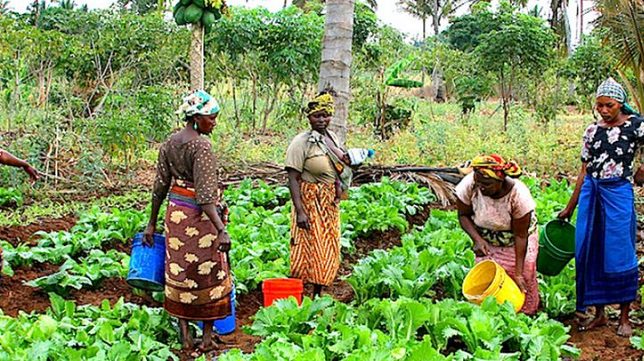
Women farmers
Women farmers

The Chairperson, Nigerian Women in Agriculture, Mrs. Chahul Ngizan, noted that the infrequent rains and changing weather patterns have made local farmers wary.

“We really do not know what to expect with the changing weather patterns. As we all observed, there was no harmattan from last year till January this year.

“And when there is no harmattan, it is difficult for farmers to have a good harvest. We don’t know if we will have enough rainfall this year.

“I would advise all farmers to adhere to the instructions of NiMet or get irrigation systems. It is just that some areas up north rarely have water.

“We just hope to have a great planting season and a good harvest because of the inconsistent weather patterns,” Ngizan said.

On his part, an agriculture analyst and co-founder Corporate Farmers, Mr. Akin Alabi, urged the farmers to invest in irrigation on their farms despite the costs.

“It is hard for us to determine climate condition these days, climate factor and climate change, so we have to play it in a well-balanced format.

“So, we urge farmers to have an irrigation in their farms. It might be expensive but it’s worth it. You can’t predict the weather; that’s the honest truth.

“NiMet will try to give you a forecast, but sometimes that forecast may change because regardless rainfall or not, it is still dependent on the mother nature.

“But as humans we have to just be prepared for whatever weather pattern we see.

“It’s advisable to have some form of irrigation on your farm, it doesn’t have to be expensive. There are other irrigation systems now that make use of solar energy,” Alabi said.

He noted that there are solar energy irrigation systems that use sun to ensure adequate water on the farm.

“Or the farmer can just have a well, just dig a well where you can actually get water. But it’s very important at this time and age that farmers have a standard and a standby irrigation system, whether rain come or not,” the expert said.

By Mercy Omoike

Eyesan urges global investors to seize opportunities in 2025 Licensing Round

0

The Nigerian Upstream Petroleum Regulatory Commission (NUPRC) has urged global investors to capitalise on opportunities in Nigeria’s 2025 licensing round, emphasising that recent reforms under the Petroleum Industry Act 2021 provide a predictable, transparent, and investor-friendly framework for upstream development.

Commission Chief Executive, Mrs. Oritsemeyiwa Eyesan, made this known on Tuesday, February 10, 2026, in her address at the opening of the 10th Anniversary of the Sub-Saharan Africa International Petroleum Exhibition and Conference (SAIPEC) 2026 in Lagos.

According to Eyesan, the licensing round is designed to unlock Nigeria’s upstream potential under a more predictable and investor-friendly regulatory framework established by the Petroleum Industry Act (PIA) 2021.

Oritsemeyiwa Eyesan
Commission Chief Executive, Nigerian Upstream Petroleum Regulatory Commission (NUPRC), Mrs. Oritsemeyiwa Eyesan

The NUPRC boss added that Nigeria is leveraging the momentum of renewed global interest in Africa’s hydrocarbons to attract credible investors into its upstream sector.

“To facilitate resource access, Nigeria has launched the 2025 licensing round, offering 50 oil and gas blocks across various terrains.

“This initiative reflects a targeted approach to responsible resource development. We invite capable investors to participate and help realise Nigeria’s promising upstream potential,” Eyesan stated.

She noted that Africa’s energy investment outlook has significantly improved over the past three years, with the continent now capturing a larger slice of global capital expenditure.

“Of the $520 billion projected in worldwide capital investment this year, Africa expects to attract between $48 billion and $50 billion. over 8% of the total. This is a significant increase from previous years when it was below 4%.”

The NUPRC boss attributed the resurgence to renewed investor interest in frontier and established basins, particularly in Nigeria, Namibia, Mozambique and other prolific African plays.

Beyond foreign investment, Eyesan stressed the importance of domestic and regional capital formation as a stabilising force for Africa’s energy future.

“As we work to draw in more external investment, encouraging capital formation within Africa remains essential. Domestic capital brings stronger commitment and stability, creating more opportunities for development,” the CCE said.

Eyesan noted that African independent operators are already playing a growing role in Nigeria’s upstream space, driving project execution and capital deployment.

A major milestone in strengthening indigenous financing, according to Eyesan, is the establishment of the Africa Energy Bank, which is headquartered in Nigeria.

“The creation of the Africa Energy Bank, proudly hosted in Nigeria, is a milestone,” she said, adding, “Unified support from stakeholders will be crucial to its success.”

The NUPRC boss also highlighted the growing impact of regional cooperation, particularly in gas development, power infrastructure and regulatory alignment.

“Beyond national efforts, regional cooperation is having a transformative effect,” she said, pointing to expanded gas and power infrastructure that is improving energy access, reliability and affordability across Africa.

She added that platforms such as the African Petroleum Regulators’ Forum (AFRIPERF) are strengthening Africa’s collective voice globally.

Book dispels five misconceptions about carbon pricing

0

Gradually increasing the price of fossil fuels is considered a key element of effective climate policy – and yet it remains the subject of bitter controversy.

In a new book, experts from the Potsdam Institute for Climate Impact Research (PIK) explain this concept and correct false perceptions. The publication is aimed at professionals and laypeople who want to gain a thorough understanding of the topic.

“We want to build bridges between the camps,” says PIK Director Ottmar Edenhofer, who co-authored the book with political scientist Cecilia Kilimann and economist Christopher Leisinger from his scientific staff.

Carbon pricing
Carbon pricing

“We address the objections of those who, like us, want strong climate policy, but equate carbon pricing with blind faith in the market and the abandonment of government regulation. The finding of climate economics is that this is a misunderstanding. For pricing to reduce CO₂ emissions efficiently and without collateral damage, comprehensive government capacities and accompanying measures are needed.”

The publication presents the latest research findings from renowned journals, including several highly acclaimed articles by PIK and the Mercator Research Institute on Global Commons and Climate Change (MCC), which has been part of PIK since the beginning of 2025. Presented in an easy-to-understand format, the book corrects five popular misconceptions about carbon pricing as a core instrument of climate policy:

Misconception 1

“No steering effect”. Fuel is becoming more and more expensive, yet people are not driving less – observations like this make many people doubt the efficacy of the carbon price. But the research team provides a different perspective: that this rather suggests a need for complementary measures such as bans, standards and subsidies – which are most effective in combination with carbon prices.

They explain simply but scientifically how pricing environmental damage pushes “dirty” products, such as coal-fired power plants, out of the market and promotes “clean” products. The analysis also looks at individual motivations: when well designed, market control is also well suited to ethically motivated climate protection.

Misconception 2

“Politically unfeasible”. The numbers prove the opposite. Worldwide, 28 percent of all CO₂ emissions are now directly priced – and in the EU, this figure will rise to 75 percent in 2028 when a second emissions trading system is launched for transport and buildings. The book shows that more and more countries, including large emerging economies, are relying on this instrument. Its success is based on its flexibility: it can be designed as a tax, as emissions trading, or as a hybrid system and thus adapted to political requirements.

Misconception 3

“Socially unjust”. Indeed, according to empirical findings cited by the research team, carbon pricing without social compensation can place a disproportionate burden on poorer households. However, this also applies to climate policy through standards or bans – and carbon pricing has the advantage of generating revenue that can be used to counteract this. Four variants of compensation are presented: a per capita flat rate, innovative climate money for buildings, a reduction in electricity costs and hardship compensation.

Misconception 4

“Obsolete model”. Why go to the trouble of establishing a pricing system when there will be nothing left to price in the climate-neutral world we are striving for? The book counters this objection with a special section on atmospheric carbon removals. These are necessary to achieve the net-zero target while there are still residual emissions that are difficult to avoid.

Later on, they can even offset exceeding the 1.5°C limit for global warming through net negative emissions. Carbon pricing can therefore help balance supply and demand for remaining emissions and removals for many decades to come, thereby creating a financing system and providing incentives for investment.

Misconception 5

“Only possible with a world government”. Does carbon pricing only make sense if everyone participates? Readers learn why a globally uniform price would not be a sensible goal – and how pricing, even if patchy and regionally fragmented, can help the climate. In this context, the international competitiveness of industry and its jobs are also discussed in detail.

The research team presents effective mechanisms that can prevent so-called carbon leakage resulting from the relocation of production. These mechanisms could even serve as a driver for increased international cooperation in the future.

“The EU’s climate tariff system, which will come into effect at the beginning of 2026, will make carbon pricing even more important internationally,” concludes PIK Director Edenhofer. “In times of increasing geopolitical tensions, this will also become relevant to security policy because it will ultimately reduce the oil and gas revenues of authoritarian states such as Russia. The career of carbon pricing has only just begun. This book explains why that is a good thing.”

×