The United Nations Children’s Fund (UNICEF) has raised concerns that rapid urbanisation in Nigeria is outpacing sanitation infrastructure, worsening open defecation, and exposing millions to preventable public health risks.
Mr. Monday Johnson, WASH Specialist at UNICEF Lagos Field Office, stated this on Thursday, November 6, 2025, in Ilaji town, Ibadan, during a media dialogue to improve Urban Water, Sanitation, and Hygiene (WASH).
The workshop was organised by the Oyo state Ministry of Information in collaboration with UNICEF.
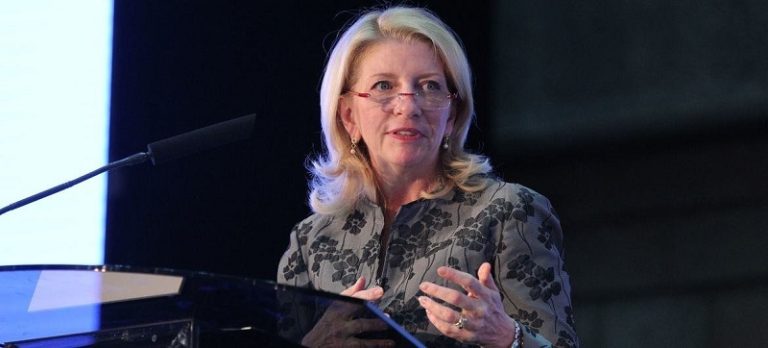
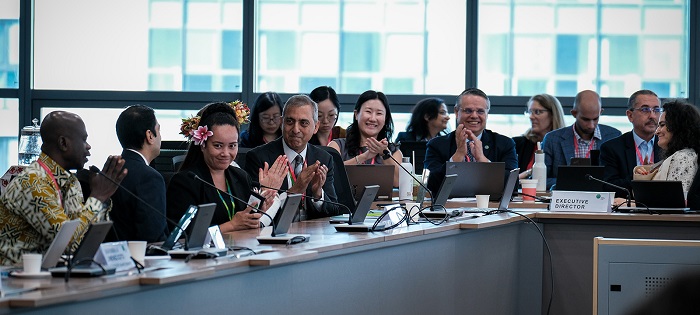
Catherine Russell, Executive Director of UNICEF
Participants in the media dialogue were drawn from the six Southwest states and Edo.
Referencing the WASH National Outcome Routine Mapping 2021, Johnson said Nigeria’s increasing urban population, now over half of the total population, is expanding faster than the country’s sanitation systems can cope with.
“As of 2023, approximately 54.3 per cent of Nigeria’s population, which is about 123.7 million people, live in urban areas, up from 29.7 per cent in 1990.
“This growth, at an annual rate of 3.51 per cent , is outpacing the expansion of sanitation infrastructure.
“Overcrowded urban slums with limited space, inadequate containment systems, and poor access to safely managed sanitation are exacerbating open defecation and environmental health risks,” he said.
The UNICEF WASH specialist noted that Nigeria’s sanitation crisis mirrors a broader regional trend in West and Central Africa (WCA), one of the fastest organising regions in the world.
“Across the WCA region, urban populations are projected to grow from 52 per cent in 2023 to as high as 68 per cent by 2050,” he said.
Johnson stressed that while 85 per cent of Nigeria’s urban population now has access to basic drinking water, only 45 per cent enjoy safely managed water systems.
He added that access to safely managed sanitation remains “critically low,” with just 25.4 per cent of urban residents covered, while over 150 million Nigerians still lack basic sanitation services.
“Open defecation persists in many urban areas.
“Access to basic hygiene services is also very low, with less than 35 per cent of the urban population having handwashing facilities,” Johnson said.
According to him, inequality is also a major obstacle to achieving universal sanitation coverage, with marginalised groups, including women, children, and persons with disabilities, facing higher barriers to accessing safe water, sanitation, and hygiene.
Johnson pointed out that limited human capacity, outdated policies, and weak institutional coordination have slowed Nigeria’s progress toward the Sustainable Development Goals (SDGs).
He identified the lack of an urban sanitation coordination framework as a key governance gap and called for immediate reforms to strengthen institutional and human capacity.
The Ijaw National Congress (INC) on Thursday, November 6, 2025, joined the global call for the formal exoneration of Ken Saro-Wiwa and the Ogoni eight of the allegations for which they were convicted and executed.
Prof. Benjamin Okaba, Global President, INC, made the call in his solidarity message on the 30th anniversary of the execution of the Ogoni nine.
Saro-Wiwa and eight other Ogoni activists, known as the “Ogoni Nine,” were executed by the Nigerian military government in November 1995 following a trial.
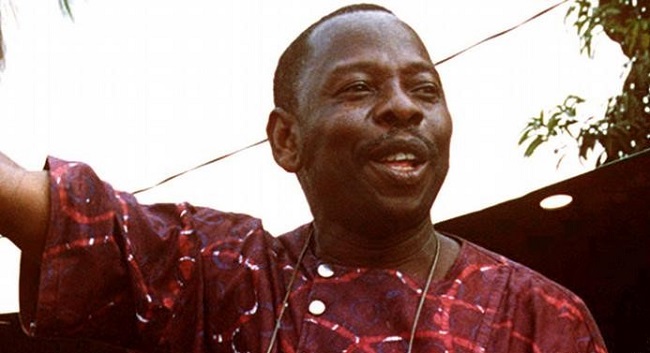
The late Ken Saro-Wiwa
“They were convicted of being complicit in the murders of four rival Ogoni chiefs and had been campaigning against environmental damage and the exploitation of oil resources by the Shell Oil Company in their homeland.
The executions drew international condemnation and led to sanctions against Nigeria.
According to Okaba, “On this symbolic 30th anniversary, our remembrance must be more than a ritual; it must be a re-dedication to the cause for which they died. We hereby reaffirm and amplify the demands of the Ogoni people and the broader Niger Delta.
“We join the global call for the formal exoneration and Justice (Not Pardon) of Ken Saro-Wiwa and the Ogoni eight.”
He also called for a full, transparent, and criminal investigation into Shell’s complicity in the human rights violations in Ogoniland, as called for by organisations like Amnesty International.
“We also call for the immediate and credible cleanup of Ogoniland, as recommended by UNEP. The exercises should be placed under a credible, internationally-managed body to ensure it is effective and accountable.
“We are also demanding that Shell and other oil companies be held legally and financially liable for the destruction they have caused.
“The Ijaw nation stands with the Ogoni in their call for the right to benefit from the resources of their land.
“We echo the call for the repeal of obnoxious laws like the Land Use Act and the Petroleum Act, which deny us the beneficial ownership of our resources,” he added.
The INC global president noted that the spirit of the Saro-Wiwa lives on.
According to him, it lives on in the continued peaceful resistance of the Ogoni people, in the work of environmental defenders across the globe, and “in our unwavering commitment at the INCto champion the Ijaw cause”.
“We will continue to constructively engage the state, the International Oil Companies (IOCs), and international agencies to demand sociopolitical inclusiveness, environmental remediation, and infrastructural development.
“To the family of Ken Saro-Wiwa, especially his daughter, Noo Saro-Wiwa, and to the families of the other eight martyrs, we say: Your pain is our pain. Your loss is our loss. Your steadfastness is our inspiration.”
President Bola Tinubu granted a posthumous pardon to Saro-Wiwa and eight other activists who were executed in 1995.
The pardon, announced in June 2025, was granted in conjunction with conferring national honours on the activists.
The Lagos State Government has reaffirmed its commitment to sustainable growth and coastal resilience at the 11th Lagos International Climate Change Summit.
The Lagos State Governor, Mr. Babajide Sanwo-Olu, said this at the opening ceremony of the summit on Thursday, November 6, 2025, in Lagos.
The summit had the theme: “Blue Economy, Green Money: Financing Africa’s Coastal Resilience and Ocean Innovation.”
Gov. Babajide Sanwo-Olu at the 11th edition of the Lagos International Climate Change Summit
Sanwo-Olu said that Lagos, being a city built on water, energy and entrepreneurship, must ensure a sustainable future for its residents, while harnessing the power of its ocean resources.
“Lagos is a city built on water, energy, and entrepreneurship.
“Our responsibility is to ensure that this foundation remains sustainable for generations to come,” Sanwo-Olu said.
He said his administration was deliberate in creating blue finance, citing the Great Wall of Lagos as an example of how the state transformed a former ocean surge zone into prime land.
“With the Great Wall of Lagos, we turned what was once a threat into an opportunity a place of economic value, safety, and growth. That is the spirit of innovation we are building on,” he added.
Sanwo-Olu reiterated that Lagos was committed to leading Africa and the global community in the pursuit of a clean climate and a vibrant blue economy, describing it as “a lifeline for the planet.”
“Lagos is committed to leading Africa and the global community in the pursuit of a clean climate and a vibrant blue economy, which remains a lifeline for the planet,” Sanwo-Olu said.
In his welcome address, the Commissioner for the Environment and Water Resources, Mr. Tokunbo Wahab, said the summit underscored the state’s determination to unlock sustainable financing and pioneer innovative solutions that safeguard the ocean and strengthen coastal communities.
“Lagos sees opportunity where others see risk, by transforming its blue economy into an engine of inclusive growth and environmental sustainability,” he said.
Wahab highlighted ongoing state-led initiatives, including the soon-to-be-commissioned biogas facility at the Ikosi-Isheri Fruit Market, in partnership with the C40 Global Leadership Group.
“Where others see risk, Lagos sees opportunity. We are transforming our blue economy into an engine of inclusive growth and environmental sustainability.
“The biogas project will convert fruit waste into clean energy for lighting, cooking, and phone charging, while also producing natural fertilizer for farmers,” he said.
Wahab added that the governor would unveil the Climate Investment Opportunities Diagnostic, a policy document linking environmental goals, with actionable investment pathways.
He noted that Lagos had been ranked the top-performing stare in climate government for the second consecutive year.
“We are ready for investment, ready for innovation, and ready to build resilience that benefits all our people,” he said.
He said the project would convert fruit waste into clean energy for lighting, cooking, and phone charging, while producing natural fertilizer for farmers.
He called for greater collaboration among African coastal cities, adding that Lagos was ready for investment, innovation, and to build resilience that benefits all its people.
The Minister of Marine and Blue Economy, Mr. Gboyega Oyetola, said the Federal Government had implemented wide-ranging reforms to enhance security on Nigeria’s territorial waters and reduce piracy.
Oyetola was represented at the event by the Director-General of the Nigerian Maritime Administration and Safety Agency, Dr Dayo Mobereola.
He added that the ministry had advanced fiscal and legal frameworks, promoted waste-to-wealth initiatives, and partnered with stakeholders to finance the blue economy and drive maritime research.
Representatives of the governments of Osun State and international partners from Britain, China, and Germany attended the summit.
The representatives in their goodwill messages reaffirmed their commitment to driving green growth, embracing climate vulnerability as an opportunity for progress, and advancing Africa’s blue economy for a sustainable future.
The Asian Development Bank (ADB), Commonwealth Secretariat, Adaptation Fund and NDC Partnership Support Unit have launched new guidance to help countries mobilise finance for climate adaptation.
With countries now submitting third-round Nationally Determined Contributions (NDCs 3.0) under the Paris Agreement, they will need to quickly mobilise public and private finance to implement their adaptation commitments.
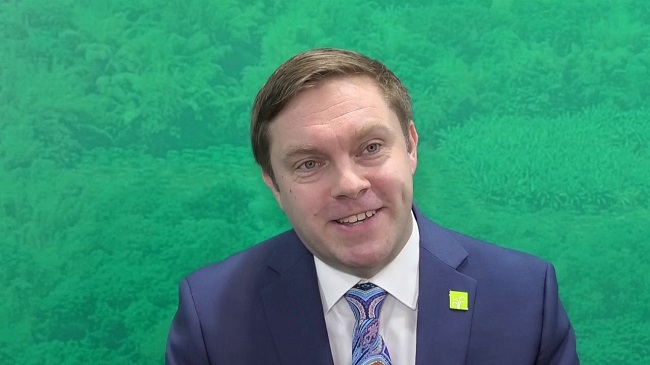
Mikko Ollikainen, Head of the Adaptation Fund
As climate impacts intensify, implementing adaptation measures is an increasingly urgent priority, particularly for developing countries on the frontlines of the climate crisis. While adaptation finance more than doubled between 2018 and 2022, reaching roughly USD 76 billion, developing countries will require nearly USD 400 billion per year in adaptation financing up to 2030. Yet major barriers – including limited private-sector investment, fragmented strategies and gaps in government capacity – remain, impeding the flow of adaptation finance to the countries where it’s needed most.
Identifying investment opportunities and solutions that are effective, scalable and replicable
Strategies for building human capacity for adaptation investment planning and finance mobilisation
Through each stage, the Adaptation Financing Supplement supports countries to mainstream and integrate adaptation priorities into national development strategies and plans, leveraging the institutional expertise of each contributing author. From scaling finance, investment planning and institutional readiness, the ADB, the Adaptation Fund and Commonwealth Secretariat together are supporting countries to turn adaptation priorities into on-the-ground action.
NDC Partnership Global Director, Pablo Vieira:“As developing countries submit their NDCs 3.0, adaptation is a key priority. Through this guidance and our global network of partners, the NDC Partnership is ensuring countries have the support they need to shift from planning to implementation, backed by the finance needed to deliver results.”
Asian Development Bank, Director, Climate Change, Arghya Sinha Roy:“An investment-focused approach is critical to scale up financial flows for adaptation and resilience. This guidance is based on the lessons learned from the implementation of ADB’s Climate Adaptation Investment Planning Program, which is supporting developing countries in the Asia Pacific to identify priority investment packages that are embedded in countries’ fiscal frameworks, thereby securing and sustaining programmatic financing for implementation.”
Commonwealth Secretariat, Director of Climate Change and Oceans, Suresh Yadav:“Across the Commonwealth, countries are demonstrating strong ambition in their NDCs 3.0, but delivering them requires finance at scale and speed, which we are supporting through the Commonwealth Climate Finance Access Hub. This new supplement is another step in ensuring that adaptation priorities translate into real resilience, especially for the most vulnerable.”
Mr. Mikko Ollikainen, Head of the Adaptation Fund: “The Adaptation Fund helps bridge the gap between adaptation planning and implementation through catalytic grant-based finance that empowers countries and communities to deliver locally led, innovative, and scalable adaptation solutions. We are pleased to contribute to this publication by sharing best practices drawn from the Fund’s experience in addressing the unique challenges of translating adaptation plans into action.”
In addition to the partners mentioned above, the Adaptation Financing Supplement was developed with the support of the Organisation for Economic Co‑operation and Development (OECD), the NAP Global Network, hosted by the International Institute for Sustainable Development (IISD), and the United Nations Development Programme (UNDP).
The Adaptation Fund (AF) Board has accredited three new national implementing entities (NIEs), that enhance the Fund’s ability to support vulnerable developing countries in adapting to the impacts of climate change in Africa: the Environmental Investment Fund (EIF) of Namibia, the Bank of Industry (BOI) of Nigeria, and La Banque Agricole (LBA) of Senegal.
The new accreditations mark a significant milestone for each of the host countries in combating climate change, especially given that national financial institutions and trust funds play an important role in helping to build countries’ adaptation capacities. They do this by providing a range of financial products and services, including grants, concessional loans, risk-sharing facilities, and insurance.
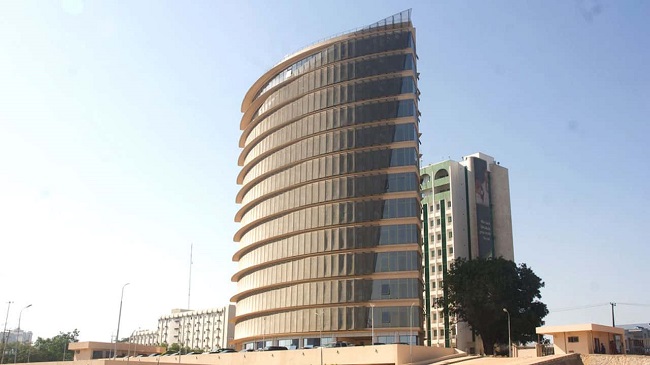
Bank of Industry (BOI) of Nigeria
The Fund now has 39 NIEs accredited across the globe under its Direct Access modality that builds country ownership in adaptation.
The accreditation of BOI represents a significant development for Nigeria as it becomes the country’s first accredited NIE. BOI achieved its accreditation in September 2025, reaffirming its compliance with the Fund’s fiduciary standards and its capacity to identify and develop effective adaptation projects.
The accreditation follows a comprehensive review by AF’s independent Accreditation Panel, which assessed BOI’s application against rigorous criteria covering financial management, institutional capacity, transparency, and environmental and social safeguards.
As Nigeria’s oldest and largest development finance institution, BOI’s accreditation enables it to access funding and develop projects directly that will benefit the most vulnerable communities disproportionately affected by climate change.
Meanwhile, the accreditation of La Banque Agricole (LBA) marks the second NIE to be accredited in Senegal. Joining the Centre de Suivi Ecologique – which was among the Fund’s first NIEs accredited 15 years ago when the Fund pioneered Direct Access. .
The Fund’s Board doubled the number of NIEs that can be accredited per country to two in 2021 to enable countries to further broaden their expertise and capacities to develop adaptation projects.
“It is great to see Namibia, Nigeria and Senegal strengthen and add to their capacities to develop effective and needed adaptation projects, which ultimately will benefit more people in communities most at risk to climate change impacts,” said Mikko Ollikainen, Head of the AF.
The Green Climate Fund (GCF) Board approved a record volume of climate finance for developing countries last week, greenlighting 22 new projects for climate action around the world. The $1.332 billion total is the largest amount approved at a GCF Board meeting and brings the year’s total to $3.26 billion, a new high surpassing the previous record of $2.9 billion in 2021.
This record achievement emphasises the Fund’s ongoing commitment to deliver support to developing countries as it heads to COP30 in Belem, Brazil. Ten years after approving its first projects in November 2015 and a decade since the Paris Agreement was adopted, GCF now has a portfolio of 336 projects amounting to $19.3 billion in GCF resources, $78.7 billion when expected co-financing is included.
Green Climate Fund (GCF) Board meeting
The projects will bring urgently needed funding for adaptation and mitigation action. The adaptation projects will benefit some of the most climate-vulnerable countries in the world, mainly targeting Least Developed Countries (LDCs), Small Island Developing States (SIDS) and African States, whilst mitigation and cross-cutting projects will bring significant emission reductions through renewable energy, reforestation and land-use, and energy efficiency.
Co-Chair Leif Holmberg from Sweden said: “I am delighted that in our tenth year of programming, the Board has approved a record annual portfolio demonstrating its commitment to accelerating climate action. This achievement reflects how the Fund is delivering on its major reform agenda to increase access to finance and results for climate action. Several of the approved projects will mobilise substantial private sector finance, providing clear evidence of GCF’s ability to catalyse additional resources in an era that requires more creative approaches to climate finance.”
Co-Chair Seyni Nafo from Mali said: “The $1.332 billion in investment agreed at this Board will deliver climate finance at scale for developing countries around the world. These 22 projects bring the total number approved this year to 50, increasing the Fund’s 2025 portfolio to $3.26 billion. This clearly signals the Fund’s continued commitment to extend its support to the most vulnerable, including in the Caribbean during the same week parts of the region were devastated by Hurricane Melissa.
“I am also delighted to see the accreditation of the first Direct Access Entities in Kazakhstan, Trinidad and Tobago, Tunisia, and Vanuatu, which signals GCF’s continued commitment to country-ownership of climate action. We also had an update on our planned regional presence, and I was encouraged to note the huge level of interest from developing countries in hosting a GCF regional office.”
Executive Director, Mafalda Duarte, stated: “2025 is a record-breaking year for GCF. Delivering over $3 billion in climate finance demonstrates that the reforms we have made are putting us on track to be the climate partner of choice for developing countries. This significant milestone generates much-needed momentum on climate action as we head towards COP30 in Belem, Brazil. Appropriately, two of the B.43 projects focus on the Amazon, with approved GCF financing of more than $220 million and unlocking more than $700 million with our partners.
“Our reforms and our growing partnerships with the private sector and serving the most vulnerable communities are enabling the Fund to deliver on its 50 by 30 vision with more impactful projects in more places.
“The Jordan-Aqaba project is a transformative case in point. The desalination project, one of the largest in the world, will eventually directly serve nearly half the population of Jordan, which has amongst the lowest water availability of any country on the planet. GCF’s USD 295 million investment will catalyse the $6 billion project.
“I would like to congratulate the Board for a milestone year that included significant reforms, including accreditation, staff rules and regulations and stewarding the strategic decision on our regional presence.”
GCF hosted the 43rd Board meeting (B.43) at its Songdo headquarters, where GCF is also celebrating the tenth anniversary of the adoption of its first climate projects.
GCF works through a network of over 158 partner agencies (‘Accredited Entities’) with projects in 134 countries. This unrivalled global network includes 106 regional and national entities (Direct Access Entities or DAEs) from the public, private, and non-profit sectors, as well as international financial institutions such as Multilateral Development Banks, United Nations agencies, and commercial banks.
The Board welcomed five new accreditation applicants, all of them DAEs. Four of the applicants are the first national DAEs of their respective countries. The Japan International Cooperation Agency (JICA), originally accredited in 2017, had its accreditation upgraded so it could deploy loans and undertake equity investments.
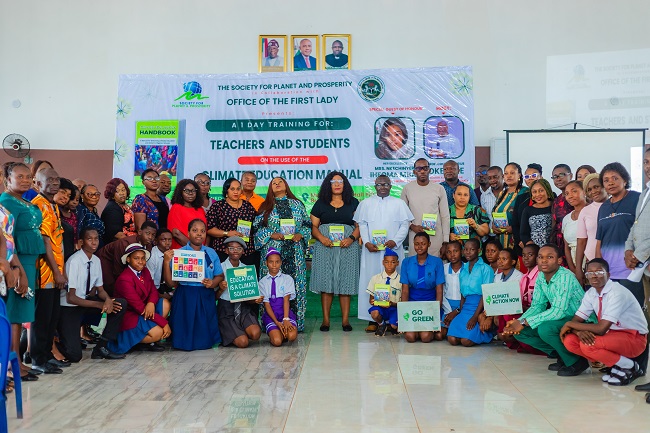
The Society for Planet and Prosperity (SPP), in collaboration with the Office of the First Lady of Enugu State and the Office of the Senior Adviser to the Governor of Enugu State on Climate Policy and Sustainable Development, brought together over 50 students, teachers, and stakeholders at the Parliament Hall, Enugu State Post Primary School Management Board for a one-day training on the use of the Climate Education Manual that was launched by Enugu State Government in March 2025.
The manual was co-created by teachers and students and spearheaded by Professor Chukwumerije Okereke, with funding from the University of Bristol, United Kingdom. It was designed to equip students with essential knowledge and practical tools to address climate change.
Participants at the one-day training on the use of the Climate Manual
Speaking at the event, the wife of the governor of Enugu State, Mrs. Nkechinyere Mbah, who was represented by the wife of the Speaker, Enugu State House of Assembly, Mrs. Chinyere Ugwu, described the initiative as a great idea coming from the office of the SA to the Governor and encouraged the teachers to champion and sustain the novel initiative in the state.
“The role of the teachers is critical in making this process a success to train the students to be climate Ambassadors,” she said.
Similarly, the Commissioner for Environment in Enugu State, Prof Sam Ugwu, who was represented by the Director, Department of Climate Change, Enugu State Ministry of Environment, Dr Nnamdi Arum, thanked the SA and the Office of the First Lady for putting up the initiative, which has become an avenue to empower the younger generation on how to be alert to climate change challenges, including the best and most sustainable ways to address climate impacts.
“This initiative is a significant step towards empowering our educators and students with the knowledge and skills necessary to understand and address climate change. By equipping them with the tools and resources outlined in the Climate Manual, we can foster a culture of sustainability and environmental stewardship in our schools and communities,” he stated.
The Chairman of Enugu State Post Primary School Management Board (PPSMB), Rev. Fr. Dr Hillary Mgbodile, thanked the SA and the Office of the First Lady for the laudable initiative and also prayed for the sustainability of the project and scale-up of the campaign to other schools in the State.
“I commend the SA and the office of the first lady for this great initiative and urge the staff and students present to take the knowledge home and pass it to their colleagues in their various schools,” he noted.
The Director of Schools Services, Enugu State Ministry of Education Mrs. Zita Oba, who was represented by Mrs. Agbo Nkem, thanked the first lady and the SA’s office for the laudable initiative, and for coming back to fulfil their promise of training the staff and students, and also encouraged that this kind of gesture be scaled up to all the schools in Enugu State including primary schools, to ensure sustainability
The event covered training from experts on some topics from the climate manual which include: Climate Change Evidence and Causes, Our Environment and Human Impacts on the Environment, Water, Sanitation and Hygiene (WASH), Climate Solutions: Renewable Energy, Clean Cooking and Climate Change Careers and Becoming a Green Ambassador (Environmental School Club).
There were also hands-on training and practical exhibition by the students on how to make briquettes from scratch. Equally demonstrated was how to make an ottoman chair using plastic waste from the environment.
According to SPP, the next stage of the training will involve the establishment of green clubs in secondary schools in Enugu State, with the schools that participated in the one-day training serving as the pilot hubs.
ByAnieze Ethelbert Elochukwu, Policy Analyst at Society for Planet and Prosperity (SPP)
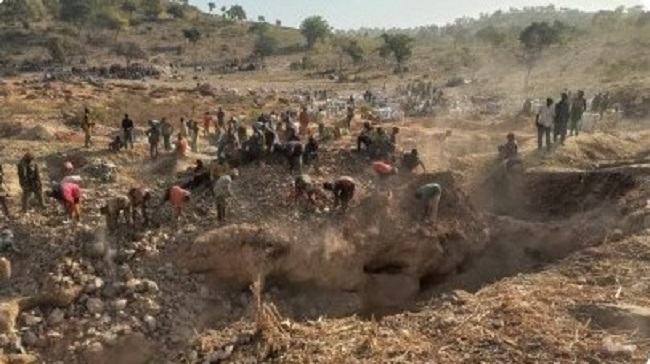
Ngaski Local Government Area in northwestern Kebbi State with its headquarters at Wara and lying on the shores of Kainji Lake near the Niger River in Nigeria is an agricultural community where millet, sorghum and maize once defined livelihoods. Today, however, artisanal gold mining has reshaped parts of its landscape and its prospects.
Photographs compiled by the Nigerian Youth Biodiversity Network (NYBN) show sluice pits, crushed ore, and open tailings that now scar fields once used for food and grazing.
As a youth-led and youth-focused organisation, the NYBN is alarmed by a widening convergence of harmful practices: mercury-dependent mining methods, rapid land degradation, declining biodiversity, youth exposure to toxic work, and the growing insecurity that blocks help and reform.
Mining site in Ngaski Local Government Area in northwestern Kebbi State
The Minamata Convention, the global pact to protect human health and the environment from mercury places this issue squarely within international concern. For youth advocates, mercury pollution in artisanal mining is not only an environmental problem; it is an intergenerational justice issue.
Listening to local voices: nuance, need and aspiration
On the ground, community perceptions are complex. An interview conducted with a local respondent – later translated by NYBN (from Hausa to English) – captures that ambivalence. The interviewee explains that gold mining is an age-old activity in the region, practiced “since I was born,” and that the work provides crucial income and food security, yet it remains insufficient to cover healthcare needs or secure long-term well-being.
They report visible changes in water quality and landscape, and they acknowledge awareness of mercury’s dangers. They also eagerly welcome training on safer mining methods. They described prior attempts to engage government but expressed little confidence in official assistance.
This testimony highlights three truths: (1) artisanal mining is socially and economically embedded; (2) local people perceive environmental change and exposure risks; and (3) communities want alternatives and capacity-building, but distrust and institutional neglect hinder progress. Any effective response must start with these lived realities.
The ecological and human stakes
Where mining proliferates without safeguards, fragile habitats are fragmented, soils erode, and waterways carry sediment and chemical residues downstream. Young people often present at sites from infancy are especially vulnerable to the chronic harm of contaminants and the immediate dangers of unrehabilitated pits.
The combination of degraded land, weakened livelihoods, and limited public support creates a feedback loop: declining agricultural productivity pushes more households toward hazardous mining practices, amplifying risks to biodiversity and human health.
Barriers to intervention: insecurity and governance gaps
Beyond environmental damage, many gold-bearing regions face security challenges that make solutions difficult to implement. Where non-state armed actors exert control, access for health workers, researchers and civil society is blocked and formalization efforts falter. Weak oversight, coupled with constrained local trust in government, means that top-down policies alone will not succeed.
Conclusion
Ngaski’s story is not an inevitable tragedy. It is a crossroads where youth energy, community knowledge, and international frameworks such as the Minamata Convention can converge to turn extractive desperation into regenerative opportunity.
The Nigerian Youth Biodiversity Network stands ready to convene partners, share local testimony, and shepherd pilot efforts that protect both people and biodiversity – so that the land and the children who will inherit it have a future worthy of them. As youth with utmost concern for our environment and the future that we look forward to, we urge the government and stakeholders on the following:
The National Gold Purchase Programme of the Ministry of Solid Minerals should be comprehensive so that it brings holistic development into the mining landscape and scrap artisanal and other forms of illegal mining across geopolitical zones
The governments of Kebbi and Zamfara states should immediately intervene into the environmental health problems and destruction of natural ecosystems caused by artisanal gold mining activities in the states. Artisanal miners are humans, and as such need ultimate health care and favourable working conditions. Labour exploitation at gold mining sites must be criminalized.
We call for a national policy framework on solid minerals and the mining industry. This national policy framework should be strengthened with legislative provisions, sanctions and incentives for good practices.
Nigeria needs to play key role in the implementation of the provisions and objectives of the Minamata Convention. Mercury and other harmful chemicals must be abolished in all its forms; both industrial usage and domestic use in skin care products must be sanctioned.
By Suleiman Bello Sule and Mayokun Taylor, Chemicals and Waste Task Force,Nigerian Youth Biodiversity Network
A new global coalition of cities has pledged urgent, coordinated action to tackle one of the most dangerous impacts of the climate crisis: extreme heat.
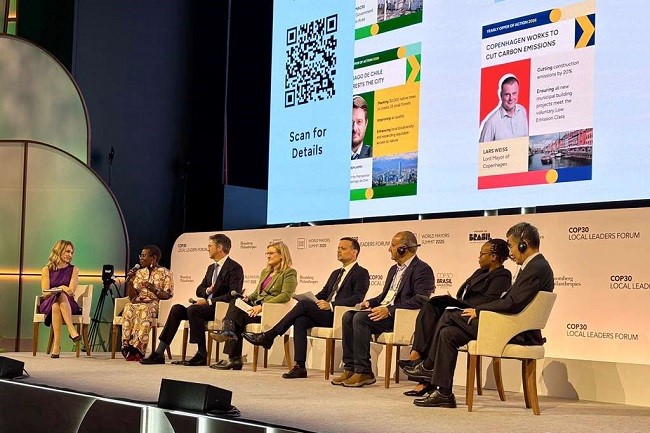
Announced on the first day of the C40 World Mayors Summit in Rio de Janeiro, the Cool Cities Accelerator will help urban leaders protect residents, safeguard economies, and redesign cities for a hotter future.
The initiative brings together 33 founding cities representing over 145 million people from every region of the world. This includes five cities in Africa: Accra (Ghana), Durban (Ethekwini – South Africa), Freetown (Sierra Leone), Nairobi (Kenya) and Tshwane (South Africa).
A session at the C40 World Mayors Summit in Rio de Janeiro
C40 established the Accelerator with support from The Rockefeller Foundation, and with implementation support from ClimateWorks Foundation, Robert Wood Johnson Foundation, Z Zurich Foundation, Danish Ministry of Foreign Affairs, and IBM.
Extreme heat is already the deadliest weather-related hazard worldwide, responsible for nearly half a million deaths each year. Without decisive action, the number of people exposed to life-threatening urban heat is projected to increase fivefold by 2050. These 33 cities are committed to taking that decisive action.
The vast majority of deaths caused by extreme heat are preventable through timely access to cooling, hydration, medical care, public health interventions, and improved infrastructure. These preventable deaths typically occur when individuals – especially vulnerable populations such as the elderly, outdoor workers, or those without access to air conditioning – are not adequately protected during periods of dangerously high temperatures.
The Cool Cities Accelerator provides a science-based, practical framework for cities to take both immediate and long-term action.
Participating cities will collaborate, share best practices, and issue progress reports protecting residents now by establishing clear heat leadership, strengthening early warning systems, and ensuring access to cooling during emergencies within two years.
They will also look at transforming cities for the future by improving building standards, expanding urban tree cover and shade, and future-proofing critical infrastructure within five years.
“Extreme heat is no longer a distant threat – it’s a daily reality affecting the lives and livelihoods of millions around the world,” said Elizabeth Yee, Executive Vice President of The Rockefeller Foundation. “Through the Cool Cities Accelerator, we’re proud to support mayors who are investing in bold, science-based solutions to future-proof health systems, ensuring they can withstand 21st century challenges. Local leaders are not just responding to the climate crisis today – they’re redesigning urban life to protect people, strengthen economies, and build a cooler, safer future for all.”
“Extreme heat is a silent killer and an increasingly urgent global threat,” said Mark Watts, Executive Director of C40 Cities. “The number of days that major capitals experience temperatures above 35°C has increased 54% over the past 20 years. Cities are showing real leadership by taking practical steps to protect communities, safeguard economies, and create more liveable urban environments.
In support of the Cool Cities Accelerator, The Rockefeller Foundation is providing a grant of approximately $1 million to develop the targets for heat adaptation and provide technical assistance for cities to implement solutions that mitigate the dangerous effects of extreme heat.
The Cool Cities Accelerator is part of C40 Cities’ broader mission to support bold, science-based climate action in the world’s largest and most influential urban areas. By sharing strategies and scaling proven solutions, cities can act faster and more effectively than they could alone.
Together, participating cities represent a global movement to save lives, strengthen resilience, and create thriving, heat-resilient cities for generations to come.
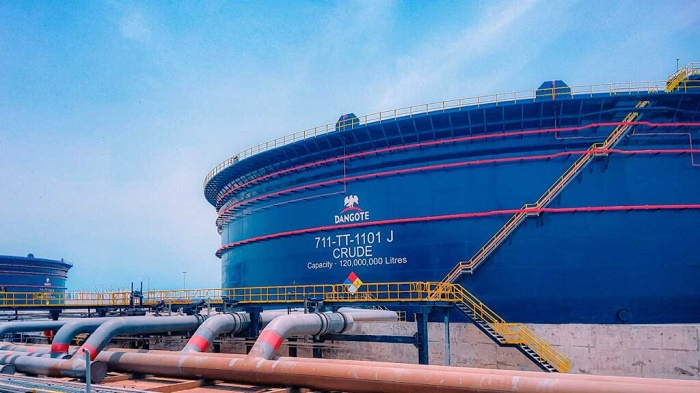
The Federal High Court in Abuja on Wednesday, November 5, 2025, dismissed the N100 billion suit filed by Dangote Petroleum Refinery and Petrochemicals FZE against Nigeria National Petroleum Company Limited (NNPCL) and its co-defendants over oil import licence dispute.
Justice Mohammed Umar dismissed the suit following an oral application by the defence lawyers after counsel who appeared for Dangote, C.O. Adegbe, withdrew the suit.
The suit, which was formerly before Justice Inyang Ekwo, began denovo (afresh) following its reassignment to Justice Umar.
Dangote Refinery
Dangote Refinery had sued the Nigeria Midstream and Downstream Petroleum Regulatory Authority (NMDPRA) and Nigeria National Petroleum Corporation Limited (NNPCL) as 1st and 2nd defendants.
Also joined in the suit are AYM Shafa Limited, A. A. Rano Limited, T. Time Petroleum Limited, 2015 Petroleum Limited, and Matrix Petroleum Services Limited as 3rd to 7th defendants respectively.
The oil company, through its lawyer, Ogwu Onoja, SAN, had prayed the court to nullify import licences issued by NMDPRA to the NNPCL and the five other companies for the purpose of importing refined petroleum products.
It equally sought a N100 billion in damages against NMDPRA for allegedly continuing to issue import licences to NNPCL and the five companies for importing petroleum products, among other reliefs.
Upon resumed hearing in the matter on Wednesday, Adegbe informed the court that though the matter was scheduled for hearing, the plaintiff (Dangote) had a notice of discontinuance dated and filed on July 28.
She said the refinery had resolved to withdraw the case and urged the court to strike it out.
Responding, I.B. Ahmad, who appeared for NMDPRA, did not oppose Adegbe’s application.
The lawyer, who acknowledged the receipt of the notice of discontinuance, prayed the court not to strike the case out but to dimiss it’s in its entirety.
Also, Chris Ekemezie, who represented the 3rd, 4th and 7th defendants (AYM Shafa Limited, A. A. Rano Limited and Matrix Petroleum Services Limited), urged the court to dismiss the suit.
Ekemezie, who cited previous Supreme Court and Appeal Court cases, said where such application is made, the proper thing to be done is to dismiss it.
According to him, this is a matter that was commenced by originating summons and issues have been joined and pleadings exchanged, and the honourable court had adjourned for today for hearing of the processes filed.
“It seems what the plaintiff (Dangote) plans to do is to go and panel-beat his case and come back, after seeing that its case is bad.
“So we urge my lord to dismiss it with substantive cost,” he said.
Mofesomo Tayo-Oyetibo, SAN, counsel for the 5th and 6th (T. Time Petroleum Limited, 2015 Petroleum Limited), also did not oppose the application for withdrawal of the suit.
He, however, aligned himself with the submissions of the other defence lawyers.
But Adegbe disagreed with the application by the defence for the dismissal of the case.
She based her argument on the prior conversation her client had with the defendants that the matter should be struck out.
Justice Umar, consequently, dismissed the suit without any cost.
“The case on records is that parties have joined issues and what is remain is for parties to adopt their processes.
“It is at this stage that the plaintiff came for a withdrawal.
“In fact, the matter is deemed for dismissal and cost.
“But since it is not asked for, the matter is hereby dismissed without cost,” he ruled.
Dangote Refinery had prayed the court to declare that NMDPRA was in violation of Sections 317(8) and (9) of the Petroleum Industry Act (PIA) by issuing licenses for the importation of petroleum products.
It stated that such licenses should only be issued in circumstances where there is a petroleum product shortfall.
But NNPCL, in its preliminary objection, prayed the court to strike out the case for being incompetent.
The NNPCL argued that the suit was premature and it disclosed no cause of action against it.
“This honourable court lacks the jurisdiction to hear this suit,” the NNPCL said.
In the affidavit in support of the application deposed to by Isiaka Popoola, a clerk in the law firm of Afe Babalola & Co, counsel to the NNPCL, he said one of their lawyers, Esther Longe who perused Dangote’s originating summons, affidavit and written address, told him that an examination of the processes showed that NNPC as sued by the refinery was non-existent entity.
Popoola averred that the court lacked jurisdiction over the 2nd defendant sued as Nigeria National Petroleum Corporation Limited (NNPCL).
“A simple search on the CAC website shows that there is no entity called “Nigeria National Petroleum Corporation Limited (NNPC).”
According to Popoola, the 2nd defendant/objector is not one and the same with the 2nd defendant sued by the plaintiff.
He urged the court to strike out the suit.
Also, the NMDPRA, in its counter affidavit deposed to by Idris Musa, a Senior Regulatory Officer in the office, prayed the court to dismiss the suit as it was misconceived, unmeritorious and incompetent.
Musa argued that Dangote Refinery is not entitled to any of the reliefs sought.
The official, in the application dated and filed Dec. 13, 2024, said the current production of Dangote Refinery is yet to meet the national daily petroleum products sufficiency requirement.
He said based on this and in compliance with Section 317 [9] of the PIA (Petroleum Industry Act), NMDPRA issued licences to import petroleum products to bridge product shortfalls to companies with good track records of international products trading.
Besides, he said the agency is also mandated to promote competition and prevent abuse of dominant market positions and unhealthy monopoly in the oil and gas sector.
He denied the allegation that NMDPRA is partaking in any purported “grand conspiracy and concerted efforts” against the refinery, describing it as “an allegation for which the plaintiff has provided no facts or evidence in support.”
The oil marketers, in a joint counter affidavit filed on Nov. 5, 2024, told the court that granting Dangote’s application would spell doom for the country’s oil sector.
According to them, the plan to monopolise the oil sector is a recipe for disaster in the country.
The three marketers, AYM Shafa Limited, A. A. Rano Limited and Matrix Petroleum Services Limited, in their response, said the plaintiff did not produce adequate petroleum products for the daily consumption of Nigerians.
They argued that there was nothing placed before the court to prove the contrary
Justice Ekwo had, on March 18, dismissed the NNPCL’s objection against Dangote’s suit
The judge, in the ruling, dismissed the objection on the grounds that the application was incompetent.
Justice Ekwo held that the NNPCL ought to have filed a defence in the form of a counter affidavit to the Dangote Refinery’s originating process before raising an objection.
The judge, who also dismissed the NNPCL preliminary objection, challenging the jurisdiction of the court, granted Dangote’s motion to amend its originating motion by correcting the name of the NNPCL.
Besides, Justice Ekwo equally dismissed the motion for joinder filed by Federal Competition and Consumer Protection Commission (FCCPC) for being an unnecessary party and as a “meddlesome interloper.”