Home Blog Page 152

Seplat Energy earns ISO 45001:2018 certification, advances operational excellence, workforce wellbeing

0

Seplat Energy PLC, leading Nigerian independent energy Company listed on both the Nigerian Exchange and the London Stock Exchange, has achieved the ISO 45001:2018 certification in line with its strides towards operational excellence and employee wellbeing,

The certification was officially presented to the company at its headquarters in Lagos by officials of Bureau Veritas (VS).

Seplat Energy’s journey to ISO 45001:2018 certification has been one of collaboration, commitment, and continuous improvement. From conducting gap assessments to implementing robust controls and engaging its workforce, every step was guided by the energy company’s vision to create a safer and healthier workplace, according to a statement from the company by Stanley Opara, Manager, Corporate Communications, Seplat Energy.
Seplat Energy
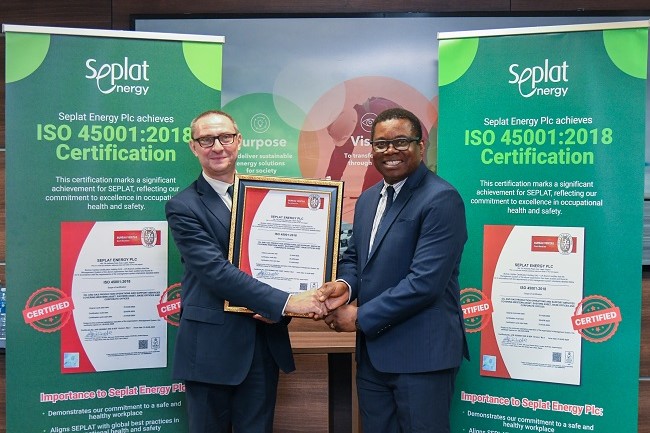
L-R: Jean-Michel Perret, District Chief Executive & Managing Director, Bureau Veritas Nigeria, and Samson Ezugworie, Chief Operating Officer, Seplat Energy Plc, during the presentation of ISO 45001:2018 Certification on Operational Excellence and Workforce Wellbeing by Bureau Veritas to the Seplat Energy Plc Team at the Company’s headquarters in Lagos …recently

“This globally recognised standard enhances its operational resilience, reduces risks, and reinforces the company’s duty of care to employees. It also positions it competitively, demonstrating to stakeholders that Seplat Energy operates with integrity, responsibility, and excellence. This certification is not the end; it’s a foundation for sustained growth and safety leadership.”

Commending on the certification, Roger Brown, Chief Executive Officer, Seplat Energy, said: “Achieving the ISO 45001:2018 certification marks a significant milestone in our journey towards operational excellence and employee wellbeing. It reflects our unwavering commitment to creating a safe, healthy, and resilient workplace.

“This global recognition reinforces our belief that safety is not just a priority, it is a core value embedded in our culture. We will continue to lead by example, ensuring our people thrive in an environment built on trust, care, and world-class standards.”

Speaking on the certification and what it meant to the company, Samson Ezugworie, Chief Operating Officer, Seplat Energy, said: “This certification is a testament to the dedication and discipline of our teams across all levels. We have always taken proactive steps to manage risks, enhance safety performance, and foster a culture of continuous improvement.

“The ISO 45001:2018 certification validates these efforts and reinforces our commitment to protecting our workforce as a fundamental part of our success. We remain focused on sustaining and evolving our health and safety practices to meet and exceed global benchmarks.”

Earlier, Adenike Akinbote, Certification Manager, Bureau Veritas (VS) Nigeria, commended Seplat Energy for its commitment and adherence to global best practices, adding that: “We commend the unwavering commitment of Seplat’s leadership in driving the implementation of ISO standards and successfully steering the organisation toward certification.

“Throughout the audit process, the professionalism, receptiveness, and openness demonstrated by both the leadership and employees of Seplat were truly commendable. We were particularly impressed by the level of implementation achieved during this initial certification phase.”

In his remarks, Adeshina Sadiq, General Manager, HSE, Seplat Energy, said: “Achieving the ISO 45001:2018 certification is a proud moment for all Seplat employees as Health, Safety, and Environment stewardship is a shared responsibility. It reflects the strategic integration of safety into all our operations and the relentless efforts of our teams to always uphold the highest standards.

“This milestone is not just a certification, it’s a validation of our systems, our people, and our culture of care. We will continue to strengthen our safety framework and empower every employee to be a champion of workplace wellbeing.”
Lagos signs MoUs with three investors on waste conversion

The Lagos State Government (LASG) has signed three separate Memoranda of Understanding (MoU) with various reputable companies to advance waste conversion.

This is contained in a statement issued and signed by the Director, Public Affairs, Mr. Kunle Adeshina, on Sunday, November 9, 2025, in Lagos.

Adeshina added that the MoU was aimed at reducing the quantum of waste in the state.

Governor Babajide Sanwo-Olu
Governor Babajide Sanwo-Olu of Lagos State

“The state over the weekend demonstrated its irrevocable commitment to advanced waste conversion.

“This is the 11th Lagos International Climate Change Summit climaxed with breakout and panel sessions on thematic areas featuring experts,” he said.

He said the Commissioner for the Environment and Water Resources, Mr. Tokunbo Wahab, while addressing the investors, stated that the state government was determined to convert waste to wealth.

He added that the LASG was determined to move from linear waste management (pick and dump), to conversion of waste to wealth which was more sustainable.

He said the new MoUs represented a new vista in the quest of the state to reduce the quantum of waste that finally gets to the various landfill sites.

He said the proposition from one of the companies, HAK Waste Ltd., was to establish a circular beverage container bottle recycling and recovery.

“This is through a deposit refund system hinged on the Extended Producer’s Responsibility mechanism (EPRM),” he said.

He added that the new proposal was an investor’s confidence in the EPRM policy of the state on waste reduction.

He added that it would involve the establishment of a packaging circularity ecosystem.

He said that another of the MoUs would bring about a first-of-its-kind establishment of a world-class tyre collection and recycling of end-of-life tyres in the state.

“Haggai Logistics Ltd. proposes to build a first-of-its-kind tyre recycling plant.

“This will be responsible for processing end-of-life tyres via a fully automated Waste Tyre Recycling Factory and deployment of environmentally sound recycling technologies.

“The third of the MoU is from Mondo 4 Africa, proposing to convert non-recyclable plastic waste into sustainable fuel and other valuable resources through environmentally friendly technology,” he said.

He said the state was determined to continually sensitise the residents to cultivate the habits of waste sorting from the source and always bear in mind that waste was a resource and not a waste.

“We are trying to make people change the culture of seeing waste as waste but waste as a resource.

“We are also trying to shift their mindset from the practice that has been in use for decades,” he said.

He said the state was determined  to address these key issues simultaneously for a proper financial intervention.

He emphasised that what the government was speaking to was proper financing and how to access it constantly as well as speaking to the vulnerabilities of Lagos being a coastal state.

Speaking further on the new MoUs, the Managing Director of LAWMA, Dr Muyiwa Gbadegesin, said the new initiative was part of the organisation’s quest to improve the state’s environment.

Gbadegesin noted that the state government or LAWMA alone cannot be saddled with the responsibility of managing the quantum of daily generated solid waste in the state.

He added that the state needed the partnership of the private sector to turn waste into a resource and wealth.

In their response, the investors expressed their appreciation and willingness  to work with the LASG to actualise the waste-to-wealth initiative of the state.

The event was witnessed by the Special Adviser on Environment, Mr. Rotimi Akodu; the Permanent Secretary, Office of Environmental Services, Dr Omobolaji Gaji and the Permanent Secretary, Office of Drainage Services, Mr. Mahamood Adegbite, among others.

By Olaitan Idris

COP30: UN chief calls for shift to clean energy

UN Secretary-General, António Guterres, has continued his campaign to accelerate the global shift from fossil fuels to clean energy – “the cheapest source of new electricity in nearly every country.”

The latest push came on Friday, November 7, 2025, in his remarks to the Energy Transition Roundtable in Belém, Brazil, held just days before the formal opening of the COP30 climate change conference.

“The fossil fuel age is ending. Clean energy is rising. Let us make the transition fair, fast, and final,” he said.

António Guterres
UN Secretary-General, António Guterres

The UN chief told world leaders that “the global energy landscape is changing at lightning speed.”

Green energy sources accounted for 90 per cent of new power capacity last year, while investment in them reached $2 trillion, or $800 billion more than fossil fuels.

“The renewables revolution is here,” he said. “But we must go much faster – and ensure all nations share the benefits.”

The international community must ensure a “just, orderly and equitable” transition from fossil fuels, triple renewable energy capacity and double energy efficiency by the end of the decade.

However, countries are falling short. Even if new national climate action plans are implemented, global temperature rise is still expected to exceed 2 degrees Celsius above the pre-industrial era.

“That means more floods, more heat, more suffering – everywhere,” he warned.

“To return below 1.5 degrees by century’s end, global emissions must fall by almost half by 2030, reach net zero by 2050, and go net negative afterwards.”

The secretary-general outlined five areas for action, calling first for countries to “align laws, policies and incentives with a just energy transition; and eliminate fossil fuel subsidies that distort markets and lock us into the past.”

Governments must “put people and equity at the centre of the transition” and support workers and communities who depend on oil, coal and gas for their living, including through training and new opportunities.

This is particularly the case for young people and women.

“Invest in grids, storage, and efficiency. Renewables are surging, infrastructure must catch up – fast,” he continued.

As “technology must be part of the solution, not a new source of strain,” clean energy must power all new electricity demand “including from the data centres driving the AI revolution.”

His final point stressed the need to “unlock finance at scale for developing countries,” noting that Africa receives just two per cent of global clean energy investment.

“We must support developing countries to implement their commitment to transition away from fossil fuels: through stronger cooperation, investment and technology transfer – and calibrated to different capacities and dependencies,” he said.

By Cecilia Ologunagba

FAO, partners unveil climate resilience project

0

The Food and Agriculture Organisation (FAO) has reaffirmed its commitment to restoring degraded ecosystems and strengthening livelihoods across Africa’s drylands.

This follows the launch of the Scaling-Up Resilience in Africa’s Great Green Wall Area (SURAGGWA) project in Abuja on Friday, November 7, 2025.

FAO Representative in Nigeria and ECOWAS, Mr. Hussein Gadain, said the initiative is supported by the Green Climate Fund (GCF).

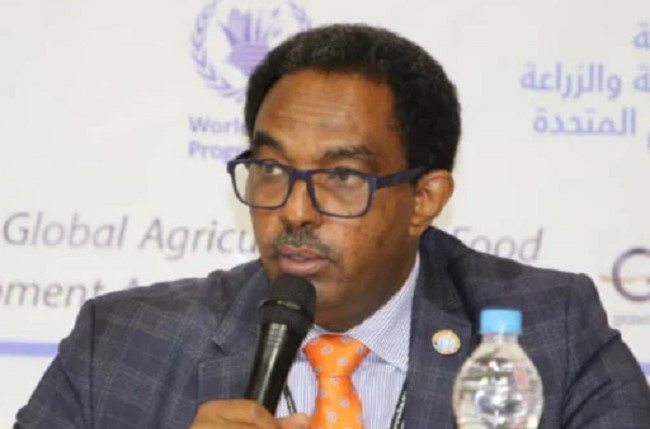
Hussein Gadain
FAO Representative in Nigeria and ECOWAS, Hussein Gadain

He said it aims to promote climate-smart agriculture and sustainable land use practices across eight countries within the Great Green Wall region.

Gadain said the project would be implemented in collaboration with the National Agency for the Great Green Wall (NAGGW), the National Council on Climate Change (NCCC), and the Agro-Climatic Resilience in Semi-Arid Landscape project.

According to him, the Federal Ministry of Environment and relevant commissions will provide oversight, while FAO will lead implementation alongside ministries, technical agencies, and development partners.

Gadain explained that each participating country will establish a Country Implementation Unit for day-to-day coordination, with FAO providing technical support and guidance.

He added that, at the regional level, a Programme Steering Committee will operate under the Pan-African Agency of the Great Green Wall (PAGGW) to ensure strategic alignment and coordination.

The initiative will also establish National Steering Committees in all eight countries: Burkina Faso, Chad, Djibouti, Mali, Mauritania, Niger, Nigeria, and Senegal to monitor project delivery.

Minister of Environment, Mr. Balarabe Lawal, said the SURAGGWA project was a step in the right direction toward restoring degraded lands and promoting low-emission value chains.

He said the project reflects the Federal Government’s determination to build a greener, safer, and more prosperous Nigeria under the Renewed Hope Agenda.

Lawal explained that Nigeria remains the largest beneficiary, with about 1.9 million people expected to benefit directly from interventions promoting climate resilience and inclusive green growth.

He emphasised that collective action among government agencies, civil society, and private partners was crucial to transforming the Great Green Wall into a symbol of resilience and hope.

Earlier, Director-General of the NAGGW, Mr. Saleh Abubakar, commended FAO for its leadership, noting that SURAGGWA aligns perfectly with Nigeria’s restoration and livelihood improvement mandate.

He said the agency would continue to provide field presence and institutional support to ensure tangible benefits for communities and landscapes across affected regions.

Abubakar added that NAGGW was establishing community-based nurseries, empowering women and youths, and promoting climate-smart livelihoods to ensure long-term sustainability.

He said the programme is expected to benefit nearly 8.7 million people across Africa’s drylands by enhancing ecosystem services and fostering inclusive growth.

He added that the initiative would strengthen national and regional institutions for sustainable coordination while promoting non-timber forest product value chains for improved livelihoods.

The Great Green Wall initiative, launched by the African Union in 2007, seeks to restore 100 million hectares of degraded land, sequester 250 million tonnes of carbon, and create 10 million green jobs by 2030.

By Patricia Amogu

Afforestation: Ondo to plant 10m trees in forest reserves

The Ondo State Government says it is establishing nurseries to raise seedlings for planting of 10 million trees in forest reserves across the state in its afforestation efforts.

Mr. Olaleye Akinola, Commissioner for Agriculture and Forestry, disclosed this at a news conference on Saturday, November 8, 2025, in Akure, the state capital.

Akinola explained that some of the tree seedlings would also be given free-of-charge to farmers, but would be monitored for two years to ensure its survival.

Nigeria REDD+
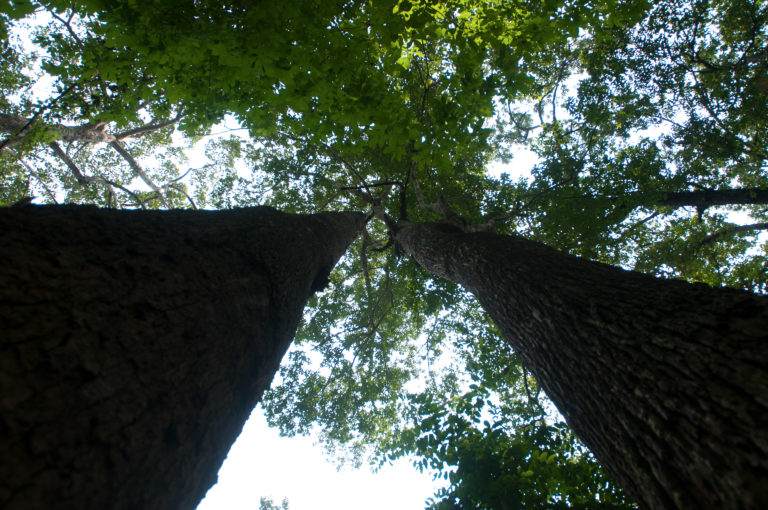
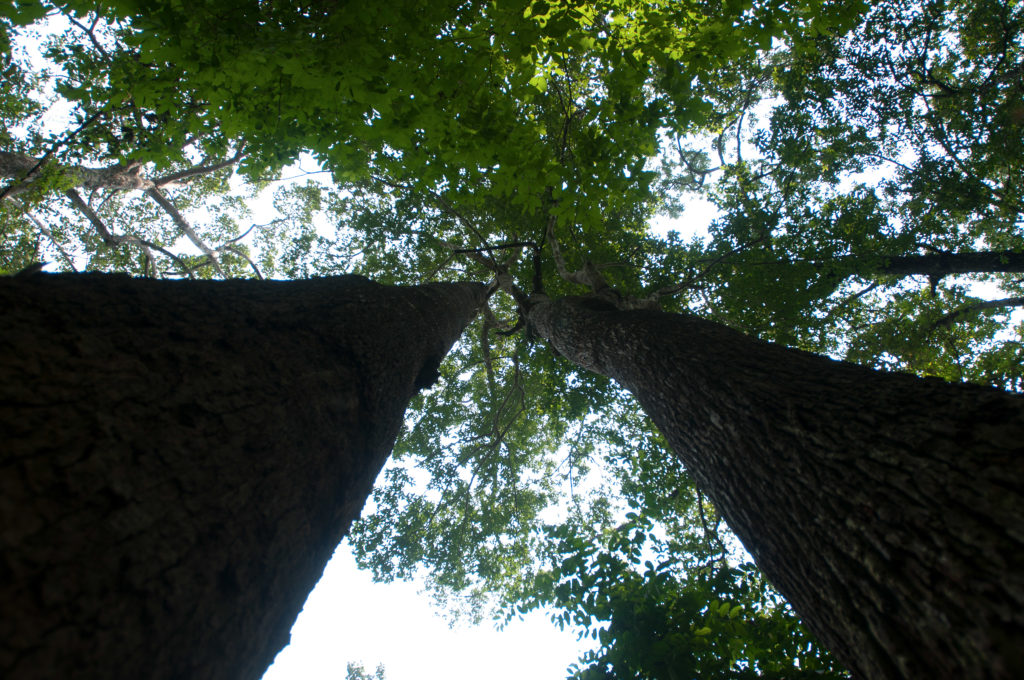
The Ondo State Government is planting 10 million trees in forest reserves. Photo credit: UNDP Cambodia/Chansok Lay/Oddar Meanchey

“Ondo State Government will not leave replanting in the hands of those who contributed to deforestation without proper supervision.

“This administration is fully committed to balancing economic growth with environmental sustainability.

“We are taking these steps to secure our forests, protect our climate, and sustain livelihoods for generations to come,” he said.

The commissioner, who said there was no going back on the government forest policy, said only cocoa farmers who planted trees in their farms would be allowed to remain in the government forest reserves.

The state government proposed framework policy requires each farmer to pay a levy of N250,000 per hectare, N150,000 for polygon mapping and N100,000 for agro-forest.

According to Akinola, the levy is charged to cover major expenses of carrying out these assignments that will remove Ondo State from the red zone in cocoa farming.

“Cocoa from Ondo State will not be allowed into global market if the forest policy is not properly carried out by December 2025.

“The policy started in 2020, and was to take full effect in 2024 but extended to 2025. It aims at ensuring that all cocoa, cashew and rubber farmers are properly mapped and registered.

“By December, only cocoa farmers with traceable farms will be eligible to sell their produce in line with global market and European Union traceability standards.

“This initiative is not about punishing anyone. It is about protecting the future of our farmers and meeting global sustainability requirements.

“We cannot continue to lose our forest cover while expecting to sell to international buyers who now demand proof of deforestation-free products,” the commissioner said.

Akinola disclosed that the state government was preparing a new legislation to be forwarded to the State House of Assembly for categorisatipn of forest areas into three distinct zones.

He listed the three zones to include the Core Zone, where tree planting and regeneration would take place; the Sustainability Zone, where regulated farming such as cocoa and rice farming would continue.

Akinola said the third and last zone was the Buffer Zone reserved for future agricultural expansion.

According to him, mapping and monitoring activities are already ongoing with government partnering accredited firms to use advanced technology for farm traceability.

“All yearly revenue collection relating to the process has been suspended until next year to ease farmers’ participation in the ongoing process,” he said.

By Muftau Ogunyemi

Nigeria reaffirms resolve to champion climate change solutions in Africa

0

The Federal Government of Nigeria has affirmed its determination to continue to use its influence to lead the way in seeking solutions to climate change matters in Africa and beyond.

The Special Adviser to the President on National Economic Council (NEC) and Climate Change, Rukaiya El-Rufai, said this in an interview with newsmen, in Belem, Brazil.

El-Rufai, who gave a recap of the Vice President Kashim Shettima’s  participation in COP30 in Brazil, said Nigeria would use its influence to mobilise finance for the country.

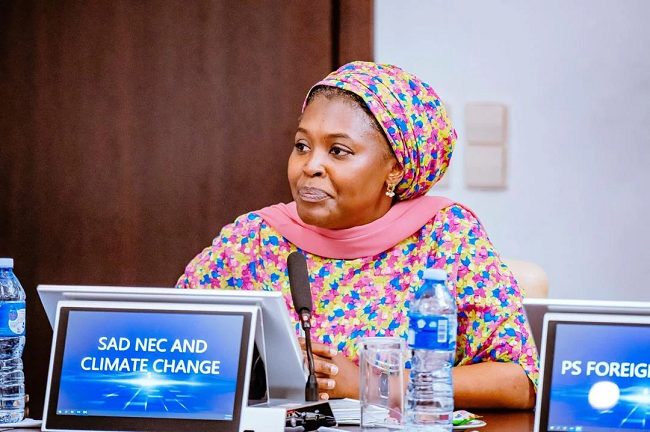
Rukaiya El-Rufai
Special Adviser to the President on National Economic Council (NEC) and Climate Change, Rukaiya El-Rufai

She also said that Nigeria would canvass for the adaptation finance for African nations in order to collectively tackle the challenges of climate change.

“One thing that I know the whole world would look out for is Nigeria’s leadership in Africa. So we do have our influence in the regional ECOWAS and also at AU platforms to demonstrate that we are that big brother.

“So, we must  galvanize all stakeholders, both in public and private sectors, to make sure we implement our National Determined Contributions (NDCs) and make it work for us,” she said.

The presidential aide added that Nigeria’s natural resources will also play a key role in mitigating the effects of climate change.

“The natural capital we have – don’t forget that we are an oil-producing nation and endowed with vast natural gas resources and renewables.

“We will also continue to use that to implement the NDCs in a way that works for us and addresses the sustainable development challenges that we are facing,” El-Rufai added.

She stated that nature and climate are the very home that makes Nigerian  economy thrive and also ” gives us the stability to live good lives. So, we are dependent on nature.

“That is why how you consume and use the natural resources is important to ensuring sustainability of livelihoods, economies and everything.

“So, this why we need to live our lives responsibly and also leave a better future for generations to come.

“The government led by President Bola Tinubu is concentrating on resilience and ensuring that there is long term shared value creation.

“The government will continue to prioritise climate and nature as well as ensuring that we lead on the necessary climate policies,” she added.

She said that many countries were yet to submit their NDCs to the United Nations Framework Convention on Climate Change (UNFCCC).

El-Rufai, therefore, urged them to emulate Nigeria and praised Nigeria for taking the lead.

“There are many countries that haven’t submitted their NDCs yet, but Nigeria has. China and EU just submitted.

“So, you can see we are leading because we also have our Climate Change Act as well as our carbon market framework in place, and that is why the theme for COP 30 is apt: COP of Action and Implementation.

“This COP Presidency said they are not creating anything new; rather, let world leaders seat and operationalise NDCs.

“And make sure all those climate-related finance pledges made at Baku that were brought down from $1.3 trillion to $300 billion come to a reality,” she stated.

Meanwhile, Shettima, has departed Belem, Brazil, for Abuja after a successful diplomatic engagement in the South American country.

Shettima represented President Bola Tinubu at the 30th Session of the United Nations Climate Change Conference (COP30).

The conference was convened by Brazil’s President, Luiz Inácio Lula da Silva, in collaboration with the United Nations and other global partners.

During the international engagement, VP Shettima joined other world leaders, development partners and business executives at the Leaders’ Climate Summit – COP30.

He delivered a speech on Nigeria’s effort in addressing climate change, saying the nation’s renewed climate agenda represents “not just an aspiration, but a solemn national commitment to preserve the planet for future generations.”

Shettima also represented Tinubu at a high-level thematic session titled, “Climate and Nature: Forests and Oceans,” on the margins of COP30, where he delivered Nigeria’s bold statement.

By Salisu Sani-Idris

Experts commend Dangote refinery expansion plan

0

Some economic and energy experts have commended the Dangote Refinery for its ambitious plan to expand its refining capacity from 650,000 barrels per day to 1.4 million barrels per day.

They said the move would place Nigeria on the path to achieving full self-sufficiency in petroleum products, conserve foreign exchange, and enhance fuel affordability for ordinary citizens.

They spoke in separate interviews in Lagos on Sunday, November 9, 2025, following the announcement of the expansion by the Dangote Group President, Alhaji Aliko Dangote.

Dangote Refinery gate

Dr Muda Yusuf, Chief Executive Officer of the Centre for the Promotion of Private Enterprise (CPPE), described the move as a landmark step in Nigeria’s industrial development.

He said the refinery expansion represents an uncommon level of foresight and confidence in the nation’s economy, adding that it would position Nigeria as a hub for refined petroleum products in Africa.

“We should be proud that a Nigerian of such stature has demonstrated the capacity and courage to ensure that our country becomes self-reliant in refined petroleum,” Yusuf said.

According to him, the expansion would enable the refinery not only to meet Nigeria’s domestic fuel demand but also to export more products to global markets, strengthening the country’s foreign reserves.

Yusuf said the project would also boost the country’s macroeconomic stability by reducing the huge amount of foreign exchange previously spent on the importation of refined petroleum.

“Before now, Nigeria expended about 30 per cent of its foreign exchange earnings on fuel imports. This expansion will help conserve a substantial portion of that,” he explained.

He noted that the refinery’s operations would extend beyond fuel production, adding that its by-products, such as polypropylene, would serve as vital inputs for local industries.

“Polypropylene is a key raw material for the plastic industry, and over 80 per cent of our packaging materials are made from plastics. The benefits are enormous,” he added.

Yusuf said the refinery’s growing capacity would strengthen Nigeria’s industrial base, attract new investments, and create a positive global perception of the country’s economic potential.

“This is a good optic for the Nigerian economy and a signal that African investors can achieve global standards. Dangote has become a reference point for continental industrialisation,” he said.

Similarly, Dr Ayodele Oni, Partner and Chair of the Energy and Natural Resources Practice Group at Bloomfield, described the refinery expansion as a “bold and transformative industrial venture.”

He said the establishment of such a large complex within Nigeria would promote local content, create jobs, and stimulate technological advancement in the energy sector.

“It is a good thing to have such a large-scale industrial project in Nigeria. It enhances the capacity of our businesses to compete internationally,” Oni said.

However, he noted that legitimate concerns exist about the possible emergence of monopolistic dominance within the sector.

“There are always concerns around monopoly, and rightly so. This is why state regulators like the Federal Competition and Consumer Protection Commission must be effective and proactive,” he said.

Oni added that it would be unjust to criticise Dangote for taking calculated risks in a difficult business environment where many investors have often shied away.

“It would also be unfair to deny him the benefits of his huge investment. What matters is ensuring fairness, transparency, and open competition,” Oni said.

Also, Mr. Boniface Okezie, President of the Progressive Shareholders Association of Nigeria, lauded Dangote for demonstrating consistency and ambition in expanding the refinery’s capacity.

He said the development was an indication of confidence in Nigeria’s economy and a reflection of the growing participation of indigenous investors in large-scale projects.

Okezie, however, urged the Dangote Group to prioritise domestic consumption over export, stressing that Nigeria’s energy needs remain enormous and largely underserved.

“Charity should begin at home. The immediate focus should be on meeting domestic fuel demand rather than rushing to export to recoup investment,” Okezie said.

He argued that projects of such scale often require patience before yielding financial returns, adding that Dangote should place emphasis on affordability for Nigerians.

“These kinds of investments take time before they begin to yield profit. Emphasis should be on affordable pricing for local consumers,” he added.

Okezie also called on the Federal Government to support other domestic investors who had secured licences to build refineries, noting that they need incentives to thrive.

“Government should grant incentives to local businesses that are licensed to build refineries so they can compete effectively and contribute to price reduction,” he said.

He said increased participation by private investors would promote healthy competition, create jobs, and make fuel pricing more stable in the long term.

The Dangote Refinery recently announced plans to expand its facility from 650,000 barrels per day to 1.4 million barrels per day.

Dangote made the announcement at a press briefing in Lagos, describing the expansion as a strategic move to boost global refining capacity.

The president of Dangote Group said the project would make the refinery the largest in the world, surpassing several established plants in Asia and the Middle East.

According to him, construction work on the expansion is expected to commence without delay, signalling another major milestone for Nigeria’s industrial landscape.

He said the refinery’s expansion would further enhance Africa’s refining capacity, reduce dependence on imported petroleum products, and position Nigeria as a key energy exporter.

Dangote added that the group remained committed to driving economic growth, creating employment opportunities, and supporting the government’s quest for industrial transformation.

By Simon Akoje

Kenyan youth demand taxation of super rich for climate justice

0

Hundreds of volunteers from Greenpeace Africa formed a giant human banner in the shape of the African continent and displayed a printed message “Tax the Super-rich for People and Planet” to demand urgent tax reform at UN Tax Convention negotiations.

The gathering welcomed negotiations in Nairobi at the UN Tax Convention (UNTC), calling for action to deliver much needed additional public finance for climate mitigation, nature protection and sustainable development by making billionaires and oil and gas corporations pay their fair share in taxes.

Tax reform
Youth volunteers demand urgent tax reform

Nina Stros, policy expert at Greenpeace International and head of the Greenpeace delegation, said: “The current global tax system is outdated and unjust, allowing the super-rich and polluting oil and gas corporations to profit while avoiding paying their fair share and fuelling the climate crisis through their excessive emissions. This has to change.

“Governments must deliver strong commitments with clear mechanisms to tax polluting billionaires and corporations. These changes will benefit the majority of the world’s countries, from the least developed economies to those with high socioeconomic indicators in the Global North. Instead of pursuing a race to the bottom with continuous lowering of corporate tax rates, it’s time governments unite to usher in new global tax rules that will finally hold these super rich individuals and polluting corporations to account.”

The UNTC’s third round of negotiations (INC-3) in Nairobi, holding from November 10 to 19, 2025, coincides with COP30 in Belém, Brazil, where countries are debating how to bridge the 1.5°C ambition gap, ending forest destruction and who picks up the tab for international climate finance.

Tangible plans are urgently needed to deliver on the COP29 finance commitment for developed countries to mobilise at least $300 billion per year by 2035, and to scale up to at least $1.3 trillion in public finance in line with needs. The UNTC provides a critical opportunity to unlock the public finance that is required, through increasing taxes on the super-rich and increasing profit taxes on polluting oil and gas corporations.

Fred Njehu, Fair Share Global Political Lead, Greenpeace Africa, said: “The world is not a billionaire’s playground, for them to get richer at the expense of our health, security and democracy. Governments must act now to stop the super-rich stashing billions in tax havens, and to put an end to polluting corporations paying too little tax, depriving people of vital public finances. It’s time to implement global taxes on billionaires and the profits of oil and gas corporations – and direct these funds to sustainable development, public services, and tackling the climate and ecological crisis.”

Murtala Touray, Programme Director at Greenpeace Africa, said: “The tax negotiations in Nairobi come at a pivotal moment to fix a global economic system so that it serves all nations, and not just a few rich countries. The Africa Group initiated this process to forge a new, legally binding UN tax convention that addresses systemic inequalities in global finance and governance.

“These injustices are preventing many countries of the Global South from raising revenues that could support better public services, climate mitigation and adaptation and nature protection. Africa is calling for a clear path to tax justice – a commitment to sustainable development rooted in fair taxation of corporations and high-net-worth individuals. Because tax justice isn’t charity, it’s a fundamental right and the essence of our sovereignty.”

Key figures:

  1. It is estimated that countries lose $492 billion annually because multinational corporations and the ultra-wealthy use tax havens to underpay tax.
  2. Profit shifting in extractive industries (oil, gas, mining) leads to governments reportedly losing at least $44 billion per year in tax revenues.
  3. Oxfam estimates that permanent polluter profits tax on oil and gas corporations could raise up to $400 billion in its first year.
  4. Reported profits from just five international oil and gas giants over the last decade reached almost $800 billion, and half of the world’s CO2 emissions reportedly come from just 36 fossil fuel firms.
  5. A tax of up to 5% on multimillionaires and billionaires could generate $1.7 trillion a year, according to Oxfam.

Greenpeace’s demands for negotiators at INC-3 are:

  1. Effective taxation of High-Net-Worth Individuals (HNWIs): Introduce and implement progressively higher rates for billionaires with revenues earmarked for sustainable development and investment in public services as well as direct climate and nature investments.
  2. Progressive environmental taxation: Secure a commitment for international cooperation to deliver progressive environmental taxation in line with the polluter pays principle and Common but Differentiated Responsibilities and Respective Capabilities (CBDR-RC), covering both polluting corporations and HNWIs, to unlock more public finance for climate action and sustainable development.
  3. Polluter tax on fossil fuel company profits: Tax the global profits of multinational oil, coal, and gas and other polluting companies, directing revenues to multilateral climate funds, so that the communities who are most vulnerable and least responsible for climate damages get the support they deserve.

WWF demands trillion-dollar climate finance package for Africa at COP30

0

The World Wildlife Fund urged leaders at the COP30 climate summit on Friday, November 7, 2025, to deliver a “Belém Package for Africa” that mobilizes at least $1 trillion annually in climate finance to keep the 1.5-degree Celsius warming limit achievable.

The call comes as the world marks 10 years since the Paris Agreement, with climate impacts intensifying while global action lags.

“Africa is bringing solutions to the table – now COP30 must respond with fair finance and concrete implementation,” said Durrel Halleson, head of policy and partnerships for WWF Africa.

Durrel Halleson
Durrel Halleson, head of policy and partnerships for WWF Africa

Africa faces severe climate shocks but offers powerful solutions including globally significant forests, vast renewable energy potential, climate-smart food systems and community-led resilience traditions, WWF said.

The organisation outlined four key demands:

WWF called for science-aligned, economy-wide national climate plans backed by predictable financing and transition strategies.

The organisation urged full operationalisation of the Baku-Belém roadmap to mobilise $1.3 trillion annually, including doubling adaptation finance and properly resourcing the Loss and Damage Fund.

The group emphasised scaling up decentralised renewable energy systems and building resilient power grids to achieve universal access to electricity and clean cooking by 2030.

The transition must safeguard biodiversity and uphold the rights of communities affected by energy and critical minerals projects.

WWF called for practical indicators to track progress under the Global Goal on Adaptation, acceleration of National Adaptation Plans and integration of ecosystem-based approaches into national strategies.

The Congo Basin stores vast carbon, regulates rainfall and supports millions of livelihoods, but remains underfunded, WWF said.

The organisation called for formal recognition and dedicated financing, including high-integrity forest finance and equitable benefit-sharing with Indigenous Peoples and Local Communities.

“Protecting the Congo Basin is non-negotiable if the world is serious about limiting warming to 1.5 degrees Celsius,” said Laurent Some, WWF regional director for the Congo Basin.

WWF emphasised protecting Indigenous and local community rights, ensuring direct access to climate finance, securing land tenure and supporting community-led solutions.

Carbon markets must be transparent, equitable and deliver real benefits for people and nature, the organization said.

“Belém must be the moment we replace incrementalism with implementation,” Halleson said.

“With clear finance, stronger NDCs and nature-positive action, COP30 can deliver a resilient, just and sustainable future – for Africa and for all.”

WWF works in nearly 100 countries to protect and restore nature, accelerate climate action and build a more resilient, equitable future.

Reconsidering Tanzania’s leadership of Africa’s climate negotiations at COP30

0

As the world prepares for the 30th Session of the Conference of the Parties (COP30) to the United Nations Framework Convention on Climate Change (UNFCCC) inC Belém, Brazil, from November 10–21, 2025, Africa faces a critical question of representation and moral authority. Tanzania, currently chairing the African Group of Negotiators (AGN), is poised to lead the continent’s agenda on climate justice, gender equality, energy transition, and the issue of Loss and Damage.

Yet, this leadership role comes at a time when serious concerns have been raised regarding the Tanzanian government’s commitment to democratic governance and respect for civil liberties.

Dr. Richard Muyungi
Chair the African Group of Negotiators (AGN), Dr. Richard Muyungi

Recent reports of electoral irregularities, suppression of dissent, and curtailment of media and civic freedoms in Tanzania have sparked debate about whether a government facing such accusations should speak for Africa on a global platform grounded in principles of justice, equity, and inclusivity. The question is not merely political – it is moral. How can a state accused of undermining the democratic rights of its own citizens credibly advocate for fairness and accountability in international climate governance?

The African Group of Negotiators represents the collective voice of a continent disproportionately affected by climate change, yet rich in solutions and aspirations for sustainable development. Its leadership must, therefore, reflect not only technical competence but also moral legitimacy and democratic integrity. For Africa to champion global climate justice effectively, its representatives must embody the very values they seek to advance – transparency, participation, and respect for human rights.

While Tanzania’s AGN Chair, Dr. Richard Muyungi, has reiterated his commitment to promoting the common African position, questions persist about whether such representation can be trusted to uphold inclusive and participatory processes.

Henry Neondo, a policy advocacy and influencing advisor at the African Coalition of Communities Responsive to Climate Change (ACCRCC) said allowing Dr Muyungi carry out his function as the AGN chair at COP30 will be a loud statement by Africans that they don’t care what happens to the grassroot citizen.

“How can a government that denies its own citizens the right to fair and transparent elections credibly advocate for fairness and justice in the global climate arena? Can Africa’s moral authority on climate justice stand firm when its representative faces allegations of silencing dissent at home?”

As the newly established Fund for Response to Loss and Damage (FRLD) begins disbursing its initial $250 million to support vulnerable nations, including Tanzania, it is imperative that African negotiators ensure that resources reach those most in need – communities at the frontlines of climate impacts – without political interference or elite capture.

African delegations heading to COP30 must, therefore, reflect deeply on who speaks for them and on what moral grounds. Leadership in climate negotiations should not be divorced from respect for democratic values at home. If Tanzania’s current political trajectory continues to contradict the principles of justice and accountability, then it is both prudent and necessary for African countries to reconsider its chairmanship of the AGN.

Africa’s call for climate justice will only carry weight if it is anchored in the same values it demands from the global community – fairness, transparency, and respect for human dignity. We are attending the 30th conference of parties to the UN Framework Convention to Climate Change on the pretext that we are fighting for climate justice for Africans. Allowing Dr Muyungi on the table will nullify all that we are here for and our arguments will be defeatist, weaken the continent’s moral standing and undermine the integrity of its voice at COP30 and beyond.

By Mercy Mbevi, Communication Officer, ASNS