The Federal Government on Tuesday, September 30, 2025, said Nigeria has made progress in providing safe water and sanitation, but warned that stronger commitment is needed to achieve Sustainable Development Goal Six (SDG 6) by 2030.
Minister of Water Resources and Sanitation, Prof. Joseph Utsev, said this in Abuja at the Annual Review Meeting of the third phase of the Accelerating Sanitation and Water for All (ASWA III) project.
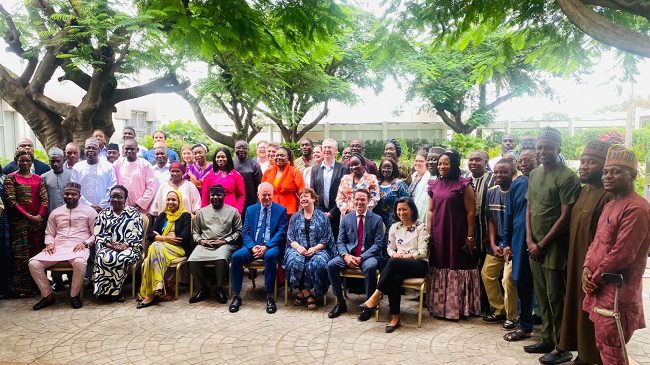
Participants at the Annual Review Meeting of the third phase of the Accelerating Sanitation and Water for All (ASWA III) project, in Abuja
Utsev, represented by the ministry’s Permanent Secretary, Mr. Richard Pheelangwa, said ASWA had contributed to measurable improvements in the sector, in spite of ongoing regional challenges.
He noted that ASWA II, launched in 2019, was implemented in six Local Government Areas (LGAs) across Adamawa, Yobe, and Borno states.
“In spite of conflict in the region, ASWA II provided safe drinking water to 900,000 people and sanitation services to 775,880.
“More than 450,000 people were sensitised on handwashing,” he said.
He added that 35 schools and 40 healthcare facilities were equipped with WASH facilities, and Nigeria’s first sector-wide sustainability checks were also conducted under the programme.
ASWA III, he explained, was designed to build on those gains by delivering climate-resilient WASH services to at least 360,000 people in Adamawa and Kaduna States.
“The new phase will focus on system strengthening, clean energy use, market-based delivery, and partnerships, while remaining flexible to address security risks,” he said.
Citing the 2021 WASHNORM survey, Utsev said 67 per cent of Nigerians now had access to basic water supply, and 151 LGAs across 21 states had been declared Open Defecation Free (ODF).
He acknowledged improvements in hygiene and handwashing practices but stressed that more must be done to meet the SDG 6 targets within the next five years.
He urged Adamawa and Kaduna states to take ASWA III implementation seriously and exceed the achievements of the previous phase.
Utsev commended the Government of the Netherlands, UNICEF, and other partners for their continued collaboration and support to the WASH sector in Nigeria.
“We assure you of our commitment to ensuring every investment yields value for the Nigerian people,” he said while declaring the meeting open.
The Dutch Ambassador to Nigeria, Mr. Bengt Van Loosdrecht, applauded Nigeria’s progress under ASWA II and reaffirmed his country’s support for the WASH agenda.
UNICEF Representative in Nigeria, Ms. Waafa Saeed, said the country’s WASH story was changing, with stronger government commitment and community participation driving improvements.
UNICEF Nigeria’s Chief of WASH, Ms. Jane Bevan, and Mr Peem Vandermalen from the Dutch Ministry of Foreign Affairs both underscored the importance of access to clean water and sanitation as a basic human right.
Eight African countries, including Nigeria, are participating in ASWA III, an initiative supported by the Netherlands and UNICEF to expand WASH services in underserved communities.
As Ghana prepares to host the maiden Ghana Space Conference 2025 in Accra this October, one may ask themselves, why should a developing country like Ghana invest time, energy, and resources into space science and technology?
The answer lies not in rockets or distant planets, but right here in Ghana, in the needs of our farmers, coastal communities, policymakers, and young innovators.
A satellite
Space Technology, Everyday Solutions
For too long, space has been seen as a distant frontier for many countries in the Global South, more so in Africa. In reality however, space technology already shapes our daily lives. From the satellite data which presenters use to report on weather information, to that same data helping over 14 million farmers in Ghana decide when to plant and coastal communities when to be wary of storms. Space-based solutions are embedded in our economy and well-being.
Ghana is no stranger to this progress. Our scientists and engineers launched GhanaSat-1, sub-Saharan Africa’s first educational satellite, in 2017 perpetuating the pioneering tradition Ghana is known for since leading sub-Saharan African nations to gain independence from colonialism. Since GhanaSat-1, Egypt, South Africa, Nigeria, Algeria, Morocco, Rwanda, Ethiopia, Angola, Kenya, and Mauritius have launched satellites into orbit.
At Kuntunse, our 32-metre radio telescope now contributes to the world’s largest astronomy project, the Square Kilometre Array, whose contribution to the economy of the country continues to be felt in technological and engineering advancements in areas like data processing and computing, offers substantial educational and capacity building and thus stimulating economic development and local employment.
Institutions like the University of Ghana, the Ghana Meteorological Agency, and All Nations University continue to apply space science in climate monitoring, marine research, and disaster preparedness.
Driving Inclusive Growth
As the world faces climate change, which is hitting sub–Saharan Africa hard and compromising our food security in the midst of the problems brought about by rising urbanisation, space technologies offer scalable and efficient tools.
For example, Earth Observation helps us to monitor deforestation due to ‘Galamsey’. Illegal gold mining causes deforestation and produces mercury pollution in the environment and waters. Tracking these changes can support stakeholders to take action and document the exact scale of devastation. Remote sensing technology has also become useful tool in providing data for precision agriculture.
Farmers are able to get timely and accurate data about soil quality and rainfall, helping them to take informed decisions and post productivity. Satellite communication on the other hand has brought about increased internet access to rural communities, unlocking opportunities for online education and entrepreneurship.
This is not just about science; it is about inclusive development. The Ghana Space Conference set for October 6-8 will highlight the importance of engaging youth and women in Science Technology, Engineering and Mathematics (STEM) and space fields, ensuring that the benefits of innovation reach everyone in Ghana and beyond.
Linking to Policy and Africa’s Growth
The timing of this conference is strategic. Ghana recently launched its National Space Policy (2024), setting a clear vision for regulation, capacity building, private sector engagement, and international partnerships. The Policy aims to harness space technology for economic growth, national security, and sustainable development by improving resource management and coordinating public and private sector efforts.
Key goals include better environmental monitoring, fostering international cooperation, and creating investment and job opportunities in satellite communications, Earth observation, and other space sectors.
With the African Continental Free Trade Area (AfCFTA) headquartered in Accra, Ghana has a unique opportunity to explore how space technologies can support trade efficiency, cross-border collaboration, and industrial growth.
Space is no longer a luxury – it is an economic and developmental necessity.
A Call to Action
The Ghana Space Conference 2025 at the University of Ghana, Accra from October 6-8, 2025, will bring together government leaders, scientists, entrepreneurs, and international experts to deliberate on these opportunities.
This is not just Ghana’s event; it is Africa’s moment to continue demonstrating that the continent is ready to harness the space economy, projected to reach $22.64 billion by 2026.
Policymakers, private sector leaders, academics, students, and the media will all have space at the conference. Together, let us shape a future where space technology empowers every Ghanaian, every African, to live in a safer, more prosperous, and more sustainable world.
By Kwaku Sumah, Managing Director, Spacehubs Africa
The African Petroleum Producers’ Organisation (APPO) and Afreximbank shared updates on the establishment of the $5 billion Africa Energy Bank on Monday, September 29, 2025, at AEW: Invest in African Energies, aimed at addressing Africa’s persistent energy financing challenges.
Speaking during a workshop titled Africa Energy Bank Take-Off – Bridging the Financing Gap for Africa’s Energy Sector, Dr. Omar Farouk Ibrahim, Secretary General of APPO, said the bank has made rapid strides in raising funds.
Haytham El Maayergi, Executive Vice President of Afreximbank
“We have succeeded in raising a large chunk of the funds we needed to get this bank started. In the last two to three years, we have achieved what no other development bank has in terms of the timeline,” Ibrahim said.
He highlighted the continent’s energy access challenges: “More than 600 million Africans lack electricity… yet we export 75% of our oil production and 45% of gas. If we want energy for our people, then we have to fund the projects.”
Ibrahim emphasised that Africa must lead its own energy financing. “We have a duty to ensure the African continent is not left behind in terms of energy access; in doing so, we cannot continue to look to others to help us. If we get outside support, it should be to supplement what we have done.”
Haytham El Maayergi, Executive Vice President of Afreximbank, noted the continent’s current financing challenges. “Africa is being penalised – we pay more per kilowatt before subsidies than anywhere in the world, because the costs of financing energy projects are higher. When we borrow, we pay more because our credit ratings are not as high… It’s a toll on Africa.”
According to the workshop presentation, Africa currently receives only 4% of global climate investment, while $1.6–$1.9 trillion will be required by 2030 to transition away from fossil fuels. The annual energy finance gap is estimated at $31–50 billion, and fossil fuels still account for 35 – 82% of government revenues in some countries, making closing these gaps critical to achieving energy access and supporting development.
With political stabilisation, the resolution of internal challenges and the establishment of a stable regulatory framework, the African refining market emerges as one of the most undervalued – and therefore potentially highly profitable – investment opportunities, writes Daniil Moskalev, International Fellow, African Energy Chamber
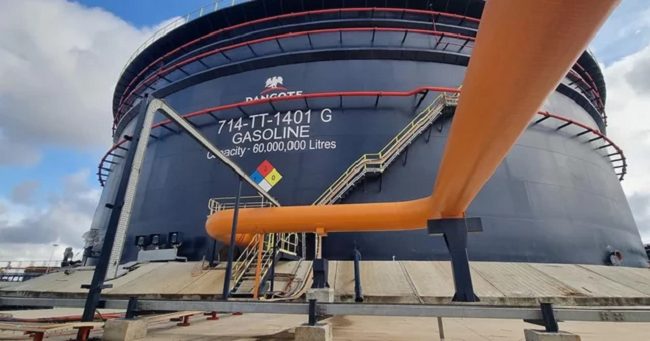
Dangote Refinery
In recent years, the African continent has been characterised by the active commissioning of new refining capacities.
However, despite this, there is a problem with the energy infrastructure on the continent, which leads to the unavailability of refined products.
This unavailability is both a blessing and a curse for the African continent, its people and its quest to make energy poverty history.
While insufficient refining capacity creates serious challenges for domestic consumers and industry, it presents an attractive opportunity for foreign investors, many of whom have yet to fully grasp the continent’s unique advantages.
Africa: The World’s Breadbasket of Crude Oil
In 2026, the upward trend of hydrocarbon production is expected to remain positive, with the African Energy Chamber’s The State of African Energy 2026Outlook showing that petroleum production will level at about 11.4 million barrels per day (MMboe/d), rising to about 13.6 MMboe/d by 2030.
An increase in petroleum production should correspond with a rise in refining; however, ongoing capacity constraints continue to impact Africa’s refining market, leading to a reliance on imported petroleum.
This impacts countries as they strive to build local industries, create jobs and develop technical expertise in the downstream sector.
Importing refined products costs African countries significantly more than processing crude oil at home, as imports involve added expenses such as shipping, insurance and other costs.
With much of the continent’s refining infrastructure either obsolete or idle, there lies a critical investment opportunity for financiers and project developers.
Increased Population Mean Increased Consumption
Beyond the current challenge of importing refined products, rapidly growing domestic demand must also be considered, as it could increase Africa’s dependence on external energy supplies.
Although Africa is home to 18% of the global population, it consumes less than 5% of the world’s oil products.
Sub-Saharan Africa, in particular, has the lowest per capita usage, underscoring the region’s significant potential for future demand growth (according to information from our report).
The expanding African market, driven by population growth and improving living standards, will provoke an increase in consumption.
Anticipated demand growth offers strong prospects for new refining facilities. Investment in more advanced processing technologies can deliver higher returns for foreign investors while simultaneously meeting Africa’s urgent and growing demand for refined petroleum products.
Ongoing Challenges: The Case of Dangote
Market size and resource availability do not necessarily guarantee sufficient refining capacity. Take the Dangote oil refinery, for example.
Even with its massive scale, this refinery will have only a limited effect on reducing Africa’s fast-rising import reliance.
The continent will continue to face shortages of gasoline, diesel, and jet fuel over the forecast period. In the short term, the capacity of Dangote refinery (617,000 bpd) could partially substitute foreign sources of refined products, but the prioritisation of exports is more attractive for foreign investors; that’s why commissioning of new refinery plants does not address fuel accessibility challenges on the ground.
However, net imports for gasoline and gasoil will widen over the long-term against the backdrop of strong growth in demand and limited additions to refining capacity.
Furthermore, the commissioning of the Dangote refinery is hugely significant for the Atlantic Basin’s oil trade due to export promotion, but it barely makes a dent in Africa’s growing requirement for imported refined products.
As stated in the African Energy Chamber’s Outlook 2026, gasoil net imports are projected to reach just under 1.8 million bpd by 2050, whereas gasoline net imports are forecast to exceed 1.5 million bpd.
Relying on refined imports leaves countries vulnerable to global supply chain disruptions, shipping bottlenecks and sharp price swing risks that become even more severe during times of crisis.
Therefore, the priority of developing domestic energy sovereignty should be to attract downstream investments to meet domestic demand.
So, we need to answer the questions: what can attract investors, and what should we do?
Foreign investments can be attracted if preferential financing conditions, a stable political environment, confidence in profitability and transparency of the terms of the agreements are provided.
When these conditions are partially or fully met, large projects such as The Cabinda Oil Refinery or The Dangote Refinery are born..
What’s Next for African Refining
Given the scale of refining projects, mobilising external financing is vital. There are several prerequisites to attract investment.
Specifically, the availability of crude oil and access to a local domestic market.
But countries need to look beyond this to strengthen regulatory frameworks; leverage public-private partnerships; simplify processes and reduce red tape; demonstrate openness to foreign investors; and be ready to meet companies halfway.
A Timely Opportunity for Strategic Investment
With political stabilisation, the resolution of internal challenges and the establishment of a stable regulatory framework, the African refining market emerges as one of the most undervalued – and therefore potentially highly profitable – investment opportunities for global companies.
An able workforce, a well-developed oil production system and growing demand are presented as outstanding incentives to attract investors to the continent.
Strengthening the trust of external shareholders and investors can lead to an explosive development of the African oil refining industry.
This can become one of the engines that drives African industrialisation.
The inaugural pilot of UN Climate Change’s Capacity-Building for Negotiators (CB4N) initiative concluded in Nairobi, Kenya, marking an important milestone in strengthening the voice of developing countries in global climate negotiations.
The training, jointly organised by UN Climate Change, its Regional Collaboration Centres (RCCs), the African Group of Negotiators Expert Support (AGNES), and the Centre for Multilateral Negotiations (CEMUNE) marks a significant step toward more inclusive and effective participation in the international climate change process.
Participants at the UN Climate Change’s Capacity-Building for Negotiators (CB4N) initiative
Held from September 17 to 19, 2025, the training brought together nearly 25 negotiators from across Africa. AGNES’ extensive regional expertise and the RCC’s long-standing role in building regional negotiation capacity were instrumental in ensuring the success of the pilot.
“To succeed, the Paris Agreement needs inclusive and empowered participation from all nations” said UN Climate Change Executive Secretary Simon Stiell. “With CB4N, we are working to enable the negotiators of today and of the future, who will carry this agreement forward. The Nairobi pilot has laid a strong foundation and is ready to be replicated in other regions around the world.”
The training employed a training-of-trainers approach, aiming not only at strengthening participants’ individual skills, but also fostering a sustainable team of regional facilitators who will be able to replicate the training in the future. RCC experts co-delivered sessions alongside AGNES facilitators, providing practical, regionally tailored insights.
Over three days, participants enhanced their understanding of the UN Climate Change legal framework, climate science, negotiation techniques and strategic communication. Practical exercises, including simulations, role plays, and scenario-based discussions, ensured a hands-on learning experience. Innovative tools, such as artificial intelligence applications for negotiation support, were also piloted.
The pilot produced several key results: improved negotiation capacities for participants, the expansion of a network of regional facilitators, and the identification of Africa-specific priorities to guide the future roll-out of CB4N. Building on this success, the CB4N initiative, with continued leadership from RCCs and partners, is now ready to be replicated and scaled up in other countries.
“The training was very good. It provided an excellent opportunity to hear from the people who have been in the process long enough, but also worked behind the scenes so that you can understand how things happen,” said Dr. George Wamukoya, lead negotiator on agriculture and team leader of AGNES.
He highlighted how critical these insights are critical for effective participation, “and AGNES is proud to continue partnering with UN Climate Change and RCCs to expand this work.”
Professor Raymond A. Kasei, expert in climate change, hydrology, gender, and modelling, from AGNES, added, “This training-of-trainers programme was exceptionally valuable for both new and experienced negotiators. It highlighted the importance of building the skills of moving beyond entrenched positions toward collaborative problem-solving approaches that acknowledge the urgency of climate action while respecting diverse national circumstances and priorities.”
Patricia Nying’uro, Principal Meteorologist at the Kenya Meteorological Department, and participant in the event, said, “The training shifted my perspective on negotiations, emphasizing respect, collective goals, and practical strategies. The simulation was especially valuable, and I hope more negotiators can benefit from this experience.”
The successful pilot in Nairobi has laid the groundwork for CB4N to be rolled out in other regions, contributing to a more inclusive climate process and drawing on RCCs and its partners to broaden its global reach beyond Africa.
The Nigerian Independent System Operator (NISO) says industrial action within the gas supply chain resulted in reduction in power generation by more than 1,100MW on Sept 28, 2025.
According to NISO’s Management in a statement in Abuja on Tuesday, Sept. 30, available generation in the National Grid fell sharply from over 4,300MW in the early hours of Sept. 28, to about 3,200MW at the lowest point.
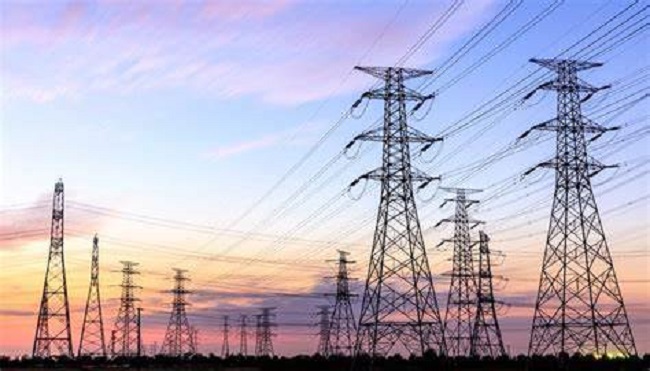
National grid lines
“NISO wishes to notify the public of recent major generation shortfalls on the National Grid, caused by industrial actions of the Petroleum and Natural Gas Senior Staff Association of Nigeria (PENGASSAN) within the gas supply chain.
“These disruptions triggered widespread gas shortages, reducing available generation from over 4,300 MW in the early hours Sept. 28th to about 3,200 MW at the lowest point,” it said.
NISO said that the development heightened pressure on the grid, prompting emergency measures to stabilise supply and avert a nationwide blackout.
”To mitigate the crisis, the system operator said that it ramped up generation from major hydropower stations, injecting over 400MW to cushion the shortfall from gas-fired plants.
The agency said that it also implemented real-time load adjustments, frequency support measures, and selective load shedding to preserve operational security.
NISO said it promptly deployed contingency measures to preserve the stability, security, and reliability of the National Grid. Key interventions which include
“Hydropower Optimisation: Strategic ramp-ups from major hydro stations, contributing over 400 MW of additional output to cushion the shortfall from gas-fired plants.
“Generation Dispatch and Load Balancing: Real-time load adjustments to match available generation with system demand, while preventing a system frequency collapse.
“Voltage and Frequency Support: Continuous deployment of reactive power compensation and reserve monitoring to safeguard system integrity.
“Demand-Side Management: Selective load shedding, applied as a last resort, to avert a system-wide collapse and ensure fair power distribution,”it said.
According to NISO, these timely actions enabled the it and National Control Centre (NCC) to minimise the impact of the labour-induced gas shortages, sustain operational security, and maintain supply to critical loads, thereby averting a nationwide blackout.
The system operator however reaffirmed its commitment to proactive grid management, operational excellence, and the application of best-in-class practices to guarantee a secure and reliable electricity supply for the nation”.
PENGASSAN attributed its latest action to Dangote Refinery’s alleged unilateral action in sacking over 800 staff members for joining the Association.
The National Executive Council (NEC) of PENGASSAN held an emergency meeting of all its branches on Saturday, and resolved that members should withdraw all services effective 00:01 on Monday..
The federal government has waded into the face-off between the Dangote Refinery and PENGASSAN.
A meeting chaired by the Minister of Finance and the Coordinating Minister of the Economy, Mr. Wale Edun, underscored two recent developments, including the purported suspension of the Naira-for-Crude oil arrangement by the Dangote Refinery, and the concerns raised by PENGASSAN regarding the refinery.
The Jigawa State Government has approved N575 million embankment and dyke project to mitigate flooding in the state.
Sagir Musa, Commissioner for Information, Youths, Sports and Culture, said this at the end of the State Executive Council (SEC) meeting, on Tuesday, September 30, 2025, in Dutse, the state capital.
Gov. Umar Namadi of Jigawa State
He said embankment would be rehabilitated along Gambara-Waza-Dutse Road, to mitigate flooding, protect the road and ease vehicular movement.
Musa said the gesture was in furtherance of Gov. Umar Namadi administration’s policies aimed at promoting environmental sustainability, economic growth and social development.
“The rehabilitation of the embankment on Waza, located along the Gambara–Waza–Dutse Road, is very vital due to its critical condition and the intervention aims at flood mitigation and protecting a major access route to the state capital.
“The Waza embankment will serve as a vital infrastructure to protect communities and facilitate movement between rural and urban centres, improve accessibility and economic activity, safeguard lives and property across the affected areas,” he said.
He said the SEC also approved an organogram for the newly established Ministry of Livestock Development.
According to Musa, the ministry is set up to transform the agricultural sector and boost sustainable livestock production in the state.
This, he said, marked a milestone in the implementation of Namadi administration’s development blueprint, aimed at enhancing value chains and creating economic opportunities for rural dwellers.
“The creation and structuring of the ministry align with the Renewed Hope Agenda of President Bola Tinubu, which emphasises agricultural diversification, food security and inclusive economic growth across the nation.
“With the approved organogram, the ministry is now positioned to commence full operations with a clearly defined structure, enabling it to efficiently coordinate policies.
“It will also initiate programmes and interventions that will drive innovation, improve animal health services and support livestock entrepreneurship across the state,” Musa said.
An organogram is a visual representation of the structure of an organisation. It shows how authority, roles and responsibilities are distributed as well as the link between different departments or individuals.
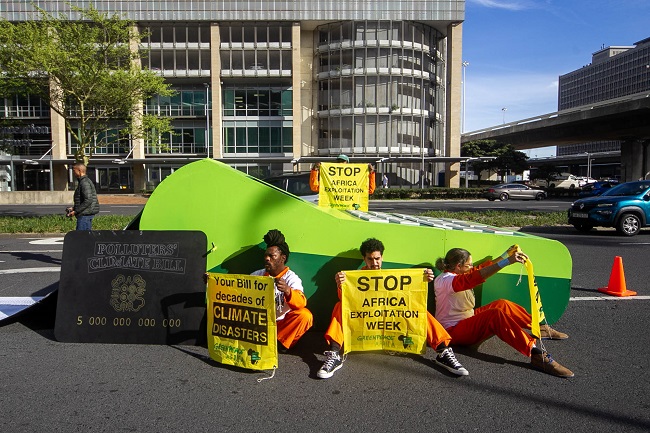
Police removed and dragged away climate activists who had chained themselves to a giant green payment machine outside the Cape Town International Convention Centre in the morning of Tuesday, September 30, 2025, as the protesters demanded oil and gas executives pay trillions in climate damages at what they’re denouncing as “Africa Exploitation Week.”
Several activists in orange jumpsuits were seen being physically dragged across the pavement by multiple officers while shouting “Polluters Must Pay! You owe us a Climate Debt!” as delegates from TotalEnergies, BP, Chevron and other fossil fuel giants entered Africa Energy Week, the continent’s largest oil and gas gathering.
Protesting climate activists
The dramatic scenes unfolded as activists attempted to blockade the entrances to the venue, as the pay machine unfurled a long bill featuring the cost of climate disasters worldwide since the Paris Agreement, amounting to $ 5 trillion. However, police quickly moved to remove protesters who were chained to the massive payment machine, which they also carried off the entrance.
As officers dragged activists away, one protester could be heard bellowing “Polluters Must Pay! You owe us a Climate Debt!” while conference delegates in business suits walked past into the venue.
“While police shield polluters at the expense of the people, African communities continue paying the ultimate price for fossil fuel extraction with their lives and livelihoods,” said Sherelee Odayar, Oil and Gas Campaigner at Greenpeace Africa, as she watched fellow activists being removed. “This giant bill represents the true cost of fossil fuel extraction that oil executives have been dodging for decades, and today’s heavy-handed response shows exactly whose interests are being protected.”
The payment machine featured a screen displaying clips from Greenpeace Africa’s documentary “Surviving The Aftermath, Who Pays?”, connecting extreme weather events like last year’s deadly Durban tornado to fossil fuel-driven climate change. The action targets executives from TotalEnergies, BP, Chevron, Woodside Energy, and the African Energy Chamber as they attempt to enter the venue for what activists are calling a week-long celebration of African exploitation disguised as energy development.
The protest followed a covert overnight operation where activists infiltrated hotels housing conference delegates, slipping climate justice flyers under hundreds of doors to deliver an early wake-up call about fossil fuel accountability before executives even arrived at the venue.
“Africa Energy Week is really Africa Exploitation Week – a gathering of corporate vultures circling our continent’s resources while ignoring the renewable energy solutions Africa desperately needs and abundantly possesses,” said Cynthia Moyo, Climate and Energy Campaigner at Greenpeace Africa.
“Africa has some of the world’s greatest solar, wind, and geothermal potential, yet these corporations want to lock us into decades more of fossil fuel dependence that benefits their shareholders while poisoning our communities,” added Moyo.
The action comes as Africa faces escalating climate impacts, from devastating floods in South Africa to prolonged droughts across East Africa, while the continent contributes less than 4% of global emissions but suffers disproportionately from climate consequences.
“The extractive industry has treated Africa as its personal ATM for centuries, extracting wealth while leaving pollution, poverty, and climate chaos in its wake,” Moyo continued. “It’s time for a just transition to renewable energy that serves African people, not foreign profit margins.”
The giant payment machine symbolises the mounting climate debt owed to vulnerable communities worldwide, with activists demanding immediate implementation of a global Polluter Pays Pact to fund climate adaptation and loss and damage compensation.
“Today’s action and heavy-handed police response will not stop our resolve. Oil executives and their police protection can silence us today, but they cannot hide from the trillion-dollar climate debt they’ve created. The bill has come due. World leaders face the choice: make polluters pay or watch the planet burn,” concluded Odayar.
The protest connects to broader global climate justice campaigns demanding fossil fuel companies pay for loss and damage caused by their products, with similar actions planned worldwide ahead of COP30 negotiations in Brazil.
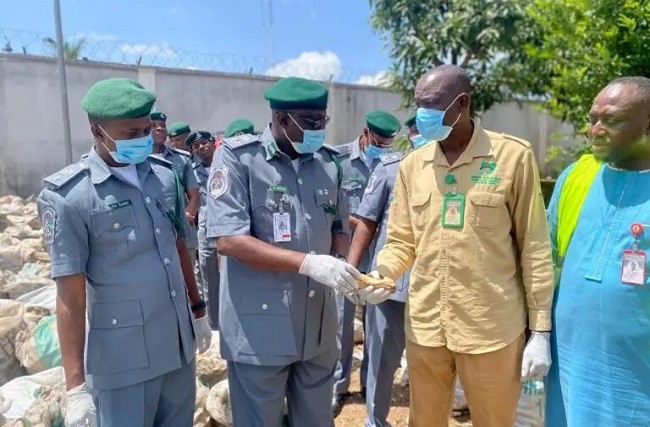
The Nigeria Customs Service (NCS), Federal Operations Unit (FOU) Zone B, Kaduna, has handed over a massive seizure of donkey bones and skins worth over ₦3.94 billion to the National Environmental Standards and Regulations Enforcement Agency (NESREA).
The handover ceremony took place on Tuesday, September 30, 2025, in Kaduna, where the Customs Area Controller, Mr. Aminu Sule, formally presented the confiscated items to the NESREA State Coordinator, Mr. Hene Emmanuel.
Customs and NESREA officials at the handing over ceremony
The items included 700 bags of donkey bones valued at ₦1.86 billion and 2,500 pieces of donkey skins valued at ₦2.07 billion, all intercepted in separate operations by the operatives of the unit.
Speaking at the event, Sule decried the illegal trade in donkey parts, warning that it posed serious ecological and socio-economic risks.
“Donkeys are essential to rural communities as a source of livelihood and transport.
“Their indiscriminate slaughter threatens sustainable development,” he said.
Sule emphasised the commitment of the NCS to enforcing environmental protection laws and curbing wildlife crimes, stating that FOU Zone B would not allow Nigeria to become a hub for illegal wildlife trade.
“This seizure is a clear warning to traffickers: FOU Zone B will not relent in the fight against environmental crime,” he added.
The Customs boss highlighted that the operation and successful handover were the outcomes of improved inter-agency cooperation, in line with the Comptroller-General of Customs, Bashir Adeniyi’s ‘Three-Point Agenda of Collaboration, Consolidation, and Innovation’.
He praised the dedication of his officers and partner agencies even as he called for increased support from the public, especially transporters, warehouse operators, and traders to report suspicious activities linked to wildlife trafficking.
Also speaking, NESREA’s State Coordinator, Mr. Hene Emmanuel, commended the Customs service for its vigilance and expressed the agency’s commitment to ensuring proper environmental compliance and protection of endangered species.
Illegal trade in donkey parts, especially skins and bones, has been on the rise in recent years due to growing demand in parts of Asia.
Tuesday, October 14, 2025, has been fixed as the date for the release of the second subnational climate governance performance ranking of the 36 states in Nigeria. This was announced by the Society for Planet and Prosperity (SPP) – the organisation leading the process – and the Department of Climate Change (DCC), Federal Ministry of Environment, Abuja, Nigeria.
Preparatory to the launch, SPP and DCC on September 29, 2025, met for the final time with the Subnational Governance Performance Ranking Expert Review Panel to finalise the results.
Prof. Chinedum Nwajiuba, Chairman of the Review Panel
Building on the success of the maiden edition, the second edition introduces several improvements, including the establishment of a Review and Quality Assurance Panel composed of distinguished national and international climate governance experts, to ensure better accountability and transparency.
The panel was inaugurated in July 2025 with the mandate of upholding the integrity and quality of the ranking process and report.
In his welcome address, Prof. Chukwumerije Okereke, SPP President, thanked the panellists for volunteering their time and expertise to improve and strengthen the ranking process, and expressed great delight at the progress made so far.
“I am pleased with the progress the ranking has made in strengthening subnational climate action. We received extensive feedback from the first edition, and that response, along with the strong cooperation of state governments, demonstrates the growing political will to improve. I am confident this initiative will continue to elevate the standard of climate governance at the state level,” he said.
Members of the panel lauded SPP and the Federal Ministry of Environment for the initiative, which they said will drive genuine climate initiatives in the subnational in a more practical way.
They individually provided feedback on how to improve the process, and collectively called for greater emphasis to be placed on weighting implementation more heavily in future rankings.
Professor Chinedum Nwajiuba, Chairman of the Review Panel, highlighted the need for more efforts in the verification process and emphasised the importance of practical projects aligned with the Paris Agreement goals above just any other projects:
“This is the most beautiful thing that has happened to climate change efforts in a long while. It is a shift from roundtable gatherings to practical implementation, and I must commend the Federal Ministry of Environment and the Society for Planet and Prosperity for making great efforts to hold this ranking for the second time. Often, we find that great initiatives such as this are not sustained beyond the first editions and therefore lose momentum,” he said.
Dr. Mrs. Priscilia Achakpa, Global President of the Women Environment Programme (WEP), and Mrs. Gbemisola Akosa, Executive Director, Centre For 21st Century Issues (C21st), called for the recognition of states that prioritise gender and climate change, suggesting that an honourable mention for such states should be considered.
They commended efforts to integrate their calls for gender mainstreaming in the process, while stating that efforts must be made to measure gender action beyond just capturing them in policy documents.
Mr. Olumide Idowu, Executive Director, International Climate Change Development Initiative (ICCDI), called for a push for the subnational to recognise the voices of the youth in climate policy. According to him, youths have innovative ideas and are those who must bear the brunt of climate impacts in the future. Therefore, the subnational must show how they integrate youths in climate action in a practical way.
This year’s ranking process was initiated on June 24, 2025, with a virtual workshop that brought together climate change desk officers, directors, permanent secretaries, and focal persons from across the states to showcase the updated methodology and project timeline.
The report (also known as the Climate Governance Scorecard), which evaluated all 36 states across five thematic areas: Climate Institutions and Governance, Climate Policy and Action Plan, Climate Project Implementation, Climate Budget and Finance, and Online Visibility, placed Lagos, Gombe, and Ebonyi as the top three performers, while Borno and Ekiti states shared the 4th position in the first edition launched in 2024.
The Climate Governance Scorecard received funding from the European Climate Foundation (ECF) for the maiden edition and is now supported by the UK Foreign, Commonwealth and Development Office (FCDO) under its Partnership for Agile Governance and Climate Engagement (PACE) programme in Nigeria, to enhance climate governance performance at the subnational level by encouraging healthy competition among subnational actors.
The ranking highlights the growing importance of subnational governments in driving global climate action, as recognised in the Paris Agreement.
The high-level launch event in Abuja will be attended by distinguished leaders, including the Minister for Environment, members of the Federal Executive Council (FEC), state governors, state commissioners, NGOs, and international development partners.
The expert review panel is composed of Prof. Chinedu Nwajiuba, Chair of the Board, West African Science Service Centre on Climate Change and Adapted Land Use (WASCAL); Prof. Olukayode Oladipo, Adjunct Professor, UNILAG; Prof. Daniel Gwary, University of Maiduguri; Dr.Eugene Itua, CEO, Natural Ecocapital; Mrs Halima Bawa, Director, National Council Climate Change Secretariat; Dr. Pricilia Achakpa, Global President of the Women Environment Programme (WEP); Mr. Olumide Idowu, Executive Director, International Climate Change Development Initiative; Mr. Amara Nwankpa, Director General (Acting) Shehu Musa Yar’Adua Foundation; Mr. Eghose Omoigui; and Madam Gbemisola Akosa, Executive Director, Centre For 21st Century Issues (C21st).
It is expected that the report will inspire collaborative action among subnational actors, attract private sector and international organisation partnerships for technical support and capacity building, thereby boosting climate actions in the respective states.
By Ugochukwu Uzuegbu, Communication Specialist, SPP