The Federal Ministry of Water Resources and Sanitation has pledged stronger collaboration with the House of Representatives Ad-hoc Committee on Flood Management and Response to tackle perennial flooding across the country.
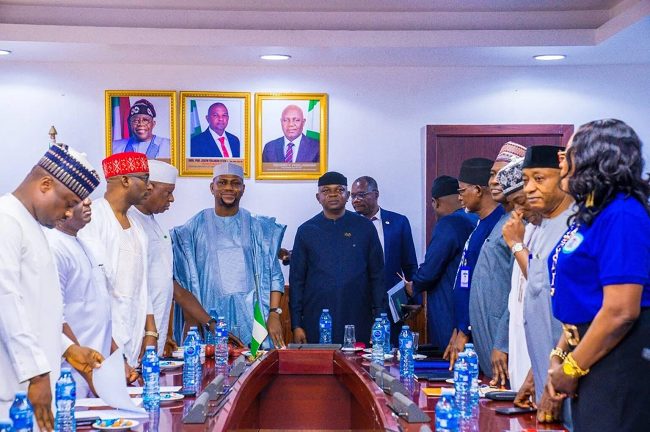
Minister of Water Resources and Sanitation, Prof. Joseph Utsev, gave the assurance on Thursday, October 2, 2025, in Abuja when the committee paid a working visit to the ministry.
Minister of Water Resources and Sanitation, Prof. Joseph Utsev, with members of the House of Representatives Ad-hoc Committee on Flood Management and Response
Utsev said the partnership was crucial to enable both arms of government work collectively for effective flood control and management.
He noted that the ministry had over the years invested greatly in dams and irrigation projects across the six geopolitical zones for flood control, irrigation and power generation.
According to him, projects include the Kashimbila Multipurpose Dam in Taraba, designed to provide water for irrigation and power supply.
Utsev added that several others, such as Mangu Dam in Plateau and Adada Dam in Enugu, were at various stages of completion.
He added that work was also progressing steadily on the Alau Dam in Borno, while the design of a buffer dam at Dasin Hausa in Adamawa had been completed.
“The Dasin Hausa Dam, when constructed, will contain excess water from the Lagdo Dam in Cameroon, which often causes flooding downstream of the River Benue.”
The minister expressed optimism that partnerships with the National Assembly and development partners would help build a resilient water sector that secured the nation’s future.
Utsev assured the committee of his ministry’s commitment to delivering priority dam and irrigation projects, protecting Nigerians from the impact of flooding, and expanding irrigated lands to meet food and energy needs.
Earlier, Chairman of the Ad-hoc Committee, Mr. Midala Balama, said the visit was to interact with the minister and his team to strengthen collaboration and develop new ideas on flood mitigation and response.
The Ministry of Environment, through the Department of Climate Change, in collaboration with the International Centre for Energy, Environment and Development (ICEED), on Tuesday, September 30, 2025, convened the second high-level stakeholder meeting to advance the development of the Abia State Clean Cooking Action Plan.
This gathering brought together a broad coalition of stakeholders, including non-governmental organisations (NGOs), civil society organisations (CSOs), persons with disabilities, youth climate ambassadors, women’s groups, academic institutions, representatives of the manufacturing sector, relevant Ministries, Departments and Agencies (MDAs), and Local Government Climate Change Desk Officers.
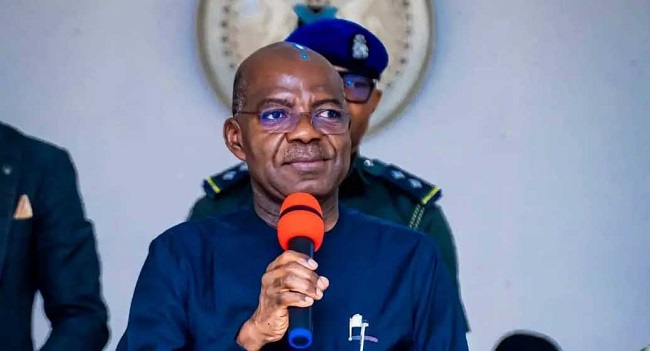
Gov. Alex Otti of Abia State
A key highlight of the meeting was the ongoing process to establish the Abia State Clean Cooking Alliance, a multi-stakeholder platform that will drive inclusive, sustainable access to clean cooking solutions across the state.
Speaking at the meeting, Mr. Chris Ike, Director of the Department of Climate Change, emphasised the urgency of transitioning to clean cooking in order to address multiple challenges facing Abia State.
“Clean cooking is not just a climate imperative. It is a health gender and development issues millions of households still rely on firewooods and other pollucting fuels. Through this Action plan. Abia state is sending a clear message. Abia state is ready to lead by example in implementing practical solutions that benefit our people and the environment,” said Ike.
He also highlighted the department’s commitment to ensuring the process remains participatory and inclusive, calling on all stakeholders to maintain strong engagement throughout the plan’s development and implementation phases.
“Abia State is committed to being a serious player in Nigeria’s climate change response,” said Philemon Asonye Ogbonna, Commissioner for Environment. “We have adopted the National Climate Change Act of 2021 and are in the final stages of developing our State Climate Change Policy and Action Plan. The Clean Cooking Action Plan is a critical component of this broader strategy.”
The state also intends to develop a State Adaptation Plan, designed to provide a coordinated, multisectoral response to the growing impacts of climate change across Abia.
ICEED Executive Director, Mr. Ewah Eleri, praised the initiative, noting that clean cooking is not only a climate priority but also a public health and economic development issue. He reaffirmed ICEED’s continued support for Abia State’s leadership in building climate resilience and expanding access to modern energy solutions.
The meeting reportedly reaffirmed Abia State’s strong commitment to environmental sustainability, climate justice, and inclusive development. The Clean Cooking Action Plan, once finalised, will serve as a model for other states, integrating equity, innovation, and locally driven solutions.
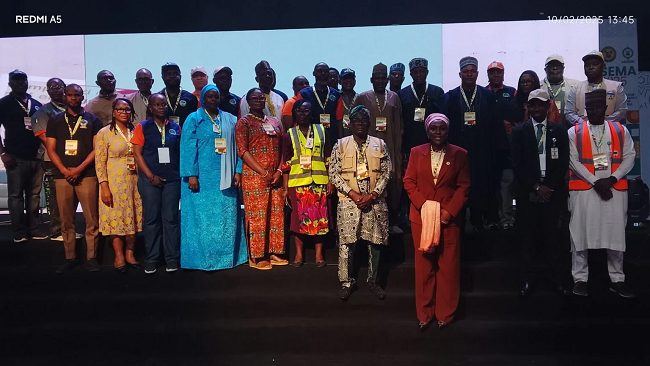
The National Emergency Management Agency (NEMA) in collaboration with the Lagos State Emergency Management Agency (LASEMA) on Thursday, October 2, 2025, opened the maiden sub-national (SEMA) conference in Lagos.
The National SEMA Conference, which holds from Oct. 2 to Oct. 4, 2025, is a gathering of emergency management stakeholders from the 36 states and the Federal Capital Territory (FCT).
Participants at the National SEMA Conference
These stakeholders are to chart a coordinated framework for disaster preparedness and resilience across Nigeria.
The conference has the theme, “Strengthening Subnational Emergency Management for a Resilient Nigeria.”
In her remarks, the Director-General, National Emergency Management Agency (NEMA), Mrs. Zubaida Umar, described the event as a defining step in strengthening Nigeria’s disaster management architecture.
“This gathering is not just another conference. It is a call to action. A reminder of the shared duty we bear: to protect lives, safeguard property and strengthen the resilience of our communities in the face of disasters and emergencies,” Umar said.
She commended Lagos State for its pioneering strides through the Lagos State Emergency Management Agency (LASEMA), noting its decentralisation of response units, integration of technology and strong community mobilisation.
The NEMA boss noted that the examples from Lagos State are models for national adoption.
“Lagos has shown that when vision meets commitment, progress is inevitable. Yet, as a nation, we face sobering realities: floods, building collapses, industrial accidents, public health emergencies and the growing threats of climate change.
“These challenges demand not just a federal response, but a coordinated national system,” she added.
Umar outlined her administration’s focus areas, including strengthening early warning systems, expanding grassroots capacity building and embedding transparency in emergency interventions.
Also speaking, Dr Olufemi Oke-Osanyintolu, Permanent Secretary of LASEMA, said that hosting the maiden conference underscored Lagos State’s leadership in disaster management.
“This summit reflects the commitment of Gov. Babajide Sanwo-Olu to safeguarding lives and property.
“Our recent simulation exercise showed Lagos residents that we have the personnel, equipment and capacity to manage any form of emergency 24/7,” he stated.
Oke-Osanyintolu announced that LASEMA would formally launch its Institute of Emergency and Disaster Management this weekend to institutionalise training and professionalise emergency response across the country.
“By December, we will admit our first intake of trainees. This is when professionalism will meet academics—ensuring Nigeria produces responders with both knowledge and practical expertise,” he added.
He also unveiled the LASEMA Mobile App, designed to improve communication and speed of response during emergencies.
“Effective communication is the backbone of emergency management. With this app, citizens can reach our call centre directly, provide real-time feedback and receive instant support during emergencies,” Oke-Osanyintolu said.
Dr. Leke Pitan, former Lagos State Commissioner for Health and Education, delivered a keynote address titled “From Risk to Readiness: Strengthening Disaster Preparedness at the Sub-National Level.”
He drew on Lagos’ pioneering reforms under then-Governor (now President) Bola Tinubu, and recounted the establishment of LASAMBUS in 2001, Nigeria’s first structured state ambulance system with mobile intensive care capacity.
Pitan also recounted the eventual creation of LASEMA to coordinate multi-agency responses.
“For cities like Lagos – densely populated, economically vital, and highly vulnerable – integrating health systems into emergency management is not optional; it is existential,” Pitan said.
He highlighted 10 strategic levers for the future to include surveillance, financing mechanisms, public-private partnerships and community resilience.
He urged states to adopt a “resilience-first” mindset, saying, “Emergencies will inevitably come – whether flood, fire, disease or accident. The true test is not their occurrence but our readiness, unity and innovation in response.
“Lagos has shown what is possible, and Nigeria must now scale it nationwide,” Pitan concluded.
The conference will feature high-level plenary sessions, simulation drills, technical sessions and networking platforms for policymakers, responders, international partners and the private sector.
The Benue State House of Assembly has urged the state government to take urgent steps to rescue Adum Community in Otukpa District of Ogbadibo Local Government Area from the devastating effects of gully erosion.
The assembly made the call after a motion of urgent public importance moved by Mr Samuel Agada (APC/Ogbadibo) during plenary on Thursday, October 2, 2025, in Makurdi.
Gov. Hyacinth Alia of Benue State
Agada told his colleagues that Adum, which is part of Ai-Oodo Ward II in Otukpa, was a community rich in agricultural produce such as yam, cassava, cashew, and palm products but had been heavily impacted by severe environmental degradation.
The lawmaker expressed concern that gully erosion had completely cut off the community from the rest of the area.
He said that the erosion forced residents to take an alternative route through Kogi State, adding an extra five kilometres just to access essential supplies and transport their farm produce to the market.
The legislator further said the erosion denied the people of Adum access to basic amenities such as healthcare, schools, and local markets.
Agada warned that if urgent intervention was not provided, the situation could worsen, as rainfall from the newly constructed dual carriageway was further aggravating the erosion and threatening the community’s survival.
He, therefore, said that the Benue Government, through the Ministry of Works, should immediately mobilise resources to grade the Adum road and restore access for the community.
The motion was seconded by Mr. Douglas Akya (APC/Makurdi South), who commended Gov. Hyacinth Alia for his ongoing efforts in addressing infrastructural challenges across constituencies.
Akya expressed optimism that with the governor’s current pace, many communities would soon benefit from similar interventions.
Ruling on the matter, the Speaker, Mr Alfred Emberga, directed the Commissioner for Water Resources and Environment to immediately conduct an on-the-spot assessment of the area.
Emberga urged the ministry to collaborate with relevant agencies to find a sustainable solution to the gully erosion menace in Adum and other affected communities in Ogbadibo local government.
Climate change is no longer a distant threat – it is here with us, and in Malawi, its scars are everywhere, writes Emmanuel Harawa
From Cyclone Idai in 2019 to Cyclone Freddy in 2023, each disaster has torn through our communities, destroying homes, sweeping away crops, and leaving families without food, water, or shelter.
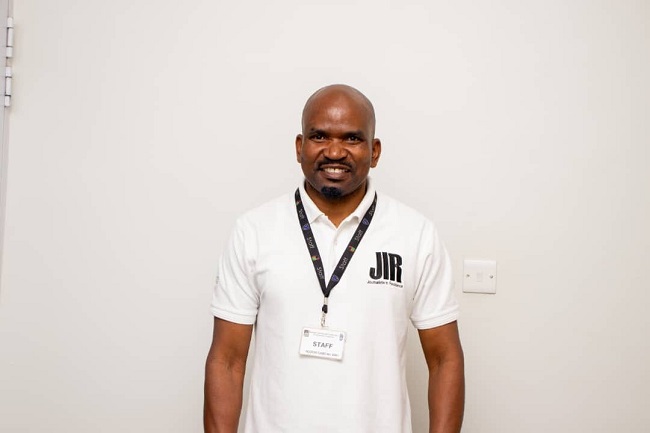
Emmanuel Harawa
These are not isolated weather events; they are part of a pattern, and they reveal how climate change is fast becoming the greatest public health challenge of our time.
What frustrates me most is that our responses often feel cosmetic, designed more for visibility than for impact.
Tree-planting campaigns are the perfect example. Every rainy season, schools, communities, and officials gather to plant thousands of seedlings. Politicians deliver speeches.
Donors take photographs. Yet months later, when the rains stop, those same seedlings are left to wither in the sun, grazed by goats or uprooted by careless footsteps.
In Mchinji District, under the government’s Climate-Smart Enhanced Public Works Programme, many trees simply never stood a chance. Without aftercare – watering, weeding, or protection — the survival rate is painfully low.
This cycle of waste cannot continue.
For a country already grappling with poverty, food insecurity, and fragile health systems, pouring millions into failed climate adaptation projects is not just inefficient – it is unjustifiable.
The truth is that tree-planting, while noble, is not a magic bullet. Planting is the easy part; sustaining growth is the real test.
If we are serious about protecting Malawians from the health consequences of climate change, we must change how we approach adaptation.
Communities must be placed at the centre of climate action, not treated as passive beneficiaries.
When people own the problem, they also own the solution.
I find hope in initiatives like the Malawi Liverpool Wellcome (MLW) Research Programme’s Climate Change and Health project.
Using a participatory method called photovoice, MLW gave communities cameras to document their lives after Cyclone Freddy.
The results were raw, heart-wrenching, and unfiltered: children learning under collapsed classrooms, women walking hours for clean water, and families losing livestock and fields to floods.
These stories remind us that climate change is not abstract. It is hunger in a child’s belly. It is the spread of cholera in crowded camps.
It is the trauma etched on the faces of families forced to start over again and again.
Most importantly, the testimonies show that women and girls pay the heaviest price.
When water sources dry up or become contaminated, it is women who walk further and risk harassment to fetch it.
When food runs out, it is mothers who sacrifice their own meals. Climate change, therefore, is not gender-neutral – it compounds existing inequalities.
This is why adaptation must go beyond planting trees or building dams. It must be holistic, inclusive, and gender-sensitive.
We need strategies that empower communities, support women, and protect the vulnerable. We need policies that do more than tick boxes for donor reports.
And we need leaders who measure success not by the number of seedlings planted, but by how many trees survive, how many children remain healthy, and how many families are spared from hunger and disease.
Climate change is the greatest development challenge of our generation.
It demands honesty: the courage to admit that what we are doing now is not enough, and the vision to pursue innovative, community-driven solutions.
The fight against climate change is not a responsibility we can outsource.
It belongs to all of us: individuals making sustainable choices, governments enforcing climate-resilient policies, and the international community honouring its promises on climate finance and technology transfer.
Only through collective, inclusive action can Malawi safeguard its people, protect its future, and contribute to Africa’s Agenda 2063 and the Sustainable Development Goals.
Anything less would be a betrayal – not just of our environment, but of our health, our dignity, and our children’s right to a safe and sustainable future.
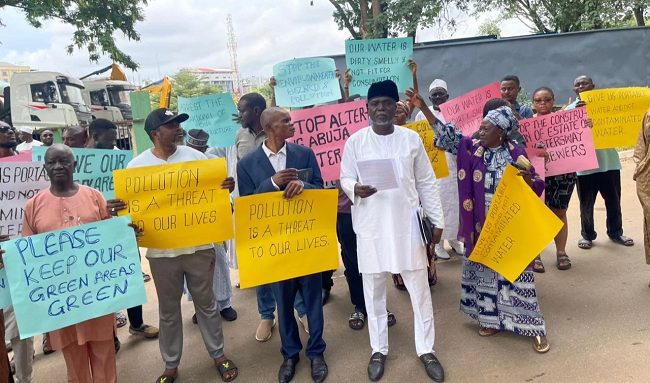
The Wuse Zone 6 Neighbourhood Residents Association in Abuja has called on President Bola Tinubu and other stakeholders to help halt the ongoing conversion of green areas.
Protesting residents told newsmen on Thursday, October 2, 2025, during a march to the Department of Development Control that the development has become a grave health and environmental challenge.
Protesting members of the Wuse Zone 6 Neighbourhood Residents Association, in Abuja
The Chairman of the association, Alhaji Ayinde Soaga, said that the Abuja Master Plan deliberately preserved green areas to protect underground utility corridors and spaces for recreation.
He said residents were concerned because many of the reserved sites were now being fenced, cleared and built upon in defiance of planning regulations, putting the entire community in danger.
“We urge the Federal Capital Territory Administration (FCTA), and the Development Control Authority to urgently intervene.
“The Abuja Master Plan must be enforced to protect both the environment and critical underground infrastructure.
“Almost all the designated areas in Wuse Zone 6 have been sold and cleared for new construction, sparking fears of looming environmental and infrastructural disasters for residents.
“The most disturbing of these sites include the Julius Berger Park by Berger Junction, behind the police barracks.
“This has already been built up as a housing estate by the Nigeria Police Force Cooperative Society.
“Gilmore Gardens on Rabat Street is being prepared for the construction of a housing estate.
“The garden on Tunis-Bissau Junction, which is being converted into a club and other facilities with very strong structures, is noteworthy,” he said.
Soaga explained that the areas now under development were not just ordinary open spaces, but lying on underground sewage and water pipelines.
He said the ongoing construction in Wuse Zone 6 could turn one of Abuja’s most planned neighbourhoods into a hotbed of flooding, pollution and infrastructure failure.
“Already, residents of Wuse Zone 6 are facing the environmental menace of burst water pipes, blocked sewer lines and water and environmental contamination.
“There is hardly any street that is not having sewer line bleeding onto the streets, making them very smelly and unsightly.
“The outbreak of gastrointestinal and other waterborne diseases of huge proportions is a disaster waiting to happen in the neighbourhood.
“These challenges have been associated with the built-up estate on former Julius Berger Park in the area,” he said.
He also said the loss of green spaces would worsen flooding, increase heat and reduce air quality in the neighbourhood.
Soaga, a retired broadcaster, said trees and open spaces that once absorbed rainwater and filtered air were being replaced with concrete and steel, leaving residents vulnerable.
The chairman said that with more buildings springing up in Zone 6 outside the scope of the original master plan of the city, roads, drainage systems and power supply were also expected to come under strain from overuse.
Also speaking, Mr. Ernest Frank, one of the members of the association, said he had lived in Zone 6 since 1985, adding that basic infrastructure was already overstretched.
“Zone 6 is overtly chocked and we are bleeding.
“This is a very quiet protest to halt the bleeding so that our sewer lines that are under this particular place, flowing all the way to Zone 7, are not blocked.
“We are pleading with the FCT Minister, Nyesome Wike; we are also asking President Bola Tinubu to please intervene,” he said.
The Youth Leader of Zone 6, Mr. Emmanuel Adamu, said residents were gravely concerned with the conversion of green areas to estates.
“All of a sudden, these lands are now being converted into a housing project.
“The traffic situation is not too good and it is going to get worse with more houses.
“Again, where are the kids going to play?
“We want the FCT minister to intervene because we know he’s a performing minister and he listens.
“We want our president, Bola Tinubu, to intervene and bring a halt to this development.
“Let the green areas remain green,” he said.
Another resident, Hamza Madaki-Tayyub, said members of the association were taken aback when trees were being felled in the area.
“We were so disturbed and annoyed; we didn’t even know what to do.
“We began to make contacts, and then we had meetings several times. We were very concerned.
“Some of us who are members of professional bodies reached out to them.
“The Nigerian Institute of Town Planners (NITP) has come out and made their position known,” he said.
He urged NITP to rise up to the occasion to protect the environment and fight for the sanctity of the master plan.
Responding, the Head of Administration, Development Control, Oche Obe, promised to relay the complaints of the protesters to the Director of Department of Development Control, Mukhtar Galadima.
The International Institute of Tropical Agriculture (IITA) and Technologies for African Agricultural Transformation (TAAT) will play a leading role at the 11th African Grain Trade Summit (AGTS), taking place from October 1–4, 2025. Through its strategic partnership with the Eastern Africa Grain Council (EAGC), IITA will showcase scalable solutions designed to tackle Africa’s most pressing grain market challenges.
The long-standing collaboration, formalised through a Memorandum of Understanding, combines IITA’s agricultural research expertise with EAGC’s extensive network of millers, traders, processors, and policymakers. Together, they are creating a platform that translates research into real-world impact across the continent.
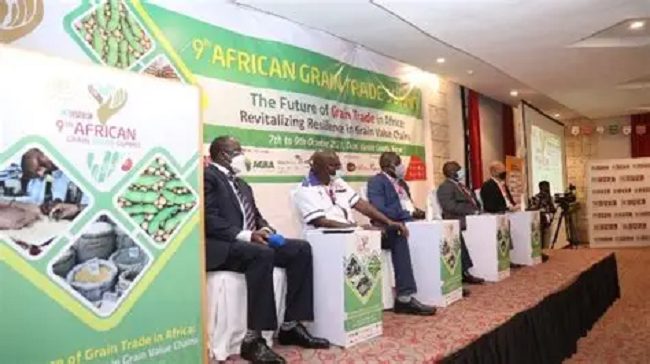
A session at the 9th African Grain Trade Summit (AGTS)
“Our partnership with IITA and TAAT demonstrates the Summit’s core value of turning knowledge into action. By showcasing scalable technologies, we are bridging the gap between research and markets, ensuring that Africa’s grain sector is not only resilient but also competitive and inclusive. This collaboration reflects the very essence of the 11th AGTS, convening science, policy, and business to drive real transformation for farmers, traders, and consumers across the continent,” said Gerald Masila, Executive Director, Eastern Africa Grain Council.
Driving Innovation Under a Shared Agenda
Held under the theme “Resilient grain markets: Unlocking Africa’s food security potential,” the summit will highlight persistent challenges such as fragmented value chains, post-harvest losses, food safety concerns, poor infrastructure, and limited access to finance. IITA will use the platform to advance its “Scaling for Impact” initiative, linking research-driven technologies with private sector leaders capable of taking them to scale, while also strengthening existing partnerships.
“Scaling for impact means moving beyond research to real change in the lives of farmers and communities. By working together to improve soil health, food safety, and resilience, we can unlock Africa’s potential to feed itself and thrive in the face of climate challenges,” said Jane Kamau, the Scaling & Agribusiness Specialist at IITA.
Key Contributions from IITA Experts
IITA scientists and partners will feature prominently across the summit agenda:
Food Safety Leadership: As a session sponsor, IITA will focus on “Grain quality and food safety: harmonising standards and combating aflatoxins for competitive trade.” Dr. George Mahuku will deliver a keynote on Integrated Aflatoxin Management, addressing one of Africa’s most critical food safety and trade barriers.
Productivity Innovation:Geoffrey Nsofon will present the TAAT Private Sector E-catalogue in the “Innovating for Productivity” session, providing private enterprises with access to CGIAR technologies that promote climate-smart practices.
Financing Grain Markets:Solomon Assefa Gizaw will outline TAAT’s approach to leveraging institutional financing during the “Financing African Grain Markets” session, highlighting strategies to de-risk investments and encourage private sector growth.
Research to Market Pathways:Abdou Konlambigue will share insights on scaling agricultural innovations through private sector partnerships in the “From Research to Market” session, underscoring pathways to commercialization.
Showcasing Innovation: The Aflatoxin risk Early Warning System(A-EWS)
At the Innovation Exhibition, IITA will spotlight the Aflatoxin risk Early Warning System – a GeoAI-powered model developed by Francis Muthoni and Jane Kamau. By combining satellite data with machine learning, the system predicts aflatoxin risks in several crops, including maize, and guides timely interventions to minimise contamination. Live demonstrations will illustrate how advanced data-driven tools can transform food safety management across value chains.
TAAT will showcase its technology ecatalogs, which comprises cutting-edge ag-technologies from developers and agricultural research institutions for agricultural value chains covering crops, livestock and fisheries. Designed for three key audiences, decision makers in governments, the private sector, and development partners, the e-catalogs enhance the brokerage of TAAT technologies to decision-makers, empowering them to pick the most appropriate technology.
Partnership for Lasting Impact
IITA’s engagement at AGTS underscores the power of its collaboration with EAGC, the recognized voice of Africa’s grain sector. By convening millers, traders, processors, researchers, donors, and policymakers, the partnership ensures that summit discussions translate into commitments and concrete action.
Together, IITA and EAGC are advancing innovative, scalable approaches that strengthen food safety, resilience, and sustainability in Africa’s grain markets – supporting the continent’s drive toward food security and economic growth.
“Africa’s food security depends on solutions that are both science-driven and market-ready. CGIAR and its partners are delivering innovations and decision-support tools – such as the aflatoxin risk early warning system – that provide actionable insights and scalable technologies for governments, agribusinesses, and development agencies,” concludes Jane Kamau.
Jane Goodall, the famed primatologist, anthropologist and conservationist, has died, according to the institute she founded. She was 91 years old.
Goodall died of natural causes while in California on a speaking tour of the United States, the institute said in a statement on social media on Wednesday, October 1, 2025.
Jane Goodall
The British primatologist’s “discoveries as an ethologist revolutionised science, and she was a tireless advocate for the protection and restoration of our natural world,” according to the institute.
Goodall was only 26 years old when she first entered Tanzania and began her important research on chimpanzees in the wild. Throughout her study of the species, Goodall proved that primates display an array of similar behaviors to humans, such as the ability to develop individual personalities and make and use their own tools.
Among the most surprising discoveries Goodall made was “how like us” the chimpanzees are, she told ABC News in 2020.
“Their behavior, with their gestures, kissing, embracing, holding hands and patting on the back,” she said. “… The fact that they can actually be violent and brutal and have a kind of war, but also loving an altruistic.”
That discovery is considered one of the great achievements of 20th-century scholarship, according to the Jane Goodall Institute.
Goodall’s love of animals began practically at birth, she told ABC News. As a child growing up in London and Bournemouth, she dreamed of traveling to Africa and living among the wildlife. When she was 10, she read the books “Doctor Dolittle” and “Tarzan,” and the inspiration changed the trajectory of her life.
The initial arrival into Gombe National Park proved to be challenging. The terrain was steep and mountainous, the forests were thick, and threats from buffalo and leopards lurked in the wilderness. But her lifelong ambition had finally been realized, and Goodall knew she was where she was meant to be.
“It was what I always dreamed of,” she told ABC News.
Goodall later earned a PhD in ethology, the study of animal behavior, from the University of Cambridge. Her thesis detailed the first five years of study at the Gombe reserve.
In 1977, Goodall founded the Jane Goodall Institute with Genevieve di San Faustino. Headquartered in Washington, D.C. with offices in 25 cities around the world, the organization aims to improve the treatment and understanding of primates through public education and legal representation.
More than 200 government and partner representatives across Africa have reaffirmed their commitment to identifying opportunities to scale up national and regional action on climate.
The Green Climate Fund’s (GCF) Regional Dialogue with Africa convened government focal points (Nationally Designated Authorities), implementing partners (national, regional and international Accredited Entities), civil society, and private sector partners from across the continent.
Participants at the 2025 GCF Africa Regional Dialogue
The overall theme of the Dialogue, held at the United Nations Economic Commission for Africa Conference Centre, in Addis Ababa, Ethiopia, on September 29, 2025, is “Towards a Resilient Africa: Advancing Regional Solutions for Climate Action, Sustainable Growth, and Inclusive Development”.
In the opening, Mr. Seyoum Mekonen, State Minister, Ethiopia’s Ministry of Planning and Development, said the outcome of the recent Africa Climate Summit charted an ambitious path ahead for climate action based on “unity, courage, and decisive action.”
“GCF is one of our most important partners and can be the catalyst for transformation. We look to GCF to live up to its motto of being a unique fund for humanity’s greatest challenge,” State Minister Mekonen said.
GCF’s Director of the Africa Region, Catherine Koffman, emphasised the Dialogue’s strategic importance in her opening speech: “This forum is a unique opportunity for direct and in-depth engagement with our African partners. It is a space for GCF to listen, learn, and respond to their priorities. We aim to support Africa’s self-determined climate leadership and help build vibrant green economies that lift communities out of climate-aggravated poverty.”
Ambassador Seyni Nafo, Co-chair of the GCF Board, provided an overview of his 14-year engagement with GCF in various capacities and highlighted the opportunity for more finance to be channeled through more African entities, including the private sector.
The three-day event aims to understand and respond better to the African region’s priorities, challenges, and needs. Key themes will seek to build on the momentum generated at the Africa Climate Week and the Africa Climate Summit earlier in the month, where leaders called for stronger national and regional leadership on climate action.
GCF’s Africa Strategy (2025–2027) aligns with this vision. The strategy prioritises country ownership, regional investment platforms, and enhanced access to climate finance. With over $7 billion invested in 132 African projects, GCF is scaling up its support through streamlined operations and is moving towards a new regional presence to bring the Fund closer to its partners.
The Dialogue focuses on reforms within GCF, including the Revised Accreditation Framework and the Efficient GCF initiative, which aims to accelerate funding proposal reviews and simplify access. Sessions will also explore how Africa can design its own climate action pathways, with discussions on greening the Africa Free Trade Area and harnessing synergies across infrastructure, transport, and energy sectors among the highlights.
The Dialogue also provides updates on GCF Readiness support for national capacity building on climate action ($252 million provided to Africa so far), environmental and social safeguards, and tools for demonstrating climate impact.
The Executive Director, Global Initiative for Food Security and Ecosystem Preservation (GIFSEP), Dr Michael David, says there is a need for new laws in Nigeria to protect its people and environment.
David spoke on Wednesday, October 1, 2025, in Abuja in commemoration of Nigeria’s 65th Independence Day Celebration.
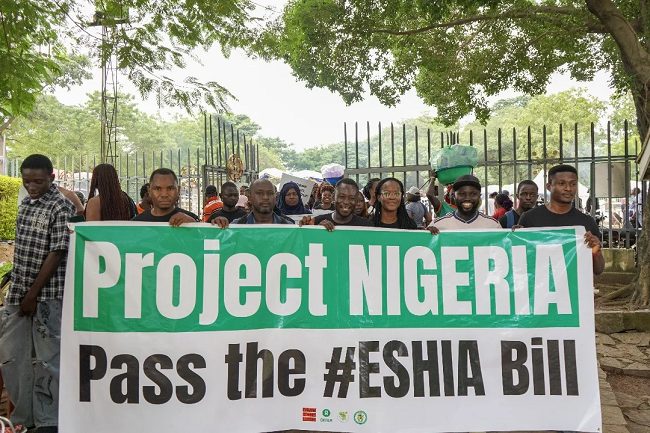
GIFSEP is at the forefront of the campaign to pass the ESHIA (Environmental, Social, and Health Impact Assessment) Bill into law
He said that after 65 years of independence, Nigeria needed a law to match its current realities–robust enough to protect people, ecosystems, and future development.
“At independence in 1960, Nigeria’s environment was relatively intact; vast forest cover, healthy mangrove ecosystems in the Niger-Delta, largely clean rivers, low industrial pollution and fewer people, less urban pressure.
“Over the decades, the country has witnessed massive demographic growth from about 45 million in 1960 to more than 220 million today.
“It has witnessed rapid industrialisation, oil extraction, expansion of cities, and weak regulatory regimes have severely degraded air, water, land and biodiversity.’’
According to David, deforestation has accelerated as Nigeria loses more than 350,000 hectares of forest per year.
“Mangrove zones have been damaged by repeated oil spills since the 1950s; estimates suggest Nigeria has spilled around 13 million barrels of oil in the Niger-Delta, heavily impacting mangrove forests.
“Water pollution has become a grave issue in many mining communities and many urban rivers are contaminated by industrial effluent in levels far above WHO safety limits.
“Air quality has worsened significantly; urban centres often record PM2.5 levels that are many times above safe standards, with Port Harcourt regularly exhibiting hazardous black soot levels linked to illegal refining and gas flaring.”
David said that flooding and extreme weather had become more frequent and destructive.
“The 2022 floods destroyed over 200,000 homes, displaced more than 1.4 million people, and damaged more than 300,000 hectares of farmland.
“Soil fertility in many agricultural areas has dropped; desertification is consuming once productive lands in northern Nigeria.
“Open defecation persists; almost 48 million Nigerians practice it, with serious health and environmental consequences.
“Regulatory tools remain outdated, weak, poorly enforced, and often ill-suited to modern challenges like climate change, health impacts, and social equity.
“This is where the #ESHIA Bill (Environmental, Social, and Health Impact Assessment Bill), which has passed first reading at the House of Representatives, becomes essential.’’
He said that the current Environmental Impact Assessment Act dated from 2004 and lacked sufficient teeth for present scale of development and pollution.
David said that passing the ESHIA Bill would help ensure that new infrastructure, resource extraction, industrial and urban projects were assessed not only for environmental impact, but also for health and social consequences.
“The ESHIA Bill puts the people and the communities first and seeks to embed stronger standards, including free, prior, and informed consent of affected communities.
“Also it would ensure enforceable penalties, restructure oversight agencies to monitor compliance; and integration of disaster risk reduction.
“It would enshrine rights for communities that suffer from pollution, land loss, displacement, as well as provide clearer, enforceable guidelines to prevent future degradation,” he said.