Home Blog Page 145

COP30: Nigeria set to boost green economy, tackle climate change

0

Director-General, National Council on Climate Change (NCCC), Mrs. Tenioye Majekodunmi, says Nigeria will intensify efforts to advance the green economy toward mitigating climate change.

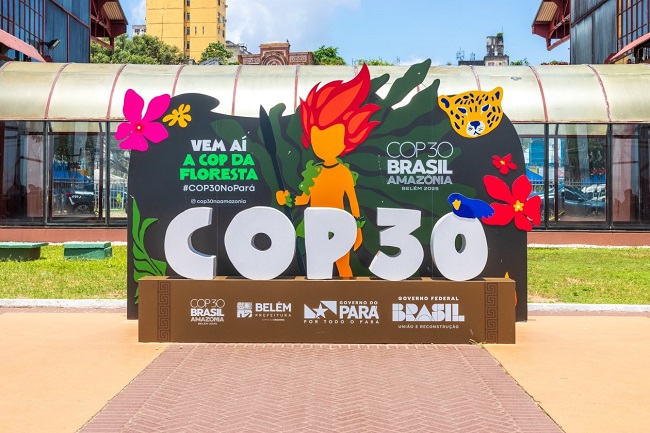
Majekodunmi said this on Monday, November 17, 2025, during an interview on the sideline of the 30th United Nations Climate Change Conference of the Parties in Belém, Brazil.

She said focus on overall environmental sustainability including renewable energy, sustainable agriculture, and waste management would be maintained nationwide.
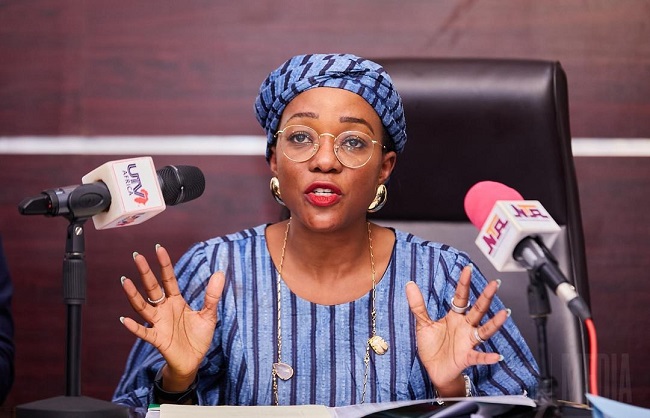
Mrs. Tenioye Majekodunmi
Director-General, National Council on Climate Change (NCCC), Mrs. Tenioye Majekodunmi

According to her, Nigeria has taken this charge to heart. Our commitment is not just an aspiration; it is a solemn national mandate to reach a 32 per cent emission reduction target by 2035.

“We have already submitted our comprehensive Third Nationally Determined Contribution; the first among West Africa, approved the National Carbon Market Framework, and operationalised our Climate Change Fund.

“These actions send a clear, powerful signal that Nigeria is ready for high-integrity and large-scale clean energy investment; yet a gap remains between potential and proof.”

She disclosed that the Federal Government would support private sectors that were ready to deploy scalable off-grid solutions toward ensuring diversification of nation`s energy sources to close persistent energy gaps in the hard-to-reach communities.

“This aligns with the Nigeria Just Transition Guideline and action plan we have recently validated.

“Such clean energy projects from the private sector will strengthen the NCCC’s efforts to advocate for and mandate the decarbonisation of energy production thereby ensuring Nigeria remains Paris aligned.

“Nigeria offers political stability, massive market demand, and a new, robust climate policy architecture designed to attract and protect investors’ capital,” she added.

The NCCC director general reiterated that the Nigerian government through the council supported the wind sector as a vital pillar in the Nigerian energy mix plan.

“Let the winds of change that sweep across Nigeria’s land be harnessed not just as potential, but as tangible power, driving our sustainable development and guaranteeing a greener, brighter future for every Nigerian,” she said.

In another development, Prof. Magnus Onuoha, Executive Director, West Africa Green Economic Development Institute (WAGEDI), said that driving wind energy in Nigeria would greatly boost energy supply.

WAGEDI is a pan-African research institute housed within Gregory University, a private tertiary institution located in Uturu, Nigeria.

Onuoha, who spoke on the sideline of the conference, said that government policies and incentives Nigeria had committed to global climate action were key drivers behind wind energy projects in the country.

According to him, the electric power sector reform Act of 2005 laid the groundwork for private sector participation in electricity generation; creating a regulatory framework that includes renewable energy.

“Additionally, Nigeria’s ratification of the Paris Agreement in 2016 and subsequent submission of its Nationally Determined Contributions (NDCs) in 2017 underscored the country’s pledge to reduce greenhouse gas emissions.

“These commitments have spurred investment in low-carbon technologies, including wind energy as part of Nigeria’s strategy to meet its international obligations.”

He added that domestically, policy initiatives such as the Renewable Energy Master Plan (REMP) and the Climate Change Act of 2021 have further accelerated the development of wind energy.

“The REMP outlines specific targets for renewable energy adoption, aiming to achieve a 23 per cent share by 2025, with wind power as a critical component.

“The government’s REMP that was inaugurated in 2011 aimed at increasing the share of renewable energy to at least 13 per cent by 2015, 23 per cent by 2025, and 36 per cent by 2030.

“Energy target will be comprised of renewable and carbon intensive sources as coal (2,200MW), the Nigerian National Integrated Power Project (NIPP)(1,896MW), Independent power projects (IPPs) (296MW), Legacy assets (thermal) (5600MW), hydro (1300MW) and wind(10MW).

“The Climate Change Act institutionalises climate governance, requiring the government to develop pathways toward net-zero emissions by 2060.

“These frameworks provide a roadmap for renewable energy deployment and attract international support and funding, as demonstrated by partnerships with institutions like the African Development Bank and commitments from global entities such as the U.S.-EXIM Bank,” he explained.

According to him, Nigeria’s recent Energy Transition Plan (2022) and the passage of the Nigerian Electricity Act in 2023-mark significant milestones in advancing the renewable energy agenda.

He said the initiatives prioritised sustainable energy projects with wind energy recognised for its role in off-grid electrification and regional development particularly in the northern and coastal areas.

He further said that the country’s carbon neutrality goal by 2060 emphasised the need for scaling renewable technologies, making wind energy a viable solution to bridge Nigeria’s energy deficit while aligning with global sustainability goals.

“These drivers collectively signal a strong commitment to integrating wind energy into Nigeria’s energy future, leveraging policy, technology, and international collaboration,” he added.

By Gabriel Agbeja

Emadeb Petroleum achieves first oil from Ibom Field

0

Emadeb Petroleum Exploration & Production Company Limited (Emadeb E&P) has announced the achievement of first oil from the Ibom Field (PPL 236), marking another milestone in Nigeria’s upstream oil and gas industry. 

Following sustained investment, technical rigour and collaborative effort, Emadeb E&P has commenced commercial production from Ibom Field.

According to the organisation, the achievement underscores Emadeb E&P’s emergence as a fully integrated energy player and highlights the pivotal role of indigenous operators in advancing Nigeria’s energy security and economic diversification. 

Adebowale Olujimi
Adebowale Olujimi, CEO, Emadeb E&P

It also aligns with the Federal Government of Nigeria’s vision and aspiration to increase the nation’s crude oil production.

Ibom Field

Located approximately 30 kilometres offshore, Ibom Field was originally discovered in 1979. The field boasts significant in place volume of 103 million barrels of oil.

Since its acquisition in the 2020 Marginal Field Bid Round, Emadeb E&P has invested over $100 million in a phased field development programme. The Nigerian Upstream Petroleum Regulatory Commission (NUPRC) approved the Ibom Field Development Plan (FDP) in November 2024.

Key Technical Milestones

  1. Successful drilling and completion of the Ibom-03 well in September 2023.
  2. Integration of a Mobile Producing Offshore Unit (MOPU) completed in June 2025.
  3. Commissioning of the Ibom Field Mooring System in September 2025.
  4. First oil achieved in October 2025.

Demonstrating Indigenous Capacity and Strategic Partnership

“This milestone reflects our deep commitment to unlocking Nigeria’s hydrocarbon potential through homegrown expertise, strong partnerships, and disciplined investment,” said Adebowale Olujimi, CEO, Emadeb E&P. 

Olujimi declared: “We are proud to contribute to Nigeria’s energy goals, foster local content, create jobs, and deliver sustainable value.”

The Ibom Field development showcases effective collaboration between the private sector and government institutions and stands as a model for marginal field commercialisation and indigenous capacity development in the upstream sector. 

Looking Ahead

Emadeb E&P says it is now preparing for Phase 2 development to drill two additional wells that will triple production by Q4 2026. The company adds that it remains focused on operational excellence, environmental stewardship, safety, and community engagement.

Head of HEDA emerges winner of 2025 Global Courageous Scientists Award for Africa

0

Chairman of the Human and Environmental Development Agenda (HEDA Resource Centre), Olanrewaju Suraju, has been named and awarded the winner of the 2025 Courageous Scientists Award for Environmental and Climate Justice, from Africa, an international honour established by the Vienna-based organisation, Forum Eco-Social Transformations.

Suraju was announced as one of six global winners selected from 22 nominees across Africa, Asia, Australia/Oceania, Europe, Latin America and North America. The award, created in 2025, recognises individuals who demonstrate exceptional courage and commitment to environmental protection, climate justice and species preservation, often at significant personal risk.

Olanrewaju Suraju
Chairman of the Human and Environmental Development Agenda (HEDA Resource Centre), Olanrewaju Suraju

According to the organisers, Suraju’s selection acknowledges his “outstanding and inspiring work, long-time fight against corruption, and deep commitment to human rights,” especially through his leadership of HEDA Resource Centre. The award aligns with the prize’s guiding motto, “Tell the Truth!”, which honours individuals who speak boldly on environmental and justice issues.

Other 2025 award recipients include: Asia: Eight Iranian scientists from the Persian Wildlife Foundation, arrested in 2018 for conservation work; Australia/Oceania: Cynthia Houniuhi of Vanuatu, President of the Pacific Islands Students Fighting Club; Europe: Dr Elisa Privitera, Italian urban and environmental planner at the University of Toronto Scarborough; Latin America: Olivia Bisa Tirko, President of the Autonomous Territorial Government of the Chapra Nation, Peru; North America: Dr Rose Abramoff, earth scientist at the University of Maine, USA.

The winners were selected by a six-member International Jury comprising experts in environmental economics, climate science, Indigenous rights advocacy, urban planning and ecological research from across the world. A five-member Scientific Advisory Board based in Vienna, led by Dr Ernst Fürlinger, oversaw the process.

In Asia, the Scientific Advisory Board offered the prize to two researchers from two different countries. Both were grateful but declined the prize.

The award was founded by Austrian architectural historian and climate advocate, Dr Norbert Mayr, who said the recognition highlights Suraju’s sustained commitment to environmental justice and accountability.

Speaking on the award, Suraju described the award as an encouragement to continue advocating for transparency and climate responsibility. He dedicated the recognition to environmental defenders and civil society actors in Africa who work under challenging conditions.

He decried the inhuman environmental and human rights conditions of the Niger Delta, and accused state authorities, the IOCs, and their host countries of complicity in the creation of world most polluted region out of the Niger Delta from oil exploitation.

The public award ceremony held on Saturday, November 15, 2025, in Vienna, with global participants joining in-person and online.

‘Negotiations stand at a crossroads’ – A COP30 midway assessment

0

COP30 had been billed as the first real “implementation COP” since Paris – a chance to make good on the unfulfilled commitments of the Paris Agreement, which promised a Just Transition, but instead delivered a decade of drift and broken trust.

In Belém, agreement on a Just Transition was widely viewed as the clearest test of seriousness: proof that governments would finally be ready to embed justice across every part of the outcome – finance, adaptation, and accountability.

Midway through COP30, the negotiations now stand at a crossroads. Across all major negotiating tracks – adaptation, finance, Just Transition, trade, and the still-unresolved agenda – a single message reverberates: the implementation gap is a finance gap, and credibility will not be restored until that gap is addressed. Climate Action Network attempts a midway assessment.

COP30
During the 2025 UN Climate Change Conference, countries will need to reaffirm their commitments and create climate plans that will bring the world closer to the Paris Agreement’s 1.5 degree C goal. Photo credit: Luis War

The COP of Truth – and a managed agenda

President Lula opened COP30 with a blunt recognition of the present crisis. Climate change, he said, is not a distant threat but a current tragedy, already pushing millions back into poverty and striking hardest at Afro-descendant communities, women, and children. He repeated his expectation that COP30 must be a COP of Truth – one willing to face the inequalities that drive the climate crisis, not speak around them.

This call for truth shaped much of the first week. COP30 has seen an unprecedented focus on combating climate misinformation and ensuring that people – from negotiators to communities – have access to accurate, factual information on which to base responsible decisions.

The Presidency’s proposal to run four consultations together, covering the four extraordinary agenda items, was tactically useful. It allowed for a smooth start and let technical negotiations begin. But it was really just window-dressing. The political agenda remains unresolved, and it rises to the surface in every negotiation room. Throughout the week, Parties were told to speak directly to each other without prepared statements, searching for bridges between ambition and implementation.

Yet developing countries expressed deep unease that the process risked diluting their central demands. A five-minute stocktake plenary only deepened the sense of uncertainty, and although a further stocktake took place on Saturday, many fear the substantive issues are still being set aside.

Just Transition: a breakthrough at risk

The most significant political development of the first week – and the most contested – unfolded in the Just Transition negotiations. In a notable shift, G77+China called for the creation of a Global Mechanism for Just Transition, echoing long-standing demands from civil society and trade unions embodied in the proposal for a Belém Action Mechanism (BAM). The EU, for its part, also tabled a proposal for an institutional arrangement – a real evolution in the international conversation, though still far from the kind of mechanism that could deliver justice in the transition.

But the breakthrough remains fragile. There are already clear signs that the political fight is only beginning. Several wealthy countries have pushed back hard against the idea of any new mechanism, arguing that existing arrangements are sufficient – despite broad evidence that current structures cannot deliver the scale or coordination required. The blockers are consistent: denial of responsibility, resistance to coordinated international action, and a refusal to recognise that transitions without justice are neither durable nor legitimate. 

This is the COP where climate justice and social justice must finally be married – where workers are recognised not as footnotes to climate policy, but as central actors in shaping the new economy. A credible Just Transition mechanism is essential not only for climate ambition, but for rebuilding trust between countries, trust between governments and workers, and trust in a process that must deliver real change on the ground.

Critical Issues Shaping the Just Transition Outcome

There was overwhelming support for including transition minerals within the scope of Just Transition work – the first time such recognition has entered UNFCCC text.

Beyond this, trade is emerging as a defining fracture. Developing countries insist that unilateral trade measures – such as the EU’s CBAM – must be addressed within the climate process. For many, a meaningful Just Transition cannot be separated from the inequities embedded in global trade rules. Developed countries refuse outright.

The carbon markets discussions added another layer of concern. In the Article 6.4 room, some Parties sought to weaken already insufficient safeguards, threatening environmental integrity and eroding human rights protections. These efforts run counter to science and contradict the public demand for accountability.

Finance: the heart of the blockage

The core of the current impasse is the same issue we’ve faced for years: justice and responsibility – represented most clearly through climate finance. Every negotiation room – whether the Global Goal on Adaptation (GGA) discussions, the National Adaptation Plan (NAP) processes, or the Just Transition Work Programme (JTWP) sessions – circled back to the same inescapable truth: developing countries cannot implement their climate plans without real, predictable, grants-based finance.

Yet many developed countries continued to resist language that implies obligation, creating growing frustration and widening trust gaps – despite the Paris Agreement and ICJAO ruling. ENGO observers were explicit: the implementation gap is the finance gap, and until this is resolved, no amount of political choreography will restore trust.

The Loss and Damage Fund took a step forward with the official launch of its first Call for Funding Requests. But with only $250 million allocated for 2025–26, the fund remains dramatically under-resourced.

Adaptation: clarity in need, uncertainty in delivery

Adaptation issues dominated much of week one. The first draft of the Global Goal on Adaptation (GGA) text includes an option for a new adaptation finance target, proposing to triple adaptation finance by 2030 and reach at least $120 billion annually – a demand strongly backed by civil society. The draft signals recognition of need but not yet agreement on delivery.

Parties remain divided over whether the GGA indicators should be adopted, welcomed, or simply noted. Developing countries maintain that the current list still fails to reflect the guidance from SB62, particularly on Means of Implementation. Across GGA, NAP and agenda consultations, the message from developing countries was consistent: adaptation without finance is not adaptation – it is rhetoric.

Civil society and Indigenous movements return to the streets

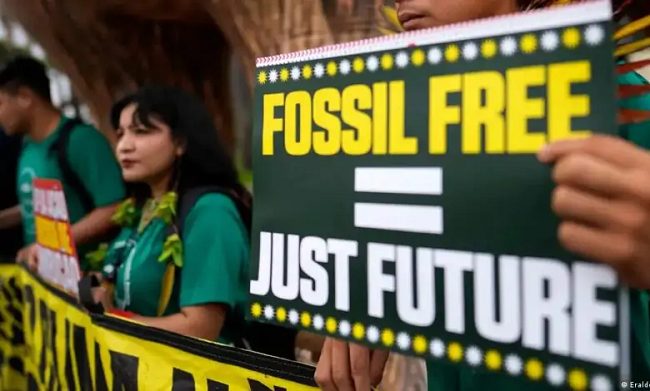
Belém witnessed what the last three COPs did not: a mass, peaceful mobilisation of up to 70,000 people. A theatrical funeral for coal, oil and gas captured the public mood and reinforced the call for a clear, uncompromised fossil fuel phase-out. Indigenous leaders amplified demands for land rights, consent-based decision-making, and an end to the extractive violence tied to both transition minerals and fossil fuel expansion. Their presence and leadership remain a moral compass for the negotiations.

However, as Larissa Baldwin-Roberts, Widjabul Wia-bal woman, Director of Common Threads and Climate Action Network International Boardmember, observed: “This was promised to be the Indigenous COP – yet thousands of Indigenous peoples are still outside. They were promised to be inside the venue to be heard on what’s happening to their territories: the privatisation of their waters, the illegal mining of their land. The UNFCCC needs to do much more in making sure that Indigenous organisations are here as rights-based constituencies.”

A summit searching for its backbone

As COP30 moves into its second week, the process enters its most demanding and political phase. Technical work must be completed by Tuesday for ministers to begin the high-level political negotiations. UN climate chief, Simon Stiell, urged governments “to give a little to get a lot,” a message widely interpreted as a call for real compromise after a week of cautious manoeuvring and word soup.

The Presidency is due to release a Sunday report summarising progress on emissions ambition, finance, unilateral trade measures, and transparency of national data reporting. That document will shape ministerial negotiations in the critical days ahead.

What Week Two must deliver

The second week must break from the incrementalism that has defined too many COPs. To honour Lula’s call for a COP of Truth, ministers will need to resolve the agenda impasse transparently and without sidelining the finance debate. They must confront the finance gap directly – especially on adaptation finance and Article 9.1 obligations – and demonstrate that implementation is not a slogan but a commitment.

Delivering justice now depends on delivering the proposed Belém Action Mechanism: the clearest pathway to a Just Transition mechanism grounded in global consensus rather than veto power. Week two must also protect, not weaken, carbon market integrity; recognise trade justice as integral to climate justice; and provide meaningful direction on phasing out fossil fuels while rejecting false solutions.

Ultimately, the stakes are not whether COP30 appears orderly or well-managed, but whether it delivers for the communities President Lula named on Day 1 – the millions already living inside the consequences, thousands of whom marched through the streets of Belém on Saturday to demand governments to deliver climate justice.  

13 nations launch tax on luxury flights at COP30

0

A coalition of 13 countries unveiled a declaration on Saturday, November 15, 2025, to tax private jets and business or first-class flights, with revenue directed toward climate action, though only two high-income nations have joined the initiative.

The coalition aims to make the heaviest polluters contribute most to addressing climate change. Tax details vary by country, but all target luxury air travel.

Most participating nations are from the Global South, despite wealthier countries’ citizens generating more luxury travel emissions.

Luxury flight
The climate tax targets private jets and business or first-class flights

The coalition invited additional countries to join.

“This initiative deserves to be celebrated,” said Mattias Söderberg, climate advisor at DanChurchAid.

“Finally, some governments are taking leadership and introducing taxes on private jet travel. These flights emit far more CO₂ per passenger than any other form of transport.”

Söderberg criticised wealthy nations for limited participation.

“It is disappointing that so few wealthy countries are joining in,” he said.

“The richest nations – whose citizens are most responsible for luxury emissions – should be the first to act, not the last.”

He called it embarrassing that lower- and middle-income countries show more courage on climate justice than wealthy ones.

For Global South nations already experiencing climate impacts, the taxes can help mobilise adaptation resources, Söderberg said.

“Every initiative that reduces emissions and generates finance for vulnerable communities counts – and this one sends a clear message: it’s time for the richest to pay their share,” he said.

Söderberg expressed hope that more countries would announce participation in the coming days.

By Winston Mwale, AfricaBrief

Presidency text opens fight for fossil fuel phase out at COP30

0

As COP30 starts its second week, the Presidency has released the highly anticipated presidency consultation text, which harbors the key contentious issues at COP30, namely responding to the ambition gap in national climate pledges (NDCs) and climate finance. 

This comes as the support for establishing a roadmap to transition away from fossil fuels has grown to 62 countries in just one week, according to an analysis by 350.org.

Andreas Sieber, Associate Director of Policy and Campaigns, 350.org, said: “The fight is on. The COP30’s Presidency text shows a visible pathway to close the decarbonisation gap, anchored in a fossil-fuel phase-out roadmap and a credible climate-finance package. Real textual options now exist, even if still in placeholder form.

André Corrêa do Lago
COP30 President, André Corrêa do Lago

“The challenge ahead is whether Brazil will leverage these twin pillars, finance and ambition, to drive a strong outcome or allow the process to slip to the lowest common denominator. Equally critical is whether Europe and other developed countries will step up on climate finance to make a deal possible.”

Fanny Petitbon, France Team Lead, 350.org, stated: “Finance is the engine of climate action. The Presidency calls on developing countries to lead, prioritise public, grant-based, concessional finance to protect the world’s most vulnerable and break the vicious debt cycle. However, it misses the urgency to simplify direct access to finance for communities, especially Indigenous peoples, who hold solutions on the ground yet face enormous barriers to securing the funds needed to scale them up.” 

Analysis of Presidency text

The group has analysed key elements of the text, which tables various options that include the ingredients for a highly ambitious outcome at COP30.

The COP30 Presidency’s text lays out a series of options that could shape core outcomes,  including a potential roadmap to accelerate the transition away from fossil fuels.

Options for a Fossil Fuel Transition Roadmap

The text explicitly presents options for countries to “accelerate action to transition away from fossil fuels”, including the possibility of a new roadmap developed by successive COP Presidencies.

A proposed mandate would:

  1. Task COP Presidencies with developing a Roadmap to boost NDC implementation and cooperation,
  2. Convene a Coalition of Climate Ministers,
  3. Release the Roadmap before COP31.

The text also includes a de facto “no-action” option, which would delay decisions until the next global stocktake.

Options on Finance

The document fully acknowledges the persistent and growing climate finance gaps, and underlines the role of finance as a key enabler of climate action. It paves the way towards increased international cooperation, specifically calling on developed countries to take the lead.

A proposed way forward would be to:

  1. Establish a three-year Belem work programme and Action Plan on the implementation of Article 9.1,
  2. Tripling adaptation finance,
  3. Establish fair burden-sharing arrangements.

The document lays out several formal options, from a Mutirão decision to a de facto cover decision and a range of “plans”:

  1. Mutirão decision
  2. Mission-oriented action
  3. Global response plan
  4. Action plan
  5. Delivery plan

This opens the door for different elements of the package to ultimately land in different outcome vehicles. What is essential is that the formal outcome delivers a strong response to the 1.5°C ambition gap and finance, potentially complemented by additional declarations or parallel outcomes.

On Monday, November 17, Parties will give feedback on whether the summary accurately reflects their positions, setting the stage for a possible negotiated package later in Week 2.

PETAN urges Africa to adopt Nigeria’s local content model

0

Petroleum Technology Association of Nigeria (PETAN) has urged African governments to deepen public–private sector collaboration to strengthen the continent’s oil and gas value chain.

PETAN Chairman, Mr. Wole Ogunsanya, in statement on Sunday, November 16, 2025, in Lagos, was quoted to have made the call at the 4th Conference and Exhibition on Local Content in the African Oil and Gas Industry (CECLA).

The event was organised by the African Petroleum Producers Organisation (APPO) in Kintélé, Brazzaville, Congo.

Kevin Nwanze
PETAN Secretary, Kevin Nwanze

Ogunsanya, represented by the association’s Secretary, Mr. Kevin Nwanze, said the country’s local content model had been proven to be a pathway to sustainable industry growth.

He said Nigeria’s local content achievements, anchored on the Nigerian Oil and Gas Industry Content Development (NOGICD) Act and implemented by the Nigerian Content Development and Monitoring Board (NCDMB).

This, he noted, had raised in-country value retention from five per cent in 2010 to 56 per cent in 2024, adding that the model worth replicating across Africa.

“Collaboration is no longer a ‘nice-to-have’ but a ‘must-have’ for sustainable local content in Africa’s oil and gas industry,” he said.

Ogunsanya noted that the increasing complexity of oil and gas projects demands stronger cooperation among operators, international oil companies, and local suppliers.

The chairman warned that weak policies, limited financing, trust deficits, and capacity gaps remain major obstacles to effective collaboration on the continent.

He called for clearer regulatory frameworks, transparent procurement systems, open publication of contract awards, and strong oversight mechanisms, describing them as “non-negotiable” for trust-driven partnerships.

On Nigeria’s progress, Ogunsanya cited successful collaboration models enabled by the NOGICD Act, including the Egina FPSO topsides engineering consortium, the EnServ–Schlumberger alliance, and the Kwale Gas Gathering (KGG) Hub.

He added that Africa must now build long-term supplier capability and invest in emerging technologies such as renewable integration, carbon capture, utilisation and storage (CCUS), and oil and gas decommissioning.

“What has worked in Nigeria can work elsewhere. The NOGICD model is ripe for adaptation by other African jurisdictions seeking real local content growth,” he said.

Ogunsanya added that strong regulation and empowered local content institutions remain critical to sustaining progress. 

Momentum surges behind fossil fuel phase-out roadmap as COP30 enters Week 2

0

In just nine days, support for a fossil fuel phase-out roadmap has jumped from one to 62 countries – across both developed and developing nations, according to new analysis from 350.org and partners.

As COP30 enters its second week, support for establishing a Transition Away from Fossil Fuels (TAFF) Roadmap is accelerating fast. What began as a single call has become a powerful push to anchor a fossil fuel phase-out at the heart of the emerging Mutirão Pact.

Savio Carvalho, Head of Regions at 350.org, said: “The world needs a credible response to the gaping hole in climate ambition. Turning the COP28 promise into real action isn’t optional, we need urgent action to keep the planet livable.”

Fossil fuel phase-out
A broad coalition is urging COP30 to adopt a concrete plan to accelerate the shift from oil, gas, and coal

The global shift is already underway: renewables are growing faster than any other energy source.

“The real question now is whether the transition will be fair. Fossil fuels are about to peak, and emissions are set to fall. Countries need a just, orderly transition that is fair, fast, and funded – not a chaotic one defined by stranded assets. A justice-centred roadmap can protect people instead of sacrificing them.”

The proposed TAFF Roadmap would be bottom-up, showcasing real transition plans and policies already underway, and strengthening cooperation aligned with equity and the Paris Agreement.

But 350.org stresses that it must come with real support; finance, technology transfer, and capacity-building or it won’t be credible. Justice, adds the group, must be the starting point.

Indeed, a major diplomatic confrontation is taking shape at the UN climate summit in Brazil, where dozens of nations are pressing for a formal roadmap to phase out oil, coal, and gas – a move fiercely opposed by powerful fossil-fuel producers and industry lobbyists.

The push comes amid record global emissions from burning fossil fuels, which scientists say are driving deadly climate impacts and destabilising ecosystems worldwide. Despite years of negotiations, it was only at COP28 in Dubai that countries formally acknowledged the need to “transition away from fossil fuels.”

This year, momentum has grown. A broad coalition – including France, Colombia, Germany, Kenya, and many Small Island Developing States – is urging COP30 to adopt a concrete plan to accelerate the shift from oil, gas, and coal, dw.com reports.

Brazil’s President Luiz Inácio Lula da Silva, who has faced criticism for authorising new oil exploration in the Amazon, has nevertheless called for ending global dependence on fossil fuels and supports developing a clear timeline for their progressive phase-out.

Environment Minister, Marina Silva, echoed the message, describing a roadmap as essential to ensuring a “fair and planned transition.”

So far, about 60 countries across Europe, Africa, Latin America, and vulnerable island nations have backed the effort, with hopes of expanding support to at least 100. A draft declaration on phasing out fossil fuels prepared by Colombia is expected to be released early next week.

Resistance from major oil producers

But the initiative faces determined resistance. Saudi Arabia and other major oil-exporting states have reportedly rejected outright any reference to a fossil fuel phase-out roadmap. One negotiator estimated that as many as 70 countries may oppose the proposal.

Oil-producing nations argue instead for reducing emissions through technologies like carbon capture and storage – an approach criticized by experts because it has never been proven at global scale.

Diplomats say the coalition must be large enough to force the issue onto the summit’s agenda, a process described as a “diplomatic puzzle” with high stakes for the outcome of COP30.

Industry lobbyists in record numbers

Complicating matters further is the unprecedented presence of fossil fuel industry representatives. According to a report by the Kick Big Polluters Out coalition, 1 in every 25 participants at COP30 is linked to the oil, gas, or coal sector – totaling more than 1,600 delegates, including representatives from ExxonMobil, Shell, and TotalEnergies.

They outnumber nearly every national delegation except Brazil’s and hold significantly more passes than the 10 most climate-vulnerable nations combined.

Critics say their influence threatens to dilute ambition. “You cannot solve a problem by giving power to those who caused it,” said Jax Bonbon, a coalition member from the Philippines, which was recently hit by a devastating typhoon.

TotalEnergies CEO, Patrick Pouyanné, who attended the summit, rejected being labeled a lobbyist and expressed skepticism about the roadmap, calling it a “European vision.”

A warming planet and stark warnings

Global emissions from oil, coal, and gas reached a new high in 2025, and the world remains on track for a catastrophic 2.6°C rise in temperatures by 2100.

Johan Rockström, director of the Potsdam Institute for Climate Impact Research, warned that progress on other COP priorities — such as forest protection or climate finance — “can only be celebrated if we also see progress on the phase-out of fossil fuels.”

With pressure mounting and negotiations intensifying, COP30 appears poised for a decisive clash over the future of the world’s energy system – and the political will to confront what scientists call the central driver of the climate crisis.

COP11: Stand up for public health, CSOs urge Nigerian delegates

0

A coalition of civil society organisations (CSOs) has urged Nigeria’s delegation to the Eleventh Session of the Conference of the Parties (COP11) to the WHO Framework Convention on Tobacco Control (WHO FCTC) to prioritise public health over tobacco industry interests.

The CSOs working in tobacco control, in a joint statement on Sunday, November 16, 2025, warned the delegate not to sell out Nigeria’s public health to tobacco industry. The WHO FCTC COP11 is holding in Geneva, Switzerland, from November 17 to 25.

The group includes Nigeria Tobacco Control Alliance (NTCA), Corporate Accountability and Public Participation Africa (CAPPA), Gatefield, Environmental Rights Action/Friends of the Earth Nigeria (ERA/FoEN) and Centre for Youth Inclusion and Development

WHO FCTC COP11
WHO FCTC COP11

They cautioned against yielding to the influence of the tobacco industry and its allies.

“We call on Nigerian delegates to stand firm with the global public health community, resist any form of industry influence, and support decisions that advance a tobacco-free future,” the CSOs said.

The WHO FCTC is the world’s coordinated response to the tobacco epidemic, while the Conference of the Parties serves as its governing body, comprising all Parties to the Convention. Currently, there are 183 Parties, covering more than 90 per cent of the world’s population.

The group and other public health advocates raised the alarm over the tobacco industry’s renewed global campaign to infiltrate COP11 discussions through proxies.

This is in a bid to sway delegates into supporting the introduction and legitimisation of nicotine-based and other novel products, including e-cigarettes, under the guise of harm reduction.

They also demanded that the Nigerian government and its delegates reject all tobacco industry-linked funding, partnerships, and influence.

The advocates said they were watching closely as global negotiations begin, stressing that Nigerians would hold the delegates fully accountable for any action that undermined the fight against tobacco and nicotine addiction.

They urged the Nigerian delegation to act in the nation’s best interest and uphold the spirit and letter of Sections 25-28, 33-34, and 38(2) of the National Tobacco Control Act, which combine to prohibit government officers and agencies from any financial and non-financial relationship with the tobacco industry and its proxies.

According to them, the delegates must also comply with obligations under the WHO FCTC, to which Nigeria is a Party.

The CSOs reminded delegates that Article 5.3 of the Convention explicitly obliges Parties to protect public health policies from the commercial and vested interests of the tobacco industry.

“We are aware that the tobacco industry and its front groups are working overtime to manipulate discussions at COP 11 through delegates, pushing narratives that normalise nicotine addiction and weaken existing tobacco control measures.

“Nigeria must not be complicit in this devious strategy.”

The group called on the Nigerian government to demonstrate leadership in protecting its citizens, especially young people, from addiction and exploitation by multinational tobacco corporations seeking to expand their markets across Africa.

“Tobacco kills over seven million people every year,” the coalition warned.

“Now the industry wants to hook a new generation on nicotine using shiny gadgets, false marketing, and the manipulation of regulatory officials.”

They described novel nicotine-based products as the “new faces of the same deadly business.”

“These nicotine-based products touted by the industry as less harmful alternatives to smoking are not solutions.

”They are traps through which the industry hopes to continue raking in profits at the expense of public health.

“The same companies that created a century of death and addiction now want to rebrand themselves as part of the solution. It is deception at its peak, and Nigeria must not fall for it.

“Nigeria’s delegates must go to Geneva to defend life, not profit.

”Nigerians are watching and will hold them accountable for any actions or positions that undermine public health or promote the interests of the tobacco industry.”

The group stressed that industry interference remained the single greatest obstacle to effective tobacco control.

It warned that the introduction of novel nicotine products will reverse public health gains made under the National Tobacco Control Act and related policies.

By Deji Abdulwahab

Shell’s Ronald Adams inducted Fellow of Nigerian Society of Chemical Engineers

0

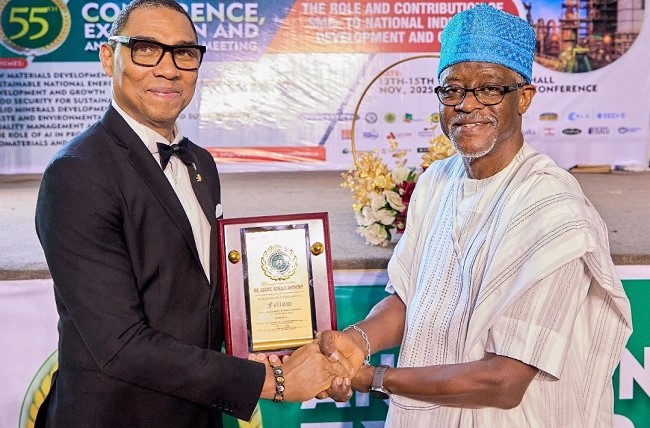
The Nigerian Society of Chemical Engineers (NSChE) at the weekend inducted the Managing Director of Shell Nigeria Exploration and Production Company Limited (SNEPCo), Ronald Adams, and 19 others as Fellows for outstanding contributions to the profession.

They were accorded the highest honour of the Society at its 55th conference and annual general meeting held on Saturday, November 15, 2025, in Enugu. NSChE National President, Bayo Olarewaju-Alo, advised them to continue “to inspire younger engineers, shape industrial polices and drive sustainable growth through innovation and ethical practice.”

Responding on behalf of the inductees, Ron expressed gratitude for the honour and pledged that they would justify the confidence reposed in them.

Ronald Adams
L-R: Managing Director, Shell Nigeria Exploration and Production Company Limited (SNEPCo), Ronald Adams, while receiving his Followship award from the National President, Nigerian Society of Chemical Engineers, Bayo Olarewaju-Alo, at the 55th Annual Conference and Annual General Meeting (AGM) of the Nigerian Society of Chemical Engineers (NSChE) in Enugu State

He said: “Chemical engineers are needed today more than ever before. As society evolves at a rapid pace, we need these professionals to make sense of it all and prepare us for challenges in the energy sector and beyond.”

He added: “SNEPCo shares the vision of the Nigerian Society of Chemical Engineers and supports members in the company through trainings and the wider body in the pursuit of its mission. The partnership will continue.”

A few months ago, the Petroleum Technology Association of Nigeria (PETAN) presented an Award of Excellence to Ron, for his visionary leadership in deep-water production.

Ron has a bachelor’s degree in chemical engineering from the University of the West Indies and an international MBA, with specialization in Strategic Planning from Herriot-Watt University, Edinburgh. He has held several leadership roles in his native Trinidad and Tobago, and made history on August 1, 2021, when he became the Chief Executive Officer of Atlantic LNG of Trinidad and Tobago, the first local to hold the position in its 25 years of operation.

In October last year, he arrived in Nigeria to open another historic chapter, becoming the first non-Nigerian to serve as Managing Director of SNEPCo; the company that had itself made history earlier on February 14, 2023, when Bonga, Nigeria’s first deep-water field, produced its one billionth barrel of oil.

Ronald is said to be repositioning SNEPCo for an even brighter future as it implements the $5 billion Bonga North project.