Home Blog Page 140

New climate pledges only slightly lower dangerous global warming projections – UNEP

0

A UN Environment Programme (UNEP) assessment of available new climate pledges under the Paris Agreement finds that the predicted global temperature rise over the course of this century has only slightly fallen, leaving the world heading for a serious escalation of climate risks and damages.

UNEP’s Emissions Gap Report 2025: Off Target finds that global warming projections over this century, based on full implementation of Nationally Determined Contributions (NDCs), are now 2.3-2.5°C, compared to 2.6-2.8°C in last year’s report. Implementing only current policies would lead to up to 2.8°C of warming, compared to 3.1°C last year.

However, methodological updates account for 0.1°C of the improvement, and the upcoming withdrawal of the US from the Paris Agreement will cancel another 0.1°C, meaning that the new NDCs themselves have barely moved the needle. Nations remain far from meeting the Paris Agreement goal to limit warming to well-below 2°C, while pursuing efforts to stay below 1.5°C. 
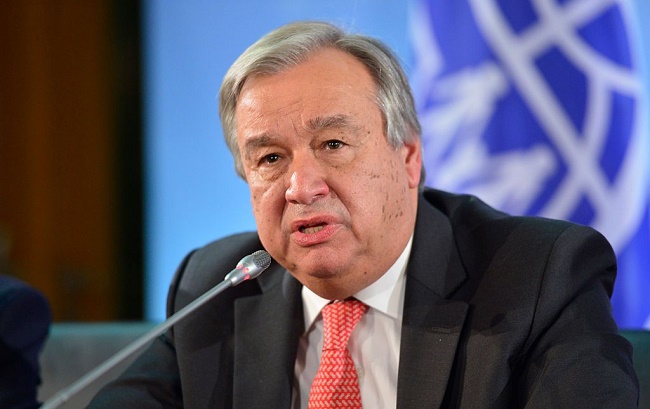
António Guterres
UN Secretary-General, António Guterres

The report finds that the multi-decadal average of global temperature rise will exceed 1.5°C, at least temporarily. This will be difficult to reverse – requiring faster and bigger additional reductions in greenhouse gas emissions to minimise overshoot, reduce damages to lives and economies, and avoid over-reliance on uncertain carbon dioxide removal methods.

“Scientists tell us that a temporary overshoot above 1.5 degrees is now inevitable – starting, at the latest, in the early 2030s. And the path to a livable future gets steeper by the day,” said UN Secretary-General, António Guterres in his message on the report. “But this is no reason to surrender. It’s a reason to step up and speed up. 1.5 degrees by the end of the century remains our North Star. And the science is clear: this goal is still within reach. But only if we meaningfully increase our ambition.”

“Nations have had three attempts to deliver promises made under the Paris Agreement, and each time they have landed off target,” said Inger Andersen, Executive Director of UNEP. “While national climate plans have delivered some progress, it is nowhere near fast enough, which is why we still need unprecedented emissions cuts in an increasingly tight window, with an increasingly challenging geopolitical backdrop.”

“But it is still possible – just. Proven solutions already exist. From the rapid growth in cheap renewable energy to tackling methane emissions, we know what needs to be done. Now is the time for countries to go all in and invest in their future with ambitious climate action – action that delivers faster economic growth, better human health, more jobs, energy security and resilience.”

Off target

 The report finds that only 60 Parties to the Paris Agreement, covering 63 per cent of greenhouse gas emissions, had submitted or announced new NDCs containing mitigation targets for 2035 by 30 September 2025. In addition to the lack of progress in pledges, a huge implementation gap remains, with countries not on track to meet their 2030 NDCs, let alone new 2035 targets.

Aligning with the Paris Agreement requires rapid and unprecedented cuts to greenhouse gas emissions above the pledges – a task made harder by emissions growing 2.3 per cent year-on-year to 57.7 gigatons of CO2 equivalent in 2024. Emissions in 2030 would have to fall 25 per cent from 2019 levels for 2°C pathways, and 40 per cent for 1.5°C pathways – with only five years left to achieve this goal.

Full implementation of all NDCs would reduce expected global emissions in 2035 by about 15 per cent compared with 2019 levels – although the US withdrawal will change these figures. These reductions are far below the 35 per cent and 55 per cent needed in 2035 to align with 2°C and 1.5°C pathways, respectively.  

Pursuing 1.5°C remains critical

The size of the cuts required, and the short time left to deliver them, means that the multi-decadal average of global temperature will now exceed 1.5°C, very likely within the next decade. Stringent near-term cuts to emissions could delay the onset of overshoot, but not avoid it entirely. The big task ahead is to strive to make this overshoot temporary and minimal, through rapid emissions cuts that keep returning to 1.5°C by 2100 in the realms of possibility. 

Every fraction of a degree avoided reduces an escalation of the damages, losses and health impacts that are harming all nations – while hitting the poorest and most vulnerable the hardest – and reduces the risks of climate tipping points and other irreversible impacts. Minimising overshoot would also reduce reliance on uncertain, risky and costly carbon dioxide removal methods – which would need to permanently remove and store about five years of current global annual CO2 emissions to reverse each 0.1°C of overshoot

The report looks at a “rapid mitigation action from 2025” scenario, which is designed to limit overshoot to about 0.3°C, with a 66 per cent chance, and return to 1.5°C by 2100. Under this scenario, 2030 emissions would have to fall by 26 per cent and 2035 emissions by 46 per cent compared with 2019 levels.

Tools there for faster action, but political climate challenging

Since the adoption of the Paris Agreement ten years ago, temperature predictions have fallen from 3-3.5°C. The required low-carbon technologies to deliver big emission cuts are available. Wind and solar energy development is booming, lowering deployment costs. This means the international community can accelerate climate action, should they choose to do so. However, delivering faster cuts would require navigating a challenging geopolitical environment, a massive increase in support to developing countries, and redesigning the international financial architecture.

G20 action and leadership will be pivotal as G20 members – excluding the African Union – account for 77 per cent of global emissions. Seven G20 members have submitted new NDCs with targets for 2035, while three members have announced such targets. However, these pledges are not ambitious enough, G20 members are collectively not on track to achieve even their 2030 NDC targets, and G20 emissions rose by 0.7 per cent in 2024 – all pointing to the need for a massive ramp up in action by the biggest emitters.


Spain: TotalEnergies to supply renewable electricity to Data4’s data centres for 10 years

TotalEnergies and Data4 (the European champion in the data centre industry) have signed an agreement to supply renewable electricity with a stable consumption profile (Clean Firm Power) to Data4’s sites in Spain.

This contract will begin in January 2026 for 10 years and will represent a total volume of 610 GWh. TotalEnergies will supply Data4’s facilities with renewable electricity generated by Spanish wind and solar farms with a capacity equivalent to 30 MW, which are about to start production.

Thanks to this contract, TotalEnergies further strengthens its position as a preferred partner for major industrial players worldwide, supporting the decarbonization of their energy consumption.

TotalEnergies and Data4
The signing of the agreement by TotalEnergies and Data4

As European leader in the data centre industry, Data4 is now established in six countries, and announced its plan to invest nearly €2 billion euros by 2030 to develop its campuses in Spain. This agreement with TotalEnergies reaffirms Data4’s engagement to fully integrate renewable energy across all its locations.

“We are delighted with this agreement with Data4, which illustrates our ability to offer competitive and tailored electricity supply solutions to large industrial groups,” said Sophie Chevalier, Senior Vice President Flexible Power & Integration at TotalEnergies. “Our ‘Clean Firm Power’ solutions are specifically designed to meet our clients’ requirements in terms of cost, consumption profile, and environmental commitment. These solutions are based on our integrated power portfolio, combining both renewable and flexible assets, and contribute to achieving our target of 12% profitability in the power sector.”

“This agreement reaffirms Data4’s commitment to renewable energy which is more crucial than ever as the race for AI accelerates and the energy capacity required for all data centers in Spain is expected to more than triple by 2030. By partnering with TotalEnergies, we provide our customers a stable and competitive long-term supply of carbon-free electricity, in infrastructures designed to be models of sustainability and innovation” says François Sterin, Chief Operation Officer at Data4. “In this context, securing this type of contract for Data4 is strategic to meet the growing demand and position Madrid as one of Europe’s most attractive digital hubs.”

GMO: ACB expresses relief over South Africa constitutional court victory

The African Centre for Biodiversity (ACB) has welcomed the decision of 11 Judges of the Constitutional Court of South Africa (SA), who, on Tuesday, November 4, 2025, dismissed with costs, an application for leave to appeal filed in November 2024, by the Minister of Agriculture, Forestry and Fisheries; the Director-General, Department of Agriculture, Forestry and Fisheries; the Executive Council: Genetically Modified Organisms Act (EC: GMO Act); and the Appeal Board, Genetically Modified Organisms.

According to the Constitutional Court, the application for leave to appeal was dismissed with costs because it bears no reasonable prospects of success. Thus, the original judgment of the Supreme Court of Appeal (SCA), delivered on October 22, 2024, in ACB’s case against Monsanto/Bayer and the State, when the SCA set aside the commercial approval of genetically modified (GM) drought-tolerant maize, MON 87460, stands.

GMOs
GMOs

This historic decision of the SCA was challenged by the Minister of Agriculture et al. in November 2024, in the form of an application for leave to appeal to the Constitutional Court, seeking to overturn a first-ever judicial ruling regarding GMO decision-making in South Africa, handed down by the full bench of five judges of the SCA. The ACB filed papers on November 26, 2024, opposing the leave to appeal.

The SCA’s decision overturned multiple layers of approvals, including:

  1. The 2015 approval by the EC: GMO Act.
  2. The 2016 dismissal of ACB’s appeal by the Appeal Board.
  3. The Minister of Agriculture’s 2016 confirmation of the dismissal of the appeal and the EC’s approval.
  4. The 2023 High Court judgment of Justice Tolmay against the ACB.

A core of the SCA’s judgment was a finding that the EC: GMO Act failed to follow the correct legal procedure when approving the commercial release of the GM drought-tolerant maize. Further, the SCA found that the EC did not meet a mandatory statutory requirement to assess whether the applicant (previously Monsanto, now owned by Bayer) needed to conduct an environmental impact assessment (EIA).

The SCA’s judgment also stands, which requires the application for the general release of MON87460 to be sent back to the EC for proper reconsideration, in accordance with the requirements of South African law.

The findings and decisions of both the SCA and the Constitutional Court – the highest court in the country – are precedent-setting in SA concerning GMO decision-making processes and will bind the state regarding future decision-making concerning the environmental release of GMOs. It will put an end to the rubber-stamping of GMO approvals and ensure compliance with SA’s laws regarding EIAs before the release of GMOs into the environment.

The ACB expressed relief that this decade-long saga has finally been put to rest and regards both the SCA and Constitutional Court’s decisions as major steps forward in protecting the country’s agricultural future and biodiversity, and respect for the rule of law.

The ACB says it is grateful to Legal Aid South Africa (LASA), which represented ACB, working on the matter over these long years.

“We were represented by K Pillay SC and N Stein and are deeply grateful to the proficient and dedicated LASA team. We are also indebted to Professor Jack Heineman, Dr Angelika Hilbeck, and Dr Eva Sirinathsinji for their expert opinions and support,” stated the group.

The ACB is a research and advocacy organisation working towards food sovereignty and agroecology in Africa, with a focus on biosafety, seed systems and agricultural biodiversity.

Nigeria’s Joe-Ezigbo, seven other African women entrepreneurs honoured at Cape Town awards gala

0

The Africa Women Innovation and Entrepreneurship Forum recognised eight women entrepreneurs and leaders at its annual awards gala on Friday, October 31, 2025, celebrating achievements in technology, agriculture, energy and social impact across the continent.

The 2025 AWIEF Awards honoured winners from Kenya, South Africa, Morocco, Angola and Nigeria at a ceremony concluding the two-day AWIEF2025 Conference, which drew more than 500 delegates from over 50 countries.

Norah Kimathi of Zerobionic in Kenya won the Young Entrepreneur Award, while Audrey Joe-Ezigbo, CEO of Falcon Corporation in Nigeria, received the Lifetime Achievement Award.

Awards
L-R: Soraya da Piedade, Winner of Creative Industry Award; Dr Vera Kamtukule, Former Minister of Tourism, Malawi; Photo taken at the 2025 AWIEF Awards on October 31, 2025, at CTICC, Cape Town

Other winners included Mampho Sotshongaye of Golden Rewards 1981 in South Africa for empowerment, Nidal Tafah of MIRRIAH in Morocco for energy entrepreneurship, and Farana Boodhram of MiDesk Global in South Africa for social entrepreneurship.

Soraya da Piedade of Angola won the Creative Industry Award for her work as a designer and entrepreneur.

“This award reminds me that when we create from a place of passion and purpose, we not only build brands but also inspire others to dream bigger,” da Piedade said.

Linda Davis, founder of Giraffe Bioenergy in Kenya, won the Agri Entrepreneur Award sponsored by OCP Africa.

Maryanne Gichanga of AgriTech Analytics in Kenya received the Tech Entrepreneur Award.

“AWIEF has given women like me a powerful space to share our work, connect with others, and be recognized for driving change in our communities,” Davis said.

“This win belongs to every woman farmer and entrepreneur working to build a sustainable Africa.”

The awards, established in 2016, aim to recognise women-led businesses and inspire future innovators across Africa.

Finalists represented countries including Botswana, Uganda, Somalia and Zimbabwe.

NITP: The lamentations, worries of a young town planner

0

“While it may be easier to be polite, it is more important to face facts so that you can make progress.” – Bill Gates at the National Economic Council meeting at Abuja, 2018.

A high-confidence junior colleague shared with this writer a letter written to the National Executive Council of the Nigerian Institute of Town Planners (NITP) by a young planner, which was posted on WhatsApp on October 29th, 2025. For personal reasons, the writer’s identity is being kept anonymous.

The letter was titled: “A cry for order: A Young Planner’s Displeasure with the Ongoing 2025 NITP Conference.”  The junior colleague who sent the letter to me reacted with a terse statement: “This is a serious call to order if you ask me.” And my reaction to his statement went thus:

NITP
he 56th International Conference of the Nigerian Institute of Town Planners (NITP) held from October 27 to 30, 2025, at the NICON Luxury Hotel, Abuja

“I have read the letter. It is a serious indictment against the NITP as a “professional body” by a young planner. I wrote to thank the author of the letter for his courage in putting his observations and manifest foibles of the NITP in writing [for the record]. All the shortcomings he identified are genuine and thought-provoking. I pray that the NEC of the NITP deliberates on the issues raised by the young planner. Truly, there is no success without a successor.

“The NITP needs to shape up. It is not as visible and vocal as the Nigerian Bar Association (NBA) or the Nigerian Society of Engineers (NSE) in the scheme of things in Nigeria, despite the fact of its (NITP’s) enormous importance to national development.”

I took a step further to share the same letter with a couple of other town planner colleagues and received one dispassionate comment, which is worthy and appropriate to share: “Happy New Month to you, sir. I hope you are doing great. Best regards to your family. Thank you for sharing the open letter to the NITP. The observations of this young planner are valid and have been there over the years. Nothing has changed. The NITP and the practice of the profession in Nigeria remain (worrisome). Very unfortunate.”

A former NITP President succinctly wrote: “Putting NITP back on track is for all members.”

As I was about to conclude this piece, another former president of the Institute, who is a reputable town planning practitioner in the private sector, sent me a message. He shared his experience with nostalgia as follows: “Good evening, sir. I read the letter since Thursday morning. It was sent to me by a Past National Secretary. The students are right. They knew how they were treated when I was privileged to be the National President. What they              experienced this year [2025] was far below expectations. I’m sure the Executive must be realizing their folly in going against the NITP Constitution and Conventions.”

Readers may want to ask what the young planner’s lamentation was about the Institute, his grievances against the professional body, and its repeated shortcomings. For brevity, permit me to paraphrase what was running through the mind of the Young Turk Town Planner (YTTP):

1.    Lamentation: He felt a deep sense of displeasure and disappointment about the NITP’s poor and inefficient system of registration and organization at the just-concluded 2025 National Conference. It is ironic that manual registration still prevails under a lead organization and a proponent “for smart cities and digital futures.” What a paradox!

2.    Grievances: The holding capacity of the conference hall was grossly inadequate for the expected number of the confab’s attendees, while other complementary facilities at the venue were poorly maintained. (ii) There was no commensurate value for the exorbitant registration fees paid by the gamut of conference participants. The quality of services provided by the conference organizers was abysmal.

3.    Observation: The inattentive/non-inclusion of young planners in the participation of panel sessions and key discussions. He quipped: How can the NITP that often promotes ‘future sustainability’ and inclusive planning ignore the very group that represents the future of the profession? Another paradox!

The NITP is not a perfect organisation. I can vouch for the excellent quality of leadership provided by a selected few among past presidents of the Institute and the impact they made during their tenure. However, what is worrisome about the Institute is the persistent way its shortcomings or failings are exhibited at every annual conference to the point of incorrigibility.

There are no kind words or compliments from some concerned senior members of the NITP on the way and manner the annual national conferences were usually conducted. This letter of complaint, written by a young planner, corroborated such similar feelings. The NITP could do better.

Frankly, the National Planning Committee is usually responsible for the shambolic arrangements at each of the NITP annual conferences.

The precedent to any action is preparation. Mission and vision are easily accomplished only when you prepare for them. The Conference Planning Committee members seldom pay attention to the minute details that are meant to facilitate a seamless conference. They underrate the enormous responsibility thrust on them. More often, they fail to plan properly and plan to fail, as in the instant situation under reference.

Although it is hard to accept the fact, their proclivity to cut corners for pecuniary gains seems normal, but not an action that should be roundly condemned. To dip their hands into the cookie jar(finances) of the Institute is never considered an anathema, but a normal practice(?). All these anomalies persist because there is a weak accountability system to detect fraudulent conduct, and when one is detected, there is no punishment meted out to the rogue offender(s) as deterrence. Unless the members of the Conference Planning Committee are under close watch and constant scrutiny during the conference period, corrupt practices will be difficult to discover and curtail.

Therefore, we also suggest that whoever is the incumbent president should be actively involved in the preparation of the National Conference as the overall monitor or overseer. To leave such an important task unsupervised at the executive level is a serious gaffe.  The president must not show a passing interest or be lethargic. If the conference is well-organized, the president claims the glory. If it falls below expectations, he/she will be blamed for the poor organization and solely bear the brunt of the ignominy associated with such a failure.

The NITP should create room for mentoring young planners. It is no gainsaying that the Institute has a group of cerebral and competent planners who should serve as mentors to the budding planners. Experience, as they say, is the best teacher. The crop of brilliant urban planning professors or practitioners in private practice will do a great service to the sustainability of the profession if they constantly share their wealth of experience with the generation of young planners, who also have the advantage of IT and AI skills that the senior planners could learn from.

There is a palpable fear that the number of new student entrants into the Town Planning profession is not encouraging, and if care is not taken, the situation will continue to go south. That is all the more reason the NITP should devise all means to reverse the trend. The profession should be incentivized to attract new intakes.

 Finally, we should be reminded that failure of good performance by the Institute is not necessarily the result of what the NITP did wrong, but the cumulative effects of things the Institute never did properly to excel.

By Tpl. Yacoob Abiodun, Planning Advocate, Parkview Estate, Lagos, 08103501024

Nigeria on track to hit 2m bpd oil production by 2027 – NNPC

0

The Nigerian National Petroleum Company Limited (NNPC Ltd.) says Nigeria remains on track to grow crude oil production to two million barrels per day (bpd) by 2027 and three million bpd by 2030.

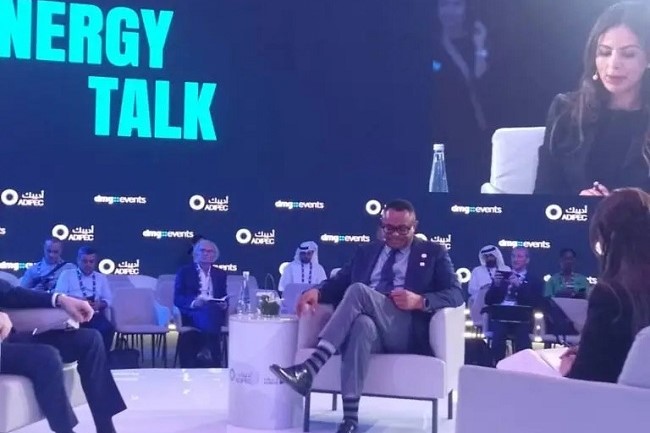
Mr. Udy Ntia, Executive Vice President, Upstream, NNPC Ltd., made this known on Monday, November 2, 2025, at the ongoing 2025 Abu Dhabi International Petroleum Exhibition and Conference (ADIPEC).

ADIPEC, the world’s largest energy exhibition and conference, is being hosted by the Abu Dhabi National Oil Company (ADNOC).

ADIPEC
The Executive Vice President, Upstream, NNPC Ltd., Mr. Udy Ntia, during his presentation “Beyond the Barrel: the Future of Upstream Strategy” at the ongoing 2025 Abu Dhabi International Petroleum Exhibition and Conference (ADIPEC) in UAE

The 41st edition, with the theme “Energy. Intelligence. Impact,” holding from Nov. 3 to Nov. 6, brings together international, regional and local stakeholders across the energy, technology and finance sectors.

Speaking during the ADIPEC 2025 session “Beyond the Barrel: The Future of Upstream Strategy,” Ntia said its collaborative upstream growth plan was anchored on technology, efficiency and decarbonisation.

“Nigeria’s upstream sector is evolving through a mix of collaboration, co-investments and smarter capital deployment, rather than competition.

“It is not just about producing more oil it is about producing better oil: more efficient, cleaner and more profitable,” he said.

“We have the capacity, and we are growing steadily while working together to reduce the strain of fossil fuels,”

Ntia outlined three key forces shaping the upstream landscape globally and in Nigeria  energy transition pressures as industry fragmentation and technological inflection points.

He said that innovation, particularly Artificial Intelligence (AI) and digital technologies, would drive efficiency gains and unlock value from mature fields.

“We are seeing technology as an enabler to get more from the ground, improve efficiency, and guide capital decisions. The goal is smarter investment, not just more spending,” he added.

On energy transition and decarbonisation, Ntia said that NNPC Ltd. and its partners were committed to reducing emissions while maintaining responsible oil production.

He said that Africa contributed less than three per cent of global emissions, emphasising that “we can decarbonise and still produce responsibly.”

He cited ongoing initiatives such as monetisation and flare reduction, through commercial partnerships and regulatory compliance.

He also listed major gas pipeline projects,  including the Nigeria, Morocco Gas Pipeline and links to demand centres in western and northern Nigeria; Refinery optimisation and development of hybrid partnerships for co-investment in upstream projects.

“Co-investment is the new round of financing. We are stepping in as co-investors to ensure projects are bankable and decisions are made quickly in a rapidly changing environment,” he said.

He emphasised a shift toward partnership-driven growth between National Oil Companies (NOCs) and International Oil Companies (IOCs), calling for collaboration over competition.

“IOCs are not grabbers; they are partners. We all share the same goal, which is profitability, sustainability and growth. The real question is how we can increase the size of the pie so that everyone wins,” he said.

Ntia reaffirmed that Nigeria’s upstream strategy balances energy security, profitability, and climate responsibility, ensuring the nation’s resources remain relevant in the global energy transition.

In a related development, the Federal Government of Nigeria has underscored the need to end energy poverty across Africa, calling for co-investment strategies to de-risk energy infrastructure and unlock shared prosperity.

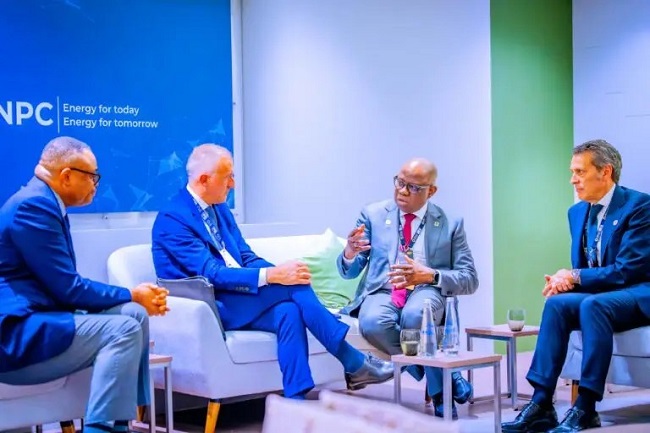
The Group Chief Executive Officer, Nigerian National Petroleum Company Limited (NNPC Ltd.), Mr. Bashir Ojulari, made the call on Monday at the ongoing 2025 Abu Dhabi International Petroleum Exhibition and Conference (ADIPEC).

Bayo Ojulari
The Group Chief Executive Officer, Nigerian National Petroleum Company Limited (NNPC Ltd.), Mr Bashir Ojulari (2nd right) engaging with some energy leaders at the ongoing 2025 ADIPEC

Ojulari participated in a closed-door session of the Global Oil Club, a prestigious forum of leading energy companies and institutions.

In his remarks, the GCEO reaffirmed NNPC’s commitment to global partnerships, energy equity, and sustainable investment.

“Africa’s energy future must be built on collaboration, innovation, and inclusion. NNPC Ltd. stands ready to co-create solutions that will deliver real impact,” he said.

He reiterated the NNPC Limited commitment to ensuring global strategy to championing energy equity and global collaboration.

The NNPC Ltd. exhibition booth at ADIPEC 2025 continues to attract global attention, showcasing the company’s portfolio of transformative projects.

These include major gas initiatives, methane-reduction programmes, and the company’s expanding investments in clean energy and human-capital development.

NNPC’s participation at ADIPEC 2025 underscored its position as a corporate titan and energy anchor for Africa, demonstrating its commitment to delivering intelligent energy solutions with lasting impact.

The 41st edition of ADIPEC, with the theme “Energy. Intelligence. Impact,” aligns closely with NNPC’s transformation into a commercially driven, global energy company.

By Emmanuella Anokam

WHO issues guidance to address drastic global health financing cuts

0

The World Health Organisation (WHO) on Monday, November 3, 2025, released new guidance for countries on ways to counter the immediate and long-term effects of sudden and severe cuts to external funding, which are disrupting the delivery of essential health services in many countries.

The new guidance, called “Responding to the health financing emergency: immediate measures and longer-term shifts”, provides a suite of policy options for countries to cope with the sudden financing shocks, and bolster efforts to mobilize and implement sufficient and sustainable financing for national health systems.

Tedros Ghebreyesus
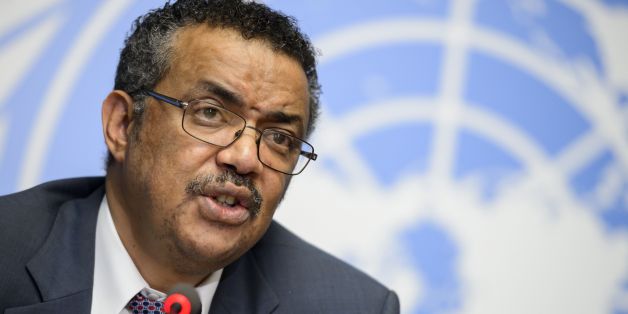
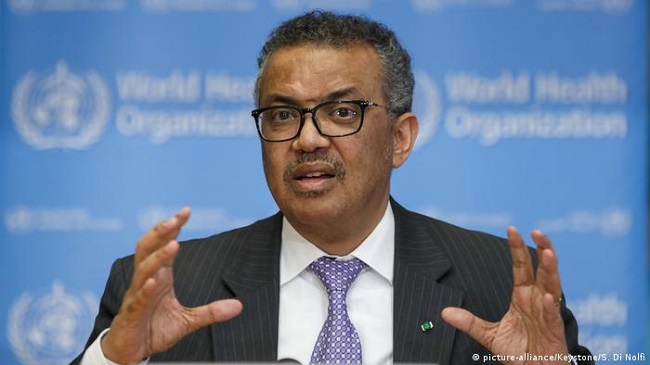
Dr. Tedros Adhanom Ghebreyesus, Director-General, World Health Organisation (WHO)

External health aid is projected to drop by 30% to 40% in 2025 compared with 2023, causing immediate and severe disruption to health services in low- and middle-income countries (LMICs). WHO survey data from 108 LMICs collected in March 2025 indicate that funding cuts have reduced critical services – including maternal care, vaccination, health emergency preparedness and response, and disease surveillance – by up to 70% in some countries. More than 50 countries have reported job losses among health and care workers, along with major disruptions to health worker training programmes.

“Sudden and unplanned cuts to aid have hit many countries hard, costing lives and jeopardizing hard-won health gains,” said Dr Tedros Adhanom Ghebreyesus, WHO Director-General. “But in the crisis lies an opportunity for countries to transition away from aid dependency towards sustainable self-reliance, based on domestic resources. WHO’s new guidance will help countries to better mobilize, allocate, prioritize and use funds to support the delivery of health services that protect the most vulnerable.”

This year’s funding cuts have compounded years of persistent health financing challenges for countries, including rising debt burdens, inflation, economic uncertainty, high out-of-pocket spending, systemic budget underfunding and heavy reliance on external aid.

Swift action guided by efficiency and equity   

WHO’s new guidance urges policy-makers to make health a political and fiscal priority in government budgets even during times of crisis, seeing health spending as not merely a cost to be contained, but an investment in social stability, human dignity, and economic resilience. 

The guidance emphasises the need for countries to cushion the immediate impact of reductions in foreign assistance for health, and to adapt to a new era of reduced assistance. Key policy recommendations include:

  • prioritise the health services accessed by the poorest;
  • protect health budgets and essential health services;
  • improve efficiency through better procurement, reduced overheads and strategic purchasing;
  • integrate externally-funded or disease-specific services into comprehensive PHC-based delivery models; and
  • use health technology assessments to prioritise services and products that have the greatest health impact per dollar spent.

Country leadership and global solidarity are critical

Several countries have already taken decisive action to strengthen their health systems and protect essential health services:

  • Kenya, Nigeria and South Africa have allocated additional budget funds to health, or are awaiting parliamentary approval for increases;
  • Nigeria increased its health budget by $200 million to offset aid shortfalls, with increased allocations for immunisation, epidemic response, and priority programmes;
  • Ghana lifted the cap on excise tax earmarked for its national health insurance agency, resulting in a 60% budget increase. The country also launched “the Accra Reset”, a bold framework to reimagine global governance, financing and partnerships in health and development; and
  • Uganda has outlined a clear policy agenda for integration of health services and programmes, aiming to improve efficiency and sustain service delivery.

The new guidance builds on WHO’s commitment to help all countries strengthen and sustain robust health systems, built on a commitment to universal health coverage, underpinned by strong primary health services delivering essential care to all who need it.

It also aligns with existing World Health Assembly mandates, including resolutions on “Strengthening health financing globally” and “Economics of health for all,” to translate global commitments into actionable policy steps.

WHO and its partners are said to be committed to providing technical support, analytics and peer learning to countries to manage the health financing crises and navigate the transition, including through the new UHC Knowledge Hub, a partnership with the Government of Japan and the World Bank, set to be launched in December 2025. 

GOCOP, IPC sign MoU on advancing inclusive reporting of gender issues in democratic, electoral process

0

The Guild of Corporate Online Publishers (GOCOP) and the International Press Centre (IPC) signed a Memorandum of Understanding (MoU) on Monday, November 3, 2025, to advance inclusive reporting of gender issues in the democratic and electoral process.

GOCOP President, Danlami Nmodu, mni, signed on behalf of the Guild, while Lanre Arogundade, ICP’s Executive Director, signed on behalf of ICP. Monday’s ceremony comes after the IPC’s consultative session with GOCOP leadership held in Abuja on Friday, May 30, 2025.

GOCOP
Signing of MoU by the Guild of Corporate Online Publishers (GOCOP) and the International Press Centre (IPC)

In his brief remarks before the MoU signing, Nmodu said GOCOP’s decision to collaborate with the IPC formed part of the Guild’s commitment to promoting inclusiveness and gender equality in Nigeria. He recalled that the collaboration between GOCOP and IPC commenced during the tenure of its first female president, Maureen Chigbo, adding that, under his leadership, the Guild will fully implement the MoU as part of its pledge to improve the visibility of women and other minority groups, such as Persons With Disabilities (PWDs), in politics and governance.

He assured that the leadership of GOCOP would spearhead the engagement of women, promote women’s voices and also focus on the sensitisation of female voters on politics, governance, accountability and transparency.

Speaking on promoting trust in the electoral process, Nmodu, stated that, to promote the trust of citizens, elected public office holders must meet the expectations of the electorate.

He also assured that GOCOP members would prioritise the reportage of the implementation of the manifesto of elected candidates as well as the promises made by them during campaigns.

“We believe that the signing of this MoU is coming at the right time, we’ve just had a change of leadership. The new executive is determined to ensure that this partnership between GOCOP and IPC works.

“At GOCOP, we are committed to deepening the reportage of gender issues. We are determined to ensure that we engage, sensitise and enlighten women on elections, governance and other issues of national importance. All of these are to ensure that we widen the scope of female participation in all spheres of society,” Nmodu said.

IPC Executive Director, Lanre Arogundade, in his remarks, explained that the MoUs signed with GOCOP and the Nigeria Association of Women Journalists (NAWOJ) are targeted at ensuring inclusivity, accountability and transparency in the electoral process. He called on GOCOP and NAWOJ to lead the push for impartial election monitoring and reportage, adding that the media should also scrutinise elected government officials, taking them to task on campaign promises.

He said: “As Nigeria approaches the 2027 general elections, discussions regarding electoral trust and stakeholder confidence have become increasingly prominent. A critical factor in the discourse is the understanding that the integrity of any election is determined not only by its final outcomes, but also by the process that precedes them-including voter registration, vote collation and the subsequent announcement of results.”

Earlier in her speech, the National Chairperson of NAWOJ, Aisha Bura Ibrahim, expressed the readiness of the Association to amplify the position of women in politics and governance.

Ibrahim called for credible elections even as she reiterated NAWOJ’s commitment to improving the reportage of issues affecting women.

She stated the need to train and retrain female journalists, improve newsroom management to expand the opportunities for female reporters as we all as widening of access to platforms such as the agreement between NAWOJ and IPC presented.

She said: “NAWOJ insists that inclusive elections are trusted elections. Women must be visible as voters, candidates, election observers, and commentators. By amplifying women’s voices, NAWOJ promotes broader social trust and legitimacy in democracy.

“NAWOJ urges electoral bodies, security agencies, and political parties to maintain openness, fairness, and communication with the public. Transparency in vote counting, result transmission, and dispute resolution is essential for restoring public confidence.”

President of the Nigeria Labour Congress (NLC), Joe Ajaero, who also spoke at the event, commended IPC, GOCOP and NAWOJ for taking the bold step to increase the visibility of women in the media.

He called on the media to stand on the side of the people and not to serve as the megaphone of the government. He maintained that the media must serve as the compass to guide the nation, especially in critical moments such as the general elections.

SP Orvenonne Ikwen, the Strategic Communications Officer, Force Public Relations Department, Force Headquarters, who represented the Nigeria Police Force at the meeting, said the police would collaborate with the media to deliver on a peaceful and credible election come 2027.

Stakeholders were also presented with IPC’s report on Safeguarding Electoral Integrity For Democratic Consolidation. The report is a component of the European Union Support to Democratic Governance in Nigeria (EU-SDGN) as executed by IPC.

CAPPA warns on reckless solid minerals drive

0

The Corporate Accountability and Public Participation Africa (CAPPA) has sounded a warning on the direction of Nigeria’s mining sector. The CAPPA board stated that the global energy transition has triggered an aggressive hunt for lithium and other “green minerals” essential for batteries, electric vehicles, and digital infrastructure.

While corporations present this as a new economic frontier and the Nigerian government recently celebrated that the mining sector now contributes about 4.6 percent to national GDP – up from less than half a per cent a decade ago – the board stressed that this growth is unfolding alongside land grabs, forced displacement, environmental degradation, and the return of concession-style politics in host communities.

Auwal Musa Rafsanjani

The board stated plainly that Nigeria risks repeating the tragedy of the Niger Delta all over again, where oil wealth produced national revenue but destroyed entire ecosystems and livelihoods. It stressed that unless the government enforces strong regulation, guarantees community consent, and ensures transparent governance, the country will simply replace one resource curse with another.

The board reminded policymakers that there is no just transition if communities do not share in its gains. CAPPA called for a people-centred resource framework that treats land, water, culture, and livelihoods as more than collateral for investment. It urged Nigerians to question any development model that enriches a few while displacing many and devastating the environment.

Reaffirming its commitment, CAPPA vowed to expand alliances with labour movements, grassroots organisations, women’s groups, youth formations, and community defenders across the continent. It declared that the fight for public accountability and participation is one struggle that cannot be won by scattered voices.

CAPPA has announced prominent Nigerian civil rights leader, Auwal Musa Rafsanjani, as the new Chairman of its Advisory Board, following a Board Election held over the weekend.  The organisation described his emergence as a renewed mandate to intensify its defence of people, public resources, and democratic space across Nigeria and the African continent.

Beyond his long-standing civil society leadership, Mr. Rafsanjani also serves as the Executive Director of the Civil Society Legislative Advocacy Centre (CISLAC) and the Head of Transparency International in Nigeria. He presently chairs the Board of Trustees of Amnesty International Nigeria, leads the Zero Corruption Coalition, and co-convenes the Say No Campaign.

His work has spanned regional and global platforms, including his role as past Sub-Saharan Africa representative on the Coordination Committee of the UN Convention Against Corruption (UNCAC) Civil Society Coalition. A founding member of the Transition Monitoring Group, he has spent over three decades advancing extractive transparency, anti-corruption reforms, human rights, and legislative advocacy across West Africa.

In its statement to the media, CAPPA said it is confident that Mr. Rafsanjani’s formidable experience in anti-corruption campaigns and policy advocacy would strengthen its work across Africa. The organisation noted that his leadership arrives at a time when civic space is shrinking, state resources are being commercialised, and communities face the double risk of economic exclusion and environmental harm.

The Advisory Board also includes Akinbode Oluwafemi, Executive Director and Board Secretary; Evelyn Nkanga Bassey, Treasurer; Scott Pegg; Kayode Ogunbunmi; Betty Abah; and Doifie Buokoribo. Together they bring experiences in policy-advocacy, environmental and rights activism, global-development practice and community-defence organising, stated CAPPA.

Speaking after his election, Mr. Rafsanjani noted that his priority is to anchor CAPPA more firmly as a fearless watchdog for public good. He highlighted the organisation’s work in public health advocacy, environmental protection and extractive justice, democratic rights, and defence of public services as core areas that will receive stronger institutional backing and clearer strategic direction.

Researchers discover European bison, wild horses help retain water in the landscape

0

Natural grazing by large ungulates improves conditions for vegetation growth, promotes the storing of organic substances in the soil, and enhances water retention in the landscape.

This has been demonstrated in the research conducted by scientists at the reserve of large herbivores in the former military area of Milovice, one of a number of sites where European bison, wild horses and back-bred aurochs live across Central Europe.

“Year-round grazing by large ungulates reduces the average amount of aboveground plant biomass while also increasing its ‘nutritional’ quality. The vegetation contains more nitrogen and water, making it more nutritious for animals and also more efficient at managing water,” explains Eva Kastovska from the University of South Bohemia in Ceske Budejovice, Czech Republic.

European bison
European wildlife: European bison in the European Serengeti. Photo credit: Michal Köpping

This is precisely what fundamentally distinguishes natural grazing by large herbivores from intensive livestock grazing. “The underground plant biomass remains unaffected – it does not decrease, as often appears during intensive grazing, when animals repeatedly nibble on the growing aboveground parts of plants.

Thanks to this, the vegetation has enough time to regenerate, absorb sufficient nutrients and water through its roots, and supply the soil with organic matter that supports its recovery. In this way, they contribute to the formation of soil organic matter, which is closely linked to water retention,” says Kastovska, describing the process behind the long-term sustainability of grazing ecosystems.

Even at the height of summer, the vegetation in the pastures of large ungulates remains vigorous.

“Grazing naturally connects the needs of plants with the activity of soil microorganisms. We observed improved nutrient uptake – primarily nitrogen, but also phosphorus – in grazed herbage. In our opinion, these closer links support the self-regulation of the system and its ability to respond flexibly to environmental changes, including weather extremes such as droughts,” emphasises Kastovska.

As such, natural grazing by large herbivores has great potential in Europe to help with water retention in the landscape, which, taken together with progressing climate change, is becoming an increasingly serious problem in this country.

“Large ungulates bring several significant benefits to nature conservation. In addition to water retention in the landscape and soil restoration, they also support biodiversity, promote carbon storage in the soil, and reduce the risk of wildfires. This is why this approach is becoming increasingly popular in the environmentally conscious countries of Western Europe. Moreover, this solution is financially efficient,” added Dalibor Dostal, director of the European Wildlife conservation organisation, which founded the Milovice Reserve for large ungulates in cooperation with scientists in 2015.

Year-round natural grazing, also known as trophic rewilding, is increasingly being used for the management of open landscapes. This approach has the potential to mitigate biodiversity loss and climate change.