The Seme Area Command of the Nigeria Customs Service has intercepted a blue Mazda vehicle carrying one lion cub and two patas monkeys in clear violation of national and international wildlife protection laws.
The command’s Spokesperson, Isah Sulaiman, disclosed this in a statement on Monday, November 17, 2025, in Badagry, Lagos State.
According to him, the vehicle, with registration number MUS 743 HA, was intercepted during a stop-and-search operation at Gbaji, along the Badagry-Seme Expressway.
Lion cubs
“Upon inspection, the operatives discovered one lion cub and two Patas Monkeys being transported in the vehicle in clear violation of national and international wildlife protection laws.
“Two individuals, Mr. Mathew Kofi, a Beninese national, and Mr. Nasiru Usman Gwandu, a Nigerian; claimed ownership of the animals.
“They confessed that they had purchased them in Kano with the intention of conveying them to the Benin Republic,” he said.
Sulaiman said that, in line with Nigeria’s status as a signatory to the Convention on International Trade in Endangered Species of Wild Fauna and Flora (CITES) and in accordance with global wildlife-protection standards, the endangered species were immediately confiscated and taken to the command for documentation.
“The two male suspects were detained for further investigation to ascertain the level of their involvement in wildlife trafficking.
“For proper care, safety and expert handling, the endangered species were formally handed over on Nov.16, to the Greenfingers Wildlife Initiative.
“The handover was carried out by Deputy Comptroller AY Mohammed (DC Administration) on behalf of the Customs Area Controller, Seme Area Command, Comptroller Wale Adenuga,” he said.
Speaking, Adenuga reaffirmed the command’s unwavering commitment to enforcing all laws relating to wildlife protection, environmental conservation and border security.
The Controller reiterated the command’s resolve to continue working with relevant agencies to ensure that the illegal trade in endangered species was curtailed.
The Proceedings of the National Academy of Sciences on Monday, November 17, 2025, released a new study, titled: “A quantitative risk assessment framework for mortality due to macroplastic ingestion in seabirds, marine mammals, and sea turtles.”
Led by Ocean Conservancy researchers, the peer-reviewed paper is said to be the most comprehensive study yet to quantify the extent to which a range of plastic types – from soft, flexible plastics like bags and food wrappers; to balloon pieces; to hard plastics ranging from fragments to whole items like beverage bottles – result in the death of seabirds, sea turtles, and marine mammals that consume them.
A bird feeding on a plastic waste
The study reveals that, on average, consuming less than three sugar cubes’ worth of plastics for seabirds like Atlantic puffins (which measure approximately 28 centimetres, or 11 inches, in length); just over two baseballs’ worth of plastics for sea turtles like Loggerheads (90 centimetres or 35 inches); and about a soccer ball’s worth of plastics for marine mammals like harbor porpoises (1.5 metres, or 60 inches), has a 90% likelihood of death.
At the 50% mortality threshold, the volumes are even more startling: consuming less than one sugar cube’s worth of plastics kills one in two Atlantic puffins; less than half a baseball’s worth of plastics kills one in two Loggerhead turtles; and less than a sixth of a soccer ball kills one in two harbor porpoises.
“We’ve long known that ocean creatures of all shapes and sizes are eating plastics; what we set out to understand was how much is too much,” said lead author of the study, Dr. Erin Murphy, Ocean Conservancy’s manager of ocean plastics research. “The lethal dose varies based on the species, the animal’s size, the type of plastic it’s consuming, and other factors, but overall, it’s much smaller than you might think, which is troubling when you consider that more than a garbage truck’s worth of plastics enters the ocean every minute.”
To arrive at their findings, Ocean Conservancy scientists analysed the results of 10,412 necropsies, or animal autopsies, conducted worldwide in which cause of death and data on plastic ingestion were known. Of the animals studied, 1,537 were seabirds representing 57 species; 1,306 were sea turtles representing all seven species of sea turtles; and 7,569 were marine mammals across 31 species.
They then modeled the relationship between the plastics in the gut and likelihood of death for each group, looking both at total pieces of plastics as well as volume of plastics. Based on data availability, they also looked at different plastic types to determine which are particularly lethal to each group. They found that rubber and hard plastics are especially deadly for seabirds, soft and hard plastics for sea turtles, and soft plastics and fishing gear for marine mammals.
“This study reminds us that plastic bags, lost fishing gear, and other larger items can be dangerous to animals big and small,” said Ocean Conservancy’s Director of Ocean Plastics Research and study co-author, Dr. Britta Baechler, who co-authored a study in 2024 that showed microplastics are present in both animal and plant-based proteins eaten by humans. “One in 20 sea turtles that we studied died from ingesting plastics. I wouldn’t take those odds.”
Nearly half (47%) of all sea turtles; a third (35%) of seabirds; and 12% of marine mammals in the dataset had plastics in their digestive tracts at their time of death; overall, one in five (21.5%) of the animals recorded had ingested plastics, often of varying types. Additional findings included:
Seabirds
Of seabirds that ate plastic, 92% ate hard plastics, 9% ate soft plastics, 8% ate fishing debris, 6% ate rubber, and 5% ate foams, with many individuals eating multiple plastic types.
Seabirds are especially vulnerable to synthetic rubber: just six pieces, each smaller than a pea, are 90% likely to cause death.
Sea Turtles
Of sea turtles that ate plastic, 69% ate soft plastics, 58% ate fishing debris, 42% ate hard plastics, 7% ate foam, 4% ate synthetic rubbers, and 1% ate synthetic cloth.
Sea turtles, which on average weigh several hundred pounds, are especially vulnerable to soft plastics, like plastic bags: just 342 pieces, each about the size of a pea, would be lethal with 90% certainty.
Mammals
Of marine mammals that ate plastic, 72% ate fishing debris, 10% ate soft plastics, 5% ate rubber, 3% ate hard plastics, 2% ate foam, and 0.7% ate synthetic cloth.
Marine mammals are especially vulnerable to fishing debris: 28 pieces, each smaller than a tennis ball, are enough to kill a sperm whale in 90% of cases.
The study also found that nearly half of the individual animals who had ingested plastics are red-listed as threatened – that is, near-threatened, vulnerable, endangered or critically endangered – by the IUCN.
Notably, the study only analysed the impacts of ingesting large plastics (greater than 5 millimetres) on these species and did not account for all plastic impacts and interactions. For example, they excluded entanglement, sublethal impacts of ingestion that can impact overall animal health, and microplastics consumed.
“This research really drives home how ocean plastics are an existential threat to the diversity of life on our planet,” said Nicholas Mallos, vice president of Ocean Conservancy’s Ending Ocean Plastics programme and a study co-author. “Eating plastics is just one way that marine life is threatened by the plastic pollution crisis. Imagine the dangers when you also consider entanglement and the everpresent threat of toxic chemicals leaching from plastics.”
Scientists estimate that more than 11 million metric tons of plastics enter the ocean every year. Much of those plastics are single-use items like those commonly found by volunteers during Ocean Conservancy’s annual International Coastal Cleanup. Since 1986, more than 19 million volunteers have removed more than 400 million pounds of trash from beaches and waterways worldwide.
“Every year, volunteers collect massive numbers of balloons, plastic bags, straws, food wrappers, and other items that are lethal to wildlife even in small amounts, according to this research,” said Ocean Conservancy’s Senior Director of Conservation Cleanups, Allison Schutes. “When you pick up just a few pieces of plastic, you are helping to protect the life of a marine animal. And when we all clean up together, we are helping to protect countless lives.”
Scientists have determined that to successfully address the plastic pollution crisis, we need to reduce plastics production, improve waste collection and recycling, and clean up what does get into the environment.
“We are thrilled to have this new research quantifying the wildlife impacts of plastic pollution,” said Ocean Conservancy’s Director of Plastics Policy, Dr. Anja Brandon. “While there is no single solution to this issue, these hard numbers reaffirm that our work addressing particularly problematic items like balloons and plastic bags are truly meaningful. In the fight to protect our marine wildlife, every policy and every individual action matters.”
“Governments around the world are grappling with how to address plastic pollution, and they are looking for science-based targets to inform policy decisions,” said Dr. Chelsea Rochman, associate professor in the Department of Ecology and Evolutionary Biology at the University of Toronto, scientific advisor to Ocean Conservancy, and senior author of the study. “This research provides an important foundation for decision-makers to understand thresholds for risk to better protect biodiversity.”
Over 35 government and philanthropic funders organised by the Forest Tenure Funders Group (FTFG) have announced a new, five-year, $1.8 billion pledge to support Indigenous Peoples, local communities and, for the first time, Afro-descendant communities in securing land rights across an expanded range of ecosystems, including forests, mangroves and savannahs.
The first-ever Forest and Land Tenure Pledge was announced in 2021; this new pledge provides an additional $1.8 billion on top of those funds already delivered.
Securing Indigenous Peoples’ and local communities’ land rights is one of the most effective investments the world can make in climate action, according to a significant body of scientific evidence. Indigenous Peoples and local communities safeguard around 40% of the world’s remaining intact ecosystems, yet less than half of their lands are legally recognised.
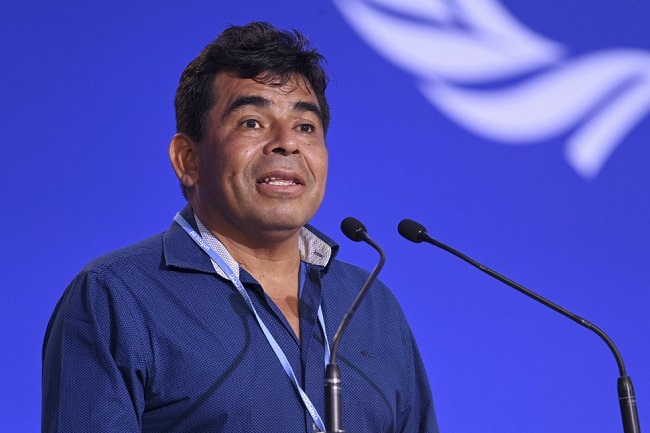
Levi Sucre Romero is coordinator of the Meso-American Alliance for People and Forests (AMPB) from the Bribri indigenous group in Costa Rica. Photo credit: AMPB
Forests managed by Indigenous Peoples and local communities have consistently lower deforestation rates than other areas. With tropical forest loss reaching record levels in 2024, land tenure is a key lever to preserving lands around the globe while also securing the lives and livelihoods of Indigenous Peoples and local communities who use and steward forests sustainably. A new body of research shows that Afro-descendant territories offer significant biodiversity and climate benefits as well.
Levi Sucre Romero, from the Mesoamerican Alliance of People of Forest (AMPB), said: “By making this commitment, major governments and funders recognise the crucial role we play in the fight against climate change and acknowledge the efforts our communities have made to create our own funds that reach our people without unnecessary bureaucracy. We welcome this with cautious optimism, knowing that promises alone cannot stop the deforestation, fires, and unprecedented violence we face today in our territories.
“The funds must reach Indigenous Peoples and local communities directly, without getting stuck in bureaucracy. Land titling processes must treat us as partners and value our deep knowledge of the territories. These promises give us hope, but only the actions taken from today onward will give us a real chance to preserve the forests that protect not only us, but the entire planet, from catastrophic climate change.”
The new pledge builds on the success of the original $1.7 billion COP26 commitment, which has channeled $1.86 billion to support Indigenous Peoples and local communities in securing land rights and protecting forests. The FTFG’s contributions over the past few years have helped drive a 36% increase in climate funding for Indigenous Peoples and local communities.
Nancy Lindborg, President and CEO of the Packard Foundation, said: “This pledge brings to life a shared vision for protecting critical ecosystems and supporting the people who steward them. Through deep and sustained collaboration, we’re working to shift policies and align funding in ways that support lasting solutions for both people and nature – from securing land rights for Indigenous Peoples, local communities and Afro-descendant communities, to strengthening institutions, and advancing climate resilience.”
The renewed Forest and Land Tenure Pledge will mobilise funding that reaches communities directly and advances land tenure, supporting long-term access to finance for communities that are too often excluded from direct climate and forest financing. Also of note is that the new pledge will include more than just forests, to honour the way in which Indigenous Peoples, Afro-descendants and local communities manage multiple ecosystems adjacent to one another – for example, savannahs and rainforests – which leads to greater carbon storage overall.
At the ongoing United Nations Climate Change Conference (COP 30) in Belem, Brazil, the Africa Make Big Polluters Pay (MBPP) Coalition has rejected the newly launched Tropical Forest Forever Facility (TFFF), describing it as a dangerous and misleading attempt to financialise nature under the guise of protecting it.
The TFFF, spearheaded by Brazil, is being touted as a $125 billion blended-finance fund that promises annual payments to countries for protecting and maintaining their forests.
But in a statement on Monday, November 17, 2025, the Africa MBPP said the facility – widely marketed as an innovative climate finance instrument – offers no real support to climate-vulnerable nations.
The coalition warns that TFFF reduces tropical forests to “tradable assets” controlled by powerful financial institutions. Photo credit: UNDP Cambodia/Chansok Lay/Oddar Meanchey
The Africa MBPP, comprising over 32 member organisations including Corporate Accountability and Public Participation Africa (CAPPA), Gender CC Southern Africa, Global Forest Coalition (GFC), and others from across the continent, is committed to holding polluting corporations accountable for their significant contributions to the climate crisis.
The coalition warned that TFFF reduces tropical forests to “tradable assets” controlled by powerful financial institutions, who will in turn perpetuate the same extractive systems that drive deforestation, exploitation, and inequality.
“The excitement that has trailed the launch of the TFFF is misplaced,” the coalition said. “Rather than safeguarding forests, it commodifies living ecosystems, undermines Indigenous and community-led stewardship, and erodes the principles of climate justice it claims to uphold.”
According to the group, the TFFF poses grave risks to Africa, home to some of the world’s most biodiverse forests and climate-vulnerable communities.
“Instead of empowering African nations, the Facility risks tightening financial dependence and eroding local sovereignty over forest resources,” the Africa MBPP said
Countries including Nigeria, Angola, Benin, Cameroon, Côte d’Ivoire, Equatorial Guinea, Ghana, Liberia, Mozambique, Rwanda, Sierra Leone, Togo, and Uganda are being drawn into a system, the group says, that places investor returns above community needs.
“What it offers is not real climate finance, but new layers of external bureaucracy and financial engineering,” the group warned.
According to the coalition, the TFFF’s model, which centres a large investment fund whose returns are prioritised for investors before any payments reach countries, risks deepening corporate influence and excluding frontline communities whose knowledge and custodianship have long protected biodiversity.
The Fund proposes to pay countries about $4 per hectare of standing forest annually, an amount the coalition describes as tokenistic compared to the ecological, cultural, and economic value of tropical forests and the real costs of community-led protection.
Far from advancing the Paris Agreement or Africa’s restoration goals, the coalition added, the TFFF “threatens to divert attention and resources away from genuine, community-led climate actions towards opaque financial schemes whilst replacing public accountability with private financial interests at the same time.”
The group criticised the Facility’s financing structure, noting that it functions less like a climate-response mechanism and more like a financial vehicle designed to generate market-based returns. The coalition expressed concerns that forest payments are tied to the performance of the facility’s investment portfolio, meaning countries receive only what is left after investor obligations are met.
It argued that this approach represents “a blatant privatisation of forest finance, rooted in speculation rather than sustainability.”
“By contrast, if even 1 percent of the $2.7 trillion spent annually on global military budgets were redirected, it would free up $27 billion a year – over six times what the TFFF’s risky, market-based model promises.”
According to the coalition, this comparison “exposes the TFFF for what it truly is: a profit-making instrument disguised as climate action.”
The MBPP Coalition also condemned the decision to appoint the World Bank as trustee of the TFFF, describing it as a regressive and exclusionary arrangement that undermines local ownership and accountability.
“Experience has shown that World Bank–led climate finance centralises power, delays funding, and silences frontline communities, making the TFFF another bureaucratic obstacle rather than a climate solution,” the coalition added.
“Accountability in climate finance starts with rejecting corporate capture,” said Akinbode Oluwafemi, Executive Director of CAPPA. “The World Bank must not be allowed to turn forest protection into another business model.”
For Mokoena Ndivile from Gender CC Southern Africa, “Forest preservation is not a privilege; it is a right tied to the survival, dignity, and livelihoods of communities, especially women who depend on the forest for sustenance and resilience. Handing control of the Tropical Forests Forever Facility (TFFF) to the World Bank risks turning this right into another instrument of financial control, and we will not accept that.”
Similarly, Kwami Kpondzo of the Global Forest Coalition (GFC)expressed concern that “World Bank involvement in TFFF would marginalise knowledge of indigenous peoples and local communities, prioritise corporate profit over community needs, thereby weakening local ownership and stewardship of forest resources.’’
The coalition insisted that the TFFF‘s governance structure fails to represent or prioritise the Global South. “Its systems for access and oversight, it said, are built to serve financiers, rather than forest peoples.”
“The TFFF offers no path to justice, only an illusion of progress,” the coalition concluded. “True climate action will not come from financial schemes or distant institutions, but from the communities that have always protected the forests with their lives.”
The MBPP urged world leaders to reject the Facility and instead support transparent, community-led climate finance systems that strengthen, not undermine, local control and environmental justice.
On the occasion of Africa Day at COP30, the continent advanced the theme “Africa at the Forefront of Climate Action: Sustainable Finance for Green, Resilient and Inclusive Growth”, reaffirming its commitment to climate finance that works for people, the planet and prosperity.
The event, held on Tuesday, November 11, 2025, in Belém, brought together ministers, development partners, as well as representatives the African Union Commission, the Economic Commission for Africa (ECA), the African Development Bank Group and Afreximbank, alongside members of civil society and youth.
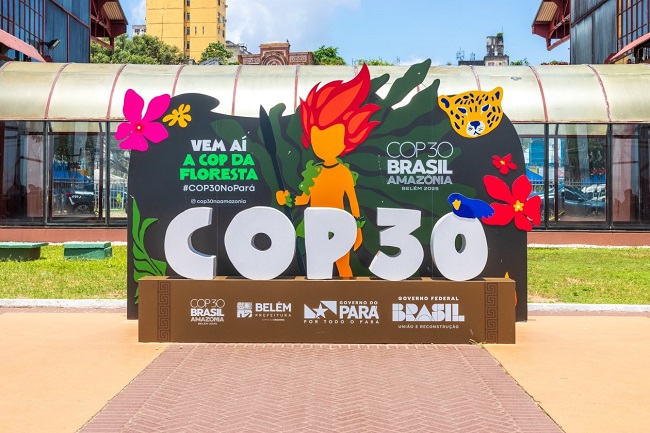
COP30
Ten years after the signing of the Paris Agreement, climate commitments are still struggling to meet the scale of the challenges that the world is facing. The objectives of limiting global warming are moving away, funding remains below needs, and the gap between promises and actions continues to widen. For Africa, which is home to 20% of the world’s emits less than 4% of greenhouse gases and receives less than 10% of adaptation funding and only 3% of global climate finance, the stakes are simply vital.
Building on the outcomes of the Second African Climate Summit, the Addis Ababa Declaration and the Africa Day at COP30 strongly reaffirmed a clear message: climate finance must be commensurate with the continent’s priorities and needs.
The Commissioner for Agriculture, Rural Development, Blue Economy and Sustainable Environment of the The African Union Commission, Moses Vilakati, reaffirmed the unity of the continent and its leading role in the fight for climate justice.
“Africa speaks with one voice, strong, united and determined, for climate justice. From Africa to Belém, we reaffirm our unity of action and our leadership role, guided by the principles of equity and common but differentiated responsibilities,” he said, adding: “We are not mere beneficiaries of the global transition, but fully active actors in the global transition. committed, bearers of just, inclusive and African climate solutions, to build a more equitable and sustainable global future.”
The discussions focused on mobilising sustainable, equitable and innovative financing to accelerate industrialisation continent. The leaders stressed that Africa’s future depends on the development of its natural resources, whether it is the processing of critical minerals or the development of renewable energy at the local level.
The African Development Bank Group Vice-President in charge of Power, Energy, Climate and Climate Kevin Kariuki, the Minister of Green Growth, said: “Africa is already at the forefront of global climate action, developing solutions that are firmly rooted in local realities and have international impact.”
He added: “We are moving forward today with a renewed vision, led by our President, Mr. Sidi Ould Tah, and structured around four strategic priorities called the ‘four points of the African Development Bank’ ‘Cardinals’: unleashing the power of African capital, strengthening the continent’s financial sovereignty, turning demography into an asset and building resilient infrastructure, while creating real added value.
“The fight against climate change is at the heart of this ambition. We are acting decisively to close the sustainable finance gap, increase the continent’s adaptive capacity and accelerate climate action through innovation, partnerships and financial leadership.”
Africa is among the world’s leading producers of critical minerals, such as cobalt and manganese, but still derives only a small share of the added value generated by their exploitation. By focusing on local processing, battery production and the development of regional value chains, the continent aims to move from being an exporter of raw materials to that of a driver of innovation and green industrial production.
Africa also has immense potential in the carbon market but currently captures less than 1% of global revenues. Through African-led reforms and governance, this market could generate up to $100 billion per year and create five million green jobs by 2030.
Participants stressed the urgency of rethinking the global financial system, by putting in place mechanisms direct, transparent and non-debt-based, designed and led by Africa itself. Despite the commitments made at COP29, only a small share of global climate finance is actually reaching African communities. The Day strongly reaffirmed the continent’s call to define a new collective and quantified climate finance target, commensurate with the urgency and concrete needs.
On behalf of the Executive Secretary of the Economic Commission for Africa, Mr. Cosmas Milton Ochieng, Director of the Division Climate Change, Food Security and Natural Resources, said: “Restructuring the global financial architecture is not just a matter of equity, it is a condition for survival.
“Africa needs a predictable, transparent, and equitable climate finance system that directs resources to where they matter most: in the hands of African countries and communities driving transformative climate action.”
The call for sustainable domestic financing was also highlighted. The continent has more than $350 billion in sovereign wealth funds and pension funds, which could be mobilised to support green infrastructure, build resilience, and spur innovation. The development of these internal resources, combined with partnerships will be decisive in achieving Agenda 2063 and the Sustainable Development Goals (SDGs).
Africa Day was not a simple commemoration, but a true declaration of intent.
Leaders called for fair carbon pricing, direct access to climate finance, and a transition so that no one in Africa is left behind. African countries call for full implementation of commitments made in Baku, including the mobilisation of $300 billion in dedicated climate finance to the continent.
COP29 in Baku failed to raise the resources needed to respond to the African climate crisis. Despite calls for an annual global target of $1.3 trillion by 2030, of which $300 billion goes to Africa, structural barriers remain. African leaders had defended non-generative subsidies and direct access to funds through African institutions, such as the African Development Bank Group.
However, the final agreement favoured a model based on debt and dependence on external intermediaries, turning nearly 60% of climate finance into new debt for African economies.
As the world now turns its attention to Belém, Africa’s message is clear: the continent is not asking for Charity, but a true partnership, a new global climate pact that recognises its leadership, values its contribution to the preservation of the planet and invests in its people.
About Africa Day
The Day is one of the continent’s flagship events at the United Nations Conference on Change Climate. It provides a platform to highlight the continent’s leadership role in climate action and advocate for equitable and sustainable access to climate finance. This maifestation embodies the common vision of African institutions: building a resilient, inclusive and sustainable future for the entire continent.
Director-General, National Council on Climate Change (NCCC), Mrs. Tenioye Majekodunmi, says Nigeria will intensify efforts to advance the green economy toward mitigating climate change.
Majekodunmi said this on Monday, November 17, 2025, during an interview on the sideline of the 30th United Nations Climate Change Conference of the Parties in Belém, Brazil.
She said focus on overall environmental sustainability including renewable energy, sustainable agriculture, and waste management would be maintained nationwide.
Director-General, National Council on Climate Change (NCCC), Mrs. Tenioye Majekodunmi
According to her, Nigeria has taken this charge to heart. Our commitment is not just an aspiration; it is a solemn national mandate to reach a 32 per cent emission reduction target by 2035.
“We have already submitted our comprehensive Third Nationally Determined Contribution; the first among West Africa, approved the National Carbon Market Framework, and operationalised our Climate Change Fund.
“These actions send a clear, powerful signal that Nigeria is ready for high-integrity and large-scale clean energy investment; yet a gap remains between potential and proof.”
She disclosed that the Federal Government would support private sectors that were ready to deploy scalable off-grid solutions toward ensuring diversification of nation`s energy sources to close persistent energy gaps in the hard-to-reach communities.
“This aligns with the Nigeria Just Transition Guideline and action plan we have recently validated.
“Such clean energy projects from the private sector will strengthen the NCCC’s efforts to advocate for and mandate the decarbonisation of energy production thereby ensuring Nigeria remains Paris aligned.
“Nigeria offers political stability, massive market demand, and a new, robust climate policy architecture designed to attract and protect investors’ capital,” she added.
The NCCC director general reiterated that the Nigerian government through the council supported the wind sector as a vital pillar in the Nigerian energy mix plan.
“Let the winds of change that sweep across Nigeria’s land be harnessed not just as potential, but as tangible power, driving our sustainable development and guaranteeing a greener, brighter future for every Nigerian,” she said.
In another development, Prof. Magnus Onuoha, Executive Director, West Africa Green Economic Development Institute (WAGEDI), said that driving wind energy in Nigeria would greatly boost energy supply.
WAGEDI is a pan-African research institute housed within Gregory University, a private tertiary institution located in Uturu, Nigeria.
Onuoha, who spoke on the sideline of the conference, said that government policies and incentives Nigeria had committed to global climate action were key drivers behind wind energy projects in the country.
According to him, the electric power sector reform Act of 2005 laid the groundwork for private sector participation in electricity generation; creating a regulatory framework that includes renewable energy.
“Additionally, Nigeria’s ratification of the Paris Agreement in 2016 and subsequent submission of its Nationally Determined Contributions (NDCs) in 2017 underscored the country’s pledge to reduce greenhouse gas emissions.
“These commitments have spurred investment in low-carbon technologies, including wind energy as part of Nigeria’s strategy to meet its international obligations.”
He added that domestically, policy initiatives such as the Renewable Energy Master Plan (REMP) and the Climate Change Act of 2021 have further accelerated the development of wind energy.
“The REMP outlines specific targets for renewable energy adoption, aiming to achieve a 23 per cent share by 2025, with wind power as a critical component.
“The government’s REMP that was inaugurated in 2011 aimed at increasing the share of renewable energy to at least 13 per cent by 2015, 23 per cent by 2025, and 36 per cent by 2030.
“Energy target will be comprised of renewable and carbon intensive sources as coal (2,200MW), the Nigerian National Integrated Power Project (NIPP)(1,896MW), Independent power projects (IPPs) (296MW), Legacy assets (thermal) (5600MW), hydro (1300MW) and wind(10MW).
“The Climate Change Act institutionalises climate governance, requiring the government to develop pathways toward net-zero emissions by 2060.
“These frameworks provide a roadmap for renewable energy deployment and attract international support and funding, as demonstrated by partnerships with institutions like the African Development Bank and commitments from global entities such as the U.S.-EXIM Bank,” he explained.
According to him, Nigeria’s recent Energy Transition Plan (2022) and the passage of the Nigerian Electricity Act in 2023-mark significant milestones in advancing the renewable energy agenda.
He said the initiatives prioritised sustainable energy projects with wind energy recognised for its role in off-grid electrification and regional development particularly in the northern and coastal areas.
He further said that the country’s carbon neutrality goal by 2060 emphasised the need for scaling renewable technologies, making wind energy a viable solution to bridge Nigeria’s energy deficit while aligning with global sustainability goals.
“These drivers collectively signal a strong commitment to integrating wind energy into Nigeria’s energy future, leveraging policy, technology, and international collaboration,” he added.
Emadeb Petroleum Exploration & Production Company Limited (Emadeb E&P) has announced the achievement of first oil from the Ibom Field (PPL 236), marking another milestone in Nigeria’s upstream oil and gas industry.
Following sustained investment, technical rigour and collaborative effort, Emadeb E&P has commenced commercial production from Ibom Field.
According to the organisation, the achievement underscores Emadeb E&P’s emergence as a fully integrated energy player and highlights the pivotal role of indigenous operators in advancing Nigeria’s energy security and economic diversification.
Adebowale Olujimi, CEO, Emadeb E&P
It also aligns with the Federal Government of Nigeria’s vision and aspiration to increase the nation’s crude oil production.
Ibom Field
Located approximately 30 kilometres offshore, Ibom Field was originally discovered in 1979. The field boasts significant in place volume of 103 million barrels of oil.
Since its acquisition in the 2020 Marginal Field Bid Round, Emadeb E&P has invested over $100 million in a phased field development programme. The Nigerian Upstream Petroleum Regulatory Commission (NUPRC) approved the Ibom Field Development Plan (FDP) in November 2024.
Key Technical Milestones
Successful drilling and completion of the Ibom-03 well in September 2023.
Integration of a Mobile Producing Offshore Unit (MOPU) completed in June 2025.
Commissioning of the Ibom Field Mooring System in September 2025.
First oil achieved in October 2025.
Demonstrating Indigenous Capacity and Strategic Partnership
“This milestone reflects our deep commitment to unlocking Nigeria’s hydrocarbon potential through homegrown expertise, strong partnerships, and disciplined investment,” said Adebowale Olujimi, CEO, Emadeb E&P.
Olujimi declared: “We are proud to contribute to Nigeria’s energy goals, foster local content, create jobs, and deliver sustainable value.”
The Ibom Field development showcases effective collaboration between the private sector and government institutions and stands as a model for marginal field commercialisation and indigenous capacity development in the upstream sector.
Looking Ahead
Emadeb E&P says it is now preparing for Phase 2 development to drill two additional wells that will triple production by Q4 2026. The company adds that it remains focused on operational excellence, environmental stewardship, safety, and community engagement.
Chairman of the Human and Environmental Development Agenda (HEDA Resource Centre), Olanrewaju Suraju, has been named and awarded the winner of the 2025 Courageous Scientists Award for Environmental and Climate Justice, from Africa, an international honour established by the Vienna-based organisation, Forum Eco-Social Transformations.
Suraju was announced as one of six global winners selected from 22 nominees across Africa, Asia, Australia/Oceania, Europe, Latin America and North America. The award, created in 2025, recognises individuals who demonstrate exceptional courage and commitment to environmental protection, climate justice and species preservation, often at significant personal risk.
Chairman of the Human and Environmental Development Agenda (HEDA Resource Centre), Olanrewaju Suraju
According to the organisers, Suraju’s selection acknowledges his “outstanding and inspiring work, long-time fight against corruption, and deep commitment to human rights,” especially through his leadership of HEDA Resource Centre. The award aligns with the prize’s guiding motto, “Tell the Truth!”, which honours individuals who speak boldly on environmental and justice issues.
Other 2025 award recipients include:Asia:Eight Iranian scientists from the Persian Wildlife Foundation, arrested in 2018 for conservation work;Australia/Oceania: Cynthia Houniuhi of Vanuatu, President of the Pacific Islands Students Fighting Club; Europe: Dr Elisa Privitera, Italian urban and environmental planner at the University of Toronto Scarborough; Latin America: Olivia Bisa Tirko, President of the Autonomous Territorial Government of the Chapra Nation, Peru; North America:Dr Rose Abramoff, earth scientist at the University of Maine, USA.
The winners were selected by a six-member International Jury comprising experts in environmental economics, climate science, Indigenous rights advocacy, urban planning and ecological research from across the world. A five-member Scientific Advisory Board based in Vienna, led by Dr Ernst Fürlinger, oversaw the process.
In Asia, the Scientific Advisory Board offered the prize to two researchers from two different countries. Both were grateful but declined the prize.
The award was founded by Austrian architectural historian and climate advocate, Dr Norbert Mayr, who said the recognition highlights Suraju’s sustained commitment to environmental justice and accountability.
Speaking on the award, Suraju described the award as an encouragement to continue advocating for transparency and climate responsibility. He dedicated the recognition to environmental defenders and civil society actors in Africa who work under challenging conditions.
He decried the inhuman environmental and human rights conditions of the Niger Delta, and accused state authorities, the IOCs, and their host countries of complicity in the creation of world most polluted region out of the Niger Delta from oil exploitation.
The public award ceremony held on Saturday, November 15, 2025, in Vienna, with global participants joining in-person and online.
COP30 had been billed as the first real “implementation COP” since Paris – a chance to make good on the unfulfilled commitments of the Paris Agreement, which promised a Just Transition, but instead delivered a decade of drift and broken trust.
In Belém, agreement on a Just Transition was widely viewed as the clearest test of seriousness: proof that governments would finally be ready to embed justice across every part of the outcome – finance, adaptation, and accountability.
Midway through COP30, the negotiations now stand at a crossroads. Across all major negotiating tracks – adaptation, finance, Just Transition, trade, and the still-unresolved agenda – a single message reverberates: the implementation gap is a finance gap, and credibility will not be restored until that gap is addressed. Climate Action Network attempts a midway assessment.
During the 2025 UN Climate Change Conference, countries will need to reaffirm their commitments and create climate plans that will bring the world closer to the Paris Agreement’s 1.5 degree C goal. Photo credit: Luis War
The COP of Truth – and a managed agenda
President Lula opened COP30 with a blunt recognition of the present crisis. Climate change, he said, is not a distant threat but a current tragedy, already pushing millions back into poverty and striking hardest at Afro-descendant communities, women, and children. He repeated his expectation that COP30 must be a COP of Truth – one willing to face the inequalities that drive the climate crisis, not speak around them.
This call for truth shaped much of the first week. COP30 has seen an unprecedented focus on combating climate misinformation and ensuring that people – from negotiators to communities – have access to accurate, factual information on which to base responsible decisions.
The Presidency’s proposal to run four consultations together, covering the four extraordinary agenda items, was tactically useful. It allowed for a smooth start and let technical negotiations begin. But it was really just window-dressing. The political agenda remains unresolved, and it rises to the surface in every negotiation room. Throughout the week, Parties were told to speak directly to each other without prepared statements, searching for bridges between ambition and implementation.
Yet developing countries expressed deep unease that the process risked diluting their central demands. A five-minute stocktake plenary only deepened the sense of uncertainty, and although a further stocktake took place on Saturday, many fear the substantive issues are still being set aside.
Just Transition: a breakthrough at risk
The most significant political development of the first week – and the most contested – unfolded in the Just Transition negotiations. In a notable shift, G77+China called for the creation of a Global Mechanism for Just Transition, echoing long-standing demands from civil society and trade unions embodied in the proposal for a Belém Action Mechanism (BAM). The EU, for its part, also tabled a proposal for an institutional arrangement – a real evolution in the international conversation, though still far from the kind of mechanism that could deliver justice in the transition.
But the breakthrough remains fragile. There are already clear signs that the political fight is only beginning. Several wealthy countries have pushed back hard against the idea of any new mechanism, arguing that existing arrangements are sufficient – despite broad evidence that current structures cannot deliver the scale or coordination required. The blockers are consistent: denial of responsibility, resistance to coordinated international action, and a refusal to recognise that transitions without justice are neither durable nor legitimate.
This is the COP where climate justice and social justice must finally be married – where workers are recognised not as footnotes to climate policy, but as central actors in shaping the new economy. A credible Just Transition mechanism is essential not only for climate ambition, but for rebuilding trust between countries, trust between governments and workers, and trust in a process that must deliver real change on the ground.
Critical Issues Shaping the Just Transition Outcome
There was overwhelming support for including transition minerals within the scope of Just Transition work – the first time such recognition has entered UNFCCC text.
Beyond this, trade is emerging as a defining fracture. Developing countries insist that unilateral trade measures – such as the EU’s CBAM – must be addressed within the climate process. For many, a meaningful Just Transition cannot be separated from the inequities embedded in global trade rules. Developed countries refuse outright.
The carbon markets discussions added another layer of concern. In the Article 6.4 room, some Parties sought to weaken already insufficient safeguards, threatening environmental integrity and eroding human rights protections. These efforts run counter to science and contradict the public demand for accountability.
Finance: the heart of the blockage
The core of the current impasse is the same issue we’ve faced for years: justice and responsibility – represented most clearly through climate finance. Every negotiation room – whether the Global Goal on Adaptation (GGA) discussions, the National Adaptation Plan (NAP) processes, or the Just Transition Work Programme (JTWP) sessions – circled back to the same inescapable truth: developing countries cannot implement their climate plans without real, predictable, grants-based finance.
Yet many developed countries continued to resist language that implies obligation, creating growing frustration and widening trust gaps – despite the Paris Agreement and ICJAO ruling. ENGO observers were explicit: the implementation gap is the finance gap, and until this is resolved, no amount of political choreography will restore trust.
The Loss and Damage Fund took a step forward with the official launch of its first Call for Funding Requests. But with only $250 million allocated for 2025–26, the fund remains dramatically under-resourced.
Adaptation: clarity in need, uncertainty in delivery
Adaptation issues dominated much of week one. The first draft of the Global Goal on Adaptation (GGA) text includes an option for a new adaptation finance target, proposing to triple adaptation finance by 2030 and reach at least $120 billion annually – a demand strongly backed by civil society. The draft signals recognition of need but not yet agreement on delivery.
Parties remain divided over whether the GGA indicators should be adopted, welcomed, or simply noted. Developing countries maintain that the current list still fails to reflect the guidance from SB62, particularly on Means of Implementation. Across GGA, NAP and agenda consultations, the message from developing countries was consistent: adaptation without finance is not adaptation – it is rhetoric.
Civil society and Indigenous movements return to the streets
Belém witnessed what the last three COPs did not: a mass, peaceful mobilisation of up to 70,000 people. A theatrical funeral for coal, oil and gas captured the public mood and reinforced the call for a clear, uncompromised fossil fuel phase-out. Indigenous leaders amplified demands for land rights, consent-based decision-making, and an end to the extractive violence tied to both transition minerals and fossil fuel expansion. Their presence and leadership remain a moral compass for the negotiations.
However, as Larissa Baldwin-Roberts, Widjabul Wia-bal woman, Director of Common Threads and Climate Action Network International Boardmember, observed: “This was promised to be the Indigenous COP – yet thousands of Indigenous peoples are still outside. They were promised to be inside the venue to be heard on what’s happening to their territories: the privatisation of their waters, the illegal mining of their land. The UNFCCC needs to do much more in making sure that Indigenous organisations are here as rights-based constituencies.”
A summit searching for its backbone
As COP30 moves into its second week, the process enters its most demanding and political phase. Technical work must be completed by Tuesday for ministers to begin the high-level political negotiations. UN climate chief, Simon Stiell, urged governments “to give a little to get a lot,” a message widely interpreted as a call for real compromise after a week of cautious manoeuvring and word soup.
The Presidency is due to release a Sunday report summarising progress on emissions ambition, finance, unilateral trade measures, and transparency of national data reporting. That document will shape ministerial negotiations in the critical days ahead.
What Week Two must deliver
The second week must break from the incrementalism that has defined too many COPs. To honour Lula’s call for a COP of Truth, ministers will need to resolve the agenda impasse transparently and without sidelining the finance debate. They must confront the finance gap directly – especially on adaptation finance and Article 9.1 obligations – and demonstrate that implementation is not a slogan but a commitment.
Delivering justice now depends on delivering the proposed Belém Action Mechanism: the clearest pathway to a Just Transition mechanism grounded in global consensus rather than veto power. Week two must also protect, not weaken, carbon market integrity; recognise trade justice as integral to climate justice; and provide meaningful direction on phasing out fossil fuels while rejecting false solutions.
Ultimately, the stakes are not whether COP30 appears orderly or well-managed, but whether it delivers for the communities President Lula named on Day 1 – the millions already living inside the consequences, thousands of whom marched through the streets of Belém on Saturday to demand governments to deliver climate justice.
A coalition of 13 countries unveiled a declaration on Saturday, November 15, 2025, to tax private jets and business or first-class flights, with revenue directed toward climate action, though only two high-income nations have joined the initiative.
The coalition aims to make the heaviest polluters contribute most to addressing climate change. Tax details vary by country, but all target luxury air travel.
Most participating nations are from the Global South, despite wealthier countries’ citizens generating more luxury travel emissions.
The climate tax targets private jets and business or first-class flights
The coalition invited additional countries to join.
“This initiative deserves to be celebrated,” said Mattias Söderberg, climate advisor at DanChurchAid.
“Finally, some governments are taking leadership and introducing taxes on private jet travel. These flights emit far more CO₂ per passenger than any other form of transport.”
Söderberg criticised wealthy nations for limited participation.
“It is disappointing that so few wealthy countries are joining in,” he said.
“The richest nations – whose citizens are most responsible for luxury emissions – should be the first to act, not the last.”
He called it embarrassing that lower- and middle-income countries show more courage on climate justice than wealthy ones.
For Global South nations already experiencing climate impacts, the taxes can help mobilise adaptation resources, Söderberg said.
“Every initiative that reduces emissions and generates finance for vulnerable communities counts – and this one sends a clear message: it’s time for the richest to pay their share,” he said.
Söderberg expressed hope that more countries would announce participation in the coming days.