Home Blog Page 135

Kaduna commissions Nigeria’s first 100-building prefabricated housing estate

0

In a major milestone for Nigeria’s housing sector, the Governor of Kaduna State has commissioned a 100-unit mass housing estate developed by Family Homes and executed by Karmod Nigeria, marking the first-ever large-scale prefabricated housing project in the country.

Completed in under six months, the innovative project demonstrates the power of modern prefabricated construction to deliver high-quality, affordable homes at record speed – a sharp contrast to traditional building methods that often take years.

Each of the 100 units in the estate is designed for a lifespan exceeding 50 years with routine maintenance. The development features tarred access roads, drainage systems, water supply, and electricity, ensuring a modern and comfortable living environment for residents.

Housing estate
A drone view of the housing estate

According to Family Homes, the project represents a new era in Nigeria’s mass housing delivery, proving that cutting-edge technology can accelerate the provision of sustainable and cost-effective homes for Nigerians.

“With prefabricated technology, we can drastically reduce construction time while maintaining top-quality standards,” said a spokesperson for Family Homes. “This project is a clear demonstration of what’s possible when innovation meets commitment to solving Nigeria’s housing deficit.”

Reinforcing this commitment, Governor Uba Sani of Kaduna State emphasised the alignment between the initiative and the state’s broader vision for affordable housing.

“The Family Homes Funds Social Housing Project aligns with our administration’s commitment to the provision of affordable houses for Kaduna State citizens. Access to safe, affordable and secure housing is the foundation of human dignity. We have been partnering with local and international investors to frontally address our housing deficit,” he said.

Also speaking at the event, Mr. Ademola Adebise, Chairman of Family Homes Funds Limited, noted that the project embodies inclusivity and social progress.

“The Social Housing Project also reflects our shared vision of inclusive growth, where affordable housing becomes a foundation for economic participation and improved quality of life.”

Karmod Nigeria, the technical partner behind the project, utilised its extensive expertise in prefabricated technology to localise the process, employing local artisans and materials to enhance community participation and job creation.

Industry experts have described the Kaduna project as a blueprint for future housing initiatives nationwide, capable of addressing the country’s housing shortfall more efficiently and sustainably.

With this pioneering development, Kaduna State takes a leading role in introducing modern housing technologies that promise to reshape Nigeria’s urban landscape.
MEMAN warns 15% fuel import tariff may increase price beyond N1,000

0

Major Energy Marketers Association of Nigeria (MEMAN) has warned that the proposed 15 per cent import tariff on petrol and diesel could raise pump prices above N1,000 per litre.

Executive Secretary, MEMAN, Mr. Clement Isong, said the tariff, if implemented, would have far-reaching effects on consumers, transporters and small businesses already battling inflation.

“We are deeply concerned that such a tariff could push petrol to nearly N1,000 per litre in Lagos and over N1,020 in inland cities,” he said.

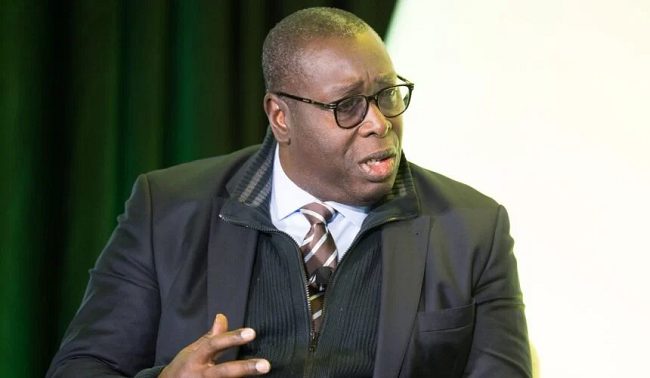
Clement Isong
Executive Secretary, MEMAN, Mr. Clement Isong

He spoke during a joint webinar organised by MEMAN and S&P Global Commodity Insights on Thursday, November 6, 2025, in Lagos.

The webinar examined the policy’s implications on the downstream petroleum market.

According to him, diesel could rise to between N1,164 and N1,194 per litre depending on marketing margins, which would drive up logistics costs and eventually reflect in food prices.

Isong described the proposed policy as “potentially regressive,” warning that it could deepen hardship if not matched with measures to protect the poor.

“Low-income earners and small business operators will feel the immediate impact,” he said.

He urged the Federal Government to ensure transparency and accountability in fuel pricing.

“Government should publish open-market price computations and end-user prices regularly so that Nigerians can see what drives pump costs,” he said.

Explaining the economics behind the policy, Isong noted that while the tariff was designed to help local refiners recover costs and compete globally, it would also increase the landed cost of imported fuel.

“Ultimately, importers will pass these additional costs to consumers,” he said.

He warned that such cost transfer could destabilise the market.

“If prices rise sharply, smaller importers may be squeezed out, leaving only a few dominant players,” he said.

Isong, therefore, called for strong regulatory oversight.

“The Nigerian Midstream and Downstream Petroleum Regulatory Authority must be vigilant to ensure fair competition and nationwide product availability,” he said.

He proposed alternatives that could achieve the same policy goals without hurting consumers.

“Government can adopt a phased or conditional tariff tied to verified increases in domestic refining capacity,” he said.

Isong also recommended tariff caps to cushion impact.

“A fixed cap of N50 per litre or $20 per metric tonne could limit the burden on ordinary Nigerians,” he said.

He emphasised the need for market transparency.

“A competitive framework with standardised pricing and regular publication of international and local refining benchmarks will promote fairness,” he said.

The MEMAN boss further urged reforms in border and customs operations.

“Enhanced anti-smuggling measures and tighter customs checks will prevent tariff evasion and protect local investments,” he said.

Isong added that proactive exchange rate management could serve as natural protection for local refiners.

“An undervalued Naira can make imports more expensive and domestic production more attractive,” he explained.

Also, S&P Global analysts, Mr. Dumdisi Awanen and Ms. Tanya Stepanova, said that “Nigeria must balance refinery protection with competition to ensure stable fuel prices and a sustainable energy market.”

Meanwhile, S&P Global Commodity Insights analysts, Mr. Dumdisi Awanen and Tanya Stepanova, presented a paper titled “Navigating Transformation: Lessons from Global Markets for Nigeria’s Energy Future”.

Their analysis showed that Nigeria remains a pioneer in fuel market liberalisation in Africa but still requires strong regulatory oversight to ensure fair competition and prevent monopolies.

Using case studies from Ghana, Zambia, Morocco, and South Africa, the report highlighted how excessive protectionist policies can distort markets, while transparent regulation and open-access systems promote competition and price stability.

In Ghana, for instance, the National Petroleum Authority (NPA) sets indicative maximum and minimum pump prices to protect consumers while allowing fair margins for marketers.

“Zambia’s open-access TAZAMA pipeline system, introduced in 2025, has also helped lower diesel prices by encouraging competition among transporters.”

The S&P Global team emphasised that striking the right balance between supporting Nigeria’s emerging refining sector, led by the Dangote Refinery and others, and maintaining market competition would be crucial for sustainable energy development.

According to them, while Dangote’s ex-refinery prices are currently lower than import parity prices when logistics are considered, continued transparency and fair regulation are needed to prevent market dominance and ensure that liberalisation benefits all stakeholders.

NNPCL charts sustainable course for Africa’s energy future, wins ADIPEC award

0

The Nigerian National Petroleum Company Ltd. (NNPCL) is charting a sustainable course for Africa’s energy future through technology deployment, business integration and strategic partnerships.

Mr. Mumuni Dagazau, the Executive Vice President, Downstream, NNPC Ltd., stated this at a high-level panel session on the Future of Refining during the ongoing 2025 Abu Dhabi International Petroleum Exhibition and Conference (ADIPEC).

Dagazau said the company was redefining its operations around sustainability and full integration to ensure long-term profitability in a rapidly decarbonising global energy landscape.

ADIPEC
Mr Mumuni Dagazau, the Executive Vice President, Downstream, NNPC Ltd. (3rd right) at a panel session at the ongoing ADIPEC in United Arab Emirates

“Decarbonisation is no longer an option but a licence to operate.

“Energy transition must balance cost, energy security and environmental responsibility.”

Dagazau said Nigeria’s challenge and opportunity depends on expanding its energy availability while pursuing decarbonisation targets.

“Success, for us, means remaining a sustainable and profitable business, 20 years from now.

“To ensure energy security, we must deploy technology with partnerships.

“We are integrating our refining, petrochemical and retail operations to protect future product requirements for Nigeria and Africa,” he said.

Dagazau reiterated NNPC Ltd.’s commitment to leading Africa’s energy transformation through strategic, sustainable and commercially viable investments.

Meanwhile, the NNPC Ltd. has won the Best Stand Design Award at the ongoing Abu Dhabi International Petroleum Exhibition and Conference (ADIPEC 2025).

The award recognises NNPC Ltd.’s outstanding exhibition stand, which highlights its key projects, sustainability initiatives, and energy transition efforts.

ADIPEC, one of the world’s largest energy conferences, had its theme for this year’s event as “Energy. Intelligence. Impact”, and it brought together global industry leaders, investors, and policymakers.

NNPC Ltd.’s display features strategic projects such as the Ajaokuta–Kaduna–Kano (AKK) Gas Pipeline and the Presidential Compressed Natural Gas (CNG) Initiative, reflecting the company’s drive for innovation and its contribution to Africa’s energy development.

The company’s participation at ADIPEC 2025 includes executive engagements, meetings with international partners, and media interactions aimed at strengthening collaboration within the global energy sector. 

By Emmanuella Anokam

We’re resource persons, not vandals – Lagos scrap dealers

Scrap dealers in Lagos have described themselves as resource persons in the production value chain, rather than vandals.

The Chairman of the Association of Scrap and Waste Dealers and Employers of Nigeria, Lagos State, Mr. Adewale Adedotun, made this known in Lagos on Thursday, November 6, 2025.

He spoke during the Lagos Central Senatorial District continuous stakeholders’ engagement on the protection of critical national assets and infrastructure in the state.

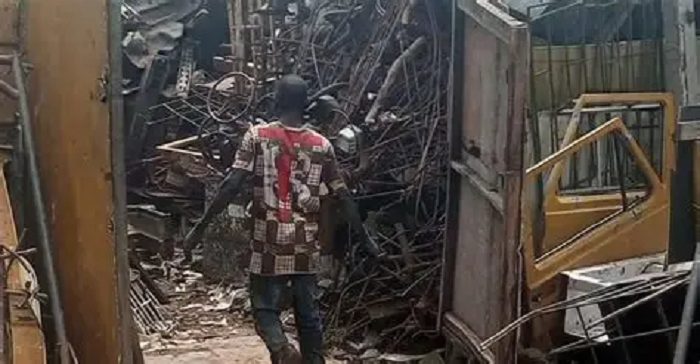
Scrap dealer
A scrap dealer

The meeting was organised by the Nigerian Security and Civil Defence Corps (NSCDC) to promote the protection of national and critical assets in Lagos State.

Adedotun explained that the association, as a body, monitored, regulated, and supervised the activities of scrap dealing within the state

“What we do purely is buy and sells recyclables, what we buy and sells is raw materials, serves as scrap materials for the Steel rolling mills for the reproduction of liquid steel.

“We are the major suppliers of raw materials used for the production of steel,” he said.

Adedotun said that scraps cart pushers were resource persons in the value chain or distribution chain.

He said that there were two ways they acquired the recyclables, first is giving your money to the scrap cart pushers to source for all recyclable items and in return they bring it to you.

He said the second way to acquire all these recyclables was to write a letter to multi national companies to source recyclables from them.

Earlier, Mr. Adedotun Keshinro, Lagos State Commander, NSCDC, had implored people to continue to support NSCDC in the protection of critical assets because it serves all of us.

Keshinro said: “We want them to support us by making sure that they keep eye on the infrastructure so that if you see anyone tampering with critical infrastructure, they should let us know so that we can apprehends such vandals.

“We have had series of engagement with all the units of scrap dealers in Lagos  to let them know that they should not purchase any products that’s suspected to be vandalised products.

“We have been receiving their cooperation in this direction, and we are going to profile the members of the association in order to screen out criminals using the name of the association to perpetrate crime,” he said.

He noted that this was the second stakeholders’ meeting aimed at focusing directly on the community, and that the meeting was having an impact due to contributions from participants.

He explained that the meeting was part of an enlightenment effort, adding that the NSCDC would take further steps to educate citizens.

He also urged the media to participate in the enlightenment process, emphasizing that it was part of their civic responsibilities.

By Abiodun Abegunde

COP30: Shettima to unveil Nigeria’s green transition roadmap to world leaders

0

Vice-President Kashim Shettima will unveil Nigeria’s green transition roadmap to world leaders, positioning the country to turn its climate commitments into concrete investment opportunities and projects.

The Director-General of the National Council on Climate Change (NCCC), Tenioye Majekodunmi, made this known while addressing newsmen at the ongoing 30th Conference of the Parties of the UNFCCC (COP30) in Belém, Brazil.

Majekodunmi noted with delight that Nigeria’s pioneering status as the first West African nation to submit its National Determined Contribution positions the country to leverage COP30 for substantial investment gains and partnerships.

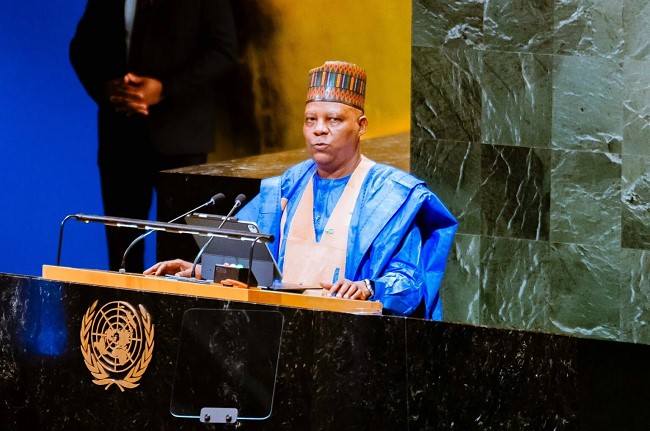
Kashim Shettima
Vice-President, Sen. Kashim Shettima

“This is particularly what we call the implementation COP that we have all been waiting for here in Belem, and we are very excited that it has come.

“COP30 is particularly important for us in Nigeria because of the momentum that we have gathered in the last two months leading up to the summit.

“First with the submission of our NDC 3.0 and us being the first West African country to submit – this is a turning point for Nigeria.”

She also used the opportunity to highlight three key takeaways for Nigeria as the country participates in COP 30.

Majekodunmi said that the gains of the summit would further boost investors’ confidence in doing business with Nigeria.

“One of the main things we are hoping to take away is to turn all the deliverables in our NDC 3.0 into pipeline projects, partnerships and pay-for-performance because we need to start turning from paper to projects, and COP30 is where Nigeria would be doing this.

“Secondly, just a few days ago, the Nigerian government approved the National Carbon Market Framework and also moved for the operationalisation of our National Climate Change Fund.

“That decision really gives investors a clear policy direction and signals that Nigeria is open for high-integrity carbon investments which deliver real mitigation and community benefits,” she added.

Majekodunmi emphasised that COP30 serves as the right time and place to activate the market framework for Nigeria.

“Belem gives us the right global matchmaking platform to be able to achieve this, and we are quite excited about what is going to happen,” the NCCC DG stated.

As part of the gains of COP30, Majekodunmi said, Nigeria will use the global gathering to deepen its South-South cooperation as it concerns climate change matters.

“It is something that has never happened before. We are here in the Amazon, we are in the forest, and this collaboration with the Amazon, Congo, and Guinea region forest dialogue – building on what Brazil’s forest protection initiatives have put in place – really just strengthens the Belem agenda.

“We are excited to be able to see how we can improve on this collaboration and take a lot of things home,” she said.

The Spokesperson for the Vice-President, Mr. Stanley Nkwocha, said the participation of Nigeria demonstrates the country’s commitment towards the Sustainable Development Goals, Paris Accord, and the sustained effort at actualising goal 13 of the accord.

“For us as a country, it is not just about our participation at COP30 in Belem, Brazil, but it shows clearly the President’s commitment to the 2016 Paris accord.

“Nigeria is a signatory, and it will ensure that article 13 of that accord, which talks about climate change, is duly pursued and being implemented to the letter.

“So, here in Belem, the Vice President of Nigeria will definitely be speaking to the spirit and body of Nigeria’s intent with particular emphasis on the country’s 3rd National Determined Contribution (NDC 3.0),” he stated.

The presidential aide also said Nigeria is fully committed to its targets of reducing emissions by 32 per cent by 2035 as well as attaining net-zero emissions by 2060.

The main theme for COP30 is “Climate Action and Implementation”, with a strong focus on climate adaptation, forests, biodiversity, and climate justice.

The conference will emphasise putting plans into action through thematic days dedicated to energy, forests, agriculture, cities, and human development.

By Salisu Sani-Idris

World leaders gather in Brazil ahead of COP30

0

Ahead of the official start of the annual United Nation (UN) Climate Change Conference, dozens of world leaders are meeting on Thursday, November 6 and Friday, November 7, 2025, in Belém, Brazil.

The meeting would be discussing urgent measures to curb global warming.

European leaders attending include German Chancellor, Friedrich Merz; French President, Emmanuel Macron; and British Prime Minister, Keir Starmer, alongside top officials from the European Union and the UN.

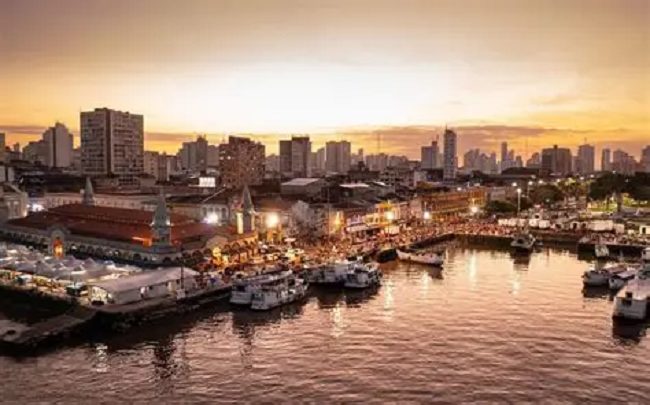
Belém
The city of Belém in Brazil is hosting COP30

The Brazilian hosts hope the summit would give momentum to the two-week conference known as COP30, which will officially begin on Monday, November 10, with tens of thousands of participants from around 200 countries.

President Luiz Inácio Lula da Silva, who has called it the “COP of Truth,” said the conference is aimed at delivering tangible results.

But the political environment is challenging: wars and economic worries dominate the headlines; the fiscal outlook of many global powers is uncertain at best.

The United States (U.S.) under Donald Trump is pressing ahead with its fossil fuel agenda.

The Trump administration did not intend to send a high-level delegation to COP30, the White House has said.

On Thursday, leaders are to formally launch a new multi-billion-dollar fund to protect tropical forests, which act as the “green lungs” of the planet.

Time is running out: in 2019, 140 countries pledged to halt deforestation by 2030, but according to the environmental pressure group WWF, nearly seven million hectares of primary forest were lost in 2024 alone.

The summit would also issue a joint call to action for international forest fire management and promote Brazil’s sustainable fuels initiative, which aimed to quadruple production and use by 2035.

A declaration addressing hunger, poverty and climate protection is also planned.

Nigeria’s urban growth outpacing sanitation infrastructure – UNICEF

The United Nations Children’s Fund (UNICEF) has raised concerns that rapid urbanisation in Nigeria is outpacing sanitation infrastructure, worsening open defecation, and exposing millions to preventable public health risks.

Mr. Monday Johnson, WASH Specialist at UNICEF Lagos Field Office, stated this on Thursday, November 6, 2025, in Ilaji town, Ibadan, during a media dialogue to improve Urban Water, Sanitation, and Hygiene (WASH).

The workshop was organised by the Oyo state Ministry of Information in collaboration with UNICEF.

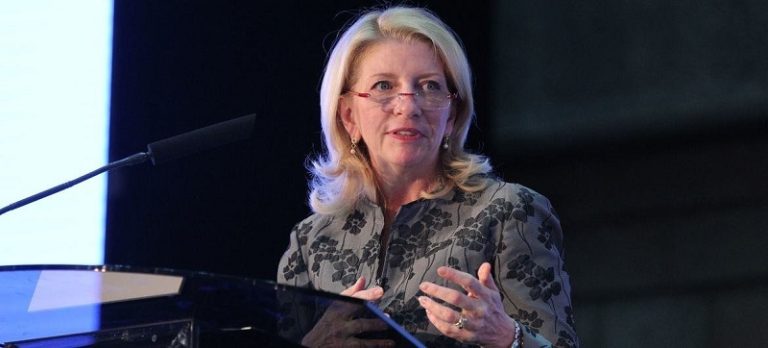
Catherine Russell
Catherine Russell, Executive Director of UNICEF

Participants in the media dialogue were drawn from the six Southwest states and Edo.

Referencing the WASH National Outcome Routine Mapping 2021, Johnson said Nigeria’s increasing urban population, now over half of the total population, is expanding faster than the country’s sanitation systems can cope with.

“As of 2023, approximately 54.3 per cent of Nigeria’s population, which is about 123.7 million people, live in urban areas, up from 29.7 per cent in 1990.

“This growth, at an annual rate of 3.51 per cent , is outpacing the expansion of sanitation infrastructure.

“Overcrowded urban slums with limited space, inadequate containment systems, and poor access to safely managed sanitation are exacerbating open defecation and environmental health risks,” he said.

The UNICEF WASH specialist noted that Nigeria’s sanitation crisis mirrors a broader regional trend in West and Central Africa (WCA), one of the fastest organising regions in the world.

“Across the WCA region, urban populations are projected to grow from 52 per cent in 2023 to as high as 68 per cent by 2050,” he said.

Johnson stressed that while 85 per cent of Nigeria’s urban population now has access to basic drinking water, only 45 per cent enjoy safely managed water systems.

He added that access to safely managed sanitation remains “critically low,” with just 25.4 per cent of urban residents covered, while over 150 million Nigerians still lack basic sanitation services.

“Open defecation persists in many urban areas.

“Access to basic hygiene services is also very low, with less than 35 per cent of the urban population having handwashing facilities,” Johnson said.

According to him, inequality is also a major obstacle to achieving universal sanitation coverage, with marginalised groups, including women, children, and persons with disabilities, facing higher barriers to accessing safe water, sanitation, and hygiene.

Johnson pointed out that limited human capacity, outdated policies, and weak institutional coordination have slowed Nigeria’s progress toward the Sustainable Development Goals (SDGs).

He identified the lack of an urban sanitation coordination framework as a key governance gap and called for immediate reforms to strengthen institutional and human capacity.

By Usman Aliyu and Millicent Ifeanyichukwu

Ijaw congress joins global call for exoneration of Saro-Wiwa, others

0

The Ijaw National Congress (INC) on Thursday, November 6, 2025, joined the global call for the formal exoneration of Ken Saro-Wiwa and the Ogoni eight of the allegations for which they were convicted and executed.

Prof. Benjamin Okaba, Global President, INC, made the call in his solidarity message on the 30th anniversary of the execution of the Ogoni nine.

Saro-Wiwa and eight other Ogoni activists, known as the “Ogoni Nine,” were executed by the Nigerian military government in November 1995 following a trial.

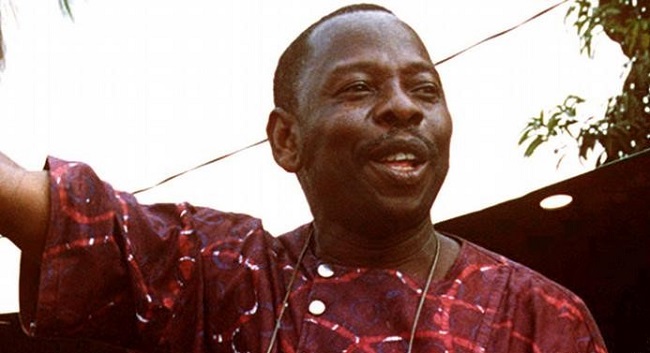
Ken Saro-Wiwa
The late Ken Saro-Wiwa

“They were convicted of being complicit in the murders of four rival Ogoni chiefs and had been campaigning against environmental damage and the exploitation of oil resources by the Shell Oil Company in their homeland.

The executions drew international condemnation and led to sanctions against Nigeria.

According to Okaba, “On this symbolic 30th anniversary, our remembrance must be more than a ritual; it must be a re-dedication to the cause for which they died. We hereby reaffirm and amplify the demands of the Ogoni people and the broader Niger Delta.

“We join the global call for the formal exoneration and Justice (Not Pardon) of Ken Saro-Wiwa and the Ogoni eight.”

He also called for a full, transparent, and criminal investigation into Shell’s complicity in the human rights violations in Ogoniland, as called for by organisations like Amnesty International.

“We also call for the immediate and credible cleanup of Ogoniland, as recommended by UNEP. The exercises should be placed under a credible, internationally-managed body to ensure it is effective and accountable.

“We are also demanding that Shell and other oil companies be held legally and financially liable for the destruction they have caused.

“The Ijaw nation stands with the Ogoni in their call for the right to benefit from the resources of their land.

“We echo the call for the repeal of obnoxious laws like the Land Use Act and the Petroleum Act, which deny us the beneficial ownership of our resources,” he added.

The INC global president noted that the spirit of the Saro-Wiwa lives on.

According to him, it lives on in the continued peaceful resistance of the Ogoni people, in the work of environmental defenders across the globe, and “in our unwavering commitment at the INCto champion the Ijaw cause”.

“We will continue to constructively engage the state, the International Oil Companies (IOCs), and international agencies to demand sociopolitical inclusiveness, environmental remediation, and infrastructural development.

“To the family of Ken Saro-Wiwa, especially his daughter, Noo Saro-Wiwa, and to the families of the other eight martyrs, we say: Your pain is our pain. Your loss is our loss. Your steadfastness is our inspiration.”

President Bola Tinubu granted a posthumous pardon to Saro-Wiwa and eight other activists who were executed in 1995.

The pardon, announced in June 2025, was granted in conjunction with conferring national honours on the activists.

By Deborah Coker

Lagos reaffirms commitment for sustainable future at climate change summit

0

The Lagos State Government has reaffirmed its commitment to sustainable growth and coastal resilience at the  11th Lagos International Climate Change Summit.

The Lagos State Governor, Mr. Babajide Sanwo-Olu, said this at the opening ceremony of the summit on Thursday, November 6, 2025, in Lagos.

The summit had the theme: “Blue Economy, Green Money: Financing Africa’s Coastal Resilience and Ocean Innovation.”

Lagos International Climate Change Summit
Gov. Babajide Sanwo-Olu at the 11th edition of the Lagos International Climate Change Summit

Sanwo-Olu said that Lagos, being a city built on water, energy and entrepreneurship, must ensure a sustainable future for its residents, while harnessing the power of its ocean resources.

“Lagos is a city built on water, energy, and entrepreneurship.

“Our responsibility is to ensure that this foundation remains sustainable for generations to come,” Sanwo-Olu said.

He said his administration was deliberate in creating blue finance, citing the Great Wall of Lagos as an example of how the state transformed a former ocean surge zone into prime land.

“With the Great Wall of Lagos, we turned what was once a threat into an opportunity a place of economic value, safety, and growth. That is the spirit of innovation we are building on,” he added.

Sanwo-Olu reiterated that Lagos was committed to leading Africa and the global community in the pursuit of a clean climate and a vibrant blue economy, describing it as “a lifeline for the planet.”

“Lagos is committed to leading Africa and the global community in the pursuit of a clean climate and a vibrant blue economy, which remains a lifeline for the planet,” Sanwo-Olu said.

In his welcome address, the Commissioner for the Environment and Water Resources, Mr. Tokunbo Wahab, said the summit underscored the state’s determination to unlock sustainable financing and pioneer innovative solutions that safeguard the ocean and strengthen coastal communities.

“Lagos sees opportunity where others see risk, by transforming its blue economy into an engine of inclusive growth and environmental sustainability,” he said.

Wahab highlighted ongoing state-led initiatives, including the soon-to-be-commissioned biogas facility at the Ikosi-Isheri Fruit Market, in partnership with the C40 Global Leadership Group.

“Where others see risk, Lagos sees opportunity. We are transforming our blue economy into an engine of inclusive growth and environmental sustainability.

“The biogas project will convert fruit waste into clean energy for lighting, cooking, and phone charging, while also producing natural fertilizer for farmers,” he said.

Wahab added that the governor would unveil the Climate Investment Opportunities Diagnostic, a policy document linking environmental goals, with actionable investment pathways.

He noted that Lagos had been ranked the top-performing stare in climate government for the second consecutive year.

“We are ready for investment, ready for innovation, and ready to build resilience that benefits all our people,” he said.

He said the project would convert fruit waste into clean energy for lighting, cooking, and phone charging, while producing natural fertilizer for farmers.

He called for greater collaboration among African coastal cities, adding that Lagos was ready for investment, innovation, and to build resilience that benefits all its people.

The Minister of Marine and Blue Economy, Mr. Gboyega Oyetola, said the Federal Government had implemented wide-ranging reforms to enhance security on Nigeria’s territorial waters and reduce piracy.

Oyetola was represented at the event by the Director-General of the Nigerian Maritime Administration and Safety Agency, Dr Dayo Mobereola.

He added that the ministry had advanced fiscal and legal frameworks, promoted waste-to-wealth initiatives, and partnered with stakeholders to finance the blue economy and drive maritime research.

Representatives of the governments of Osun State and international partners from Britain, China, and Germany attended the summit.

The representatives in their goodwill messages reaffirmed their commitment to driving green growth, embracing climate vulnerability as an opportunity for progress, and advancing Africa’s blue economy for a sustainable future.

By Olaitan Idris and Aderonke Ojediran

New guidance helps countries plan, mobilise finance for adaptation

0

The Asian Development Bank (ADB), Commonwealth Secretariat, Adaptation Fund and NDC Partnership Support Unit have launched new guidance to help countries mobilise finance for climate adaptation. 

With countries now submitting third-round Nationally Determined Contributions (NDCs 3.0) under the Paris Agreement, they will need to quickly mobilise public and private finance to implement their adaptation commitments.  

Mikko Ollikainen
Mikko Ollikainen, Head of the Adaptation Fund

As climate impacts intensify, implementing adaptation measures is an increasingly urgent priority, particularly for developing countries on the frontlines of the climate crisis. While adaptation finance more than doubled between 2018 and 2022, reaching roughly USD 76 billion, developing countries will require nearly USD 400 billion per year in adaptation financing up to 2030. Yet major barriers – including limited private-sector investment, fragmented strategies and gaps in government capacity – remain, impeding the flow of adaptation finance to the countries where it’s needed most. 

To help address these barriers, the new “Adaptation Financing Supplement” to the Climate Investment Planning and Mobilization Framework (CIPMF) online tool guides countries on how best to identify, prioritize and mobilise adaptation finance. By developing investment plans supported by financing strategies, institutional mechanisms and bankable projects, the supplement provides point-by-point guidance on: 

  1. Adaptation investment planning processes 
  1. Identifying investment opportunities and solutions that are effective, scalable and replicable 
  1. Strategies for building human capacity for adaptation investment planning and finance mobilisation 

Through each stage, the Adaptation Financing Supplement supports countries to mainstream and integrate adaptation priorities into national development strategies and plans, leveraging the institutional expertise of each contributing author. From scaling finance, investment planning and institutional readiness, the ADB, the Adaptation Fund and Commonwealth Secretariat together are supporting countries to turn adaptation priorities into on-the-ground action. 

NDC Partnership Global Director, Pablo Vieira: “As developing countries submit their NDCs 3.0, adaptation is a key priority. Through this guidance and our global network of partners, the NDC Partnership is ensuring countries have the support they need to shift from planning to implementation, backed by the finance needed to deliver results.” 

Asian Development Bank, Director, Climate Change, Arghya Sinha Roy: “An investment-focused approach is critical to scale up financial flows for adaptation and resilience. This guidance is based on the lessons learned from the implementation of ADB’s Climate Adaptation Investment Planning Program, which is supporting developing countries in the Asia Pacific to identify priority investment packages that are embedded in countries’ fiscal frameworks, thereby securing and sustaining programmatic financing for implementation.” 

Commonwealth Secretariat, Director of Climate Change and Oceans, Suresh Yadav: “Across the Commonwealth, countries are demonstrating strong ambition in their NDCs 3.0, but delivering them requires finance at scale and speed, which we are supporting through the Commonwealth Climate Finance Access Hub. This new supplement is another step in ensuring that adaptation priorities translate into real resilience, especially for the most vulnerable.” 

Mr. Mikko Ollikainen, Head of the Adaptation Fund: “The Adaptation Fund helps bridge the gap between adaptation planning and implementation through catalytic grant-based finance that empowers countries and communities to deliver locally led, innovative, and scalable adaptation solutions. We are pleased to contribute to this publication by sharing best practices drawn from the Fund’s experience in addressing the unique challenges of translating adaptation plans into action.” 

In addition to the partners mentioned above, the Adaptation Financing Supplement was developed with the support of the Organisation for Economic Co‑operation and Development (OECD), the NAP Global Network, hosted by the International Institute for Sustainable Development (IISD), and the United Nations Development Programme (UNDP).