Home Blog Page 13

IUCN welcomes roadmap to safeguard world’s migratory species corridors at CMS COP15

Following the historic adoption of the Samarkand Strategic Plan for Migratory Species 2024–2032, the 15th Conference of the Parties to the Convention on the Conservation of Migratory Species of Wild Animals (CMS COP15) in Campo Grande, Brazil, marked a decisive step forward by establishing a clear roadmap for the plan’s effective implementation.

While COP14 laid the political foundation, the outcomes in Brazil have turned global commitments into concrete mandates, defining critical points for monitoring, accountability and the transboundary cooperation necessary to safeguard the planet’s migratory corridors.
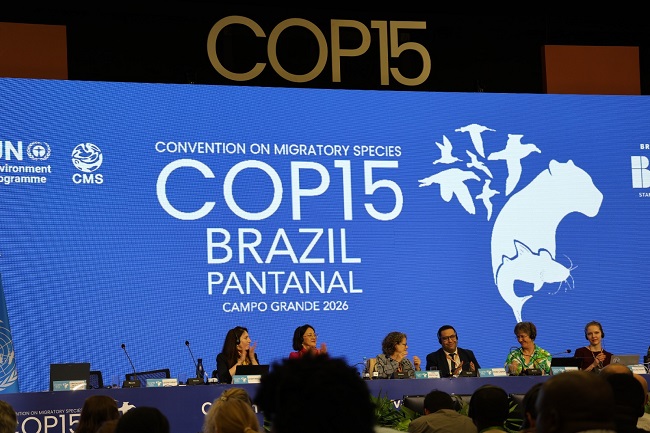
CMS COP15
Delegates at a session during CMS COP15 in Brazil. Photo credit: Qiulin Liu

From March 23 to 29, 2026, CMS COP15 brought together governments, international organisations, scientists, conservation NGOs, Indigenous Peoples and local communities under the theme “Connecting Nature to Sustain Life”. With over 130 Parties taking part in the negotiations, the conference addressed the increasing pressures from habitat degradation, fragmentation, overexploitation and climate change on species that depend on interconnected ecosystems across countries and continents.

From planning to action 

The adoption of a global roadmap to implement the Samarkand Strategic Plan was a major achievement, with Parties agreeing to integrate migratory species goals and targets into national biodiversity strategies and policies. To ensure accountability and measurable results, the CMS Secretariat was mandated to support implementation, monitoring and indicators, with progress to be reviewed at future COP meetings. 

IUCN contributed actively throughout the meeting and called on Parties to strengthen the conservation of migratory species, protect ecological connectivity and align efforts with the Global Biodiversity Framework. Parties agreed to these priorities, including by enhancing cooperation between the CMS and the Convention on Biological Diversity.

Gabriel Quijandría, IUCN Regional Director for South America, said: “These decisions ensure that the protection of wildlife is not an isolated effort, but a central component of biodiversity strategies at both global and national levels.

“IUCN stands ready to continue working with Parties, the CMS Secretariat and partners to support implementation, science-based action and concrete conservation results on the ground.”  

Vivek Menon, IUCN SSC Chair, said: “The successful implementation of the Samarkand Strategic Plan will depend on strong science, collaboration and expertise. The IUCN Species Survival Commission (IUCN SSC), through its global network of Specialist Groups, is committed to supporting Parties and the CMS with the best available knowledge, data and tools to guide conservation action.

“By bridging science, policy and practice, the SSC can help ensure that commitments made at CMS COP15 translate into effective results for migratory species across their entire range.”

Other key decisions and highlights

Other key outcomes include critical decisions on ecological connectivity, impact assessment for migratory species and transboundary conservation areas, reinforcing the importance of connected habitats and migration routes for biodiversity worldwide. In addition, a wide range of decisions address the major pressures affecting migratory species, with particularly strong outcomes on marine, freshwater and climate-related threats. Parties agreed to use science-based “Important Areas”, such as Key Biodiversity Areas, to guide marine spatial planning, protected areas and conservation action.  

Supported by IUCN, the conference also addressed renewable energy as a cross-cutting issue at the heart of a nature-positive energy transition, emphasising that renewable energy infrastructure must be carefully planned to avoid disrupting migratory paths. 

Outcomes for species conservation included the addition or upgrade of 40 species, subspecies and populations in CMS Appendices I and II, including the cheetah, striped hyena, giant otter, several shark species, freshwater fish and migratory birds. Finally, 15 new “Concerted Actions” were approved for species such as chimpanzees, dolphins, bats, sharks and seabirds, while 10 new or updated species-focused action plans were adopted.  

A key highlight of the High-Level Segment was the adoption of the Pantanal Declaration, which calls for stronger international cooperation, increased financial support and urgent action to address climate change, habitat loss, pollution and infrastructure impacts. The declaration also highlights the importance of wetlands – including Brazil’s Pantanal – as critical habitats for migratory species.

The outcomes of CMS COP15 strongly reinforce IUCN’s ongoing work across the Union, including the implementation of IUCN World Conservation Congress Resolutions on recognising ecological corridors, promoting wildlife-friendly infrastructure and strengthening transboundary conservation.

Accelerating ecosystem and migratory species conservation

Beyond the plenary, IUCN showcased how technical expertise translates into policy and on-the-ground action through over 10 side events and high-level sessions, covering four areas to accelerate ecosystem and migratory species conservation.

First, the Union highlighted the importance of strengthening multilevel governance by addressing global threats such as deep-sea mining and habitat loss, positioning wetlands as critical ecosystems for international cooperation. Second, it stressed how to scale digital innovation through strategic partnerships, such as the Tech4Nature initiative in Brazil, to promote evidence-based decision-making.

IUCN also emphasised the need to advance high-quality conservation by integrating the IUCN Green List and private reserves into territorial planning to ensure ecological connectivity and wildlife-friendly infrastructure. Through its engagement in the joint CITES–CMS African Carnivores Initiative (ACI), IUCN also highlighted the importance of coordinated, landscape-level conservation, strengthened transboundary cooperation, and mobilising partnerships and sustainable financing to scale up conservation action for African carnivores across their range.

Finally, IUCN showcased how it is empowering subnational leadership, where cities and local governments serve as a vital bridge to integrate migratory species into national biodiversity strategies.
Emperor penguin, Antarctic fur seal now endangered due to climate change – IUCN Red List

The emperor penguin and Antarctic fur seal are now both Endangered, according to The IUCN Red List of Threatened Species™.

Climate change in Antarctica is leading to changes in sea-ice that are projected to cause the emperor penguin population to halve by the 2080s, while reduced food availability has already driven a 50% reduction in the Antarctic fur seal population since 2000. The southern elephant seal is also now at risk of extinction, due to disease.

Dr Grethel Aguilar, IUCN Director General, said: “These important findings should spur us into action across all sectors and levels of society to decisively address climate change. The declines of the emperor penguin and Antarctic fur seal on the IUCN Red List are a wake-up call on the realities of climate change.

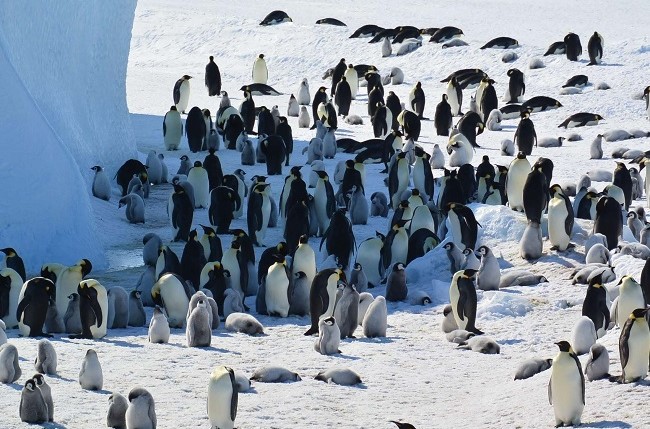
Emperor penguin
Emperor penguin chicks on Rothschild Island. The emperor penguin has moved from Near Threatened to Endangered on the IUCN Red List. Photo credit: Phillip Trathan

“As countries prepare to gather at the Antarctic Treaty Consultative Meeting in May, these assessments provide essential data to inform decisions regarding this majestic continent and its awe-inspiring wildlife. Antarctica’s role as our planet’s “frozen guardian” is irreplaceable – offering untold benefits to humans, stabilising the climate and providing refuge to unique wildlife.”

“Penguins are already among the most threatened birds on Earth. The emperor penguin’s move to Endangered is a stark warning: climate change is accelerating the extinction crisis before our eyes. Governments must act now to urgently decarbonise our economies,” said Martin Harper, CEO of BirdLife International, which coordinated the emperor penguin assessment as the authority for birds on the IUCN Red List.

The emperor penguin (Aptenodytes forsteri) has moved from Near Threatened to Endangered on the IUCN Red List, based on projections that its population will halve by the 2080s. Satellite images indicate a loss of around 10% of the population between 2009 and 2018 alone, equating to more than 20,000 adult penguins.

The primary driver is the early break-up and loss of sea-ice, which has reached record lows since 2016. Emperor penguins require fast ice – sea-ice that is “fastened” to the coastline, ocean floor or grounded icebergs – as habitat for their chicks and during their moulting season, when they are not waterproof. If the ice breaks up too early, the result can be deadly.

While it is challenging to convert observed tragedies – such as the collapse of a breeding colony into the sea before the chicks can swim – into population changes, population modelling considering a wide range of future climate scenarios shows that without abrupt and dramatic reductions in greenhouse gas emissions, emperor penguin populations will rapidly decline during this century.

Dr Philip Trathan, member of the IUCN SSC Penguin Specialist Group who worked on the emperor penguin Red List assessment, said: “After careful consideration of different possible threats, we concluded that human-induced climate change poses the most significant threat to emperor penguins. Early sea-ice break-up in spring is already affecting colonies around the Antarctic, and further changes in sea-ice will continue to affect their breeding, feeding and moulting habitat. Emperor penguins are a sentinel species that tell us about our changing world and how well we are controlling greenhouse gas emissions that lead to climate change.”

The Antarctic fur seal (Arctocephalus gazella) has moved from Least Concern to Endangered on the IUCN Red List, as its population has decreased by more than 50 per cent from an estimated 2,187,000 mature seals in 1999 to 944,000 in 2025. The ongoing decline is due to climate change, as rising ocean temperatures and shrinking sea-ice are pushing krill to greater ocean depths in search of colder water, reducing the availability of food for seals.

Krill shortages at South Georgia have reduced the survival of pups in their first year dramatically, leading to an ageing breeding population. Other threats, such as predation by killer whales and leopard seals and competition with recovering baleen whale populations targeting the same krill, are potentially also impacting this declining population.

The southern elephant seal (Mirounga leonina) has moved from Least Concern to Vulnerable on the IUCN Red List, following declines caused by Highly Pathogenic Avian Influenza (HPAI). There has been a significant increase in the prevalence of avian flu around the world since 2020, and it has spread to mammals. The disease has affected four of the five major subpopulations, killing more than 90 per cent of newborn pups in some colonies and seriously impacting adult females, which spend more time on the beaches than males.

There is growing concern that disease-related mortalities of marine mammals will increase with global warming – particularly in polar regions, where animals have not had much previous exposure to pathogens. Animals that live close together in colonies, such as southern elephant seals, are particularly hard-hit by diseases.

Dr Kit Kovacs, Co-Chair of the IUCN SSC Pinniped Specialist Group, said: “These assessments sound an alarm for all Antarctic seals, as we are concerned about how environmental changes are affecting all ice-dependent species. Monitoring of the effects of climate change in Antarctica is urgently needed. While logistically challenging and expensive to access this part of the world, the IUCN SSC Pinniped Specialist Group calls for the collection of more data on seals in the region by all of the Parties to the Treaty.”

The new assessments are available on the pre-publication page of the IUCN Red List. The new assessments will be published on the emperor penguin and seals’ species profiles as part of a broader Red List update later this year. The emperor penguin assessment was produced through the work of the IUCN SSC Penguin Specialist Group, in coordination with BirdLife International, the authority for birds on the IUCN Red List. The seal assessments were produced by the IUCN SSC Pinniped Specialist Group.

Dr Kathleen Flower, Vice President of Biodiversity Science at Conservation International, said: “These listings are not only sobering for two iconic animals; they reflect what is happening to penguins and seals globally. Their decline underscores how quickly ecosystems are being degraded and how the compounding impacts of warming accelerate food scarcity, emerging disease, and habitat loss.

“The result is rapidly increasing extinction risk for many species. The Red List is an essential tool, but it must be adequately resourced and strengthened with climate‑informed science to identify risks and help reduce climate‑driven extinctions.”

UN commends Benue on SDGs implementation model

The United Nations (UN) has commended the Benue State Government’s implementation of the Sustainable Development Goals (SDGs) model.

The UN Deputy Secretary General, Dr Amina Mohammed, gave the commendation at a stakeholders’ engagement meeting at Benue Government House in Makurdi, the state capital, on Friday, April 10, 2026.

She said Benue had a critical role to play, not only in feeding the country but also in generating livelihoods, enterprises and broader prosperity.

Amina Mohammed
Deputy Secretary-General of the UN, Amina J. Muhammed

She said that progress was being made in the state, though in a very difficult context.

‘’Insecurity has disrupted lives, weakened livelihoods, eroded trust and undermined the foundations for peace and development.

“The efforts being made to pursue durable solutions for displaced families, including through access to agricultural land and opportunities for self-reliance, reflect the kind of joined-up leadership this moment demands.

“This is how the SDGs are advanced in practice: through integrated action that connects humanitarian response to long-term development, restores agency, reduces dependency and leaves no one behind.

“With sustained leadership, stronger partnerships and continued investment in livelihoods and value chains, Benue is well placed to translate its assets into more inclusive and resilient growth.

“The UN stands ready to support these efforts in ways that are practical, coordinated and aligned behind State priorities,” she said.

Mohammed expressed her condolences to the families of those killed in the recent attacks in the state, including in Mbalom, in Gwer East LGA, and in Yeliwata.

She said the state required not only a response to security issues but also a broader commitment to peacebuilding.

According to her, this starts at the grassroots, strengthens early warning and response, rebuilds trust across communities, and creates the conditions for reconciliation.

She said for peace to thrive, there must be justice and accountability, adding that without them, peace remained fragile and reconciliation incomplete.

Mohammed promised to support the state in sustained investment in human capital, especially in children and young people.

“A resilient education system is therefore not only a social priority; it is a foundation for long-term peace, inclusion and recovery.

“We stand ready to work with Benue State to strengthen education data, planning and service delivery, including in hard-to-reach and displacement-affected areas,” she said.

In his remarks, Gov. Hyacinth Alia said Benue, as the food basket of the nation’s stability, was directly linked to the stability of Nigeria’s food systems and West Africa’s broader supply chains.

Alia noted that armed herders’ attacks had forced more than 500,000 persons out of their homes, thereby causing serious humanitarian crises in the state.

He said his administration had provided sustained support to internally displaced persons and developed shelters and critical infrastructure in affected communities for them.

‘’We launched durable solutions and allocated farmlands and facilitated the return of displaced households to productive life,” the governor said.

On the Yelewata attack, he said that, with support from Federal Government and other sources, they had built houses; provided water and education; and supported livelihoods and healthcare services.

“Your Excellency, Benue is ready. Ready to lead. Ready to partner and deliver results that matter, not just for our people, but as a model for Nigeria and the global community.

“What we seek is not charity, but collaboration. Not isolated projects, but integrated systems. Not temporary relief, but lasting transformation.

“Together, we can turn vulnerability into resilience, displacement into opportunity, and potential into prosperity. We invite the United Nations to walk this journey with us,” Alia said.

By Emmanuel Antswen

NESREA recommits to safer environment through carbon capture, utilisation

The National Environmental Standards and Regulations Enforcement Agency (NESREA) has reiterated its commitment to partner critical stakeholders towards promoting safer environment in carbon management.

The Director-General, Prof. Innocent Barikor, made the statement at the launch of a platform for carbon capture, utilisation and storage technology innovation in Port Harcourt on Thursday, April 9, 2026.

Barikor said that the platform was being co-launched by the Africa Carbon Management Technology and Innovation, Centre of Excellence, and the Clean Energy Ministerial Carbon Capture Utilisation and Storage (CCUS) Initiative.

Innocent Barikor
Dr Innocent Barikor, Director-General, National Environmental Standards and Regulations Enforcement Agency (NESERA)

The D-G stated that Port Harcourt was chosen for the launch following the high level oil and gas activities within its environment.

He said that the level of oil and gas activities in Port Harcourt environment made it an appropriate environment for carbon capture, utilisation and storage.

Barikor stated that there were extant government policies that provided strong background for carbon capture, utilisation and storage in the country.

“The Energy Transition, Climate Change and Restructure, and the 2021 Climate Change Framework are strong policies that support this innovation.

“When fully on stream, it will promote circular economy where what is not needed in the environment is converted to raw materials for industry growth.

“While carbon is harmful to human body, companies involved in cement, bottle and other items need it for production.

“This innovation will not only protect the environment, it will also boost the economy,” Barikor said.

Also speaking, Prof. Owunari Georgewill, the Vice Chancellor, University of Port Harcourt thanked NESREA and its partners for the initiative and described it as timely.

Georgewill decried the increase in carbon emissions, especially through solar powered electricity generation systems.

He commended respective stakeholders for their proactive steps towards ridding the environment of harmful carbon emission.

“Currently, solar powered electricity is an alternative electricity source, this university community alone has about 10.7 megawatts Ivory Solar Powerex plant, all these generate carbon.

“So effective storage of carbon must be worked out, otherwise, environmental pollution will become an epidemic in no distant time,” he said.

Mr. Juho Liponen, the Coordinator, Clean Energy Ministerial CCUS initiative, said that effective carbon capture, utilisation and storage were critical to promoting safer environment.

He stated that the organisation would collaborate with other critical stakeholders for the effective take-off the innovation.

By Ikuru Lizzy

Nigeria, UN to deepen partnership on women, youths’ empowerment

The Federal Government has reaffirmed commitment to strengthen its partnership with the United Nations (UN) to accelerate the empowerment of women and youths across the country.

Vice-President Kashim Shettima stated this when he received a delegation from the UN, led by its Assistant Secretary General on Youth Affairs, Dr Felipe Paullier, at the Presidential Villa, Abuja, on Friday, April 10, 2026.

Shettima explained that the partnership would be actualised through key initiatives under financial inclusion, skills development, peace and security and job creation among others.

Kashim Shettima
Vice-President Kashim Shettima with a delegation from the UN

He said that President Bola Tinubu’s administration acknowledges the potential of the youth as the engine of change and growth.

“President Tinubu believes in gender equality and youth empowerment. Under his administration, the anticipated demographic bulge will be transformed into demographic dividends.

“On behalf of the President, I reaffirm this administration’s commitment to youth development.

“The youths are the backbone of every society’s transformation,” Shettima said.

He proposed the creation of institutional mechanisms in collaboration with the UN and other partners, to midwife the advancement of Nigeria’s objectives for youths and women.

Earlier, Paullier explained that the UN youth delegation was in the country to support the Federal Government’s development vision, in addition to the multi-level support provided by UN agencies in Nigeria.

He added that the visit to Nigeria was essential because of the country’s role as a global player in advancing the cause of young people.

Describing Nigeria as a “very vibrant country”, with young people at the heart of its vibrancy, Paullier added that the country “is on the right path to development.

“If relevant authorities continued to place Nigerian youths at the heart of critical decisions, development and innovation would be accelerated”.

He argued that advancing youth development requires gender equality, as well as access to employment and education.

He recalled that, in 2022, the UN General Assembly created a new office to oversee UN’s support for youths globally in several areas.

This, according to him, included the protection of human rights, training, and skills development.

By Salisu Sani Idris

NUPRC reforms unlock $10bn upstream investment

0

The Nigerian Upstream Petroleum Regulatory Commission (NUPRC) says recent reforms have unlocked over $10 billion in upstream oil and gas investment.

Mrs. Oritsemeyiwa Eyesan, the Chief Executive, NUPRC, spoke on Thursday, April 9, in Abuja at the Society of Petroleum Engineers Nigeria Council’s Oloibiri Lecture Series and Energy Forum 2026.

Eyesan said the commission had gazetted 19 regulations, with five more underway, covering critical areas of the upstream oil and gas industry.

Oritsemeyiwa Amanorisewo Eyesan
Mrs. Oritsemeyiwa Amanorisewo Eyesan, the Commission’s Chief Executive, NUPRC

She said the rules, developed with operators, service providers and investors, replaced discretion with clarity, reduced ambiguity and introduced defined timelines.

According to her, the reforms enabled investment and delivered results across key projects, including Bonga North, Ubeta and HI developments.

Eyesan said the Bonga North deepwater project advanced due to fiscal clarity and faster approvals under the Petroleum Industry Act and related Executive Orders.

“The predictable regulatory environment reduced investment risks and supported partners to take a multi-billion-dollar Final Investment Decision,” she said.

On Ubeta, Eyesan said the gas project benefited from fiscal incentives, streamlined licensing and transparent approval processes.

She said the reforms addressed long-standing bottlenecks, enabling faster execution and supporting Nigeria’s gas supply targets.

Eyesan added that the HI development was driven by a new asset stewardship framework and performance-based work programmes.

“The framework ensures sound reservoir management and improved recovery techniques to maximise value and deliver sustainable outcomes.

“Collectively, these projects represent over $10 billion in new upstream investment and highlight the importance of clear policy and firm regulation,” she added.

Eyesan said digitalisation was reshaping regulation, with the commission adopting a digital-first approach to approvals, reporting and compliance.

According to her, integrated platforms are improving speed, transparency, accountability and real-time visibility for industry operators.

She added that technologies such as digital twins, predictive maintenance and advanced analytics were boosting operational efficiency and asset performance.

Eyesan said the commission was designing regulations to promote data integrity, interoperability and standardisation.

“Such measures are essential to fostering innovation, strengthening investor confidence and sustaining competitiveness,” she said.

By Emmanuella Anokam

Tinubu inaugurates 60-megawatt gas turbine plants in Bayelsa

President Bola Tinubu on Friday, April 10, 2026, inaugurated 60-megawatt gas turbine plants at Elebele in Ogbia Local Government Area of Bayelsa State.

The president also inaugurated other projects implemented by the Gov. Douye Diri-led administration such as 630 metre Angiama-Oporoma Bridge, Sagbama/Ekeremor Road, and 2.9km Dual-Carriageway in Yenagoa, the state capital.

Speaking at a stakeholder meeting held at the Bayelsa Government House, Tinubu commended Diri for implementing the independent power project.

President Bola Tinubu
President Bola Tinubu in Bayelsa State

The president said that Bayelsa people deserved to see governance translated into physical development and better quality of life.

“We are all working hard. Independent power supply is a good thing. I assure Nigerians that they will have electricity to power their growth,” he said.

He urged the governor to implement more people-oriented projects, and pledged that the Federal Government would support his government to achieve more for the state.

Also speaking, Diri commended the president for the visit, and described him as a friend of Bayelsa people.

“We are confident that you will recognise the depth of our appreciation for taking time from your busy schedule to inaugurate these landmark projects.

“Your administration’s decisive policy interventions have paved the way for meaningful reforms in various sectors including power.

“This has enabled us to deliver on our pledge to establish a reliable, independent energy through the construction of these gas‑powered turbines.

“For us as a state, this is not just an achievement, it is a cause for thanksgiving and rejoicing,” he said.

The visit attracted the presence of notable personalities including former President Goodluck Jonathan.

By Shedrack Frank

Renewable energy not a threat to oil, says Renaissance MD

0

The Managing Director, Renaissance Africa Energy Limited, Mr. Tony Attah, says renewable energy does not pose any threat to oil and gas prospects.

Attah who made the expression on Friday, April 10, 2026, at the second Nigerian Content Academy virtual forum on the oil and gas sector, said that oil and renewable energy would complement each other.

He said that renewable energy would remain a part of the energy mix, and could not replace fossil fuels.

Tony Attah
Managing Director, Renaissance Africa Energy Limited, Mr. Tony Attah

“I am also a fan of renewable energy, every household should have a solar panel and batteries, but fossils will always be the dominant source of energy to power industries,” he said.

Attah said that the acquisition of Shell’s onshore and shallow water assets by Renaissance, a consortium of five indigenous firms, was transformational.

He said that raising money for the acquisition deal within the country without resorting to offshore lenders was a task that took creative approach.

The managing director expressed worry that Africa’s energy sector was financed by external sources and was not skewed to develop the African continent.

According to him, the feat achieved by Renaissance will inspire more investors to fund the energy sector.

Attah urged Nigerian entrepreneurs to lead the move towards developing African energy sector by looking inwards for indigenous capital.

He commended the Nigerian Content Development and Monitoring Board (NCDMB) for instituting the Nigerian Content Intervention Fund, and the Nigerian Content Development Fund to enhance local firm’s capacity to acquire assets.

The Renaissance boss said that the establishment of African Energy Bank was a development capable of unlocking the potentials of the African energy market.

By Nathan Nwakamma

Artemis II: Humanity’s presence in space, along with environmental challenges, is expanding – UNEP

0

If all goes as planned NASA’s Artemis II crew – fresh off a record-breakng orbit of the Moon – will splash down in the Pacific Ocean late on Friday, April 10, 2026. 

But before they do, the four astronauts and their Orion spacecraft will pass through a band of the upper atmosphere that is rife with litter. 

How much junk is up there? Well, a recent issues note from the United Nations says there are 130 million pieces of debris orbiting the Earth, from satellite fragments to abandoned spacecraft. Some hurtle around the planet at up to 15km per second, 10 times the speed of a bullet, says NASA

Artemis II
The Artemis II lunar mission – the first crewed journey to the moon in more than 50 years – lifts off earlier this month. Photo credit: AFP/Jim Watson

Litter is just one of several environmental challenges linked to humanity’s rapidly expanding presence in outer space, found the UN issues note.  

To mark the return of the Artemis crew, and celebrate the International Day of Human Space Flight, six key questions about space-related pollution are worth answering.  

1. Do rockets cause pollution? 

Yes, they do. Every rocket launch releases soot, aluminium particles, chemical compounds and gases into the atmosphere. These emissions can influence atmospheric chemistry, increase air pollution and damage the ozone layer.  

But it is not just launches that pack an environmental punch. As spacecraft re-enter the atmosphere, they leave behind a chemical trail of oxides and metals. These pollutants can deplete ozone and potentially affect how much sunlight gets reflected back into space, found the UN issues note, a joint production of the UN Environment Programme (UNEP) and UN Office for Outer Space Affairs.

2. Why is space litter dangerous? 

There’s the growing cloud of debris forming around our planet. Old satellites and fragments from collisions are accumulating, heightening the risk of impacts that create more space debris. If these items stay in space, they can crash into the satellites we rely on. If they survive re-entry, they can fall back to Earth, posing risks for communities and ecosystems.  

Large satellite constellations and orbital debris are also making the night sky brighter and noisier, interfering with astronomy and our ability to study the universe. 

3. How can the world reduce the environmental footprint of space-faring? 

First, we need to close knowledge gaps. More research is needed to understand the full environmental impact of space activities on the atmosphere, the climate, ecosystems and people. 

Second, monitoring and data-sharing must improve. Better data, especially on emissions launches and re-entry, will help track risks, predict impacts and bolster responses. 

Third, spacecraft need to be designed in ways that lessen their environmental impact throughout their lifecycles. 

This includes building crafts that can avoid collisions, safely de-orbit and run on cleaner fuels. 

Finally, stronger international cooperation is essential. Governments, space agencies, private companies and scientists must work together to establish and apply global sustainability standards before challenges escalate.

4. What does the term “space sustainability” mean? 

Space sustainability refers to using outer space in a way that protects both space itself and Earth’s environment over the long term. In essence, it means treating space as a shared environment that must remain safe and usable for future generations. This means: 

  • minimising debris; 
  • reducing emissions; 
  • protecting dark and quiet skies; 
  • using resources efficiently; 
  • ensuring the safe re-entry of spacecraft; and 
  • maintaining equitable access to space  

5. Who is responsible for managing space-related environment challenges? 

This is a shared responsibility. 

International agreements, like the Outer Space Treaty, set broad principles, including the avoidance of harmful contamination. The UN Committee on the Peaceful Uses of Outer Space develops guidelines for sustainable space activities, while national governments regulate launches, satellite operations and licensing.  

Companies and agencies are responsible for designing and operating technologies that reduce environmental harm. 

Other bodies also play key roles. The International Telecommunication Union manages satellite orbits and radio frequencies, while the International Maritime Organisation is examining impacts on oceans.            

But there is still no comprehensive global environmental framework for space.  

6. What is the role of the United Nations? 

As space activities increasingly affect our atmosphere, oceans, ecosystems and communities, the United Nations is stepping in to help bridge this gap. 

UNEP and the UN Office for Outer Space Affairs are working together to better understand environmental risks, strengthen the scientific evidence base, and ensure that environmental considerations and space governance go hand-in-hand. 

What happens in space is no longer separate from what is happening on Earth. But with strong global cooperation and action, countries can keep this frontier free from environmental crisis. 

Simon Stiell: Clean energy is solution to fossil fuel crisis, doesn’t depend on vulnerable shipping straits

As the head of UN Climate Change, I’m used to making the case for clean energy. Today, the latest fossil fuel energy crisis is doing that job for me.

War in the Middle East has exposed a brutal truth: fossil fuel dependency rips away countries’ sovereignty and security, putting food prices, household budgets, business bottom lines, and entire economies at the mercy of geopolitical shocks. In a world of “might is right” politics, that gets more volatile every month, the costs of fossil fuel subservience are spiralling out of control.

The latest conflict has unleashed what the International Energy Agency has called, “the greatest global energy security threat in history”, constricting oil and gas supplies and sending prices soaring. Inflation inevitably follows, with higher bills for families and businesses of all sizes.

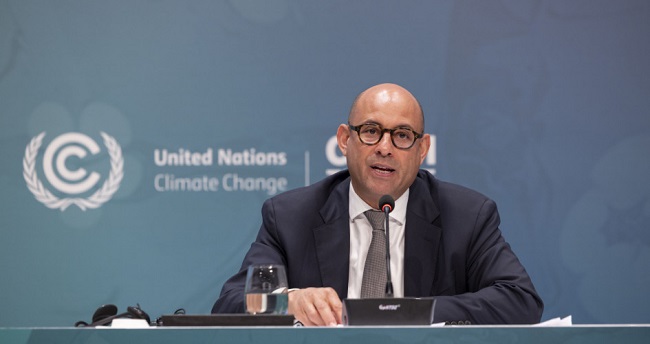
Simon Stiell
UN Climate Change Executive Secretary, Simon Stiell, during a press conference hosted by the COP31 President Designate, Minister Murat Kurum in Istanbul, Türkiye, on Thursday, February 12, 2026

The impacts are reverberating around the world. The World Food Programme predicts that the war could push global hunger to record levels this year.  In Somalia, a country in the midst of severe drought, the price of some essential commodities has risen by at least 20 percent since the conflict began, according to local reports. The Philippines has declared a national energy emergency.

Incredibly however, some argue that the correct response to the current crisis is to slow the shift to renewable energy, and instead double-down on the cause of the turmoil – fossil fuels. This defies economic logic and basic common sense.  With geopolitics in disarray, energy price chaos will keep happening again. Continued dependence on fossil fuels would leave countries forever lurching from crisis to crisis.

It would also mean our planet keeps heating-up, supercharging climate disasters like mega storms, droughts, fires and floods. These are already ruining millions of lives and tearing shreds out of every economy.  In Mozambique, tropical cyclones flooded thousands of hectares of cropland, and impacted more than a million people. In California, wildfires caused over $60 billion in losses last year alone. If temperatures keep rising unchecked, this will only get worse. And yet the cause – fossil fuels – continue to receive trillions of dollars in subsidies globally.

The good news is there is a clear solution to both the climate crisis and the fossil fuel cost crisis: accelerating the shift to clean energy systems – where renewables supply the power, backed by modern grids and storage, and clean technologies, like electric vehicles, replace polluting alternatives.

Sunlight and wind don’t depend on narrow and vulnerable shipping straits. Clean energy like solar and wind power – allow nations to regain control of their economies and security; insulating their countries from global turmoil, while creating jobs, cutting pollution, improving health, boosting stability, and lowering costs. Renewable power is the cheapest there is.

In China, electric vehicles are set to avoid over $28 billion a year in oil import costs. In Pakistan, a recent report shows that the country’s solar revolution could save it up to $7 billion a year in gas imports in 2026.  And in Spain, the country now has some of the cheapest electricity in Europe, thanks to renewables.

Many countries are already seizing these benefits and protecting themselves from climate disasters. But others need support. Over $2 trillion flowed into clean energy last year – twice as much as fossil fuels – but very little went to the vulnerable developing economies that need it most.

That must change urgently. Richer countries – and the international financial institutions they control – have every incentive to ensure that affordable finance flows to developing nations for climate action. Because a truly global shift benefits us all.

In our interconnected global economy, climate disasters hammering supply chains are a major inflation driver for every country. But through international climate cooperation, countries are creating an alternative to the strong-arm politics dominating international affairs.

At UN Climate Change, we’re supporting this cooperation. Our annual conferences, known as COPs, have driven major progress – roughly halving the projected rise in global temperature, transforming global energy markets and supporting resilience-building. But we need to go far faster, and to ensure a just transition, including for economies and communities that have historically relied on fossil fuels.

The quicker countries move, the greater the gains, and the climate cannot wait. So, we’re increasingly focussed on turning climate commitments into real-world outcomes that benefit billions more people. Last year at COP30 in Brazil, $1 trillion was committed to grids and storage, to invest in modern, clean energy systems. This year’s COP31 in Türkiye will drive further progress across sectors and regions.

Today’s turmoil underscores the urgency of this work. Climate cooperation is a cure for the chaos of this moment. Clean energy and climate resilience are essential, not despite global instability but because of it.

Simon Stiell is the UN Climate Change Executive Secretary