Home Blog Page 119

Action exposes critical climate ambition, finance and justice gaps as COP30 nears conclusion

0

As COP30 entered its final hours, climate justice groups and frontline leaders on Thursday, November 20, 2025, staged an action inside the Blue Zone to call attention to the widening climate ambition, finance, and justice gaps blocking real climate progress.

Thursday’s action responded directly to concerns raised in civil society analysis – including an assessment of the COP30 Presidency’s latest draft – which warns that the current text still lacks: A strong commitment for a “transition away from fossil fuels” roadmap towards a fast, fair and funded phase-out of fossil fuels, the primary driver of the crisis, as well as adequate and accessible climate finance – COP30 must deliver real ambition, real finance and a real fossil-fuel phase-out – not symbolic gestures.
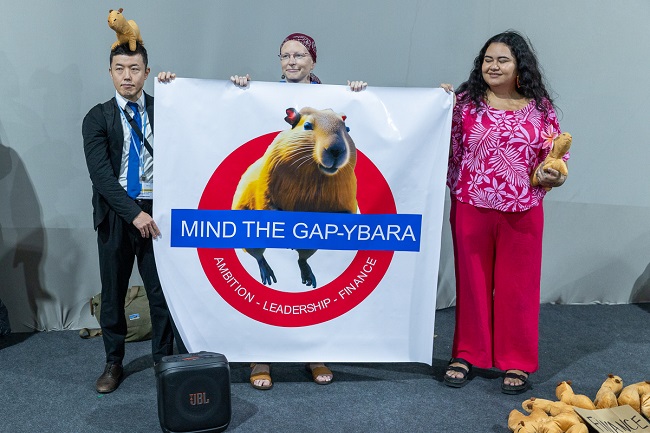
Mind the Gap-ybara
“Mind the Gap-ybara” action at COP30

The action titled “Mind the Gap-ybara” brought together 100 stuffed capybaras, capybara headpieces, banners and signs such as “Capybaras for a Fossil-Free Future”, “No oil in capybara land” and “Capybaras want rivers, not pipelines.”

Short statements were delivered by spokespeople from the Pacific, Africa and the global climate movement, highlighting the urgency of closing these gaps before the COP ends.

Johan Rockstrom, Director of the Potsdam Institute for Climate Impact Research (PIK): “The global curve of GHG emissions needs to bend next year, 2026, not at some undefined point in the future. We need to begin reducing CO₂ emissions from fossil fuels now, by at least 5% per year. This means getting as close as possible to absolute zero fossil fuel emissions by 2040 – and no later than 2045.

“It requires no new fossil fuel investments, the removal of all fossil fuel subsidies, and a global plan to phase in renewable and low-carbon energy sources in a just way while rapidly phasing out fossil fuels. Finance from rich countries to developing countries is imperative.”

Brianna Fruean, 350.org Pacific Council Elder: “This gap in ambition and action cannot be ignored. Our Pacific people are fighting tooth and nail to keep the world below 1.5 degrees and our islands above water. Why must we constantly be the bridge between the world and survival? Our elders deserve to rest and our young people deserve to thrive free from the climate crisis.”

Samuel Okulony, Director of the Environment Governance Institute (EGI) Uganda and an activist with the StopEACOP campaign: “I come from Uganda, a country on the frontlines of the climate crisis, where its impacts are part of daily life. For us, a fossil fuel phase-out is not a bargaining chip – it is the only just and central outcome we expect from this COP. I speak with the voices of thousands of frontline communities, Indigenous peoples, youth, and women who refuse to be ignored any longer. If this is truly the COP of truth, then it’s time to be honest about who caused the climate crisis and to finally put an end to fossil fuels.”

Savio Carvalho, Managing Director of Campaigns Networks, 350.org: “The Presidency’s draft text still doesn’t respond to the urgency outside these negotiating rooms. Without a strong mandate for a fast, fair and funded pathway to phase out fossil fuels, COP30 risks becoming yet another missed opportunity. People across the Amazon, the Pacific and Africa are sounding the alarm, and today’s action made that impossible to ignore. Governments must close the ambition, finance and justice gaps, because without them, there is no credible transition and no climate safety for anyone.”

Carolina Marçal, Project Coordinator at ClimaInfo Institute: “It is urgent that COP30 deliver a roadmap for the just and equitable phase-out of fossil fuels – the only real solution to contain the climate crisis. In the face of limited progress and growing distrust in multilateralism, Brazil must show leadership and rise to the level of the climate emergency. Clear, binding commitments are essential.”
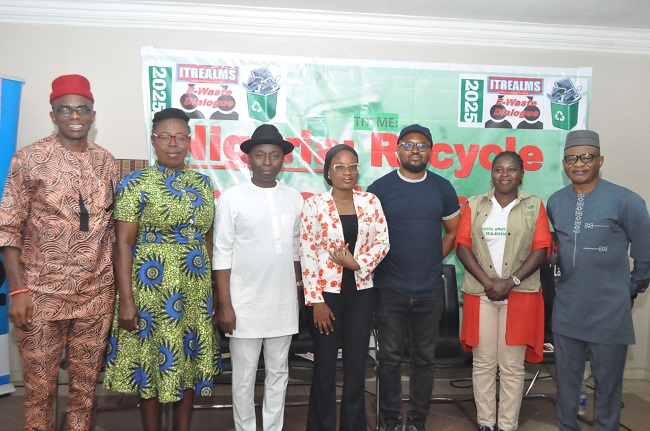
Nigeria’s e-waste crisis reaches critical mass, regulators demand unified action

0

Nigeria’s spiraling electronic waste problem has reached a critical juncture, demanding immediate, unified national action from all stakeholders, from top regulators to individual digital citizens.

This urgent call resonated profoundly at the 2025 ITREALMS E-Waste Dialogue in Lagos, where the nation’s foremost environmental agency issued a stark warning, buttressed by appeals from the event’s convener for a concrete national strategy.

Delivering the keynote address, the Director General/CEO of the National Environmental Standards and Regulations Enforcement Agency (NESREA), Professor Innocent Barikor, who was represented by the Chief Scientific Officer (CSO) at the Lagos State Liaison Office, Olaide Oyedele-Taiwo, underscored that the nation’s rapidly increasing generation of electronic waste is not merely an environmental nuisance but a burgeoning health crisis and a squandered economic opportunity.

eWaste 2025
From left: Host, Editor-in-Chief ITREALMS Media, Ogbuefi Remmy Nweke; Director Operations, ITREALMS Media, Lolo Nkem Nweke; Head Environment, Nigeria LNG Limited, Mr. Weyimi Metseagharun; Executive Assistant E-Waste Producer Responsibility Organisation of Nigeria, Azeezat Alabere; Assistant General Manager, Internet Exchange Point of Nigeria, Mr. Uchechukwu Ugwuanyi; Chief Scientific Officer, NESREA Lagos Liaison Office, Olaide Ayodele-Taiwo and Publisher, Political Economist Magazine, Mr. Ken Ugechie, during the 2025 ITREALMS E-Waste Dialogue with the theme: Nigeria: Recycle Your E-Waste It’s Critical in Lagos on 20-11-2025

“The demand for critical raw materials such as lithium, cobalt, and rare earth elements, vital components in our everyday electronics, is skyrocketing globally,” Barikor stated unequivocally. “Nigeria must position itself not just as a consumer, but as a key player in the circular economy by establishing efficient systems to recover these materials from discarded electronics, rather than allowing them to poison our communities.”

He warned of the dire consequences of informal e-waste recycling, where hazardous materials like lead, mercury, and cadmium are released into the environment, posing severe health risks. “When you don’t recycle your e-waste responsibly, it’s not just clutter; it’s a silent killer lurking in our landfills and informal dumps,” he said, making a passionate plea for immediate behavioral change.

Earlier in the day, Ogbuefi Remmy Nweke, Group Executive Editor of ITREALMS Media Group and Convener of the ITREALMS E-Waste Dialogue, set the stage by extending a warm welcome to a distinguished array of guests, industry leaders, and regulators. He highlighted the significant honour of hosting representatives from key stakeholders including NESREA, the Nigerian Communications Commission (NCC), ALTON, IXPN, NLNG and EPRON, among others, emphasising that their collective presence signaled the e-waste challenge as a national priority.

Nweke traced the journey of the ITREALMS E-Waste Dialogue, noting its evolution over five years. “Five years ago, we began this Dialogue to foster awareness. Today, the conversation must evolve. We have moved beyond merely acknowledging the problem; Nigeria now generates an estimated 1.2 million tonnes of e-waste annually. This burden demands immediate, unified, and practical solutions.”

He explained that this sobering reality informed the blunt and focused theme for the year: “Nigeria: Recycle Your e-Waste … It’s Critical!”

Nweke described this theme as “A call to action. It is a demand for a concrete national strategy. It is an appeal for every digital citizen to take personal responsibility.”

He also previewed the subsequent high-powered panel session, set to dissect the roles of various stakeholders in transforming the crisis into a circular economic opportunity.

Professor Barikor, in his keynote, further cemented the federal government’s unwavering commitment to the full implementation of the Extended Producer Responsibility (EPR) programme in the Electrical and Electronics sector.

This initiative, he explained, places the onus on producers and manufacturers to manage the end-of-life cycle of their products, from collection to recycling.

“The National Environmental (Electrical and Electronics) Sector Regulations are not merely guidelines; they are enforceable laws designed to ensure accountability,” Barikor asserted, signaling a firmer stance from the regulatory body. He indicated that NESREA would intensify its efforts to ensure compliance, stressing that deliberate disregard for these regulations would face stringent enforcement.

Before concluding, Nweke underscored a crucial holistic perspective: “E-waste management is not just an environmental issue; it is a public health, economic, and national security issue.” He affirmed the Dialogue’s mission to leave the event with actionable policy recommendations that will protect Nigeria’s environment and future generations.

Professor Barikor concluded his address by challenging every attendee to become “e-waste ambassadors,” urging them to champion proper e-waste disposal and recycling, transforming it from a niche environmental concern into a daily habit for every Nigerian.

Niger seeks stronger global partnerships against escalating climate threats

0

The Niger State Government has called for stronger global commitment and coordinated action to address the escalating climate challenges threatening economies and communities across the world.

Mr. Yakubu Garba, the Deputy Governor of Niger, made the call in an interview on Thursday, November 20, 2025.

Garba stated that climate action in Niger is not only a local necessity but also a critical contribution to Africa’s global climate commitments.

Yakubu Garba
Yakubu Garba, Deputy Governor of Niger State

“Investing in Niger means investing in the resilience of over six million people, in food security, and in the protection of critical ecosystems that sustain Nigeria’s environmental balance,” Garba said.

He described Niger as a land endowed with rich natural resources, fertile agricultural landscapes, and a population determined to build a sustainable and climate-smart future.

The deputy governor highlighted the state’s Green Sustainable Agenda, stating that climate actions are embedded across governance sector; including agriculture, forestry, energy, water resources, waste management, and sustainable livelihoods.

“The roadmap aligns with Nigeria’s Nationally Determined Contributions (NDCs) and Africa’s broader call for equitable climate finance and fair partnerships.

Garba stated that inspite of the state’s proactive approach; implementing renewable energy initiatives, afforestation programmes, climate-smart agriculture, and youth-led waste-to-wealth enterprises, financial constraints have limited the scale of these efforts.

He urged development partners, climate funds, and private investors to collaborate with Niger in mobilising climate finance through concessional funding, carbon market access, and blended financing mechanisms.

Garba further emphasised the importance of technology transfer and innovation in driving low-carbon development adding that youth participation is central to the state’s green transformation.

“Niger seeks collaboration with research institutions, development partners, and climate investors to promote clean energy, digital climate information systems, and modern agricultural technologies,” he said.

According to Garba, equipping young people with the right tools, training, and technology can create jobs, foster green entrepreneurship, and sustain climate-smart value chains.

“Niger is seeking partnerships to establish green innovation hubs, renewable energy clusters, and digital monitoring systems for effective climate action tracking”.

He cited the direct impacts of climate change on local communities, including unpredictable rainfall, floods, droughts, desert encroachment, and declining crop yields.

“Niger has initiated community-based adaptation programmes that integrate indigenous knowledge with modern scientific solutions, such as land restoration projects, irrigation support, and early-warning systems for farmers,” the deputy governor explained.

By Abigael Joshua

Lagos showcased subnational climate action leadership at COP30 – Official

0

The Lagos State Government has reaffirmed its continental leadership in climate action following a series of high-level engagements at the United Nations Climate Change Conference (COP30) in São Paulo, Brazil.

In a statement on Thursday, November 20, 2025, on Lagos, the state’s Office of Climate Change and Circular Economy (OCCE) said that Lagos featured in three strategic sessions from Nov. 6 to Nov. 8 and showcased flagship programmes.

The office said that the programmes included the 80 Million Clean Cookstoves Initiative and LAMATA’s e-Mobility aimed at attracting global capital for inclusive and measurable climate progress.

Lagos COP30
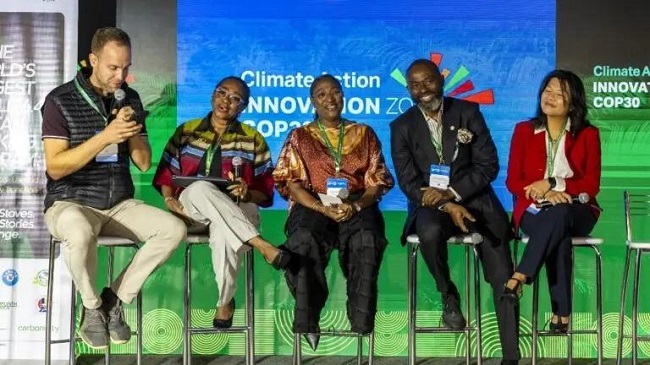
Panelists at the Lagos Private Roundtable at COP30 in Brazil

The Special Adviser to Lagos State Gov. Babajide Sanwo-Olu on Climate Change and Circular Economy, Mrs. Titi Oshodi, said that Lagos went to COP30 to demonstrate catalytic subnational leadership.

“Lagos went to COP30 to demonstrate what true subnational leadership looks like.

“We are proving that African cities can build bankable climate solutions that are inclusive, investable and capable of transforming millions of lives.

“The world is looking for climate ambition-backed by action, and Lagos is stepping forward,” she said.

The official said that active presence of Lagos at COP30 strengthened global partnerships, deepened investor confidence and positioned the state as a model for how African cities could translate climate vision into bankable, people-centred projects.

Oshodi said that the Lagos Private Roundtable with the theme: “Financing Urban Climate Solutions for a Just and Inclusive Transition” brought together development finance institutions, philanthropic organisations and private-sector investors at COP30.

She said that discussions at the roundtable focused on co-financing pathways, de-risking instruments and innovative financing structures capable of scaling green investments in Lagos.

“Key investment outcomes from Lagos’ COP30 participation include commitments to advancing feasibility and financing discussions for clean cooking projects, and interest in co-developing e-mobility pilot corridors with private investors.”

 She added that the outcomes included the need for exploratory talks with international partners on green bond issuances under the Lagos Climate Finance Framework.

“At the Africa Innovation Forum, co-curated by OCCE and Climate Action, Lagos was spotlighted as a leading voice among African cities advancing climate innovation.”

According to Oshodi, the panelists included herself; the Managing Director of the Lagos Metropolitan Area Transport Authority, Mrs. Abimbola Akinajo; the President of Oando Clean Energy, Mr. Demola Ogunbanjo; and Senior Manager, Climate Business Department, International Finance Corporation, Ms. Diep Nguyen-van Houtte.

COP30: Osun leverages digital tools, data to fast-track SDGs implementation

Osun State Government on Thursday, November 20, 2025, said it had leveraged digital tools, data and innovation hubs to fast- track Sustainable Development Goals (SDGs) implementation in the state.

Prof. Chinwe Obuaku-Igwe, the Director-General and Special Envoy of Osun State Government on Climate Change and Renewable Energy, said this during the global launch of “From Waste to Wheels and Watts” initiative of the state.

The launch took place on the sideline of the 30th United Nation Climate Change Conference of the Parties (COP) in Belem, Brazil.

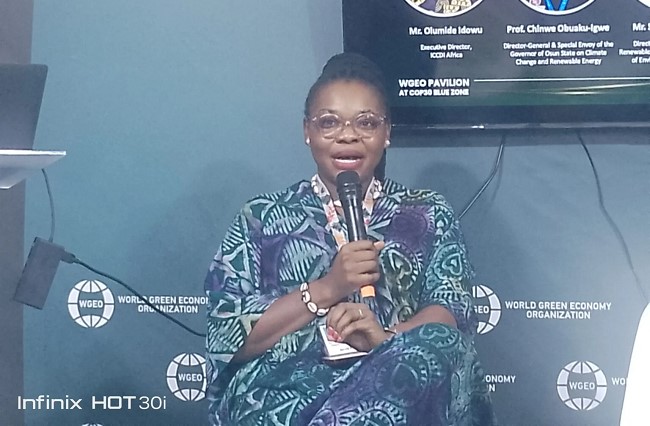
Prof. Chinwe Obuaku-Igwe
Prof. Chinwe Obuaku-Igwe, the Director-General and Special Envoy of Osun State Government on Climate Change and Renewable Energy

According to her, Osun State recognises ending poverty and other deprivations by involving strategies that improve health and education, reduce inequality and spur economic growth via tackling climate change and working to preserve oceans and forests.

Obuaku-Igwe said the state had been positioned as a digital sustainability hub to strengthen data-driven policy and youth innovation to mitigate and adapt the impact of climate change.

She said the circular economy and waste to wealth initiative was designed to transform Osun State’s waste management system into a vibrant green economy by establishing Material Recovery Outlets (MROs) across local communities.

“Also, alongside a referral and tracking system that incentives households, schools and businesses to actively participate in recycling.

“This initiative complements the recycling hub already launched and operational in Osun, while institutionalising the circular economy through strong community and private-sector partnership.

“Institutionalisation of circular economy moves Osun from ad-hoc recycling to a structured, state-wide waste-to-wealth framework,” she said.

She explained that the initiative would reduce landfill burden, lower Green House Gas (GHG) emissions from unmanaged waste and support Osun’s climate action targets, while embedding waste segregation and recycling habits at household and community levels.

She said the state deployed affordable, solar-charged electric bicycle for urban and peri-urban mobility, to reduce fossil fuel reliance in transport.

She further said that “Imole Clean Cook Stove”, an energy-efficient clean cook stove, was also introduced to replace kerosene, firewood and charcoal cooking methods.

The director-general said government distributed solar-power lantern to schoolchildren in underserved rural communities.

“We started by distributing to learners who were writing NECO, then we proceed to distribute to rural dwellers and market women. This improves access to clean, reliable lighting for education, reduce kerosene use and enhances child safety.

“The state also initiated Climate- Smart Farming for Rural Woman to strengthen capacity-building and technology transfer for women farmers to adopt drought-resistant crops, efficient irrigation and organic methods.”

Mr. Femi Dosumu, the Chairman, Greener Climate Limited, said Osun State had participated in the “Go Green Today for a Greener Tomorrow” challenge, an initiative of the First Lady of Nigeria, Sen. Oluremi Tinubu, to promote afforestation and sanitation.

According to Dosumu, who is also a fellow of the Nigerian Society of Engineers (NSE), the state is involved in some efforts to restore degraded landscapes as part of the project.

He said: “Osun State is involved in national efforts to restore degraded forests through National Afforestation Programme (NAP).

“The state government is taking actions to prevent farming and the erection of permanent structures within forest reserves to better manage and secure them and working to relocate farmers who have entered the Shasha forest reserve to other areas.

“The government is collaborating with the Osun State University to develop efficient Measurement, Reporting and Verification (MRV) systems to support national climate goals.”

By Gabriel Agbeja

Green bonds performance signifies global confidence in Lagos – Sanwo-Olu

Gov. Babajide Sanwo-Olu of Lagos says the outstanding performance of the state’s latest bond issuances demonstrates global confidence in the state’s economy, governance structure and long-term development strategy.

At the signing of the state’s Series III Green Bond and Series IV Conventional Bond, on Thursday, November 20, 2025m in Lagos, Sanwo-Olu said the strong investor demand underscored the reputation of Lagos for stability and sustainable growth.

“The overwhelming subscription we received is a vote of confidence in our fiscal discipline, our economic strength and our commitment to environmental sustainability under the THEMES Plus development agenda.”

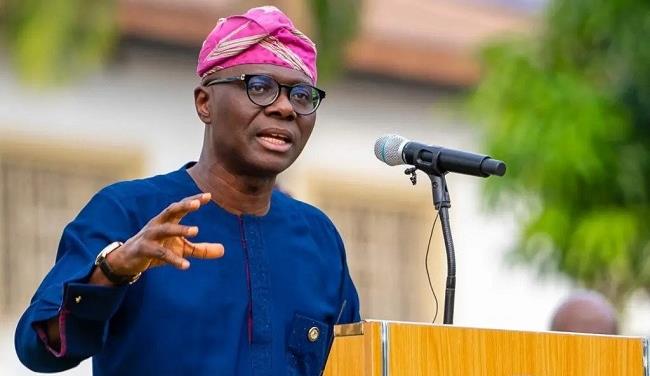
Governor Babajide Sanwo-Olu
Governor Babajide Sanwo-Olu of Lagos State

He gave the assurance  that the funds would be channelled into critical projects in transport, housing, healthcare, education, environmental sustainability and urban renewal.

Sanwo-Olu thanked President Bola Tinubu, Federal Ministry of Finance, Debt Management Office, Securities and Exchange Commission, National Pension Commission, Lagos State House of Assembly, Lagos State Executive Council and technical partners for support.

“This bond success reinforces our credibility and the trust our partners have in Lagos.

“We will ensure every Naira raised delivers value for our people,” he said.

The state Commissioner for Finance, Mr. Abayomi Oluyomi, described the N14.815 billion green bond issuance as a landmark in Nigeria’s capital market.

He said the bond met all international certification standards under the Climate Bonds Initiative and would support Sustainable Development Goals-focused projects.

“These funds will deliver healthcare upgrades, solar energy solutions, improved education infrastructure, strengthened food security systems and an expanded urban transportation network.

“This issuance sets a new benchmark for subnational green financing in Nigeria and shows the commitment of Lagos to global best practices,” he said.

The United Kingdom also commended the Lagos State’s milestone.

Representing the UK Deputy High Commissioner, Private Sector Development Adviser at the Department for International Development, Temilola Akinrinade, said that the feat was laudable.

She said that Lagos State and the entire Nigeria should be proud of the achievement which, she said, reflected strong investor confidence.

By Aderonke Ojediran

Groups urge unity to fight climate change impacts

0

Organisers of the Climate Equity Project have called for stronger collaboration among governments, civil society organisations (CSOs), and community actors to address the growing impacts of climate change across Nigeria.

This was the concession during the Climate Equity Validation Session in Ibadan, Oyo State, on Wednesday, November 19, 2025.

The project, implemented by NETHOPE, the Youth in Agroecology and Restoration Network (YARN) and Ushahidi, aims to amplify the voices of vulnerable communities in Oyo, Osun and Ondo states.

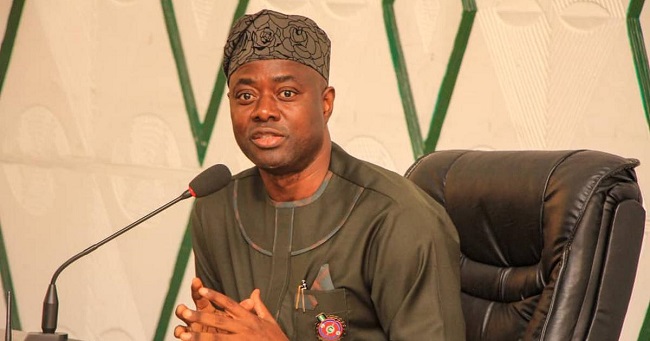
Seyi Makinde
Gov. Seyi Makinde of Oyo State

The Implementation Manager for Ushahidi, Ms. Rhoda Omenya, said the presence of government officials at the validation meeting was a positive indication that the presented data would influence climate adaptation efforts.

“I’m very glad that we had some government representatives in the session, which means they agreed with the data outputs.

“Once the final report is compiled, we hope to present it to them for use in strengthening their adaptation and mitigation strategies.

“I’m hoping this informs climate action policies in the three states, and even nationally,” she said.

Mr. Seyi Olawuyi of YARN said the project exposed the scale of neglect in rural and riverine communities, where residents had repeatedly called for government intervention.

According to him, the data reveal that communities need urgent help.

“We realised that government hands do not reach many of these areas. Flooding is a common problem across Oyo, Osun and Ondo states.

“People complain bitterly about excessive rainfall and the lack of functional drainage systems.

“We are urging the government to do more by providing proper drainage and strengthening infrastructure,” Olawuyi said.

He further stated that CSOs, government agencies and community leaders must jointly undertake awareness creation and sensitisation exercises.

“None of us can do it alone. There should be synergy among all stakeholders so we can provide sustainable solutions,” he said.

Also, Climate Intersections Project Coordinator at NETHOPE, Mrs. Aminat Adebayo, said the initiative aligned with the organisation’s climate equity pillar, which sought to integrate community voices into climate policy.

“Nigeria is clearly vulnerable to the impacts of climate change.

“People know they are being affected. That is, farmers know and communities know.

“They may not call it climate change, but they understand that rainfall patterns have shifted and weather conditions are no longer stable,” she said.

Adebayo said earlier projects in Uganda showed that climate impacts, such as flooding and drought, could even trigger secondary crises, including gender-based violence.

She noted that similar realities informed the organisation’s work in Nigeria.

Adebayo also identified gaps between climate science and local implementation.

“There’s a huge disconnect between what is discussed at global platforms and how it is translated into local action.

“Government involvement is still limited, especially in enforcing policies that address these challenges,” she said.

According to her, participants agreed that collaboration among government, CSOs and community-based groups remains central to tackling Nigeria’s climate challenges.

“People are aware and ready to make changes, but the support system must work,” Adebayo said.

She further stated that the Climate Equity Project’s final report would guide climate adaptation and mitigation programming across the three participating states and support broader national climate-action planning.

The findings highlight recurring climate-related concerns, particularly flooding, excessive rainfall, poor drainage, and low government presence in the most-affected communities.

By Ibukun Emiola

Naira-for-crude policy probe: Reps give stakeholders seven days to tender documents

0

The House of Representatives Ad hoc Committee on Implementation and Oversight of the Naira-for-Crude Oil Policy has ordered all stakeholders to submit requested documents on or before Nov. 27.

Chairman of the committee, Rep. Boniface Emerengwa (PDP-Rivers), gave the order at an abridged hearing on Thursday, November 20, 2025, in Abuja, following the failure of some stakeholders to submit documents and appear before the committee.

“The investigative hearing scheduled for today, November 20, 2025, has been adjourned due to the gross negligence and lack of seriousness displayed by relevant stakeholders.

House of Representatives
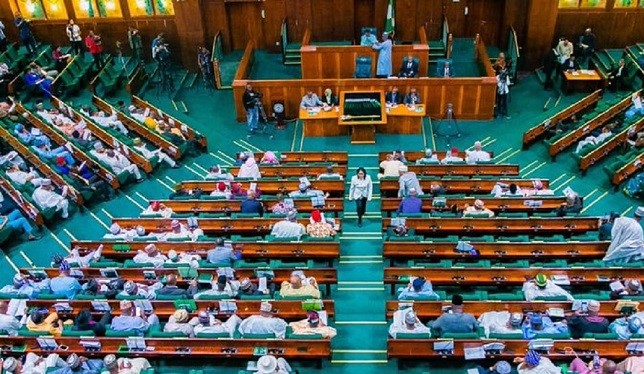
The Nigerian House of Representatives in session

“Despite ample notice, the majority of stakeholders failed to recognise the role of the legislative arm in working with the executive for the effective implementation of the policy by their failure to submit their required documents within the stipulated time frame.

“This dereliction of duty has not only undermined the integrity of the committee’s work but has also cast a shadow of unseriousness over a matter of national importance.

“The committee views this conduct as a blatant disregard for the legislative process and a disrespect to the Nigerian people whose interests we are mandated to protect.

“Let it be unequivocally stated, the committee is deeply disappointed. The failure to submit documents on time has impeded our ability to conduct proper vetting and due diligence, thereby frustrating the investigative process,” he said.

Emerengwa said that the extension was a final opportunity for stakeholders to demonstrate their commitment to transparency and cooperation.

“Furthermore, the investigative hearing has been rescheduled to 2nd December 2025, 12:00 AM, Conference Room 440. This date is final and non-negotiable,” he said.

The lawmaker warned that failure to comply with the extended deadline would attract severe sanctions.

“The committee will not hesitate to invoke its full legislative powers, including but not limited to issuance of summons and subpoenas, public naming and shaming of non-compliant entities, recommendation of sanctions to relevant regulatory and executive bodies and escalation to plenary for further disciplinary action,” Emerengwa said.

The chairman said that the  committee was constituted to ensure transparency, accountability and effective oversight of the policy which had far-reaching implications for the economy and national development.

He advised all stakeholders to treat the ultimatum with the seriousness it deserved, as the policy was not a peripheral issue but one at the centre of the nation’s economic sovereignty and fiscal accountability.

Emerengwa also urged all stakeholders to submit their documents by the new deadline and prepare to appear before the committee on the rescheduled hearing date.

By EricJames Ochigbo

COP30: Brazil, Nigeria partner on carbon emissions reduction

0

The Executive Secretary, Amazon States Consortium, Mr. Marcello Brito, says Brazil and Nigeria have partnered on energy and agriculture to tackle climate change and reduce black carbon emissions.

Brito disclosed this on Thursday, November 20, 2025, in an interview on the sideline of the COP30 United Nations Climate Change Conference of the Parties in Belém, Brazil.

He said that both countries also recently committed to global action on reducing black carbon emissions.

Marcello Brito
Executive Secretary, Amazon States Consortium, Mr. Marcello Brito

“Nigeria and Brazil are collaborating on climate change remedies primarily through the Green Imperative Project (GIP) for sustainable agriculture, and by working together on renewable energy transition and climate finance mobilisation.

“The nations engage in South-South cooperation through the Brazil-Nigeria Strategic Dialogue Mechanism to exchange ideas and technology, and align their climate strategies within the global climate framework, particularly the Paris Agreement.

“These efforts are part of a broader strategic partnership aimed at fostering sustainable development and inclusive growth between the two Global South nations,” he said.

Brito stated that the Brazilian Amazon Interstate Consortium (CAL) and Chinese institutions would strengthen scientific, economic, and environmental cooperation between Brazil and China during COP30.

According to him, the cooperation is geared toward joint solutions in energy, agriculture, biodiversity, and ecological transition.

“The cooperation will focus on forests and infrastructure, air quality and green cities, energy transition, and agricultural innovation with artificial intelligence and regenerative practices.

“It will also centre on the urgency of expanding joint investments in conservation, bioeconomy, science, and technology, with a focus on reducing deforestation and enhancing the environmental and cultural assets of the Amazon.

“As a legacy, a bilateral technical document will be published, presenting recommendations and successful experiences from both countries.

“This will consolidate partnership between Legal Amazon Consortium and Chinese institutions around a common agenda of sustainability, innovation, and shared prosperity,” Brito said.

By Gabriel Agbeja

Nestoil, Neconde regain control as court nullifies receivership

0

In a decisive ruling that appears to reset one of Nigeria’s most closely watched commercial disputes, the Federal High Court in Lagos has vacated the sweeping ex parte order previously granted against Nestoil Limited and Neconde Energy Limited, restoring both companies to full control of their assets and operations.

Justice Daniel Osiagor, who recently took over the matter, declared that all prior orders issued by Justice Isaac Dipeolu had lapsed by law, stressing that ex parte orders are temporary safeguards – not instruments to cripple businesses or deny fair hearing. He noted that the case is now starting de novo, making the earlier rulings null and void.

Nestoil
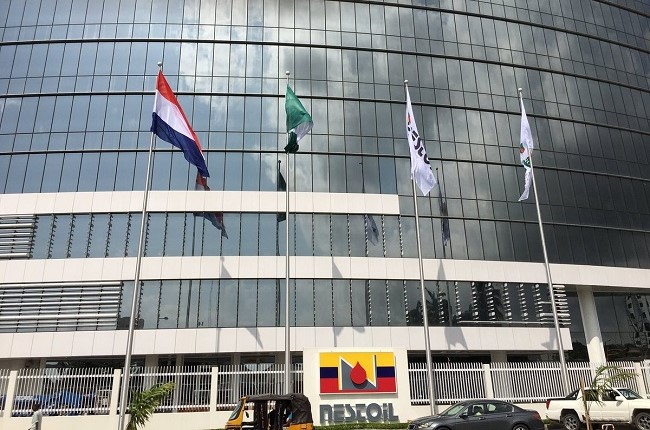
Nestoil

The vacated order had placed Nestoil and Neconde under receivership, a move that drew widespread backlash from civil society groups, legal analysts, and industry stakeholders, who argued that it was excessive, improperly granted, and based on incomplete disclosures by the plaintiffs, FBNQuest Merchant Bank and First Trustees.

Senior lenders including Glencore Energy UK, Fidelity Bank, Mauritius Commercial Bank and Africa Finance Corporation had earlier filed extensive affidavits challenging the legality of the ex parte order. They revealed that Neconde’s interest in OML 42 was already under a first charge in their favour – making it unlawful for any secondary charge to be created without their consent. They insisted that these facts were knowingly withheld from Justice Dipeolu.

When the matter was called on Thursday, November 20, 2025, Chief Wole Olanipekun (SAN), appearing for the defendants, urged the court to vacate the order, arguing that the previous ruling had expired after 14 days and could not continue to operate. Justice Osiagor agreed, confirming that all parties would now be heard on merit and that the era of far-reaching orders obtained without full disclosure had come to an end.

With the order now vacated, Nestoil and Neconde have regained full operational independence. Both companies reaffirmed their commitment to transparency, ethical business conduct, and the highest standards of corporate governance. They also signaled readiness to pursue an independent forensic reconciliation of their loan accounts, potentially through the Central Bank of Nigeria’s Consumer Protection Unit.

Industry watchers say Thursday’s ruling signals a reaffirmation of due process and commercial fairness in Nigeria’s judicial system. It also offers reassurance to local and international investors who had been closely monitoring the dispute.

As proceedings begin afresh under Justice Osiagor, stakeholders are hopeful that the court will fully address the substantive issues, including alleged unlawful debits, unexplained penalties, and prolonged refusal by lenders to release detailed account statements.