The World Health Organisation (WHO) on Monday, November 3, 2025, released new guidance for countries on ways to counter the immediate and long-term effects of sudden and severe cuts to external funding, which are disrupting the delivery of essential health services in many countries.
The new guidance, called “Responding to the health financing emergency: immediate measures and longer-term shifts”, provides a suite of policy options for countries to cope with the sudden financing shocks, and bolster efforts to mobilize and implement sufficient and sustainable financing for national health systems.
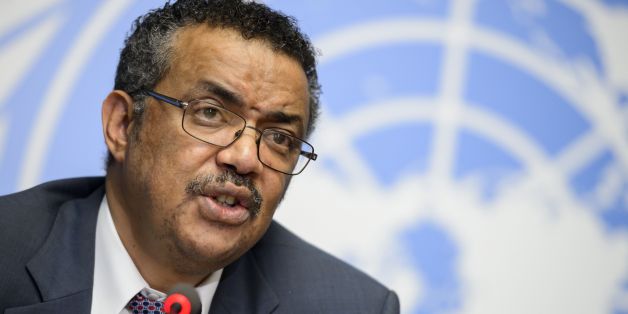
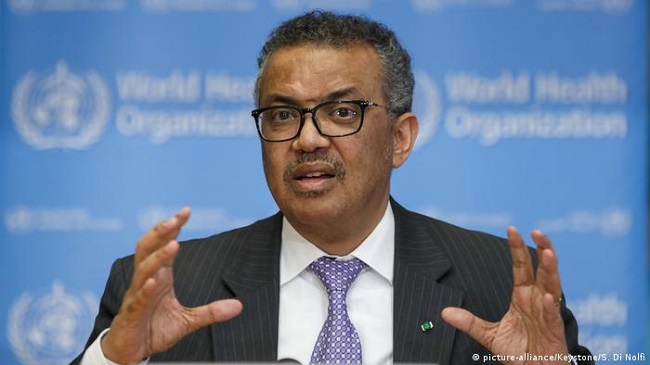
Dr. Tedros Adhanom Ghebreyesus, Director-General, World Health Organisation (WHO)
External health aid is projected to drop by 30% to 40% in 2025 compared with 2023, causing immediate and severe disruption to health services in low- and middle-income countries (LMICs). WHO survey data from 108 LMICs collected in March 2025 indicate that funding cuts have reduced critical services – including maternal care, vaccination, health emergency preparedness and response, and disease surveillance – by up to 70% in some countries. More than 50 countries have reported job losses among health and care workers, along with major disruptions to health worker training programmes.
“Sudden and unplanned cuts to aid have hit many countries hard, costing lives and jeopardizing hard-won health gains,” said Dr Tedros Adhanom Ghebreyesus, WHO Director-General. “But in the crisis lies an opportunity for countries to transition away from aid dependency towards sustainable self-reliance, based on domestic resources. WHO’s new guidance will help countries to better mobilize, allocate, prioritize and use funds to support the delivery of health services that protect the most vulnerable.”
This year’s funding cuts have compounded years of persistent health financing challenges for countries, including rising debt burdens, inflation, economic uncertainty, high out-of-pocket spending, systemic budget underfunding and heavy reliance on external aid.
Swift action guided by efficiency and equity
WHO’s new guidance urges policy-makers to make health a political and fiscal priority in government budgets even during times of crisis, seeing health spending as not merely a cost to be contained, but an investment in social stability, human dignity, and economic resilience.
The guidance emphasises the need for countries to cushion the immediate impact of reductions in foreign assistance for health, and to adapt to a new era of reduced assistance. Key policy recommendations include:
prioritise the health services accessed by the poorest;
protect health budgets and essential health services;
improve efficiency through better procurement, reduced overheads and strategic purchasing;
integrate externally-funded or disease-specific services into comprehensive PHC-based delivery models; and
use health technology assessments to prioritise services and products that have the greatest health impact per dollar spent.
Country leadership and global solidarity are critical
Several countries have already taken decisive action to strengthen their health systems and protect essential health services:
Kenya, Nigeria and South Africa have allocated additional budget funds to health, or are awaiting parliamentary approval for increases;
Nigeria increased its health budget by $200 million to offset aid shortfalls, with increased allocations for immunisation, epidemic response, and priority programmes;
Ghana lifted the cap on excise tax earmarked for its national health insurance agency, resulting in a 60% budget increase. The country also launched “the Accra Reset”, a bold framework to reimagine global governance, financing and partnerships in health and development; and
Uganda has outlined a clear policy agenda for integration of health services and programmes, aiming to improve efficiency and sustain service delivery.
The new guidance builds on WHO’s commitment to help all countries strengthen and sustain robust health systems, built on a commitment to universal health coverage, underpinned by strong primary health services delivering essential care to all who need it.
It also aligns with existing World Health Assembly mandates, including resolutions on “Strengthening health financing globally” and “Economics of health for all,” to translate global commitments into actionable policy steps.
WHO and its partners are said to be committed to providing technical support, analytics and peer learning to countries to manage the health financing crises and navigate the transition, including through the new UHC Knowledge Hub, a partnership with the Government of Japan and the World Bank, set to be launched in December 2025.
The Guild of Corporate Online Publishers (GOCOP) and the International Press Centre (IPC) signed a Memorandum of Understanding (MoU) on Monday, November 3, 2025, to advance inclusive reporting of gender issues in the democratic and electoral process.
GOCOP President, Danlami Nmodu, mni, signed on behalf of the Guild, while Lanre Arogundade, ICP’s Executive Director, signed on behalf of ICP. Monday’s ceremony comes after the IPC’s consultative session with GOCOP leadership held in Abuja on Friday, May 30, 2025.
Signing of MoU by the Guild of Corporate Online Publishers (GOCOP) and the International Press Centre (IPC)
In his brief remarks before the MoU signing, Nmodu said GOCOP’s decision to collaborate with the IPC formed part of the Guild’s commitment to promoting inclusiveness and gender equality in Nigeria. He recalled that the collaboration between GOCOP and IPC commenced during the tenure of its first female president, Maureen Chigbo, adding that, under his leadership, the Guild will fully implement the MoU as part of its pledge to improve the visibility of women and other minority groups, such as Persons With Disabilities (PWDs), in politics and governance.
He assured that the leadership of GOCOP would spearhead the engagement of women, promote women’s voices and also focus on the sensitisation of female voters on politics, governance, accountability and transparency.
Speaking on promoting trust in the electoral process, Nmodu, stated that, to promote the trust of citizens, elected public office holders must meet the expectations of the electorate.
He also assured that GOCOP members would prioritise the reportage of the implementation of the manifesto of elected candidates as well as the promises made by them during campaigns.
“We believe that the signing of this MoU is coming at the right time, we’ve just had a change of leadership. The new executive is determined to ensure that this partnership between GOCOP and IPC works.
“At GOCOP, we are committed to deepening the reportage of gender issues. We are determined to ensure that we engage, sensitise and enlighten women on elections, governance and other issues of national importance. All of these are to ensure that we widen the scope of female participation in all spheres of society,” Nmodu said.
IPC Executive Director, Lanre Arogundade, in his remarks, explained that the MoUs signed with GOCOP and the Nigeria Association of Women Journalists (NAWOJ) are targeted at ensuring inclusivity, accountability and transparency in the electoral process. He called on GOCOP and NAWOJ to lead the push for impartial election monitoring and reportage, adding that the media should also scrutinise elected government officials, taking them to task on campaign promises.
He said: “As Nigeria approaches the 2027 general elections, discussions regarding electoral trust and stakeholder confidence have become increasingly prominent. A critical factor in the discourse is the understanding that the integrity of any election is determined not only by its final outcomes, but also by the process that precedes them-including voter registration, vote collation and the subsequent announcement of results.”
Earlier in her speech, the National Chairperson of NAWOJ, Aisha Bura Ibrahim, expressed the readiness of the Association to amplify the position of women in politics and governance.
Ibrahim called for credible elections even as she reiterated NAWOJ’s commitment to improving the reportage of issues affecting women.
She stated the need to train and retrain female journalists, improve newsroom management to expand the opportunities for female reporters as we all as widening of access to platforms such as the agreement between NAWOJ and IPC presented.
She said: “NAWOJ insists that inclusive elections are trusted elections. Women must be visible as voters, candidates, election observers, and commentators. By amplifying women’s voices, NAWOJ promotes broader social trust and legitimacy in democracy.
“NAWOJ urges electoral bodies, security agencies, and political parties to maintain openness, fairness, and communication with the public. Transparency in vote counting, result transmission, and dispute resolution is essential for restoring public confidence.”
President of the Nigeria Labour Congress (NLC), Joe Ajaero, who also spoke at the event, commended IPC, GOCOP and NAWOJ for taking the bold step to increase the visibility of women in the media.
He called on the media to stand on the side of the people and not to serve as the megaphone of the government. He maintained that the media must serve as the compass to guide the nation, especially in critical moments such as the general elections.
SP Orvenonne Ikwen, the Strategic Communications Officer, Force Public Relations Department, Force Headquarters, who represented the Nigeria Police Force at the meeting, said the police would collaborate with the media to deliver on a peaceful and credible election come 2027.
Stakeholders were also presented with IPC’s report on Safeguarding Electoral Integrity For Democratic Consolidation. The report is a component of the European Union Support to Democratic Governance in Nigeria (EU-SDGN) as executed by IPC.
The Corporate Accountability and Public Participation Africa (CAPPA) has sounded a warning on the direction of Nigeria’s mining sector. The CAPPA board stated that the global energy transition has triggered an aggressive hunt for lithium and other “green minerals” essential for batteries, electric vehicles, and digital infrastructure.
While corporations present this as a new economic frontier and the Nigerian government recently celebrated that the mining sector now contributes about 4.6 percent to national GDP – up from less than half a per cent a decade ago – the board stressed that this growth is unfolding alongside land grabs, forced displacement, environmental degradation, and the return of concession-style politics in host communities.
Auwal Musa Rafsanjani
The board stated plainly that Nigeria risks repeating the tragedy of the Niger Delta all over again, where oil wealth produced national revenue but destroyed entire ecosystems and livelihoods. It stressed that unless the government enforces strong regulation, guarantees community consent, and ensures transparent governance, the country will simply replace one resource curse with another.
The board reminded policymakers that there is no just transition if communities do not share in its gains. CAPPA called for a people-centred resource framework that treats land, water, culture, and livelihoods as more than collateral for investment. It urged Nigerians to question any development model that enriches a few while displacing many and devastating the environment.
Reaffirming its commitment, CAPPA vowed to expand alliances with labour movements, grassroots organisations, women’s groups, youth formations, and community defenders across the continent. It declared that the fight for public accountability and participation is one struggle that cannot be won by scattered voices.
CAPPA has announced prominent Nigerian civil rights leader, Auwal Musa Rafsanjani, as the new Chairman of its Advisory Board, following a Board Election held over the weekend. The organisation described his emergence as a renewed mandate to intensify its defence of people, public resources, and democratic space across Nigeria and the African continent.
Beyond his long-standing civil society leadership, Mr. Rafsanjani also serves as the Executive Director of the Civil Society Legislative Advocacy Centre (CISLAC) and the Head of Transparency International in Nigeria. He presently chairs the Board of Trustees of Amnesty International Nigeria, leads the Zero Corruption Coalition, and co-convenes the Say No Campaign.
His work has spanned regional and global platforms, including his role as past Sub-Saharan Africa representative on the Coordination Committee of the UN Convention Against Corruption (UNCAC) Civil Society Coalition. A founding member of the Transition Monitoring Group, he has spent over three decades advancing extractive transparency, anti-corruption reforms, human rights, and legislative advocacy across West Africa.
In its statement to the media, CAPPA said it is confident that Mr. Rafsanjani’s formidable experience in anti-corruption campaigns and policy advocacy would strengthen its work across Africa. The organisation noted that his leadership arrives at a time when civic space is shrinking, state resources are being commercialised, and communities face the double risk of economic exclusion and environmental harm.
The Advisory Board also includes Akinbode Oluwafemi, Executive Director and Board Secretary; Evelyn Nkanga Bassey, Treasurer; Scott Pegg; Kayode Ogunbunmi; Betty Abah; and Doifie Buokoribo. Together they bring experiences in policy-advocacy, environmental and rights activism, global-development practice and community-defence organising, stated CAPPA.
Speaking after his election, Mr. Rafsanjani noted that his priority is to anchor CAPPA more firmly as a fearless watchdog for public good. He highlighted the organisation’s work in public health advocacy, environmental protection and extractive justice, democratic rights, and defence of public services as core areas that will receive stronger institutional backing and clearer strategic direction.
Natural grazing by large ungulates improves conditions for vegetation growth, promotes the storing of organic substances in the soil, and enhances water retention in the landscape.
This has been demonstrated in the research conducted by scientists at the reserve of large herbivores in the former military area of Milovice, one of a number of sites where European bison, wild horses and back-bred aurochs live across Central Europe.
“Year-round grazing by large ungulates reduces the average amount of aboveground plant biomass while also increasing its ‘nutritional’ quality. The vegetation contains more nitrogen and water, making it more nutritious for animals and also more efficient at managing water,” explains Eva Kastovska from the University of South Bohemia in Ceske Budejovice, Czech Republic.
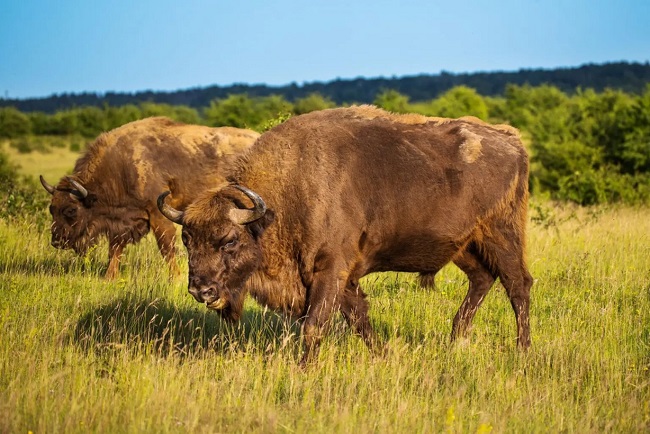
European wildlife: European bison in the European Serengeti. Photo credit: Michal Köpping
This is precisely what fundamentally distinguishes natural grazing by large herbivores from intensive livestock grazing. “The underground plant biomass remains unaffected – it does not decrease, as often appears during intensive grazing, when animals repeatedly nibble on the growing aboveground parts of plants.
Thanks to this, the vegetation has enough time to regenerate, absorb sufficient nutrients and water through its roots, and supply the soil with organic matter that supports its recovery. In this way, they contribute to the formation of soil organic matter, which is closely linked to water retention,” says Kastovska, describing the process behind the long-term sustainability of grazing ecosystems.
Even at the height of summer, the vegetation in the pastures of large ungulates remains vigorous.
“Grazing naturally connects the needs of plants with the activity of soil microorganisms. We observed improved nutrient uptake – primarily nitrogen, but also phosphorus – in grazed herbage. In our opinion, these closer links support the self-regulation of the system and its ability to respond flexibly to environmental changes, including weather extremes such as droughts,” emphasises Kastovska.
As such, natural grazing by large herbivores has great potential in Europe to help with water retention in the landscape, which, taken together with progressing climate change, is becoming an increasingly serious problem in this country.
“Large ungulates bring several significant benefits to nature conservation. In addition to water retention in the landscape and soil restoration, they also support biodiversity, promote carbon storage in the soil, and reduce the risk of wildfires. This is why this approach is becoming increasingly popular in the environmentally conscious countries of Western Europe. Moreover, this solution is financially efficient,” added Dalibor Dostal, director of the European Wildlife conservation organisation, which founded the Milovice Reserve for large ungulates in cooperation with scientists in 2015.
Year-round natural grazing, also known as trophic rewilding, is increasingly being used for the management of open landscapes. This approach has the potential to mitigate biodiversity loss and climate change.
Everland, a specialised conservation marketing organisation in the climate change mitigation business, has secured Letters of Intent totaling $160 million from companies seeking to purchase carbon credits from a new portfolio of Indigenous and traditional community-centred forest conservation projects in greater Amazonia, to be developed with financing from its Indigenous Amazon Outcome Bond initiative.
So far, 23 projects representing nearly 90,000 local and Indigenous community members across 17 million hectares of Amazonian rainforest have submitted Expressions of Interest to the ongoing application process.
The initiative aims to provide $50 million in upfront capital to launch up to 20 new Indigenous-centred REDD+ forest conservation projects in the Amazon to be verified under the new Equitable Earth Standard – as a means to catalyse $1 billion over the first 10 years of operations.
Belem, Brazil – November 01: (L-R) Thibault Sorret, CEO of Equitable Earth, Gerald Prolman, Executive Chairman of Everland, Nicia Coutinho, CEO of Greendata, Center for Socioeconomic and Environmental Management and Innovation, Concita Sompre, President of FEPIPA, Fernanda Ribeiro, Director of Institutional Partnerships at Panthera, and Ricardo Guimaraes, CEO of BNP Paribas Brazil during the 2025 Global Citizen Festival: Amazonia at Mangueirao stadium on November 01, 2025 in Belem, Brazil. Photo credit: Alexandre Schneider/Getty Images for Global Citizen
Concita Sompré, Indigenous leader of the Gavião Kyikatejê people in Pará, Brazil, welcomed the progress of the initiative, saying: “This is the kind of private sector action that climate justice demands. Today, I am filled with hope,”
Somprécontinued: “because through the Indigenous Amazon Outcome Bond, we are seeing Indigenous leadership and the private sector come together with one shared heart and one shared purpose. Together, we can build a model that values people and planet, and that can grow, multiply, and inspire others around the world.”
Speaking to the crowd of more than 50,000 gathered in Belém at Global Citizen Festival: Amazônia last Saturday (November 1, 2025) and flanked by representatives of the partnership behind the initiative, Sompré led a moment on stage to recognise the importance of the initiative as well as the dedication and commitment of the partners – including Everland, BNP Paribas, Panthera, Equitable Earth, Forest Trends, and the companies that have stepped forward to pledge their support.
The $160 million of Letters of Intent to negotiate forward purchase agreements marks a critical step toward unlocking development financing for a new portfolio of Indigenous and traditional community-centered forest conservation projects in the greater Amazon: fully executed forward purchase agreements will enable the projects to secure development financing through the outcome bond mechanism.
Everland is continuing the process to identify and assess potential projects from those that have submitted Expressions of Interest so the initiative can provide $50 million in upfront capital to further develop up to 20 Indigenous-centred REDD+ forest conservation projects in the greater Amazon, to be verified under the new Equitable Earth Standard. A first wave of five projects is anticipated to be selected by end 2025.
Upfront capital provided through the initiative will be used to further develop forest conservation projects and implement conservation activities that, if successful, will generate high-integrity carbon credits over the 40-year lifespan of the REDD+ projects. The sale of these carbon credits is projected to channel more than $1 billion to the 20 projects over their first 10 years, with communities receiving the majority of this revenue to invest in their own self-determined goals. For all projects in Brazil, communities will receive at least 70% of revenue.
An important focus for the initiative will be supporting projects located within priority landscapes established by Panthera that form the Jaguar Corridor – a mosaic of landscapes that connect and protect jaguar populations alongside countless other species. Through this partnership, Panthera will serve as biodiversity adviser to the initiative – particularly on apex species like the jaguar – making their expertise available to all the projects the initiative supports.
“This is the moment for courage. Science shows us what’s at stake – the survival of life on Earth as we know it – and the truth reminds us of what’s right: to protect the forests and stand with and invest in the Indigenous guardians who protect them. For too long, hesitation and doubt have replaced action.
“Now, we have a clear, credible path forward, built on respect, partnership, and integrity. The question is no longer if we can act, but whether we will – while there’s still time. To every company that has ever claimed to care about the planet: join us now. The window is open, but it will not stay open for long,” said Gerald Prolman, Executive Chairman, Everland.
“By investing in the long-term stewardship of the Amazon’s ultimate guardians – Indigenous and traditional communities – this initiative takes us closer to realising the vision of the Jaguar Corridor first championed by Dr. Alan Rabinowitz. Panthera will proudly make our cutting-edge science and decades of field experience available to the projects the initiative supports, helping to guide how they measure and monitor biodiversity and maximising impact for jaguars and other threatened species.
“This work forms part of our broader effort to drive a paradigm shift in conservation finance – one that values the bond between communities and wildlife, and secures the future of the landscapes we share,” said Dr. Frédéric Launay, CEO, Panthera.
“Today’s news is an important step toward ensuring that climate finance reaches the communities protecting our most vital ecosystems. Through our new standard, we are proud to provide the technical foundation to translate the initiative’s investments into lasting, verifiable outcomes for forests, people, and climate – setting a new benchmark for integrity and impact in nature-based finance,” said Manuela Yamada, Director of Certification, Equitable Earth.
“The scale of interest from both prospective buyers and projects shows that the world is finally beginning to recognise what Indigenous Peoples have always known: protecting forests is inseparable from supporting the communities who safeguard them. By channeling investment toward projects seeking certification under the Equitable Earth Standard, this initiative sets a new benchmark for how private capital can drive climate action grounded in equity, integrity, and Indigenous leadership,” said Beto Borges, Director, Communities and Territorial Governance Initiative, Forest Trends.
Civil society organisations, government institutions, and media representatives have agreed to form a coalition to monitor and promote transparency in climate finance management across Nigeria.
This was one of the major outcomes of a four-day capacity-building workshop on Climate Finance and Green Projects convened by Heinrich Bӧll Stiftung (hbs) Nigeria in collaboration with LQY SPV Ltd, and held in Abuja, from October 28 to 31, 2025.
The workshop brought together 67 participants from 44 organisations, including representatives of the Federal Ministry of Finance, Budget and National Planning, Federal Ministry of Environment, National Council on Climate Change (NCCC), Fiscal Responsibility Commission, Nigeria Governors Forum, civil society organisations, and journalists from leading media outlets.
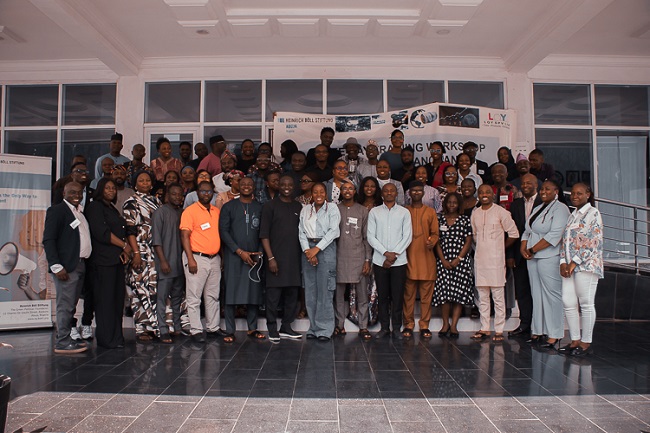
Participants at the Heinrich Bӧll Stiftung (hbs) four-day capacity-building workshop on Climate Finance and Green Projects in Abuja
Nigeria’s recently updated Nationally Determined Contribution (NDC 3.0) aims to cut emissions by up to 80% on a conditional basis requiring over USD 323 billion in climate financing. However, limited access to finance, weak institutional coordination, and poor data transparency continue to hinder progress.
The hbs Nigeria workshop sought to address these gaps by equipping both government and civil society actors with practical tools to design, manage, and monitor green projects while ensuring transparency, inclusion, and accountability.
Over the four days, participants explored key themes such as climate finance instruments, green bonds, project design, policy alignment, gender-responsive budgeting, and accountability frameworks. Facilitators drawn from policy, finance, and development sectors guided participants through exercises that simulated real-world scenarios of green project funding and oversight.
“This initiative bridges the gap between civic actors and public institutions in ensuring that climate finance truly delivers results for people and the planet,” said Mr. Obi Ugochukwu, Team Lead at LQY SPV Ltd.
One of the most significant outcomes of the training was the formation of a Coalition on Climate Finance Monitoring and Transparency, comprising civil society groups, journalists, and policy advocates.
The coalition will collaborate with government agencies to track climate finance flows, monitor green projects, and engage financial institutions such as the Central Bank of Nigeria (CBN) to enforce sustainability principles and prevent greenwashing in the private sector.
According to participants, the coalition will also play an important role in ensuring public disclosure of data on climate projects and improving coordination among ministries, departments, and agencies (MDAs).
Representatives of the Federal Ministry of Finance, Federal Ministry of Environment, NCCC, and the Fiscal Responsibility Commission commended hbs Nigeria for initiating the dialogue and pledged to support efforts toward institutionalising transparency and accountability in green financing.
At the subnational level, the Nigeria Governors Forum (NGF) announced plans to replicate the training in different states, mapping potential green projects and training subnational governments to develop and finance green projects, while encouraging CSOs participation in ensuring sustainable and accountable implementation processes.
Meanwhile, media representatives committed to working with the coalition and NCCC to track climate finance allocations in national and state budgets, and to report on progress and gaps in green project delivery.
“This collaboration between journalists, CSOs, and government can redefine how public resources for climate action are tracked and reported,” noted one participant from the Centre for Social Justice.
The National Council on Climate Change (NCCC) reaffirmed her commitments to work with all stakeholders to strengthen Nigeria’s climate finance governance framework. Participants also agreed to mainstream Gender Equality and Social Inclusion (GESI) principles in all project design and monitoring activities, ensuring that climate finance benefits women, youth, and vulnerable communities.
According to hbs Nigeria’s representative – Mr Donald Ikenna, “Transparency in climate finance is key to achieving Nigeria’s just transition. By empowering CSOs and journalists, we are building a movement that can hold systems accountable.”
The workshop marked a critical step in bridging the gap between policy ambition and financial accountability in Nigeria’s climate response. With the new coalition and institutional commitments, Nigeria now has a stronger foundation for ensuring that climate finance delivers real, measurable impact.
At the Kofar Mazugal abattoir in Kano, the morning air in September 2025 reeks of blood and smoke. Butchers hurry between carcasses, blades flash, and the cries of cows, goats, and camels pierce the din. For decades, this chaos drew hundreds of vultures circling and swooping on the remains.
Today, not one hovers over the slaughter slab. A mix of economic desperation, deep-rooted belief, and weak environmental enforcement is driving vultures toward extinction.
“The vultures would come around here in the morning and leave in the evening,” recalls Zubairu Lawal, a 64-year-old butcher who has worked here since his youth. “In the 1990s, they were in their hundreds. We butchers never killed them. They just came to feed on the remains of the animals. Now, I have not seen one for years.”
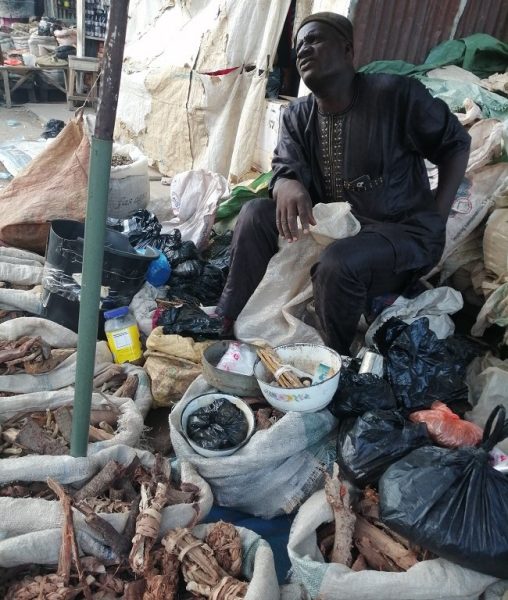
Traditional doctor, Naziru Usama, is attending to his customers. Photo credit: Francis Annagu | Dataphyte
Where hundreds of vultures once fed, only the cattle egret (belbela in Hausa), a smaller scavenger bird, now picks at scraps. “The younger generation confuses them with vultures,” Mr. Lawal says, shaking his head. “Vultures are gone. What we have now are cattle egrets.”
Once nature’s free waste managers, vultures are disappearing from Kano, northern Nigeria’s main cultural and trade centre, not from disease or habitat loss but from a growing trade in their body parts for fortune charms and traditional medicine.
In Rimi and Kurmi markets, two of Kano’s oldest trading centres known for their herbal and spiritual medicine stalls, vultures have become prized commodities. Their parts now fuel a shadow economy of hunters and healers who cater to clients seeking luck, power, or protection.
“Everything About a Vulture is Costly”
At Rimi Market, known for its clusters of herbal medicine stalls and animal part traders, healers and merchants sell powders, skins, bones, and charms used in traditional rituals. Within this bustling mix of commerce and spirituality, the vulture trade has found fertile ground and continues to thrive.
Under a roadside umbrella in Rimi Market, traditional healer Naziru Usama mixes herbs for a customer, then lowers his voice. “Everything about a vulture is costly,” he says. “The head alone costs N60,000.”
Mr. Usama, who has practised traditional medicine for decades, says vultures are now scarce in Kano, found only deep in forests between Kano and Bauchi, or farther away in Taraba and Cameroon.
“We get different kinds of orders,” he explains. “Some ask for the eyes, feet, or even the things vultures pick from the ground. Someone once offered N500,000 for two vultures.”
He smiles faintly. “Just last week, someone offered N750,000 for the one I have, but I declined.”
During a visit to Mr Usama’s stall, he led Dataphyte into a dimly lit room beside his shop, where a vulture stood confined in a rough wooden cage. Mr. Usama explained that the bird’s parts are used for charms and incense rituals.
“There’s a charm I make using the wings,” he said. “After burning them on coal, we use the smoke to bathe or sprinkle on a person. It brings good luck. We call it turaren wuta, a burning incense believed to carry supernatural powers.”
Mr. Usama’s account echoes what conservationists have warned for years: that belief in the mystical potency of vultures, especially for fortune charms known locally as tsaraka, is fast driving the species toward extinction.
When Dataphyte asked if herbs could be used instead, he replied, “It depends on the strength of the charm. You can find herbs, yes, but they’re not as effective. That’s why people insist on using the bird.”
He paused, glancing at the caged vulture. “In the last ten years, everyone wants quick luck,” he said quietly, then added, “That’s why the demand has grown.”
“When We Were Growing Up…”
Abubakar Umaru Manu, a 72-year-old community elder in Gwale, recalls a different time when Dataphyte visited his home.
“When we were growing up in the 1960s and 1970s, vultures roamed our communities,” he says. “Today, they’ve been hunted down by humans. The young people, those in their thirties, don’t know them; they have never seen one unless on television.” To him, this generational disappearance is a terrible loss. “If an entire generation grows up never seeing what was formerly common,” he says, “then we have lost part of ourselves.”
His reflection captures a disturbing truth in northern Nigeria’s biodiversity crisis, the slow, unnoticed extinction of species once integral to everyday life.
Back at the abattoir, his words ring true. Nearby, a group of younger butchers laugh as they work. When Dataphyte asked if any of them had ever seen a vulture alive, not one had.
Between Beliefs, Fortune, and Extinction
At Kurmi market, Dr Garba Gaye Sulaiman, a herb seller trained in both traditional medicine and public health, tries to bridge the worlds of science and tradition.
“We know vultures have always had a place in Hausa healing,” he explains. “People come looking for protection from poison, from business failure, from spiritual attack. They believe the bird’s strength comes from surviving on the dead without falling ill.”
His small shop smells of dried animal skins, bones, shells, and incense. Jars filled with powders and roots line the entrance. “For protection from hidden poison,” he says, “we use the head or eyes. Sometimes we dry the feathers and burn them. The patient inhales the smoke or bathes in it.”
But he admits to a moral struggle. “I know killing vultures is illegal. They are disappearing. I tell my colleagues to use substitutes. The power lies in the prayer and ritual, not just the animal. But still, some insist, they believe the real power is in the bird.”
He leans forward and sighs. “In the last decade, the demand for charms has surged,” he adds. “People feel helpless and seek power wherever they can find it.”
Dr Sulaiman believes education could offer hope. “We can keep our culture without destroying nature,” he says. “If we teach people that prayer and faith are what make the charm work, maybe the vultures will survive.”
But he adds wistfully, “As long as poverty and fear remain, people will keep looking for power no matter the cost.”
The Numbers Behind the Silence
In 2017 and 2018, NCF surveys found no vultures left in the wild in Kano, suggesting possible local extinction. Similarly, a 2025 Mongabay report documents how hooded vultures are vanishing from traditional urban food sources such as slaughterhouses and dumps, citing ethno-ornithological surveys in Kano and Ekiti where vultures appear to be driven out or extinct in many human-associated sites. Adding to this, local birdwatchers interviewed by Dataphyte said no vultures have been seen in the city for nearly a decade.
At the Audu Bako Zoo, the state’s main wildlife and recreational park, and one of the oldest and most popular zoos in Nigeria, birdwatchers familiar with the city’s wildlife recall their last sighting of vultures was around 2014 near Challawa industrial area, where they used to scavenge around open dumps. They noticed that by 2015 the birds were gone, now being replaced by swarms of perching birds. They link the decline to urban expansion, pollution, and growing trafficking in vulture parts.
Small populations could be seen only in protected areas such as Yankari Game Reserve in Bauchi and Gashaka Gumti National Park in Taraba, as well as tiny groups across the border in Cameroon.
Data from the National Conservation Foundation, BirdLife International, and the International Union for Conservation of Nature (IUCN) show that vulture populations in Nigeria and West Africa have declined by at least 80% in recent decades. The Hooded Vulture, once common, has recorded a 94% decline in Plateau State between 2017 and 2024. The White-backed and Rüppell’s vultures have each declined by over 90% across West Africa.
The Hooded Vulture is now classified as Critically Endangered by IUCN; its disappearance is most rapid in northern states where belief-based trade remains widespread.
Economy of Extinction
The economics are simple but devastating. A vulture head sells for N60,000. A whole bird can reach N750,000. The rarer the bird, the higher the price.
This illegal trade connects hunters, herbalists, and wealthy clients through secret networks. “The vultures used to be ignored by hunters,” says Mr. Usama. “Now, even the things they pick from the ground, what we locally call ‘shekan su’, are highly priced.”
He admits that some of his buyers are businessmen or politicians seeking good fortune or protection. “They don’t want to be seen,” he says. “They send others to collect for them.”
A Law Without Teeth
At the National Environmental Standards and Regulations Enforcement Agency (NESREA) office, Head of Conservation Monitoring, Gbenga Joshua Kolawole, says the agency has no record of arrests or seizures related to vultures in the past five years.
“There is no data on any case involving vultures,” he confirms. “The species is listed under Schedule II of the Endangered Species Act and Appendix II of CITES, which means hunting or selling it without a permit is illegal. The law provides for fines or imprisonment for offenders.”
Yet enforcement is virtually nonexistent. When asked to make comments about challenges in monitoring markets like Rimi or Kurmi, Kolawole replies, “According to our officers in Kano, there are no challenges in carrying out our duties.”
Although the vulture trade happens openly in some markets, traders have grown more cautious in recent years. Increased awareness campaigns and occasional enforcement actions have made many dealers more discreet, preferring to transact only with trusted buyers.
NESREA says it conducts sensitisation campaigns with NGOs and traditional leaders, but none of the traders interviewed could recall any such effort. “Nobody has ever come here to teach us about vultures or wildlife,” said one herb seller at Rimi market, who spoke to Dataphyte off the record.
Vanishing Scavengers, Rising Risks
“The Hausa believe the vulture’s power lies in its immunity,” says Mr. Lawal. “It feeds on dead animals but never dies. That’s why people think it can protect against poison.”
That belief endures even as the birds disappear. Without vultures, carcasses are left to rot in the open. “Now,” Mr Lawal adds, “flies are everywhere.”
Experts agree that the loss of vultures worsens waste management and public health around abattoirs. A Stanford University study shows that about 36% of scavenger populations are threatened or in decline globally.
The Director-General of the Nigerian Conservation Foundation (NCF), Dr Joseph Onoja, warned in an interview with Periscope International: “If we don’t take urgent action to preserve what remains and halt further decline, we risk driving vultures into extinction through human activities.”
By Francis Annagu
This story was produced as part of Dataphyte Foundation’s Biodiversity Media Initiative project, with support from Internews’ Earth Journalism Network
As the Honourable Commissioner of Environment and Water Resources of Lagos State, it is with immense pride that I reflect on the performance of Lagos State in the 2nd Edition of the Subnational Climate Governance Performance Ranking (SCGPR 2.0) developed and released by the Society for Planet and Prosperity (SPP), under the leadership of Professor Chukwumerije Okereke, in collaboration with the Department of Climate Change (DCC), Federal Ministry of Environment, and other development partners – the report of which was launched in Abuja on October 14, 2025, by the Honourable Minister of Environment, Mr. Balarabe Abbas.
For two consecutive years now, Lagos has been rated Nigeria’s best-performing state in Climate Governance, this time scoring 315 out of 360. This achievement is not just about numbers; it reflects years of deliberate work, strong policies, and the collective effort of every stakeholder, our agencies, partners, and the people of Lagos in advancing climate action. It also shows how evidence-based benchmarking such as the SCGPR directly drives innovation, institutional reform, and service delivery.
Lagos State Commissioner for the Environment and Water Resources, Tokunbo Wahab
By continuously aligning our priorities with the ranking indicators, we have been able to focus on high-impact sectors – protecting more than 3 million residents in flood-prone areas, supporting over 150,000 households with cleaner energy options, and strengthening livelihood resilience across our 57 Local Government Areas (LGAs) and associated Local Council Development Areas (LCDAs). Our goal remains to keep Lagos at the forefront of environmental sustainability and climate resilience, while ensuring that every policy we implement improves livelihoods, reduces vulnerability, and enhances the well-being of Lagosians.
Over the years, Lagos State has strengthened its institutional architecture by integrating climate and environmental functions across its respective Ministries, Departments, and Agencies – a policy direction which I am glad is recognised and valued in the ranking methodology. Lagos also has a dedicated Department of Climate Change and Environmental Planning where cross-sectoral actions spanning transport, energy, waste, and water are coordinated. This institutional synergy, reinforced by insights from the ranking framework, has improved efficiency in service delivery, reducing duplication of efforts and ensuring that climate benefits reach citizens faster and at lower cost.
Through this, we have developed the Lagos Climate Adaptation and Resilience Action Plan, which includes vulnerability mapping and sectoral coordination with project pipelines. We equally have the Lekki Low-Carbon Demonstration Zone (LLCDZ), developed in partnership with China and local investors – an ambitious innovation that seeks to reduce carbon emissions by establishing a low-carbon zone in the Lekki Free Trade Zone.
This project alone is projected to attract over ₦120 billion in green investments, create 5,000 direct and indirect jobs, and cut carbon emissions by an estimated 200,000 tonnes annually. These initiatives are not only mitigating greenhouse-gas emissions but also stimulating economic growth and creating inclusive opportunities for Lagosians.
As one of the first states to have a climate change policy and several action plans, Lagos State has updated its environmental standards and legal codes, including flood-control ordinances, waste regulations, and green-building standards. We have also concluded our Clean Cookstove and Carbon Offset Policy and launched the first subnational carbon exchange in Africa (the second globally after Canada). Through this platform, more than 100 small and medium-scale enterprises are expected to benefit from carbon credit trading by 2026, generating up to $15 million annually in new green income streams and enabling households to transition away from firewood and kerosene.
One of the criterion for the ranking project is climate finance and budgeting where Lagos also toped the chart. Following insights from the ranking methodology, Lagos has continued to improve on its financial commitment to climate resilience, providing budget lines for urban greening, flood mitigation, and renewable energy. Through the Lagos State carbon exchange, we are targeting emissions reduction across the 20 Local Government Areas (LGAs) and 37 Local Council Development Areas (LCDAs) with ₦1 billion annual green allocations per LGA. These investments have already helped upgrade over 40 critical drainage systems, reducing flood-related losses that used to cost the state an estimated ₦45 billion yearly, while simultaneously improving water quality and public health outcomes.
In Lagos, we translate policies and plans into measurable outcomes. We are on course with the 8 MW first-of-its-kind Floating Solar PV Plant at Lagos State University; Rooftop Solar Programme targeting 10,000 homes; and Waste-to-Wealth Initiatives that have created over 12,000 green jobs in waste recycling and resource recovery. Collectively, these initiatives are providing cleaner electricity to educational and healthcare institutions serving more than 500,000 people, reducing dependence on diesel, and cutting annual emissions by over 50,000 tonnes of CO₂ equivalent. We are committed to effective communication that ensures the Lagos public takes ownership of climate progress. We also use social media, press briefings, and digital storytelling to convey our stories and inspire behavioural change.
Lagos State has a culture of excellence. While it is gratifying to top the ranking table, we see it as a renewed call to deepen innovation, broaden citizen and stakeholder engagement, and enhance our green-financing portfolios as we strengthen collaboration and expand our resilience footprint. The Ranking has reinforced an accountability loop that ensures climate commitments are not abstract promises but concrete actions that protect lives, reduce poverty, and enhance urban well-being.
Our leadership in SCGPR 2.0 confirms that sustained institutional commitment, credible funding, and visible accountability are the true pillars of climate progress. The Subnational Rating and Ranking has provided a transparent yardstick that keeps us accountable and has catalysed wider peer learning – inspiring at least ten other states to adopt similar climate planning frameworks and budget tracking systems. We thank the Honourable Minister for Environment, Hon. Balarabe Abbas Lawal, for owning this laudable initiative.
We dedicate this achievement to every Lagosian, to the visionary ambition of Governor Babajide Sanwo-Olu, and to all our partners in building a cleaner, safer, and more sustainable future. We will continue to lead by example – for Nigeria, for Africa, and for our planet. When Lagos leads, over 25 million people benefit – through better waste management, cleaner energy, safer housing, and new opportunities for green enterprise. Come SCGPR 3.0, I believe Lagos will lead again with Nigeria benefiting, and the planet winning.
By Barr Tokunbo Wahab, Commissioner of Environment and Water Resources, Lagos Sate
The European Commission announced on Monday, November 3, 2025, to fund different innovative projects in Europe aimed at reducing climate-damaging emissions with a total of €2.9 billion ($3.3 billion).
The 61 selected initiatives span across 19 industrial sectors and 18 European countries.
“The focus is on energy-intensive industries, renewable energy and energy storage, net-zero mobility and buildings, cleantech manufacturing and industrial carbon management,” a press release said.
Ursula von der Leyen, President of the European Commission
Most of the projects will be based in France, Spain, Belgium, Finland, and Norway. Two projects from Germany are also among the awarded initiatives.
The projects have the potential to save around 221 million tons of CO2-equivalent in their first 10 years of operation, the commission said, which represents the annual emission of almost 10 million cars.
The funding for the grants comes from revenues from the European Union’s emissions trading scheme (EU ETS), which aims to support the bloc’s transition to climate neutrality.
Stakeholders in the Nigerian Maritime and Energy Sectors, on Sunday, November 2, 2025, said that increased participation of women in the nation’s ocean economy is crucial to unlocking potentials of the blue economy.
They made this known in separate interviews in Lagos.
Mrs. Nneka Obianyor, Director of Reforms Coordination and Blue Economy, Nigerian Maritime Administration and Safety Agency (NIMASA), said that the ocean economy globally generates above $2.5 trillion annually.
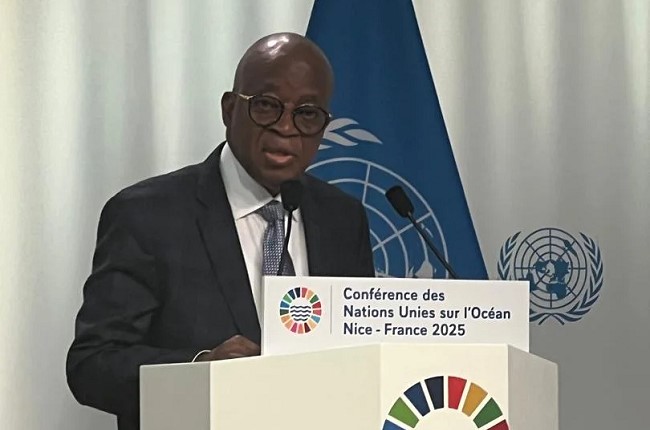
Minister of Marine and Blue Economy, Adgboyega Oyetola, addressing the United Nations Ocean Conference in Nice, France on June 10
According to her, the ocean economy serves as a key driver of trade, food security, and innovation, adding that Nigeria and Africa generally, should harness the potentials of its blue economy by unlocking the capabilities of women.
“The ocean economy is a key engine for growth in Africa; but to fully unlock its potential, we must unlock the talents of women.
“The maritime industry remains one of the world’s most male dominated sectors, with women representing less than two per cent of seafarers and about 10 per cent of leadership positions.
“In Nigeria and West Africa, women are making visible progress in logistics, administration, academia, and policymaking.
“We now see female ship captains, port managers, and maritime lawyers; Yet, women remain underrepresented in seafaring, port operations, and technical roles,” she said.
She outlined core principles for gender inclusion, such as: Leadership for gender equality, inclusive governance, access to resources, capacity building, workplace safety, education in ocean sciences, gendered marine conservation, and community advocacy.
Obianyor noted that a sustainable and inclusive ocean economy depends on integrating empowerment principles that can tackle systemic barriers against women.
Another maritime expert, Capt. Eddidong Akpanebe, identified cultural barriers and gender stereotypes as major obstacles to women’s participation, warning that Africa could not afford to underutilise half of its talent pool.
Citing the United Nations Women Empowerment Principles (WEPs), she said that the framework provides a corporate structure for gender equality across industries but needs to be tailored to suit Africa’s maritime realities.
Akpanebe proposed key actions to promote inclusivity including embedding gender considerations in blue economy policies, building female talent pipelines, unlocking capital for women-led ventures among others
In the same vein, Chairperson, Downstream, Women in Energy, Oil and Gas (WEOG), Mrs. Ruth Audu-Nungh, noted that both the ocean and energy sectors have for long been male-dominated.
She harped on the importance of mentorship and knowledge transfer for young women entering the field and urged then to remain resilient, build professional visions, and seek mentorship to excel in the blue economy.