Home Blog Page 116

2025 Climate Governance Ranking: Explaining Katsina’s massive leap to second position

0

In 2024, during the first edition of the Subnational Climate Governance Performance Rating and Ranking, Katsina placed 25th with only 64 points. We did not think at that time that such showing was acceptable or representative of the capacity that the State has when it comes to all-round climate action. So, we recalibrated. This year, the State took the second position with an impressive score of 310 points – a 23-place leap that represents one of the fastest governance transformations in Nigeria’s recent history.

This extraordinary turnaround was driven directly by strategically following the benchmarking and performance insights provided through the Subnational Climate Governance Ranking, which gave us a clearer sense of where we stood and what needed to change. The report did not just rank; it guided.

Professor Mohammed Al-Amin,
Professor Mohammed Al-Amin, Special Adviser on Climate Change to the Governor of Katsina State

Katsina’s growth in climate governance has been remarkable. The State has carefully sought to improve in all indices and this has reflected in measurable, real-world transformation over the past year. The SCGPR provided a structured mirror that helped us identify institutional weaknesses, budgetary gaps, and implementation deficits – and to fix them in record time.

Much of the credit goes to His Excellency Governor Dikko Umar Radda, whose vision to leverage climate action for development and poverty reduction became the cornerstone of our Katsina Green Growth Agenda. Since adopting this evidence-based approach, over 1.5 million residents across 22 local government areas have directly benefited from improved environmental services, access to solar energy, and enhanced agricultural productivity.

Following insights from the ranking template, we established dedicated climate governance units across 12 ministries and launched coordination mechanisms involving all 34 local governments. This structure, inspired by the SCGPR performance indicators on institutional arrangements, has streamlined decision-making and improved accountability. Today, over 300 civil servants have received climate policy training, and local governments now integrate climate budgeting into their annual plans.

These institutional changes have not only improved coordination but also helped attract external technical assistance worth ₦2.4 billion from national and international partners — investments that are being channelled into rural electrification, waste management, and afforestation.

The passage and implementation of the Katsina State Climate Resilience and Green Economy Policy (2024) marked a new era. Through this policy, we have aligned our goals with Nigeria’s Nationally Determined Contributions (NDCs) and Sustainable Development Goals (SDGs), ensuring climate governance serves as a platform for economic inclusion and social progress.

The target of the new policy is to mobilised over ₦6 billion in green-sector investment and creating 2,000 new jobs in clean energy and sustainable agriculture.

Already, these efforts are yielding tangible socio-economic dividends – 1,800 smallholder farmers have received solar irrigation support, boosting dry-season yields by up to 25%, while reducing dependency on diesel pumps.

We have recorded notable progress in solar mini-grid installations, dry-season farming initiatives, and community-led afforestation drives. The Solar for All initiative has connected over 150 rural schools and health centres to reliable solar power, improving education and healthcare delivery for more than 250,000 people.

Meanwhile, our community tree-planting campaign – inspired by the Ranking’s emphasis on project visibility and citizen engagement – has resulted in the planting of 1.2 million seedlings across the state, reducing desert encroachment and providing economic opportunities for youth and women cooperatives.

These interventions have reduced rural energy poverty, curbed migration pressures, and enhanced household incomes.

Our commitment to climate finance was deepened after the 2024 SCGPR highlighted our weak budgetary framework. In response, the State increased climate-related allocations by 30% in 2025, while introducing provisions for the issuance of Green Bonds. These bonds are projected to raise ₦10 billion over the next three years, earmarked for climate-smart agriculture, flood management, and renewable energy expansion.

We have also launched the Katsina Climate Watch, a digital transparency portal tracking project updates and offering public education on climate issues. Since its inception, the platform has reached over 500,000 residents online and mobilised 10,000 volunteers for community climate projects. This innovation, shaped by the SCGPR’s Online Visibility pillar, has transformed climate awareness from a government agenda into a people’s movement.

The increased visibility and transparency have enhanced citizens’ trust and encouraged collaboration between local government councils, youth groups, and development partners.

Our progress is reflected across the SCGPR’s five thematic areas. Under Climate Institutional Arrangements, Katsina rose from 24 points and the 32nd position in 2024 to 110 points and 2nd position in 2025. In Policy and Legal Frameworks, the State moved from 5 points and 30th position to 50 points and 4th position. For Budgetary Allocation to Climate Change Projects, Katsina advanced from 5 points and 32nd position to 60 points and 2nd position, and under Project Implementation and Monitoring, we rose from 15 to 55 points. Online Visibility also grew from 15 to 35 points.

These are not just numerical improvements — they represent better schools powered by solar, cleaner streets, thriving small businesses, and farmers earning more from climate-smart innovations.

While we celebrate this milestone, we view it as a baseline, not a ceiling. Katsina remains committed to building a sustainable, climate-smart future. We will deepen partnerships with federal institutions, development partners, and civil societies to move from second to first place — not for the title, but for the people whose lives are now demonstrably better because of research-led governance reform.

Kudos must of course go to the Department of Climate Change (Federal Ministry of Environment), Professor Chukwumerije Okereke, the Society for Planet and Prosperity, and all other partners for this brilliant and innovative initiative. This has not only motivated State-level action but has also provided a clear evidence-based pathway to more effective and efficient subnational climate governance.

Under the visionary leadership of the Governor, His Excellency Governor Dikko Umar Radda, Katsina State is determined to maintain and improve on its performance in the third rating and ranking project in 2026.

By Professor Mohammed Al-Amin, Special Adviser on Climate Change to the Governor of Katsina State


New policy brief outlines Africa’s priorities at COP30

0

Africa goes to Belém, Brazil, with a shared vision and demand for real delivery on climate commitments, a new policy brief released on Wednesday, November 5, 2025, by Power Shift Africa shows.

The report, which examines Africa’s vulnerabilities and opportunities, calls on both the COP30 Presidency and African negotiators to ensure that this summit marks a turning point from promises to practice, and from ambition to implementation.

Mohamed Adow
Director of Power Shift Africa, Mohamed Adow

According to the brief, more than a decade after the Paris Agreement transformed global climate governance, COP30 must now prove that the multilateral climate system can deliver tangible results for all. While the first Global Stocktake at COP28 in Dubai, and the adoption of a new global finance goal at COP29 in Baku, produced important commitments, the analysis warns that words alone will not avert catastrophe and advises that the task for Belém is to make climate ambition real, fair, and felt in people’s everyday lives.

Africa’s position, the report states, is not about seeking special treatment but about demanding fairness, consistency, and delivery. The continent is warming at twice the global average despite contributing the least to the crisis. Yet, while its adaptation needs exceed $70 billion annually, only about $15 billion is received each year, and loss and damage costs could rise to nearly half a trillion dollars by 2030.

The report calls for tripling adaptation finance beyond the current pledge to double by 2030, and for embedding both finance and clean technology transfer as binding obligations under the UN climate process, not voluntary gestures of goodwill.

“The world no longer needs more promises, but proof that climate multilateralism can still deliver – and deliver for all. If COP30 is to be remembered as the ‘Implementation COP,’ it must also be remembered as the moment Africa helped re-anchor the global climate regime in fairness, solidarity, and accountability,” said Mohamed Adow, Founder and Director of Power Shift Africa, at the launch of the document.

He added that “COP30 must not only recognise Africa’s disproportionate vulnerability, but also finally act on the historic responsibility to support our adaptation and resilience. Africa is not arriving in Belém empty-handed; we bring solutions, renewable energy potential, and a vision for climate justice rooted in fairness and shared prosperity. What we need now is delivery: delivery of finance, delivery of technology, and delivery of trust.”

Dr Wafa Misrar, Campaign and Policy Lead for Climate Action Network (CAN Africa), said: “African countries must be cautious of the Tropical Forest Forever Facility introduced by Brazil. The fund aims to raise $125 billion to protect tropical rainforests in the world and promises payments to countries in the Global South for every hectare of tropical forest they conserve.

“This fund depends on loans and bonds, meaning that developing countries could end up paying interest through debt finance to carry out conservation. The mechanism sets complex conditions that some of the countries with these forests may not meet. This is neither new nor fair, but another distraction and market-based mechanism that benefits investors more than the countries they claim to support.’’

Amos Wemanya, Global Project Co-Lead, Fair Share for People and the Planet at Greenpeace, said: “Africa arrives at COP30 determined to drive a new era of climate cooperation grounded in equity and opportunity. The continent has the renewable energy capacity, human talent, and ambition to power a cleaner and more resilient global economy, but we need fair access to the finance and technology that makes this possible. Belém must be the moment the world moves beyond pledges and truly invests in Africa’s energy transition.

“This COP is an opportunity for Africa to rearticulate its priorities and demands for climate and development. The just transition conversation is more than just about reducing emissions. Africa has vast natural resources, and the just transition must help Africa to turn this potential into engines of resilience and prosperity. To facilitate the provision of finance for the just transition, Africa must demand the establishment of a new and fair tax regime.”

The brief urges the COP30 Presidency to reaffirm the principles of transparency, inclusivity, and accountability, while resisting the growing trend toward side deals and unilateral measures that undermine the UN process. It also calls on African negotiators to act as a united, strategic bloc across finance, adaptation, and trade, and to work closely with civil society, youth, and Indigenous Peoples to ensure that climate diplomacy remains people-centred and justice-driven.

Among its key recommendations, the policy brief calls for the operationalisation of Article 9.1 of the Paris Agreement as a binding financial obligation for developed countries; the establishment of a Technology Implementation Programme to remove barriers to innovation in the Global South; and the creation of a Belém Action Mechanism and a Just Transition Technical Assistance Network to help developing countries design and finance equitable transitions.

Find the policy brief hereWatch video of the launch here.

COP30 Wishlist: Developers call for practical action to unlock private climate finance, scale mitigation projects

0

With COP30 starting imminently in Belém, the Project Developer Forum (PD Forum) has issued its key priorities for advancing international carbon markets under Article 6 of the Paris Agreement.

As negotiations shift from rule-making to implementation, the PD Forum is calling on parties and observers to focus on practical, transparent frameworks that build trust and unlock investment in high-integrity climate action.

“Article 6 is moving from the rulebook to the real world at COP30,” said Nick Marshall, Chair of the PD Forum. “We need frameworks that enable private finance to flow and climate projects to scale, not create bureaucratic bottlenecks that stall progress.”

Belém
The city of Belém in Brazil is hosting COP30

The PD FORUM COP30 Wishlist

1. Predictable and transparent cost structures

Establish clear, stable frameworks for fees and levies on Article 6 activities. Predictable costs enable developers and investors to model returns with confidence, accelerating capital deployment. Host countries should announce pragmatic fee structures aligned with Article 6 principles.

2. Nuanced approach to benefit-sharing

Guarantee that communities receive fair, direct benefits while recognising that delivery models must vary across project types and geographies. Flexible frameworks should allow benefit-sharing to be tailored to local contexts.

3. Intelligent and inclusive authorisation

Encourage parties to authorise eligible projects retroactively to 2021, the start of the current NDC period. This would acknowledge early climate action and stabilise market confidence. Bilateral agreements between countries would send powerful demand signals.

4. Streamlined project approval and issuance processes

Create a single, coherent pathway from project approval to credit issuance. Avoid fragmented, year-by-year reviews that introduce uncertainty and disrupt financial planning.

5. Legal certainty for corresponding adjustments

Strengthen legal foundations to ensure that corresponding adjustments (CAs) for project emissions reductions are enforceable, transparent, and protected from arbitrary reversal. Two pioneering approaches demonstrate what is possible:

  • Thailand-Switzerland bilateral agreement: South Pole delivered the first Article 6 ITMOs with CAs under a stable regulatory framework that reduces uncertainty and builds confidence for project developers and investors.
  • Zimbabwe’s immediate authorisation model: Cicada Carbon received the first tradable Article 6 carbon credits with CAs, with Zimbabwe simultaneously updating its national reporting to reflect this. This enabled immediate trading on international markets under systems like CORSIA, effectively eliminating reversal risk.

These models should be replicated globally. Where this isn’t possible, insurance products must be available to cover reversal risk, especially for least developed countries (LDCs) that need carbon finance most but may face higher risk premiums. Without this certainty, developers will avoid certain jurisdictions, blocking finance from reaching communities most affected by climate change.

6. Government continuity and capacity

Retain dedicated, experienced personnel in ministries and agencies responsible for Article 6 implementation. Institutional consistency is essential for sustained progress.

7. Accelerated registry development

Prioritise the UNFCCC registry to enable international trading of Article 6.4 credits. This infrastructure is critical for moving from planning to practice and demonstrating that global carbon markets can deliver at scale.

Developer Input Matters

The PD Forum also encourages the Paris Agreement Crediting Mechanism (PACM) to adopt a more inclusive approach to methodology development, engaging project developers, who possess deep technical and field experience, throughout the drafting process, not just during consultations.

“By adopting these recommendations, COP30 can help ensure Article 6 fulfils its potential to deliver measurable climate outcomes, mobilise private finance, and ensure equitable benefit-sharing across the Global South,” added Marshall.

The PD Forum and its members remain committed to supporting parties, host governments, and multilateral institutions in implementing robust, inclusive, and transparent frameworks for international carbon markets.

Group describes EU’s updated climate targets ‘a lukewarm NDC agreement’

0

Environment and climate change advocacy group, 350.org, has described the updated nationally determined contribution (NDC) of the EU and its member states that was approved on Wednesday, November 5, 2025, as “a lukewarm NDC agreement” the EU Council came up with “days before COP30”.

Less than a week before COP30 opens in Belém, EU Environment ministers struck what appears to be a last-minute deal on the bloc’s 2035 Nationally Determined Contribution (NDC) – the EU’s formal climate action plan under the Paris Agreement.

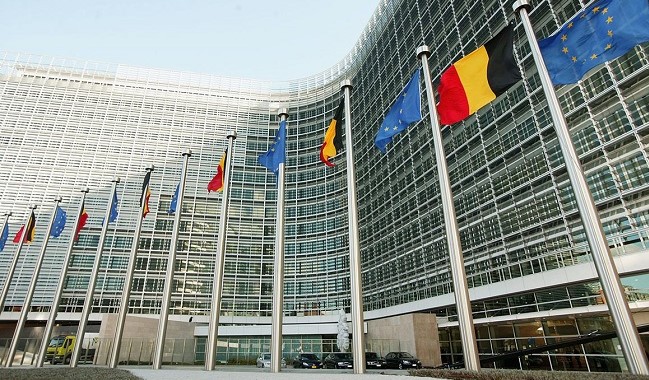
European Commission
European Commission. Photo credit: Mark Renders/Getty Images

“The target to reduce emissions by 66.25 to 72.5% by 2035 prevents the EU from arriving at COP30 empty-handed, but delays, internal divisions, and attempts to weaken ambition including by pushing for the use of carbon credits by France, Poland, Hungary and Italy exposed deep cracks within the bloc,” submitted the group.

It added: “The latest UN Emissions Gap Report released yesterday makes it clear: the Paris Agreement is on life support. As EU leaders make their way to Belém to attend the high-level segment, the EU has a responsibility to demonstrate ambition and unity now more than ever.”

Fanny Petitbon, 350.org France Team Lead, says: “The EU won’t be going to Belém empty-handed, but their target falls short of what the climate crisis requires and is well below Europe’s historic responsibility. If the bloc wants to keep its credibility, on the global stage and with its own citizens, this target should be treated as the floor not the ceiling.

“The EU cannot ignore its climate debt to the world’s most impacted populations. In Belém, the EU must come prepared to discuss the need to scale up debt-free public finance, to support communities to accelerate their clean energy transition, and adapt to the climate crises. This is not about charity or solidarity, but responsibility.” 

Paris Agreement: EU submits updated NDC to UN ahead of COP30

0

The Council of the European Union (EU) on Wednesday, November 5, 2025, approved an updated nationally determined contribution (NDC) of the EU and its member states, which will be submitted to the United Nations Framework Convention on Climate Change (UNFCCC) ahead of COP30 (November 10 to 21, 2025). Following the 2020 NDC and its 2023 update, Wednesday’s NDC covers the period up to 2035.

According to the EU, he NDC agreed reiterates its goal of achieving a net reduction of 55% in greenhouse gas (GHG) emissions by 2030 and acknowledges the agreement reached within the Council on a net emissions reduction target of 90% by 2040, compared to 1990. Based on this target, the NDC introduces an indicative contribution of 66.25% to 72.5% for 2035 on the path towards carbon neutrality by 2050.

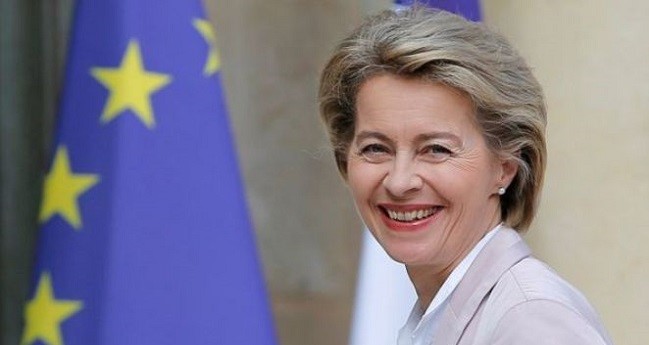
Ursula von der Leyen
Ursula von der Leyen, President of the European Commission

The updated NDC builds on previous commitments, aiming to accelerate the transition to a decarbonised economy and industry, and outlines the EU’s ongoing efforts to achieve climate neutrality in line with the objectives of the Paris Agreement.

“With the adoption of EU’s NDC, we are sending a strong signal ahead of COP30 that we remain fully committed to keeping the goals of the Paris Agreement. It enables us to push for more global climate action, when we meet the rest of the world at COP30,” said Lars Aagaard, Denmark’s minister for climate, energy and utilities.

Main elements of the EU’s 2035 NDC

In the updated NDC, the EU outlines its ambitious climate targets and the policy frameworks that is implementing in order to achieve carbon neutrality by 2050. It recalls the agreement reached within the Council on a 2040 climate target of 90%, including an adequate contribution of high-quality international credits in a manner that is both ambitious and cost-efficient.

The NDC also highlights the EU’s continued progress in its climate action towards decarbonising its economy and its contribution to the global efforts agreed in the outcome of the first global stocktake (GST) at COP28 in Dubai. These include the commitment to tripling renewable energy capacity globally and doubling the rate of global energy efficiency by 2030. The updated NDC underlines the EU’s efforts in this regard, which resulted in renewable energy sources making up 44% of the EU’s electricity production in 2023, with that figure increasing to 47% in the estimates for 2024.

In addition, the new NDC emphasises the EU’s accelerating efforts towards making the energy sector predominantly free of fossil fuels well ahead of 2050, while recognising the importance of phasing out unabated fossil fuels at global level. To that end, the EU acknowledges the need to use all the available technologies to reduce emissions from hard-to-abate sectors.

The updated NDC also includes the information necessary for clarity, transparency and understanding (ICTU), outlining all the elements of the NDC.

Next Steps

The updated NDC will be submitted to the UNFCCC Secretariat and will feed into an updated NDC synthesis report, building on the first version issued by the Secretariat on 28 October. The report will provide an overview of global emission reduction commitments and gaps in relation to the Paris Agreement goals.

Background

Nationally determined contributions (NDCs) are an integral part of the Paris Agreement, which requires all parties to communicate their post-2020 climate actions starting in 2020 and every five years thereafter. NDCs set out each party’s efforts to reduce national emissions and adapt to the impact of climate change. The EU submits a single NDC on behalf of the EU and its member states.

On that basis, the EU and its member states submitted their first NDC in 2015 as an intended NDC, and an updated and enhanced NDC on 17 December 2020. Following the adoption of the Fit for 55 legislative package, in October 2023, the EU submitted a further update reflecting its target of at least 55% of net greenhouse gas emissions reductions by 2030.

On September 18, 2025, EU environment ministers approved a statement of intent confirming the EU’s commitment to the Paris Agreement and indicating that the EU would submit its post-2030 NDC ahead of COP30 in Belém, Brazil.

UN confirms famine in besieged Sudanese cities amid ongoing conflict

0

Famine has taken hold in conflict-hit areas of Sudan that have been cut off from aid or under siege, according to a UN-backed food security analysis released on Tuesday, November 4, 2025.

Famine conditions have been confirmed in Darfur’s El Fasher and Kadugli, where “people have endured months without reliable access to food or medical care,” the Food and Agriculture Organisation (FAO), World Food Programme (WFP) and UNICEF said in a joint statement.

The agencies estimated 21.2 million people in Sudan – 45% of the population – are facing high levels of acute food insecurity, representing a slight improvement.

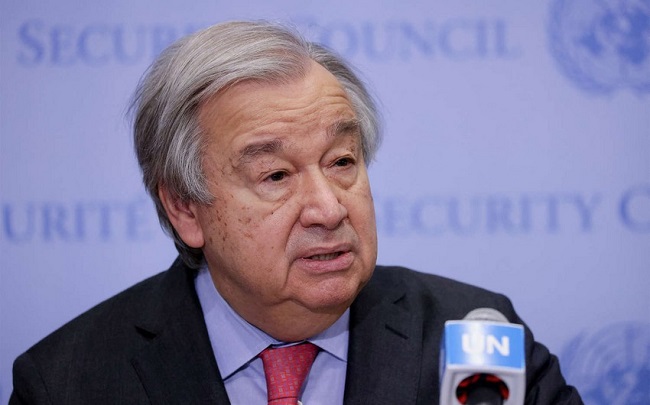
Antonio Guterres
UN Secretary General, Antonio Guterres

About 3.4 million people are no longer facing crisis levels of hunger.

UN Secretary-General, António Guterres, called for an immediate ceasefire Tuesday as images of apparent mass killings in El Fasher continue to circulate online.

He appealed to the Sudanese Armed Forces and rebel Rapid Support Forces “to come to the negotiating table to bring an end to this nightmare of violence.”

Heavy fighting erupted in April 2023 between the rival armies, creating a massive humanitarian disaster.

Last week saw the fall of government-held El Fasher after more than 500 days of siege by rebels.

Hundreds of civilians – including humanitarian workers – are believed to have been killed.

The improvements follow gradual stabilisation since May in Khartoum, Al Jazirah and Sennar states, where conflict has eased and families are returning.

“But these gains are limited,” the UN agencies said. “The wider crisis has shattered the economy and vital services, and much of the infrastructure people rely on has been damaged or destroyed.”

Favourable crop conditions are expected to improve crisis-level hunger to 19.3 million through January. However, “these fragile improvements are highly localised,” the agencies warned, as many returning families have lost everything.

Active conflict persists in western regions, notably North and South Darfur and West and South Kordofan. Hunger is expected to worsen starting in February as food stocks run out.

The IPC’s Famine Review Committee found famine conditions in El Fasher and Kadugli, which have been largely cut off due to conflict.

Conditions in Dilling, South Kordofan, “are likely similar to Kadugli, but cannot be classified due to insufficient reliable data.”

The committee projects famine risk in 20 additional areas across Greater Darfur and Greater Kordofan, including rural localities, displacement camps and locations in East Darfur and South Kordofan.

Global acute malnutrition rates range from 38% to 75% in El Fasher and reach nearly 30% in Kadugli.

Outbreaks of cholera, malaria and measles continue to rise where health, water and sanitation systems have collapsed.

Africa’s solar imports surge 60% as clean energy accelerates

Solar panel imports into Africa reached 15 gigawatts by mid-2025, a 60% year-on-year increase signaling rapid clean energy adoption across the continent.

The newly released ESI Africa Solar & Storage Volume 2025 documents the surge in renewable energy infrastructure, with 20 countries setting new records for solar imports and expanding battery storage deployment.

“Africa’s solar surge is now measurable, material, and reshaping the continent’s energy economy,” said Nicolette Pombo-van Zyl, editor-in-chief at ESI Africa.

Nicolette Pombo-van Zyl
Nicolette Pombo-van Zyl, editor-in-chief at ESI Africa

“This Volume captures the pace and depth of change, from groundbreaking technologies to the bold policies and partnerships driving them forward.”

The publication highlights opportunities for energy investors, technology providers and infrastructure partners as the continent transitions to sustainable, decentralised energy systems.

Key developments include advances in bifacial and perovskite solar modules, with next-generation cells achieving efficiencies exceeding 30%.

Energy storage innovation is expanding beyond lithium-ion batteries, with vanadium redox flow and metal-hydrogen batteries emerging as viable alternatives.

The volume examines how recycling and upcycling solar panels and batteries can create economic opportunities from end-of-life management.

Financiers are backing Africa’s largest standalone battery projects, driving grid resilience and investment returns.

The publication also explores regulatory reforms, partnerships and financing models enabling sustainable infrastructure growth across the continent, from rooftop installations to utility-scale projects.

By Winston Mwale, AfricaBrief

Proposal to phase out dental amalgam on agenda as Minamata Convention COP-6 seeks to strengthen global action on mercury pollution

0

More than 1,000 participants from governments, intergovernmental organisations, UN bodies, civil society, Indigenous Peoples, and youth are gathered for the sixth meeting of the Conference of the Parties to the Minamata Convention on Mercury (COP-6), taking place from November 3 to 7, 2025, at the International Conference Centre Geneva (CICG).

COP-6 is considering measures to curb the illegal trade of mercury and strengthen control of its supply and compounds; review progress on artisanal and small-scale gold mining (ASGM), which remains the largest source of global mercury emissions, and assess the enforcement of the ban on mercury-added skin-lightening products.

Minamata Convention
Delegates at the sixth meeting of the Conference of the Parties to the Minamata Convention on Mercury (COP-6) in Geneva

Parties are also discussing a proposal to phase out dental amalgam, evaluate feasible mercury-free alternatives in vinyl chloride monomer (VCM) production, and examine updates to the Convention’s financial mechanism, including guidance to the Global Environment Facility (GEF) and the Specific International Programme (SIP).

As part of the global environmental agenda, delegates are exploring ways to strengthen cooperation with the Intergovernmental Science-Policy Panel on Chemicals, Waste and Pollution, the Global Framework on Chemicals, and other multilateral environmental agreements to advance shared goals on chemicals, waste, and health. 

Cross-cutting issues are likewise featuring, including aligning mercury reduction efforts with the Kunming–Montreal Global Biodiversity Framework, advancing the engagement of Indigenous Peoples and local communities, launching the Minamata Convention’s Women’s Caucus, and reviewing the Secretariat’s digital transformation work to enhance transparency and access to information.

At the opening ceremony, Elizabeth Mrema, Deputy Executive Director of the UN Environment Programme, emphasised that the Minamata Convention stands as a powerful example of science-based and cooperative action to tackle the planet’s most pressing environmental challenges.

“The Minamata Convention offers a model which is rigorous, science-based, and anchored in global solidarity,” she said.

Reflecting on the Convention’s progress, she added that although it is one of the youngest multilateral environmental agreements, it has already demonstrated remarkable maturity and impact.

Representing the host country, Katrin Schneeberger, State Secretary and Director of the Swiss Federal Office for the Environment, welcomed delegates to Geneva and reaffirmed Switzerland’s commitment to advancing global cooperation on chemicals and waste management. he emphasised the life-cycle approach of the Convention as a model for addressing pollution across all stages and sectors.

“The structure of the Convention is a model for global environmental governance, one that can, and should, serve as a blueprint for addressing other pollution challenges,” she said. 

Monika Stankiewicz, Executive Secretary of the Minamata Convention, highlighted the progress achieved since the last COP and the need to sustain momentum to fully implement the Convention’s commitments.

“Since we last met in this very hall two years ago, Parties have continued turning words into action. Thanks to your leadership, mercury-added products are becoming a thing of the past, mercury is no longer used in most industrial processes as safer alternatives become increasingly available, and awareness is growing across societies,” she said.

Stankiewicz underscored that despite this progress, major challenges remain, including the illegal trade in mercury, rising emissions from artisanal and small-scale gold mining, and the ongoing use of mercury in cosmetics.

“The heart of our Convention lies with those most vulnerable to mercury exposure and disproportionately impacted: Indigenous Peoples, local communities, women, and children,” she added. “I remain deeply optimistic that the Minamata Convention will continue to make a positive and lasting impact on people’s lives everywhere and serve as a model of multilateral cooperation.”

Presiding over the meeting, Osvaldo Álvarez Pérez, COP-6 President, underlined that mercury remains a dangerous toxin and that the Minamata Convention represents a shared promise to protect human health and the environment. COP-6 President stressed that despite progress made, significant challenges persist, particularly the rapid growth of artisanal and small-scale gold mining and the ongoing trade in mercury-added products, which threaten to undermine collective efforts, together with unintentional releases.

He encouraged delegates to connect the dots, review financial systems, and ensure that progress is guided by measurable indicators and reliable data.

“Let us build on our collective achievements and face the challenges ahead with optimism, determination, and respect for one another’s perspectives,” he said. “Through thoughtful and constructive debate, we can take decisions that truly protect both people and the planet.”

Special events

Ahead of the opening, the public event “From Science to Action: Protecting the Amazon from Mercury Pollution”, organised in collaboration with the Geneva Environment Network, brought together National Geographic Explorer Fernando Trujillo and Aileen Mioko Smith (co-author of MinamataMinamata with photographer W. Eugene Smith), for a dialogue linking the legacy of Minamata disease to today’s challenges in the Amazon caused by mercury pollution. The event also featured the screening of the documentary Amazon, the New Minamata? which portrays the devastating impacts of mercury on Indigenous communities of Brazil’s Tapajós River.

Throughout the week, delegates will also take part in special sessions such as “Driving Effective and Inclusive Implementation of the Minamata Convention”, “The planetGOLD Programme”, the launch of the Women’s Caucus, and knowledge labs on key technical and policy topics.

The “Minamata Photographer’s Eye” exhibition at CICG, together with the Humanae photo exhibit by Angelica Dass along Geneva’s lakeshore, reflects the Convention’s ongoing engagement with art and awareness. The broader exhibition area, open throughout the week, offers a vibrant space for partner institutions to showcase their activities, projects, and technologies that support the Convention’s implementation and help advance its goal to make mercury history.

Report reveals chronic oil pollution, escalating environmental threats from Brazil’s offshore oil and gas expansion

0

Just before COP30 begins in Brazil next week, a new report was released by SkyTruth, a nonprofit conservation technology organisation, that reveals the mounting environmental toll of Brazil’s offshore oil and gas expansion. 

The report, Brazil Offshore Fossil Fuel Threats and Impacts, documents 179 probable oil slicks covering Brazilian waters since 2017, alongside dramatic increases in production, vessel traffic, and methane emissions that threaten the country’s marine ecosystems and coastal communities. The timing is particularly urgent as Brazil’s environmental agency just approved Petrobras to begin exploratory drilling near the mouth of the Amazon River – a decision environmentalists warn undermines Brazil’s credibility as a climate leader.

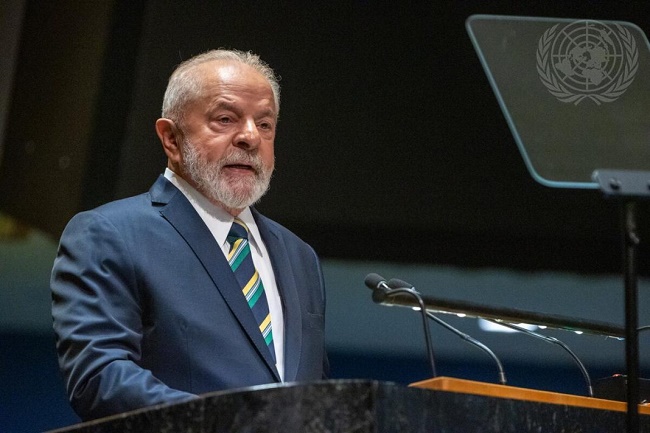
Lula da Silva
Lula da Silva, President of Brazil

SkyTruth’s analysis used satellite imagery, vessel tracking data, and government records to document the environmental impacts of Brazil’s offshore oil and gas industry. The full report includes detailed maps and data visualizations showing oil slick locations, vessel traffic patterns, flaring activities, and overlap with protected areas and important marine mammal habitats.

“As Brazil prepares to host world leaders at a major global climate conference, this report provides concrete evidence of how offshore oil and gas development is already harming the country’s marine ecosystems and climate,” said John Amos, CEO of SkyTruth. “The recent approval of Amazon drilling makes this contradiction even starker. With new exploration planned for the ecologically sensitive Amazon River mouth, the risks are only growing. We need transparent monitoring and accountability — and a strong shift away from fossil fuels and toward renewable energy — to protect these important ocean resources.”

Key Findings

  1. Between 2014 and 2024, Brazil’s oil production increased by more than 49% and natural gas production surged by over 78%, making Brazil the largest oil producer in South America.
  2. 179 probable oil slicks were observed on satellite imagery of the Brazilian EEZ since 2017 – 48 from oil and gas infrastructure, 131 from vessels. (This number likely underrepresents the true pollution situation, because of the gaps in coverage of satellite imagery.) Oil tankers and oil field service vessels were responsible for nearly half (47%) of the vessel slicks with verifiable sources.  
  3. Floating production, storage and offloading vessels (FxOs) have become increasingly utilized in the oil and gas industry. A single FxO in the Santos basin was responsible for 9 of the 48 infrastructure oil slicks. Another FxO location saw an increase in vessel traffic by 430% after it went into operation.
  4. Oil and gas facilities within Brazil’s EEZ have been observed to flare 12.5 billion cubic meters of natural gas since 2012, equivalent to the annual emissions of about 6.9 million passenger cars.
  5. Three methane plumes, each large enough to be considered a super-emitter event at over 100 kg of methane per hour, were captured on the same day in April 2025 from offshore oil and gas infrastructure in the Santos basin.
  6. There are 162 producing fields and 143 exploration blocks in the Brazilian EEZ. In addition, Petrobras has started exploration for 9 blocks in ecologically sensitive habitats at the mouth of the Amazon River and has recently been granted approval to drill at a site located 500km from the river mouth and 160km from the coast. 
  7. 13 of the 160 Marine Protected Areas (MPAs) in Brazil overlap with oil and gas infrastructure, lease blocks, or detected oil slicks, and nearly all of the MPAs have some amount of oil-related vessel traffic moving through them. 
  8. There are 20 important marine mammal areas (IMMAs) that cover over a quarter of Brazil’s EEZ. Only about 6% of the IMMA area falls within marine protected areas, leaving 94% of these important spaces unprotected.

Implications for Climate and Conservation

Brazil’s offshore expansion directly contradicts its commitment to climate neutrality by 2050 and the Paris Agreement’s 1.5°C target. By 2040, Brazil is projected to produce about 50% of the world’s offshore oil – a level incompatible with global climate goals. As Brazil positions itself to lead international climate discussions at COP30, the disconnect between its climate rhetoric and fossil fuel expansion has drawn sharp criticism from environmental advocates worldwide.

The report also highlights serious threats to Brazil’s marine biodiversity. Only about 12% of the area that falls within the country’s 160 Marine Protected Areas is fully or highly protected, covering just 3.2% of the Brazilian EEZ. The Southwest Atlantic Humpback Migratory Corridor, which passes through the heavily industrialised Campos and Santos basins, is particularly at risk, with 73 oil slicks, 49 floating production vessels, and 20 operational oil platforms observed within the corridor.

“The patterns we’re documenting – chronic oil pollution, coastal industrialization, habitat loss and degradation – represent significant threats to Brazil’s coastal ecology and economy,” said Amos. “Brazil has a window of opportunity to pivot from this extractive offshore legacy toward a future where ocean wealth is measured in healthy reefs, thriving fisheries, and resilient coastal communities. But that window is closing.”

UN meeting to review global progress on desertification, land degradation, drought

Representatives of 196 countries and the European Union will meet in Panama from December 1 to 5, 2025, to review their efforts against desertification, land degradation and drought under the United Nations Convention to Combat Desertification (UNCCD) – one of the three Rio Conventions, alongside biodiversity and climate.

The 23rd session of the Committee for the Review of the Implementation of the Convention (CRIC 23) to the UNCCD will convene some 500 delegates from governments, civil society, and academia to assess progress in advancing the Convention’s objectives. 

Yasmine Fouad
UNCCD Executive Secretary, Yasmine Fouad

A signatory to UNCCD since 1996, Panama has committed to achieve Land Degradation Neutrality by 2030, identified 31 critical hotspots, and is advancing reforestation and Dry Corridor adaptation programmes – underlining its role as regional host. In 2023, the country faced its driest year on record, when water shortages disrupted traffic through the Panama Canal and highlighted how local drought can trigger global consequences. 

Juan Carlos Navarro, Minister of Environment of Panama, stated: “Never before has a country hosted, in the same year, the three major United Nations environmental conventions – on climate action, biodiversity, desertification, and sustainable land management. With this, Panama reaffirms its commitment to conserving nature and advancing sustainable development, while once again calling for the integrated management of these three pillars in order to confront the planetary crisis and build a resilient future for our communities.”

UNCCD Executive Secretary, Yasmine Fouad, said: “Severe droughts and the loss of fertile land are already straining food and energy production, uprooting rural communities, and threatening the livelihoods of millions. Nowhere is this more evident than in Latin America and the Caribbean, a region that is experiencing severe land degradation, affecting at least 20 per cent of its total area. By hosting CRIC23, Panama is placing itself at the center of collective response – from its national Nature Pledge to the regional Dry Corridor Initiative – and helping to build the momentum for the urgent need for drought resilience and land restoration worldwide.”

This CRIC will place particular emphasis on gender, highlighting best practices and bottlenecks in engaging women – including Indigenous women – who are among the hardest hit by land degradation and drought, yet remain at the forefront of sustaining families and food systems.

Recent UNCCD data underline the urgency: the world is losing nearly 100 million hectares of healthy land annually, and over 70 per cent of land has become drier over the past three decades, eroding the planet’s ability to support a growing population.  Meeting global land restoration targets will require USD 1 billion per day until 2030—still only a fraction of what is currently spent on harmful subsidies and unsustainable investments.

CRIC23 will be held at the Panama Convention Centre, Panama City. Parties will: review progress and provide recommendations towards drought resilience and 2030 global targets on land; discuss the post-2030 strategic framework; engage with key stakeholders including women, youth, Indigenous Peoples and local communities; and see the launch of the Panama Nature Pledge and other key reports.