The Lagos State Government has indicated its readiness to partner with the Nigerian Institute of Building (NIOB), Lagos State Chapter, to strengthen physical planning processes and ensure orderly, safe, and sustainable development across the State.
The Commissioner for Physical Planning and Urban Development, Dr. Oluyinka Olumide, disclosed this while receiving members of the Institute during a courtesy visit to the Ministry on Monday, December 15, 2025.
Dr. Olumide explained that the State Government’s focus was on proactive physical planning measures, stressing that effective development control begins from strict adherence to approved layouts, building plans, and professional standards at the earliest stages of construction.
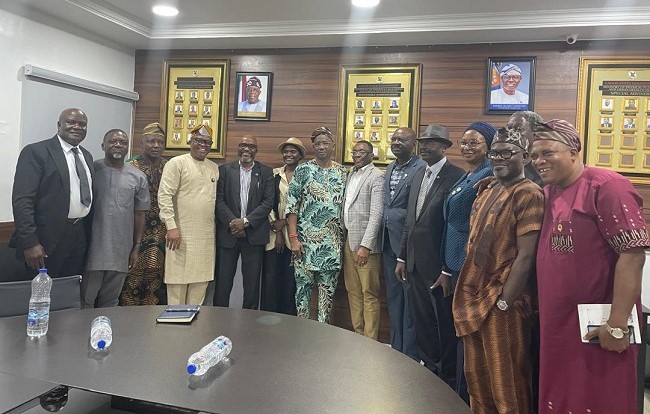
Lagos State Government officials and members of the NIOB during a courtesy visit to the Ministry
He maintained that compliance with planning regulations remained the most effective safeguard against structural failure, while linking failures in development outcomes to compromised planning standards, substandard designs, excessive client interference, political pressures, and human errors.
According to the Commissioner, developments carried out without due regard to physical planning approvals and supervision by qualified professionals posed serious risks to lives, property, and the physical environment.
Dr. Olumide further stated that any construction site operating without the engagement of registered and competent building professionals should not be allowed to proceed, adding that the Ministry would continue to insist on professionalism and planning discipline across the State.
The Permanent Secretary, Office of Physical Planning, Engr. Oluwole Sotire, emphasising the importance of sustained public awareness on planning laws and regulations, said that the government was open to deeper collaboration with professional bodies to strengthen compliance and enforcement as early compliance with physical planning requirements would significantly reduce avoidable losses and wastage of resources.
The General Manager, Lagos State Informal Space Management Authority (LASISMA), Daisi Oso, highlighted the need for developers to embrace proper planning, land-use conformity, and strict adherence to approvals to significantly reduce development failures and promote a more orderly physical environment.
Speaking on behalf of the Nigerian Institute of Building, the Chairman of the Lagos State Chapter, Owolabi Rasheed Ayoola, stated that the visit was aimed at strengthening collaboration with the Ministry of Physical Planning and Urban Development as a critical stakeholder in the built environment.
He added that the Institute also used the opportunity to congratulate the Commissioner on his recent awards, describing them as the recognition of his contributions to the sector.
A veteran member of the delegation, Kunle Awobodu, who assured of the Institute’s continued support for efforts toward promoting professionalism and compliance in the sector, said that non-compliance with approved building plans remained a major challenge within the building construction industry, while praising the Ministry for making positive impacts in entrenching planning discipline.
Less than 24 hours after the President of Dangote Group, Aliko Dangote, announced an imminent reduction in petrol prices, filling stations operated by the refinery’s lead offtaker, MRS Oil Nigeria Plc, have begun selling Premium Motor Spirit (PMS) at N739 per litre in Lagos, down from N885, bringing immediate relief to commuters and businesses.
Speaking at a press conference in Lagos on Sunday, December 14, 2025, Dangote assured Nigerians that the pump price of PMS would decline further, stating that petrol would sell at no more than N740 per litre from Tuesday, starting in Lagos. He disclosed that MRS, which operates over 2,000 filling stations nationwide, would be the first to implement the new pricing.
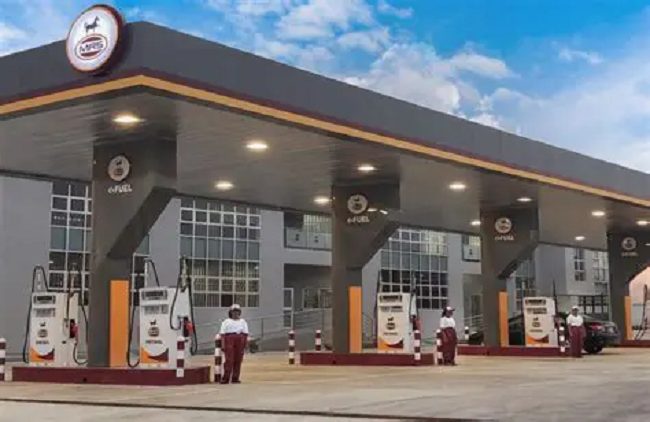
MRS Oil Nigeria Plc filling station
“From Tuesday, all MRS stations will sell PMS at prices not exceeding N740 per litre, beginning in Lagos,” Dangote said. However, the stations started the implementation on Monday to the delight of Lagos commuters.
He also announced that the Dangote Petroleum Refinery had reduced its minimum purchase requirement from two million litres to 500,000 litres, a move designed to enable more marketers, including members of the Independent Petroleum Marketers Association of Nigeria (IPMAN), to participate in product offtake.
“So if you come to the refinery today, you will get PMS at N699 per litre,” he stated.
Dangote maintained that Nigerians would be the ultimate beneficiaries of domestic refining as the refinery was working round the clock to ensure that recent reductions in gantry prices were fully reflected at the retail level.
He further highlighted quality differences between locally refined fuel and imported products, noting that PMS supplied through MRS and other refinery offtakers are straight-run fuels, unlike blended products imported from overseas markets.
“Nigerians have a choice: to buy better-quality fuel at a more affordable price, or to buy blended PMS at a higher rate. Importers can continue to lose, as long as Nigerians benefit, I am happy,” Dangote said.
He disclosed that despite challenges, including resistance from vested interests, the refinery would deploy its fleet of Compressed Natural Gas (CNG) trucks in the coming days and was prepared to procure additional units beyond the existing 4,000 trucks to sustain affordable nationwide distribution.
Responding to concerns by some oil importers that the price reductions would lead to losses, Dangote said the refinery was established primarily to serve Nigerians.
“Anyone who chooses to continue importing despite the availability of locally refined products should be prepared to face the consequences,” he said.
Dangote also reiterated his resolve to protect the refinery, describing it as a strategic national asset.
“A business of this magnitude must not be allowed to fail,” he said. “If they want to import fuel, let them continue. We will meet in the market. If 4,000 CNG trucks are not enough, we will buy another 4,000. This is a logistics business.”
Relief for Nigerians
Checks across Lagos showed that several MRS filling stations implemented the new price almost 24 hours ahead of the announced timeline. At the MRS station in Alapere, motorists queued to purchase fuel, expressing appreciation for the price cut.
“This is a relief for us, especially during the festive season,” said Mr Adejare Israel, a commuter. “It is sad that some people are still importing and selling at over N900 when we have locally refined, high-quality fuel at a more affordable rate.”
A university lecturer, Dr Hassan Olalekan, who bought Dangote fuel from MRS Victoria Island, described the development as a significant intervention, noting that the Dangote Refinery had, for the second consecutive year, helped to prevent perennial fuel scarcity during the festive period while also driving down prices.
He called on the Federal Government to review the issuance of import licences in light of growing domestic capacity, stressing that “no country can achieve sustainable growth without strong local production.”
Leaders of Izombe, an oil-bearing community in Oguta Local Government Area of Imo State, have appealed to the Federal and State Governments, to urgently intervene in the provision of basic infrastructure to improve the living conditions of the people.
Mr. Valentine Onwuka, Chairman, Izombe Central Union (ICU), Abuja Branch, and a Patron of the union, Chief Vitus Egwuagu, made the appeal at their End of Year Get Together on Sunday, December 14, 2025, in Abuja.
Onwuka, who lamented the underdevelopment in the community in spite of its status as an oil-bearing community, said that the area lacked basic amenities such as good roads, schools, electricity and other social infrastructure.
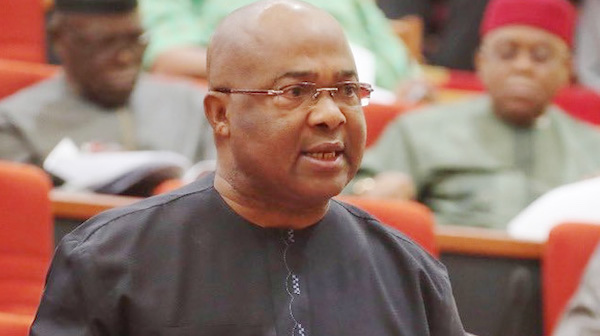
Gov. Hope Uzodinma of Imo State
He described the level of underdevelopment in the community as unacceptable for an oil-producing area.
“As an oil-producing community, these basic necessities are not privileges; they are our rights. They are needed to improve life in the community,” he said.
He said that economic trees in the area had been destroyed by gas flaring and environmental degradation linked to oil activities, adding that there was nothing on ground to show that oil is being produced in Izombe.
According to him, Izombe is one of the first oil-producing communities in Imo, but has not benefitted from opportunities usually associated with such status, including scholarships and community development projects by oil companies.
“Oil companies are supposed to provide scholarships, both locally and overseas, for our children and support community development but there is nothing like that in Izombe.
“The impact of crises and neglect on education in the area, is worrisome that many government schools are left with only a few teachers.”
He stressed the need for inclusive and reconciliatory leadership, warning that appointing or selecting political divisions and revenge-driven leadership would worsen the plights of the community.
“Reconciliation builds communities and nations. Hatred and resentment only destroy them.
“We need leaders whose focus will be unity and development, not division,” he said.
He specifically commended one of their sons, Rep. Eugene Dibiagwu, who is the member representing Ohaji-Egbema/ Oguta/Oru-West Federal Constituency, for single-handedly sponsoring their end of year get together in Abuja.
Onwuka also lauded the efforts of Dibiagwu and others including Chief Vitus Egwuagu, retired Brig.-Gen. Kalu Egwuagu and Sir Alex Ihesie in moving Izombe forward and uniting its people.
“These men are admirable and worthy of honourable memories for their contributions so far in this union.
“Therefore, the hudes presented to them was to express our much regards because I believe strongly that transparency is crucial to correcting misconceptions.”
Also speaking, the patron of the union, Chief Vitus Egwuagu, appealed to government at all levels to urgently address the infrastructural decay in the area, particularly Izombe/Ogbako road now with several failed portions.
Egwuagu, a retired Deputy Managing Director of the News Agency of Nigeria (NAN), said the Izombe/Ogbaku road linking the communities to Owerri was constructed in 1979 by the government of Chief Sam Mbakwe and had since deteriorated because of the heavy use by oil trucks.
“The community has remained peaceful over the years, yet nothing is being done for it.
“There is no federal institution in the town, or even in the local government area,” he said.
“Izombe once served as a strategic location for oil transportation, with a river route used to evacuate crude oil, but the area has since been abandoned.
“We are asking the government to have a rethink and do something meaningful for Izombe,” Egwuagu said.
The community leaders also called on relevant authorities and stakeholders to recognise Izombe’s contribution to the national economy and respond with concrete development projects that would uplift the living standards of its people.
The Kano Coalition for Climate Action and Inclusive Governance (KACIG) has urged the Kano State House of Assembly to prioritise climate resilience in the 2026 Appropriation Bill.
The Head of KACIG, Mr. Safiyanu Bichi, made the call on Monday, December 15, 2025, at a public hearing on the budget, while presenting the coalition’s position paper.
Bichi noted that Kano, with a population of more than 20 million, remained one of the most climate-vulnerable states in the Sahel region.
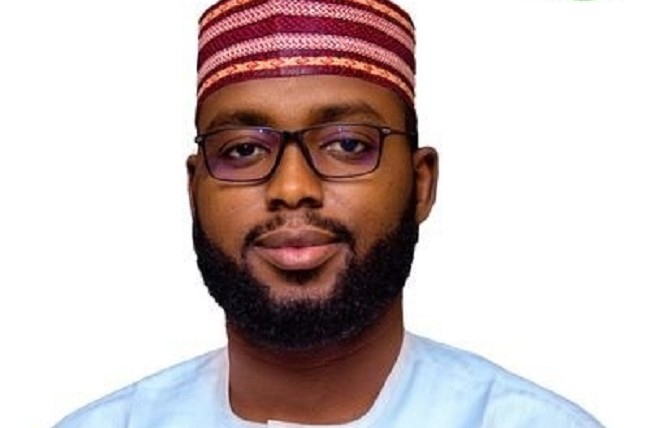
Dr. Dahir M. Hashim, Commissioner, Ministry of Environment and Climate Change, Kano State
“Continued underfunding of climate-related interventions can threaten livelihoods, critical infrastructure and long-term development in the state,” he said.
He presented the coalition’s analysis of budget performance between 2022 and 2025.
Bichi said that the real value of the state budget declined by about 20 per cent in dollar terms, despite nominal growth from ₦241 billion in 2022 to ₦696 billion in 2025.
“The analysis shows that capital budget execution averaged 23 per cent during the period, dropping to 19.9 per cent in 2025.
“KACIG also reports a steady decline in climate-related allocations, from 13.9 per cent in 2023 to 6.5 per cent in 2025.
“The Ministry of Environment executed only 26.7 per cent of its ₦12.5 billion allocation in 2025, while funding for agriculture fell sharply from ₦36 billion in 2023 to ₦0.2 billion in 2024,” he said.
Bichi expressed concern that, while spending on non-critical items such as ceremonies, media engagements, office renovations and symbolic purchases increased, funding for climate-critical projects continued to shrink.
He cited cuts in erosion control funding for the Baban Gwari drainage from ₦2.6 billion to ₦514 million.
Others, according to him, are preventive erosion works from ₦1.1 billion to ₦500 million, and the recent ₦210 million allocated for tree planting across the three senatorial districts.
He also described the ₦800 million earmarked for drainage construction under the Ministry of Environment and Climate Change as inadequate.
He warned that persistent underfunding of climate resilience could worsen economic losses from flooding, erosion and drought, while heightening environmental stress, migration, unemployment and insecurity.
Bichi said evidence showed that every one naira invested in climate resilience could save between four naira and seven naira in future losses.
The KACIG head, therefore, urged the assembly to increase capital allocations to climate-critical ministries, departments and agencies.
According to him, these include the Ministry of Environment and Climate Change, WECCMA, the Ministry of Water Resources, REMASAB and KNAP’s afforestation project.
He also called for the protection and expansion of funding for erosion control, drainage systems, water treatment, afforestation, renewable energy, climate-smart agriculture and waste management.
Bichi urged lawmakers to align the 2026 budget with the Kano State Climate Change Policy to secure a climate-resilient future for the state.
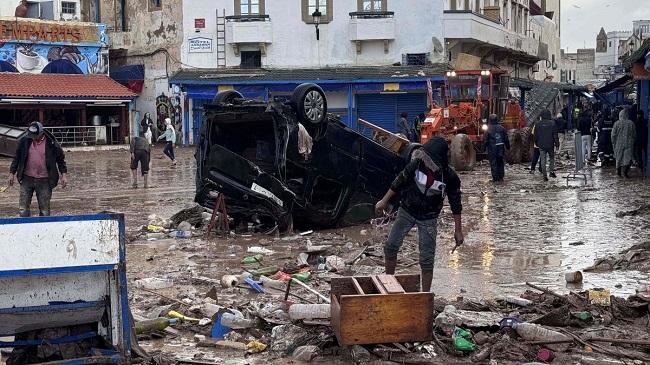
No fewer than 37 people were killed in flash floods triggered by torrential rains on Sunday, December 14, 2025, in Morocco’s Atlantic coastal province of Safi, 330 kilometres (205 miles) south of the capital Rabat, Morocco’s state-run 2M TV reported on Monday.
Fourteen people were receiving medical care at Mohammed V hospital in the town after the floods and two of them are in intensive care, it added, citing local authorities.
One hour of heavy rain was enough to flood homes and shops in the old town of Safi, sweeping away cars and cutting off many roads in surrounding areas as rescue efforts continued, it reported.
eople look at a destroyed vehicle and other debris following a flash flood in the coastal town of Safi, Morocco, Dec. 15, 2025. Photo credit: AFP
Morocco is experiencing heavy rain and snowfall in the Atlas Mountains following seven years of drought that emptied some of its main reservoirs. Sunday’s flooding in Safi is said to be the deadliest such disaster in at least a decade.
Officials warned residents to remain vigilant as weather conditions continue to threaten vulnerable areas. Emergency teams are on high alert to respond to further flooding risks.
Schools have been closed for at least three days and mud and debris clog the streets.
“I’ve lost all my clothes. Only my neighbor gave me some to cover myself. I have nothing left. I’ve lost everything,” one victim told Agence France-Presse (AFP), asking not to give her name.
At least 70 homes and businesses in the historic town center were flooded and 55-year-old shopkeeper Abdelkader Mezraoui said the retail economy had been devastated.
“Jewelry store owners have lost all their stock … and the same goes for clothing store owners,” he said, calling for official compensation to save businesses.
Late Sunday, the rescuer Azzedine Kattane had told AFP about the strong “psychological impact of the tragedy” in light of the large number of victims.
As the waters receded, they left behind a landscape of mud and overturned cars. Onlookers watched Civil Protection units and local residents working to clear debris.
Morocco is struggling with a severe drought for the seventh consecutive year, and last year was the North African kingdom’s hottest on record.
Climate change has made storms more intense, because a warmer atmosphere holds more moisture and warmer seas can turbocharge weather systems.
Flash floods killed hundreds in Morocco in 1995 and scores in 2002.
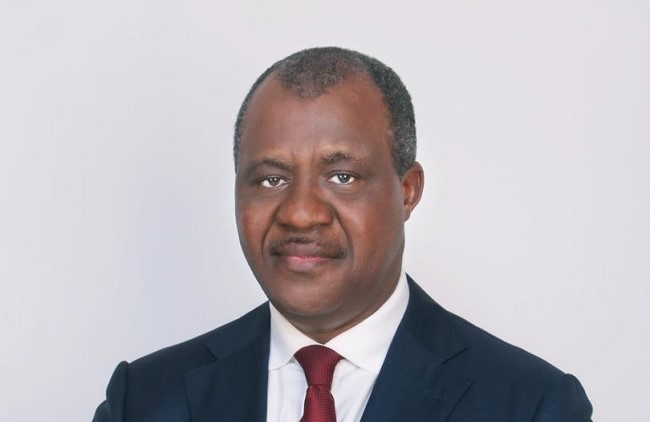
Dangote Group has appointed renowned economist and former Central Bank of Nigeria (CBN) Director, Dr Mahmud Hassan, as its Chief Economist, strengthening the Group’s economic advisory capacity at a time of heightened global and domestic market volatility.
In his new role, Dr Hassan will serve as the Group’s top adviser on economic strategy, market trends, and policy implications, reporting directly to the President of the Group, Aliko Dangote.
Dr Hassan brings more than 30 years of experience in economic policy formulation, financial sector regulation, and central banking. During his long career at the CBN, he held several senior positions, including Director of the Trade and Exchange Department and Director of the Monetary Policy Department. He also served as Secretary to the Monetary Policy Committee and as Special Assistant on Economic Policy and Research to the CBN Governor.
Dr Mahmud Hassan
Beyond Nigeria, Dr Hassan has played a key role in advancing regional economic integration, working as a lead consultant to the African Union Commission on trade integration initiatives and the establishment of the African Monetary Fund.
Academically, he holds a PhD in Economics and an MSc in Energy Economics and Policy from the University of Surrey in the United Kingdom, as well as a BSc in Economics from Ahmadu Bello University, Zaria. He is an alumnus of the Harvard Kennedy School and holds professional certifications as a Bank Examiner and AML CFT Analyst.
Dr Hassan is a Fellow of several professional bodies, including the Nigerian Statistical Association, the Chartered Institute of Bankers of Nigeria, and the Compliance Institute of Nigeria. He is also a prolific researcher with extensive publications in macroeconomics, monetary policy, energy economics, and financial engineering.
In addition to his corporate role, he continues to serve as a visiting professor at several Nigerian universities and is currently the President of the Nigerian Association for Energy Economics.
His appointment underscores Dangote Industries Limited’s focus on deep economic insight and policy intelligence as it navigates evolving market dynamics across Nigeria, Africa, and the global economy.
On Wednesday, December 10, 2025, AP7, the largest pension fund in Sweden, was reported to have updated its annual exclusions and, in their latest review, made the decision to drop TotalEnergies alongside 35 other companies, citing climate-related risks and human rights concerns.
AP7’s decision follows a growing pattern among long-term investors who have assessed TotalEnergies’ involvement in EACOP and chosen to step away. The StopEACOP Coalition, a group focused on stopping the actualisation of the East African Crude Oil Pipeline (EACOP), says it has observed morethan 50 investors excluding or avoiding financing TotalEnergies’ projects in recent years, many of them citing the EACOP project.
AP7, the state pension fund in Sweden, is said to have drop TotalEnergies, citing climate-related risks and human rights concerns related to the EACOP project
2022: Dutch asset manager Cardano (formerly Actiam) chose to sell its investments in TotalEnergies because of EACOP.2023: Danish pension fund PKA divested after years of engagement, citing TotalEnergies’ unresponsiveness to their criticism of EACOP 2024: Dutch pension funds Achmea and ASR excluded the company, with Achmea directly referring to environmental and human rights violations related to EACOP 2025: The Scandinavian asset manager Nordea Asset Management placedTotalEnergies in “quarantine,” with no new bonds or shares being bought due to ongoing human rights allegations surrounding EACOP.
“It’s not just consequential investors pulling away from TotalEnergies projects on the continent; governments too are finding investments in TotalEnergies’ fossil fuels extremely risky, as exemplified by the recent decision of the UK and the Netherlands to pull out of TotalEnergies’ Mozambique LNG project at the last minute. The UK, in particular, overturned more than $1 billion due to increased project risks since 2020.
“Looking at the shift in investor behaviour and diminishing government appetite, if the examples above are anything to go by, this points to a broader reality: EACOP is being rejected because it makes no sense financially, reputationally nor morally for financial institutions and investors interested in sustainable investments,” the group said in a statement.
StopEACOP added that, for long-term investors, the EACOP project is increasingly being assessed as a material risk rather than a viable asset. It noted that decisions by major pension funds and asset managers to exclude or restrict TotalEnergies reflect concerns around stranded assets, legal exposure, reputational damage, and the growing gap between fossil fuel expansion and climate-aligned investment mandates.
“This is not a values-based judgment but a risk calculation, and the direction of capital is making that clear,” StopEACOP stressed, adding:
“Despite repeated claims that the project represents development and economic opportunity, the growing list of investors walking away reflects the true story of EACOP, as told directly by thousands of impacted people in Uganda and Tanzania. A story of unprecedented violations of human rights exemplified by the weaponisation of the judiciary, which has seen Ugandan youths spend more than three months in jail unnecessarily for voicing opposition to EACOP.
“A story of the displacement of thousands of people and putting ecosystems at risk. A story of big oil lining their pockets while leaving communities impoverished and their governments saddled with debts and stranded assets. This reality is becoming a liability for EACOP’s financial backers.
“We, therefore, urge banks and insurers still backing EACOP, including Standard Bank, South Africa, KCB Bank Uganda, and Stanbic Bank Uganda, to take note. When pension funds, asset managers, and governments step back, it is a warning, not a coincidence.
“The market is speaking clearly. Accountability is catching up. And the costs of continuing down this path are becoming impossible to ignore. The responsible choice is for the financial backers to withdraw. If TotalEnergies insists on advancing this harmful project, investors too have a responsibility to divest from the company altogether.”
Nigeria’s civil society landscape is filled with well-intentioned initiatives. From campaigns that generate headlines but change no laws, voter education drives that inform but don’t mobilise to groups that protest but lack the organisational muscle to sustain pressure – the pattern is clear. Despite decades of democratic governance and a vibrant civil society sector, the actual practice of democracy is weak.
The problem isn’t lack of passion or good intentions. The problem is structure or, more precisely, the lack of it. This siloed approach creates three fatal weaknesses:
First, the sector suffers from resource fragmentation, where multiple organisations compete for identical donor funds to address the same issues from scattered points. This dilutes impact, duplicates efforts, and deepens an unsustainable dependency on external funding.
Mayowa Olajide Akinleye
Consequently, this competitive environment breeds knowledge isolation; hard-won lessons, contacts, and operational experience remain trapped within individual organisations rather than evolving into collective wisdom that elevates the entire sector and, finally, power diffusion. Without coordinated action, civil society’s voice reduces to a cacophony of competing interests that politicians can easily ignore or manipulate.
The result? Decades of activism that generate heat but little light.
Silos in Civic-Tech
An obvious gap and where this piece will focus intently, is how we have built or are building civic-tech tools. From civic education platforms to transparency and accountability trackers and election mobilisation apps and, more recently, a plethora of AI tools, the innovation pipeline has never been short of ideas.
However, despite this abundance, the civic tech ecosystem has largely grown horizontally rather than vertically, with each organisation building in isolation and creating overlapping tools with limited interoperability.
This siloed approach contrasts sharply with the very spirit of open government that civil society advocates. More importantly, because civic tech is largely driven by civil society organisations, this fragmentation is diluting civil society’s collective voice.
Integration as Strategy
But what if we approached civic technology differently? What if, instead of building in isolation, organisations deliberately designed their tools to connect and amplify each other?
A connected civic tech ecosystem signals an integrated civil society, one that can mobilise citizens at scale, coordinate advocacy efforts, and sustain pressure on government using shared data, technology, and resources. There are four interconnected layers of civic infrastructure that amplify each other’s effectiveness.
Foundation Pillar: Civic education infrastructure to build critical thinking skills, interest, and systemic understanding of how our governance works (or should work).
Engagement Pillar: Channels that transform education into sustained action – not just voting, but year-round citizen engagement with representatives and institutions.
Organisation Pillar: Political structure that transforms individual citizens into collective power through disciplined, accountable political organisations with a clear theory of change.
Accountability Pillar: Governance oversight mechanisms that ensure transparency, create consequences for behavior, and reward responsive leadership.
When these layers work together in series, they create exponential rather than additive impact. Educated citizens participate more effectively. Organised participation creates political pressure. Political pressure enables accountability. Accountability creates space for better governance, which supports more civic education and participation. The flywheel keeps turning.
This is the unlock that we must intentionally build for as an ecosystem. Organisations combining efforts to build interoperable initiatives, interventions, and technology within each pillar as a stack, and each pillar directly feeding each other.
What can this look Like
An integrated civic tech stack envisions a framework where tools are built to complement rather than compete. For instance, a stack could link:
Citizens engagement platforms that educate voters on candidates
Promise tracking systems that monitor campaign commitments
Citizen feedback mechanisms that report implementation status
Budget dashboards that show fiscal allocations against promises
Accountability scorecards that rate official performance
Imagine if verified campaign promises automatically integrated into a public policy tracker, which in turn updated from open-budget dashboards that monitor fiscal allocations. This unified dataset could feed into community feedback forms where citizens report whether promised projects were delivered. The result would be citizens, journalists, and policymakers working with a unified source of civic truth.
Nigeria’s civic ecosystem could start with a civic Data Layer, a shared repository of open, standardised datasets on governance, budgets, and policies. Above that could sit an Engagement Layer, where citizens interact with these datasets through apps, chatbots, or SMS. Finally, an Innovation Layer could allow new civic startups to plug in using shared APIs,authentication tools, and analytics systems.
This principle of stacked infrastructure is not new. The fintech ecosystem in Nigeria offers a living model. Before the era of integrated payment systems, mobile banking was impossible. Today, thanks to the Nigeria Inter-Bank Settlement System (NIBSS) and open banking frameworks, users can transfer across banks and fintech apps almost seamlessly. Civic tech can borrow from this model by creating Civic Interoperability Protocols, standard APIs and data frameworks that enable different platforms to communicate securely.
Globally, India’s Digital Public Infrastructure, notably the India Stack, offers a masterclass in how layered systems can transform public service. Built around digital identity (Aadhaar), payments (UPI), and data consent layers, India Stack enables private and civic innovators to plug into a national framework, producing exponential outcomes. Similarly, in Estonia, civic engagement and governance platforms are interconnected through the X-Road, a backbone that links government databases, NGOs, and even businesses under secure, interoperable standards.
How the ecosystem benefits
This structure delivers multiple benefits simultaneously:
For Civil Society: Organisations share verified insights, coordinate campaigns, and can present a united front in demanding transparency, accountability, and reform. Collaboration attracts funders who increasingly prefer systemic investments over one-off projects. By pooling data and infrastructure, civic tech organisations reduce redundancy, enhance collaboration, and deepen democratic impact.
For Citizens: The same platforms can serve multiple functions. A voter who learns about candidates through the education layer can track their promises through the engagement layer and later report results through the accountability layer – all within a connected ecosystem where information builds progressively. This creates both convenience and depth.
For Democracy: Sustained, organized pressure on government becomes possible. Individual organisations making individual demands are easy to ignore. A unified civil society armed with shared data, coordinated messaging, and demonstrated citizen support is far more difficult to dismiss.
For Funders: Rather than funding dozens of parallel initiatives addressing the same problem, donors can invest in shared infrastructure that multiplies the impact of each individual organisation. This reduces overhead, improves sustainability, and creates a path to measurable systemic change
Blueprint for the New Generation
Building these stacks requires a fundamental shift in how Nigeria’s emerging civic leaders approach the work. Here’s how we must begin:
Impact over Idea: We must be humble enough to accept that individual ideas are always less important than collective impact.
Ruthless prioritisation: Our work must focus ruthlessly and collectively consolidate on the highest-leverage interventions rather than trying to solve everything at once.
Embrace political realism: Civil society cannot remain “above politics” while expecting political outcomes. The new generation must understand that civic education without political organisation is an academic exercise, and political organisation without accountability mechanisms will become corrupt.
Build for local & community ownership: This means developing solutions with the community to enable ownership, this allows inputs such as membership contributions and community investment that ensure improved participation & longer sustainability of interventions.
Measure what matters: Move beyond counting workshops held or people reached to tracking concrete policy wins, electoral accountability, and institutional changes.
The path forward requires less ego and more strategy, less noise and more organised power. Philanthropic funders, local incubators, and civil society leaders must invest in shared infrastructure projects such as civic APIs, open data repositories, and joint capacity-building programmes. Just as technology stacks revolutionised finance, civic stacks can revolutionise democratic participation.
Like anything there will be issues to grapple with. Which is why the most critical stack we need to build first is not of technology, but of trust and shared strategy among diverse actors. Let this be the start of that conversation: How do we govern a shared civic infrastructure? What is the sustainable economic model? How do we design for the rural and city demographics simultaneously?
The future of our democracy depends not on a single perfect solution, but on our collective willingness to engage with these hard questions and build iteratively, and inclusively, from the ground up.
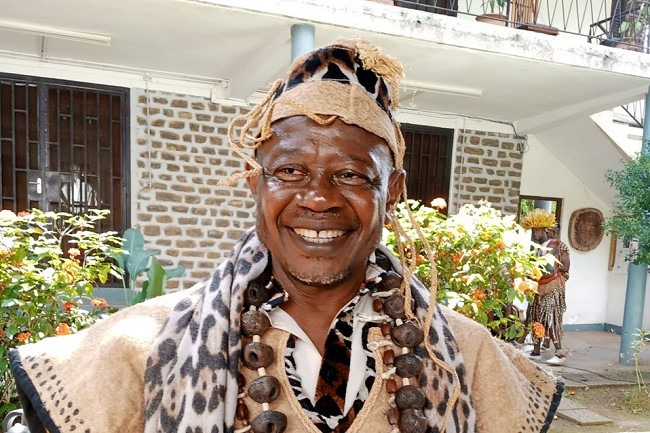
The Elephant Protection Initiative (EPI) Foundation’s friend of the month for December 2025 is Mvondo Bruno, Traditional Chief of Minkok-Bityli in the Sanaga Maritime Division of Cameroon’s Littoral Region. He stands as a respected leader whose influence extends far beyond his village. Known for his unwavering commitment to environmental protection, cultural preservation, and community leadership, he plays a key role in regional initiatives focused on conserving natural resources and strengthening traditional governance.
Beyond ritual knowledge, he is also a senior expert in traditional knowledge associated with genetic resources, an expert in sacred forest management, and a ritualist for forest peoples. His dedication to cultural advocacy has led him to serve as a spokesperson for the Fang-Béti-Bulu communities in their efforts to repatriate cultural property taken during colonial times. His passion for forest and wildlife conservation comes from his upbringing as the son of a farmer in the heart of the Congo Basin rainforest.
Mvondo Bruno
The forest, he explains, is the source of food, materials, and spiritual balance. Without it, life loses its richness. For him, protecting forests and wildlife, especially species essential to rituals and livelihoods, is inseparable from his role as a traditional chief.
Among his most memorable moments in the fight for land rights are the advocacy campaigns aimed at ensuring that customary provisions are recognised in land management. He recalls the 2013 correspondence from Cameroon’s Head of State urging the Government to consider traditional chiefs’ proposals in land reform, as well as his 2014 trip to the United States to negotiate key projects such as the Tenure Facilities initiative and the Unification of Participatory Mapping Approaches in Cameroon.
Another highlight was his speech at the African Union forum in Addis Ababa, where he championed customary land rights and better land access for women and young people. More recently, he has helped establish mechanisms to prevent and manage land conflicts in communities within Yoko and Nanga Eboko.
When asked about how citizens can help conserve wildlife, particularly elephants, His Majesty suggests promoting alternatives to poaching, encouraging ecotourism and solidarity tourism, and preserving traditional knowledge that helps keep elephants away from villages. He also advocates for the planting of moabi trees, which grow quickly thanks to elephant dung.
Addressing conflicts between humans and elephants remains a major concern in many Cameroonian communities. For His Majesty, the most realistic and respectful solutions include strengthening state–community collaboration, ensuring that communities play a primary role in managing protected areas, and allocating sufficient resources to support these efforts.
Through his leadership, His Majesty Mvondo Bruno embodies a powerful blend of cultural stewardship, environmental advocacy, and community empowerment, which is an example of how traditional authority can guide modern solutions to protect both heritage and nature.
Demand isn’t the problem; broken input systems are. Fixing them could unlock 5,000 youth jobs and make local processors competitive again.
When Everyone Is Rational and the System Still Fails
Few meals are as quintessentially Kenyan as chicken and chips. From roadside kiosks to fast-food chains, this simple pairing cuts across classes, incomes and geographies. Yet behind the ubiquity of this dish lies a quiet paradox: despite surging demand, the value chains that underpin chicken and chips remain structurally fragile and chronically underperforming.
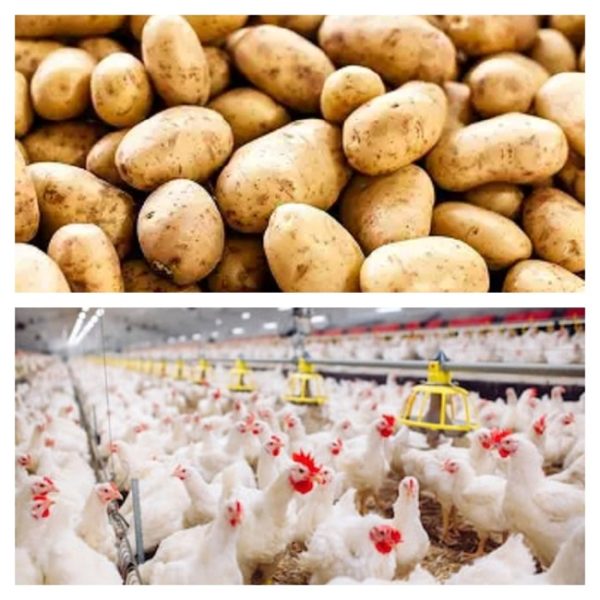
Potato (top) and poultry sectors
Over the past months, through deep-dives into both the potato and poultry sectors culminating in a recent webinar with processors and off-takers, a consistent message has emerged: demand is not the problem; reliability is. Kenya does not lack buyers or consumers. It lacks the aligned systems required to consistently produce what the market wants, when it wants it, and at the quality and cost it requires.
Most Kenyan potato farmers grow what they can afford and sell where they can be paid quickly. That usually means informal markets that are cash-based, fast-moving, and tolerant of variability. They suit the realities of smallholders managing tiny plots with limited cashflow.
Processors, on the other hand, operate under entirely different pressures. They must produce to specification, on schedule, with low rejection rates and high plant utilisation. Yet the varieties they require such as Markies, Voyager and Dutch Robijn are rarely available locally. Farmers overwhelmingly plant Shangi, a fast-maturing table potato well-suited for boiling and local markets but poorly suited for frying due to its inconsistent dry matter content and storage behaviour.
Even when farmers try to grow to spec, the system is stacked against them: less than one per cent of potato seed in Kenya is certified. Without clean planting material, yields stagnate at 8–10 MT/ha against a potential of 30–40 MT/ha, and quality falls short of processor standards.
Poultry tells the same story in a different register. Feed which accounts for 50 to 60 per cent of production costs is among the most expensive in East Africa, while reliable day-old chicks are costly and erratic. Formal buyers demand strict weights, chilling and biosecurity, but often pay slowly; informal wet markets pay in cash on delivery and overlook variability. Rationally, farmers choose speed and certainty over delayed payments and penalties.
The outcome is predictable: processors operate at barely 40 per cent of installed capacity, unable to compete with imports on cost, while farmers remain locked into low-productivity systems that deliver neither scale nor stability.
No Seed, No Scale
Most discussions about agricultural competitiveness focus on prices, yet price cannot compensate for the absence of foundational inputs. The central choke point in both value chains is not farmer motivation or processor behaviour, it is the absence of reliable seed, breeds, and input systems to produce to specification.
Without accessible stocks of processing-grade potato seed, it is impossible to meet the size, shape, dry matter and storability attributes that processors require. No amount of training, contract design or pricing reform can overcome this bottleneck. It must be solved upstream before efficiency can flow downstream.
From Seed to Scale: A 5,000-Job Youth Opportunity
Fixing this seed bottleneck offers a powerful economic opportunity particularly for young people through the production of apical cuttings.
Apical cuttings are clean, disease-free potato plantlets produced in greenhouses from tissue-culture mother stock. They allow fast, local multiplication of varieties commonly grown by farmers, such as Shangi, as well as processor-preferred varieties like Markies. Each cutting can generate multiple tubers within a season, compressing a seed multiplication process that typically takes five years into just two to three cycles, while reducing the disease risks that undermine conventional seed systems.
This is an inherently youth-friendly enterprise: it requires only a ¼-acre plot, modest capital (about KES 250,000 to set up a greenhouse), fast turnover, and serves a market where demand far exceeds supply. A small unit can produce 10,000-15,000 apical cuttings per cycle, selling at KES 10 each. With one to two trained operators per ward in key potato counties, this model could create 2,000–2,500 youth-led seed enterprises employing around 5,000 young people while simultaneously solving the certified seed constraint that keeps processors starved of consistent, quality raw material.
From Plate to Seed: Reversing the Logic with Collaboration
Kenya’s challenge is not a lack of effort. It is a lack of alignment. Farmers grow what they can, buyers demand what they cannot get, and processors limp along at half capacity while imports quietly fill the gap.
To change this, we must reverse the logic: start from the plate and plan backwards to the seed. That means specifying the products the market wants (chips-grade potatoes, standardised poultry weights), aligning input systems to produce them, and financing production based on off-take contracts rather than collateral.
Solving these systemic bottlenecks isn’t a solo effort – it demands collaboration across sectors to align incentives, share expertise and scale solutions. That’s why Kuza has collaborated with TRANSFORM, an impact accelerator led by Unilever, the UK Government’s Foreign, Commonwealth and Development Office (FCDO) and EY, to tackle agricultural challenges in Kenya and beyond. Through this collaboration, we are leveraging over 3,000 trained local changemakers, our “Agripreneurs” – entrepreneurial leaders who deliver market-aligned guidance to smallholder farmers to start thinking market first, Using over 10,000 bite-sized, hyperlocal videos accessible online/offline through Edge Computing, these young Agripreneurs help farmers make smarter decisions about what to grow, when, and how based on market demand.
The change is happening but more stakeholders in the sectors need to join and collaborate to drive faster impact.
If Kenya can align these pieces, chicken and chips could become more than a popular street meal. They could become a case study in how to rebuild value chains for competitiveness, jobs and food security.
Because chicken and chips are not hard to eat – they are just hard to coordinate.
By Sheena Raikundalia, chief growth officer at Kuza