Solar panel imports into Africa reached 15 gigawatts by mid-2025, a 60% year-on-year increase signaling rapid clean energy adoption across the continent.
The newly released ESI Africa Solar & Storage Volume 2025 documents the surge in renewable energy infrastructure, with 20 countries setting new records for solar imports and expanding battery storage deployment.
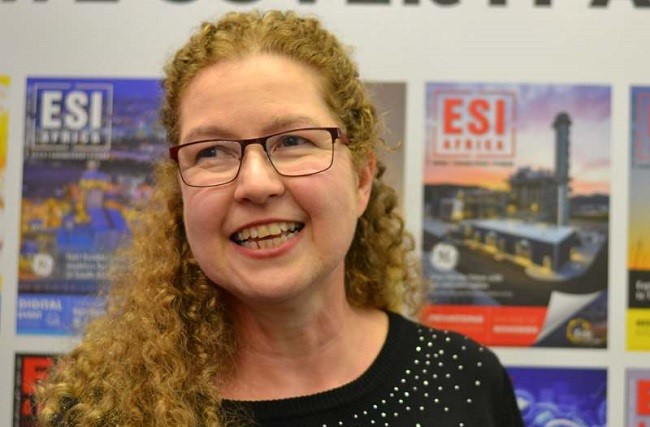
“Africa’s solar surge is now measurable, material, and reshaping the continent’s energy economy,” said Nicolette Pombo-van Zyl, editor-in-chief at ESI Africa.
Nicolette Pombo-van Zyl, editor-in-chief at ESI Africa
“This Volume captures the pace and depth of change, from groundbreaking technologies to the bold policies and partnerships driving them forward.”
The publication highlights opportunities for energy investors, technology providers and infrastructure partners as the continent transitions to sustainable, decentralised energy systems.
Key developments include advances in bifacial and perovskite solar modules, with next-generation cells achieving efficiencies exceeding 30%.
Energy storage innovation is expanding beyond lithium-ion batteries, with vanadium redox flow and metal-hydrogen batteries emerging as viable alternatives.
The volume examines how recycling and upcycling solar panels and batteries can create economic opportunities from end-of-life management.
Financiers are backing Africa’s largest standalone battery projects, driving grid resilience and investment returns.
The publication also explores regulatory reforms, partnerships and financing models enabling sustainable infrastructure growth across the continent, from rooftop installations to utility-scale projects.
More than 1,000 participants from governments, intergovernmental organisations, UN bodies, civil society, Indigenous Peoples, and youth are gathered for the sixth meeting of the Conference of the Parties to the Minamata Convention on Mercury (COP-6), taking place from November 3 to 7, 2025, at the International Conference Centre Geneva (CICG).
COP-6 is considering measures to curb the illegal trade of mercury and strengthen control of its supply and compounds; review progress on artisanal and small-scale gold mining (ASGM), which remains the largest source of global mercury emissions, and assess the enforcement of the ban on mercury-added skin-lightening products.
Delegates at the sixth meeting of the Conference of the Parties to the Minamata Convention on Mercury (COP-6) in Geneva
Parties are also discussing a proposal to phase out dental amalgam, evaluate feasible mercury-free alternatives in vinyl chloride monomer (VCM) production, and examine updates to the Convention’s financial mechanism, including guidance to the Global Environment Facility (GEF) and the Specific International Programme (SIP).
As part of the global environmental agenda, delegates are exploring ways to strengthen cooperation with the Intergovernmental Science-Policy Panel on Chemicals, Waste and Pollution, the Global Framework on Chemicals, and other multilateral environmental agreements to advance shared goals on chemicals, waste, and health.
Cross-cutting issues are likewise featuring, including aligning mercury reduction efforts with the Kunming–Montreal Global Biodiversity Framework, advancing the engagement of Indigenous Peoples and local communities, launching the Minamata Convention’s Women’s Caucus, and reviewing the Secretariat’s digital transformation work to enhance transparency and access to information.
At the opening ceremony, Elizabeth Mrema, Deputy Executive Director of the UN Environment Programme, emphasised that the Minamata Convention stands as a powerful example of science-based and cooperative action to tackle the planet’s most pressing environmental challenges.
“The Minamata Convention offers a model which is rigorous, science-based, and anchored in global solidarity,” she said.
Reflecting on the Convention’s progress, she added that although it is one of the youngest multilateral environmental agreements, it has already demonstrated remarkable maturity and impact.
Representing the host country, Katrin Schneeberger, State Secretary and Director of the Swiss Federal Office for the Environment, welcomed delegates to Geneva and reaffirmed Switzerland’s commitment to advancing global cooperation on chemicals and waste management. he emphasised the life-cycle approach of the Convention as a model for addressing pollution across all stages and sectors.
“The structure of the Convention is a model for global environmental governance, one that can, and should, serve as a blueprint for addressing other pollution challenges,” she said.
Monika Stankiewicz, Executive Secretary of the Minamata Convention, highlighted the progress achieved since the last COP and the need to sustain momentum to fully implement the Convention’s commitments.
“Since we last met in this very hall two years ago, Parties have continued turning words into action. Thanks to your leadership, mercury-added products are becoming a thing of the past, mercury is no longer used in most industrial processes as safer alternatives become increasingly available, and awareness is growing across societies,” she said.
Stankiewicz underscored that despite this progress, major challenges remain, including the illegal trade in mercury, rising emissions from artisanal and small-scale gold mining, and the ongoing use of mercury in cosmetics.
“The heart of our Convention lies with those most vulnerable to mercury exposure and disproportionately impacted: Indigenous Peoples, local communities, women, and children,” she added. “I remain deeply optimistic that the Minamata Convention will continue to make a positive and lasting impact on people’s lives everywhere and serve as a model of multilateral cooperation.”
Presiding over the meeting, Osvaldo Álvarez Pérez, COP-6 President, underlined that mercury remains a dangerous toxin and that the Minamata Convention represents a shared promise to protect human health and the environment. COP-6 President stressed that despite progress made, significant challenges persist, particularly the rapid growth of artisanal and small-scale gold mining and the ongoing trade in mercury-added products, which threaten to undermine collective efforts, together with unintentional releases.
He encouraged delegates to connect the dots, review financial systems, and ensure that progress is guided by measurable indicators and reliable data.
“Let us build on our collective achievements and face the challenges ahead with optimism, determination, and respect for one another’s perspectives,” he said. “Through thoughtful and constructive debate, we can take decisions that truly protect both people and the planet.”
Special events
Ahead of the opening, the public event “From Science to Action: Protecting the Amazon from Mercury Pollution”, organised in collaboration with the Geneva Environment Network, brought together National Geographic Explorer Fernando Trujillo and Aileen Mioko Smith (co-author of MinamataMinamata with photographer W. Eugene Smith), for a dialogue linking the legacy of Minamata disease to today’s challenges in the Amazon caused by mercury pollution. The event also featured the screening of the documentary Amazon, the New Minamata? which portrays the devastating impacts of mercury on Indigenous communities of Brazil’s Tapajós River.
Throughout the week, delegates will also take part in special sessions such as “Driving Effective and Inclusive Implementation of the Minamata Convention”, “The planetGOLD Programme”, the launch of the Women’s Caucus, and knowledge labs on key technical and policy topics.
The “Minamata Photographer’s Eye” exhibition at CICG, together with the Humanae photo exhibit by Angelica Dass along Geneva’s lakeshore, reflects the Convention’s ongoing engagement with art and awareness. The broader exhibition area, open throughout the week, offers a vibrant space for partner institutions to showcase their activities, projects, and technologies that support the Convention’s implementation and help advance its goal to make mercury history.
Just before COP30 begins in Brazil next week, a new report was released by SkyTruth, a nonprofit conservation technology organisation, that reveals the mounting environmental toll of Brazil’s offshore oil and gas expansion.
The report, Brazil Offshore Fossil Fuel Threats and Impacts, documents 179 probable oil slicks covering Brazilian waters since 2017, alongside dramatic increases in production, vessel traffic, and methane emissions that threaten the country’s marine ecosystems and coastal communities. The timing is particularly urgent as Brazil’s environmental agency just approved Petrobras to begin exploratory drilling near the mouth of the Amazon River – a decision environmentalists warn undermines Brazil’s credibility as a climate leader.
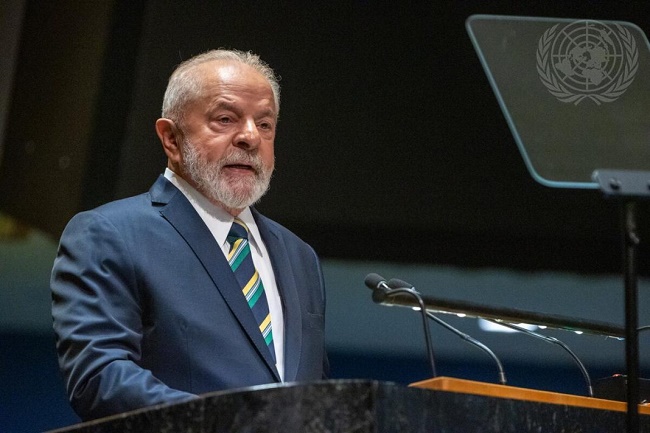
Lula da Silva, President of Brazil
SkyTruth’s analysis used satellite imagery, vessel tracking data, and government records to document the environmental impacts of Brazil’s offshore oil and gas industry. The full report includes detailed maps and data visualizations showing oil slick locations, vessel traffic patterns, flaring activities, and overlap with protected areas and important marine mammal habitats.
“As Brazil prepares to host world leaders at a major global climate conference, this report provides concrete evidence of how offshore oil and gas development is already harming the country’s marine ecosystems and climate,” said John Amos, CEO of SkyTruth. “The recent approval of Amazon drilling makes this contradiction even starker. With new exploration planned for the ecologically sensitive Amazon River mouth, the risks are only growing. We need transparent monitoring and accountability — and a strong shift away from fossil fuels and toward renewable energy — to protect these important ocean resources.”
Key Findings
Between 2014 and 2024, Brazil’s oil production increased by more than 49% and natural gas production surged by over 78%, making Brazil the largest oil producer in South America.
179 probable oil slicks were observed on satellite imagery of the Brazilian EEZ since 2017 – 48 from oil and gas infrastructure, 131 from vessels. (This number likely underrepresents the true pollution situation, because of the gaps in coverage of satellite imagery.) Oil tankers and oil field service vessels were responsible for nearly half (47%) of the vessel slicks with verifiable sources.
Floating production, storage and offloading vessels (FxOs) have become increasingly utilized in the oil and gas industry. A single FxO in the Santos basin was responsible for 9 of the 48 infrastructure oil slicks. Another FxO location saw an increase in vessel traffic by 430% after it went into operation.
Oil and gas facilities within Brazil’s EEZ have been observed to flare 12.5 billion cubic meters of natural gas since 2012, equivalent to the annual emissions of about 6.9 million passenger cars.
Three methane plumes, each large enough to be considered a super-emitter event at over 100 kg of methane per hour, were captured on the same day in April 2025 from offshore oil and gas infrastructure in the Santos basin.
There are 162 producing fields and 143 exploration blocks in the Brazilian EEZ. In addition, Petrobras has started exploration for 9 blocks in ecologically sensitive habitats at the mouth of the Amazon River and has recently been granted approval to drill at a site located 500km from the river mouth and 160km from the coast.
13 of the 160 Marine Protected Areas (MPAs) in Brazil overlap with oil and gas infrastructure, lease blocks, or detected oil slicks, and nearly all of the MPAs have some amount of oil-related vessel traffic moving through them.
There are 20 important marine mammal areas (IMMAs) that cover over a quarter of Brazil’s EEZ. Only about 6% of the IMMA area falls within marine protected areas, leaving 94% of these important spaces unprotected.
Implications for Climate and Conservation
Brazil’s offshore expansion directly contradicts its commitment to climate neutrality by 2050 and the Paris Agreement’s 1.5°C target. By 2040, Brazil is projected to produce about 50% of the world’s offshore oil – a level incompatible with global climate goals. As Brazil positions itself to lead international climate discussions at COP30, the disconnect between its climate rhetoric and fossil fuel expansion has drawn sharp criticism from environmental advocates worldwide.
The report also highlights serious threats to Brazil’s marine biodiversity. Only about 12% of the area that falls within the country’s 160 Marine Protected Areas is fully or highly protected, covering just 3.2% of the Brazilian EEZ. The Southwest Atlantic Humpback Migratory Corridor, which passes through the heavily industrialised Campos and Santos basins, is particularly at risk, with 73 oil slicks, 49 floating production vessels, and 20 operational oil platforms observed within the corridor.
“The patterns we’re documenting – chronic oil pollution, coastal industrialization, habitat loss and degradation – represent significant threats to Brazil’s coastal ecology and economy,” said Amos. “Brazil has a window of opportunity to pivot from this extractive offshore legacy toward a future where ocean wealth is measured in healthy reefs, thriving fisheries, and resilient coastal communities. But that window is closing.”
Representatives of 196 countries and the European Union will meet in Panama from December 1 to 5, 2025, to review their efforts against desertification, land degradation and drought under the United Nations Convention to Combat Desertification (UNCCD) – one of the three Rio Conventions, alongside biodiversity and climate.
The 23rd session of the Committee for the Review of the Implementation of the Convention (CRIC 23) to the UNCCD will convene some 500 delegates from governments, civil society, and academia to assess progress in advancing the Convention’s objectives.
UNCCD Executive Secretary, Yasmine Fouad
A signatory to UNCCD since 1996, Panama has committed to achieve Land Degradation Neutrality by 2030, identified 31 critical hotspots, and is advancing reforestation and Dry Corridor adaptation programmes – underlining its role as regional host. In 2023, the country faced its driest year on record, when water shortages disrupted traffic through the Panama Canal and highlighted how local drought can trigger global consequences.
Juan Carlos Navarro, Minister of Environment of Panama, stated: “Never before has a country hosted, in the same year, the three major United Nations environmental conventions – on climate action, biodiversity, desertification, and sustainable land management. With this, Panama reaffirms its commitment to conserving nature and advancing sustainable development, while once again calling for the integrated management of these three pillars in order to confront the planetary crisis and build a resilient future for our communities.”
UNCCD Executive Secretary, Yasmine Fouad, said: “Severe droughts and the loss of fertile land are already straining food and energy production, uprooting rural communities, and threatening the livelihoods of millions. Nowhere is this more evident than in Latin America and the Caribbean, a region that is experiencing severe land degradation, affecting at least 20 per cent of its total area. By hosting CRIC23, Panama is placing itself at the center of collective response – from its national Nature Pledge to the regional Dry Corridor Initiative – and helping to build the momentum for the urgent need for drought resilience and land restoration worldwide.”
This CRIC will place particular emphasis on gender, highlighting best practices and bottlenecks in engaging women – including Indigenous women – who are among the hardest hit by land degradation and drought, yet remain at the forefront of sustaining families and food systems.
Recent UNCCD data underline the urgency: the world is losing nearly 100 million hectares of healthy land annually, and over 70 per cent of land has become drier over the past three decades, eroding the planet’s ability to support a growing population. Meeting global land restoration targets will require USD 1 billion per day until 2030—still only a fraction of what is currently spent on harmful subsidies and unsustainable investments.
CRIC23 will be held at the Panama Convention Centre, Panama City. Parties will: review progress and provide recommendations towards drought resilience and 2030 global targets on land; discuss the post-2030 strategic framework; engage with key stakeholders including women, youth, Indigenous Peoples and local communities; and see the launch of the Panama Nature Pledge and other key reports.
Vice-President Kashim Shettima has departed Abuja for Brazil to represent President Bola Tinubu at the 30th session of the United Nations Climate Change Conference.
Mr. Stanley Nkwocha, Senior Special Assistant to the President on Media and Communications, Office of the Vice-President, made this known in a statement on in Abuja on Tuesday, November 4, 2025.
The conference tagged COP30 is scheduled to hold from Nov. 6 to 7 in the city of Belém, capital of the state of Pará, in the Brazilian Amazon.
Vice-President Kashim Shettima
It will be convened by Brazil’s President Luiz Inácio Lula da Silva, in collaboration with other partners.
Nkwocha said VP Shettima is billed to join other world leaders, development partners and business executives at the event.
According to him, the theme of the conference is “Climate Action and Implementation,” with a strong focus on adaptation, forests, biodiversity, and climate justice.
He explained that on the first day of engagements in Belem, Shettima will attend the general plenary of leaders where he is expected to present Nigeria’s climate action address.
Nkwocha added that Shettima would take part in the inauguration of the Tropical Forest Forever Fund, and participate in a roundtable chaired by President Lula on Climate and Nature.
According to him, similarly, Vice-President Shettima will attend an Amazonian Cocktail for Heads of Delegation, hosted by the President of Brazil.
On the second day of the summit, Nkwocha said VP Shettima will participate in two roundtables chaired by President Lula on energy transition.
“And the review of the Paris Agreement, with a focus on Nationally Determined Contributions (NDCs) and Financing.”
On the sidelines of the event, the spokesperson said Shettima will hold bilateral meetings on establishing and managing Nigeria’s participation in the carbon markets.
This, according to him, is with a view to enable Nigeria to unlock between $2.5 billion and $3 billion annually in carbon finance over the next decade to help meet climate goals.
Nkwocha disclosed that, at the conclusion of his COP 30 engagements, Shettima will proceed to the city of Brasilia for a reciprocal visit to his Brazilian counterpart, Vice President Geraldo Alckmin.
He recalled that Alckmin had in June this year paid a historic three-day visit to Nigeria.
He said in the city of Brasilia, the Vice President, accompanied by top Nigerian government officials, will engage with his Brazilian counterpart to further deepen Nigeria’s South-South diplomatic ties.
According to him, the Vice-President is expected back in Nigeria at the end of his engagements in Brazil.
The Lagos State Government on Tuesday, November 4, 2025, disclosed that it would present pioneering climate solutions at the 2025 United Nations Climate Change Conference (COP30) in Brazil.
The state will prominently showcase the 80 Million Clean Cookstoves (CCS) Initiative and the Four Billion Tree Planting Project, the world’s largest UNFCCC Article 6.4-approved reforestation programme.
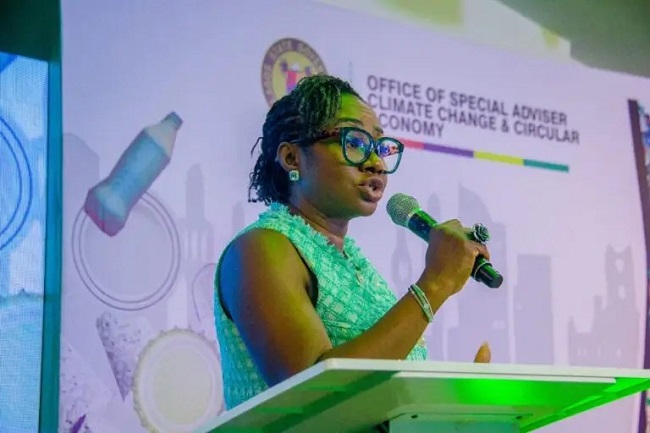
Mrs. Titi Oshodi, Special Adviser to the Governor on Climate Change and Circular Economy, disclosed the plans in a statement issued in Lagos.
Titi Oshodi, Special Adviser to the Lagos State Governor on Climate Change and Circular Economy
She said Lagos’ participation at the Climate Innovation Zone, hosted by Climate Action, would position the state as a leader in climate investment and innovation.
“This collaboration places Lagos among a select group of African subnational governments demonstrating actionable climate leadership and investment-ready solutions,” Oshodi said.
The 80 Million Clean Cookstoves Initiative, developed by GreenPlinth Africa and endorsed by the Office of the Vice President and National Council on Climate Change (NCCC), is a flagship project.
In partnership with Oando Clean Energy, the initiative will deploy 80 million metered, biomass-powered cookstoves to households across Nigeria, significantly reducing over 1.2 billion tonnes of carbon emissions.
The programme is also expected to create thousands of green jobs, contributing to economic growth while supporting Nigeria’s green energy transition.
“Lagos is championing Africa’s climate ambition, where innovative solutions meet practical implementation,” Oshodi said, emphasising the city’s role as a continental climate pioneer.
She added: “Our participation at COP30 demonstrates how subnational leadership can mobilise global climate finance, scale clean energy access, and deliver a just, inclusive transition for millions of citizens.”
Oshodi highlighted that the initiative reflects the visionary leadership of Gov. Babajide Sanwo-Olu, whose administration prioritises climate action, resilience, and sustainable urban development.
“Through COP30, Lagos aims to spotlight its integrated climate finance framework and showcase flagship initiatives across clean energy, transport decarbonisation, agriculture, and circular economy innovation,” she said.
Among the state’s major engagements, Lagos will host a high-level private roundtable, titled “From Lagos to the World – Financing Urban Climate Solutions for a Just and Inclusive Transition”, on Nov. 6.
The session, headlined by the state governor, will bring together development finance institutions, global investors, and international policymakers to explore innovative models for city-led climate financing.
Presentations will include LAMATA on low-carbon transport, LASPA on electric vehicle charging infrastructure, and the Ministry of Agriculture and Food Systems on nature-based solutions and agroforestry.
Private sector innovators, such as Oando Clean Energy and GreenPlinth Africa, will also highlight their clean energy projects, including the global carbon finance potential of the 80 Million Clean Cookstoves Initiative.
Lagos will participate in the Africa Innovation Forum Main Stage Panel on November 7, sharing its model for climate financing and local-global collaboration with leading experts and partners.
The state’s involvement in the Climate Implementation Summit on Nov. 8 will further spotlight the 80 Million CCS Initiative, the first biomass clean cooking programme integrating on-chain Digital MRV technology.
“This inclusion demonstrates Nigeria’s pioneering role in leveraging climate technology to deliver measurable emission reductions alongside social and economic co-benefits,” Oshodi said.
A private Dealroom Session on Nov. 8, titled “Bridging Ambition and Capital: Financing Bankable African Climate Solutions”, will bring together DFIs, private investors, and carbon financiers.
The session aims to unlock capital for high-impact projects, including the 80 Million CCS Initiative and Lagos’ broader climate-smart urban portfolio.
“Through these engagements, Lagos will cement its position as a continental leader in climate innovation, advancing projects that contribute directly to global emission reduction targets,” she added.
Oshodi concluded that the state’s participation reflects a commitment to fostering inclusive growth, resilience, and sustainable development while demonstrating Africa’s potential in climate leadership.
Four new cities have been chosen to receive support from the C40 Cities Finance Facility (CFF) to turn their ambitious climate plans into tangible, finance-ready infrastructure projects.
Implemented jointly by Deutsche Gesellschaft für Internationale Zusammenarbeit (GIZ) GmbH and C40 since 2015, the CFF is an award-winning project preparation facility helping cities develop inclusive urban infrastructure projects and link them to climate finance. The first group of new partner cities for CFF’s fourth phase was announced at the 2025 C40 World Mayors Summit as:
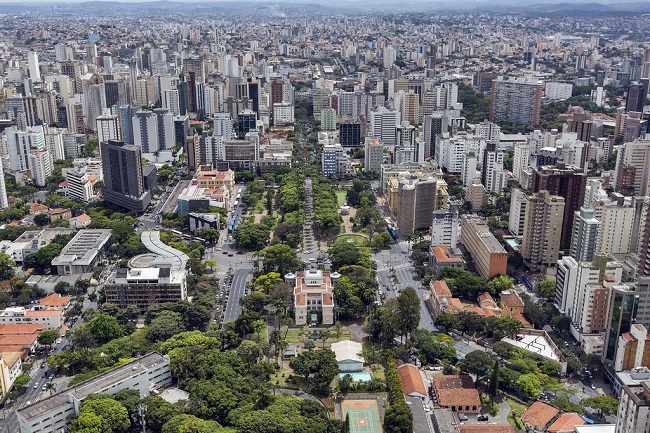
Belo Horizonte, Brazil
Resilient urban watersheds in Belo Horizonte, Brazil
Belo Horizonte is launching a major watershed climate adaptation project in one of its most vulnerable areas, the Capão and Piratininga basins, to build resilience against extreme weather. The initiative will strategically implement nature-based solutions such as green corridors, rain gardens and water harvesting systems in public buildings to manage stormwater and heat naturally throughout the neighbourhoods.
These measures aim to cut flooding impacts by 40%, mitigate urban heat risks, significantly improve water quality and deliver improvements to biodiversity, public health and social cohesion.
Nature-based urban regeneration in São Paulo, Brazil
São Paulo will launch the Jardim Orion II urban regeneration project along the banks of the strategically vital Billings Reservoir. This initiative directly tackles severe social challenges and water insecurity within a high-risk flood zone. For the first time, the project will incorporate nature-based solutions, using green spaces and natural water systems, into São Paulo’s long-standing Watershed Protection Programme. This significant shift away from traditional concrete infrastructure will strengthen the city’s climate resilience, boost public health and create new green jobs.
Solar-powered e-buses in Rabat, Morocco
Rabat will roll out 30 new e-buses along a new north-south express line connecting Salé, Rabat, and Témara, and install rooftop solar photovoltaic (PV) at up to three bus depots. This transformative project will combine electric mobility and renewable energy within a single framework, setting a precedent for integrated infrastructure delivery across Morocco. It also offers the chance to test innovative governance and contractual models for transit operators, providing valuable lessons for other urban contexts in Morocco and the wider MENA region.
Clean ferries in Cartagena, Colombia
Cartagena is creating a reliable, low-emission passenger ferry network to connect its industrial, residential, commercial, and tourism centres with communities, including the island of Tierra Bomba. This project replaces old diesel-powered boats with 10 new, clean ferries and 10 new or improved docks, complete with charging stations.
Fully integrated with the existing Transcaribe bus system, this network will dramatically cut commute times, improve travel safety, and significantly expand fair access to jobs, healthcare and education for underserved island and coastal residents. As the first project of its kind in Colombia, it offers a replicable model for other cities located on coasts and rivers.
With the support of Germany’s Federal Ministry for Economic Cooperation and Development (BMZ) and the UK’s Foreign, Commonwealth and Development Office (FCDO), CFF will now collaborate with these cities to prepare and implement these projects to improve the lives of residents with large-scale, measurable impact.
Launched in 2015 at COP21 in Paris by Rio Mayor Eduardo Paes, CFF has become a leading project preparation facility partnering with cities in the Global South to enable transformative climate action. By putting cities’ best interests first, CFF is helping cities prepare and implement urban infrastructure projects that address the impacts and injustices of climate breakdown and that make a real difference to people’s lives.
From Mumbai to Medellín, Durban to Dakar, CFF has partnered with more than 30 cities across the Global South, supporting 38 transformative projects in key climate action areas: nature-based solutions, renewable energy and buildings, sustainable mobility and waste management. By 2030, CFF will have leveraged over €1 billion in capital investment.
Through its support for inclusive and resilient climate infrastructure, CFF is a vital mechanism for helping cities and Mayors unlock the investment needed to meet their climate goals, contributing to the achievement of the Nationally Determined Contribution (NDC).
Mayor of Belo Horizonte, Álvaro Damião, said: “The C40 Cities Finance Facility will provide vital support to our work to tackle flooding and extreme heat in Belo Horizonte
“Through green and blue infrastructure interventions in the Capao and Piratininga basins, the city will protect vulnerable residents and strengthen resilience to climate change.”
Mayor of Cartagena, Dumek Turbay, said:“Today, Cartagena takes a historic step forward. With this new public maritime transport system, we will connect our islands and coastal communities with the industrial, commercial, and tourist heart of the city,
“For the first time in Colombia, our residents will have an aquatic service designed for them – one that will make it easier to reach jobs, healthcare, and education.
“We dreamed it together, we heard it from our communities, and today we make it a reality: a sustainable transport system that unites, connects, and improves the lives of all Cartageneros.
“With the support of the C40 Cities Finance Facility, we continue building a greener, fairer, and more human Cartagena where every journey across the water is also a step toward the future we all deserve.”
Mayor of Rabat, Fatiha el Moudni, said: “This pivotal project is a key step in implementing our strategic vision for sustainable urban mobility. It is not merely about renewing our bus fleet, but rather a foundational investment designed to enhance the quality of life for all citizens across Greater Rabat.”
“The new fleet of 30 electric buses will represent a significant upgrade to the transportation services available to our residents. It will provide a more reliable, quieter, and cleaner service, while also streamlining travel within the Rabat-Salé-Kénitra conurbation. This initiative directly addresses the need for high-quality public services to support our growing population,” stated Fatiha El Moudni, the Mayor of Rabat.
“By combining electric mobility with on-site solar photovoltaic energy generation at our depots, we are building a pioneering model in Morocco for truly integrated, zero-emission infrastructure.”
Co-Director of the C40 Cities Finance Facility, Ingrid Simon, said: “The C40 Cities Finance Facility is delighted to announce its four new partner cities – Belo Horizonte, Cartagena, São Paulo and Rabat – whose fantastic projects will build communities’ resilience to extreme heat and flooding, connect people to employment and services, and create cleaner, healthier environments.
“Thanks to the support of the German and British governments, we’re proud to continue to assist cities in developing real projects that make a real difference to people’s lives.”
A new UN Environment Programme (UNEP) report warns that global climate pledges are still far off track to meet the goals of the Paris Agreement, leaving the world on course for a catastrophic 2.3–2.5°C of warming. Despite updated Nationally Determined Contributions (NDCs), climate progress has stalled, and the world remains dangerously close to losing the 1.5°C goal altogether.
According to climate change campaign group, 350.org, world leaders arriving in Belém at the end of this week for the Leaders’ Summit ahead of COP30 must scale up ambition and act with urgency, saying: “There’s no time to lose.”
Greenhouse gas increases are leading to a faster rate of global warming. Photo credit: earthtimes.org
Savio Carvalho, Head of Regions at350.org: “This report confirms what millions already feel in their daily lives: governments are still failing to deliver on their promises. The window to keep 1.5°C within reach is closing fast, but it is not yet gone. All eyes are now on Belém. COP30 must be a turning point, where leaders stop making excuses, phase out fossil fuels, and scale up renewable energy in a way that is fast, fair, and equitable.
“The science is clear: expanding fossil fuels is incompatible with a livable future. COP30 needs to deliver a concrete plan to rapidly phase out coal, oil, and gas, and support countries in scaling up renewable energy that is affordable and accessible for all. The world needs courage and cooperation, not delay and denial.”
The UNEP Emissions Gap Report 2025 reveals that even with all current pledges implemented, the world remains on track for up to 2.5°C of heating, far beyond the limits scientists say are safe. Meanwhile, emissions are still rising, and high-emitting countries are failing to meet their 2030 targets.
Ilan Zugman, Latin America Managing Director, 350.org: “Civil society and Indigenous leadership are the moral compass of these negotiations. In the Amazon and beyond, Indigenous peoples and traditional communities are protecting the very ecosystems that keep our planet alive. Their leadership must be at the heart of decision-making in Belém. We will hold governments accountable and demand that words finally turn into real climate action.
“This is the moment for civil society to stand firm as leaders prepare to gather in Belém – we must remind them that our future is not negotiable. The world needs them, and us, to act now.”
Jacynta Fa’amau, 350.org Pacific Campaigner: “This should ring alarm bells at the highest level. Our islands are already facing devastating impacts, we cannot accept being on course for 2.5°C as the “new normal”. We refuse to give up on the 1.5°C target, and even with this prediction of a temporary overshoot, we need to do everything we can as a global community to keep this as limited as possible.
“These are more than numbers on a graph for us because every fraction of a degree counts for the survival of the Pacific. COP30 needs to urgently course-correct and implement a phase-out of fossil fuels and a transition to renewable energy. We can only adapt to so much. We have to draw the line somewhere and for us, that is at 1.5°C.”
A UN Environment Programme (UNEP) assessment of available new climate pledges under the Paris Agreement finds that the predicted global temperature rise over the course of this century has only slightly fallen, leaving the world heading for a serious escalation of climate risks and damages.
UNEP’s Emissions Gap Report 2025: Off Target finds that global warming projections over this century, based on full implementation of Nationally Determined Contributions (NDCs), are now 2.3-2.5°C, compared to 2.6-2.8°C in last year’s report. Implementing only current policies would lead to up to 2.8°C of warming, compared to 3.1°C last year.
However, methodological updates account for 0.1°C of the improvement, and the upcoming withdrawal of the US from the Paris Agreement will cancel another 0.1°C, meaning that the new NDCs themselves have barely moved the needle. Nations remain far from meeting the Paris Agreement goal to limit warming to well-below 2°C, while pursuing efforts to stay below 1.5°C.
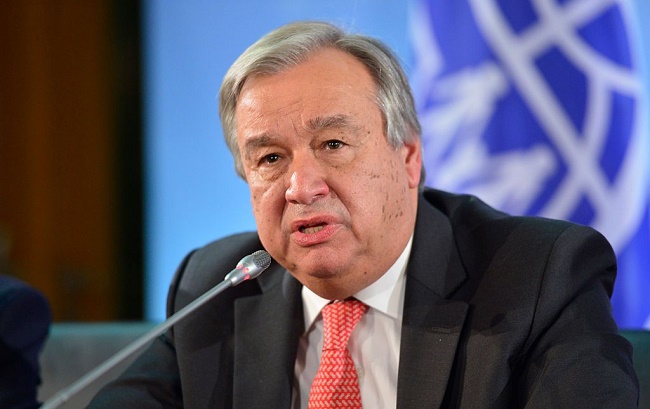
UN Secretary-General, António Guterres
The report finds that the multi-decadal average of global temperature rise will exceed 1.5°C, at least temporarily. This will be difficult to reverse – requiring faster and bigger additional reductions in greenhouse gas emissions to minimise overshoot, reduce damages to lives and economies, and avoid over-reliance on uncertain carbon dioxide removal methods.
“Scientists tell us that a temporary overshoot above 1.5 degrees is now inevitable – starting, at the latest, in the early 2030s. And the path to a livable future gets steeper by the day,” said UN Secretary-General, António Guterres in his message on the report. “But this is no reason to surrender. It’s a reason to step up and speed up. 1.5 degrees by the end of the century remains our North Star. And the science is clear: this goal is still within reach. But only if we meaningfully increase our ambition.”
“Nations have had three attempts to deliver promises made under the Paris Agreement, and each time they have landed off target,” said Inger Andersen, Executive Director of UNEP. “While national climate plans have delivered some progress, it is nowhere near fast enough, which is why we still need unprecedented emissions cuts in an increasingly tight window, with an increasingly challenging geopolitical backdrop.”
“But it is still possible – just. Proven solutions already exist. From the rapid growth in cheap renewable energy to tackling methane emissions, we know what needs to be done. Now is the time for countries to go all in and invest in their future with ambitious climate action – action that delivers faster economic growth, better human health, more jobs, energy security and resilience.”
Off target
The report finds that only 60 Parties to the Paris Agreement, covering 63 per cent of greenhouse gas emissions, had submitted or announced new NDCs containing mitigation targets for 2035 by 30 September 2025. In addition to the lack of progress in pledges, a huge implementation gap remains, with countries not on track to meet their 2030 NDCs, let alone new 2035 targets.
Aligning with the Paris Agreement requires rapid and unprecedented cuts to greenhouse gas emissions above the pledges – a task made harder by emissions growing 2.3 per cent year-on-year to 57.7 gigatons of CO2 equivalent in 2024. Emissions in 2030 would have to fall 25 per cent from 2019 levels for 2°C pathways, and 40 per cent for 1.5°C pathways – with only five years left to achieve this goal.
Full implementation of all NDCs would reduce expected global emissions in 2035 by about 15 per cent compared with 2019 levels – although the US withdrawal will change these figures. These reductions are far below the 35 per cent and 55 per cent needed in 2035 to align with 2°C and 1.5°C pathways, respectively.
Pursuing 1.5°C remains critical
The size of the cuts required, and the short time left to deliver them, means that the multi-decadal average of global temperature will now exceed 1.5°C, very likely within the next decade. Stringent near-term cuts to emissions could delay the onset of overshoot, but not avoid it entirely. The big task ahead is to strive to make this overshoot temporary and minimal, through rapid emissions cuts that keep returning to 1.5°C by 2100 in the realms of possibility.
Every fraction of a degree avoided reduces an escalation of the damages, losses and health impacts that are harming all nations – while hitting the poorest and most vulnerable the hardest – and reduces the risks of climate tipping points and other irreversible impacts. Minimising overshoot would also reduce reliance on uncertain, risky and costly carbon dioxide removal methods – which would need to permanently remove and store about five years of current global annual CO2 emissions to reverse each 0.1°C of overshoot
The report looks at a “rapid mitigation action from 2025” scenario, which is designed to limit overshoot to about 0.3°C, with a 66 per cent chance, and return to 1.5°C by 2100. Under this scenario, 2030 emissions would have to fall by 26 per cent and 2035 emissions by 46 per cent compared with 2019 levels.
Tools there for faster action, but political climate challenging
Since the adoption of the Paris Agreement ten years ago, temperature predictions have fallen from 3-3.5°C. The required low-carbon technologies to deliver big emission cuts are available. Wind and solar energy development is booming, lowering deployment costs. This means the international community can accelerate climate action, should they choose to do so. However, delivering faster cuts would require navigating a challenging geopolitical environment, a massive increase in support to developing countries, and redesigning the international financial architecture.
G20 action and leadership will be pivotal as G20 members – excluding the African Union – account for 77 per cent of global emissions. Seven G20 members have submitted new NDCs with targets for 2035, while three members have announced such targets. However, these pledges are not ambitious enough, G20 members are collectively not on track to achieve even their 2030 NDC targets, and G20 emissions rose by 0.7 per cent in 2024 – all pointing to the need for a massive ramp up in action by the biggest emitters.
TotalEnergies and Data4 (the European champion in the data centre industry) have signed an agreement to supply renewable electricity with a stable consumption profile (Clean Firm Power) to Data4’s sites in Spain.
This contract will begin in January 2026 for 10 years and will represent a total volume of 610 GWh. TotalEnergies will supply Data4’s facilities with renewable electricity generated by Spanish wind and solar farms with a capacity equivalent to 30 MW, which are about to start production.
Thanks to this contract, TotalEnergies further strengthens its position as a preferred partner for major industrial players worldwide, supporting the decarbonization of their energy consumption.
The signing of the agreement by TotalEnergies and Data4
As European leader in the data centre industry, Data4 is now established in six countries, and announced its plan to invest nearly €2 billion euros by 2030 to develop its campuses in Spain. This agreement with TotalEnergies reaffirms Data4’s engagement to fully integrate renewable energy across all its locations.
“We are delighted with this agreement with Data4, which illustrates our ability to offer competitive and tailored electricity supply solutions to large industrial groups,” said Sophie Chevalier, Senior Vice President Flexible Power & Integration at TotalEnergies. “Our ‘Clean Firm Power’ solutions are specifically designed to meet our clients’ requirements in terms of cost, consumption profile, and environmental commitment. These solutions are based on our integrated power portfolio, combining both renewable and flexible assets, and contribute to achieving our target of 12% profitability in the power sector.”
“This agreement reaffirms Data4’s commitment to renewable energy which is more crucial than ever as the race for AI accelerates and the energy capacity required for all data centers in Spain is expected to more than triple by 2030. By partnering with TotalEnergies, we provide our customers a stable and competitive long-term supply of carbon-free electricity, in infrastructures designed to be models of sustainability and innovation” says François Sterin, Chief Operation Officer at Data4. “In this context, securing this type of contract for Data4 is strategic to meet the growing demand and position Madrid as one of Europe’s most attractive digital hubs.”