30.3 C
Lagos
Saturday, March 7, 2026
Home Blog Page 109

Minamata Convention COP6: Mercury and artisanal gold mining in northwest Nigeria

0

Ngaski Local Government Area in northwestern Kebbi State with its headquarters at Wara and lying on the shores of Kainji Lake near the Niger River in Nigeria is an agricultural community where millet, sorghum and maize once defined livelihoods. Today, however, artisanal gold mining has reshaped parts of its landscape and its prospects.

Photographs compiled by the Nigerian Youth Biodiversity Network (NYBN) show sluice pits, crushed ore, and open tailings that now scar fields once used for food and grazing.

As a youth-led and youth-focused organisation, the NYBN is alarmed by a widening convergence of harmful practices: mercury-dependent mining methods, rapid land degradation, declining biodiversity, youth exposure to toxic work, and the growing insecurity that blocks help and reform.
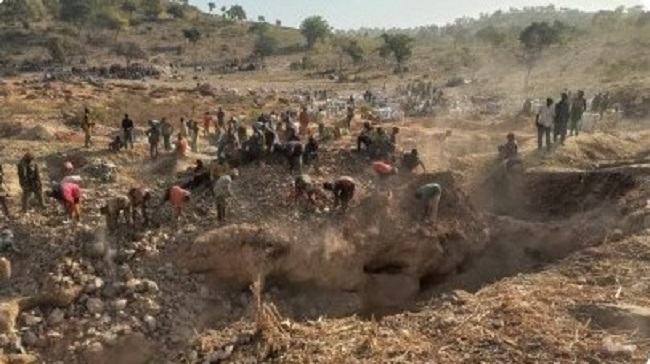
Mining site
Mining site in Ngaski Local Government Area in northwestern Kebbi State

The Minamata Convention, the global pact to protect human health and the environment from mercury places this issue squarely within international concern. For youth advocates, mercury pollution in artisanal mining is not only an environmental problem; it is an intergenerational justice issue.

Listening to local voices: nuance, need and aspiration

On the ground, community perceptions are complex. An interview conducted with a local respondent – later translated by NYBN (from Hausa to English) – captures that ambivalence. The interviewee explains that gold mining is an age-old activity in the region, practiced “since I was born,” and that the work provides crucial income and food security, yet it remains insufficient to cover healthcare needs or secure long-term well-being.

They report visible changes in water quality and landscape, and they acknowledge awareness of mercury’s dangers. They also eagerly welcome training on safer mining methods. They described prior attempts to engage government but expressed little confidence in official assistance.

This testimony highlights three truths: (1) artisanal mining is socially and economically embedded; (2) local people perceive environmental change and exposure risks; and (3) communities want alternatives and capacity-building, but distrust and institutional neglect hinder progress. Any effective response must start with these lived realities.

The ecological and human stakes

Where mining proliferates without safeguards, fragile habitats are fragmented, soils erode, and waterways carry sediment and chemical residues downstream. Young people often present at sites from infancy are especially vulnerable to the chronic harm of contaminants and the immediate dangers of unrehabilitated pits.

The combination of degraded land, weakened livelihoods, and limited public support creates a feedback loop: declining agricultural productivity pushes more households toward hazardous mining practices, amplifying risks to biodiversity and human health.

Barriers to intervention: insecurity and governance gaps

Beyond environmental damage, many gold-bearing regions face security challenges that make solutions difficult to implement. Where non-state armed actors exert control, access for health workers, researchers and civil society is blocked and formalization efforts falter. Weak oversight, coupled with constrained local trust in government, means that top-down policies alone will not succeed.

Conclusion

Ngaski’s story is not an inevitable tragedy. It is a crossroads where youth energy, community knowledge, and international frameworks such as the Minamata Convention can converge to turn extractive desperation into regenerative opportunity.

The Nigerian Youth Biodiversity Network stands ready to convene partners, share local testimony, and shepherd pilot efforts that protect both people and biodiversity – so that the land and the children who will inherit it have a future worthy of them. As youth with utmost concern for our environment and the future that we look forward to, we urge the government and stakeholders on the following:

  1. The National Gold Purchase Programme of the Ministry of Solid Minerals should be comprehensive so that it brings holistic development into the mining landscape and scrap artisanal and other forms of illegal mining across geopolitical zones
  2. The governments of Kebbi and Zamfara states should immediately intervene into the environmental health problems and destruction of natural ecosystems caused by artisanal gold mining activities in the states. Artisanal miners are humans, and as such need ultimate health care and favourable working conditions. Labour exploitation at gold mining sites must be criminalized.
  3. We call for a national policy framework on solid minerals and the mining industry. This national policy framework should be strengthened with legislative provisions, sanctions and incentives for good practices.
  4. Nigeria needs to play key role in the implementation of the provisions and objectives of the Minamata Convention. Mercury and other harmful chemicals must be abolished in all its forms; both industrial usage and domestic use in skin care products must be sanctioned.

By Suleiman Bello Sule and Mayokun Taylor, Chemicals and Waste Task Force, Nigerian Youth Biodiversity Network
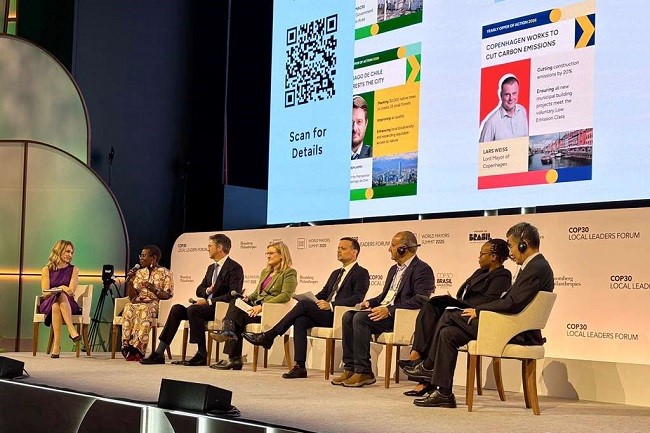

Climate crisis: Cities unite to tackle deadly extreme heat, transform urban spaces

A new global coalition of cities has pledged urgent, coordinated action to tackle one of the most dangerous impacts of the climate crisis: extreme heat.

Announced on the first day of the C40 World Mayors Summit in Rio de Janeiro, the Cool Cities Accelerator will help urban leaders protect residents, safeguard economies, and redesign cities for a hotter future.

The initiative brings together 33 founding cities representing over 145 million people from every region of the world. This includes five cities in Africa: Accra (Ghana), Durban (Ethekwini – South Africa), Freetown (Sierra Leone), Nairobi (Kenya) and Tshwane (South Africa).

C40 World Mayors Summit
A session at the C40 World Mayors Summit in Rio de Janeiro

C40 established the Accelerator with support from The Rockefeller Foundation, and with implementation support from ClimateWorks Foundation, Robert Wood Johnson Foundation, Z Zurich Foundation, Danish Ministry of Foreign Affairs, and IBM.

Extreme heat is already the deadliest weather-related hazard worldwide, responsible for nearly half a million deaths each year. Without decisive action, the number of people exposed to life-threatening urban heat is projected to increase fivefold by 2050. These 33 cities are committed to taking that decisive action.

​​The vast majority of deaths caused by extreme heat are preventable through timely access to cooling, hydration, medical care, public health interventions, and improved infrastructure. These preventable deaths typically occur when individuals – especially vulnerable populations such as the elderly, outdoor workers, or those without access to air conditioning – are not adequately protected during periods of dangerously high temperatures.

The Cool Cities Accelerator provides a science-based, practical framework for cities to take both immediate and long-term action.

Participating cities will collaborate, share best practices, and issue progress reports protecting residents now by establishing clear heat leadership, strengthening early warning systems, and ensuring access to cooling during emergencies within two years.

They will also look at transforming cities for the future by improving building standards, expanding urban tree cover and shade, and future-proofing critical infrastructure within five years.

“Extreme heat is no longer a distant threat – it’s a daily reality affecting the lives and livelihoods of millions around the world,” said Elizabeth Yee, Executive Vice President of The Rockefeller Foundation. “Through the Cool Cities Accelerator, we’re proud to support mayors who are investing in bold, science-based solutions to future-proof health systems, ensuring they can withstand 21st century challenges. Local leaders are not just responding to the climate crisis today – they’re redesigning urban life to protect people, strengthen economies, and build a cooler, safer future for all.”

“Extreme heat is a silent killer and an increasingly urgent global threat,” said Mark Watts, Executive Director of C40 Cities. “The number of days that major capitals experience temperatures above 35°C has increased 54% over the past 20 years. Cities are showing real leadership by taking practical steps to protect communities, safeguard economies, and create more liveable urban environments.

In support of the Cool Cities Accelerator, The Rockefeller Foundation is providing a grant of approximately $1 million to develop the targets for heat adaptation and provide technical assistance for cities to implement solutions that mitigate the dangerous effects of extreme heat.

The Cool Cities Accelerator is part of C40 Cities’ broader mission to support bold, science-based climate action in the world’s largest and most influential urban areas. By sharing strategies and scaling proven solutions, cities can act faster and more effectively than they could alone.

Together, participating cities represent a global movement to save lives, strengthen resilience, and create thriving, heat-resilient cities for generations to come.

By Kofi Adu Domfeh

Court dismisses Dangote Refinery’s N100bn suit against NNPCL, others

0

The Federal High Court in Abuja on Wednesday, November 5, 2025, dismissed the N100 billion suit filed by Dangote Petroleum Refinery and Petrochemicals FZE against Nigeria National Petroleum Company Limited (NNPCL) and its co-defendants over oil import licence dispute.

Justice Mohammed Umar dismissed the suit following an oral application by the defence lawyers after counsel who appeared for Dangote, C.O. Adegbe, withdrew the suit.

The suit, which was formerly before Justice Inyang Ekwo, began denovo (afresh) following its reassignment to Justice Umar.

Dangote Refinery
Dangote Refinery

Dangote Refinery had sued the Nigeria Midstream and Downstream Petroleum Regulatory Authority (NMDPRA) and Nigeria National Petroleum Corporation Limited (NNPCL) as 1st and 2nd defendants.

Also joined in the suit are AYM Shafa Limited, A. A. Rano Limited, T. Time Petroleum Limited, 2015 Petroleum Limited, and Matrix Petroleum Services Limited as 3rd to 7th defendants respectively.

The oil company, through its lawyer, Ogwu Onoja, SAN, had prayed the court to nullify import licences issued by NMDPRA to the NNPCL and the five other companies for the purpose of importing refined petroleum products.

It equally sought a N100 billion in damages against NMDPRA for allegedly continuing to issue import licences to NNPCL and the five companies for importing petroleum products, among other reliefs.

Upon resumed hearing in the matter on Wednesday, Adegbe informed the court that though the matter was scheduled for hearing, the plaintiff (Dangote) had a notice of discontinuance dated and filed on July 28.

She said the refinery had resolved to withdraw the case and urged the court to strike it out.

Responding, I.B. Ahmad, who appeared for NMDPRA, did not oppose Adegbe’s application.

The lawyer, who acknowledged the receipt of the notice of discontinuance, prayed the court not to strike the case out but to dimiss it’s in its entirety.

Also, Chris Ekemezie, who represented the 3rd, 4th and 7th defendants (AYM Shafa Limited, A. A. Rano Limited and Matrix Petroleum Services Limited), urged the court to dismiss the suit.

Ekemezie, who cited previous Supreme Court and Appeal Court cases, said where such application is made, the proper thing to be done is to dismiss it.

According to him, this is a matter that was commenced by originating summons and issues have been joined and pleadings exchanged, and the honourable court had adjourned for today for hearing of the processes filed.

“It seems what the plaintiff (Dangote) plans to do is to go and panel-beat his case and come back, after seeing that its case is bad.

“So we urge my lord to dismiss it with substantive cost,” he said.

Mofesomo Tayo-Oyetibo, SAN, counsel for the 5th and 6th (T. Time Petroleum Limited, 2015 Petroleum Limited), also did not oppose the application for withdrawal of the suit.

He, however, aligned himself with the submissions of the other defence lawyers.

But Adegbe disagreed with the application by the defence for the dismissal of the case.

She based her argument on the prior conversation her client had with the defendants that the matter should be struck out.

Justice Umar, consequently, dismissed the suit without any cost.

“The case on records is that parties have joined issues and what is remain is for parties to adopt their processes.

“It is at this stage that the plaintiff came for a withdrawal.

“In fact, the matter is deemed for dismissal and cost.

“But since it is not asked for, the matter is hereby dismissed without cost,” he ruled.

Dangote Refinery had prayed the court to declare that NMDPRA was in violation of Sections 317(8) and (9) of the Petroleum Industry Act (PIA) by issuing licenses for the importation of petroleum products.

It stated that such licenses should only be issued in circumstances where there is a petroleum product shortfall.

But NNPCL, in its preliminary objection, prayed the court to strike out the case for being incompetent.

The NNPCL argued that the suit was premature and it disclosed no cause of action against it.

“This honourable court lacks the jurisdiction to hear this suit,” the NNPCL said.

In the affidavit in support of the application deposed to by Isiaka Popoola, a clerk in the law firm of Afe Babalola & Co, counsel to the NNPCL, he said one of their lawyers, Esther Longe who perused Dangote’s originating summons, affidavit and written address, told him that an examination of the processes showed that NNPC as sued by the refinery was non-existent entity.

Popoola averred that the court lacked jurisdiction over the 2nd defendant sued as Nigeria National Petroleum Corporation Limited (NNPCL).

“A simple search on the CAC website shows that there is no entity called “Nigeria National Petroleum Corporation Limited (NNPC).”

According to Popoola, the 2nd defendant/objector is not one and the same with the 2nd defendant sued by the plaintiff.

He urged the court to strike out the suit.

Also, the NMDPRA, in its counter affidavit deposed to by Idris Musa, a Senior Regulatory Officer in the office, prayed the court to dismiss the suit as it was misconceived, unmeritorious and incompetent.

Musa argued that Dangote Refinery is not entitled to any of the reliefs sought.

The official, in the application dated and filed Dec. 13, 2024, said the current production of Dangote Refinery is yet to meet the national daily petroleum products sufficiency requirement.

He said based on this and in compliance with Section 317 [9] of the PIA (Petroleum Industry Act), NMDPRA issued licences to import petroleum products to bridge product shortfalls to companies with good track records of international products trading.

Besides, he said the agency is also mandated to promote competition and prevent abuse of dominant market positions and unhealthy monopoly in the oil and gas sector.

He denied the allegation that NMDPRA is partaking in any purported “grand conspiracy and concerted efforts” against the refinery, describing it as “an allegation for which the plaintiff has provided no facts or evidence in support.”

The oil marketers, in a joint counter affidavit filed on Nov. 5, 2024, told the court that granting Dangote’s application would spell doom for the country’s oil sector.

According to them, the plan to monopolise the oil sector is a recipe for disaster in the country.

The three marketers, AYM Shafa Limited, A. A. Rano Limited and Matrix Petroleum Services Limited, in their response, said the plaintiff did not produce adequate petroleum products for the daily consumption of Nigerians.

They argued that there was nothing placed before the court to prove the contrary

Justice Ekwo had, on March 18, dismissed the NNPCL’s objection against Dangote’s suit

The judge, in the ruling, dismissed the objection on the grounds that the application was incompetent.

Justice Ekwo held that the NNPCL ought to have filed a defence in the form of a counter affidavit to the Dangote Refinery’s originating process before raising an objection.

The judge, who also dismissed the NNPCL preliminary objection, challenging the jurisdiction of the court, granted Dangote’s motion to amend its originating motion by correcting the name of the NNPCL.

Besides, Justice Ekwo equally dismissed the motion for joinder filed by Federal Competition and Consumer Protection Commission (FCCPC) for being an unnecessary party and as a “meddlesome interloper.”

By Taiye Agbaje

Senate passes second reading of electric vehicles transition bill

The Nigerian Senate on Wednesday, November 5, 2025, passed the second reading of a bill aimed at facilitating the country’s transition to electric vehicles (EVs) and promoting green mobility.

The bill, sponsored by Sen. Orji Uzor Kalu, sought to establish a legal framework for EV adoption, local manufacturing, environmental sustainability, and economic growth.

Presenting the lead debate, Kalu said the legislation would guide Nigeria’s gradual shift from petrol- and diesel-powered vehicles to cleaner, environmentally friendly alternatives.

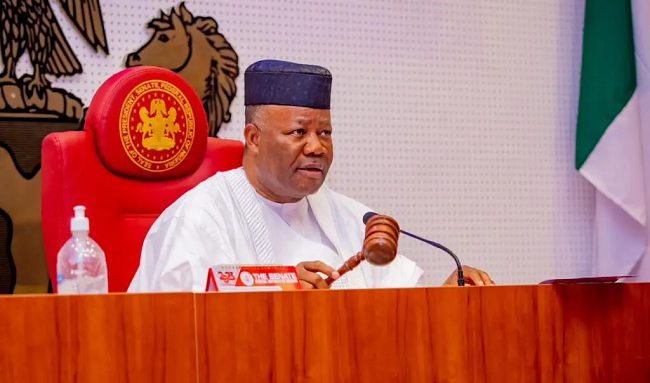
Godswill Akpabio
Senate President, Godswill Akpabio

He highlighted that the transport sector contributed 25–30 per cent of national greenhouse gas emissions, with more than 12 million registered vehicles still relying on fossil fuels.

Kalu stressed that the bill aligned with global best practices and Nigeria’s international environmental commitments.

He noted that advanced nations, such as Norway, aimed for full electric mobility by 2030, while African economies like South Africa and Kenya had adopted national EV policies.

“Nigeria risks being left behind without decisive action,” he warned.

The lawmaker emphasised the bill’s economic potential, citing the global EV industry’s projected value of more than $1.5 trillion by 2030.

He said that, with abundant mineral resources like lithium and nickel, Nigeria could benefit from local EV and battery production, while reduced emissions would improve public health.

Sen. Adamu Aliero (APC-Kebbi) described the bill as timely, noting that cities like Lagos and Kano would benefit from reduced carbon emissions.

Senate President Godswill Akpabio hailed the initiative as “a good innovation” and referred the bill to the Senate Committee on Industries for further legislative review, with a report expected in four weeks.

By Naomi Sharang

2025 Climate Governance Ranking: Explaining Katsina’s massive leap to second position

0

In 2024, during the first edition of the Subnational Climate Governance Performance Rating and Ranking, Katsina placed 25th with only 64 points. We did not think at that time that such showing was acceptable or representative of the capacity that the State has when it comes to all-round climate action. So, we recalibrated. This year, the State took the second position with an impressive score of 310 points – a 23-place leap that represents one of the fastest governance transformations in Nigeria’s recent history.

This extraordinary turnaround was driven directly by strategically following the benchmarking and performance insights provided through the Subnational Climate Governance Ranking, which gave us a clearer sense of where we stood and what needed to change. The report did not just rank; it guided.

Professor Mohammed Al-Amin,
Professor Mohammed Al-Amin, Special Adviser on Climate Change to the Governor of Katsina State

Katsina’s growth in climate governance has been remarkable. The State has carefully sought to improve in all indices and this has reflected in measurable, real-world transformation over the past year. The SCGPR provided a structured mirror that helped us identify institutional weaknesses, budgetary gaps, and implementation deficits – and to fix them in record time.

Much of the credit goes to His Excellency Governor Dikko Umar Radda, whose vision to leverage climate action for development and poverty reduction became the cornerstone of our Katsina Green Growth Agenda. Since adopting this evidence-based approach, over 1.5 million residents across 22 local government areas have directly benefited from improved environmental services, access to solar energy, and enhanced agricultural productivity.

Following insights from the ranking template, we established dedicated climate governance units across 12 ministries and launched coordination mechanisms involving all 34 local governments. This structure, inspired by the SCGPR performance indicators on institutional arrangements, has streamlined decision-making and improved accountability. Today, over 300 civil servants have received climate policy training, and local governments now integrate climate budgeting into their annual plans.

These institutional changes have not only improved coordination but also helped attract external technical assistance worth ₦2.4 billion from national and international partners — investments that are being channelled into rural electrification, waste management, and afforestation.

The passage and implementation of the Katsina State Climate Resilience and Green Economy Policy (2024) marked a new era. Through this policy, we have aligned our goals with Nigeria’s Nationally Determined Contributions (NDCs) and Sustainable Development Goals (SDGs), ensuring climate governance serves as a platform for economic inclusion and social progress.

The target of the new policy is to mobilised over ₦6 billion in green-sector investment and creating 2,000 new jobs in clean energy and sustainable agriculture.

Already, these efforts are yielding tangible socio-economic dividends – 1,800 smallholder farmers have received solar irrigation support, boosting dry-season yields by up to 25%, while reducing dependency on diesel pumps.

We have recorded notable progress in solar mini-grid installations, dry-season farming initiatives, and community-led afforestation drives. The Solar for All initiative has connected over 150 rural schools and health centres to reliable solar power, improving education and healthcare delivery for more than 250,000 people.

Meanwhile, our community tree-planting campaign – inspired by the Ranking’s emphasis on project visibility and citizen engagement – has resulted in the planting of 1.2 million seedlings across the state, reducing desert encroachment and providing economic opportunities for youth and women cooperatives.

These interventions have reduced rural energy poverty, curbed migration pressures, and enhanced household incomes.

Our commitment to climate finance was deepened after the 2024 SCGPR highlighted our weak budgetary framework. In response, the State increased climate-related allocations by 30% in 2025, while introducing provisions for the issuance of Green Bonds. These bonds are projected to raise ₦10 billion over the next three years, earmarked for climate-smart agriculture, flood management, and renewable energy expansion.

We have also launched the Katsina Climate Watch, a digital transparency portal tracking project updates and offering public education on climate issues. Since its inception, the platform has reached over 500,000 residents online and mobilised 10,000 volunteers for community climate projects. This innovation, shaped by the SCGPR’s Online Visibility pillar, has transformed climate awareness from a government agenda into a people’s movement.

The increased visibility and transparency have enhanced citizens’ trust and encouraged collaboration between local government councils, youth groups, and development partners.

Our progress is reflected across the SCGPR’s five thematic areas. Under Climate Institutional Arrangements, Katsina rose from 24 points and the 32nd position in 2024 to 110 points and 2nd position in 2025. In Policy and Legal Frameworks, the State moved from 5 points and 30th position to 50 points and 4th position. For Budgetary Allocation to Climate Change Projects, Katsina advanced from 5 points and 32nd position to 60 points and 2nd position, and under Project Implementation and Monitoring, we rose from 15 to 55 points. Online Visibility also grew from 15 to 35 points.

These are not just numerical improvements — they represent better schools powered by solar, cleaner streets, thriving small businesses, and farmers earning more from climate-smart innovations.

While we celebrate this milestone, we view it as a baseline, not a ceiling. Katsina remains committed to building a sustainable, climate-smart future. We will deepen partnerships with federal institutions, development partners, and civil societies to move from second to first place — not for the title, but for the people whose lives are now demonstrably better because of research-led governance reform.

Kudos must of course go to the Department of Climate Change (Federal Ministry of Environment), Professor Chukwumerije Okereke, the Society for Planet and Prosperity, and all other partners for this brilliant and innovative initiative. This has not only motivated State-level action but has also provided a clear evidence-based pathway to more effective and efficient subnational climate governance.

Under the visionary leadership of the Governor, His Excellency Governor Dikko Umar Radda, Katsina State is determined to maintain and improve on its performance in the third rating and ranking project in 2026.

By Professor Mohammed Al-Amin, Special Adviser on Climate Change to the Governor of Katsina State

New policy brief outlines Africa’s priorities at COP30

0

Africa goes to Belém, Brazil, with a shared vision and demand for real delivery on climate commitments, a new policy brief released on Wednesday, November 5, 2025, by Power Shift Africa shows.

The report, which examines Africa’s vulnerabilities and opportunities, calls on both the COP30 Presidency and African negotiators to ensure that this summit marks a turning point from promises to practice, and from ambition to implementation.

Mohamed Adow
Director of Power Shift Africa, Mohamed Adow

According to the brief, more than a decade after the Paris Agreement transformed global climate governance, COP30 must now prove that the multilateral climate system can deliver tangible results for all. While the first Global Stocktake at COP28 in Dubai, and the adoption of a new global finance goal at COP29 in Baku, produced important commitments, the analysis warns that words alone will not avert catastrophe and advises that the task for Belém is to make climate ambition real, fair, and felt in people’s everyday lives.

Africa’s position, the report states, is not about seeking special treatment but about demanding fairness, consistency, and delivery. The continent is warming at twice the global average despite contributing the least to the crisis. Yet, while its adaptation needs exceed $70 billion annually, only about $15 billion is received each year, and loss and damage costs could rise to nearly half a trillion dollars by 2030.

The report calls for tripling adaptation finance beyond the current pledge to double by 2030, and for embedding both finance and clean technology transfer as binding obligations under the UN climate process, not voluntary gestures of goodwill.

“The world no longer needs more promises, but proof that climate multilateralism can still deliver – and deliver for all. If COP30 is to be remembered as the ‘Implementation COP,’ it must also be remembered as the moment Africa helped re-anchor the global climate regime in fairness, solidarity, and accountability,” said Mohamed Adow, Founder and Director of Power Shift Africa, at the launch of the document.

He added that “COP30 must not only recognise Africa’s disproportionate vulnerability, but also finally act on the historic responsibility to support our adaptation and resilience. Africa is not arriving in Belém empty-handed; we bring solutions, renewable energy potential, and a vision for climate justice rooted in fairness and shared prosperity. What we need now is delivery: delivery of finance, delivery of technology, and delivery of trust.”

Dr Wafa Misrar, Campaign and Policy Lead for Climate Action Network (CAN Africa), said: “African countries must be cautious of the Tropical Forest Forever Facility introduced by Brazil. The fund aims to raise $125 billion to protect tropical rainforests in the world and promises payments to countries in the Global South for every hectare of tropical forest they conserve.

“This fund depends on loans and bonds, meaning that developing countries could end up paying interest through debt finance to carry out conservation. The mechanism sets complex conditions that some of the countries with these forests may not meet. This is neither new nor fair, but another distraction and market-based mechanism that benefits investors more than the countries they claim to support.’’

Amos Wemanya, Global Project Co-Lead, Fair Share for People and the Planet at Greenpeace, said: “Africa arrives at COP30 determined to drive a new era of climate cooperation grounded in equity and opportunity. The continent has the renewable energy capacity, human talent, and ambition to power a cleaner and more resilient global economy, but we need fair access to the finance and technology that makes this possible. Belém must be the moment the world moves beyond pledges and truly invests in Africa’s energy transition.

“This COP is an opportunity for Africa to rearticulate its priorities and demands for climate and development. The just transition conversation is more than just about reducing emissions. Africa has vast natural resources, and the just transition must help Africa to turn this potential into engines of resilience and prosperity. To facilitate the provision of finance for the just transition, Africa must demand the establishment of a new and fair tax regime.”

The brief urges the COP30 Presidency to reaffirm the principles of transparency, inclusivity, and accountability, while resisting the growing trend toward side deals and unilateral measures that undermine the UN process. It also calls on African negotiators to act as a united, strategic bloc across finance, adaptation, and trade, and to work closely with civil society, youth, and Indigenous Peoples to ensure that climate diplomacy remains people-centred and justice-driven.

Among its key recommendations, the policy brief calls for the operationalisation of Article 9.1 of the Paris Agreement as a binding financial obligation for developed countries; the establishment of a Technology Implementation Programme to remove barriers to innovation in the Global South; and the creation of a Belém Action Mechanism and a Just Transition Technical Assistance Network to help developing countries design and finance equitable transitions.

Find the policy brief hereWatch video of the launch here.

COP30 Wishlist: Developers call for practical action to unlock private climate finance, scale mitigation projects

0

With COP30 starting imminently in Belém, the Project Developer Forum (PD Forum) has issued its key priorities for advancing international carbon markets under Article 6 of the Paris Agreement.

As negotiations shift from rule-making to implementation, the PD Forum is calling on parties and observers to focus on practical, transparent frameworks that build trust and unlock investment in high-integrity climate action.

“Article 6 is moving from the rulebook to the real world at COP30,” said Nick Marshall, Chair of the PD Forum. “We need frameworks that enable private finance to flow and climate projects to scale, not create bureaucratic bottlenecks that stall progress.”

Belém
The city of Belém in Brazil is hosting COP30

The PD FORUM COP30 Wishlist

1. Predictable and transparent cost structures

Establish clear, stable frameworks for fees and levies on Article 6 activities. Predictable costs enable developers and investors to model returns with confidence, accelerating capital deployment. Host countries should announce pragmatic fee structures aligned with Article 6 principles.

2. Nuanced approach to benefit-sharing

Guarantee that communities receive fair, direct benefits while recognising that delivery models must vary across project types and geographies. Flexible frameworks should allow benefit-sharing to be tailored to local contexts.

3. Intelligent and inclusive authorisation

Encourage parties to authorise eligible projects retroactively to 2021, the start of the current NDC period. This would acknowledge early climate action and stabilise market confidence. Bilateral agreements between countries would send powerful demand signals.

4. Streamlined project approval and issuance processes

Create a single, coherent pathway from project approval to credit issuance. Avoid fragmented, year-by-year reviews that introduce uncertainty and disrupt financial planning.

5. Legal certainty for corresponding adjustments

Strengthen legal foundations to ensure that corresponding adjustments (CAs) for project emissions reductions are enforceable, transparent, and protected from arbitrary reversal. Two pioneering approaches demonstrate what is possible:

  • Thailand-Switzerland bilateral agreement: South Pole delivered the first Article 6 ITMOs with CAs under a stable regulatory framework that reduces uncertainty and builds confidence for project developers and investors.
  • Zimbabwe’s immediate authorisation model: Cicada Carbon received the first tradable Article 6 carbon credits with CAs, with Zimbabwe simultaneously updating its national reporting to reflect this. This enabled immediate trading on international markets under systems like CORSIA, effectively eliminating reversal risk.

These models should be replicated globally. Where this isn’t possible, insurance products must be available to cover reversal risk, especially for least developed countries (LDCs) that need carbon finance most but may face higher risk premiums. Without this certainty, developers will avoid certain jurisdictions, blocking finance from reaching communities most affected by climate change.

6. Government continuity and capacity

Retain dedicated, experienced personnel in ministries and agencies responsible for Article 6 implementation. Institutional consistency is essential for sustained progress.

7. Accelerated registry development

Prioritise the UNFCCC registry to enable international trading of Article 6.4 credits. This infrastructure is critical for moving from planning to practice and demonstrating that global carbon markets can deliver at scale.

Developer Input Matters

The PD Forum also encourages the Paris Agreement Crediting Mechanism (PACM) to adopt a more inclusive approach to methodology development, engaging project developers, who possess deep technical and field experience, throughout the drafting process, not just during consultations.

“By adopting these recommendations, COP30 can help ensure Article 6 fulfils its potential to deliver measurable climate outcomes, mobilise private finance, and ensure equitable benefit-sharing across the Global South,” added Marshall.

The PD Forum and its members remain committed to supporting parties, host governments, and multilateral institutions in implementing robust, inclusive, and transparent frameworks for international carbon markets.

Group describes EU’s updated climate targets ‘a lukewarm NDC agreement’

0

Environment and climate change advocacy group, 350.org, has described the updated nationally determined contribution (NDC) of the EU and its member states that was approved on Wednesday, November 5, 2025, as “a lukewarm NDC agreement” the EU Council came up with “days before COP30”.

Less than a week before COP30 opens in Belém, EU Environment ministers struck what appears to be a last-minute deal on the bloc’s 2035 Nationally Determined Contribution (NDC) – the EU’s formal climate action plan under the Paris Agreement.

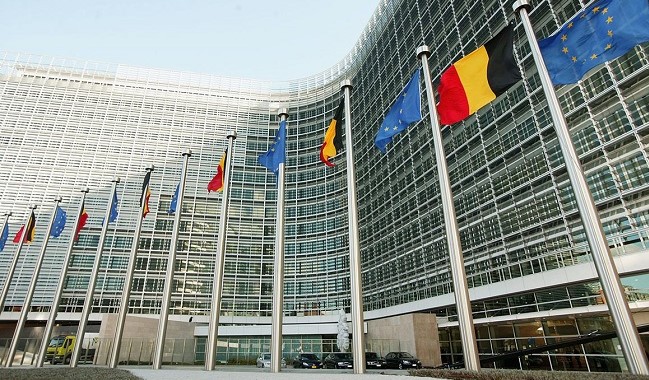
European Commission
European Commission. Photo credit: Mark Renders/Getty Images

“The target to reduce emissions by 66.25 to 72.5% by 2035 prevents the EU from arriving at COP30 empty-handed, but delays, internal divisions, and attempts to weaken ambition including by pushing for the use of carbon credits by France, Poland, Hungary and Italy exposed deep cracks within the bloc,” submitted the group.

It added: “The latest UN Emissions Gap Report released yesterday makes it clear: the Paris Agreement is on life support. As EU leaders make their way to Belém to attend the high-level segment, the EU has a responsibility to demonstrate ambition and unity now more than ever.”

Fanny Petitbon, 350.org France Team Lead, says: “The EU won’t be going to Belém empty-handed, but their target falls short of what the climate crisis requires and is well below Europe’s historic responsibility. If the bloc wants to keep its credibility, on the global stage and with its own citizens, this target should be treated as the floor not the ceiling.

“The EU cannot ignore its climate debt to the world’s most impacted populations. In Belém, the EU must come prepared to discuss the need to scale up debt-free public finance, to support communities to accelerate their clean energy transition, and adapt to the climate crises. This is not about charity or solidarity, but responsibility.” 

Paris Agreement: EU submits updated NDC to UN ahead of COP30

0

The Council of the European Union (EU) on Wednesday, November 5, 2025, approved an updated nationally determined contribution (NDC) of the EU and its member states, which will be submitted to the United Nations Framework Convention on Climate Change (UNFCCC) ahead of COP30 (November 10 to 21, 2025). Following the 2020 NDC and its 2023 update, Wednesday’s NDC covers the period up to 2035.

According to the EU, he NDC agreed reiterates its goal of achieving a net reduction of 55% in greenhouse gas (GHG) emissions by 2030 and acknowledges the agreement reached within the Council on a net emissions reduction target of 90% by 2040, compared to 1990. Based on this target, the NDC introduces an indicative contribution of 66.25% to 72.5% for 2035 on the path towards carbon neutrality by 2050.

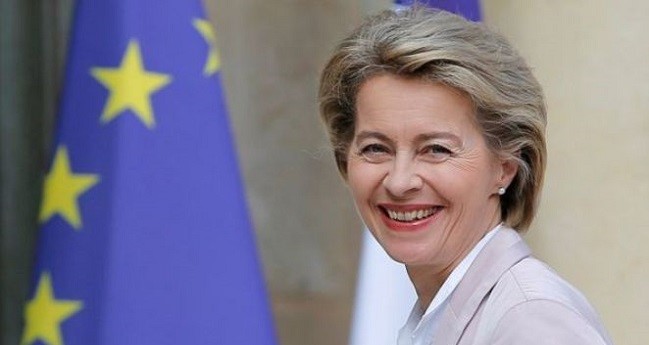
Ursula von der Leyen
Ursula von der Leyen, President of the European Commission

The updated NDC builds on previous commitments, aiming to accelerate the transition to a decarbonised economy and industry, and outlines the EU’s ongoing efforts to achieve climate neutrality in line with the objectives of the Paris Agreement.

“With the adoption of EU’s NDC, we are sending a strong signal ahead of COP30 that we remain fully committed to keeping the goals of the Paris Agreement. It enables us to push for more global climate action, when we meet the rest of the world at COP30,” said Lars Aagaard, Denmark’s minister for climate, energy and utilities.

Main elements of the EU’s 2035 NDC

In the updated NDC, the EU outlines its ambitious climate targets and the policy frameworks that is implementing in order to achieve carbon neutrality by 2050. It recalls the agreement reached within the Council on a 2040 climate target of 90%, including an adequate contribution of high-quality international credits in a manner that is both ambitious and cost-efficient.

The NDC also highlights the EU’s continued progress in its climate action towards decarbonising its economy and its contribution to the global efforts agreed in the outcome of the first global stocktake (GST) at COP28 in Dubai. These include the commitment to tripling renewable energy capacity globally and doubling the rate of global energy efficiency by 2030. The updated NDC underlines the EU’s efforts in this regard, which resulted in renewable energy sources making up 44% of the EU’s electricity production in 2023, with that figure increasing to 47% in the estimates for 2024.

In addition, the new NDC emphasises the EU’s accelerating efforts towards making the energy sector predominantly free of fossil fuels well ahead of 2050, while recognising the importance of phasing out unabated fossil fuels at global level. To that end, the EU acknowledges the need to use all the available technologies to reduce emissions from hard-to-abate sectors.

The updated NDC also includes the information necessary for clarity, transparency and understanding (ICTU), outlining all the elements of the NDC.

Next Steps

The updated NDC will be submitted to the UNFCCC Secretariat and will feed into an updated NDC synthesis report, building on the first version issued by the Secretariat on 28 October. The report will provide an overview of global emission reduction commitments and gaps in relation to the Paris Agreement goals.

Background

Nationally determined contributions (NDCs) are an integral part of the Paris Agreement, which requires all parties to communicate their post-2020 climate actions starting in 2020 and every five years thereafter. NDCs set out each party’s efforts to reduce national emissions and adapt to the impact of climate change. The EU submits a single NDC on behalf of the EU and its member states.

On that basis, the EU and its member states submitted their first NDC in 2015 as an intended NDC, and an updated and enhanced NDC on 17 December 2020. Following the adoption of the Fit for 55 legislative package, in October 2023, the EU submitted a further update reflecting its target of at least 55% of net greenhouse gas emissions reductions by 2030.

On September 18, 2025, EU environment ministers approved a statement of intent confirming the EU’s commitment to the Paris Agreement and indicating that the EU would submit its post-2030 NDC ahead of COP30 in Belém, Brazil.

UN confirms famine in besieged Sudanese cities amid ongoing conflict

0

Famine has taken hold in conflict-hit areas of Sudan that have been cut off from aid or under siege, according to a UN-backed food security analysis released on Tuesday, November 4, 2025.

Famine conditions have been confirmed in Darfur’s El Fasher and Kadugli, where “people have endured months without reliable access to food or medical care,” the Food and Agriculture Organisation (FAO), World Food Programme (WFP) and UNICEF said in a joint statement.

The agencies estimated 21.2 million people in Sudan – 45% of the population – are facing high levels of acute food insecurity, representing a slight improvement.

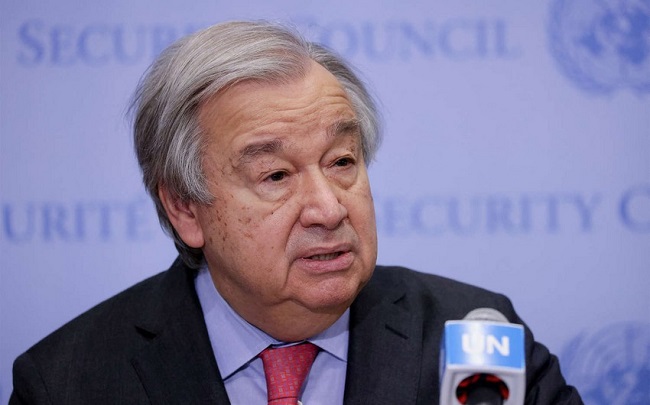
Antonio Guterres
UN Secretary General, Antonio Guterres

About 3.4 million people are no longer facing crisis levels of hunger.

UN Secretary-General, António Guterres, called for an immediate ceasefire Tuesday as images of apparent mass killings in El Fasher continue to circulate online.

He appealed to the Sudanese Armed Forces and rebel Rapid Support Forces “to come to the negotiating table to bring an end to this nightmare of violence.”

Heavy fighting erupted in April 2023 between the rival armies, creating a massive humanitarian disaster.

Last week saw the fall of government-held El Fasher after more than 500 days of siege by rebels.

Hundreds of civilians – including humanitarian workers – are believed to have been killed.

The improvements follow gradual stabilisation since May in Khartoum, Al Jazirah and Sennar states, where conflict has eased and families are returning.

“But these gains are limited,” the UN agencies said. “The wider crisis has shattered the economy and vital services, and much of the infrastructure people rely on has been damaged or destroyed.”

Favourable crop conditions are expected to improve crisis-level hunger to 19.3 million through January. However, “these fragile improvements are highly localised,” the agencies warned, as many returning families have lost everything.

Active conflict persists in western regions, notably North and South Darfur and West and South Kordofan. Hunger is expected to worsen starting in February as food stocks run out.

The IPC’s Famine Review Committee found famine conditions in El Fasher and Kadugli, which have been largely cut off due to conflict.

Conditions in Dilling, South Kordofan, “are likely similar to Kadugli, but cannot be classified due to insufficient reliable data.”

The committee projects famine risk in 20 additional areas across Greater Darfur and Greater Kordofan, including rural localities, displacement camps and locations in East Darfur and South Kordofan.

Global acute malnutrition rates range from 38% to 75% in El Fasher and reach nearly 30% in Kadugli.

Outbreaks of cholera, malaria and measles continue to rise where health, water and sanitation systems have collapsed.

×