The Interfaith Rainforest Initiative (IRI) in Brazil, Colombia and Peru have jointly issued a call for an ethical, fair, and action-oriented COP30, urging governments to use the conference in Belem as a moment to adopt, fulfill and expand upon commitments to end deforestation and protect the Amazon
We address you, heads of state, presidents, world leaders… not with empty requests, but with a demand born of solidarity and hope… make a true, courageous commitment that does not give in to this climate crisis that is taking our breath away and threatening our existence.
We can no longer accept that the Amazon is treated as anything but sacred.
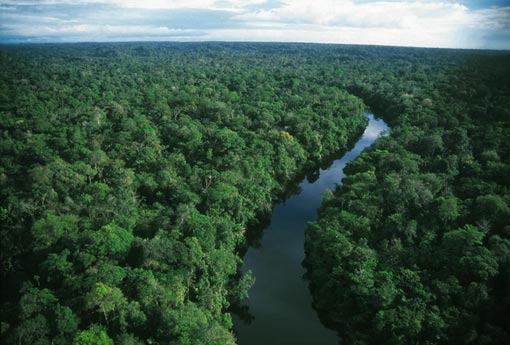
The Amazon rainforest
COP30 must be the birthplace of a new global ethical pact, where the faith that moves us, the science that guides us, and the politics that organise us walk hand in hand toward the only goal that matters: preserving life.
Now is the moment for genuine environmental transformation and bold leadership for our forests, our climate and our people.
We urge COP30 to make commitments that restore our hope… listen to and respect the sacred limits of nature, halting projects that bring irreversible social and environmental pain.
We support with hope the creation of the Tropical Forests Forever Facility (TFFF)… (and) urge political leaders to ensure that this fund will be a channel for delivering resources quickly and transparently.
Faith, when united with science and filled with solidarity, is a powerful force capable of transforming the world.
We are ready to walk hand in hand with governments, communities, authorities, and civil society organisations in Brazil, Colombia, and Peru. Together, we will sow and reap public policies as solid as the trees of the rainforest itself.
Special adviser to President Bola Tinubu on Energy, Olu Verheijen, has said that the federal government is ready to sell the refineries of the Nigerian National Petroleum Company (NNPC) Limited.
Verheijen spoke in an interview with Bloomberg TV on the sidelines of the ADIPEC energy conference in Abu Dhabi, United Arab Emirates (UAE).
The presidential aide said the consideration was part of an effort to boost competition in the refining industry.
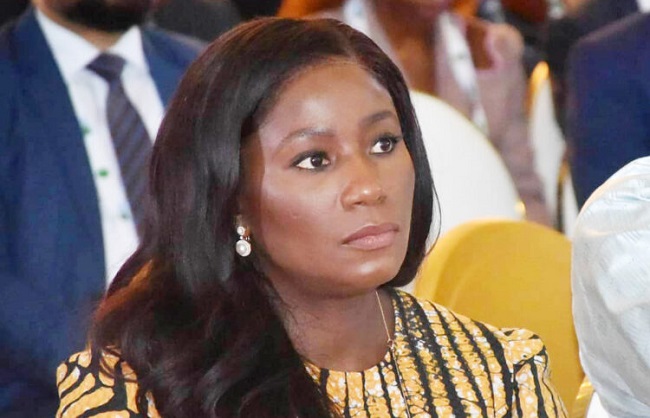
Olu Arowolo Verheijen, Special Adviser to the President on Energy
“It’s one of the options that you have to consider if you find the right technical partner with the right capital,” she said.
Verheijen noted that the plants had largely been sustained by subsidies, saying “but now that we’ve removed the subsidies, we’ve removed the distortions in that market”.
In October, NNPC said it had commenced a comprehensive technical and commercial review of the moribund refineries in Warri, Port Harcourt, and Kaduna.
On July 11, Bayo Ojulari, the group chief executive officer (GCEO) of the NNPC, said it is becoming a “bit more” complicated to revamp state-owned refineries, hinting at completing an ongoing reassessment by year-end.
Speaking further, Verheijen said the government also sees a long-anticipated initial public offering for NNPC as “an end destination”
“What’s really important to the shareholders is that we have an NNPC that’s a lot more transparent, a lot more efficient and delivers,” she said.
On Tuesday, Ojulari said NNPC has been enhancing transparency regarding its operations in preparation for the much-anticipated initial public offering.
The Federal Government says it has signed a pivotal agreement with Germany to strengthen the technical foundations of its energy transition.
Mr. Bolaji Tunji, the Special Adviser, Strategic Communication and Media Relations to the Minister of Power, made this known in a statement in Abuja on Friday, November 7, 2025.
Tunji said that the landmark achievement was contained in a new Joint Declaration of Intent on Bilateral Energy Transition Dialogue and Cooperation, endorsed at the Working Group on Power, Energy and Climate held in Germany.
Minister of Power, Mr Adebayo Adelabu
He said that the working group also underscored the vital role of strategic partnerships between Nigerian and German companie, highlighting importance of the private sector for the energy relations between both countries.
Tunji said that the two countries also noted the continued progress on the “Presidential Power Initiative,” while looking forward to furthering progress in the realisation of the Initiative
The Minister of Power, Mr. Adebayo Adelabu, who represented Nigeria at the event, said that the Joint Declaration was a game-changer for the country’s national energy architecture.
“It moves our partnership with Germany beyond dialogue into the realm of concrete technical assistance, ensuring Nigeria receives the specialised expertise needed to build a robust, sustainable, and secure energy future for our people.
“The enhanced technical cooperation complements the long-standing Nigerian-German Energy Partnership and was reached during the meeting where both countries reiterated their commitment to renewable energy and socio-economic development.
“It also intensifies our close cooperation to advance energy security and renewable energy and energy efficiency for socio-economic development in line with technology innovation and long-term decarbonisation targets,” he said.
Adelabu said that the partnership was already delivering tangible benefits, with Germany’s Federal Ministry for Economic Cooperation and Development (BMZ) providing an additional nine million Euros in 2024 to the “Nigeria Energy Support Programme (NESP).
”This is in addition to a further 12 million Euros for the newly inaugurated “Energy Transition Challenge Fund (ETCF).”
The minister welcomed the progress, adding that the financial mechanisms, including the “Green Line of Credit” for Nigeria’s Small Medium Enterprises (SMEs) and the mobilisation of private investment through GET.invest, are critical enablers.
“When combined with the technical expertise now formalised in our Joint Declaration, we are building a comprehensive ecosystem for energy success,” he said.
Germany reiterated its desire for NGEP meetings to be held annually at the level of under-secretaries in the future, beginning from 2026.
UN Secretary-General, António Guterres, on Thursday, November 6, 2025, called for urgent action to drive down global temperatures and keep the 1.5°C goal within reach.
Guterres made the call at the COP30 climate summit in Belém, Brazil, where negotiators, scientists, and civil society are gathering to discuss priority actions to tackle climate change.
The gathering focuses on the efforts needed to limit the global temperature increase to 1.5°C, the presentation of new national action plans (NDCs), and the progress on the finance pledges made at COP29.
UN Secretary-General António Guterres
“Every fraction of a degree means more hunger, displacement, and loss – especially for those least responsible.
“It could push ecosystems past irreversible tipping points, expose billions to unlivable conditions, and amplify threats to peace and security,” Guterres told leaders in Belém.
Failure to contain global heating amounts to “moral failure and deadly negligence,” he added.
Each year that is warmer, he said, “will hammer economies, deepen inequalities and impact developing countries hardest – even though they did least to cause it.”
“After decades of denial and delay, science now tells us that a temporary overshoot beyond the 1.5°C limit – starting at the latest in the early 2030s – is inevitable,” Guterres said.
“We need a fundamental paradigm shift to limit this overshoot’s magnitude and duration and quickly drive it down. Even a temporary overshoot will unleash far greater destruction and costs for every nation.”
The secretary-general told COP30 that the 1.5°C limit remains “a red line for humanity”, calling for rapid emissions cuts, an accelerated phase-out of fossil fuels, and stronger protection of forests and oceans.
Guterres highlighted the growing momentum of the clean energy revolution, noting that investments in renewables now exceed those in fossil fuels by $800 billion.
“Clean energy is winning in price, performance, and potential,” he said, “but what is still missing is political courage.”
Echoing his remarks, World Meteorological Organisation (WMO) chief, Celeste Saulo, said that greenhouse gas emissions are now at their highest level in 800,000 years.
“From January to August this year, the Earth’s average temperature was about 1.42°C above pre-industrial levels, with oceans also reaching record highs, which is inflicting lasting damage on marine ecosystems and economies,” she said.
The planet’s relentless warming trend has shown no sign of slowing, with 2025 projected to be either the second or third warmest year on record, according to the State of the Global Climate Update 2025 issued by the WMO on Thursday.
It warns that the 11-year stretch from 2015 to 2025 will be the hottest period since records began 176 years ago.
“This unprecedented streak of high temperatures, combined with last year’s record increase in greenhouse gas levels, makes it clear that it will be virtually impossible to limit global warming to 1.5°C in the next few years without temporarily overshooting this target,” WMO Secretary-General Celeste Saulo, said.
She stressed that science still shows it is possible to bring temperatures back below that threshold by the end of the century.
The report paints a stark picture of compounding climate impacts. Arctic sea ice reached its lowest winter maximum on record, while Antarctic sea ice remained well below average.
Global sea level rise, nearly twice as fast as in the 1990s, continued to accelerate due to ocean warming and ice melt.
Extreme weather events – from devastating floods and storms to prolonged heatwaves and wildfires – have disrupted food systems, displaced communities and hindered economic development across multiple regions.
COP30, which opened on Thursday, Nov. 6, and will run through Nov. 21.
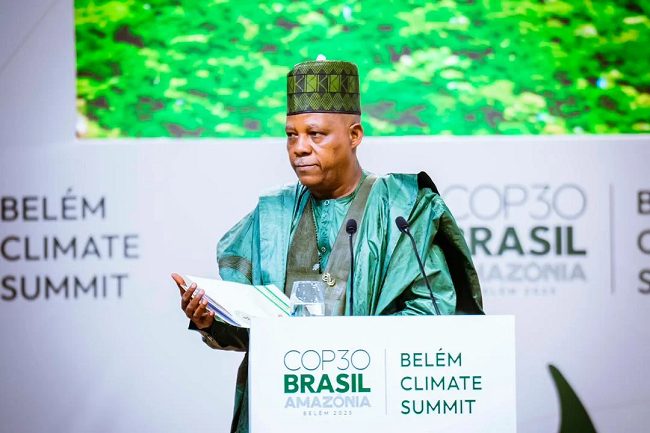
Vice-President Kashim Shettima has tasked global leaders on taking “reasonable action” and moving from pledges to performance in tackling climate change.
Shettima made the call at the opening of the Heads of State Summit at the 30th UN Climate Change Conference (COP30), on Thursday, November 6, 2025, in Belém, Brazil.
He also implored world leaders to be more proactive in curtailing climate change attendant natural disasters that have claimed innocent lives and rendered many homeless across the globe.
Vice-President Kashim Shettima with President Lula Inacio Da Silva of Brazil at COP30
“Let COP30 be remembered as the moment when the world moved from pledges to performance, from ambition to action, and from dialogue to delivery,” he said.
The Vice-President, who is representing President Bola Tinubu at the global event, reaffirmed Nigeria’s global climate leadership with a commitment to achieving an emission reduction target of 32 per cent by 2035.
He explained that the new initiatives form the core of Nigeria’s climate finance architecture designed to attract billions of dollars in clean energy and adaptation investments.
Shettima said Nigeria’s renewed climate agenda represents “not just an aspiration, but a solemn national commitment to preserve the planet for future generations.
“The earth speaks in the language of loss and warning. It tells us that our survival is tied to its well-being.
“These are the cries that have compelled us to gather, from one city to another, in pursuit of one shared purpose – to save the only home we have.”
He stressed that climate ambition could be sustained by goodwill alone, saying ” No nation can finance climate ambition with goodwill alone.
“We need a reliable and equitable architecture that recognises the realities of developing nations and empowers them to deliver on global commitments.”
“I hereby say without absolute certainty that we are not the problem; we are an integral part of the solution.
“This is why, at COP30, we hope to demonstrate that Africa can lead in carbon capture through forests, in renewable energy expansion, in digital monitoring of emissions, and in regional cooperation that translates ambition into prosperity,” he said.
Shettima maintained that Nigeria is ready “to work with all nations to build a fairer, greener, and more resilient world, one where our children inherit not the ruins of our indifference, but the fruits of our collective resolve.”
He stated that the National Carbon Market Framework would enable Nigeria to generate, trade, and retire carbon credits in alignment with Article 6 of the Paris Agreement, ensuring transparency and integrity in carbon transactions.
The proceeds, he noted, will flow into the newly established Climate Change Fund to support communities most affected by floods, droughts, and desertification.
Shettima further revealed that the Nigerian government has launched a five-year Carbon Market Roadmap that will lay the groundwork for an Emissions Trading System and a Carbon Tax Regime.
The vice-president added that it will be reinforced by fiscal incentives to promote clean industrial innovation.
Shettima said the decade of gas strategy remains pivotal in powering the transition, balancing natural gas utilisation with expanded solar and off-grid electrification to drive rural energy access and sustainable development.
The UN Secretary General, Antonio Gutierres, said it was unfortunate that countries of the world have failed to remain below 1.5 degrees.
He charged world leaders to embrace a paradigm shift to limit the overshoot magnitude and quickly drive it down in order to salvage what he described as a highly risky situation.
“I cannot agree more, and the real truth is that we have failed to remain below 1.5 degrees, and science now tells us that the temporary overshoot between the 1.5 limit, starting at the latest in the early 2030s, is inevitable.
“We therefore need a paradigm shift to limit these overshoots magnitude and duration and quickly drive it down.
“Given the temporary average overshoots and their thematic consequences, it could push ecosystems and expose billions of people to unliveable conditions and amplify threats to peace and security.
“Every fraction of a degree means more hunger, displacement and loss especially for those least responsible. This is more of failure and deadly negligence.
“The world metrological service has indicated that emissions will begin to increase this year, and the 1.5 degrees is a red line for humanity.”
He urged world leaders to act with speed and scale in order to make the overshoot as small and as safe as possible thus bringing temperatures to back to below 1.5 degrees Celsius before the end of the century.
Brazil’s President, Lula Inacio Da Silva, said it will take a collective effort for the world to fight climate change, emphasizing that fighting climate change must be a priority for every government and individual on earth.
“We will need to overcome the mismatch of lack of connection between diplomatic dialogue and the actual world.
“It will take a collective effort, listening to indigenous communities and those bearing the brunt of climate change in order to take a global approach to the challenge,” he said.
President Da Silva added that thethe slogan of “Collective Efforts” was adopted for COP 30 to encourage climate action worldwide.
“From all sectors of society, in particular civic societies and grassroots organisations.”
“Climate change is the result of the same dynamics that, during centuries, has broken our societies between rich and poor.
“Climate justice is aligned with fighting hunger and poverty, the struggle against racism and gender inequality,” he added.
The Prince of Wales, Williams, who represented his father, King Charles, at the plenary, said it was time for his generation to safeguard the natural world for generations to come.
“Our children and grandchildren will stand on the shoulders of our collective action.
“Let us use these inspiring surroundings here in the heart of the Amazon to rise to meet this moment, not with hesitation, but with courage; not with division, but with collaboration; not with delay, but with decisive commitment,” he said.
The Federal Government of Nigeria has implored the international community to significantly increase global financing to protect and restore nature’s economic value through predictable, equitable and accessible funding mechanisms.
The Vice President, Sen. Kashim Shettima, made the demand in Belem, Brazil, at a high-level thematic session titled “Climate and Nature: Forests and Oceans.”
The event held on the margins of the ongoing United Nations Climate Change Conference (COP30).
Vice President, Sen. Kashim Shettima
According to him, since forests, landscapes, and oceans are shared resources that are outside the jurisdiction of any single nation, their protection requires global solidarity.
Shettima regretted that while nature is probably the most critical infrastructure in the world, it has long been treated as a commodity to exploit, rather than an asset to invest in.
The vice president said: “Nigeria is solidly driven by this knowledge to integrate nature-positive investments into its climate finance architecture.
“Through our National Carbon Market Framework and Climate Change Fund, we aim to mobilise up to $3 billion annually in climate finance.
“These resources will be reinvested in community-led reforestation, blue carbon projects and sustainable agriculture.
“We call on our global partners to recognise the economic value of nature and to channel significant finance towards protecting and restoring it through predictable, equitable and accessible funding mechanisms.”
Shettima contended that the Global South countries that contributed least to this crisis are today paying its highest price.
He insisted that, for climate justice to be seen as well served, nations that benefited more from centuries of extraction must now lead in restoration.
He, therefore, urged the global community to increase grant-based finance, operationalise Blue Carbon Markets and implement debt-for-nature swaps to enable developing countries to invest in conservation.
“We urge the international community to scale up grant-based finance for nature-based solutions and implement debt-for-nature swaps that free developing countries to invest in conservation, operationalise Blue Carbon Markets under Article six of the Paris Agreement and strengthen community-led governance.”
He noted that such investment would enable indigenous people, farmers and fisherfolk to get reward for their stewardship, rather than displaced by it.
The vice president said countries that took their forests and oceans for granted had always paid dearly for it.
He explained that “it is the reason why Nigeria will boldly sit in the front row of any global forum where these twin determinants of ecological order are being discussed.
“We, too, are under siege. We see the signs of danger in deforestation, desertification, illegal mining, coastal erosion and rising sea levels within our borders.
“The Sahara advances by nearly one kilometre each year, displacing communities and eroding livelihoods. Each piece of land these threats overcome invites conflict into human lives, compounding our development challenges.”
Shettima told the world leaders and other participants at the high-level session that Nigeria’s Climate Change Act 2021 enshrines nature-based solutions as legal obligation of the state.
He, however, said “the nation is taking bold, coordinated steps to restore balance between climate, nature and development.
“Our National Council on Climate Change provides the institutional backbone for integrating climate actions into all sectors of governance.
“We are implementing the Great Green Wall Initiative, reforesting degraded lands across 11 frontline states, planting over ten million trees and creating thousands of green jobs for our youths and women.
“Through our National Afforestation Programme and Forest Landscape Restoration Plan, we aim to restore more than two million hectares of degraded land by 2030.
“We have also launched our Marine and Blue Economy Policy to harness the vast potential of our seas sustainably – promoting climate-smart fisheries, coastal protection and marine biodiversity conservation.”
Shettima reaffirmed Nigeria’s commitment to working with partners across the globe to advance global agenda where climate action becomes synonymous with nature restoration and human prosperity.
World leaders who gathered in Belém for the World Leaders Summit ahead of COP30 on Thursday, November 6, 2025, announced a landmark commitment to collectively recognise and strengthen 160 million hectares of Indigenous Peoples’ and local communities’ lands by 2030 through the Intergovernmental Land Tenure Commitment (ILTC). The Commitment is the first global agreement focused on recognising land tenure.
Alongside the Commitment, more than 35 government and philanthropic funders organised by the Forest Tenure Funders Group (FTFG) announced a renewed, five-year Forest and Land Tenure Pledge. The new $1.8 billion pledge will support Indigenous Peoples, local communities, and Afro-descendant communities in securing land rights across an expanded range of ecosystems, including forests, mangroves, and savannahs.
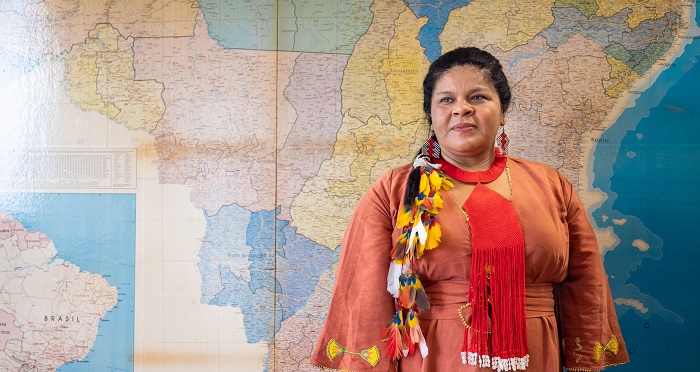
Sonia Guajajara, Brazil’s Minister of Indigenous Peoples
Securing Indigenous Peoples’ and local communities’ land rights is one of the most effective investments the world can make in climate action, according to a significant body of scientific evidence. Indigenous Peoples and local communities safeguard around 40% of the world’s remaining intact ecosystems, yet less than half of their lands are legally recognised. Forests managed by Indigenous Peoples and local communities have consistently lower deforestation rates than other areas.
With tropical forest loss reaching record levels in 2024, land tenure is a key lever to preserving lands around the globe while also securing the lives and livelihoods of Indigenous Peoples and local communities who use and steward forests sustainably.
Sonia Guajajara, Minister of Indigenous Peoples of Brazil, said: “Advancing tenure rights and finance for Indigenous Peoples go hand in hand. I am pleased that the renewed Forest and Land Tenure Pledge can support Tropical Forest Countries as well as Indigenous Peoples and local communities to make real change, starting in Belem. As part of this, I am pleased by Brazil’s own contribution of at least 59 million hectares.”
Levi Sucre Romero, from the Mesoamerican Alliance of People of Forest (AMPB), said: “By making this commitment, major governments and funders recognise the crucial role we play in the fight against climate change and acknowledge the efforts our communities have made to create our own funds that reach our people without unnecessary bureaucracy. We welcome this with cautious optimism, knowing that promises alone cannot stop the deforestation, fires, and unprecedented violence we face today in our territories.
“The funds must reach Indigenous Peoples and local communities directly, without getting stuck in bureaucracy. Land titling processes must treat us as partners and value our deep knowledge of the territories. These promises give us hope, but only the actions taken from today onward will give us a real chance to preserve the forests that protect not only us, but the entire planet, from catastrophic climate change.”
The Intergovernmental Land Tenure Commitment is a collaborative political action led by the Forest and Climate Leaders’ Partnership and co-chaired by the governments of Brazil, Peru and Norway, which invites governments to set national 2030 targets to strengthen the land and forest tenure rights of Indigenous Peoples, local communities and and Afro-descendant communities, including through enhanced legislation and implementation, policy reforms, and improved access to finance in tropical forest countries.
The new financial pledge builds on the success of the original $1.7 billion COP26 commitment, which has already channeled $1.86 billion to support Indigenous Peoples and local communities in securing land rights and protecting forests. The FTFG’s contributions over the past few years have helped drive a 36% increase in climate funding for Indigenous Peoples and local communities.
Andreas Bjelland Eriksen, Minister of Climate and Environment of Norway, said: “Strengthening Indigenous rights is one of the most effective measures to reduce deforestation. This is both about social justice and about protecting forests that absorb and store carbon.”
Nancy Lindborg, President and CEO of the Packard Foundation, said: “This pledge brings to life a shared vision for protecting critical ecosystems and supporting the people who steward them. Through deep and sustained collaboration, we’re working to shift policies and align funding in ways that support lasting solutions for both people and nature – from securing land rights for Indigenous Peoples, local communities and Afro-descendant communities, to strengthening institutions, and advancing climate resilience.”
By 2030, the Intergovernmental Land Tenure Commitment aims to accelerate recognition of lands and territories, strengthen governance systems, and align national frameworks with climate and biodiversity objectives. Alongside and complementing the Commitment, the renewed Forest and Land Tenure Pledge will mobilise funding that reaches communities directly and advances land tenure, supporting long-term access to finance for communities that are too often excluded from direct climate and forest financing.
The Commitment originated in the Indigenous Peoples’ movement and was built through dialogues among FCLP member states, philanthropies, Indigenous Peoples, and local communities, culminating in efforts to secure a global commitment to land tenure and direct access to finance.
The Commitment will also support the implementation of the Tropical Forests Forever Facility, which aims to provide long-term, reliable financing for tropical forest conservation and has earmarked 20% of funds for Indigenous Peoples and local communities.
In a major milestone for Nigeria’s housing sector, the Governor of Kaduna State has commissioned a 100-unit mass housing estate developed by Family Homes and executed by Karmod Nigeria, marking the first-ever large-scale prefabricated housing project in the country.
Completed in under six months, the innovative project demonstrates the power of modern prefabricated construction to deliver high-quality, affordable homes at record speed – a sharp contrast to traditional building methods that often take years.
Each of the 100 units in the estate is designed for a lifespan exceeding 50 years with routine maintenance. The development features tarred access roads, drainage systems, water supply, and electricity, ensuring a modern and comfortable living environment for residents.
A drone view of the housing estate
According to Family Homes, the project represents a new era in Nigeria’s mass housing delivery, proving that cutting-edge technology can accelerate the provision of sustainable and cost-effective homes for Nigerians.
“With prefabricated technology, we can drastically reduce construction time while maintaining top-quality standards,” said a spokesperson for Family Homes. “This project is a clear demonstration of what’s possible when innovation meets commitment to solving Nigeria’s housing deficit.”
Reinforcing this commitment, Governor Uba Sani of Kaduna State emphasised the alignment between the initiative and the state’s broader vision for affordable housing.
“The Family Homes Funds Social Housing Project aligns with our administration’s commitment to the provision of affordable houses for Kaduna State citizens. Access to safe, affordable and secure housing is the foundation of human dignity. We have been partnering with local and international investors to frontally address our housing deficit,” he said.
Also speaking at the event, Mr. Ademola Adebise, Chairman of Family Homes Funds Limited, noted that the project embodies inclusivity and social progress.
“The Social Housing Project also reflects our shared vision of inclusive growth, where affordable housing becomes a foundation for economic participation and improved quality of life.”
Karmod Nigeria, the technical partner behind the project, utilised its extensive expertise in prefabricated technology to localise the process, employing local artisans and materials to enhance community participation and job creation.
Industry experts have described the Kaduna project as a blueprint for future housing initiatives nationwide, capable of addressing the country’s housing shortfall more efficiently and sustainably.
With this pioneering development, Kaduna State takes a leading role in introducing modern housing technologies that promise to reshape Nigeria’s urban landscape.
Major Energy Marketers Association of Nigeria (MEMAN) has warned that the proposed 15 per cent import tariff on petrol and diesel could raise pump prices above N1,000 per litre.
Executive Secretary, MEMAN, Mr. Clement Isong, said the tariff, if implemented, would have far-reaching effects on consumers, transporters and small businesses already battling inflation.
“We are deeply concerned that such a tariff could push petrol to nearly N1,000 per litre in Lagos and over N1,020 in inland cities,” he said.
Executive Secretary, MEMAN, Mr. Clement Isong
He spoke during a joint webinar organised by MEMAN and S&P Global Commodity Insights on Thursday, November 6, 2025, in Lagos.
The webinar examined the policy’s implications on the downstream petroleum market.
According to him, diesel could rise to between N1,164 and N1,194 per litre depending on marketing margins, which would drive up logistics costs and eventually reflect in food prices.
Isong described the proposed policy as “potentially regressive,” warning that it could deepen hardship if not matched with measures to protect the poor.
“Low-income earners and small business operators will feel the immediate impact,” he said.
He urged the Federal Government to ensure transparency and accountability in fuel pricing.
“Government should publish open-market price computations and end-user prices regularly so that Nigerians can see what drives pump costs,” he said.
Explaining the economics behind the policy, Isong noted that while the tariff was designed to help local refiners recover costs and compete globally, it would also increase the landed cost of imported fuel.
“Ultimately, importers will pass these additional costs to consumers,” he said.
He warned that such cost transfer could destabilise the market.
“If prices rise sharply, smaller importers may be squeezed out, leaving only a few dominant players,” he said.
Isong, therefore, called for strong regulatory oversight.
“The Nigerian Midstream and Downstream Petroleum Regulatory Authority must be vigilant to ensure fair competition and nationwide product availability,” he said.
He proposed alternatives that could achieve the same policy goals without hurting consumers.
“Government can adopt a phased or conditional tariff tied to verified increases in domestic refining capacity,” he said.
Isong also recommended tariff caps to cushion impact.
“A fixed cap of N50 per litre or $20 per metric tonne could limit the burden on ordinary Nigerians,” he said.
He emphasised the need for market transparency.
“A competitive framework with standardised pricing and regular publication of international and local refining benchmarks will promote fairness,” he said.
The MEMAN boss further urged reforms in border and customs operations.
“Enhanced anti-smuggling measures and tighter customs checks will prevent tariff evasion and protect local investments,” he said.
Isong added that proactive exchange rate management could serve as natural protection for local refiners.
“An undervalued Naira can make imports more expensive and domestic production more attractive,” he explained.
Also, S&P Global analysts, Mr. Dumdisi Awanen and Ms. Tanya Stepanova, said that “Nigeria must balance refinery protection with competition to ensure stable fuel prices and a sustainable energy market.”
Meanwhile, S&P Global Commodity Insights analysts, Mr. Dumdisi Awanen and Tanya Stepanova, presented a paper titled “Navigating Transformation: Lessons from Global Markets for Nigeria’s Energy Future”.
Their analysis showed that Nigeria remains a pioneer in fuel market liberalisation in Africa but still requires strong regulatory oversight to ensure fair competition and prevent monopolies.
Using case studies from Ghana, Zambia, Morocco, and South Africa, the report highlighted how excessive protectionist policies can distort markets, while transparent regulation and open-access systems promote competition and price stability.
In Ghana, for instance, the National Petroleum Authority (NPA) sets indicative maximum and minimum pump prices to protect consumers while allowing fair margins for marketers.
“Zambia’s open-access TAZAMA pipeline system, introduced in 2025, has also helped lower diesel prices by encouraging competition among transporters.”
The S&P Global team emphasised that striking the right balance between supporting Nigeria’s emerging refining sector, led by the Dangote Refinery and others, and maintaining market competition would be crucial for sustainable energy development.
According to them, while Dangote’s ex-refinery prices are currently lower than import parity prices when logistics are considered, continued transparency and fair regulation are needed to prevent market dominance and ensure that liberalisation benefits all stakeholders.
The Nigerian National Petroleum Company Ltd. (NNPCL) is charting a sustainable course for Africa’s energy future through technology deployment, business integration and strategic partnerships.
Mr. Mumuni Dagazau, the Executive Vice President, Downstream, NNPC Ltd., stated this at a high-level panel session on the Future of Refining during the ongoing 2025 Abu Dhabi International Petroleum Exhibition and Conference (ADIPEC).
Dagazau said the company was redefining its operations around sustainability and full integration to ensure long-term profitability in a rapidly decarbonising global energy landscape.
Mr Mumuni Dagazau, the Executive Vice President, Downstream, NNPC Ltd. (3rd right) at a panel session at the ongoing ADIPEC in United Arab Emirates
“Decarbonisation is no longer an option but a licence to operate.
“Energy transition must balance cost, energy security and environmental responsibility.”
Dagazau said Nigeria’s challenge and opportunity depends on expanding its energy availability while pursuing decarbonisation targets.
“Success, for us, means remaining a sustainable and profitable business, 20 years from now.
“To ensure energy security, we must deploy technology with partnerships.
“We are integrating our refining, petrochemical and retail operations to protect future product requirements for Nigeria and Africa,” he said.
Dagazau reiterated NNPC Ltd.’s commitment to leading Africa’s energy transformation through strategic, sustainable and commercially viable investments.
Meanwhile, the NNPC Ltd. has won the Best Stand Design Award at the ongoing Abu Dhabi International Petroleum Exhibition and Conference (ADIPEC 2025).
The award recognises NNPC Ltd.’s outstanding exhibition stand, which highlights its key projects, sustainability initiatives, and energy transition efforts.
ADIPEC, one of the world’s largest energy conferences, had its theme for this year’s event as “Energy. Intelligence. Impact”, and it brought together global industry leaders, investors, and policymakers.
NNPC Ltd.’s display features strategic projects such as the Ajaokuta–Kaduna–Kano (AKK) Gas Pipeline and the Presidential Compressed Natural Gas (CNG) Initiative, reflecting the company’s drive for innovation and its contribution to Africa’s energy development.
The company’s participation at ADIPEC 2025 includes executive engagements, meetings with international partners, and media interactions aimed at strengthening collaboration within the global energy sector.