32.7 C
Lagos
Friday, March 6, 2026
Home Blog Page 103

Africa Day: At COP30, we demand delivery, accountability – PACJA

0

Speech by Dr. Mithika Mwenda, Executive Director, Pan African Climate Justice Alliance (PACJA), on Africa Day at COP30, on Tuesday, November 11, 2025

It is an honour to speak today on behalf of the Pan-African Climate Justice Alliance and the wider fraternity of Africa’s non-state actors.

Non-state actors are those who turn climate commitments into real action on the ground. And therefore it is strategic to associate us with the Africa Day here at COP30, as has been the case in previous COPs.
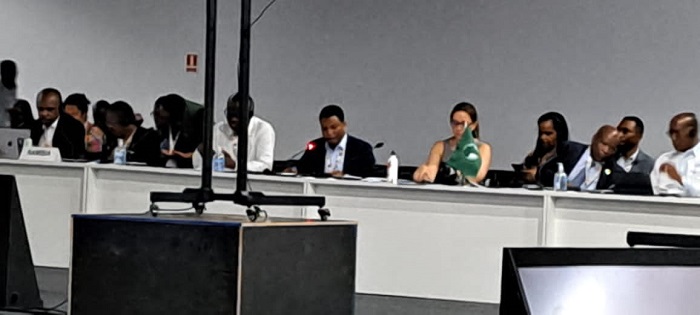
PACJA
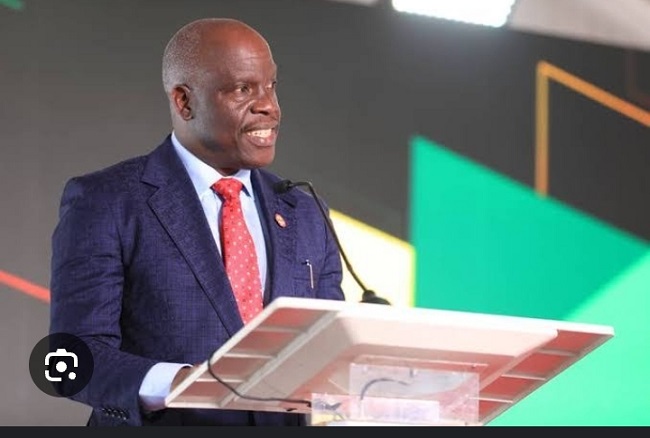
Dr. Mithika Mwenda, Executive Director, Pan African Climate Justice Alliance (PACJA), delivering remarks at the opening session of the Africa Day

Let me, therefore, express gratitude to all partners involved in making this day successful and our pledge to continue working with you to advance the interests of African people in these global dialogues.

We come to this Africa Day as co-architects of the continent’s climate destiny. Without collective effort, achieved through meaningful inclusiveness, the risks of missing out on the true aspirations of all our peoples is high.

Across Africa, communities are living the daily consequences of broken promises. Yet, they continue to lead with courage and innovation. They remind us that climate action is a necessity for the survival of our shared planet.

But survival alone is not enough; Africa must transition into prosperity. That is why we stand for a new paradigm that sees climate finance, not as aid, but as investment in Africa’s people, innovation, and resilience. This means shifting power from global intermediaries to national and local actors; replacing talk with results, and moving away from extractive to regenerative economies.

At COP29, we were promised ambition. At COP30, we demand delivery and accountability. We cannot fund adaptation with pledges that never materialise.  We cannot build resilience on the foundation of debt. We cannot industrialise on terms that export our minerals and import our poverty.

Non-state actors across the continent are ready to partner with governments to change this narrative by scaling just energy transitions, empowering youth and women, and driving transparent, community-led solutions.

The Africa Climate Summit in Addis Ababa has already shown the way: climate action must be needs-based, inclusive, and Africa-led. If we can unlock the value of our natural assets, reform the rules of global finance, and invest in our people, Africa will not only adapt to the climate crisis, it will define the future of sustainable growth.

So, today, as we celebrate Africa Day at COP30, we call for justice, fairness, and partnership grounded in respect and proportional responsibility. Let this moment mark the shift from pledges to power, from potential to performance, and from promises to prosperity.

AEDC sacking falls short of union, management agreement – Employees union

0

The National Union of Electricity Employees (NUEE) has expressed concern over the sack of 800 employees of Abuja Electricity Distribution Company (AEDC), saying that the said restructuring falls short of the agreement between the unions and management anchored on mutual trust.

NUEE frowned at the development, pointing out that the number involved is “unacceptably high”, taking into consideration the current economic reality in the country and the manpower gap in the company.

“The figure undermines workers’ livelihoods and the sustainability of the workforce,” stated the employees union, pointing out that some workers on the retrenchment list have no business being on it.

Abuja Electricity Distribution Company (AEDC)

“Underperformance could either be as a result of Worker’s ineptitude or management induced through non-provision of the necessary working tools and conducive work-environment,” the NUEE noted, lamenting that over 60% of affected staff members fall within the youth group.

“We note regrettably that a substantial majority of those affected fall within the youth age bracket against the advice of the Unions. The long term economic and social impact of the youth unemployment on households and communities cannot be overemphasised.”

The union also alleged victimisation of union officials: “The union has observed with disappointment, a well thought out plan of victimisation, orchestrated against the union. Over 70% of union officials across the four State Councils and 21 Chapters in the Company were affected.”

NUEE thus called for a comprehensive review of the entire restructuring process in line with the Memorandum of Understanding between the Management and the Unions.

“It has been evidently proved that the entire process is flawed,” declared the NUEE, calling for a detailed line by line audit of performance records and disciplinary history for all affected employees.

Apart from providing access to performance records and disciplinary histories of the affected staff, NUEE also demanded the establishment of a joint AEDC/Union committee to oversee the review, appeal processes and, where appropriate, provide a mitigation process for those unfairly targeted.

“While the Union reaffirms its commitment to safeguarding workers’ rights, we advise the Management of AEDC to engage the inherent potentials of the workers in achieving the desired productivity,” said Dominic Igwebike, the NUEE Ag. General Secretary,

COP30: NDCs will reduce emissions by 12% in 2035 – UNFCCC

0

The UN Framework Convention on Climate Change (UNFCCC) says that Nationally Determined Contributions (NDCs) will reduce emissions by 12 per cent in 2035.

The NDCs are commitments that countries make to reduce their greenhouse gas emissions as part of climate change mitigation.

The UNFCCC said this in its NDC Synthesis report, released on Monday, November 10, 2025, on the sidelines of COP30 in Belém, Brazil.

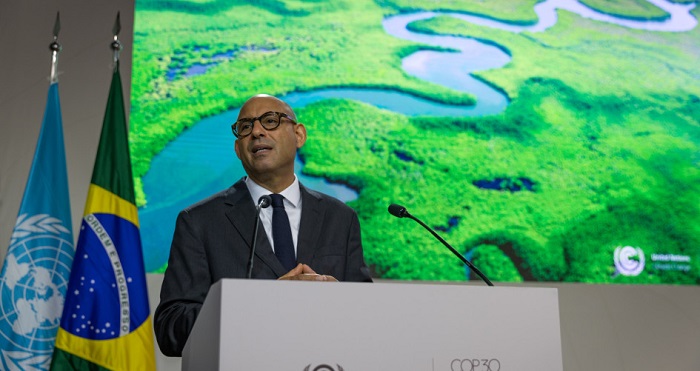
Simon Stiell
Executive Secretary of UN Climate Change, Mr. Simon Stiell. Photo credit: Kiara Worth | UN Climate Change

A sense of cautious optimism marked the first day of COP30, following the announcement that dozens of new national climate plans – known as NDCs – pushed the tally to 113 countries, including Nigeria now committed to curbing global warming.

Together, they represent nearly 70 per cent of global greenhouse gas emissions; a significant step forward in the race to keep temperatures in check.

The report shows that new NDCs, including many received in recent days, will reduce emissions by 12 per cent in 2035.

UNFCCC highlighted that every fraction of a degree of heating avoided will save millions of lives and billions of dollars in climate damages.

UNFCCC, which convenes the yearly COPs, suggests these pledges could cut emissions by 12 per cent, but not yet enough to guarantee the 1.5°C goal.

According to the UN climate change agency, the challenge now is turning promises into action at a pace that matches the scale of the crisis.

Speaking at the opening of COP30, the Brazilian President, Luiz Inácio Lula da Silva, called for a decisive defeat of climate denial and faster action to keep the 1.5°C goal alive.

”This is the moment to match opportunity with urgency.

Silva, however, warned that ”climate change is not a threat to the future; it is a tragedy of the present”.

Citing Hurricane Melissa in the Caribbean and a tornado in Paraná, the President declared this ”the COP of truth”, denial and delay are no longer options.

”We are moving in the right direction, but at the wrong speed,” he said, adding that Crossing 1.5°C is a risk we cannot take”.

He called strongly for an end to climate denialism, underscoring that in the age of disinformation, obscurantists reject not only scientific evidence but also the progress of multilateralism.

They control algorithms, sow hatred, spread fear, and attack institutions, science, and universities. It is time to impose a new defeat on denialists.

“Without the Paris Agreement, the world will be heading toward catastrophic warming of nearly 5°C by the end of the century,” he said

He pressed world leaders to adopt ambitious climate pledges and keep adaptation at the heart of national strategies.

He also called for a roadmap for humanity to overcome in a just and planned way, its dependence on fossil fuels, reverse deforestation, and mobilise the resources needed to do so.

To back that vision, he announced a new fund to support energy transitions in developing countries, financed by revenues from oil exploration.

Meanwhile, André Corrêa do Lago, COP30 President, presided over the official opening of the summit following a musical performance by members of the Guajajara Indigenous People.

He urged delegates to make this the ”COP of implementation, adaptation, and economic integration of climate policy and above all, the COP that listens to and believes in science”.

He acknowledged the crucial role of Indigenous Peoples as guardians of the Amazon, the region now at the centre of the world’s attention.

COP30 opened on Monday and runs through Nov. 21.

By Cecilia Ologunagba

Nigeria begins 2025 oil licensing round December

0

The Nigerian Upstream Petroleum Regulatory Commission (NUPRC) has announced the commencement of the 2025 Licensing Round, effective Dec. 1, 2025.

The NUPRC Chief Executive (CCE), Mr. Gbenga Komolafe, made the announcement at the NUPRC’s Project One Million Barrels Per Day (1MMBOPD) Additional Production Investment Forum in London on Tuesday, November 11, 2025.

Komolafe, in a statement by its Head of Media and Strategic Communication, Eniola Akinkuotu,
said the announcement was in line with the Petroleum Industry Act (PIA 2021).

Gbenga Komolafe
Gbenga Komolafe, the Chief Executive of NUPRC

He said the announcement followed the approval of President Bola Tinubu who doubles as the Minister of Petroleum Resources.

“We are announcing that we are ready, following the approval of the Minister of Petroleum Resources in line with the PIA to commence the 2025 licensing round beginning from Dec. 1, 2025,” the CCE said.

At the forum which was attended by the Chief Executive Officers of oil companies, bank representatives and potential investors, he said funding remained the biggest challenge in Nigeria’s upstream sector.

According to him, the commission as a business enabler has planned to tackle to challenges by connecting interested parties.

Komolafe, therefore, said the event was put together to connect all stakeholders in order make the additional one million barrels a reality.

“One of the factors that affected business is that activities were happening in silos but the NUPRC now realises the need to bring everyone together.

“We want you all to network. Bank of America is here as well as representatives of other banks,” he said.

Komolafe said the reforms initiated by the President Bola Tinubu’s administration had improved Nigeria’s economic metrics.

He said crude production now averaged 1.71mbpd with a peak daily output of 1.83mbpd, evidence of tangible progress.

The CCE said 46 Field Development Plans had been approved from January 2025 till date, representing immediate investment commitments and production growth potential.

He said the rig count had grown to over 60 out of which at least 40 were active.

He disclosed that this was the best time for existing investors to deepen their stake in Nigeria.

“The drive to reach and sustain one million barrels per day in incremental capacity and beyond will require Floating Production, Storage and Offloading units for cluster developments.

“It will require Floating Storage and Offloading vessels for crude evacuation and storage; and a variety of Modular Offshore Production Units and Early Production Facilities to enable early production and accelerated monetisation.

“All these need investments and the prospects are here in Nigeria,” he added.

Speaking earlier, the Chairman, House Committee on Petroleum Resources (Upstream), Mr Alhassan Doguwa, promised investors that his committee would not push any legislation that would undermine investments.

Doguwa, while saying that the Petroleum Industry Act, 2021 would not be tampered with arbitrarily, reaffirmed the House of Representatives commitment to resist any arbitrary changes that would undermine investments.

His counterpart in the Senate, Sen. Eteng Williams, also promised investors that Nigeria’s legislature would continue to pass business-friendly laws and urged investors not to fret.

By Emmanuella Anokam

$3bn not enough to tackle Nigeria’s climate challenges, says CAPPA 

0

The Corporate Accountability and Public Participation Africa (CAPPA) says the $3 billion annual climate finance being sought by Nigeria is not enough to tackle the country’s climate challenges.

The Associate Director, Climate and Environment, Mr. Olamide Ogunlade, said in Port Harcourt on Tuesday, November 11, 2025, that the amount was insignificant given Nigeria’s climate challenges.

It will be recalled that Nigeria has unveiled a plan to mobilise $3 billion annually in climate finance through its National Carbon Market Framework and Climate Change Fund.

Kashim Shettima
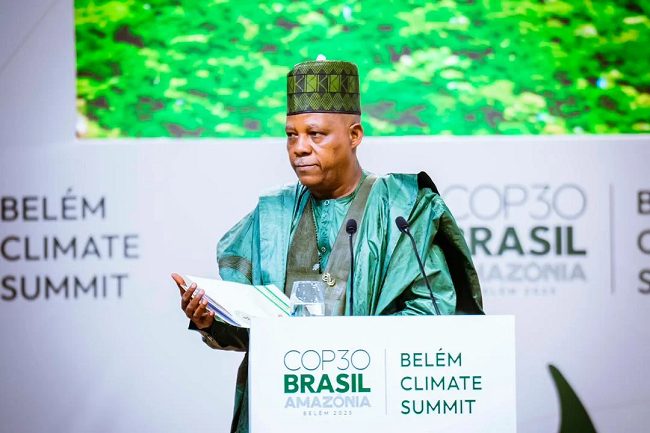
Vice President, Sen. Kashim Shettima

The Vice President, Kashim Shettima, made the disclosure at the ongoing United Nations Climate Change Conference (COP30) in Belem, Brazil.

Ogunlade said the annual climate finance was small compared to the attention needed to tackle the current climate challenges faced by the country.

The CAPPA official however said that when mobilised, the fund should be directed towards renewable energy, reforestation, flood control, and climate-smart agriculture.

“There is need for transparency and accountability, the fund should be used transparently and inclusively, with oversight from government, civil society, and affected frontline communities,” he said.

Ogunlade expressed skepticism about Nigeria’s target to cut emissions by 32 per cent in 2035, citing policy inconsistencies and over-reliance on fossil fuels.

“This will be challenging under the current policy inconsistency, the country needs to prioritise renewable energy, and reduce dependence on fossil fuels,” he said.

He said that Nigeria’s key priorities at the ongoing COP30 should be to secure climate finance, promote renewable energy investments, and push for loss and damage funding.

Ogunlade said that with Nigeria’s role in promoting climate action and sustainability in Africa, the country should leverage its political advantage to push for fairness in climate finance and technology transfer.

The CAPPA director urged developed nations to clear their historical liabilities, honor finance and technology pledges, and support Nigeria’s climate and development goals without compromising growth.

Ogunlade expressed hope that Nigeria’s participation in COP30 would contribute to global climate efforts, and that the country’s stance on eco-preservation would be fairly supported.

By Precious Akutamadu

African youth demand justice, ambition, implementation at COP30

0

As the world convenes for the 30th UN Climate Change Conference (COP30) in Belém, Brazil, Yanayi Haki Afriqya has launched the African Youth Position Paper titled “From Sub-Saharan Africa to the Amazon: Youth Voices for Climate Justice and a Just Future.”

Africa stands at the frontline of the climate crisis yet remains on the margins of responsibility. The continent contributes less than 4% of global greenhouse gas emissions, yet it endures some of the world’s most severe climate impacts, from prolonged droughts in Sub-Saharan Africa and the Sahel to rising floods in East Africa and devastating cyclones along the southern coast. This imbalance exposes the persistent injustice in the global climate regime: those who pollute the least continue to pay the highest price.

International Youth Day
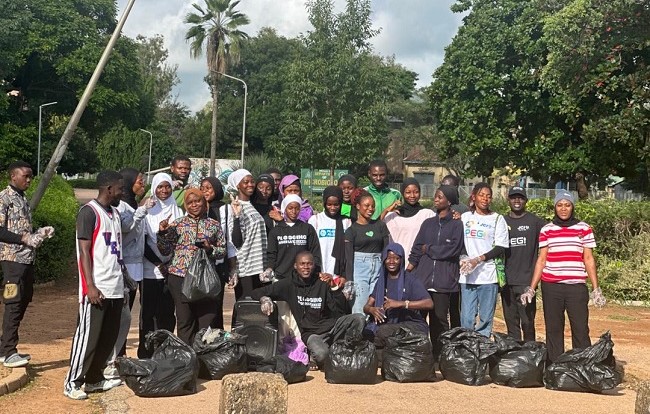
A cross section of youths during the cleanup at Plogging Nigeria, University of Nigeria, Nsukka

At the same time, Africa holds some of the planet’s greatest potential for renewable energy, biodiversity protection, and youth-driven innovation. With over 60% of the population under 25, the continent is not a victim but a critical partner in global transformation. What Africa needs is not sympathy, but equitable access to finance, technology, and decision-making power to drive its own climate-resilient future.

It is against this backdrop that Yanayi Haki Afriqya and its youth partners are calling for a shift at COP30 from pledges to measurable progress, from promises to justice, and from exclusion to shared leadership.

Africa’s Youth Vision for COP30

African youth envision a continent powered by renewable energy, nourished by sustainable food systems, and governed by equity and rights. They emphasize that youth are not observers but implementers, driving local innovation, renewable energy access, and community-led resilience across Africa.

Key Calls from African Youth to COP30 Negotiators

  1. Deliver on existing climate agreements through measurable, time-bound actions that translate commitments into tangible results.
  2. Operationalise the Loss and Damage Fund with direct, simplified access for African and other vulnerable communities, ensuring transparency and accountability in its governance.
  3. Implement the New Collective Quantified Goal (NCQG) adopted at COP29 in Baku, which commits developed countries to mobilise a minimum of $300 billion per year by 2035 and up to $1.3 trillion annually from all sources. (a) Youth call for transparent, grant-based, and equitable disbursement of NCQG-linked funds, prioritising adaptation, loss and damage, and community resilience. (b)The NCQG must be operationalised through youth-inclusive mechanisms, such as a Youth Climate Innovation and Finance Facility under the Green Climate Fund (GCF) or African Development Bank (AfDB) to finance youth-led mitigation and adaptation initiatives.
  4. Establish an International Mechanism for Just Transition (IMJT) to guarantee decent jobs, reskilling, and fairness in the shift to 100% renewable energy, ensuring no one is left behind.Advance the Global Goal on Adaptation (GGA) with localised, youth-inclusive indicators that measure progress on resilience, water security, food systems, and livelihoods.
  5. Enhance technology transfer and digital capacity-building programmes for youth and women to strengthen Africa’s position in the global green economy.

Africa’s Message: Finance Must Deliver Justice

While the adoption of the NCQG represents progress beyond the former $100 billion pledge, African youth emphasise that delivery and accessibility remain the real tests of ambition. Finance must be grant-based, transparent, and accessible to youth, women, and frontline communities. Debt-driven finance mechanisms, they warn, undermine justice and reverse development gains. “Climate finance is not charity; it is an obligation under the Convention and the Paris Agreement,” the statement reiterates. African youth demand that COP30 shift from pledges to performance, ensuring that climate finance truly reaches those most in need.

A Call for Ambition, Accountability, and Solidarity

Through this position paper, Yanayi Haki Afriqya and African Youth reaffirm that protecting Africa’s future means protecting the planet.

From Sub-Saharan Africa to the Amazon, youth are uniting across continents to demand a just transition, equitable finance, and a climate regime that delivers for all.

“Protecting Africa is protecting the planet. COP30 must be remembered as the Implementation COP – where promises become progress, and justice becomes action.”

About the Position Paper

The COP30 African Youth Position Paper was developed by Yanayi Haki Afriqya through a dialogue with representation from young people across the continent. It provides a framework for engaging African negotiators, policymakers, and partners to ensure that youth priorities and African realities are reflected in global climate outcomes.

Link to Download: https://www.climate-justice.africa/yanayi-haki-afriqya-cop30-position-paper/

Ethiopia edges Nigeria to win COP32 hosting right, COP31 stalemated

0

At COP30 on Tuesday, November 11, 2025, Ethiopia was confirmed as the host country for the 32nd session of the Conference of the Parties (COP32) to the United Nations Framework Convention on Climate Change (UNFCCC).

The long-confirmed “Africa COP” has seen Ethiopia and Nigeria vying for hosting rights, with Ethiopian Prime Minister Abhi Ahmed dubbing Addis Ababa “a global city in climate ambition” during September’s Africa Climate Summit. Ethiopia defeated Nigeria in a closely contested bid.

Observers have welcomed the announcement of Ethiopia as COP32 host and celebrate the opportunity for Africa to take centre stage in advancing climate justice and solutions.

Abhi Ahmed
Abhi Ahmed, Prime Minister of Ethiopia

Rukiya Khamis, Africa Senior Organiser at 350.org, says: “We welcome the announcement of COP32 in Ethiopia and look forward to the opportunity to elevate Africa’s climate priorities, solutions and leadership. The world cannot afford to treat climate diplomacy as a political bargaining chip. We call on all parties to resolve the COP31 stalemate to avoid undermining momentum at a pivotal moment for climate action. The Pacific has spoken clearly in support of a COP hosted between Australia and the Pacific, as a matter of respect, dignity and recognition of the frontline realities Pacific communities face.”

The news comes as the decision on COP31 remains at a stalemate. Australia’s bid to co-host COP31 with Pacific nations has been complicated by Turkiye’s continued bid for hosting rights. Pacific nations are supportive of an Australia-Pacific COP31, and in the case of an Australia-Turkiye co-presidency remain adamant that the Albanese government be held accountable for Australia’s position as one of the world’s major fossil fuel exporters and center Pacific demands for climate action in negotiations.

If neither Australia nor Turkiye withdraws, Germany will be forced to host the talks as per the treaty agreement. 

Fenton Lutunatabua, 350.org Deputy Head of Regions, says: “We are pleased that Ethiopia has been confirmed as COP32 host, but we need an urgent decision on whether Australia will win its bid to host COP31 with Pacific nations and maintain that an Australia-Pacific COP is necessary to build on the legacy of Pacific climate leadership.

“With COP30 in the Amazon rainforest, it is vital that the world now turns its attention to the oceans, our planet’s other great climate frontier. Our oceans are warming rapidly, with devastating consequences. Sea levels in the Pacific Islands are rising at a rate that is near or twice the global average. As Pacific islanders, we have been instrumental in keeping the Paris Agreement’s 1.5°C goal alive, driving the creation of the Loss and Damage Fund through COP negotiations, and achieving the historic International Court of Justice ruling earlier this year.

“Hosting rights should not be used as political bargaining tools or trophies: these are the largest climate negotiations in the world, and we must remember what their purpose is: to address the most urgent crisis of our time, one that impacts people’s lives and futures. “

From Niger Delta to Belém: Why COP30 must listen to frontline voices

0

As the world gathers in Belém, Brazil, for the 30th United Nations Climate Change Conference (COP30), millions of people from frontline communities are watching with a single question: Will our voices finally be heard?

For the people of Nigeria’s Niger Delta, climate change is not a policy debate – it’s a daily struggle. Sea-level rise swallows ancestral farmlands. Oil spills destroy rivers that once sustained livelihoods. Gas flaring burns endlessly above our homes. Yet, the same communities that suffer the most from extraction and pollution are excluded from the global negotiations that decide their future.

COP30
COP30

At Connected Advocacy, we stand at COP30 to say: Enough is enough. The climate crisis is global, but its impacts are local – and solutions must be local too. The world cannot win this fight without the people who are living it.

Our Five Demands for COP30

  1. Climate Finance That Reaches the Ground
    Climate finance remains trapped in bureaucratic systems that rarely benefit local actors. We call for direct access to climate-blended finance for civil society, community networks, and youth-led initiatives. Funding must empower those implementing real solutions, not just those managing paperwork.
  2. Local Design, Global Impact
    True climate action begins in communities. Governments and donors must support local climate design and innovation – enabling indigenous, youth, and women-led groups to deliver renewable energy, climate education, and ecosystem restoration tailored to their needs.
  3. Green Skills for a Just Transition
    The energy transition must lift people, not leave them behind. COP30 must prioritize green skills development, especially for young people and women in Africa, ensuring that new jobs in clean energy, climate adaptation, and digital innovation are accessible to all.
  4. Environmental Justice and Accountability
    For decades, the Niger Delta has been the ground zero of environmental injustice. Polluters must pay. Communities must heal. COP30 must ensure that Loss and Damage funds are operationalized with justice at their core – compensating those most affected by fossil extraction and climate impacts.
  5. Meaningful Participation, Not Tokenism
    Indigenous and grassroots voices deserve seats at the decision-making table. We call for inclusive national delegations and mechanisms that make participation real – not symbolic. Nothing about us, without us.

Why Belém Matters

Belém, at the heart of the Amazon, symbolises both the beauty and vulnerability of our planet. It is a powerful reminder that the global climate crisis is interconnected – from the rainforests of the Amazon to the mangroves of the Niger Delta.

The choices made here will determine whether the transition to renewable energy becomes a story of justice or exclusion, of shared prosperity or deepening inequality.

Our Call to Action

We urge COP30 negotiators, global leaders, and climate financiers to:

  • Invest in grassroots innovation that combines local knowledge with sustainable technology;
  • Support youth and women with green skills and leadership opportunities;
  • Hold polluters accountable through enforceable Loss and Damage mechanisms; and
  • Empower local voices as co-creators in the global climate process.

The people of the Niger Delta – and countless communities like ours – have waited too long to be seen and heard. The time for promises has passed. The time for climate justice and shared power is now.

World leaders, industry, civil society endorse pathway to sustainable construction

At COP30, 11 governments joined over 300 companies and civil society groups in endorsing the Principles for Responsible Timber Construction (Principles), a science-based framework to guide the responsible use of timber from forest to building. This endorsement, it was gathered, marks a significant step in aligning global efforts to transform the global construction industry in ways that benefit climate, nature and people.

The Principles were developed through a collaborative process co-led by the Forest & Climate
Leaders’ Partnership, Built by Nature and Bauhaus Earth, along with a wide coalition of experts,
governments and industry leaders. This brought together a wide array of stakeholders from around the world for extensive collaboration on making the Principles a reality on the road to COP30.

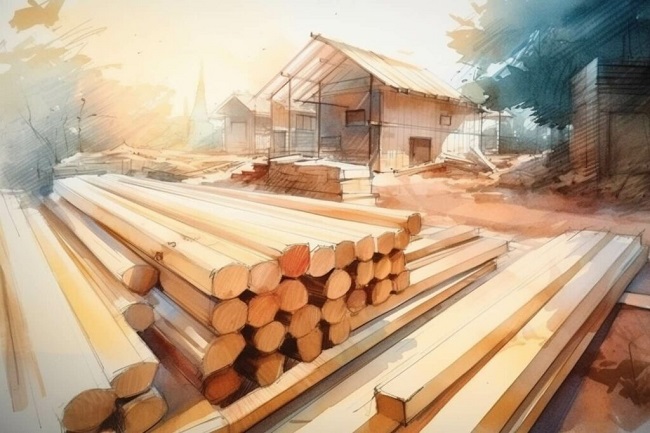
Sustainable construction

According to the promoters, the endorsement represents the first time such a diverse global group – from forest managers and certification bodies to developers, architects, engineers, investors and national governments – has aligned behind one common approach to scaling timber in construction.

Vice Minister Carlos Isaac Pérez, Ministry of Environment and Energy, Costa Rica, stated: “Costa Rica not only adheres to these Principles but also actively promotes them internationally, encouraging adoption by other producer countries committed to transparency, traceability and deforestation-free wood products.”

Welcoming the launch and representing Canada’s co-leadership of the FCLP Greening Construction with Sustainable Wood initiative, Emmanuel Kamarianakis, Ambassador of Canada to Brazil, said: “This best practice approach can transform the market for responsible timber construction, providing a win-win for the climate and global goals to halt deforestation. These Principles and the guidance that accompanies them are a testament to the tremendous collaboration between stakeholders across all sectors with a determination to turn an aspiration into a reality. Together, the five principles provide a common language and approach that can be used to inform the development of public policy, regulation and industry practices.”

Andrew Waugh, Co-Founder of Waugh Thistleton Architects added: “These principles reflect
everything we’ve been advocating for: low-carbon, high-performance buildings that are beautiful, healthy, and financially viable. Timber allows us to build at scale without compromising the planet. The Principles give the industry a clear framework to move from innovation to mainstream adoption, which is exactly what the future demands.”

Paul King, CEO of not-for-profit Built by Nature stated: “These Principles were developed to build trust and confidence across the value chain—but we know they’re already being applied. This year’s Built by Nature Prize attracted nearly 400 entries from almost 40 countries, showcasing completed timber buildings that bring the Principles to life. That global response proves they’re not just aspirational – they’re achievable. All five Principles are ambitious yet realistic. To drive the transition, we need in the built environment, we must apply them everywhere, all the time.”

Demand for new buildings is expected to double by 2050, especially in the Global South. At the
same time, the construction sector already accounts for nearly 40 per cent of global greenhouse gas emissions, with the production of building materials like concrete and steel making up at least a quarter of those emissions. The Principles set out how timber can safely replace more carbon intensive materials, store carbon in buildings for decades, and create economic value for forest communities, but only if demand is matched by sustainable forest management.

The framework draws on IPCC science and builds on the FCLP “Greening Construction with
Sustainable Wood” initiative launched at COP28 in Dubai, which was backed by 17 governments. Today’s endorsements show that this work has matured into an actionable, globally accepted model for the construction sector. Additional governments, companies, and non-governmental actors are expected to continue to back the Principles throughout COP30 and beyond.

Climate activists at COP30 confront industry lobbyists at AgriZone

0

Climate campaigners at COP30 on Monday, November 10, 2025, confronted Big Agriculture lobbyists in a protest at the “AgriZone”, a new zone near the COP venue dedicated to agribusiness interests and sponsored by corporate giants Nestlé and Bayer.

The AgriZone is the latest development in the growing trend of COP–the world’s only multilateral decision-making forum on climate change–being co-opted by big polluters and business interests. In recent years, the influence of industry lobbyists over the climate convention has grown, with more than 5,000 fossil fuel lobbyists given access since COP26.

AgriZone
Climate activists at AgriZone

Despite the COP Presidency including land restoration and sustainable agriculture in its Action Agenda, the Brazilian government made the unprecedented move to capitulate to industrial agriculture, which is a main driver of deforestation in the Amazon and produces a third of global greenhouse gas emissions. The campaigners, as part of the Global Campaign to Demand Climate Justice, condemned the move, emphasising the danger of allowing Big Agriculture to influence world leaders and climate negotiators.

Elodie Guillon, World Animal Protection, said: “It is deeply concerning to see a third zone popping up at COP30 dedicated entirely to agribusiness interests. Industrial animal agriculture is not only a leading cause of emissions, but a major driver of deforestation and farmed and wild animal suffering.

“Giving agribusiness a major seat at the table at this COP will drown out the voices most affected by climate change. ‘Big ag’ are not climate champions, they are fuelled by greed as they harm animals, people and the planet.”

Prayash Adhikari, Asian Peoples’ Movement on Debt and Development and Digo Bikas Institute: “Asian movements are here to fight back against the co-optation of COP and other multilateral processes. Asia is the biggest hunger hotspot in the world, representing 55% of the world’s hungry, and incurring trillions of dollars in climate-related losses per year. Asian peasants, fishers, and women are forced to feed the world, while they are left starving.

“That is why we cannot let this greenwashing from Bayer, Nestlé, JBS, and their allies in government go unchallenged. We know industrial agriculture has contributed greatly to the food and climate crises, and we cannot let Big Ag get away with it. Food, land, and water are for people, not profit! Food is a right, not mere commodities for Big Ag’s profits.”

Andrea Echeverri, Global Forest Coalition: “The AgriZone is nothing more than a huge greenwashing space. While social organisations and other mortals usually compete to be heard in spaces in the Blue Zone and the Green Zone, agribusinesses have a huge space dedicated to dazzling negotiators and convincing them that they are not major polluters but rather the saviours of the planet.

“The globalised agri-food system focused on livestock does not fulfill its purpose of feeding the world because it is designed to produce money, not food.

“Inside the AgriZone, large companies, think tanks, and supposedly independent research centres are disguising their model with their ‘climate-smart’ models, their smart seeds, their digitisation, and their metrics, while they are producing a food and agricultural crisis and a countryside without peasants, and without memory and diversity.”

Sebastian Ordoñez Muñoz, War on Want: “Industrial agriculture is fuelling both the climate and food crises, yet its biggest players are being given a stage at COP30 to greenwash their destruction. We’re here to say: food is not a commodity, it’s a right – and real climate action means taking power away from polluters and putting it in the hands of the people who feed the world.”

Joelmir Silva, riverine from Middle Earth, Xingu River: “Our land doesn’t need promises of market, it needs respect. Our food comes from the live forest, not from fabrics that kill the People’s rivers and souls.”

Erika Xananine Calvillo Ramirez, Stop Financing Factory Farming Coalition / Mesoamerican Caravan for Climate and Life: “Climate spaces must stop being complicit with all forms of extractivism creating the crisis. The agribusiness has been responsible for the water crisis in the Ngiwa Valley of Tehuacan region in Mexico, and they must stop greenwashing their image at COP30.”

Gertrude Kenyangi, Women and Gender Constituency /SWAGEN: “An intersectional lens in strategies to combat climate change is not optional but critical for effective resilience of marginalised women. The realities of nomadic women, widows, and women with disabilities cannot be addressed through one-size-fits-all responses. Intersectional data collection and participatory methodologies that center marginalised voices are key to ensuring no one is left behind!”

×