Home Blog Page 101

In Belém, African leaders back new Wildlife for Climate Declaration ahead of COP31

0

At an official side event hosted by World Federation for Animals (WFA) on Friday, November 14, 2025, at COP30 in Belém, Brazil, Ambassador Tadeous T Chifamba, speaking on behalf of the Republic of Zimbabwe’s Minister of Environment, Climate & Wildlife, Dr Evelyn Ndlovu, announced that African leaders have agreed to pave the way for a Global Wildlife for Climate Action Declaration to be launched at COP31 next year.

He was joined by Ambassador Lamin B Dibba, Ambassador and Permanent Representative to the United Nations, who represented Rohey John Manjang, Minister of Environment, Climate Change and Natural Resources in the Government of The Gambia at the event.
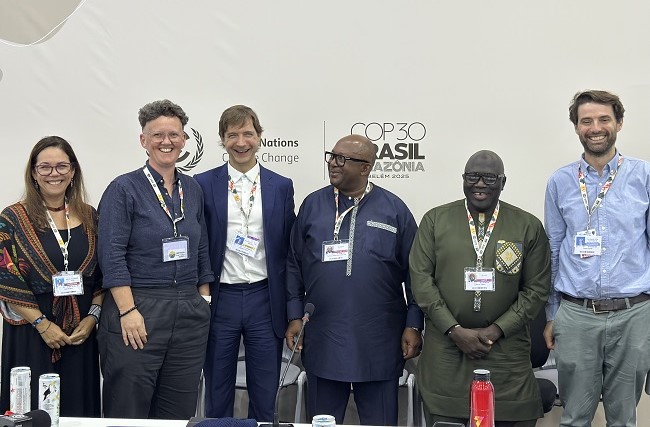
World Federation for Animals (WFA)
Participants at the COP30 side event hosted by World Federation for Animals (WFA)

The endorsement was agreed at the inaugural African Union Biodiversity summit, held in Botswana in early November, where Heads of State adopted the ‘African Leaders Gaborone Declaration on Biodiversity’. In paragraph 44, leaders committed: “to endorse the Wildlife for Climate Action Agenda and Declaration and call upon the rest of the world to support Africa and Africa’s wildlife resources on this cause”.

This decision reflects growing recognition that protecting wildlife and restoring habitats is a cost-effective and nature-based solution to climate change, directly supporting the Paris Agreement.

Wild animals contribute significantly to natural carbon sequestration and ecosystem resilience by maintaining land and ocean ecosystems. Across Africa, elephants, antelopes, and other large herbivores disperse seeds, regenerate forests, and maintain grasslands that lock carbon in soils, helping to mitigate climate change.

In rivers, mangroves and coastal wetlands, fish and marine species sustain blue-carbon ecosystems that buffer our coasts against storms and store carbon on a vast scale. Even creatures as small as termites play a role, burrowing to create their huge mounds, bringing up nutrients and water, allowing tree species to establish and create rich, resilient habitat mosaics.

However, wildlife is under threat from myriad forces, including habitat loss, poaching, and the illegal wildlife trade, meaning collective action is needed before it is too late. Recent analysis found that Africa is experiencing a continent-wide collapse in the animal ‘power’ that drives nutrient cycling, seed dispersal and other life-supporting functions, risking not just biodiversity but the livelihoods of those who depend on it. 

Ambassador Chifamba made the announcement at an official side event hosted by the World Federation for Animals at COP30, “From synergies to action: Animals as the missing link”, which explored practical policy actions to advance climate, biodiversity and land restoration goals. He joined Tristan Tyrrell, Programme Management Officer, CBD Secretariat; Dra Ana Cristina Mendes de Oliveira, Professor, Federal University of Pará, Brazil; Tricia Croasdell, CEO, World Animal Protection; Dr James Yeates, CEO, World Federation for Animals. 

Ambassador Chifamba said: “We know that healthy wildlife populations are engines of climate stability, yet until now there has been minimal collective commitment across the continent to protect them. With this new Declaration, African leaders have taken a huge step forward in recognising wildlife as allies in climate action.

“We invite the world to support us as we look ahead to launch at COP31, a key opportunity to secure global recognition of wildlife as an integral component of climate policy. Protecting wildlife is not just a moral imperative, but a cornerstone of our collective climate strategy; when wildlife thrives, ecosystems flourish and resilience grows.” 

Ambassador Dibba added, “In The Gambia, we are witnessing firsthand how climate change is affecting our wildlife and the ecosystems on which they depend. Rising temperatures, altered rainfall patterns, and more frequent extreme weather events are impacting and changing habitats faster than many species can adapt. The socio-economic impact is significant.

“Wildlife-based tourism contributes to livelihoods, supports local enterprises, and showcases our natural heritage to the world. When biodiversity declines, we lose far more than species – we lose our economic resilience and sense of identity. For countries like The Gambia, enhancing cooperation between the Rio Conventions is not an abstract aspiration; it is a practical necessity. Protecting animals and transforming food systems must be central pillars of that effort.” 

Dr James Yeates, CEO, World Federation for Animals, adds, “This announcement is a huge win for animals. While at COP30 decisions are being made at the highest levels to address climate change,  wild animals across Africa – and the world – are quietly doing their bit, supporting ecosystems and contributing to carbon storage through their natural behaviours.

“I commend these Ministers for their forward-thinking approach, understanding that without a shared commitment, the fate of these wild animals will be under threat. I urge the world to get behind Africa ahead of the Declaration launch at COP31, acknowledging that protecting these animals is not just the compassionate thing to do, but is critical for the future of our planet.”

The forthcoming Wildlife for Climate Declaration builds on commitments made at the 20th African Ministerial Conference on the Environment (AMCEN) in Nairobi, and aligns with the African Union’s Agenda 2063: The Africa We Want, which recognises that Africa’s unique natural endowments, including its wildlife and wild lands, must be valued and protected to ensure climate resilience, biodiversity conservation, and sustainable development.
How young Nigerians are reimagining open defecation free communities

In 2019, Nigeria’s President, Muhammadu Buhari, signed Executive Order 009 to tackle open defecation with the Clean Nigeria 2025 target. With less than one month left, millions of Nigerians still lack access to safe sanitation. According to the Federal Ministry of Water Resources, less than 250 out of the 774 Local Government Areas of Nigeria are currently Open Defecation Free (ODF).

Open defecation is an urgent challenge in Nigeria as only 46 percent of the 210 million population have access to sanitation facilities. It is a complex issue that negatively impacts public health, gender equality, education, climate resilience and human dignity.

International Youth Day
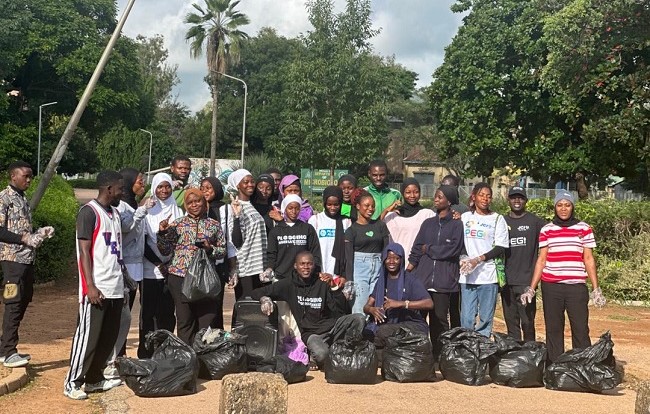
Young Nigerians: A cross section of youths during the cleanup at Plogging Nigeria, University of Nigeria, Nsukka

With less than four years to 2030, which is the deadline for the United Nations Agenda for Sustainable Development, young people are proving that the end to open defecation is possible through community-led, youth-driven innovation.

According to the World Health Organisation (WHO), Nigeria accounts for one of the largest shares of people practising open defecation. The consequences such as preventable diseases, contaminated water sources, school absenteeism, avoidable deaths and a cycle of poverty that disproportionately affect women, children, and people in informal communities.

The 2025 Clean Nigeria Campaign is one of the most ambitious behavioural change programmes in Africa. However, progress has been uneven due to a heavy focus on infrastructure development. Toilets do not guarantee use. Communities do not change behaviour because a policy says so. And the conversation around sanitation still carries stigma.

This is where young people with their influence, creativity, and trust within communities become essential.

With nearly 70 percent of Nigeria’s population under the age of 35, they provide the demographic advantage needed to drive behavioural change and policy action. Young people are not just beneficiaries of sanitation solutions, they are innovators, organisers, and community mobilisers who can accelerate the Clean Nigeria vision.

Over the years, the Network of Youth for Sustainable Development (NGYouthSDGs) has demonstrated that when young people are equipped, trusted, and supported, they deliver high-impact solutions that government and development actors can scale.

One example stands out.

In 2025, NGYouthSDGs worked with UNICEF Nigeria and ICCDI Africa on a sanitation initiative in a community in the Aleyita–Lugbe axis of Abuja. The community had long struggled with open defecation, limited toilet access, and poor hygiene practices.

  1. Youth Mobilisation and Behaviour Change: NGYouthSDGs associates carried out community mobilisation, going door-to-door to build trust with households. They facilitated discussions on hygiene, organised workshops, and debunked long-held myths about sanitation. Their age, energy, and cultural fluency helped break barriers that traditional sensitisation campaigns often struggle with.
  2. A Toilet Built from Plastics Waste: In collaboration with community members, the youth team supported a plastic-to-toilet initiative, using collected plastic waste to construct a community toilet. This innovative approach did more than provide infrastructure, it created: circular economy awareness, ownership among residents, and a visible symbol of what youth-led development can achieve.
  3. Community Ownership and Lasting Impact: The project did not end with construction. Youth continued to work with local leaders to establish maintenance systems, promote consistent usage, and integrate hygiene education into community routines.

The result was a meaningful reduction in open defecation, improved environmental conditions, and renewed confidence that communities can transform their surroundings through partnership and local leadership.

This case strengthens a vital truth: youth-led approaches work.

As 2026 approaches, Nigeria requires solutions that are bold, scalable, and firmly rooted in community behaviour change.

  1. A National Youth Sanitation Corps: A structured programme that deploys trained young people as community sanitation champions across all LGAs.
  2. Funding for Youth-Led Social Enterprise: Support for innovations such as waste-to-toilet models, mobile toilet start-ups, and digital hygiene campaigns.
  3. Youth-Designed Behaviour Change Campaigns: Messaging that reflects local culture, humour, language, and peer influence is far more effective when young people lead it.
  4. Stronger Local Government Ownership: Youth advisory groups working directly with LGAs can strengthen monitoring, awareness, and sanitation systems.
  5. Multi-Sector Partnerships: The private sector, development organisations, and government must jointly invest in youth-led sanitation models that have proven community impact.

Ending open defecation advances SDG 6 (Clean Water and Sanitation), SDG 3 (Good Health and Wellbeing), SDG 13 (Climate Action), and the broader commitment to human dignity. As the world turns its attention to sanitation on World Toilet Day, Nigeria has a chance to lead Africa with a people-powered, youth-driven model that can be replicated across the continent.

Ending open defecation in Nigeria is a moral responsibility to preserve dignity, protect health, and secure futures.

The Abuja project with UNICEF Nigeria and ICCDI Africa shows that youth leadership is essential. If Nigeria is to meet its Open Defecation Free target, the government and partners must urgently invest in young people as catalysts for behaviour change, innovation, and community transformation.

Group frowns at Cross River’s inaction on illegal logging in Ekuri, Ikom

0

The Renevlyn Development Initiative (RDI) has criticised the Cross River State Government for failing to enforce the ban on illegal logging activities rampant in Ekuri, Ikom and other forest communities in the state, cautioning that the government inaction may send signals of “complicity” by some highly placed persons in government.

RDI said that the position is informed by its findings after a visit to the affected communities following a renewed Save-Our-Soul from the locals in Old and New Ekuri on the unchecked illegal logging activities. The same scenario is playing out in nearby Ikom, added the group.

Ekuri Forest is 33,600 hectares of pristine forest situated north-west of the Cross River National Park and Oban Hills and to the north of the Ukpon River Forest Reserve. On the North-east of the Ekuri forest sits the Okokori and Etara /Eyeyeng community forest, and to its west, the Iko Esai community forest.

Prince Bassey Edet Otu
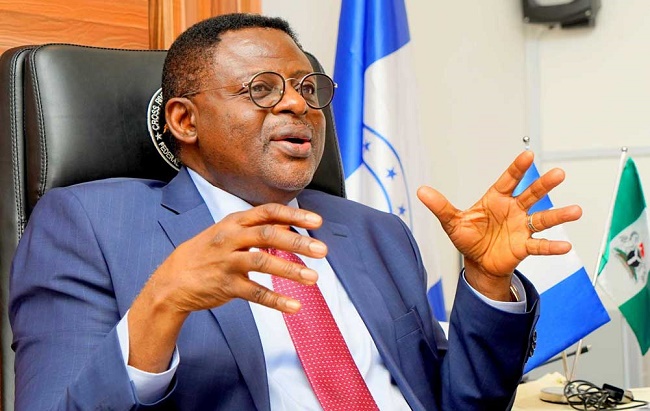
Governor Prince Bassey Edet Otu of Cross River State

Unlicensed logging activities have depleted timber, African mahogany and other exotic trees with negative impact on the apes and forest elephant population that have steadily dwindled as they flee to safe haven. The unique vegetables and fruits indigenous to the forest including the bush mango are now hard to come by.

The dire situation in Ekuri was captured in the Global Witness 2025 Annual Defenders Report released in September 2025. The report is dedicated to individuals, communities and organisations bravely speaking out or taking action to defend their rights to their land and resources globally.

RDI Executive Director, Philip Jakpor, said: “It is utterly reprehensible that while the global community has taken note of the plight of the Ekuri and other forest communities in relation to the ongoing plundering of the forest resources in their environs, the Cross River State government has refused to enforce its own ban on illegal logging.”

Jakpor explained that Ekuri forest was once a model of community-led conservation, but it has steadily lost about 20 percent of its original forest cover as its wildlife and plant species continue to be negatively affected by destructive activities of the logging merchants.

The RDI boss noted that the locals thought that their defeat of the White Elephant Super Highway project conceived by the Ben Ayade administration in 2016 was the end of their travails but have become more disillusioned as the opening of the forest which was part of that botched project actually paved the way for unlicensed loggers to come in.

“We would not be wrong if we conclude that the unlicensed logging firms that have invaded the forests must have state backing or the backing of some highly placed individuals judging by the impunity with which they act. Some people somewhere must definitely be benefitting from the pain that the locals are experiencing.”

He said that the plight of the locals is further worsened by the total absence of government presence in the affected communities where the RDI team noticed very treacherous roads and no connection to the electricity grid.

Jakpor said that the situation in the forest communities is no longer tolerable.

“The Cross River government must exonerate itself by matching words with action. We are demanding an immediate halt to the unlicensed logging activities in Ekuri and Ikom and the arrest and prosecution of unlicensed logging firms and their enablers operating like tin gods in the forest. The inaction of the state government on this subject is no longer golden,” Jakpor insisted.

Nigeria unveils Carbon Market Association at COP30

0

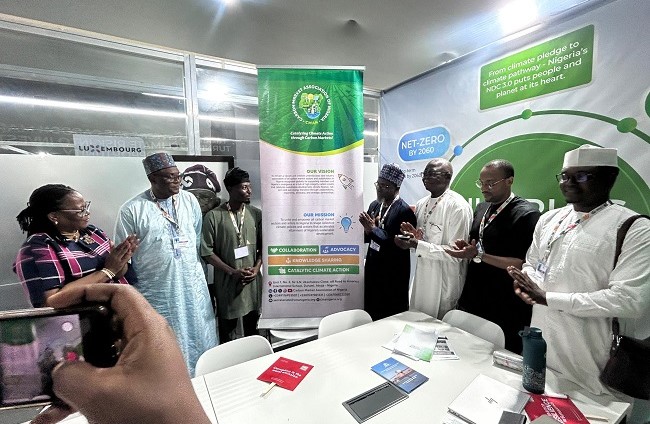
Nigeria appears to have taken a landmark step in strengthening its emerging carbon market ecosystem as the Minister of Environment, Balarabe Abbas Lawal, on Tuesday, November 18, 2025, unveiled the Carbon Market Association of Nigeria (CMAN) at the Nigeria Pavilion during the 30th United Nations Climate Change Conference (COP30).

The unveiling of CMAN comes at a pivotal moment for the country, following the recent approval of Nigeria’s Carbon Market Framework – a national policy designed to guide the growth of a transparent, high-integrity, and economically viable carbon market capable of attracting global investments and positioning Nigeria as a leading carbon credit hub in Africa.

Speaking during the unveiling, the Minister emphasised that the establishment of CMAN would enhance coordination, strengthen capacity, and provide an enabling environment for Nigeria’s carbon market ecosystem to thrive.

Carbon Market Association of Nigeria (CMAN)
The unveiling of the Carbon Market Association of Nigeria (CMAN) at the Nigeria COP30 Pavilion

“The establishment of the Carbon Market Association of Nigeria is a major milestone in our national climate and economic transformation agenda. As we accelerate the implementation of the Carbon Market Framework, this Association will play a critical role in providing support, sharing knowledge, and evolving best practices that ensure Nigeria becomes a hub for high-quality, high-integrity credits.

“I am therefore glad to unveil this important development in our country’s green transition and continuing economic development – the Carbon Market Association of Nigeria. I encourage stakeholders to get involved and help build a unified front to achieve our enormous carbon market potential, as it aligns with our administration’s efforts to meet Nigeria’s renewed climate goals while developing a whole new sector that connects global investment to local impact,” the Minister said.

Speaking at the event, Interim President of the Association, Horsfall Tony, presented CMAN’s foundational direction to the Minister, highlighting both the Vision and Mission driving the Association.

He stated that the Vision of CMAN is “to become and remain a vibrant and credible umbrella body and industry association for all carbon market sectors and stakeholders in Nigeria – recognised globally for supporting members and positioning Nigeria as a hub of high-integrity carbon credits that catalyses sustainable development, climate finance, net-zero attainment, and a just energy transition through collaboration, organizing, advocacy, and strategic partnerships.”

He emphasised that the Mission of CMAN is “to unite and empower all carbon market sectors and actors in Nigeria to shape collective climate policies and actions that accelerate the nation’s sustainable development objectives.”

The unveiling at COP30, according to Tony, underscores Nigeria’s rising leadership in global climate action and highlights the country’s commitment to leveraging carbon markets as a tool for economic diversification, climate finance mobilisation, nature-based solutions, clean energy deployment, and poverty reduction.

CMAN is expected to serve as a central platform to amplify Nigeria’s voice in international carbon market reforms, advance African-led climate solutions, and support high-quality carbon projects across forestry, renewable energy, clean cooking, blue carbon, and other emerging sectors critical to Nigeria’s climate and development agenda.

My many incredible experiences around elephants – Chloe Desesquelles

0

Chloe Desesquelles is the Elephant Protection Initiative (EPI) Friend of the Month and the latest addition to the EPI team as programme manager. From encounters with elephants and “ghost lemurs” to sensitive work in conflict zones, Chloe brings a unique blend of passion and pragmatism to the EPI herd.

As the group’s new Programme Manager, she shares her passion for sustainable, community-driven conservation and recounts some of her most unforgettable wildlife encounters

Chloe Desesquelles
Chloe Desesquelles

Could you tell us a little bit about your childhood? Were you growing up in the city or in the countryside? And were you interested in conservation and environmental issues from a young age?

I grew up in multiple countries, from New Caledonia to China. Although I’m French, France is the country I’ve lived in the least! I mostly grew up in cities and only started to really connect with nature and understand the pressing climate biodiversity issues in high school, when I lived in Tianjin, China. 

Later, while studying in the Netherlands, I became involved in student environmental groups, volunteered for Greenpeace, and wondered how we could improve waste management and sustainability in everyday life. Studying environmental law deepened my passion for conservation and environmental issues, and working in densely populated areas just made me increasingly conscious of the rarity of wild places and the need to protect them.

What was the career path which brought you to the EPI?

I studied international development and criminology, specialising in conflicts and state security. I first worked in the legal field, at the International Criminal Court, and taught International Criminal Law at the Hague University. After a few years, I wanted to move beyond theory and work closer to the realities on the ground. That led me to Burkina Faso, where I joined a peacebuilding NGO and worked on conflict resolution and natural resource management projects. That experience deepened my understanding of how environmental and social issues intersect, and it is what first drew me toward conservation. I then joined the Wildlife Conservation Society, where I worked for over 3 years across Central and East Africa, before recently returning to West Africa, and am now based in Côte d’Ivoire with the EPI Foundation.

How would you like to make a difference, for the EPI and for conservation more generally?

The fundraising landscape for conservation has changed significantly over the last years, making it increasingly challenging to sustain projects that are both impactful and financially viable. High staff turnover within organisations and governments adds to that challenge. What I hope to contribute to the EPI Foundation is to strengthen our project portfolio and help build a more sustainable conservation model, one that creates opportunities for local communities to benefit from and advocate for conservation so that they are not just participants but leaders in protecting Africa’s wildlife and ecosystems.

Africa is, of course, world-renowned for its wildlife, including elephants. What have been some of your most outstanding experiences within the continent?

I’ve been fortunate to have many incredible experiences around elephants. A recent one is when my car broke downright next to a bull. He was quietly eating, completely unbothered by my presence, which was both nerve-wracking and magical! Another unforgettable experience was in Madagascar, when I came across a couple of Silky Sifaka Lemurs, also known as “the Ghost Lemur”. Seeing these rare, graceful creatures in one of the most lush and mystical forests I’ve ever visited was truly humbling.

Finally, please describe your perfect weekend away from work. 

A perfect weekend for me is one spent in nature, somewhere remote with no internet connection. Ideally surrounded by both forest and ocean. I love a mix of hiking and diving, sharing delicious locally sourced food with a few authentic friends, and ending the day with music, a beautiful sunset, and peace.

COP30: Draft text on climate finance, fossil fuels still falls short

0

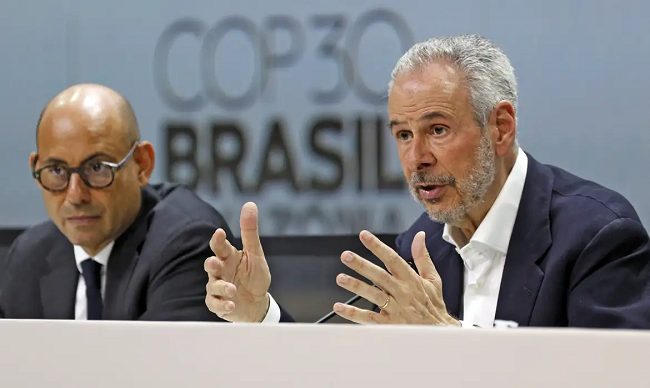
The Brazilian Presidency on Tuesday, November 18, 2025, released a new set of draft texts on key issues including, adaptation finance, the just energy transition and an overall COP30 decision mechanism.

But, according to observers, the text still falls far short of what is needed to respond to the huge gaps in climate ambition and finance. They contended that a theoretical roadmap appears in the text – but it explicitly excludes fossil fuels, leaving the response to the decarbonisation gap hollow and disconnected from the root causes of the climate crisis.

André Corrêa do Lago
André Corrêa do Lago, COP30 President

“The draft text may contain the right ingredients, but it’s been assembled in a way that leaves a bitter aftertaste. A roadmap for delivering on 1.5°C without a credible fossil fuel phase-out at its core is hollow. The COP30 Presidency must heed the many Parties, including President Lula, calling for a clear transition pathway and put it where it belongs: at the centre of the 1.5°C response, balanced with adequate finance. Without this, the overall effort will fall short,” said Andreas Sieber, Associate Director of Policy and Campaigns, 350.org.

Stakeholders say that a credible COP30 outcome depends on a balanced package that delivers climate finance, strengthened adaptation measures and a clear road map for phasing out fossil fuels. Without all three pillars in place, a durable and effective agreement will not be possible, they insist.

Fanny Petitbon, France Team Lead, 350.org, said: “This is not yet the climate justice package the world needs, but there are the building blocks. Crucially, the call to triple adaptation finance must stay, adaptation has long been forgotten in climate finance. There is no credible ambition without supporting communities already facing devastating the impacts of the climate emergency.

“The Presidency has begun to respond to strong demands for developed countries to pay their climate debt, which is key for rebuilding trust in all negotiating rooms. But the text still lacks a plan to fully deliver on the collective climate finance goal agreed upon in Baku- ignoring innovative sources of finance like taxing major polluters and the super-rich and fails to guarantee direct access for the most vulnerable, including Indigenous Peoples.”

A 350.org analysis:

  1. The COP30 Presidency is sidelining a clear political demand: over 60 Parties and Brazil’s President Lula himself have called for a roadmap to transition away from fossil fuels.
  2. Fossil fuels and forests are the core levers for limiting global heating to 1.5°C and minimising the scale and duration of overshoot. Any response that omits them is structurally inadequate.
  3. A roadmap option exists in paragraph 44, but it explicitly excludes fossil fuels, leaving the 1.5°C response hollow.
  4. The only reference to fossil fuel transition is exceptionally weak, a mandated ministerial and a report that offer symbolism, not action.
  5. For the decision to carry credibility, the Presidency must embed a fossil fuel transition roadmap directly into the 1.5°C response, not relegate it to the margins.
  6. The roadmap must be placed in the section addressing the 1.5°C ambition gap, where it is currently absent.
  7. Progress on adaptation and finance is essential to unlock climate ambition including operationalising the New Collective Quantified Goal (NCQG) via a significant provision of grants-based public finance, scaling means of implementation, and securing real accountability. Yesterday’s pledges to the Adaptation Fund once again fell short with only $133 million secured out of the $300 million target.
  8. A viable COP30 package requires finance + adaptation + a fossil-fuel transition roadmap. Without all three, the deal cannot hold.
  9. Parties must now work to ensure the text’s focus on the core problem areas remains sharp, while securing a robust, multi-COP process to develop just and equitable pathways for transitioning away from fossil fuels and halting and reversing deforestation.  

NUPRC reaffirms commitment to transparency, investment growth

0

CEO, Nigerian Upstream Petroleum Regulatory Commission (NUPRC), Mr. Gbenga Komolafe, has restated the commission’s commitment to transparency, accountability, and sustained investment growth in the oil and gas sector.

Komolafe made the pledge on Tuesday, November 18, 2025, in Lagos during a strategic workshop for energy correspondents.

He was represented by Mrs. Efemona Bassey, Deputy Director, Services and Administration at the Commission.

Gbenga Komolafe
Gbenga Komolafe, Chief Executive, Nigerian Upstream Petroleum Regulatory Commission (NUPRC)

Komolafe told participants that the media plays a vital role in national development, noting that the 1999 Constitution empowers journalists to hold public institutions accountable.

He added that the Petroleum Industry Act reinforces this expectation by requiring the Commission to publish reports, data, and statistics on upstream operations.

“At the heart of our missions is a shared commitment to openness, accountability, and service to the Nigerian people,” he said.

He explained that the workshop was designed to give correspondents deeper insight into the Commission’s activities and the upstream petroleum industry.

Komolafe noted that over the past two years, NUPRC experts have provided extensive briefings on exploration, production, acreage management, and community relations.

He observed that global fossil fuel investments are declining as countries intensify energy transition efforts.

In spite of this, he said Nigeria continues to make steady progress, supported by PIA reforms and the backing of President Bola Tinubu’s administration.

According to him, the number of oil rigs in the country has risen to nearly 70, with more than 40 currently active.

He added that the Commission has approved several final investment decisions worth billions of dollars in recent months.

The chief executive said a major development plan valued at about $20 billion was approved within the past 10 months.

“These milestones reflect the stability and renewed confidence in Nigeria’s upstream sector,” he said.

Komolafe also disclosed that the commission will launch a new oil licensing round on Dec. 1.

He described the exercise as a defining moment for the industry and more transparent than the 2024 bid round.

He said the round aims to open new frontiers and unlock fresh opportunities for both local and international investors.

He added that the process will meet global standards as Nigeria works toward adding one million barrels of oil per day to its output.

Komolafe emphasised the media’s decisive role in shaping investor sentiment, urging journalists to avoid inaccurate or sensational reporting.

He warned that harmful reporting could discourage investors in the highly sensitive oil and gas sector.

He urged correspondents to prioritise factual, contextual, and development-focused reporting in the national interest.

Komolafe reaffirmed the Commission’s dedication to openness, noting that NUPRC publishes data and updates on its website and platforms.

He called for deeper collaboration with the media, stressing the joint responsibility to uphold transparency and accountability for national growth.

COP11: Minister celebrates Nigeria’s progress at tobacco global meet

0

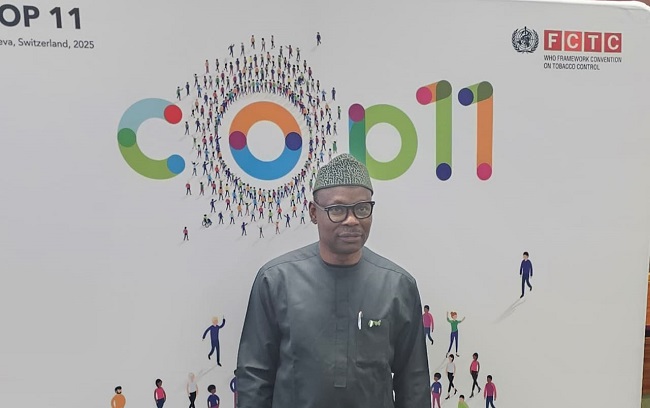
Minister of State for Health and Social Welfare, Dr. Iziaq Salako, has praised Nigeria’s tobacco control efforts since 2012, saying the country had made “remarkable progress” in the fight against the deadly product.

Dr. Salako, who spoke at the ongoing 11th Session of the Conference of the Parties (COP11) to the WHO Framework Convention on Tobacco Control (WHO FCTC) in Geneva, said it had resulted in a continued decline in the number of adults using tobacco in the country.

The opening session featured over 1,400 delegates from across the world participating in a high-level dialogue that reviewed two decades of progress under the WHO FCTC and deliberated on accelerated action on tobacco control.

Dr. Iziaq Salako
Minister of State for Health and Social Welfare, Dr. Iziaq Salako

The delegates from government, international organisations and civil society including Corporate Accountability and Public Participation Africa (CAPPA) – representing 162 Parties to the WHO FCTC – began discussions on a wide range of measures to stem tobacco use, which kills more than 7 million people annually, and to protect the environment from the harms caused by tobacco production, use and waste.

Delivering Nigeria’s high-level statement at the global meeting on Monday, November 17, 2025, Dr. Salako highlighted new national data, strengthened enforcement, and bold regulatory actions that he said reinforce Nigeria’s commitment to public health and the WHO FCTC.

He said at the centre of the country’s progress was the successful completion of the second round of the Global Adult Tobacco Survey (GATS 2025), which shows a continued decline in daily tobacco use among adults compared to earlier surveys.

According to the Minister, the latest findings also reveal the powerful impact of graphic health warnings, with the percentage of smokers who considered quitting after seeing the warnings rising from 26.7 percent in 2012 to 43.3 percent in 2025, a major step forward for cessation efforts.

“Overall, from 2012 to 2025, exposure to secondhand smoke significantly declined inside homes, government buildings, restaurants, public transportation, tertiary institutions and schools,” Dr. Salako added.

Nevertheless, he emphasised that although the gains were encouraging, sustaining them would require continued vigilance and stronger enforcement at all levels of government.

The minister explained that, to reinforce implementation of the National Tobacco Control Act, 2015 & Regulations, 2019, the Federal Government had rolled out multiple strategic policy documents, including the National Tobacco Control Strategic Plan of Action, 2024 – 2028, National Tobacco Control Communication Strategy, 2024 – 2028 and the National Tobacco Control Enforcement Plan, 2024 – 2028.

These frameworks, he noted, ensure a coordinated, multisectoral approach to regulation and public education.

The Minister highlighted Nigeria’s advancement of the WHO FCTC Article 19, which encourages Parties to hold the tobacco industry legally and financially accountable for actions that undermine public health, as one of the country’s most notable achievements.

“In this regard, our Federal Competition and Consumer Protection Commission (FCCPC) recently imposed a fine of 110 million US dollars on the British American Tobacco Nigeria (BATN) for multiple infringements of the National Tobacco Control Act, 2015, the National Tobacco Control Regulations, 2019, and other consumer protection laws”, Dr. Salako said.

“This represents one of the most significant applications of Article 19 globally and sends a strong message that the tobacco industry must bear responsibility for its actions.”

In addition, he spotlighted new regulations from the National Film and Video Censors Board (NFVCB) to prohibit tobacco advertising, promotion, and sponsorship (TAPS) across films, TV, music videos, and digital media, saying it was an important step in protecting young people.

“This bold step gives practical effect to Article 13 of the WHO FCTC, helping to prevent indirect advertising and the normalisation of tobacco use,” Dr. Salako added.

Despite this progress, he acknowledged ongoing challenges, including tobacco industry interference and the rise of new nicotine products. He called for stronger global collaboration, technical support, and knowledge exchange to help countries, especially developing nations, stay ahead of industry tactics.

“In conclusion, while significant progress has been made, we acknowledge that key challenges persist, including the need to strengthen enforcement especially at subnational levels; addressing the growing spread and false narrative of new and emerging tobacco and nicotine products and ensuring their strict regulation; as well as countering persistent tobacco industry interference,” Dr. Salako said.

The Minister concluded by expressing Nigeria’s gratitude to the WHO FCTC Secretariat, COP11 leadership, and participating Parties, wishing all delegates productive deliberations.

In addition to the strategic dialogue that reviewed progress on tobacco control in the 20 years since the WHO FCTC entered into force, a ministerial round table organised by the Government of Belgium addressed the pressing issue of nicotine addiction among young people and how to prevent it amid the wide availability and marketing of e-cigarettes and other novel tobacco and nicotine products.

Discussions at the round table focused on national approaches and lessons learned and the potential role of the WHO FCTC in tackling the issue.

“COP11 provides an opportunity for Parties to consider important issues including forward-looking tobacco control measures, environmental protection, liability and measures to prevent and reduce tobacco consumption, nicotine addiction and exposure to tobacco smoke,” said Andrew Black, Acting Head of the Secretariat of the WHO FCTC.

“The Secretariat of the WHO FCTC welcomes all Parties and observers to COP11 to promote international cooperation and move ahead with global action to address the global tobacco epidemic,” he added.

COP11, organised around the theme of “20 years of change – uniting generations for a tobacco-free future”, will be followed by the Fourth Meeting of the Parties to the Protocol to Eliminate Illicit Trade in Tobacco Products from November 24 to 26.

TotalEnergies faces criminal complaint for alleged complicity in war crimes, others in Mozambique

0

The European Centre for Constitutional and Human Rights (ECCHR) on Tuesday, November 18, 2025, filed a criminal complaint in France against TotalEnergies for alleged complicity in war crimes, torture and enforced disappearance.

The oil and gas major is accused of having directly financed and materially supported the Joint Task Force, composed of Mozambican armed forces which, between July and September 2021, allegedly detained, tortured and killed dozens of civilians on TotalEnergies’ gas site. The complaint has been filed with the French National Anti Terrorism Prosecutor (PNAT), which also has a mandate to investigate international crimes.

TotalEnergies
TotalEnergies

This filing comes as TotalEnergies announced the lifting of the force majeure declared in April 2021 on its liquified natural gas project, Mozambique LNG, despite a persistent conflict, intensifying deadly attacks and a major humanitarian crisis. The final restart of the project however still depends on the Mozambican government agreeing to TotalEnergies’ revised budget and to cover for the $4.5 billion extra cost of the project.

The complaint centres on the so-called “container massacre” at the company’s facility. These allegations were first reported by the newspaper Politico in September 2024, followed by SourceMaterial and Le Monde.

Following an insurgent attack on Palma town by the armed group Al-Shabab in March and April 2021, the Mozambican army – including members of the Joint Task Force supported by TotalEnergies – allegedly arbitrarily detained dozens of civilians in metal containers situated at the facility entrance between July and September 2021.

The civilians were fleeing their home villages as a result of attacks by Al-Shabab when they were intercepted by the army. According to reported allegations, detainees were tortured, subjected to enforced disappearance and some of them executed. In September 2021, the final 26 detainees were released.

The Joint Task Force was established through a 2020 memorandum between TotalEnergies’ Mozambique subsidiary and the Mozambican government as a dedicated security unit to protect the Mozambique LNG project operations.

TotalEnergies knew of human rights violations committed by armed forces before massacre

“TotalEnergies knew that the Mozambican armed forces had been accused of systematic human rights violations, yet continued to support them with the only objective to secure its own facility” says Clara Gonzales from ECCHR. “The involvement of TotalEnergies with local armed forces and the gravity of allegations ought to lead to the opening of an investigation by French judicial authorities. Companies and their executives are not neutral actors when they operate in conflict zones: if they enable or fuel crimes, they might be complicit and should be held accountable.”

Internal TotalEnergies documents, including from its security contractor, detail acts of violence against civilians committed by Mozambican armed forces from May 2020, revealing that the company was aware of serious human rights violations carried out by the Joint Task Force in close proximity to its facility before the container massacre.

Those documents were obtained through freedom of information requests addressed to public financiers of the project3. Some have been reported on by Le Monde and SourceMaterial, but the complaint analyzes new documents sent by the Dutch government, in which TotalEnergies details its security system, as well as the human rights risks associated with the employment of the Joint Task Force.

Despite this knowledge, TotalEnergies continued to directly support the Joint Task Force by providing accommodation, food, equipment, and soldier bonuses – while stipulating that bonuses would be withdrawn if soldiers committed human rights violations.

Media investigation sparks official probes

The Politico article prompted investigations by Mozambican authorities, as well as by two public financiers of the project, the UK Export Finance agency and the Dutch government – via Atradius. However, no European judicial investigation has yet been opened.

Lorette Philippot from Friends of the Earth France says: “The seriousness of the allegations against Total, laid out in this criminal complaint, must set a red line for the financial backers of Mozambique LNG. More than 30 public and private banks have decided to place their trust in TotalEnergies in 2020 by signing loans, but they did not sign blank cheques.

“TotalEnergies continues to demonstrate that it has learned nothing from the past: it just announced the lifting of the force majeure on its gas project, despite the dramatic security and humanitarian situation. The UK and Dutch governments, like the French banks Société Générale and Crédit Agricole, must now refuse to renew their financial support and withdraw from Mozambique LNG.”

Daniel Ribeiro from Justiça Ambiental says: “The local communities have experienced repeated violations of their human rights, yet to date have received no justice. The perpetrators of these crimes have not faced any consequences. This case is an important step toward justice, where the business interests of a company like TotalEnergies do not override the rights and lives of local people.”

Second complaint against TotalEnergies regarding its Mozambique LNG project

This case follows another criminal complaint filed in 2023 by survivors and relatives of victims of the March and April 2021 Palma attack, in which TotalEnergies is separately accused of failing to ensure the safety of its subcontractors who were targeted, and for some of them killed. In March 2025, the Prosecutor in Nanterre opened a preliminary investigation against TotalEnergies on charges of manslaughter and failure to assist persons in danger.

Companies can be held criminally liable: in France, the Lafarge case has led to the indictment of the company and executives for complicity in crimes against humanity committed by ISIS in Syria, and an on-going trial for terrorism financing in front of Paris court. In Sweden, a trial is also taking place against two former executives at the Swedish oil company Lundin for complicity in war crimes committed by Sudan’s regime – now South Sudan.

Beyond its association with numerous accusations of human rights violations, the project could contribute to emit up to 4.5 billion tons of CO₂ equivalent over its lifetime, making it one of the carbon bombs threatening the Paris Agreement’s goals.

Friends of the Earth Mozambique (Justiça Ambiental), Friends of the Earth France and Friends of the Earth Europe, who have been engaged for years in a campaign against human rights violations associated with the TotalEnergies Mozambique LNG project, claim that they are supporting the legal action.

Building climate resilience: Need to improve Nigeria’s building codes and policies

0

As global climate negotiations unfold at COP30 in Belem, Brazil, one of the revelations that has caught media attention is that global GHG emissions are still rising and that the world may be headed for a 2.5oC temperature rise by the end of the century. With the effects of climate change already weighing heavily on us in Nigeria, it has become imperative to factor climate resilience in fabric of every sector. One of the sectors where urgent action is required in Nigeria is the building sector.

Globally, buildings account for 37% of greenhouse gas emissions, consume 40% of the world’s energy, and use 16% of water annually (UNEP, 2024). Cement, the backbone of construction in Nigeria, is responsible for emitting over 11 million tonnes of CO₂ every year, according to UNEP (2023).

Ifeoma Adenusi
Ifeoma Adenusi

We also face a housing deficit of over 24 million units, with more than 75% of existing homes classified as substandard by government and industry assessments. This has fueled a sprawling informal construction boom that often overlooks climate resilience, increasing dependence on diesel generators, straining waste management systems, and leaving millions vulnerable to environmental hazards.

In 2012, catastrophic floods displaced 2.1 million people and caused an estimated ₦2.6 trillion in damages. Another 600,000 people were displaced during the 2018 floods, underscoring the growing threat of climate-related disasters (UN-Habitat, 2024). Meanwhile, Nigerian cities grow at over 3.5% annually and Nigeria ranks 162 out of 180 countries in the 2022 Environmental Performance Index, a painful reminder that we are falling behind.

The spaces where we live shape how we adapt to climate change. Stronger building codes mean safer homes, fewer lives lost to disasters, and cities that thrive rather than crumble. Nigeria has introduced climate policies such as the NDC pledging 20% unconditional emission reduction and 47% conditional emissions reduction by 2030, the Climate Change Act (2021), the National Building Code, and the Building Energy Efficiency Code (2017). Yet these commitments have not translated to practice. The gap is not one of ambition but a lack of enforcement.

Nigeria’s building regulations exist, but are rarely enforced consistently with implementation heavily impeded and compromised by local politics and corruption. Informal construction remains widespread due to limited technical expertise and weak institutional oversight.

Lagos State exemplifies the complexity of Nigeria’s urban regulatory landscape. Securing a building permit involves navigating 17 distinct procedures over an average of 118 days. Faced with such delays, developers rationally choose to bribe officials for expedited permits or to build informally without permits.

These practices undermine code compliance and heighten safety risks. While regulatory agencies have the mandate to inspect and enforce standards, enforcement tends to be reactive rather than preventive, often triggered only after structural failures or public outcry. At its core, this is a governance challenge, not just a technical one.

Yet change is possible. Kenya updated its National Building Code in 2024 to mandate rainwater harvesting, heat mitigation, energy efficiency, and Electric Vehicle charging infrastructure, making climate resilience legally required, not optional. India’s Energy Conservation and Sustainable Building Code establishes tiered compliance levels, allowing developers to choose standards that match their project budgets while maintaining baseline performance. These example are recent, tested, and can apply to Nigeria.

Strengthening codes alone will fail without simultaneously investing in enforcement capacity, institutional integrity, and professional accountability. Research has shown that the issue isn’t a lack of laws, but a failure to enforce them effectively. The gap between Nigeria’s codes and their implementation is not knowledge; it is institutional will that requires action on three fronts:

First, we must integrate climate resilience into the National Building Code itself. Mandatory provisions must address energy efficiency, water conservation, flood resilience, and embodied carbon with clear standards tied to climate zones, including inclusivity requirements for disabled or vulnerable occupants, ensuring resilience serves all populations, not just the able-bodied. This integration must reflect Nigeria’s actual emissions and vulnerabilities.

Secondly, we need to reform enforcement. Permitting processes must be streamlined to eliminate corruption incentives. Multi-agency coordination must be simplified. Professional oversight must be strengthened with clear liability. Training for building officials must be mandatory. The adoption of transparent online permitting systems can significantly reduce opportunities for corruption by minimising human discretion and increasing accountability. Critically, state and federal oversight is essential as local authorities alone cannot bear the full weight of enforcement.

Thirdly, we need to create market incentives that reward excellence. Kenya offers a compelling model by pairing mandatory building standards with voluntary green certification schemes that unlock financing benefits. Nigeria could adopt a similar dual-track approach. Mandatory standards would establish the baseline for compliance, while voluntary certifications would encourage developers to aim higher, offering access to concessional financing, faster permitting, and recognition for sustainable performance.

With 24 million housing units needed and millions more to come, Nigeria faces a transformational opportunity. Each new building is an opportunity to construct smarter, more resilient structures. Enforcing standards sets a precedent, and holding developers accountable strengthens norms. By strengthening and enforcing building codes, construction shifts from national liability to national asset. The benefits are far-reaching: reduced repair costs, healthier living, job creation, innovation in local materials, and greater resilience to climate shocks.

If we fail to act, the costs will be staggering. The cities we build today will shape generations to come. We can settle for incremental tweaks or seize the chance to build lasting resilience. We can treat building codes as bureaucratic hurdles or embrace them as essential tools for public safety and climate adaptation.

The real question facing Nigeria is not whether we can afford to act, but whether we can afford not to.

By Ifeoma Adenusi, Society for Planet and Prosperity, Nigeria