

Oil and gas prices soared on Thursday, March 19, 2026, after Iran hit the world’s largest liquefied natural gas (LNG) facility in Qatar and threatened to destroy the region’s energy infrastructure, while Donald Trump warned of a furious US response if such attacks continued.
International benchmark Brent surged 10 percent before falling back while European gas rose 35 percent after Iran attacked Qatar’s huge Ras Laffan LNG facility in retaliation for an Israeli strike on its South Pars gas field.
Trump, whose country started the war alongside Israel with their attack on Iran on February 28, said Washington did not know about the strike on South Pars.
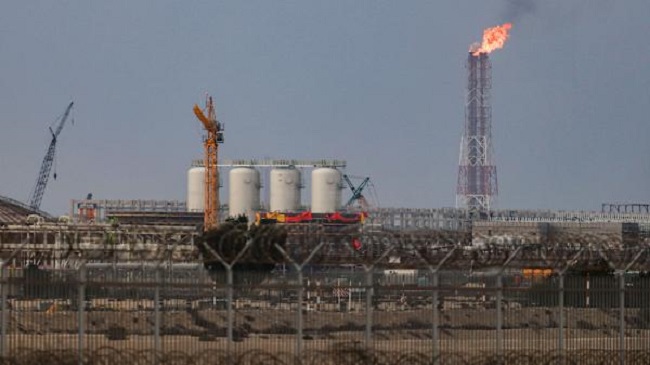
But he warned the United States would itself “blow up” the Iranian gas field if Tehran did not stop attacking Qatar.
Iran’s military responded on Thursday with defiance, saying it had been a “major mistake” to hit South Pars, which supplies around 70 percent of the country’s domestic natural gas.
“If it is repeated, subsequent attacks against your energy infrastructure and that of your allies will not stop until their complete destruction,” operational command Khatam Al-Anbiya said in a statement carried by Fars news agency.
Lasting impact
Qatar is one of the world’s top LNG producers, alongside the United States, Australia and Russia, and its Ras Laffan facility is the world’s largest LNG hub.
It has been repeatedly targeted by Iran since the war began. State-run QatarEnergy said on Thursday that two waves of Iranian strikes had caused “sizeable fires and extensive further damage” to several LNG facilities.
French President, Emmanuel Macron, condemned Thursday the “reckless escalation”.
He warned that if Middle Eastern energy “production capacities themselves are destroyed, this war will have a much more lasting impact”.
He called for “direct talks between the Americans and Iranians on this matter”.
UK Prime Minister Keir Starmer’s office also warned that “attacks on critical infrastructure risked pushing the region further into crisis”, after talks with Macron and NATO chief Mark Rutte.
Gulf nations had also warned of the fall-out from Israel’s attack on Iran’s South Pars gas field, which is part of the South Pars/North Dome megafield, the largest known gas reserve in the world that is shared with Qatar.
The United Arab Emirates said that targeting energy infrastructure poses a “direct threat to global energy security”.
Meanwhile Saudi Arabia said Thursday it reserved the “right to take military actions” if necessary after repeated missile and drone attacks on its energy facilities from Iran.
Energy prices had already spiralled since tanker traffic through the Strait of Hormuz, which normally carries a fifth of the world’s oil and LNG, was brought to a near standstill by the threat of Iranian attacks.
Since the war began, fuel shortages have sparked long queues at petrol stations across Asia, where many economies are heavily dependent on fossil fuel imports, while Sri Lanka and Philippines have shifted to a four-day week.
It is also hitting businesses. “I am currently spending more than 33 percent more on fuel than I used to,” said Adeola Sanni, a 36-year-old Nigerian entrepreneur making corporate uniforms in Lagos.