

As the September 30, 2025, deadline for the submission of new Nationally Determined Contributions (NDCs) approaches, countries have been urged to put forward updated 2030 targets and new 2035 targets that are aligned with the 1.5°C pathway.
This submission formed part of the outcome of a virtual media session held on Tuesday, September 23, 2025, by the Alliance of Small Island States (AOSIS) and the Least Developed Countries (LDC) Group.
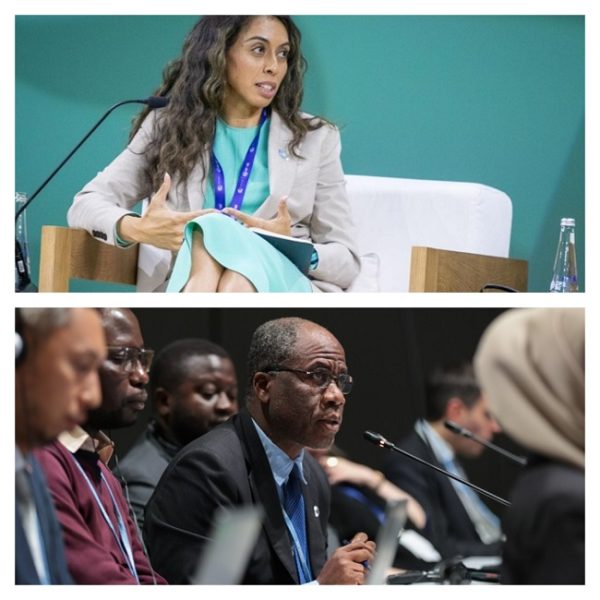
The groups represent some of the most climate-vulnerable nations in the world, small islands facing the risk of disappearance and nearly one billion people in the least developed countries living daily on the frontlines of this crisis.
“Our uncompromising message is that the survival of our nations depends on urgent and ambitious climate action,” the groups declared, adding that a true celebration of 10 years of the Paris Agreement will be if COP30 in Belém delivers a credible plan to close the ambition gap, respond to the Global Stocktake, and put the world firmly on course to limit warming to 1.5°C.
“Anything less would be a betrayal of the world’s most vulnerable,” they stressed, calling on the European Union to seize the moment and deliver on its stated unwavering commitment to the Paris Agreement and the 1.5°C goal.
“We are disheartened to see the political damage from its indicative current range of 66.25%–72.5%, which is already lending itself to other countries, such as Australia, delivering weaker targets. The EU’s leadership role in confronting the ambition challenge ahead of COP30 is critical, not only for its own credibility, but for inspiring others, especially major emitters, to step up to secure our collective future.”
Ambassador Ilana Seid, Chair of AOSIS, said: “Every fraction of a degree matters. For our islands, exceeding 1.5°C is a point of no return. COP30 must deliver a clear and credible plan to close the ambition gap and keep the world on track for 1.5°C. Anything less would be a betrayal of the most vulnerable.”
LDC Chair, Evans Njewa, said: “For the Least Developed Countries, 1.5°C is a matter of survival, not of choice. Every delay in climate action is costing lives, livelihoods, and futures in our countries. The time for pledges has passed. We must intensify implementation.”
The groups believe that if countries at COP30 fail to deliver a credible pathway to reduce emissions and limit warming to 1.5°C, it will not merely be a missed opportunity, it will be another round of betrayal of the most vulnerable.
According to them, adaptation and finance are equally critical.
“For our countries, adaptation is not optional, it is a matter of survival. Yet the gap in adaptation finance continues to grow, and where resources exist, they too often fail to reach the communities most in need. Adaptation finance must be tripled by 2030 and delivered in ways that are predictable, accessible, and at scale. COP30 must also agree on meaningful adaptation indicators that reflect the realities of vulnerable nations, so that progress towards the Global Goal on Adaptation can be measured in ways that matter for our people.
“Implementation of the new collective quantified goal (NCQG) must respond to the scale of needs. This means anchoring the $300 billion annual commitment within the broader Baku-to-Belém $1.3 trillion roadmap, with milestones, timelines and accountability mechanisms to guarantee delivery.
“Our countries are already suffering irreversible losses from sea level rise, cyclones, floods and droughts, while climate-induced displacement continues to undermine resilience and strain scarce resources. The Loss and Damage Fund must be fully resourced and become immediately accessible prioritising our countries.”
By Idowu Esuku