

As COP30 approaches in Belém, Brazil, the global climate conversation remains skewed. Mitigation – cutting emissions, transitioning to renewables, phasing out fossil fuels – continues to dominate headlines and diplomatic talking points.
Meanwhile, adaptation – how communities actually live with climate impacts already here – remains underfunded, under-prioritised, and undervalued. This isn’t just a bureaucratic imbalance. It’s a dangerous one.
Mitigation Is Easier to Sell
Mitigation has always had the upper hand at climate conferences. It delivers tidy metrics: megawatts of solar, tons of CO₂ avoided, carbon markets traded. Politically, it is more palatable because it fits the narrative of progress, innovation, and solutions. Adaptation, by contrast, is messy. It means building seawalls, relocating villages, strengthening food systems, or retrofitting cities. It does not reduce emissions; it absorbs their consequences.
And for that reason, it attracts far less interest from those responsible for most of the emissions in the first place. Even as climate shocks intensify heatwaves, droughts, floods, displacement adaptation still receives less than 10% of global climate finance. Yet the need is in the hundreds of billions annually.
Follow the Money
Mitigation projects flow where capital already exists and profits can be made – solar parks, wind farms, green hydrogen. They are attractive to development banks and private investors because they generate measurable returns. This is why the Global North champions mitigation so strongly: it reinforces their financial and technological dominance while creating business opportunities.
Adaptation, on the other hand, happens in poorer, climate-vulnerable countries where the returns are uncertain and the risks high. There’s no quick ROI in protecting a fishing village from sea-level rise or retrofitting slums to withstand floods. Instead of grants, these countries are offered concessional loans debt, simply with softer terms. That is not climate justice. That is business as usual.
And the debt trap is real. Africa’s external debt stood at $1.15 trillion in 2023, with $163 billion due in 2024 just for debt servicing. Public debt across the continent has surged by 183% since 2010, and the debt-to-GDP ratio has more than doubled to nearly 67% in 2023. Add concessional climate loans to this burden, and the cycle will never end.
The Numbers Behind the Mismatch
The financial imbalance is stark. Global climate finance flows reached $1.3 trillion in 2021–2022, but less than $63 billion (just 5%) went to adaptation. Mitigation continues to absorb close to 90% of funds, even though the world needs $4.3 trillion annually by 2030 to stay on a 1.5 °C pathway. Africa’s story illustrates the trap perfectly. In 2022, the continent received $8.3 billion in public concessional climate finance, yet 65% of that ($5.4 billion) came as loans, not grants. The World Bank’s IDA delivers 83% of its adaptation finance to Africa in loan form. In other words: the money to survive climate change comes at the price of future indebtedness.
Mitigation sells. Adaptation indebts. And so the imbalance persists.
Why the Rhetoric Can’t End
The Global South, least responsible for the climate crisis, is being told to wait. Wait for mitigation to work. Wait for emissions to fall. Wait for finance that rarely arrives. But communities on the frontline cannot wait; they need adaptation now. That is why the rhetoric matters. Words must keep pushing until they turn into finance, capacity, and justice. COP30, hosted in the heart of the Amazon, is the moment to demand adaptation as a frontline priority, not a side issue.
What COP30 Must Deliver
This is not just about shifting money. It’s about shifting power. If adaptation remains secondary, so too will the voices of those who depend on it most. COP30 must anchor adaptation as a central pillar of the Global Stocktake, set a hard floor for adaptation in the new climate finance goal, make loss and damage finance fully operational, and most importantly ensure that adaptation finance comes as grants, not loans. Local and Indigenous communities must be empowered not just to implement projects, but to shape the decisions that determine their futures.
The Stakes Are Clear
Without serious adaptation, mitigation risks becoming irrelevant. What good is a net-zero future if entire regions become uninhabitable in the meantime? This is not a call to abandon emissions cuts. It is a call to stop pretending mitigation alone is enough. Climate change is no longer tomorrow’s problem it is today’s crisis.
The urgency must apply to both stopping the storm and surviving it. If COP30 is to be credible, it must close the gap not only in temperature targets, but in priorities. The rhetoric cannot end, because the work is far from done.
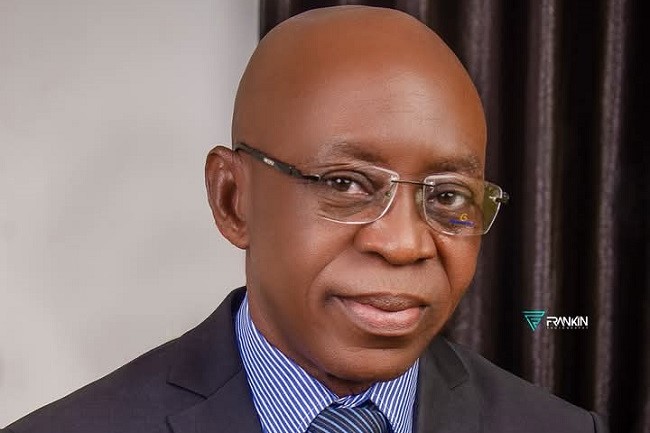
By Dr Sadiq Austine Igomu Okoh, Climate Governance/Net-Zero & Energy Transition/GHG Accounting/Capacity Building Expert