

The Minister of Solid Minerals Development, Dele Alake, has called for the establishment of regional energy hubs as a strategic pathway to accelerate cross-border mining industrialisation.
Alake made the call while speaking at a panel session themed “Critical Minerals in Africa: Meeting Global Demand” on the sidelines of the 11th Powering Africa Summit (PAS) in Washington, D.C., United States.
The Minister’s Special Assistant on Media, Segun Tomori, made this known in a statement on Sunday, March 22, 2026, in Abuja.
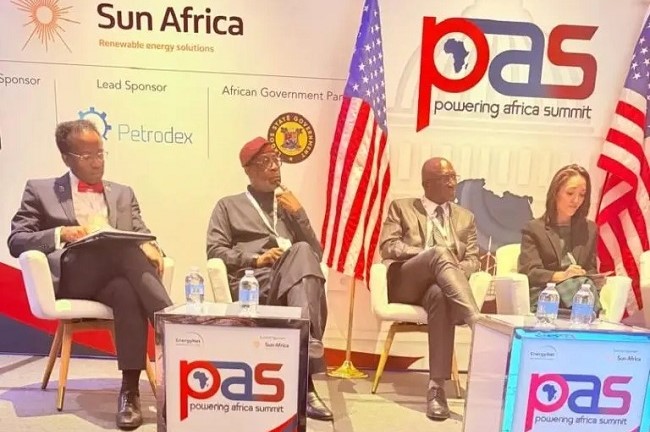
He charged the U.S. and African nations to prioritise the establishment of the hubs, which he described as crucial to strengthen the supply chain of critical minerals essential for the global energy transition.
He said that sustainable partnerships with Africa remained the fastest route to meeting rising global demand for critical minerals.
The minister called for the development of regional industrial corridors similar to the Lobito Corridor.
According to him, similar belts, such as the Lagos to Abidjan corridor, spanning Nigeria, Benin, Togo, Ghana, and Côte d’Ivoire, as well as the Walvis Bay Corridor linking Southern and Central Africa to global markets, could unlock vast mineral potential across the continent.
The minister said such corridors would serve as economic catalysts through driving infrastructure development, enhancing energy access and promoting regional integration.
“The development of nuclear power in one West African country, for instance, can service an entire corridor.
“With that in place, local beneficiation, technology transfer, manufacturing and cross-border industrialisation will naturally follow.
“If three to five such corridors are developed in Africa, we would significantly advance industrialisation across the continent, creating a win-win outcome for both Africa and the West,” he said.
Alake added that strengthened governance structures, improved regulatory frameworks, digitisation of licensing processes and enhanced ease of doing business had repositioned Nigeria’s mining sector as a key driver of economic diversification.
He said reforms introduced by President Bola Tinubu’s administration over the past three years had guaranteed secure tenure for mineral title holders, thereby providing the long-term stability required for investment decisions.
He stressed that the government was scaling up the generation of scientific, internationally certified geological data to support informed decision-making by local and international investors.
The minister acknowledged the challenges in the sector, including insecurity, but said significant progress had been achieved in addressing the situation through the establishment of mining marshals.
According to him, more than 350 suspected illegal miners, including foreign nationals, have been arrested within a year, while over 150 are currently being prosecuted, signalling that Nigeria means business.
He said Nigeria was open to genuine investors who were required to strictly comply with local laws and regulations.
He listed key incentives for investors to include tax waivers on imported mining equipment and full repatriation of profits after due payment of royalties and taxes.
“We have successfully de-risked and sanitised the mining environment, making it conducive to Foreign Direct Investment (FDI).
“Within the last two and a half years, we have attracted over 2.6 billion dollars in FDI into the sector,” he said.
The PAS is an annual high-level international energy conference that focuses on strengthening the U.S. and Africa energy partnership.
The summit serves as a platform for dialogue on critical issues such as energy infrastructure development, investment strategies and the role of critical minerals in supporting the global energy transition.
The 11th edition of PAS focused on the theme “Powering the US-Africa Partnership: Energy Infrastructure, Critical Minerals and Investment Strategies”.
By Martha Agas