

The Centre for 21st Century Issues (C21st), in partnership with the Lagos State Ministry of Environment and Water Resources, has launched the Environmental Bees Club at the Apostolic Faith Secondary School – an initiative designed to equip young people with the knowledge and passion needed to tackle today’s pressing environmental challenges.
The event, held with great enthusiasm from students and staff, featured opening remarks delivered by Aminat Davies on behalf of Ms. Titilope Ngozi Akosa, Executive Director of C21st.
In her address, Davies celebrated the new club as “a platform that empowers young people to understand, protect, and advocate for the health of our planet.” She emphasised that environmental stewardship begins with knowledge, creativity, and passion – values the Environmental Bees Club is set to instill in students.
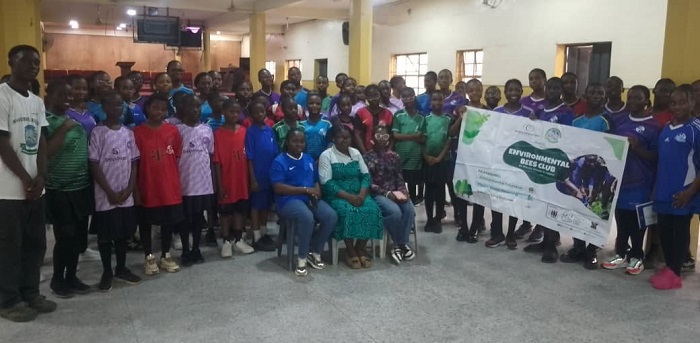
Through the club, students will explore issues such as climate change, recycling, clean energy, and biodiversity while engaging in hands-on projects that build leadership and problem-solving skills.
Ms. Akosa extended heartfelt appreciation to the school for embracing the initiative and encouraged students to stay curious and committed to creating sustainable change.
In his remarks, Simileoluwa Adewale, Programme Officer at C21st and Project Lead for the club, explained why the school was selected for the rollout.
“Apostolic Faith Secondary School aligns with our mission at C21st,” he stated. “The management welcomed the project wholeheartedly, and we are confident that the school will champion environmental research and sustainability efforts.”
Adewale added that expectations for the newly inducted student members are high. He hopes the club will grow, expand its impact, and help nurture a society where environmental consciousness is a core value.
C21st’s Programme Assistant, Jolaolu Opeyemi, led an engaging session on air pollution, outlining causes such as industrial emissions, vehicle fumes, generator smoke, and greenhouse gases. She highlighted health risks including asthma, heart disease, and respiratory complications.
Opeyemi also demonstrated the use of an AirBeam3 air monitor. The device recorded a moderate air quality reading of 25%, prompting discussions on practical steps students can take – such as tree planting, proper waste disposal, and the avoidance of burning refuse—to improve environmental conditions.
Speaking on behalf of the school, Mrs. Idoko Oladele, Vice Principal (Academics), praised the club’s launch as both timely and impactful.
“In Lagos, we see blocked canals, flooding, and waste challenges everywhere,” he said. “Bringing environmental awareness down to the secondary school level is a welcome idea. The students are learning lifelong lessons that go beyond the classroom.”
She expressed hope that programme organisers would continue to visit the school, monitor the club’s progress, and encourage its growth.
Students enthusiastically participated in the sessions, expressing newfound knowledge about environmental issues.
Osage Lois, one of the participants, said she learned about air pollution, climate change, and the importance of adopting cleaner energy sources such as gas and electricity instead of charcoal.
“Climate change affects the regular pattern of the earth, and change begins with us—the younger generation,” she said.
Another student, Otugo Uche, commended the organisers for expanding their understanding of waste management and pledged to be a dedicated ambassador of the Environmental Bees Club.
The launch of the Environmental Bees Club marks a significant milestone in promoting environmental literacy among young Nigerians. For C21st, this initiative is more than an extracurricular activity – it is an investment in the next generation of environmental leaders committed to sustaining the planet.
As the partnership between C21st and the Apostolic Faith Secondary School unfolds, stakeholders are optimistic that the knowledge and enthusiasm sparked today will lead to long-term environmental transformation in the community and beyond.
By Ajibola Adedoye