

Every business depends on biodiversity, and every business impacts biodiversity. The growth of the global economy has been at the cost of immense biodiversity loss, which now poses a critical and pervasive systemic risk to the economy, financial stability and human wellbeing. This is a central finding of a landmark new report published on Monday, February 8, 2026, by the Intergovernmental Platform on Biodiversity and Ecosystem Services (IPBES).
Even companies that might seem far-removed from nature or that do not see themselves as nature-based rely, directly or indirectly, on material inputs, regulation of environmental conditions – such as flood mitigation and water supply – and non-material contributions such as tourism, recreation, education, and spiritual, aesthetic and cultural values. But businesses often bear little or no financial cost for their negative impacts and many cannot currently generate revenue from positive impacts on biodiversity.
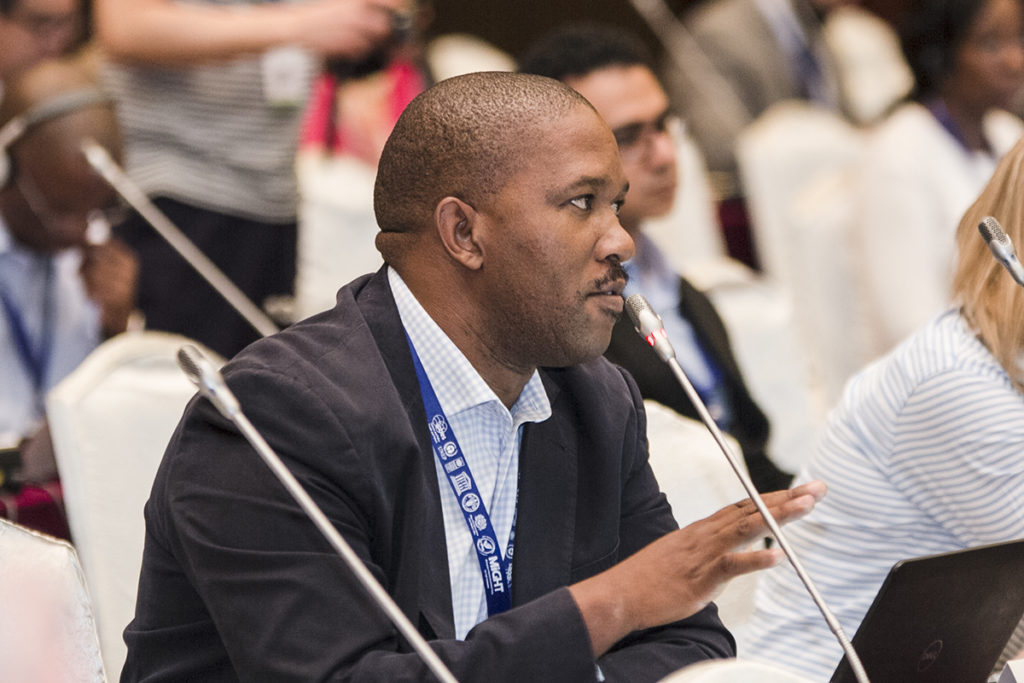
Approved by representatives of the more than 150 member Governments of IPBES, during the 12th session of the IPBES Plenary, hosted in Manchester, United Kingdom, the IPBES Methodological Assessment Report on the Impact and Dependence of Business on Biodiversity and Nature’s Contributions to People (known as the Business and Biodiversity Report), finds that businesses are central to halting and reversing biodiversity loss, but that many often lack information to address their impacts and dependencies, as well as the risks and opportunities relating to biodiversity and nature’s contributions to people.
Enabling Environment Necessary for Business Action
Prepared over three years by 79 leading experts from 35 countries and all regions of the world, drawn from science and the private sector, in consultation with Indigenous Peoples and local communities, the Report finds that the current conditions in which businesses operate are not always compatible with achieving a just and sustainable future, and that these conditions also perpetuate systemic risks.
Businesses often face inadequate or perverse incentives, barriers that hinder efforts to reverse nature’s decline, an institutional environment with insufficient support, enforcement and compliance, as well as significant gaps in data and knowledge. These combine with business models that result in ever-increasing material consumption and an emphasis on reporting quarterly earnings, to contribute to the degradation of nature around the world. The Report makes the point that fundamental change is possible and necessary to create an enabling environment to align what is profitable for business with what is beneficial for biodiversity and people.
“This Report draws on thousands of sources, bringing together years of research and practice into a single integrated framework that shows both the risks of nature loss to business, and the opportunities for business to help reverse this,” said Matt Jones (UK), one of three Co-chairs of the Assessment.
“This is a pivotal moment for businesses and financial institutions, as well as Governments and civil society, to cut through the confusion of countless methods and metrics, and to use the clarity and coherence offered by the Report to take meaningful steps towards transformative change. Businesses and other key actors can either lead the way towards a more sustainable global economy or ultimately risk extinction…both of species in nature, but potentially also their own.”
Business-as-usual Incentives are Driving Nature’s Decline
Current conditions perpetuate business-as-usual and do not support the transformative change necessary to halt and reverse biodiversity loss. For example, large subsidies that drive losses of biodiversity are directed to business activities with the support of lobbying by businesses and trade associations. In 2023, global public and private finance flows with directly negative impacts on nature, were estimated at $7.3 trillion, of which private finance accounted for $4.9 trillion, with public spending on environmentally harmful subsidies of about $2.4 trillion.
In contrast, $220 billion in public and private finance flows were directed in 2023 to activities contributing to the conservation and restoration of biodiversity, representing just 3% of the public funds and incentives that encourage harmful business behaviour or prevent behaviour beneficial to biodiversity.
“The loss of biodiversity is among the most serious threats to business,” said Prof. Stephen Polasky (USA), Co-chair of the Assessment. “Yet the twisted reality is that it often seems more profitable to businesses to degrade biodiversity than to protect it. Business as usual may once have seemed profitable in the short term, but impacts across multiple businesses can have cumulative effects, aggregating to global impacts, which can cross ecological tipping points.
The Report shows that business as usual is not inevitable – with the right policies, as well as financial and cultural shifts, what is good for nature is also what is best for profitability. To get there, the Report offers tools for choosing more effective measurements and analysis.”
Measuring Impacts and Dependencies
The Report finds that a wide range of methods, knowledge and data exist for measuring business impacts and dependencies, which can already inform decisions and action, but that more is understood about applying methods for assessing impacts than for measuring dependencies. The application and uptake of methods is found to be low and uneven across and within business sectors and locales, with less than 1% of publicly reporting companies mentioning their impacts on biodiversity in their reports.
A recent survey among financial institutions representing 30% of global market capitalisation value found that the three most cited barriers to greater uptake of nature-related risk assessment and management are: a) access to reliable data, b) access to reliable models and c) access to scenarios. Prof. Polasky said: “Too often, businesses spend more time trying to decipher complex, competing frameworks for compliance and reporting than taking meaningful action.
One of the powerful features of this Report is that it helps to decipher which methods, metrics and policy tools are appropriate for the scope of business, helping bring clarity and coherence to how businesses measure and report on their interactions with nature. We are moving the conversation from voluntary sustainability pledges to a science-based roadmap for system change.”
The authors emphasise that no single method to measure and manage impacts and dependencies is suitable for all business decisions, and which aspects should be measured depends on context and the action to be taken or decision being informed – multiple methods or metrics will often be necessary.
The Report proposes three overarching characteristics that can be used to assess which methods are most appropriate for any business, of any size or sector: coverage (geographic as well as the extent of impacts and dependencies included); accuracy (the degree to which results correctly describe what they are designed to measure); and responsiveness (the ability of the method to detect changes that can be attributed to the actions and activities of the business).
Decisions at the operational level require site-specific information, generated through ‘bottom-up’ approaches including location-based observations, participatory monitoring and mapping, and spatial analysis built on these data sources. Approaches more appropriate at the portfolio, corporate and value chain levels include “top-down” methods such as life cycle approaches and macro-scale environmental economic models. Depending on the purpose of measurement, they can be conducted with lower spatial resolution data but wider geographic scale.
Another key finding is that business could improve the measurement and management of impacts and dependencies through appropriate engagement with science and Indigenous and local knowledge. “Data and knowledge are often siloed,” said Prof. Ximena Rueda (Colombia), Co-chair of the Assessment. “Scientific literature is not written for businesses and a lack of translation and attention to the needs of business has slowed uptake of scientific findings. Among business there is also often limited understanding and recognition of Indigenous Peoples and local communities as stewards of biodiversity and, therefore, holders of knowledge on its conservation, restoration and sustainable use.”
Industrial development threatens 60% of Indigenous lands around the world and a quarter of all Indigenous territories are under high pressure from resource exploitation, but Indigenous Peoples and local communities often find themselves inadequately represented in business research and decision-making. “Respectful collaboration resulting in the sharing and better use of data, information, scientific insights and Indigenous and local knowledge can translate into better management of business risks and the realisation of opportunities,” said Prof. Rueda.
Priorities and Options for Business Action
The Report makes it clear that all businesses, including financial institutions, have a responsibility to address their impacts and dependencies and could take further actions, given an enabling environment. Although trade-offs exist that prevent some transformative actions, the authors point to many actions that businesses can take now that benefit business and biodiversity – such as increasing efficiency and reducing waste and emissions. Specific options for business action that can be taken now to address their impacts and dependencies on nature are included as a table below.
“Better engagement with nature is not optional for business – it is a necessity,” said Prof. Rueda. “This is vital for their bottom line, long-term prosperity and the transformative change needed for a more just and sustainable future. To avoid greenwashing though, it is essential that businesses have transparent and credible strategies, which clearly demonstrate their actions and how they contribute to biodiversity outcomes and that they publicly disclose their impacts and dependencies as well as their lobbying activities.”
The Report explores both actions that can be taken by businesses themselves and ‘signalling’ actions that can publicly influence and inspire action by others. Actions of each type can be pursued by businesses across four decision-making levels: corporate, operations, value-chain and portfolio.
The authors acknowledge that while there is a large existing knowledge base to guide action by businesses, there are also important gaps in knowledge and its application that constrain the ability of all actors to fully understand and effectively manage business activities. The Report groups these gaps as follows: business-relevant data; data accessibility and transparency; completeness of evidence; adoption of methods and applicability of methods – suggesting five sets of actions to address these priorities.
100+ Concrete Actions for Governments, Financial Actors & Civil Society
Another central message of the Report is that businesses cannot, by themselves, deliver the scale of change needed to halt and reverse biodiversity loss. Collaboration, collective and individual actions are essential to create an enabling environment where businesses contribute to a just and sustainable future.
Five specific components are identified as central to such an enabling environment: policy, legal and regulatory frameworks; economic and financial systems; social values, norms and culture; technology and data; and capacity and knowledge. The Report provides more than 100 specific examples of concrete actions that can be taken, across each of these five components, by businesses, governments, financial actors and civil society. A table of these actions is also attached below.
“Better stewardship of biodiversity is central to managing risk across the whole of the economy and throughout societies – it’s not some distant environmental issue, but a core challenge now in every boardroom and cabinet-room,” said Prof. Polasky. “We need to move beyond the fallacy of a binary choice between governments and decision-makers being either pro-environment or pro-business. All business depends on nature, so actions that conserve and sustainably use nature can also be those that help businesses thrive in the long-term.
One of the innovations of this Report is that it provides a template for accelerating collaboration and collective actions at all levels among and by governments, financial actors, other actors including civil society, Indigenous Peoples and local communities, consumers, NGOs, international organisations, and academia in addition to the action needed by businesses and financial institutions themselves.”
Vital Guidance to Achieve Global Goals
Speaking about the significance of the Business and Biodiversity Report, Dr. David Obura, Chair of IPBES said: “This first-ever fast-track IPBES Assessment Report was delivered with urgency as we begin the second half of this decade, at the request of our Governments, as a vital contribution to efforts by businesses, governments, financial actors and the whole of society to meet the goals and targets of the Global Biodiversity Framework, the Sustainable Development Goals and the Paris Agreement on Climate Change. It relates very directly to Target 15 of the Global Biodiversity Framework, which focuses on businesses, but ultimately to all our shared global goals because businesses are at the centre of how our economies, and large parts of our society, depend on and impact nature.”
“We thank the Co-chairs and all the authors of this Assessment,” said Dr. Luthando Dziba, Executive Secretary of IPBES. “This Report builds very directly on the insights and evidence of many earlier IPBES Assessments – particularly the 2019 Global Assessment, the 2022 Values Assessment and the 2024 Nexus and Transformative Change Assessments – offering much-needed clarity and coherence to guide actions by business and all decision-makers. Nature is everybody’s business and the conservation, restoration and sustainable use of biodiversity is central to business sustainability and success.”