

No doubt, climate change is intensifying; urban expansion is steadily consuming green spaces while insecurity is creeping further into forest corridors.
Stakeholders say these concerns entail that biodiversity restoration can no longer be left to government agencies, foresters, and policy meetings alone.
Their argument is simple but urgent: if forests are to survive, the battle must move beyond forest reserves and official declarations into classrooms, neighbourhoods, churches, farms and homes.
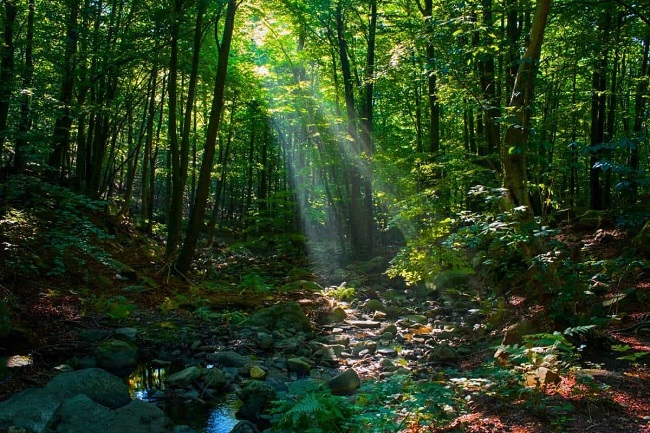
Recently, at this year’s International Day of Forests celebration in Ibadan, the Oyo State capital, academics, geospatial professionals, foresters and public officials acknowledged a troubling reality of Nigeria’s shrinking forests.
Available data indicates that Nigeria is estimated to have about 1,160 constituted forest reserves covering roughly 10 per cent of the country’s land area; however, studies suggest many of these reserves have been severely degraded over the decades.
Records also indicate that the country lost about 47.5 per cent of its forest cover between 1990 and 2010, placing it among nations that have experienced intense deforestation pressure.
Experts say the current forest estate remains far below the 25 per cent threshold often recommended for ecological balance and climate resilience.
In Oyo, the local picture is equally sobering.
Conservation records indicate that the state has nine gazetted forest reserves covering about 342,461 hectares, representing roughly 12.92 per cent of its land area.
Opara Forest Reserve alone accounts for about 248,640 hectares, making it by far the largest, while other notable reserves include Ijaiye, Gambari and Lanlate.
Yet, the scale of those reserves has not insulated them from pressure.
Studies reviewed by stakeholders show that forest cover in some of Oyo’s major reserves, including Opara and Igangan, declined by between 42.26 per cent and 91.21 per cent between 1990 and 2020.
The decline was driven largely by agricultural expansion, settlement growth, illegal logging and other extractive activities.
Some assessments also suggest that about half of the reserves have been affected by conversion to farmland or human habitation.
Against this backdrop, the Geo-Information Society of Nigeria (GEOSON) is pushing a new conservation model it calls “Geomentorship for Biodiversity Restoration and Monitoring”.
The model is built around an idea many speakers at the Ibadan event repeatedly emphasised: that tree planting alone is no longer enough.
For GEOSON, that thinking is already being translated into action.
Its chairman in Oyo, Mr. David Afolayan, said the society planned to plant 5 million trees within the next three years to four years, using Oyo as a pilot before scaling the initiative across the country.
“We are going to schools to plant trees, using our technology to map where the trees have been planted, using the same technology to monitor as the tree grows,” he said.
GEOSON’s response is to start where habits can still be shaped early, which is, in schools.
Stakeholders argue that if children are introduced early to environmental stewardship, spatial awareness and the practical value of trees, conservation can gradually become a culture rather than an annual ritual.
Dr Rotimi Obateru, a lecturer and researcher in the Department of Geography, University of Ibadan, said the first step must be knowledge.
According to him, Nigeria cannot effectively conserve its natural resources without first understanding what it has, where those resources are located and how they are changing under mounting environmental pressure.
“We need to first understand what we have, take inventory of our natural resources, and have deep knowledge of what we have.”
For him, inventory is only the foundation.
He said the next layer was environmental education; not just policy conversations among experts, but grassroots engagement that helped citizens understand how their daily actions affected land, water, vegetation and climate.
He identified deforestation, indiscriminate land-use transformation and poor waste management as examples of human activities steadily degrading the environment.
In a climate-stressed era, he said, the pressure on ecosystems was no longer abstract.
According to him, it is visible, cumulative and increasingly disruptive.
“We cannot control the natural, but we can control the anthropogenic, that is, our actions. We humans are the drivers of that,” he said.
Obateru also framed the issue in terms that resonated beyond environmental policy.
According to him, there is a “circular causal relationship” between humans and the environment: people shape ecological systems, and those same systems eventually shape human survival, health and livelihoods.
With reports of illegal activities around reserve corridors and the continuing pressure from sawmills and extractive livelihoods, the challenge in Oyo increasingly sits at the intersection of conservation, local economy and public safety.
This is one reason many of the stakeholders insisted that tree planting should not be reduced to symbolism.
Oyo State Commissioner for Environment, Dr Ademola Aderinto, said the scale of the challenge required not only stronger enforcement, but also wider citizen participation.
“You must realise this is not what government can do alone; there is a limit to how much government can do in terms of this,” Aderinto said.
The commissioner said the state government was engaging stakeholders and exploring stronger legislation to improve environmental compliance, forest protection and biodiversity restoration.
He also noted that Oyo was looking outward for lessons, citing countries such as Rwanda and Kenya, where environmental discipline and conservation culture were more visibly integrated into governance and daily life.
“Stronger legislation would go a long way in enforcing a lot of things,” he said.
Still, several experts at the event argued that legislation alone would not be enough unless communities began to see trees as assets rather than obstacles.
Dr Mary Ugobi-Onyemere, a philosopher and researcher in geospatial problems and prospects at Dominican University, Ibadan, urged schools, particularly at the secondary level, to become more environmentally conscious and more spatially responsive, so that conservation was not merely taught, but practised and measured.
“We must support continuous tree planting, build and sustain nurseries, map planted trees and prioritise indigenous species that stand a better chance of survival within local ecological conditions.
“We need more trees than what we deforest,” she said.
Her emphasis on indigenous species was echoed by other speakers, who cautioned against treating all tree planting as equal.
Also, Vice-Chancellor of Dominican University, Ibadan, Prof. Jacinta Opara, said restoration must be guided by science, not sentiment.
According to her, universities can support communities through research on biodiversity, ecosystem dynamics, soil conditions, threatened species and climate suitability for different trees.
She said institutions could also deploy tools such as Geographic Information Systems (GIS), remote sensing, environmental modelling and data analytics to monitor restoration efforts and determine which species should be planted in specific locations.
“Telling people to plant trees is not enough; they need to know which trees to plant, where to plant them, how far from buildings to place them, what soil they need and how to keep them alive,” Opara said.
On his part, Dr Osikabor Benson, Director of Research at the Forestry Research Institute of Nigeria (FRIN), said one of the major gaps in many conservation campaigns was the absence of aftercare.
Beyond supplying seedlings, he said the institute was willing to support schools, communities and private planters with technical guidance, including plantation management, species selection, spacing and responses to pest or insect infestation.
Benson said that fruit trees, orchards, timber species and carefully selected indigenous plants couild provide food, medicinal value, shade, carbon benefits and future income.
“A tree that cools a compound can reduce energy use. A tree that stabilises soil can protect farmland; a tree that bears fruit or yields timber can become a household asset.
“In that sense, the green economy may be one of conservation’s strongest arguments,” he said.
According to stakeholders, what is emerging from Oyo is a growing recognition that Nigeria’s forest crisis is not only about disappearing trees.
They say unless homes, schools, churches, farms and neighbourhoods begin to treat trees as part of everyday life, the restoration effort may remain smaller than the crisis it seeks to confront.
For conscious environmentalists in Oyo, the future of forests may depend not only on what happens in reserves and policy circles, but on teaching the next generation that trees are essential for survival, not just scenery.
By Ibukun Emiola, News Agency of Nigeria (NAN)