

A coalition of over 300 CSOs under the aegis of the Climate and Sustainable Development Network (CSDevNet) and partners have commended the Presidential Executive Order on the Prohibition of Exportation of Wood and Allied Products, 2025.
CSDevNet and the United Youths 4 Environmental Sustainability Initiatives (UY4ESI) welcome the Presidential Executive Order, describing it as a significant and timely policy intervention. The pair believes that, if implemented with integrity, coordination and social safeguards, the Order has the potential to slow Nigeria’s accelerating forest loss, strengthen climate and environmental governance, and advance a more just and resilient development pathway.
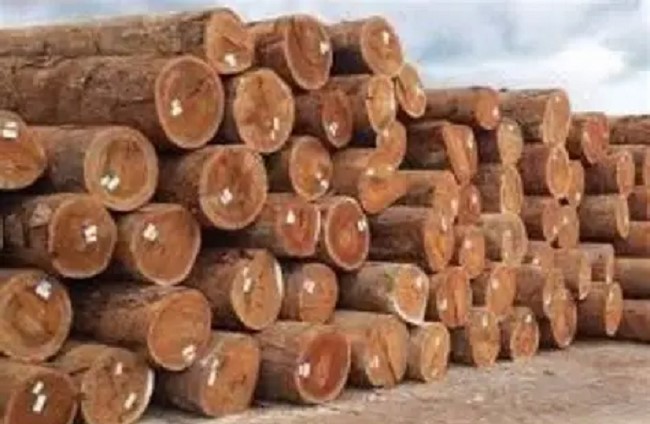
In a statement made available to EnviroNews on Sunday, January 18, 2026, they described Nigeria’s forests, wetlands and other natural ecosystems as critical national assets that underpin climate regulation, biodiversity conservation, food security, livelihoods and social stability.t
The groups pointed out that heir rapid degradation; driven by commercial logging, weak regulation, cross-border trade, and the concentration of resource benefits among a few powerful actors has disproportionately affected rural and forest-dependent communities.
“These impacts are already evident in worsening floods, desertification, land degradation, habitat loss, rising food insecurity, and the increasing resource-related conflicts. In this context, the Executive Order should be understood not simply as a trade restriction; but as a climate justice and environmental security measure aimed at protecting shared ecological resources,” they submitted.
CSDevNet and UY4ESI emphasise that an export ban on its own will not stop deforestation.
“Without strong enforcement, transparent governance and coordinated action across federal, state and local levels, there is a real risk that logging pressures will shift to domestic markets, informal supply chains, and illegal cross-border routes. Past experience shows that poorly enforced bans often penalise small-scale actors while allowing large commercial interests to adapt, evade regulation or continue operations with impunity. Preventing this outcome requires deliberate policy choices that confront the political economy of timber extraction and trade in Nigeria.
“We therefore stress the urgent need for robust, fair and transparent enforcement mechanisms. This includes clear roles for Customs, port authorities, border agencies and state forestry institutions, supported by public reporting on seizures, prosecutions, and forest monitoring data.
“Enforcement must be even-handed and resistant to elite capture, ensuring that the burden of compliance does not fall disproportionately on vulnerable communities while powerful actors remain untouched. Equally important is federal – state coordination, recognising that effective forest governance depends heavily on state and local authorities. Without such coordination, the Executive Order risks uneven implementation.”
The groups noted that, beyond enforcement, the success of the policy would ultimately depend on how it addresses the livelihood and energy realities of millions of Nigerians.
“Fuelwood, charcoal production and wood-based trade remain central to household survival and cooking energy for a large segment of the population. Abrupt restrictions, without affordable and accessible alternatives, risk increasing energy poverty, household costs, and illegal markets. A just and effective transition therefore requires planned, financed, and time-bound interventions that expand access to clean cooking solutions, sustainable energy options, and climate-resilient livelihoods.”
CSDevNet National Network Coordinator, Abu Stephen, noted: “This Executive Order is an important step toward climate justice, but its impact will depend on how seriously we address implementation and equity. Protecting forests is inseparable from protecting people. Enforcement must be transparent and fair, and communities that currently depend on wood-based livelihoods must be supported with viable alternatives that are affordable, accessible and dignified.”
UY4ESI Executive Director, Musa Ibrahim, added: “This policy presents an opportunity to invest in clean energy alternatives, sustainable agriculture and local innovation. These investments are not optional; they are essential to ensuring that environmental protection goes hand in hand with improved livelihoods and long-term resilience.”
Practical alternatives, added CSDevNet and UY4ESI, already exist. For instance, UY4ESI’s community outreach and training on efficient briquette production and clean cook stoves, supported by CSDevNet demonstrate how pressure on forests can be reduced while improving household health and income.
In parallel, CSDevNet’s sustainable agriculture and soil restoration interventions show that climate-resilient livelihoods can be scaled when supported by the right policies and investments, stressed the group, adding: “What is now required is the political will and financing to move these solutions from pilot initiatives to national impact?”
CSDevNet and UY4ESI called on the federal and state governments, development partners and the private sector to treat the Executive Order as the starting point of a broader reform agenda.
“Such an agenda must integrate forest protection with clean energy access, sustainable land-use planning, livelihood diversification, and community-led conservation, underpinned by transparency and accountability.
“As civil society actors, we reaffirm our commitment to supporting implementation, monitoring outcomes, and advocating for policies that strengthen responsible environmental governance, advance climate justice and secure a resilient sustainable for Nigeria,” stated the groups.