

As South Africa prepares to commemorate Human Rights Day 2026, The Green Connection is reminding citizens – especially those who may feel unheard or powerless – that their voices matter.
The organisation’s 25-year legacy of eco-justice victories demonstrates that when ordinary people unite to defend their rights and their environment, meaningful change is possible.
“Many people feel overwhelmed by decisions made far from their communities, even when those decisions threaten their wellbeing or the environment, they depend on,” says The Green Connection’s Founder and Strategic Lead, Liziwe McDaid.
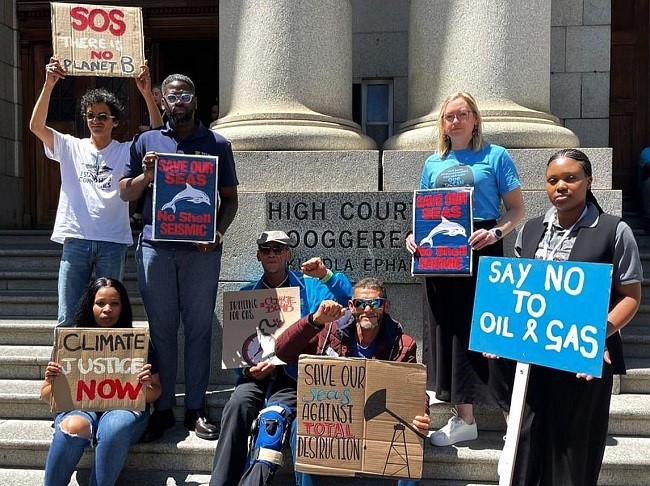
“However, our experience shows that when people are properly informed and meaningfully involved, decisions are far more likely to serve the public interest. Human Rights Day reminds us that when people raise their voices collectively, everybody wins. Every person has the power to protect their future,” says McDaid.
The Green Connection recently marked 25 years of community-led activism and environmental governance advocacy. Over this period, the eco-justice organisation has worked alongside coastal communities, small-scale fishers, youth, legal partners and civil society organisations to help reshape national conversations around public participation, fossil fuels and South Africa’s energy future – proving that people-powered action is not only possible, but transformative.
Ordinary People Making Extraordinary Impact
“Over the past five years alone, South Africans from vulnerable and often overlooked communities have helped secure significant environmental and social justice victories. These achievements were not driven by wealth or political influence, but by courage, unity and determination,” says Neville van Rooy, The Green Connection’s Outreach Ambassador.
In the Western and Eastern Cape, communities successfully challenged Karpowerships’ gas-to-power proposal, exposing major flaws in environmental governance and helping to prevent long-term, gas contracts that could have become extremely costly and may have likely placed the greatest burden on low-income households.
Small-scale fishers also successfully challenged Searcher’s proposed seismic blasting, affirming the rights of Indigenous fishing communities to be recognised and respected. In another victory, communities halted TEEPSA’s oil and gas exploration in Block 5/6/7, reinforcing the constitutional right to a healthy environment and meaningful public participation.
“These wins are not just about stopping harmful projects. They are about restoring dignity, defending livelihoods, and ensuring that ways of life passed down through generations are protected. They show that when communities stand together, we can reshape our country for the better.”
Building Confidence, Leadership and Hope
Through initiatives such as its Legacy Programme, Bridges Programme, and the Koeksister Project, The Green Connection continues to strengthen community leadership and deepen collaboration to build resilience and economic independence. These programmes – which prioritise small-scale fishers and women and youth in coastal communities – help ensure that those most affected by environmental decisions are informed, empowered and confident in asserting their rights.
According to The Green Connection’s Advocacy Lead, Lisa Makaula, the organisation has also commissioned three research papers to deepen public understanding of the choices shaping South Africa’s energy transition. These studies explore the potential of offshore renewable energy, the future of the transport sector, and how rising global demand for critical minerals may affect communities on the ground.
Makaula says, “Our aim is simple: to ensure that ordinary people have access to clear, credible information so they can actively participate in decisions that shape their lives, livelihoods and environment. A just transition cannot be built on outdated fuel standards, harmful technologies or governance systems that sideline communities.
“Justice must guide every step of the transition, and no community should be left behind or harmed as we see in Limpopo and KwaZulu-Natal, where unprecedented floods have displaced families, and in the Eastern Cape, where persistent drought has left many without reliable water security.”
As the country marks Human Rights Day, The Green Connection calls on all South Africans to stand firm in defending their rights, their environment and each other. The victories won by communities over the past years show that when ordinary people unite, they can take on powerful interests and win. Their resilience is a clear reminder that collective action has always been one of South Africa’s greatest strengths.