

The Media Awareness and Justice Initiative (MAJI) has commenced deployment of 200 air quality monitoring devices to collect empirical data to support climate action activism aimed at addressing oil pollution and addressing climate change.
Mr. Onyekachi Okoro, Executive Director of MAJI, announced this at a preliminary consultation and interactive meeting with stakeholders on the effect of climate action in Nigeria, held in Yenagoa, the Bayelsa State capital, on Friday, August 29, 2025.
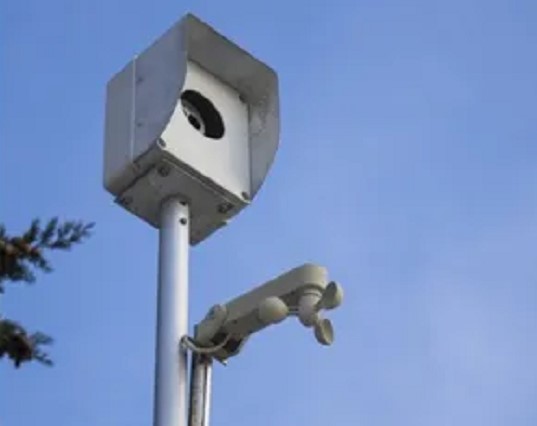
Okoro explained that MAJI, an environment focused non-government organisation (NGO), has so far deployed some 30 air quality monitoring devices across oil communities prone to oil pollution at the pilot stage to collect and transmit real time empirical data on measurement of air particles from the field.
He said that the project, tagged “Strengthening Data for Climate Action in Nigeria (SD-CAN)”, is supported by funding from United Nations Democracy Fund and will train stakeholders in the use of the devices to monitor the environment.
He said that MAJI is collaborating with the National Oil Spills Detection and Response Agency (NOSDRA) and has trained officials at the Port Harcourt Zonal Office of the agency on the workings of the devices used to monitor air quality across the world.
Okoro noted that the introduction of technology in data gathering on environmental variables like air particles, carbon emissions and toxicity would strengthen the arguments for environmental justice often dismissed as mere emotions and lacking empirical evidence by polluters who escape liability due to lack of credible data evidence.
Representatives of the academia, media, oil producing community leaders, NGOs, regulators and Bayelsa Ministry of Environmental participated in the interaction.
The participants examined the challenges around data collection, data quality, integrity and access and recommended collaboration amongst the stakeholders to overcome identified challenges.
Mrs. Maria Olodi-Osuma, a media professional, urged the stakeholders to evolve strategies that would leverage on the competence and experience of journalists who cover the environment rather than relying on untrained hands who use the social media to disseminate unverified information that lack credibility.
She noted that perceptions by the stakeholders about impact of media in raising awareness on climate change is born out of lack of knowledge as the media practitioners were doing their jobs amidst various challenges including risks to lives and personal safety.
In his contributions, HRH David Osene, (Ogbolo XI) Paramount Ruler, Elebele Community, Ogbia LGA in Bayelsa, regretted the neglect of the environmental hazards faced by residents of oil communities.
According to the traditional ruler, several oil and gas leak incidents have been swept under the carpet on the grounds that the evidence presented by the communities were not scientific and, therefore, denied compensation and remediation.
Osene applauded the efforts by MAJI to strengthen the capacity of communities and stakeholders to collectively advocate for environmental justice.
He pledged to mobilise women and youths in his domain during the training phase of the MAJI project at the Kolo Creek Oilfields.
Also, Mrs. Grace Orumiefa, Chairman of Bayelsa chapter of National Association of Women Journalists, urged MAJI to ensure that oil firms operating in the Niger Delta region to be part of the project.
By Nathan Nwakamma