

World leaders who gathered in Belém for the World Leaders Summit ahead of COP30 on Thursday, November 6, 2025, announced a landmark commitment to collectively recognise and strengthen 160 million hectares of Indigenous Peoples’ and local communities’ lands by 2030 through the Intergovernmental Land Tenure Commitment (ILTC). The Commitment is the first global agreement focused on recognising land tenure.
Alongside the Commitment, more than 35 government and philanthropic funders organised by the Forest Tenure Funders Group (FTFG) announced a renewed, five-year Forest and Land Tenure Pledge. The new $1.8 billion pledge will support Indigenous Peoples, local communities, and Afro-descendant communities in securing land rights across an expanded range of ecosystems, including forests, mangroves, and savannahs.
Securing Indigenous Peoples’ and local communities’ land rights is one of the most effective investments the world can make in climate action, according to a significant body of scientific evidence. Indigenous Peoples and local communities safeguard around 40% of the world’s remaining intact ecosystems, yet less than half of their lands are legally recognised. Forests managed by Indigenous Peoples and local communities have consistently lower deforestation rates than other areas.
With tropical forest loss reaching record levels in 2024, land tenure is a key lever to preserving lands around the globe while also securing the lives and livelihoods of Indigenous Peoples and local communities who use and steward forests sustainably.
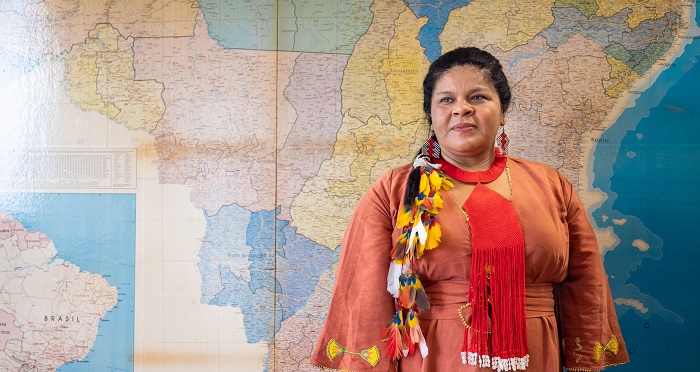
Sonia Guajajara, Minister of Indigenous Peoples of Brazil, said: “Advancing tenure rights and finance for Indigenous Peoples go hand in hand. I am pleased that the renewed Forest and Land Tenure Pledge can support Tropical Forest Countries as well as Indigenous Peoples and local communities to make real change, starting in Belem. As part of this, I am pleased by Brazil’s own contribution of at least 59 million hectares.”
Levi Sucre Romero, from the Mesoamerican Alliance of People of Forest (AMPB), said: “By making this commitment, major governments and funders recognise the crucial role we play in the fight against climate change and acknowledge the efforts our communities have made to create our own funds that reach our people without unnecessary bureaucracy. We welcome this with cautious optimism, knowing that promises alone cannot stop the deforestation, fires, and unprecedented violence we face today in our territories.
“The funds must reach Indigenous Peoples and local communities directly, without getting stuck in bureaucracy. Land titling processes must treat us as partners and value our deep knowledge of the territories. These promises give us hope, but only the actions taken from today onward will give us a real chance to preserve the forests that protect not only us, but the entire planet, from catastrophic climate change.”
The Intergovernmental Land Tenure Commitment is a collaborative political action led by the Forest and Climate Leaders’ Partnership and co-chaired by the governments of Brazil, Peru and Norway, which invites governments to set national 2030 targets to strengthen the land and forest tenure rights of Indigenous Peoples, local communities and and Afro-descendant communities, including through enhanced legislation and implementation, policy reforms, and improved access to finance in tropical forest countries.
The new financial pledge builds on the success of the original $1.7 billion COP26 commitment, which has already channeled $1.86 billion to support Indigenous Peoples and local communities in securing land rights and protecting forests. The FTFG’s contributions over the past few years have helped drive a 36% increase in climate funding for Indigenous Peoples and local communities.
Andreas Bjelland Eriksen, Minister of Climate and Environment of Norway, said: “Strengthening Indigenous rights is one of the most effective measures to reduce deforestation. This is both about social justice and about protecting forests that absorb and store carbon.”
Nancy Lindborg, President and CEO of the Packard Foundation, said: “This pledge brings to life a shared vision for protecting critical ecosystems and supporting the people who steward them. Through deep and sustained collaboration, we’re working to shift policies and align funding in ways that support lasting solutions for both people and nature – from securing land rights for Indigenous Peoples, local communities and Afro-descendant communities, to strengthening institutions, and advancing climate resilience.”
By 2030, the Intergovernmental Land Tenure Commitment aims to accelerate recognition of lands and territories, strengthen governance systems, and align national frameworks with climate and biodiversity objectives. Alongside and complementing the Commitment, the renewed Forest and Land Tenure Pledge will mobilise funding that reaches communities directly and advances land tenure, supporting long-term access to finance for communities that are too often excluded from direct climate and forest financing.
The Commitment originated in the Indigenous Peoples’ movement and was built through dialogues among FCLP member states, philanthropies, Indigenous Peoples, and local communities, culminating in efforts to secure a global commitment to land tenure and direct access to finance.
The Commitment will also support the implementation of the Tropical Forests Forever Facility, which aims to provide long-term, reliable financing for tropical forest conservation and has earmarked 20% of funds for Indigenous Peoples and local communities.