

The Federal Government says it has championed the domestication of Liquefied Petroleum Gas (LPG) produced in Nigeria, leading to improved domestic availability, price stability, and reduced exposure to international price volatility for households.
Dr Ekperikpe Ekpo, Minister of State for Petroleum Resources (Gas), spoke at the National Gas Day session of the ninth Nigeria International Energy Summit (NIES 2026), themed “Unlocking Nigeria’s Gas Advantage for Power, Industry and Growth”.
He disclosed that it had completed the nationwide rollout of the Decade of Gas Free LPG Cylinder Distribution Programme across six geopolitical zones, aimed at accelerating clean cooking adoption, reducing deforestation, improving public health, and supporting Nigeria’s net-zero ambitions.
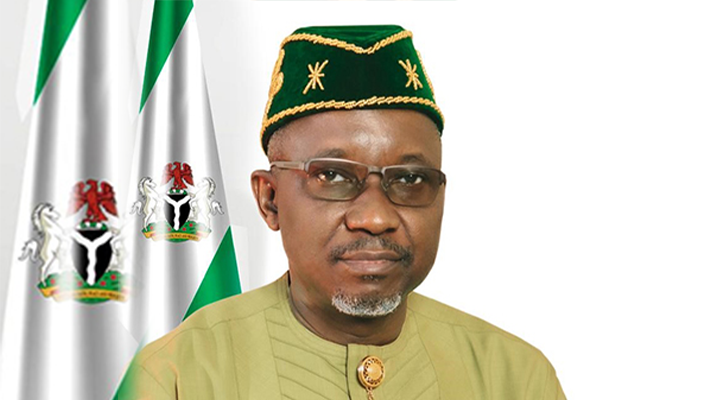
Ekpo also announced the resolution of long-standing gas-to-power legacy debts, following presidential approval and ratification by the National Economic Council, describing the development as a major confidence booster for gas producers and investors in the domestic power market.
“Nigeria is positioning natural gas as the backbone of its economic transformation, with government policies focused on power generation, industrial development, energy access and long-term growth.
“The country holds 210.54 trillion cubic feet (Tcf) of proven gas reserves, the largest in Africa and the ninth largest globally,” he said.
Ekpo said gas was critical to expanding electricity access, deepening industrialisation, reducing energy poverty, and meeting climate commitments in a development-focused manner.
Under the Renewed Hope Agenda and the Decade of Gas Initiative, Ekpo said the Federal Government was entrenching gas as the backbone of the national energy system through institutional reforms, regulatory improvements, and targeted investment incentives.
The minister said, “Gas currently fuels over 70 per cent of Nigeria’s on-grid electricity generation, adding that government is strengthening the entire gas-to-power value chain to support industrial growth.
“Strategic measures include commercially viable gas supply agreements, sustained implementation of the debt resolution framework, expansion of pipelines and processing facilities, and the establishment of a National Gas Infrastructure Command Centre, recently approved by the President.
“Beyond power generation, the minister described gas as the engine of Nigeria’s industrialisation drive, supporting agriculture, manufacturing, petrochemicals, and transportation.”
He cited ongoing efforts to develop gas-based industrial hubs such as the Brass Gas Hub, promote LPG and compressed natural gas (CNG) adoption, and expand small-scale and modular gas projects to empower local entrepreneurs and host communities.
On policy and regulation, Ekpo said the Petroleum Industry Act (PIA) has provided a transparent and commercially viable framework for investment.
He added that government is working with regulators and industry stakeholders to ensure cost-reflective pricing, simplify licensing processes, grow local content, and shorten project timelines.
He emphasised that improved energy access is essential for peace, equity, and national cohesion, adding that Nigeria’s gas advantage also strengthens regional energy security across West Africa through exports, pipelines, and cross-border cooperation.
On Nigeria’s global energy diplomacy, Ekpo said the election of a Nigerian as Secretary-General of the Gas Exporting Countries Forum (GECF) has strengthened the country’s influence in the international gas community.
He reaffirmed the Federal Government’s commitment to building a gas-driven economy that delivers prosperity domestically and credibility internationally, calling on stakeholders to work together to harness gas as a driver of industrial transformation and sustainable development.
By Emmanuella Anokam